Best Christmas Markets in Europe: Where to Go for Festive Magic
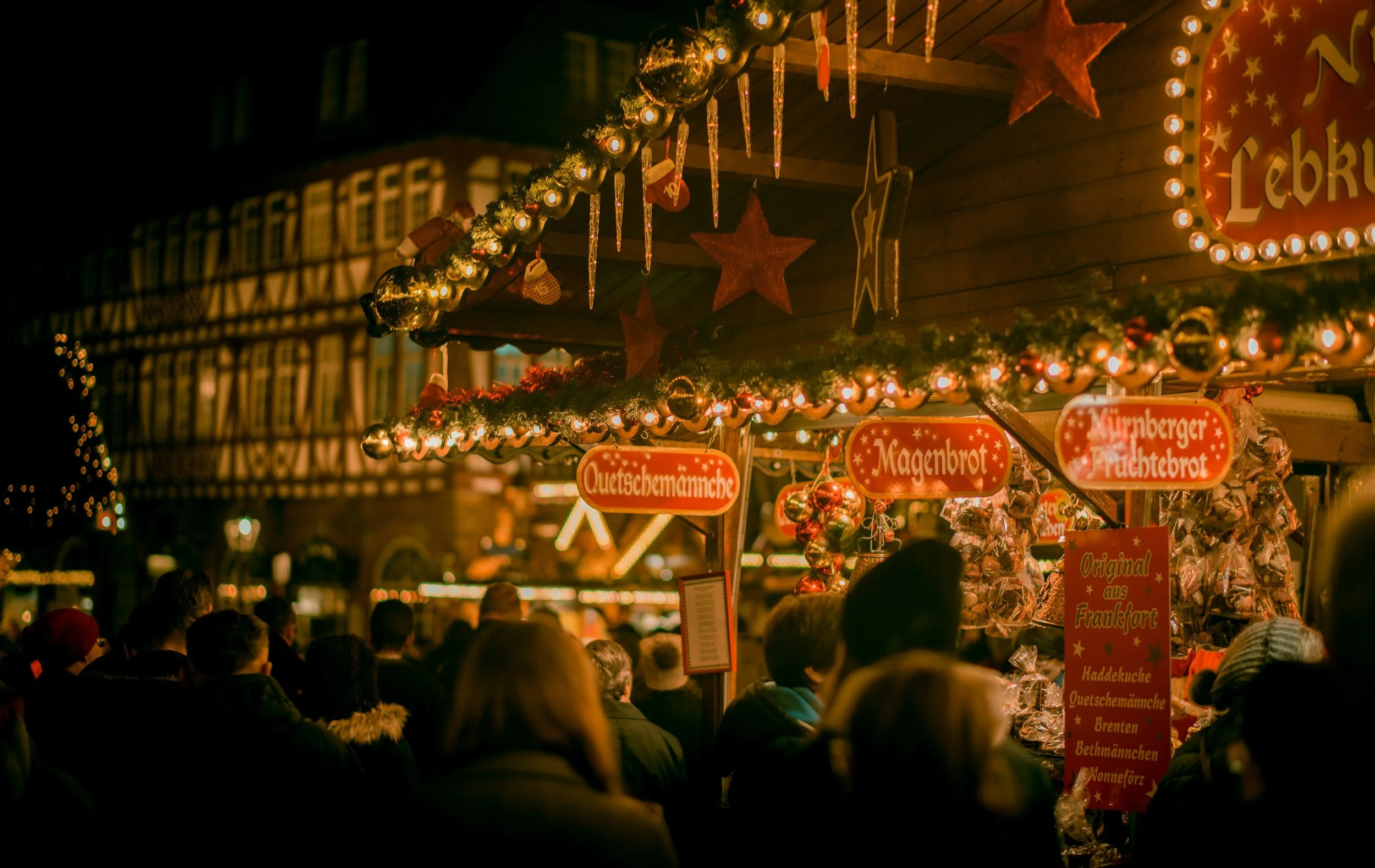
There’s something about winter in Europe that feels tailor-made for wandering. As the days grow shorter and the air turns crisp, cities across the continent glow with fairy lights, wooden chalets, and the smell of spiced wine drifting through medieval squares. Christmas markets aren’t just seasonal attractions here — they’re deeply rooted traditions, shaped by local history, regional food, and centuries-old customs.
From grand cathedral backdrops in Central Europe to smaller, more intimate markets tucked into historic neighbourhoods, Europe’s Christmas markets offer far more than souvenirs and snacks. They’re places to slow down, warm your hands around a mug of mulled wine, and experience a city at its most atmospheric. Whether you’re planning a festive city break or building a winter itinerary around multiple stops, these are the Christmas markets that truly stand out.
Vienna, Austria
Why this Christmas market stands out
Vienna does Christmas with a sense of occasion. The city’s imperial architecture, historic squares, and long-standing Christmas market tradition — dating back to the 13th century — give its festive season a refined, almost storybook feel. Rather than one single market stealing the spotlight, Vienna offers several distinct markets, each with its own atmosphere, from grand and ceremonial to cosy and local.
What you’ll find at the markets
Viennese Christmas markets are known for their craftsmanship and quality. Wooden chalets sell handmade decorations, candles, ceramics, and gifts that feel rooted in tradition rather than novelty. Food stalls focus on warming, seasonal comfort: sausages sizzling on grills, trays of pastries dusted with sugar, and steaming drinks designed to take the edge off cold winter evenings.
Must-try food and drink
Glühwein is the classic choice, but Vienna’s markets also serve Kinderpunsch, a non-alcoholic spiced punch that’s popular with families. For food, try a Käsekrainer sausage (filled with melted cheese), freshly baked waffles, or a portion of Kaiserschmarrn — fluffy shredded pancakes topped with icing sugar. Roasted chestnuts, sold from open braziers, are a simple but essential winter snack.
Best markets to visit
The Christmas Market at Rathausplatz is Vienna’s most iconic, with the illuminated City Hall providing a dramatic backdrop. The Christmas Village at Belvedere Palace feels more relaxed and romantic, especially after dark, while Spittelberg’s market winds through narrow historic streets and offers a more local, bohemian atmosphere.
Practical tips
Vienna’s public transport system is efficient and well-connected, making it easy to visit multiple markets in one evening. Temperatures often sit around freezing, so insulated shoes and gloves are a must. While card payments are increasingly common, some smaller stalls still prefer cash.
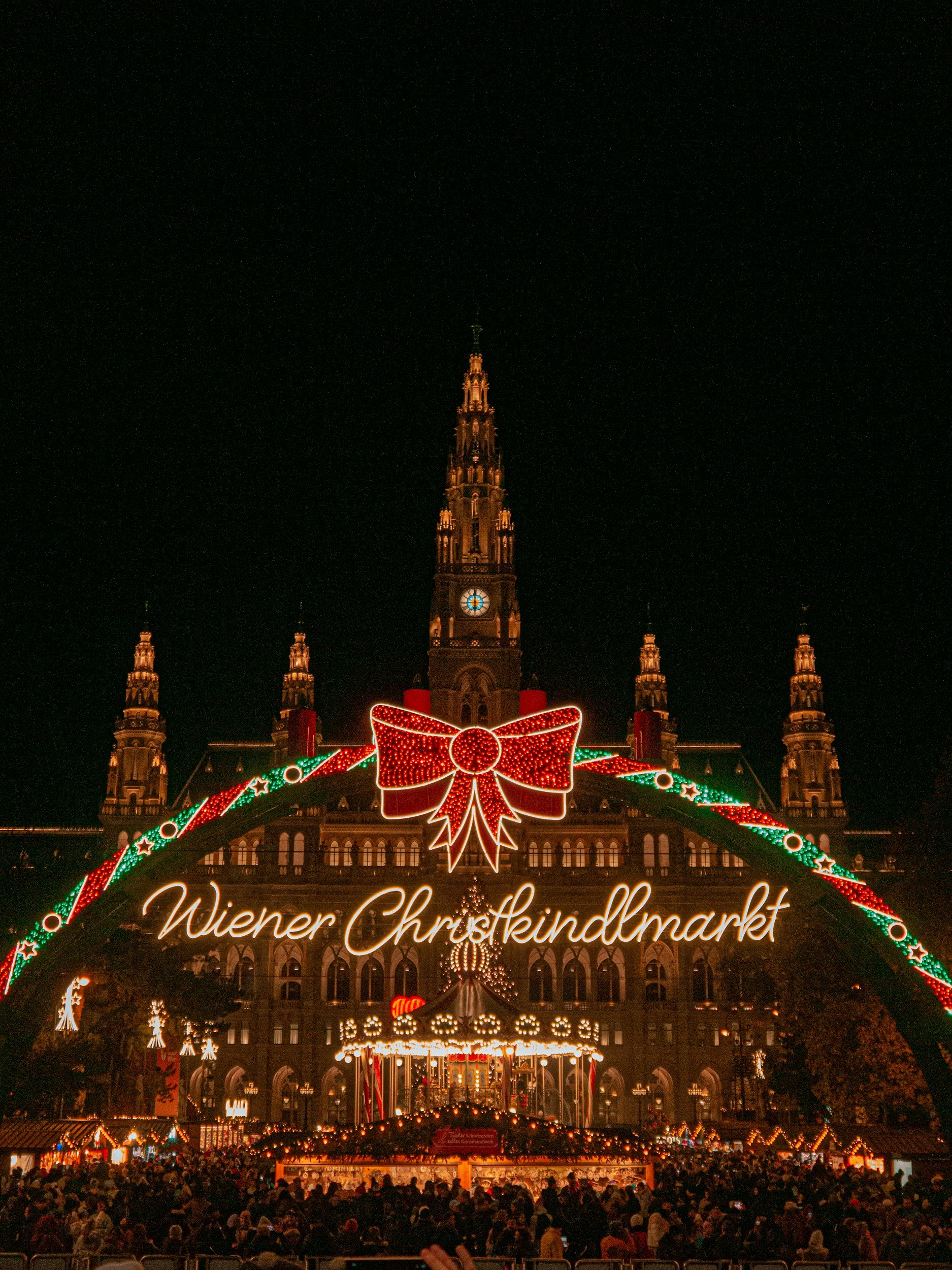
Vienna, Austria.
Nuremberg, Germany
Why this Christmas market stands out
Nuremberg’s Christkindlesmarkt is one of the oldest and most traditional Christmas markets in Europe, with roots stretching back to the 16th century. Set in the city’s main square beneath the Frauenkirche, it’s known for its strict rules around what can be sold, ensuring stalls stick to traditional crafts and regional specialities rather than mass-produced souvenirs. The result is a market that feels authentic, historic, and deeply tied to local culture.
What you’ll find at the markets
Rows of red-and-white striped wooden stalls line the square, selling handcrafted ornaments, wooden toys, and seasonal decorations made in the region. The atmosphere is lively but grounded, with a strong focus on tradition rather than spectacle. Expect the scent of spices, roasting meat, and pine drifting through the air as you wander.
Must-try food and drink
Nuremberg’s famous Nürnberger Rostbratwürste are the star of the show — small, thin sausages traditionally served three in a bun with mustard or sauerkraut. Lebkuchen, the city’s spiced gingerbread, is another must-try and often sold in beautifully decorated tins. To drink, go for a mug of Glühwein or Feuerzangenbowle, a stronger spiced wine topped with flaming rum-soaked sugar.
Best markets to visit
Christkindlesmarkt in Hauptmarkt is the main attraction and an essential stop. For something quieter, head to the nearby Handwerkerhof, a small artisan village near the city walls, which feels more intimate and is great for handmade gifts.
Practical tips
Nuremberg’s market gets busy, especially in the evenings and at weekends, so visiting earlier in the day can make a big difference. The city centre is compact and easy to explore on foot, and trains connect Nuremberg well with other German Christmas market cities, making it an ideal stop on a winter itinerary.
Strasbourg, France
Why this Christmas market stands out
Strasbourg proudly calls itself the Capital of Christmas, and it earns the title. With origins dating back to 1570, its Christmas market is one of the oldest in Europe, woven through the city’s UNESCO-listed historic centre. Half-timbered houses, narrow canals, and the towering Gothic cathedral create a setting that feels almost unreal once the lights come on after dark.
What you’ll find at the markets
Rather than being confined to a single square, Strasbourg’s Christmas market spreads across multiple locations in and around the Grande Île. Wooden chalets sell Alsatian crafts, hand-painted ornaments, candles, textiles, and festive decorations inspired by regional folklore. The atmosphere is lively but elegant, with each area offering a slightly different mood.
Must-try food and drink
Alsatian food is a highlight here. Look out for tarte flambée (flammekueche), a thin flatbread topped with crème fraîche, onions, and bacon, served hot from wood-fired ovens. Bredele, small traditional Christmas biscuits, are sold in endless varieties. To drink, try vin chaud made with local Alsace wines, often lighter and more aromatic than versions elsewhere.
Best markets to visit
Place de la Cathédrale is one of the most atmospheric spots, with stalls gathered beneath Strasbourg Cathedral. Place Broglie hosts one of the main stretches of the market and is usually less congested, while Place Kléber is home to the city’s giant Christmas tree and feels especially festive in the evenings.
Practical tips
Strasbourg’s markets are easy to explore on foot, but they do get busy, particularly around the cathedral at peak times. Weekday mornings or early afternoons are the calmest. Alsace winters can be damp and cold, so waterproof layers are a good idea alongside warm clothing.
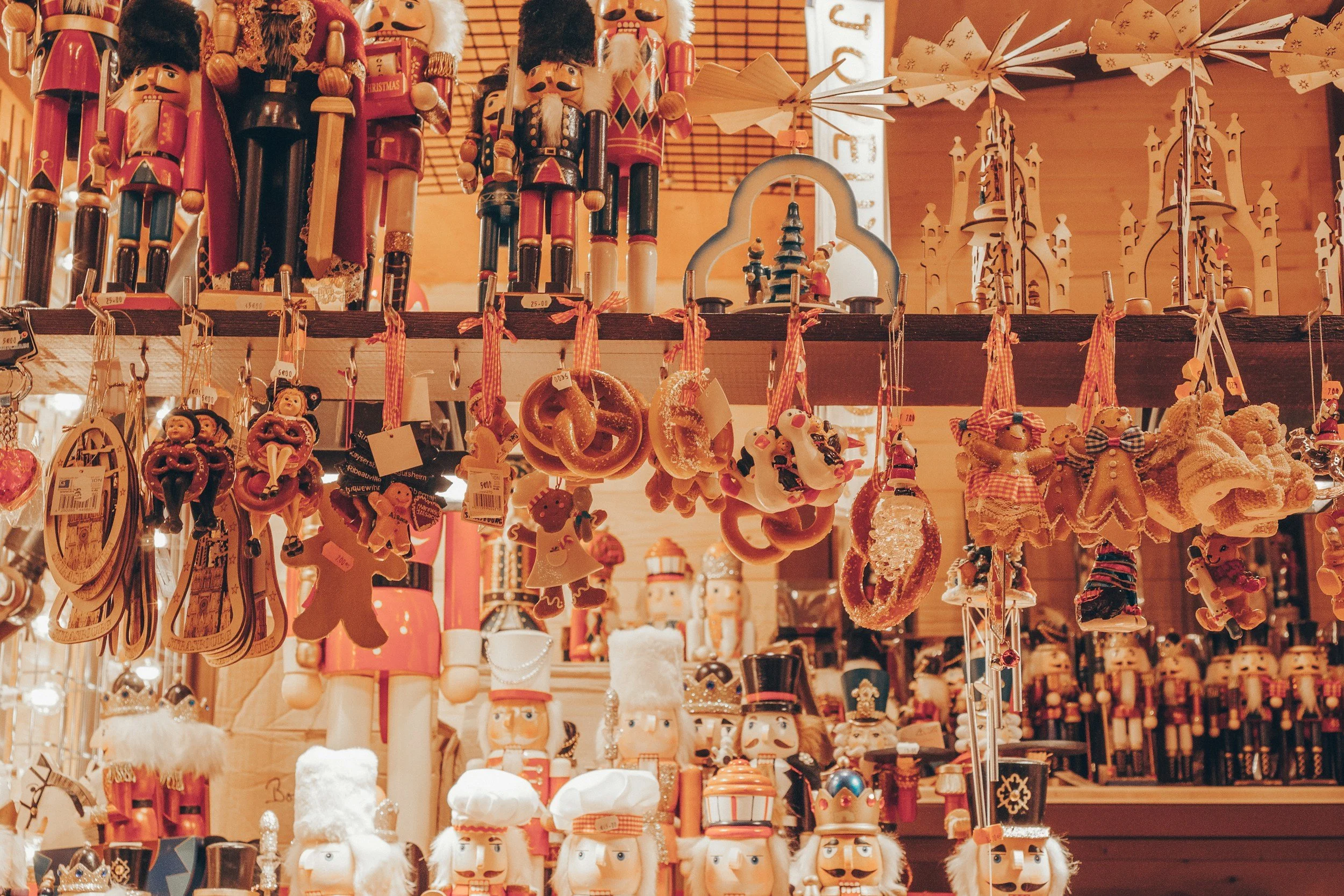
Strasbourg, France.
Cologne, Germany
Why this Christmas market stands out
Cologne’s Christmas markets stand out for their variety and scale. Rather than one central market, the city hosts several distinct markets spread across different neighbourhoods, each with its own theme and setting. With the vast Cologne Cathedral looming over the Old Town and the Rhine flowing through the city, Cologne combines dramatic scenery with a lively, social festive atmosphere.
What you’ll find at the markets
Cologne’s markets are energetic and welcoming, with a strong emphasis on food, drink, and communal spaces. Expect classic German Christmas decorations alongside modern stalls, themed lighting, and live music at some locations. The markets here feel less formal than those in southern Germany, making them ideal for relaxed evening wandering.
Must-try food and drink
Reibekuchen (crispy potato pancakes) are a Cologne staple, usually served with apple sauce or garlic sauce. You’ll also find bratwurst, roasted almonds, and plenty of sweet treats. For drinks, try Glühwein served in collectible mugs unique to each market, or sample Kölsch, the local beer, which is often available at nearby bars if you fancy a break from mulled wine.
Best markets to visit
The Cathedral Christmas Market is the most iconic, set right beside Cologne Cathedral with a backdrop that’s hard to beat. The Old Town Christmas Market at Alter Markt and Heumarkt is another highlight, often featuring an ice rink and a more traditional feel. For something different, the Harbour Christmas Market by the Rhine has a maritime theme and a slightly edgier vibe.
Practical tips
Cologne’s markets are well connected by public transport, making it easy to hop between them. The cathedral area can get extremely busy in the evenings, so visiting earlier in the day or later at night can make for a more relaxed experience. December weather is often cold and damp, so warm, waterproof layers are essential.
Prague, Czech Republic
Why this Christmas market stands out
Prague’s Christmas markets feel like they’ve been dropped straight into a fairytale. Gothic spires, medieval squares, and centuries-old buildings provide an atmospheric backdrop that really comes alive in winter. The city keeps things refreshingly traditional, with a strong focus on local customs, folklore, and handmade goods rather than flashy modern displays.
What you’ll find at the markets
Prague’s markets are known for their wooden stalls decorated with pine branches and lights, selling handcrafted toys, puppets, ornaments, candles, and traditional Czech gifts. Nativity scenes are a big feature here, reflecting the country’s strong Christmas traditions. Live choirs and folk music performances are common, especially in the main squares.
Must-try food and drink
Trdelník may be the most famous treat — a sweet pastry cooked over an open flame, rolled in sugar and cinnamon, and often filled with cream or chocolate. For something savoury, look out for klobása (grilled Czech sausage) served with mustard and bread. To drink, warm up with svařák, the Czech version of mulled wine, or medovina, a honey-based mead that’s particularly popular at Christmas.
Best markets to visit
Old Town Square hosts Prague’s largest and most iconic Christmas market, complete with a towering Christmas tree and views of the Astronomical Clock. Wenceslas Square runs a close second and tends to be slightly less crowded. For a quieter, more local feel, the smaller market at Náměstí Míru is well worth the detour.
Practical tips
Prague’s markets are clustered close together, making them easy to explore on foot. The Old Town gets busy from late afternoon onwards, so visiting earlier in the day can make a big difference. Winter temperatures regularly dip below freezing, so thermal layers, gloves, and a hat are essential.
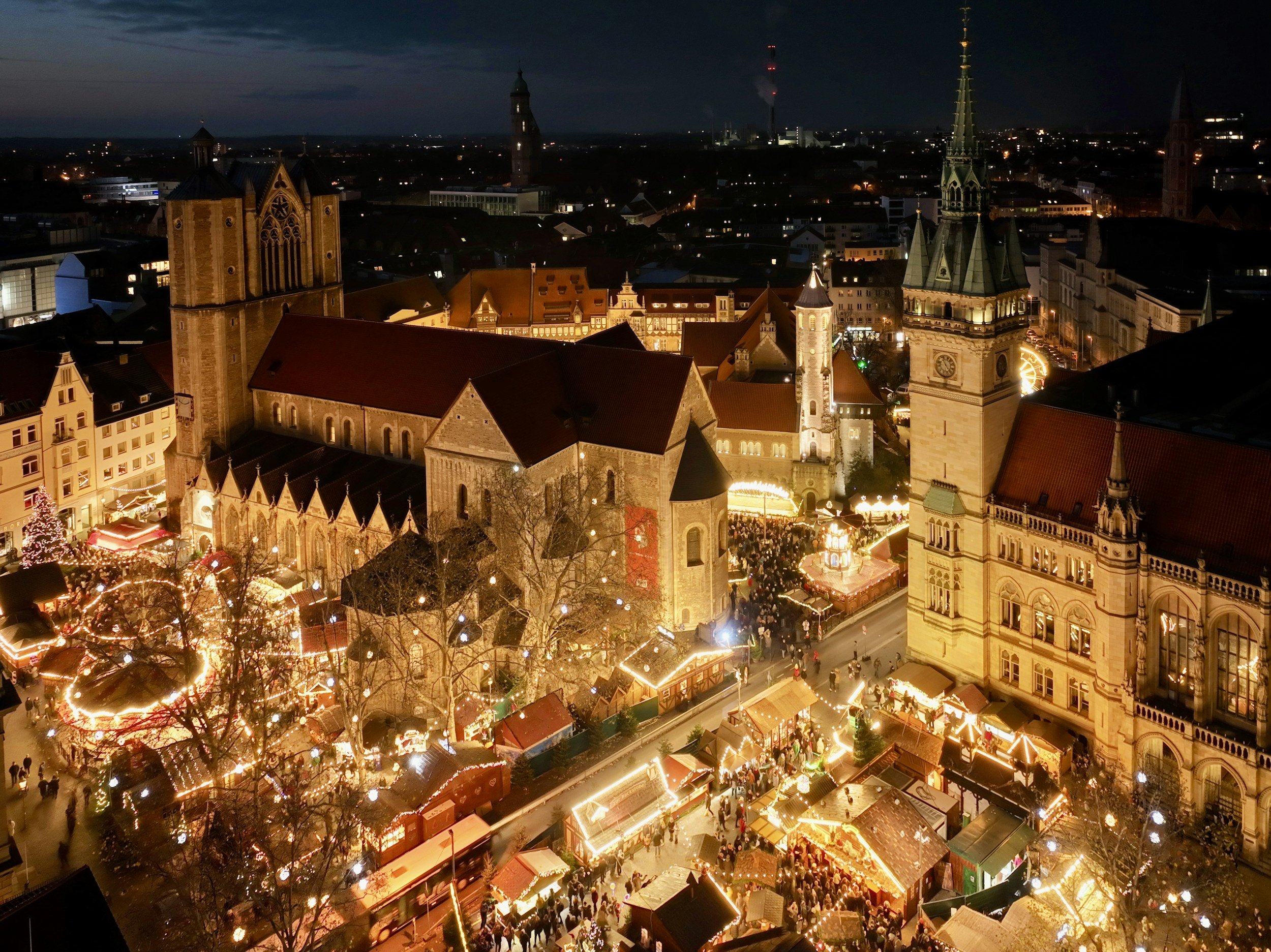
Prague, Czech Republic.
Budapest, Hungary
Why this Christmas market stands out
Budapest’s Christmas markets are known for their atmosphere and value. Set against grand architecture and elegant squares, they offer a more relaxed and affordable festive experience compared to many Western European cities. The markets here feel warm and welcoming, with a strong emphasis on traditional Hungarian food, folk crafts, and local culture.
What you’ll find at the markets
Budapest’s stalls focus heavily on Hungarian craftsmanship and regional specialities. You’ll find handmade leather goods, embroidery, wooden toys, ceramics, and festive decorations inspired by folk motifs. The atmosphere is cosy and social, with long communal tables where locals and visitors gather with hot food and wine.
Must-try food and drink
Hungarian Christmas markets are a dream for comfort food lovers. Lángos — deep-fried flatbread topped with sour cream, cheese, or garlic — is an absolute must. You’ll also find goulash, sausages, chimney cake (kürtőskalács) rolled in sugar and cinnamon, and roasted chestnuts. To drink, try forralt bor (Hungarian mulled wine) or a shot of pálinka if you’re feeling brave in the cold.
Best markets to visit
Vörösmarty Square hosts Budapest’s most famous Christmas market, right in the heart of the city and known for its food-focused stalls. The market at St Stephen’s Basilica is another highlight, with a large Christmas tree and light projections on the basilica’s façade creating a particularly festive evening atmosphere.
Practical tips
Budapest’s markets are easy to reach using public transport, and many are within walking distance of each other. Prices are generally lower than in cities like Vienna or Prague, making it a great place to eat well without overspending. Cold snaps are common in December, so warm boots and layers are essential.
Tallinn, Estonia
Why this Christmas market stands out
Tallinn’s Christmas market is smaller than most on this list, but that’s exactly its charm. Set in the heart of the city’s medieval Old Town, it feels intimate, traditional, and wonderfully atmospheric. Snow-dusted rooftops, cobbled streets, and historic guild houses give Tallinn one of the most storybook Christmas settings in Europe.
What you’ll find at the markets
Tallinn’s market focuses heavily on local tradition. Expect stalls selling woollen goods, knitted hats and gloves, wooden crafts, candles, and festive decorations inspired by Estonian folklore. There’s often live folk music and performances, adding to the cosy, village-like feel rather than a big-city buzz.
Must-try food and drink
Warm yourself with mulled wine or hot blackcurrant juice, a popular non-alcoholic option in the Baltics. For food, try blood sausage (verivorst), traditionally eaten during the Christmas season, or sauerkraut and roast potatoes served hot from street stalls. Gingerbread (piparkoogid) is another festive staple you’ll see everywhere.
Best markets to visit
Tallinn’s main Christmas market takes place in Town Hall Square (Raekoja plats), framed by medieval buildings and the Gothic Town Hall itself. It’s compact and easy to explore, with the city’s official Christmas tree often at its centre — a tradition Tallinn claims to have introduced to Europe.
Practical tips
Tallinn gets seriously cold in December, with temperatures often well below freezing, so proper winter clothing is essential. The Old Town is very walkable, but icy cobbles mean sturdy footwear is a must. The smaller scale of the market makes it ideal for a relaxed evening rather than a full day of hopping between locations.
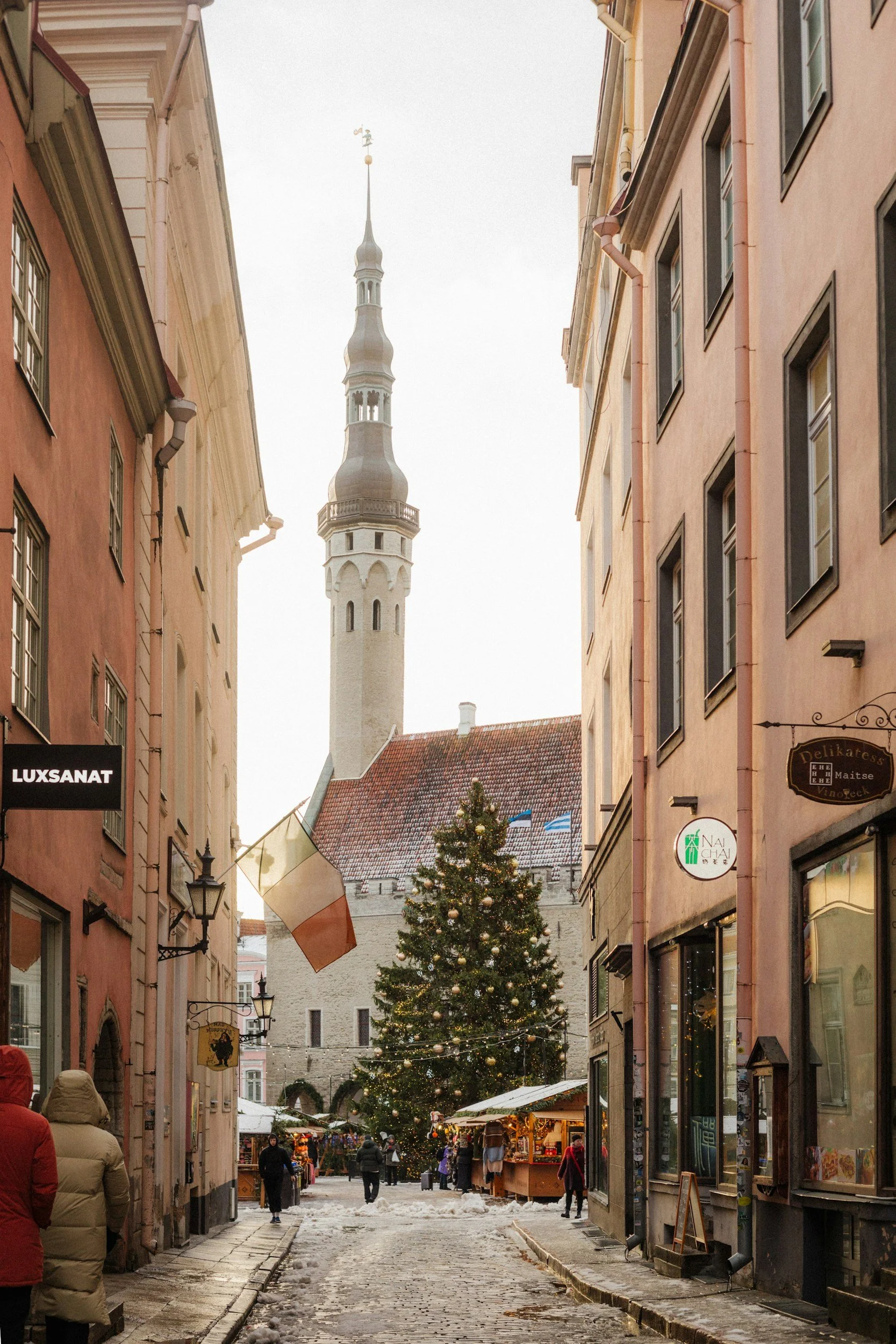
Tallin, Estonia.
Copenhagen, Denmark
Why this Christmas market stands out
Copenhagen’s Christmas markets are all about hygge — that uniquely Danish sense of cosiness and comfort. Rather than feeling grand or historic, they lean into atmosphere: soft lighting, warm drinks, and beautifully styled stalls. The city blends traditional festive elements with clean Scandinavian design, giving its Christmas markets a distinctly modern feel.
What you’ll find at the markets
Expect carefully curated stalls selling Nordic crafts, minimalist decorations, woollen accessories, candles, and design-led gifts. Food stalls focus on quality over quantity, and the markets often feel calmer and more polished than those in Central Europe. Music, lights, and subtle festive décor do much of the heavy lifting here.
Must-try food and drink
Æbleskiver — small, round Danish pancake balls dusted with icing sugar and served with jam — are a Christmas market essential. You’ll also find open-faced sandwiches, sausages, and roasted nuts. To drink, try gløgg, Denmark’s version of mulled wine, often served with raisins and almonds floating in the cup for an extra warming touch.
Best markets to visit
Tivoli Gardens hosts Copenhagen’s most famous Christmas market, with thousands of lights, festive rides, and themed decorations throughout the park. The market at Nyhavn offers a picturesque canal-side setting, while the market in Christiania provides a more alternative, local take on the festive season.
Practical tips
Copenhagen can be expensive, so it’s worth budgeting a little extra for food and drinks. The city is compact and easy to navigate by foot or bike, though winter evenings can be cold and windy. Layers, scarves, and a warm coat will go a long way.
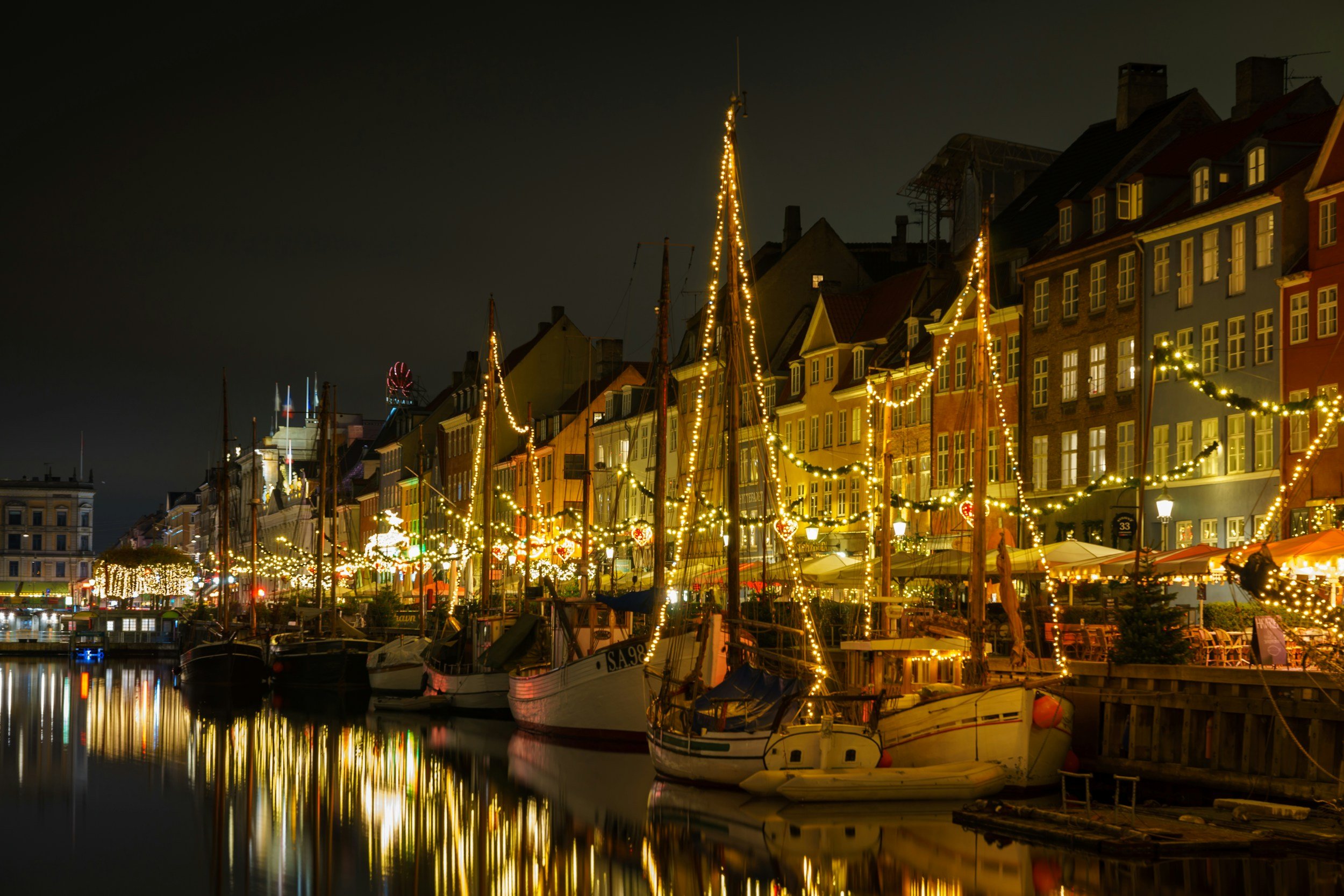
Copenhagen, Denmark.
Zagreb, Croatia
Why this Christmas market stands out
Zagreb’s Advent season has quietly become one of Europe’s biggest festive success stories. Repeatedly voted one of the best Christmas markets in Europe, the city transforms its parks, squares, and streets into a network of lively, beautifully decorated festive zones. What sets Zagreb apart is the variety — each area has its own theme, music, and atmosphere, making it feel like a city-wide celebration rather than a single market.
What you’ll find at the markets
Zagreb’s Christmas markets are colourful, creative, and full of energy. Expect a mix of traditional wooden stalls and more modern pop-up setups, selling local crafts, festive decorations, and plenty of street food. Live music, DJs, and performances are common, especially in the evenings, giving the markets a social, buzzy feel.
Must-try food and drink
Food is a highlight in Zagreb. Look out for ćevapi (grilled minced meat sausages), sausages served in crusty bread, and fritule — small Croatian doughnuts dusted with sugar. For drinks, try kuhano vino (mulled wine) or rakija, a strong fruit brandy that’s perfect for braving cold winter nights.
Best markets to visit
Ban Jelačić Square is the heart of Zagreb’s Advent celebrations and a good starting point. Zrinjevac Park is one of the most atmospheric spots, with lights strung through the trees and a more romantic feel. The market at Strossmayer Promenade offers great views over the city and often hosts live music.
Practical tips
Zagreb is very walkable, and many of the main markets are clustered close together. Prices are generally reasonable compared to Western Europe, making it a great option for a festive trip without the premium price tag. Evenings are lively, while daytime visits are calmer and better for browsing.
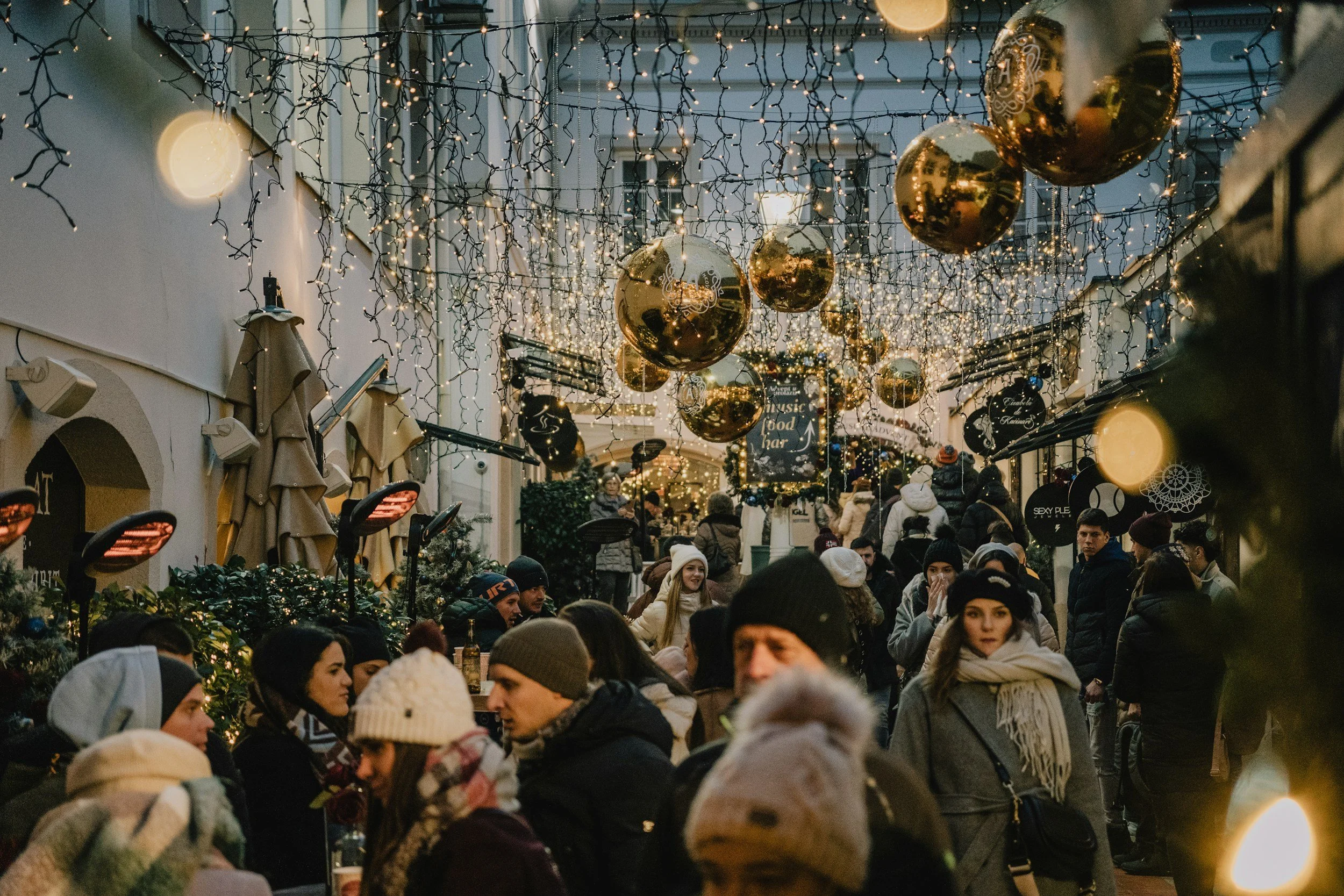
Zagreb, Croatia.
Munich, Germany
Why this Christmas market stands out
Munich’s Christmas markets combine Bavarian tradition with a relaxed, local feel. While the city is famous for Oktoberfest and beer halls, its winter markets are far more intimate, rooted in alpine customs and centuries-old festive traditions. Set against historic squares and churches, Munich offers a classic Christmas market experience without feeling overly touristy.
What you’ll find at the markets
Munich’s markets focus on traditional crafts and regional specialities. Expect hand-carved wooden figures, nativity scenes, glass ornaments, and decorations inspired by alpine folklore. The atmosphere is cosy and unpretentious, with locals gathering after work to eat, drink, and socialise rather than just browse.
Must-try food and drink
Bratwurst and sausages are everywhere, but look out for Schupfnudeln — potato noodles often served with sauerkraut or cheese — a true Bavarian winter comfort dish. Roasted almonds and gingerbread are easy wins, while drinks include classic Glühwein and Feuerzangenbowle, a theatrical spiced wine topped with flaming rum-soaked sugar.
Best markets to visit
Marienplatz hosts Munich’s main Christmas market, framed by the New Town Hall and its famous Glockenspiel. For something more traditional, the Kripperlmarkt nearby specialises in nativity scenes and figurines. The Medieval Christmas Market at Wittelsbacherplatz offers a different experience altogether, with historical costumes, torches, and period-style food.
Practical tips
Munich’s markets are easy to combine on foot, and public transport is efficient for reaching those further out. December weather can be cold but often crisp rather than damp. Evenings are lively but friendly, making Munich a great place to end a Christmas market route through Europe.
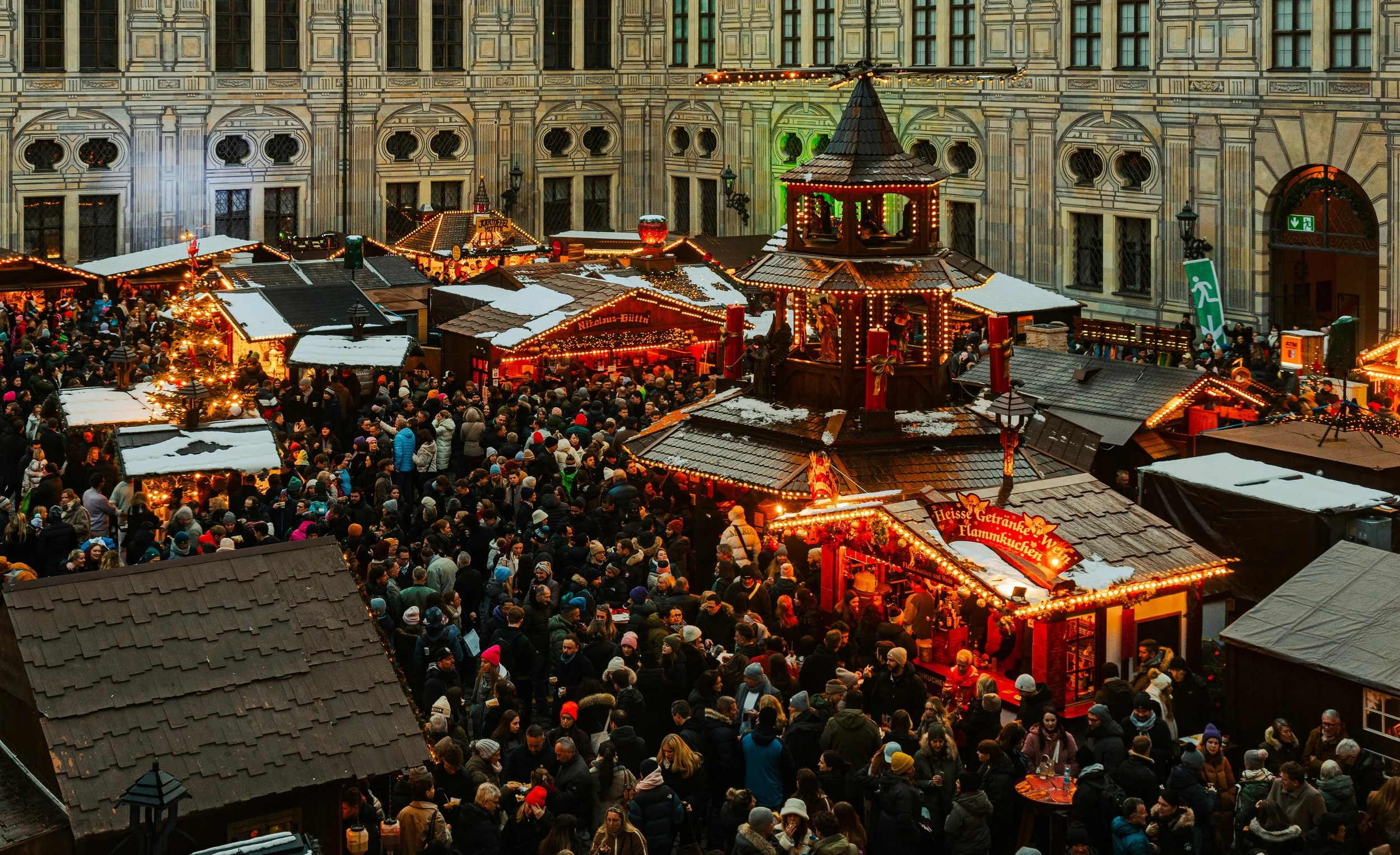
Munich, Germany.
When to visit Christmas markets in Europe
Most Christmas markets across Europe open between mid-November and early December, with the majority running until 23 or 24 December. A smaller number — particularly in Germany and Austria — stay open through to New Year’s Eve or early January.
For the best experience:
Late November to early December is ideal for fewer crowds and a calmer atmosphere
Mid-December feels the most festive but is also the busiest
Weekday afternoons and early evenings are generally quieter than weekends
Markets usually come alive after dark, once the lights are on and the food stalls are in full swing, but visiting earlier in the day is better if you want space to browse.
Christmas market travel tips
European Christmas markets are easy to combine into a multi-city winter trip, especially in Central Europe where distances are short and train connections are excellent.
A few practical tips to keep in mind:
Trains beat flights for most Christmas market routes — they’re faster city-centre to city-centre and far more atmospheric
Dress for standing still, not just walking — insulated shoes, thermal layers, gloves, and a hat make a huge difference
Reusable mugs are handy, but many markets use collectible deposit cups you can keep as souvenirs
Cash is still useful, particularly at smaller stalls, even if cards are widely accepted
Base yourself centrally — most major markets are clustered around old towns and main squares
If you’re short on time, cities like Vienna, Prague, and Budapest work well as standalone festive breaks. If you’ve got longer, combining Germany, Austria, and the Czech Republic makes for a brilliant Christmas market route.
“Christmas markets are one of Europe’s most atmospheric winter traditions — not because they’re flashy, but because they’re deeply rooted in local life. They bring people outdoors in the coldest months, filling historic squares with warmth, food, music, and a sense of shared celebration.
Whether you’re sipping mulled wine beneath Gothic cathedrals, wandering medieval streets dusted with snow, or discovering a lesser-known Advent city buzzing with local energy, Europe’s Christmas markets offer a slower, more human way to experience the continent. They’re not just places to shop — they’re places to linger, connect, and feel the season properly.”