Cape Town: Neighbourhood Guide
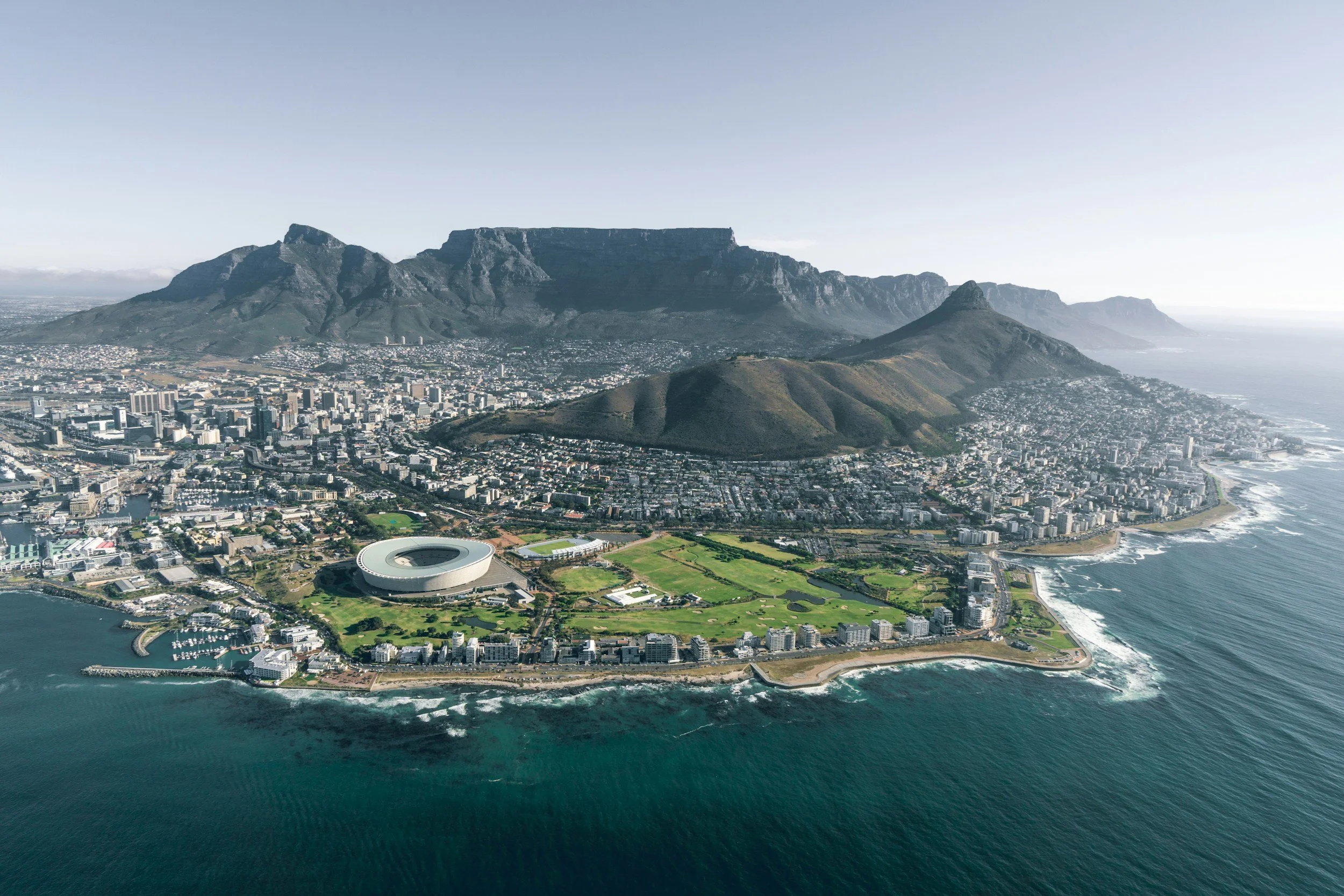
Cape Town is one of those cities that leaves a mark long after you’ve flown home. Wedged between the Atlantic and the steep cliffs of Table Mountain, it’s a place where nature shapes daily life: mornings begin with pink skies over Lion’s Head, afternoons drift into golden beach light, and evenings settle beneath a mountain that’s older than the Himalayas. It’s dramatic, diverse, endlessly scenic — and full of neighbourhoods with proper character.
What makes Cape Town so fascinating to explore is how different each district feels. One minute you’re wandering the cobbled, colour-soaked streets of Bo-Kaap, learning about its Cape Malay heritage; the next, you’re in the café-lined lanes of Gardens, surrounded by creatives, boutiques, and the hum of the city’s cultural heart. Take a turn toward the ocean and you’ll hit Sea Point’s breezy promenade, where joggers, surfers, and dog walkers form their own rhythm against the waves. Drive south and suddenly the city slips away into rugged seaside communities like Kalk Bay — all salty air, fishing boats, and independent shops.
Cape Town is a mosaic: layered histories, multiple cultures, distinct identities, and landscapes that change every couple of kilometres. This guide takes you through the neighbourhoods that help you understand the city properly — not just the postcard shots, but the everyday life, the flavours, the stories, and the small moments that make Cape Town special.
Ready? Let’s wander.
V&A Waterfront
Overview
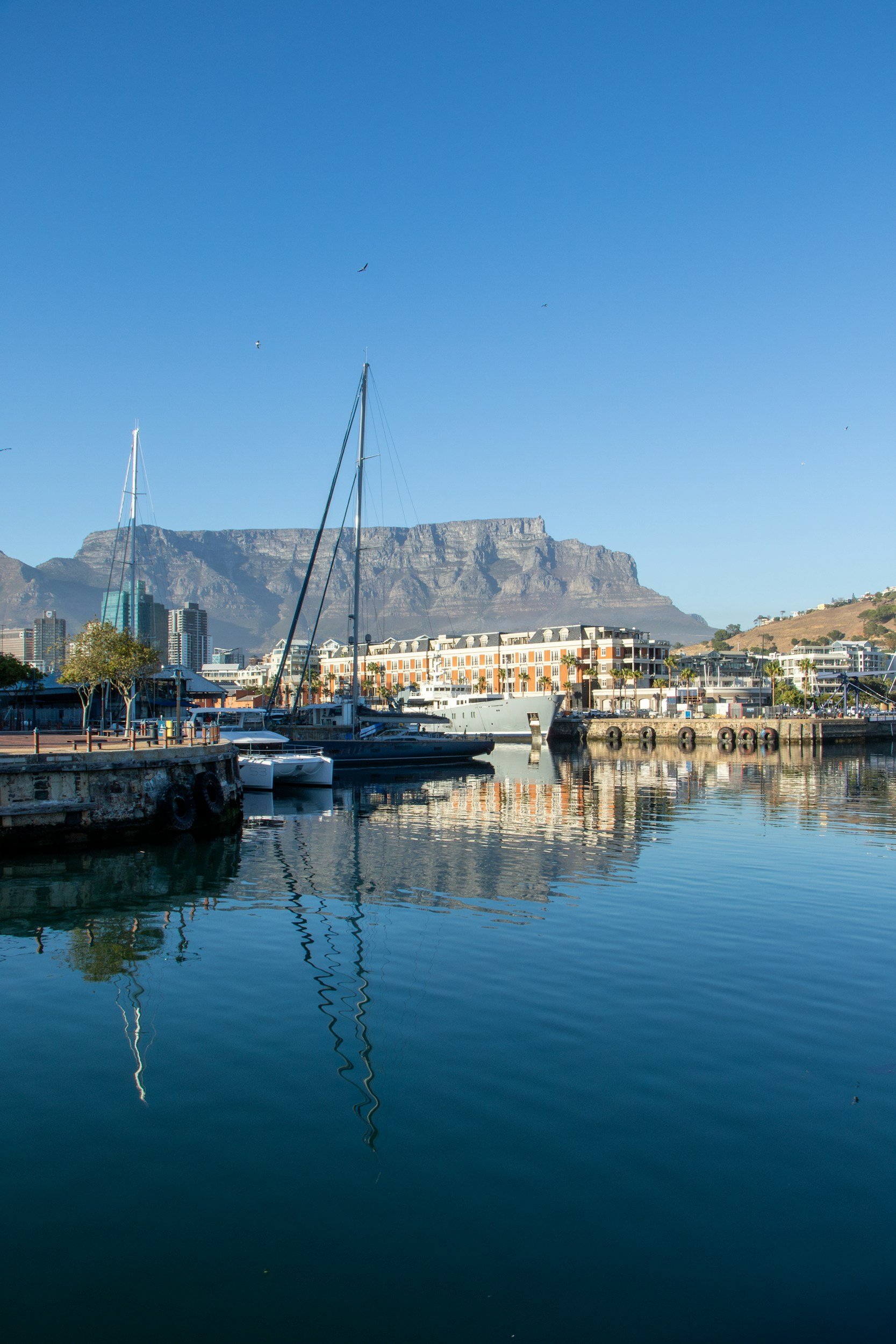
Situated at the edge of Cape Town’s city bowl, the V&A Waterfront is a vibrant and versatile neighbourhood where harbour history meets modern leisure. The area spans around 123 hectares and serves as both a working harbour and a leisure destination — fishing boats and tug-boats still operate alongside chic shops, restaurants, hotels and waterfront promenades.
With Table Mountain looming in the background and the marina glinting in the sun, it’s a superb base for first-time visitors who want a stylish, central, walkable stay.
Where to Stay
Accommodation along the waterfront ranges from luxury hotels overlooking the marina to serviced apartments and upscale guesthouses. Staying here means easy access to shopping, dining and attractions — and the added bonus of scenic views over the harbour and Table Mountain.
Hidden Gems
The storied Clocktower area, built in 1882, that marks the original port-captain’s office and echoes the harbour’s maritime past.
The Silo District, home to the landmark Zeitz Museum of Contemporary Art Africa (MOCAA), tucked into a converted grain-silo complex.
Quiet jetties at dawn where seals and seabirds share the morning light with the early joggers — a subtle contrast to the busy shopping hours.
What to Eat
This area boasts over a hundred restaurants and eateries offering everything from quick bites to fine dining.
Here are some standout spots:
Den Anker — overlook the working harbour while indulging in Belgian classics like mussels and beer on tap. Den Anker |+1
Marble Restaurant — situated on the rooftop of the Union Castle building, known for open-fire cooking with sweeping views over Table Mountain and the marina. Marble Restaurant Johannesburg
Willoughby & Co — excellent for sushi and seafood in a more casual setting, yet still in this vibrant waterfront zone. insideguide.co.za+1
Attractions and Experiences
Catch the ferry to Robben Island (departures nearby) for a deeply meaningful historic experience.
Visit the Zeitz MOCAA museum in the Silo District — Africa’s largest museum of contemporary art.
Take a harbour cruise at sunset, or enjoy the waterfront promenade and marina views as the city lights come on.
Explore the mix of heritage buildings and modern redevelopment: this place is living history, reinvented.
Practical Tips
It’s very walkable, but bring a light jacket or layer: the harbour can feel chilly even on a sunny day due to winds.
Parking is available, but staying in accommodation in the area saves you from parking stress.
For the best ambience, aim for early morning or late afternoon strolls when the light is beautiful and the crowds are thinner.
While the area is one of the safer tourist-zones, standard city-smart rules apply: keep valuables secure, use well-lit paths, and stick to main areas after dark.
Bo-Kaap
Overview
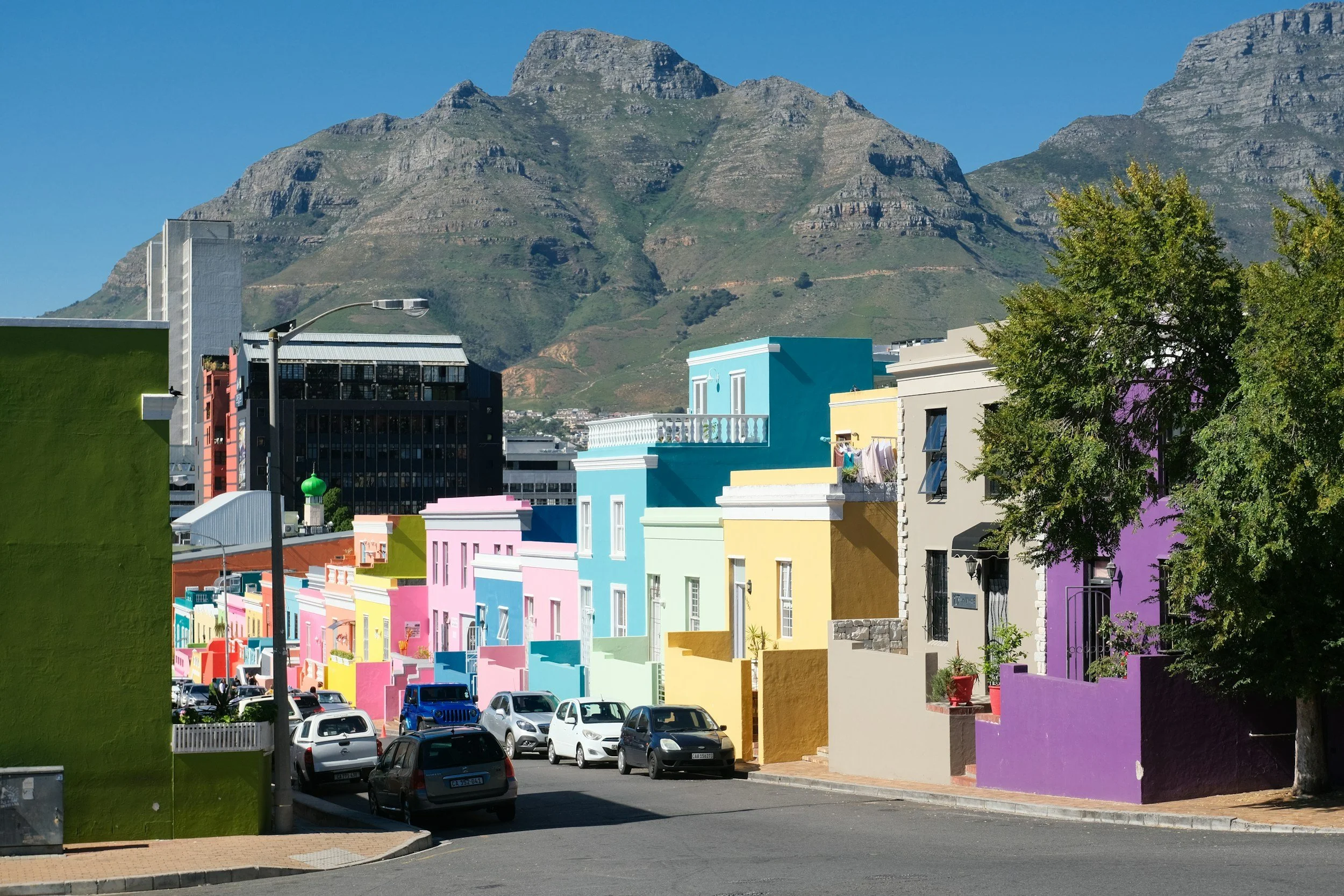
Perched on the lower slopes of Signal Hill, Bo-Kaap is one of Cape Town’s most recognisable neighbourhoods — a pocket of steep cobbled streets lined with bright, sherbet-coloured houses that glow even more vividly in the late-afternoon sun. Beyond its bright façades lies a deep cultural soul: this is the historic heart of Cape Malay identity, shaped by enslaved people and political exiles from Southeast Asia, East Africa and India from the 1600s onward.
The neighbourhood remains a proud, tight-knit community where the call to prayer flows across the rooftops, spices drift from family kitchens, and long-held traditions continue to define everyday life. For travellers wanting to understand Cape Town’s cultural layers, Bo-Kaap is essential.
Where to Stay
Bo-Kaap is mostly residential, offering characterful stays in heritage-style apartments, guesthouses and small boutique spots with sweeping views over the city bowl. It’s quiet at night, central by day, and well-positioned for exploring the Waterfront, De Waterkant and the city centre on foot.
Hidden Gems
The Bo-Kaap Museum, housed inside an 18th-century home with displays on early Cape Malay life
Atlas Trading Company, the neighbourhood’s legendary spice shop operating since 1946
The quieter corners of Chiappini Street, perfect for slow wandering
Family-run bakeries selling fresh, syrup-dipped koesisters on Sunday mornings
What to Eat
Bo-Kaap is the home of Cape Malay cuisine — fragrant, gently spiced and full of influences from Malaysia, Indonesia, India and East Africa. Expect comforting dishes like bobotie, beef or chicken curry wrapped in flaky rotis, denningvleis, tamatie bredie, samoosas and chilli pastes made to old family recipes.
For places worth trying:
Bo-Kaap Kombuis — A local family-run classic with traditional dishes such as denningvleis, dhaltjies and slow-cooked curries.
Biesmiellah — A longstanding community favourite serving Cape Malay staples alongside North Indian-influenced curries and excellent samoosas.
Bo-Kaap Deli — A relaxed street-corner spot for breakfast, coffee, pastries and light meals, great for a casual stop between exploring the streets.
Attractions and Experiences
Join a Cape Malay cooking class in a local home
Wander the colourful lanes around Wale Street and Chiappini Street
Visit the Auwal Mosque — South Africa’s oldest mosque, founded in 1794
Explore community-driven street art rooted in heritage, identity and resilience
Practical Tips
Early morning and late afternoon are ideal for photography
Be mindful when photographing homes — this is an active, lived-in neighbourhood
Wear comfortable shoes; the hills and cobblestones can be tricky
During the day it’s lively; at night, stick to main routes if exploring solo
Uber pick-ups are easiest from Wale Street
De Waterkant
Overview
Tucked between Bo-Kaap and the V&A Waterfront, De Waterkant is one of Cape Town’s most charming urban pockets — a blend of pastel Georgian-style houses, cobbled lanes, rooftop terraces and boutique energy. It’s fashionable without trying too hard; creative yet relaxed; lively but never overwhelming. Think cafés spilling onto pavements, independent shops, artful interiors, and sunset cocktails with a view of Table Mountain.
This neighbourhood has long attracted designers, young professionals and travellers looking for something more polished than the city centre but more intimate than the Waterfront. It’s also known for being one of Cape Town’s most LGBTQ+-friendly districts, with a social scene that buzzes into the evening.
Where to Stay
Stays in De Waterkant tend to be stylish, contemporary and often housed within beautifully restored heritage buildings. Expect apartment-style suites, design-driven guesthouses and rooftops with views of the city skyline and mountain. With its central location, you can walk to the Waterfront, the city centre and Bo-Kaap in minutes.
Hidden Gems
The cobbled stretch of Waterkant Street, especially around the Fan Walk, lined with cafés and boutiques
Art galleries and homeware studios where local designers often showcase small-batch work
Rooftop terraces that offer some of the area’s best golden-hour views
Quiet residential lanes behind Dixon and Loader Streets, where Georgian townhouses create a European-meets-Cape atmosphere
What to Eat
De Waterkant punches well above its weight when it comes to food. You’ll find brunch spots, chic eateries, cocktail bars and globally influenced menus all within a five-minute stroll.
Standout restaurants include:
The Charles Café — a neighbourhood favourite for brunch, pastries and courtyard dining beneath leafy trees.
Il Leone Mastrantonio — an elegant Italian restaurant known for fresh pasta, generous seafood dishes and warm service.
Firefly Café — a relaxed, creative café ideal for breakfast bowls, healthy plates and good coffee before exploring the city.
Attractions and Experiences
Browse the boutiques and concept stores dotted along Loader, Napier and Waterkant Streets
Enjoy a rooftop drink with mountain views — many lodges and bars offer spectacular sunset perspectives
Take an architecture walk through the neighbourhood’s preserved Georgian terraces
Explore the lively social scene in and around Dixon Street, which comes alive on weekends
Practical Tips
De Waterkant is very walkable; cobblestones mean comfy shoes are a must
Evenings are lively but safe — standard city-smart habits apply
Uber is the easiest way to navigate between nearby districts
The neighbourhood sits on a slope; the upper streets offer better views but require a bit more legwork
Late afternoons are ideal for photography, especially around Loader Street
Gardens and Tamboerskloof
Overview
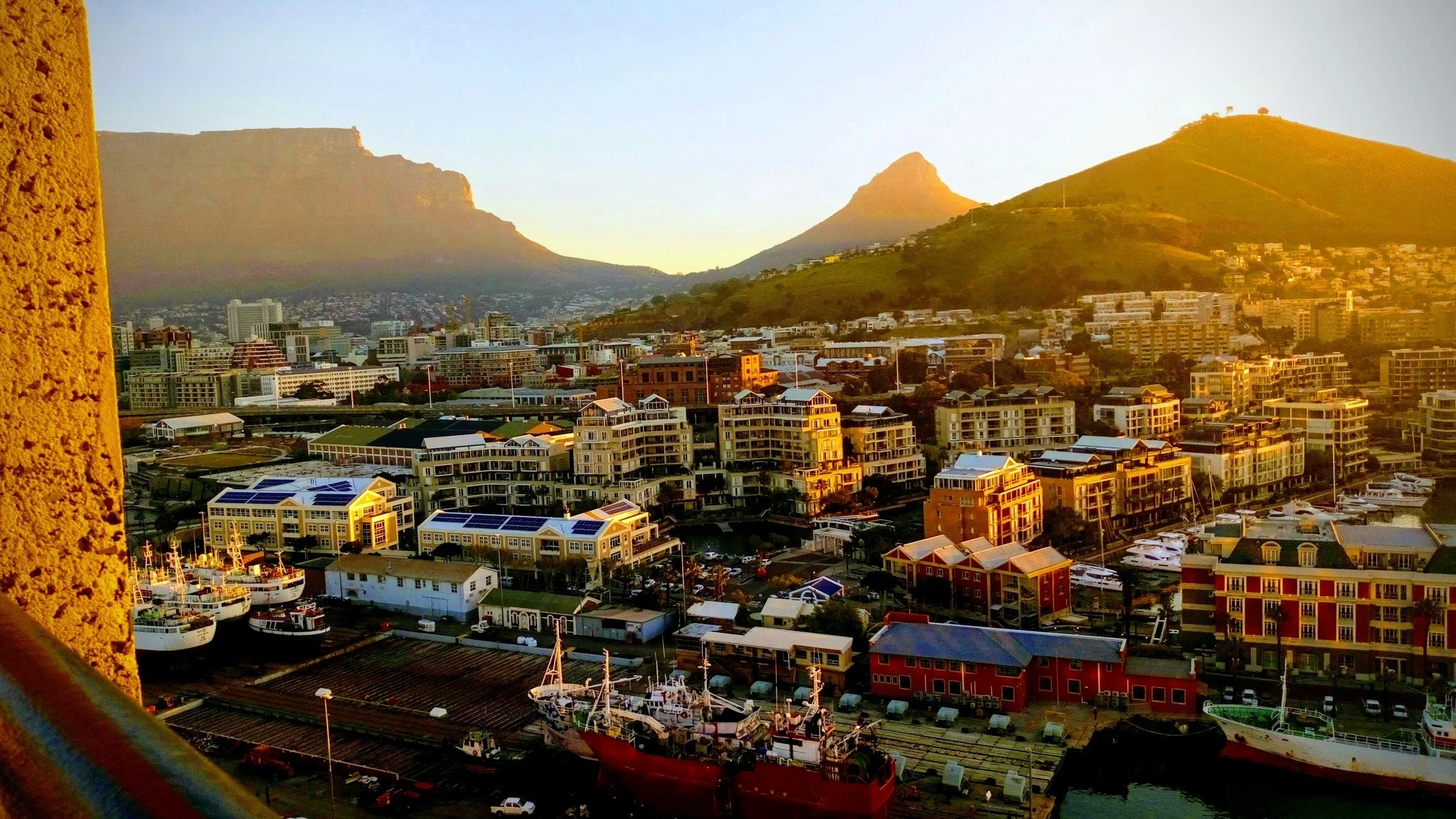
Sitting on the lower slopes of Table Mountain, Gardens and Tamboerskloof form one of Cape Town’s most appealing city-bowl districts — leafy, creative, scenic and full of personality. Gardens is lively and cosmopolitan, where independent cinemas, bakeries, design shops and cafés are woven into historic streets. Tamboerskloof, just next door, feels more residential and peaceful, with bougainvillea-draped homes, panoramic mountain views and winding roads that feel like a calm escape from the city buzz.
This area is beloved by locals for its blend of nature and neighbourhood life. Within minutes, you can go from sipping coffee beneath jacaranda trees to hiking trails leading directly onto Lion’s Head or Table Mountain. It’s central, walkable and ideal for travellers who want to feel plugged into local daily rhythms.
Where to Stay
Accommodation here ranges from boutique guesthouses to modern apartments, many with terraces facing the mountain or the city lights below. Tamboerskloof’s quieter backstreets are particularly good for guests wanting a peaceful base, while Gardens places you closer to Kloof Street’s dining and nightlife.
Hidden Gems
De Waal Park, home to tree-lined paths, dogs galore and summer sunset concerts
The Labia Theatre, South Africa’s oldest independent cinema, showing arthouse and indie films
Chandler House, a small design and homeware studio filled with local craftsmanship
Kloof Street’s lesser-known courtyards, where tiny bakeries and cafés hide behind greenery
What to Eat
Gardens and Tamboerskloof are among Cape Town’s best neighbourhoods for eating out, mixing long-standing institutions with creative newcomers.
Here are some standout spots:
Kloof Street House — a Cape Town classic set inside a Victorian manor, known for moody lighting, live jazz and a menu of modern South African dishes.
Our Local — part café, part greenhouse-style workshop, serving fresh, homey plates and excellent brunch.
Thali — a much-loved contemporary Indian restaurant offering flavour-packed small plates and a set tasting experience ideal for sharing.
Attractions and Experiences
Wander Kloof Street’s café-and-boutique strip, one of the city’s most vibrant hangouts
Visit the Iziko South African Museum and Planetarium, only a short walk from Gardens
Join a guided hike straight from the neighbourhood into the foothills of Table Mountain
Explore the quirky mix of murals, galleries and design stores scattered through the area
Take in sunset views from Signal Hill, just a few minutes’ drive away
Practical Tips
Early mornings are perfect for coffee runs and quiet strolls along Kloof Street
Parking can be tricky near peak dining hours; walking or Uber is easiest
The area is generally safe and busy into the evening, though standard city-smart habits apply
Bring layers — the mountain’s microclimate can shift from warm to breezy quickly
Trails to Lion’s Head and Table Mountain start nearby; go early to beat the sun and the crowds
Woodstock
Overview
Once an industrial district on the edge of Cape Town’s city bowl, Woodstock has transformed into one of the city’s most creative neighbourhoods — a hub of street art, design studios, craft breweries and repurposed warehouses filled with independent makers. It’s gritty, colourful and full of character, with a thriving community of artists, entrepreneurs and young locals shaping its identity.
The area’s charm lies in its contrasts: Victorian row houses sit beside industrial factories; bold murals brighten old brick walls; and trendy cafés coexist with long-standing family businesses. It’s a neighbourhood that rewards slow wandering, curiosity and an appreciation for Cape Town’s creative pulse.
Where to Stay
Stays here lean towards industrial-chic guesthouses, artistic boutique hotels and modern serviced apartments in converted warehouse buildings. Woodstock is well-connected to the city centre and waterfront by Uber or MyCiTi bus, but less walkable at night — meaning many travellers prefer staying closer to the village core or along the main Albert Road stretch.
Hidden Gems
Boutique shopping and studios inside The Woodstock Exchange — a creative complex filled with local designers, ceramicists, jewellers and cafés
Streetside murals by renowned local and international artists, especially along Albert Road and nearby laneways
The Biscuit Mill’s smaller weekday stalls, away from weekend crowds
Tiny roasteries tucked into side streets, serving some of Cape Town’s best small-batch coffee
What to Eat
Woodstock is a dream for food lovers, with artisanal markets, cafés and global flavours shaped by the neighbourhood’s creative energy.
Top spots to try:
The Pot Luck Club — perched on the top floor of the Silo building at The Biscuit Mill, serving inventive small plates with panoramic views of the city bowl.
The Test Kitchen Fledgelings — an inspiring culinary training restaurant offering elevated dishes while supporting young hospitality talent.
Rosetta Roastery — a sleek café and roastery known for exceptional specialty coffee and minimalist, calm interiors.
Attractions and Experiences
Browse The Old Biscuit Mill on weekends for food stalls, local crafts, music and hand-made goods
Join a guided Woodstock street art tour to learn about the artists and political themes behind the murals
Explore independent galleries and design studios along Albert Road
Visit microbreweries and local tasting rooms scattered through the neighbourhood
See artisan workshops in action at The Woodstock Exchange
Practical Tips
The area is lively by day; at night, stick to main roads or use Uber for longer walks
Weekends at The Old Biscuit Mill get busy — arrive early for the best experience
Comfortable shoes are recommended for exploring murals and backstreets
Many shops and studios close by late afternoon, so plan your visit earlier in the day
For photography, morning light works beautifully against the murals and textured buildings
Sea Point
Overview
Stretching along Cape Town’s Atlantic Seaboard, Sea Point is a lively, diverse and beautifully walkable neighbourhood known for its oceanfront promenade, beach access, cafés and community buzz. It’s where locals jog at sunrise, families cycle in the golden hour, swimmers brave the chilly Atlantic tidal pools, and every sunset draws a crowd.
Sea Point strikes the perfect balance between relaxed seaside living and city convenience. It’s packed with eateries, supermarkets, independent shops and scenic pockets — all backed by Lion’s Head rising steeply behind the neighbourhood.
Where to Stay
Sea Point offers everything from stylish seaside apartments and boutique hotels to well-positioned guesthouses overlooking the water. Choose between ocean-facing stays along Beach Road or quieter accommodation tucked into the slopes with better mountain views. It’s one of the most practical bases in Cape Town thanks to its transport links and easy access to Camps Bay, Clifton, Green Point and the city centre.
Hidden Gems
The Sea Point Promenade’s secluded viewpoint benches near Queen’s Beach — perfect for quiet sunset moments
The historic Sea Point Pavilion swimming complex, where locals train in open-air saltwater pools
The small independent bookstores and art-forward cafés tucked off Main Road
Rockpool nooks at low tide where children hunt for mini-crabs and colourful shells
What to Eat
Sea Point has become one of Cape Town’s best dining corridors, with a mix of casual eateries, upscale restaurants and international flavours lining Main Road and Regent Road.
Here are standout options worth visiting:
Kleinsky’s — a beloved deli serving Jewish-inspired dishes, including excellent bagels, pastrami sandwiches and shakshuka.
Bao Down — a creative Asian-inspired spot known for bao buns, dumplings and bold flavour combinations.
Three Wise Monkeys — a small, highly popular ramen and sushi bar perfect for casual but seriously good dining.
Attractions and Experiences
Walk, jog or cycle the full length of the Sea Point Promenade with ocean views the whole way
Swim in the Sea Point Pavilion tidal pools, an iconic spot for cold-water enthusiasts
Enjoy sunset picnics on the grass at Milton Beach or Queen's Beach
Explore the neighbourhood’s mix of boutiques, wellness studios and cafés
Join ocean-side yoga sessions or sunrise fitness meet-ups along the promenade
Practical Tips
The promenade can get windy — bring a layer for late afternoon strolls
Parking fills up quickly near sunset; walking from your accommodation is best
Early mornings offer the quietest and most atmospheric views
Tidal pools are cold year-round: many locals bring neoprene tops
Uber is convenient for short hops to Clifton, Camps Bay or the city centre
Green Point
Overview
Bordering both Sea Point and the V&A Waterfront, Green Point is one of Cape Town’s most versatile urban neighbourhoods — leafy, safe, stylish and packed with things to do. It’s home to the expansive Green Point Urban Park, the Cape Town Stadium, a long stretch of Main Road cafés and some of the most walkable streets in the city bowl. Locals love it for morning jogs, picnics, casual dining and its easy access to both the ocean and the city.
Green Point has a relaxed, sporty, coastal energy — the perfect in-between zone for travellers who want scenery, convenience and a base that feels lively but not crowded.
Where to Stay
Green Point offers a great mix of boutique hotels, modern guesthouses and apartment-style stays. Many properties sit along quieter residential streets just a few minutes’ walk from the park or promenade. It’s an ideal base for visitors wanting something central, safe and easy to explore on foot.
Hidden Gems
The Green Point Urban Park’s biodiversity garden — a peaceful maze of indigenous plants and boardwalks
Oranjezicht City Farm’s weekend market nearby, ideal for fresh food and local vendors
Small backstreet cafés off Main Road that stay quieter than the promenade side
The pedestrian walkways behind the stadium, great for early-evening strolls
What to Eat
Green Point’s dining scene blends casual favourites with sleek modern eateries.
Top open-and-operating picks include:
Giovanni’s Deliworld — an iconic Italian deli and coffee spot famous for its sandwiches, pastries and deli counter.
Hudsons — a local burger favourite with great casual vibes and generous portions.
Nu Health Food Café — ideal for healthy bowls, smoothies and fresh brunch plates.
Attractions and Experiences
Explore the Green Point Urban Park’s open lawns, running paths and landscaped gardens
Visit Cape Town Stadium — tours are often available
Walk to Mouille Point lighthouse and the oceanfront promenade
Browse local shops and design stores along Main Road
Join community fitness classes held throughout the park
Practical Tips
Mornings are best for park walks before the afternoon wind picks up
Main Road stays lively into the evening, but Uber is easiest for moving between neighbourhoods
Parking is usually manageable around the park but busier during events at the stadium
Bring comfortable shoes — the park and promenade are great for exploring on foot
Camps Bay
Overview
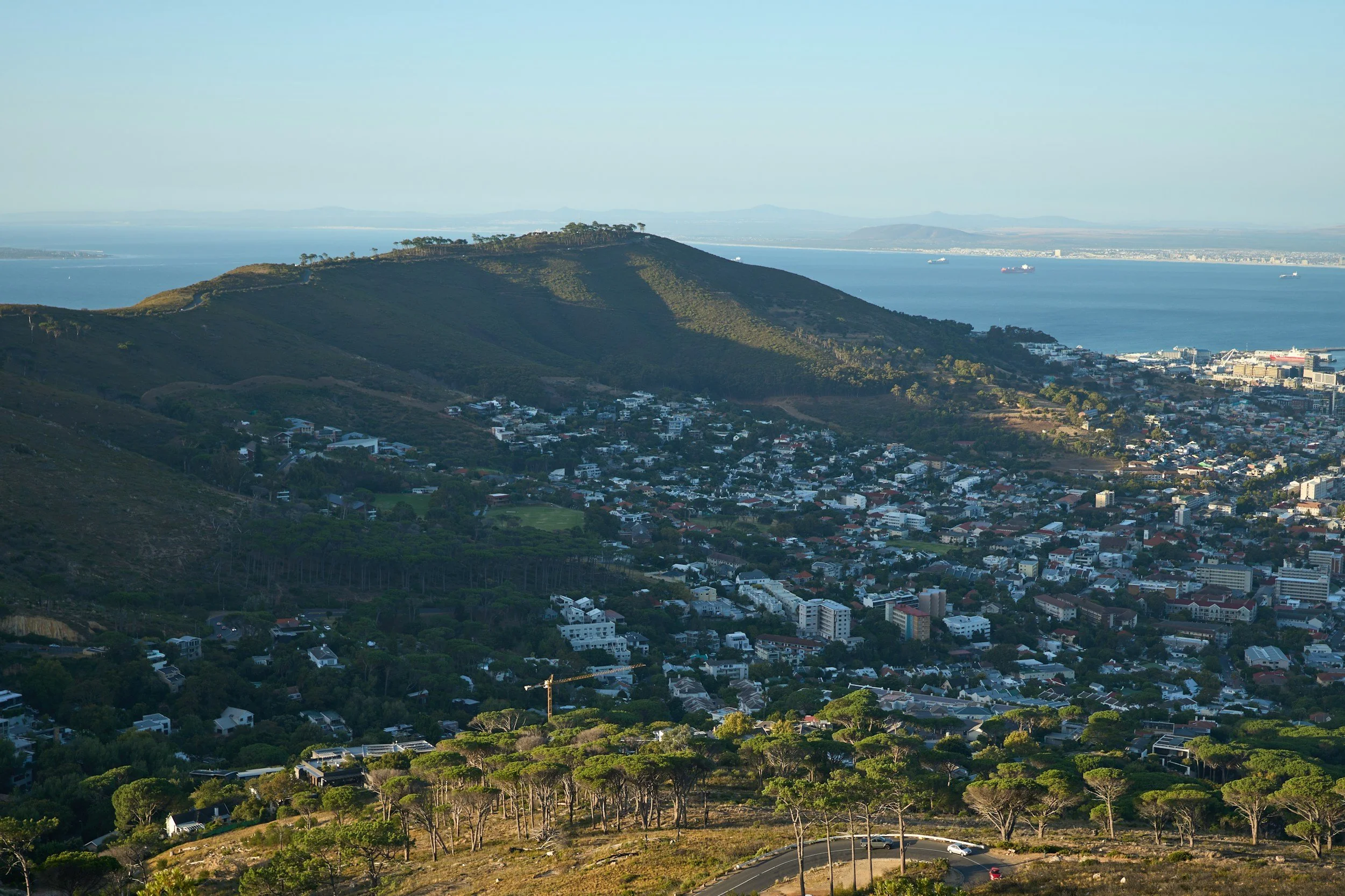
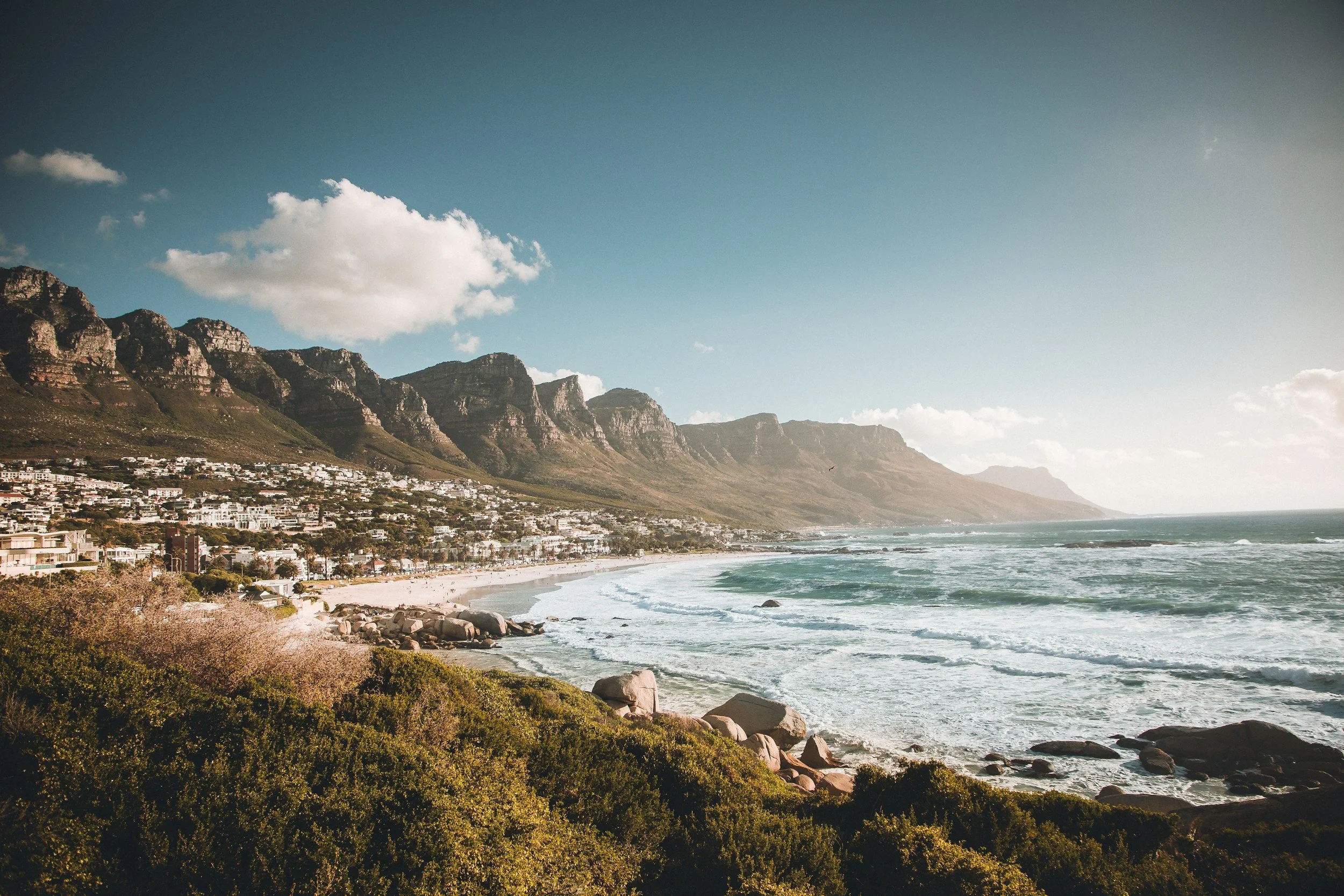
Camps Bay is Cape Town’s sun-soaked showstopper — a long crescent of soft white sand framed by turquoise water on one side and the imposing Twelve Apostles mountain range on the other. It’s stylish, scenic and effortlessly laid-back, drawing beach lovers, sunset watchers, ocean swimmers and anyone chasing a bit of seaside luxury.
The neighbourhood is lined with palm trees, beach bars and open-fronted restaurants, giving it a breezy Mediterranean feel. By day, it’s all beach towels, volleyball games and icy dips in the Atlantic; by night, the strip glows with cocktail lights and golden-hour energy. It’s a must-visit even if you’re not staying here.
Where to Stay
Accommodation in Camps Bay leans upscale — think boutique hotels with infinity pools, villas overlooking the waves and apartments built into the mountainside. Many stays offer panoramic sea-and-sunset views, making it ideal for travellers wanting a scenic, resort-style base while still being just 10–15 minutes from the city bowl by Uber.
Hidden Gems
Glen Beach, just north of the main beach, where locals surf and the atmosphere is quieter
The Bakoven tidal pools — small, rocky, beautifully sheltered spots loved by photographers and early-morning swimmers
Kloof Corner lookout (a short drive away) for a stunning sunrise perspective over the Atlantic
Side-street cafés behind the main strip where you’ll find slower, more local-feeling spots
What to Eat
Camps Bay has a polished dining scene with sweeping ocean views and menus that lean into seafood, grills and contemporary global flavours.
Here are reliable, open-and-operating restaurants worth a stop:
Codfather — famous for its fresh seafood selection and sushi, with a choose-your-own-fish counter that’s a hit with travellers.
Café Caprice — an iconic beachfront café-bar perfect for brunch, cocktails and sunset people-watching.
Paranga — a long-standing favourite serving seafood, pasta and grills from a stylish deck overlooking the beach.
Attractions and Experiences
Relax on Camps Bay Beach — one of Cape Town’s most iconic stretches of sand
Swim in the tidal pool at the southern end of the beach, calmer than the main surf
Explore the walking routes and viewpoints along Victoria Road, especially at sunset
Take short drives to nearby viewpoints: Maiden’s Cove, Kloof Corner and the Twelve Apostles trailheads
Join oceanfront fitness classes or beach yoga sessions on summer mornings
Practical Tips
Camps Bay gets busy on sunny days; arrive early if you want a good beach spot
Winds can pick up in summer — aim for mornings or late afternoons if you prefer calmer conditions
Parking is limited along the strip; walking or Uber is easier
The Atlantic is cold year-round — quick dips are the norm unless you’re used to icy waters
The neighbourhood feels safe and lively in the evening, especially along the restaurant strip
Clifton
Overview
Just north of Camps Bay, Clifton is a string of four picture-perfect beaches — Clifton 1st, 2nd, 3rd and 4th — each separated by giant granite boulders and backed by steep hillsides packed with luxury homes. It’s exclusive, scenic and sheltered from Cape Town’s notorious summer winds, which is why locals flock here when the Cape Doctor picks up elsewhere.
Clifton doesn’t function like a traditional neighbourhood — there are no cafés, shops or beachfront restaurants — but its beaches are among the most beautiful in South Africa. The vibe is relaxed and beach-focused, with sunbathers, swimmers, volleyball matches and golden-hour picnics spread across the four coves.
Hidden Gems
The boulder nooks between Clifton 2nd and 3rd, ideal for quiet sunbathing
Small natural rock pools at low tide along Clifton 1st
Sunset from the steps above Clifton 4th — perfect for photographers
Practical Tips
Parking is limited along Victoria Road — arrive early on sunny days
The steps down to each beach are steep; bring light gear
Clifton’s water is cold year-round, but the sheltered bay makes swimming more manageable
4th Beach is the most family-friendly; 2nd and 3rd attract younger crowds
Observatory and Salt River
Overview
Observatory — known as “Obs” to locals — is Cape Town’s bohemian heart: student-filled cafés, second-hand bookshops, leafy streets, alternative bars and a laid-back, multicultural vibe that feels worlds away from the polished waterfront. Salt River, directly next door, brings an edgier industrial flavour, with warehouses converted into studios, breweries and creative workspaces.
Both neighbourhoods sit just east of the city bowl and attract a mix of artists, students, academics and young travellers. Expect colourful Victorian homes, murals, community markets and a buzzing indie energy. If you’re into alternative culture, live music, co-working cafés or vintage browsing, this is your spot.
Where to Stay
Stays here tend to be budget-friendly guesthouses, modern apartment conversions and a handful of boutique-style lodges aimed at younger travellers and remote workers. Observatory’s quieter residential blocks offer the best base, while Salt River’s converted lofts often appeal to those chasing a more urban, industrial feel. Both neighbourhoods offer easy Uber access into the city bowl.
Hidden Gems
The Lower Main Road thrift shops — a corridor of vintage clothing, vinyl, books and quirky second-hand finds
Artist studios and creative collectives tucked into Salt River’s warehouses
Independent bookstores and handwritten-sign cafés that feel untouched by tourism
The Observatory Centre’s small astronomy outreach events, held by the South African Astronomical Observatory
What to Eat
Obs and Salt River have a fun, eclectic dining scene ranging from vegan cafés to global comfort food and craft breweries.
Here are stand-out, open-and-operating spots:
Obz Café — a neighbourhood institution with pizzas, burgers and a lively, student-friendly atmosphere.
Hello Sailor — a chilled café-bar with comfort plates, great coffee and an always-welcoming vibe.
Devil’s Peak Taproom (Salt River) — one of Cape Town’s best craft beer venues, serving seriously good burgers, ribs and sharing plates.
Attractions and Experiences
Wander down Lower Main Road for cafés, bars, bookstores and local hangouts
Explore Salt River’s street art — an extension of Woodstock’s creative scene
Visit the South African Astronomical Observatory for public talks or star-gazing evenings
Hop between craft breweries and independent tasting rooms
Check out community markets and small creative fairs that pop up on weekends
Practical Tips
Both neighbourhoods are lively and welcoming by day; at night, stick to main streets or use Uber for longer walks
Lower Main Road is the social hub — best explored late morning through early evening
Many small shops close earlier than you’d expect (around 4–5pm)
This area is great for budget-friendly meals, coffee shops and co-working spots
If you're visiting for nightlife, go with a group or use Uber between venues
Kalk Bay
Overview
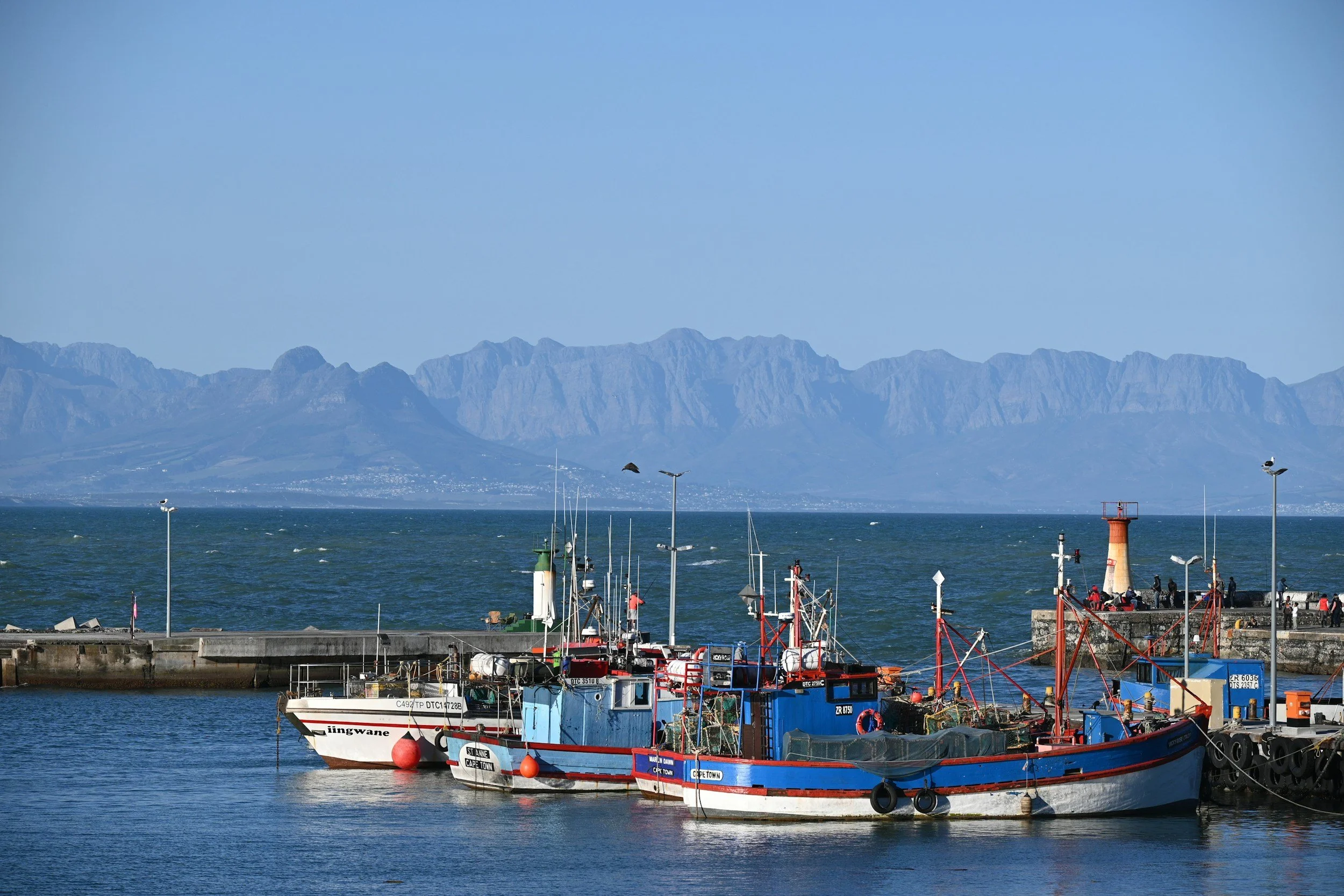
Kalk Bay, on the False Bay coastline, is one of Cape Town’s most charming seaside villages — a blend of fishing harbour, indie boutiques, tidal pools, bookshops, vintage stores and salty air drifting in from the ocean. With colourful boats, dramatic waves and Victorian-era architecture, it feels worlds away from the city bowl yet remains one of the most rewarding day trips or bases for travellers wanting quiet coastal charm.
Life here moves at a slower rhythm. Mornings start with surfers riding the reef break, seals sprawled on harbour walls, and locals grabbing coffee with sea spray in the air. It’s creative, bohemian, slightly weather-worn and utterly atmospheric.
Where to Stay
Kalk Bay offers a small but character-rich selection of guesthouses, seaview apartments and boutique lodges, many with balconies overlooking the harbour or False Bay. It’s ideal for travellers who prefer a slower seaside pace rather than the bustle of the Atlantic Seaboard.
Hidden Gems
Kalk Bay Books, a beloved independent bookshop with a balcony overlooking the sea
Dalebrook tidal pool — one of Cape Town’s best for calm morning swims
Art galleries and indie workshops tucked into narrow lanes off Main Road
Harbour-edge fish stalls selling fresh calamari and snoek straight from the boats
What to Eat
Kalk Bay is famous for its seafood, harbour views and creative eateries.
Here are top operating picks:
Harbour House — an upscale restaurant perched above the waves, known for fresh seafood and panoramic windows overlooking the bay.
Kalky’s — a no-frills harbour-side classic serving fish and chips, calamari and hake with unbeatable character.
Olympia Café — a long-loved institution famous for pastries, rustic meals and its lively, bustling atmosphere.
Attractions and Experiences
Watch the fishing boats return to the harbour with seals in tow
Swim at Dalebrook or St James tidal pools
Browse vintage shops, bookshops and local galleries along Main Road
Explore Kalk Bay Caves (with a local guide for safety)
Walk the coastal path to Muizenberg for scenic sea views
Practical Tips
Mornings are the calmest for exploring and for tidal pool dips
Parking along Main Road can get tight — arrive early on weekends
The sea can be rough around the harbour during big swells — keep an eye on waves
It’s cooler on the False Bay side; bring a layer even in summer
Combine Kalk Bay with nearby St James or Muizenberg for a full coastal day out
How to Get Around Cape Town
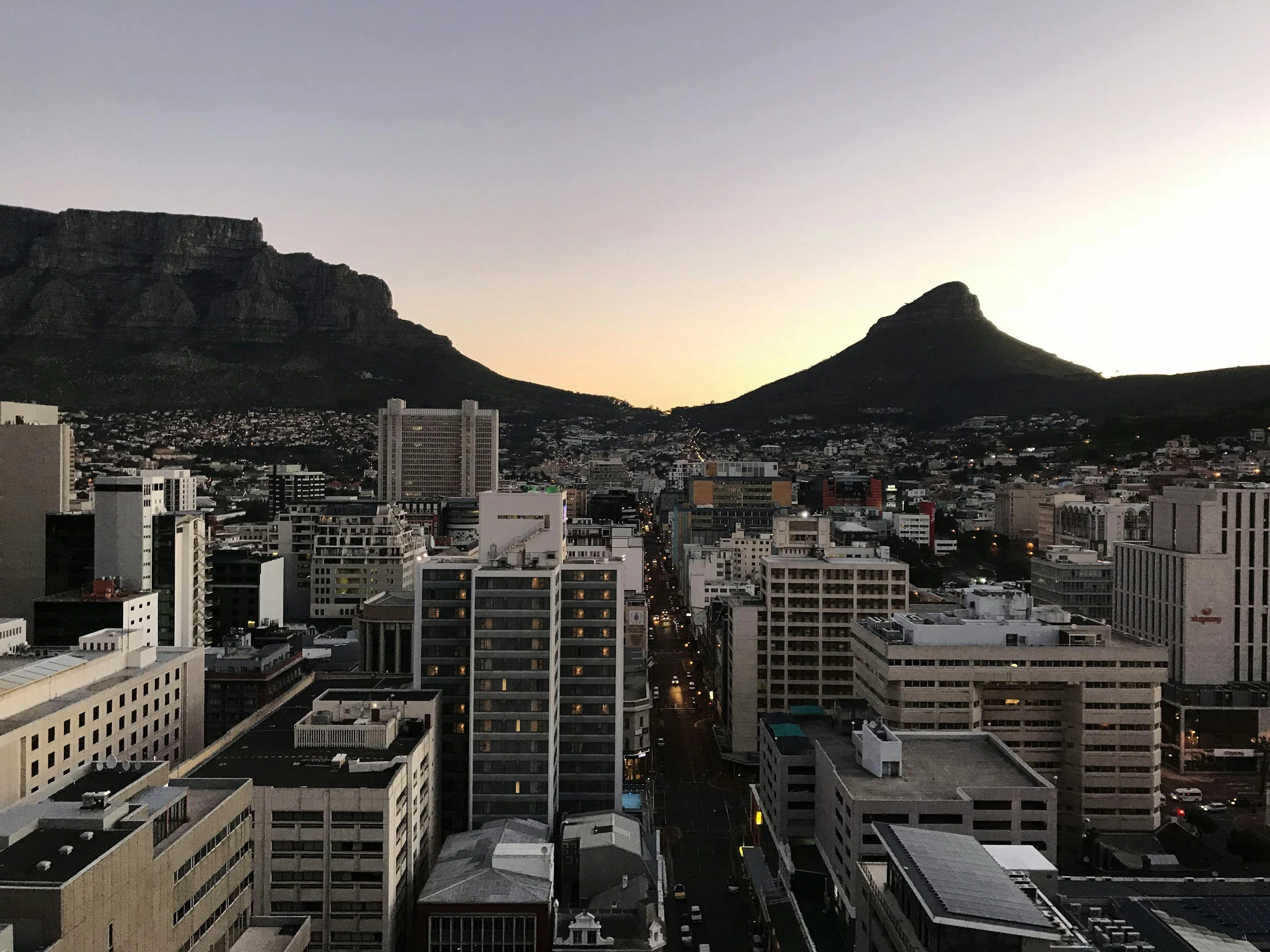
Cape Town is a city where the ocean and mountains shape the layout, so getting around is surprisingly straightforward once you know the flow. Most neighbourhoods in this guide sit within a compact radius, and travelling between them is easy with a mix of Uber, public transport and scenic drives.
Uber
Uber is the most convenient and reliable way to move between neighbourhoods. Cars are quick to arrive, affordable by local standards and widely used by both travellers and locals. It’s ideal for short hops between the Waterfront, Sea Point, Camps Bay and the city bowl, especially in the evenings.
MyCiTi Bus
Cape Town’s MyCiTi bus service links key areas including the Waterfront, Green Point, Sea Point, Gardens and the Airport. It’s clean, safe and dependable during the day.
The route between the Waterfront and Camps Bay (via Sea Point) is particularly scenic.
Buses run less frequently at night, so plan your return ahead of time.
Car Hire
Hiring a car is a great option if you want to explore beaches, vineyards and coastal towns beyond the city — places like Hout Bay, Chapman’s Peak Drive, Muizenberg and the Cape Peninsula.
Parking in the city bowl can be tight, but manageable with paid street parking.
Coastal drives are stunning but narrow in places; take it slow around curves.
Avoid leaving valuables in the car, especially when parking near beaches.
Walking
The Waterfront, Green Point, Sea Point Promenade, De Waterkant, Gardens and parts of Tamboerskloof are very walkable by day.
Sidewalks can be uneven in older areas, especially Woodstock and Observatory.
At night, use Uber for longer distances or quieter streets.
Linking Neighbourhoods
Waterfront → De Waterkant / Green Point: 5–10 minutes by foot or a quick Uber
Green Point → Sea Point: walkable, especially along the promenade
Sea Point → Camps Bay: short Uber or a longer coastal walk for keen walkers
City Bowl → Observatory / Salt River: quick Uber or MyCiTi
City Bowl → Kalk Bay: best reached by car or Uber; the scenic M3/M4 drive is beautiful
Final Tips for Exploring Cape Town
Cape Town is one of the world’s most rewarding cities to explore, but like any major destination, it comes with its own rhythms and quirks. These final tips will help travellers move through the city smoothly, safely and with a deeper sense of place.
Weather and Wind
Cape Town’s weather can shift quickly, especially around the mountains.
Mornings are usually calm and clear — ideal for hikes, beach visits and photography.
Afternoon winds (the Cape Doctor) often pick up in summer, strongest along the Atlantic Seaboard.
Pack layers: temperatures drop fast once the sun dips behind the Twelve Apostles.
On windy days, beaches like Clifton and False Bay are more sheltered.
Load Shedding
South Africa’s rolling power cuts (load shedding) still occur from time to time.
Most cafés, restaurants and hotels now have backup power, so disruptions are minimal.
Keep phones charged and carry a small power bank for day trips.
Traffic lights may be out during cuts — allow extra travel time.
Safety Essentials
Cape Town is welcoming and vibrant, but travellers should stay city-smart.
Use Uber for longer distances or after dark.
Avoid displaying valuables on quiet streets or beaches.
Stick to well-lit areas in the city bowl and use established walkways on the Seaboard.
On hikes, go early, stick to marked trails and ideally go with a buddy or group.
Money and Payments
Cape Town is largely cashless — cards and phone payments are accepted almost everywhere.
Tipping is standard: around 10–15% at restaurants, and small tips for car guards.
ATMs are widely available, but use those inside malls or the Waterfront for added security.
Beach and Ocean Tips
The Atlantic side (Camps Bay, Clifton, Sea Point) is cold year-round — quick dips are the norm!
False Bay (Muizenberg, St James, Kalk Bay side) is warmer and better for longer swims.
Tidal pools are safe, scenic and perfect for calmer swim sessions.
Bring sun protection: the UV index can be very high even on cooler days.
Cultural and Local Etiquette
Always ask before photographing people, especially in community neighbourhoods.
Cape Town’s markets are a great place to support small local makers — most will share the story behind their craft if you show interest.
Sundays are quieter in many neighbourhoods; locals often head to parks, beaches or family gatherings.
Planning Your Days
Start with mornings on the mountain or coastline, then ease into neighbourhood exploring.
Weekdays are best for the Waterfront and Bo-Kaap; weekends suit Woodstock, Kalk Bay and Sea Point.
Golden hour is magical across the city — bring your camera for sunsets at Clifton, Camps Bay, Mouille Point or Signal Hill.
“Cape Town isn’t a city you simply visit — it’s a place you feel your way through, neighbourhood by neighbourhood. Each district carries its own rhythm: the colour and heritage of Bo-Kaap, the creative pulse of Woodstock, the breezy calm of Sea Point, the seaside glow of Camps Bay, the indie corners of Observatory, the polished edges of the Waterfront and Green Point, and the slow-coastal charm of Kalk Bay. Together, they form a mosaic that reveals Cape Town’s real beauty — a city shaped by people, culture, landscapes and stories layered across centuries.
Exploring Cape Town this way lets you see beyond the postcard moments. You meet the local spice merchants, the surfers chasing winter swells, the artists painting new narratives, the café owners who know everyone by name, and the families who’ve lived in the same colourful homes for generations. You wander between mountain and ocean, discovering the in-between pockets that give this city its depth.
No matter how many days you spend here, Cape Town leaves you wanting more — another sunrise hike, another tidal-pool swim, another long stroll through a neighbourhood you’ve only just begun to understand. Let this guide be your starting point, a way to move through the city with curiosity and confidence, embracing the places where everyday life unfolds.
Cape Town is a city that stays with you. All you have to do is start exploring.”