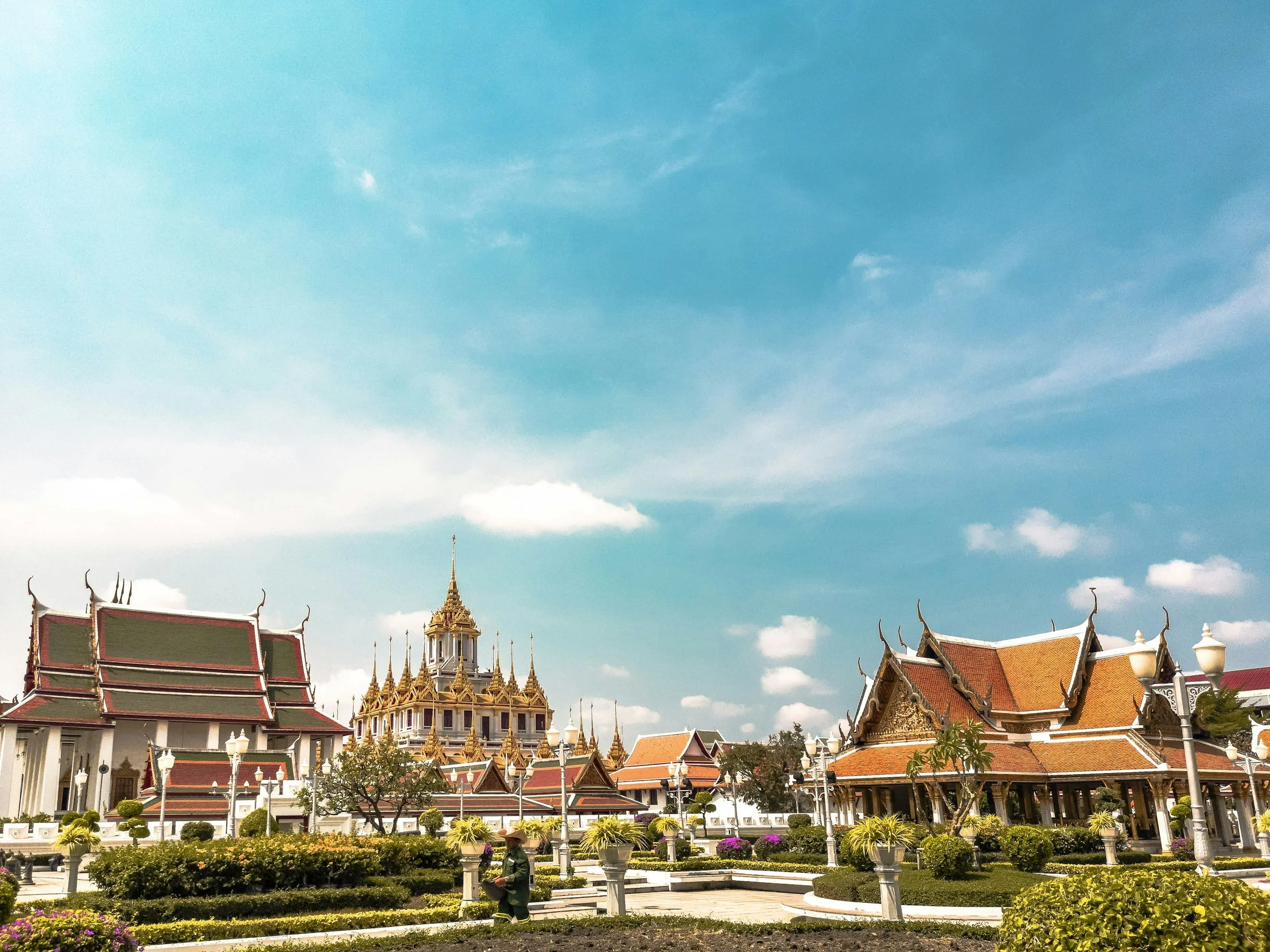
Bangkok is a city of contrasts — a place where golden spires rise beside glass towers, monks walk barefoot past neon-lit streets, and morning calm shifts effortlessly into night-time chaos. It’s a city that rewards wandering, curiosity, and the willingness to follow a side street just because something smells good or sounds interesting.
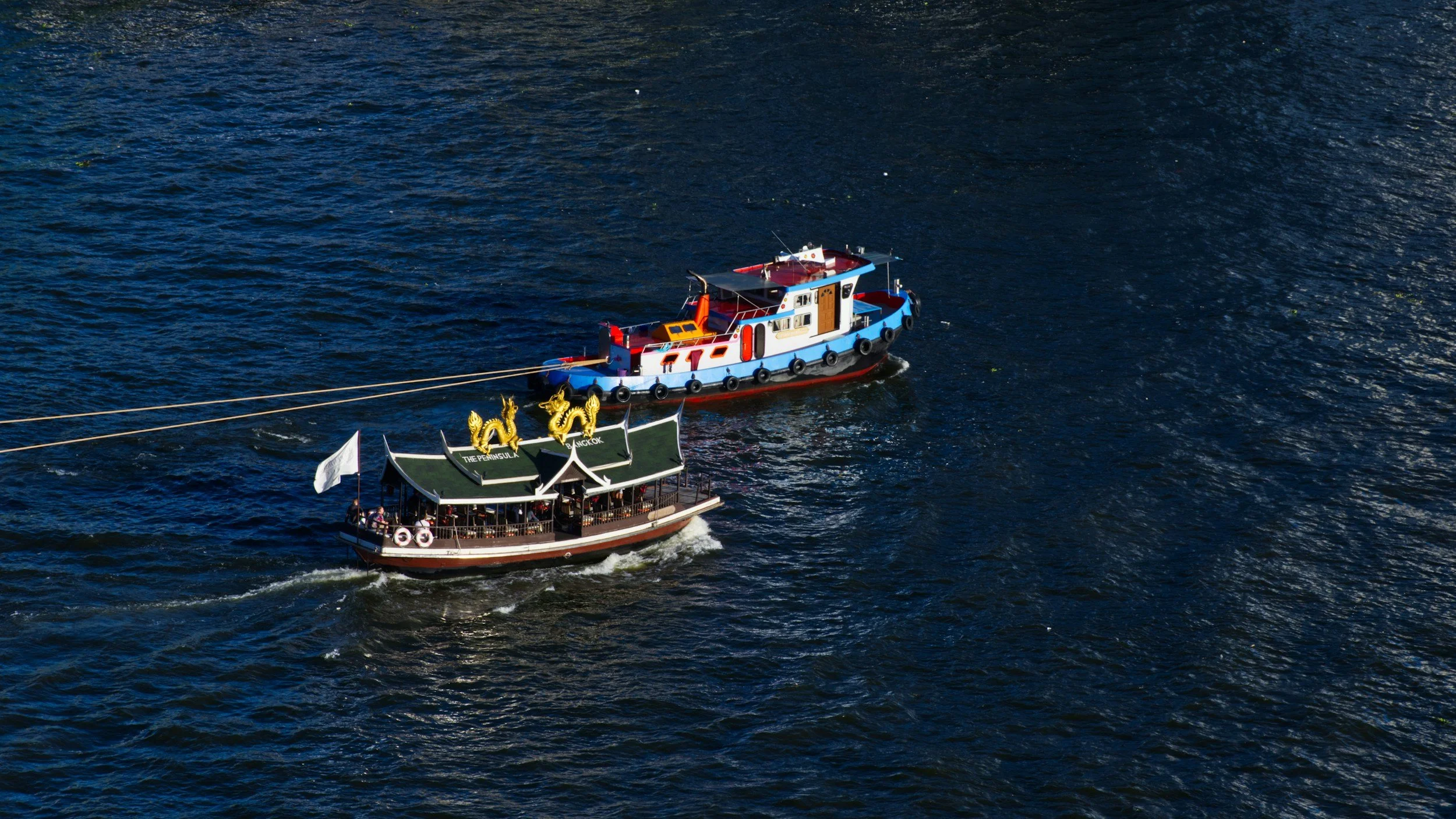
Experiencing Bangkok isn’t just about ticking off the famous sights. It’s about watching monks chant at dawn while the city slowly wakes. It’s drifting down the Chao Phraya on an old river ferry, passing temples, shipping boats, and families watering plants on their balconies. It’s weaving through Chinatown’s night markets, losing yourself in the glow of wok fires, or finding a quiet moment of calm inside a temple courtyard just metres from the traffic.
This guide brings together Bangkok’s most essential experiences — the iconic, the cultural, the creative, the unexpected — alongside local spots and gentle escapes that help you understand the city beyond the postcards. Whether you're here for temples, street food, river life, art, markets, or a dose of serene green space, Bangkok delivers it all with energy, warmth, and its unmistakable rhythm.
Let’s explore.
Explore Bangkok’s Temples and Historic Sights
Bangkok’s historic heart is a world of gold-leaf rooftops, centuries-old murals, incense drifting through courtyards, and quiet corners where the modern city feels a million miles away. These are the places that define Bangkok’s identity — not just architecturally, but spiritually and culturally. Visiting them offers one of the deepest windows into life in the Thai capital.
The Grand Palace & Wat Phra Kaew
The Grand Palace is Bangkok’s most sacred and symbolically important landmark — an elaborate complex built in 1782 when the capital moved to Bangkok. Inside sits Wat Phra Kaew, home to the Emerald Buddha, carved from a single piece of jade and considered Thailand’s most revered icon.
The palace grounds are a visual overload in the best way: sparkling gold chedis, intricate mosaics made from coloured glass, giant yaksha guardian statues, and hand-painted murals depicting the entire Ramakien epic. It’s busy, but there’s nothing else quite like it.
Tips:
Arrive early — the heat and crowds build quickly.
Shoulders and knees must be fully covered (no exceptions).
Combine with a river ferry ride for an atmospheric approach.
Wat Pho
Older than Bangkok itself, Wat Pho is famous for its 46-metre-long Reclining Buddha — a colossal golden figure symbolising the Buddha’s final step toward enlightenment. The serene expression, mother-of-pearl feet, and detailed mural work make it one of the city’s most beautiful interiors.
But Wat Pho is more than one statue. Its courtyards hold dozens of chedis, prayer halls, shady walkways, and a traditional massage school where Thai massage was formalised. If you want to experience temple life at a slower rhythm, this is the place.
Look closer:
The murals are astonishing — each panel a snapshot of everyday life centuries ago.
The massage school is still considered one of Thailand’s best.
Wat Arun
Sitting on the Thonburi side of the river, Wat Arun (Temple of Dawn) is one of Bangkok’s most photographed temples — and with good reason. Its tall Khmer-style spire is covered in delicate porcelain shards, once used as ballast by Chinese trading ships and repurposed into intricate lotus and floral motifs.
Climb the steep steps for views over the Chao Phraya, especially magical around sunset when the temple glows softly and the river turns gold.
Best moment:
Take a ferry across the river just before sunset — the temple silhouette is iconic.
Local Temple Experiences
Some of Bangkok’s most meaningful temple visits happen far from the crowds.
Wat Prayoon (Thonburi) – A quiet riverside temple with a striking white chedi and a turtle-filled pond symbolising longevity.
Wat Saket (The Golden Mount) – A gentle spiral staircase leads to a rooftop shrine with sweeping Old City views. Come early for monks’ chants drifting through the air.
Morning alms – At sunrise, monks walk barefoot through neighbourhoods collecting alms. Watching locals offer rice and food in silence is a serene moment that reveals the rhythm of daily life.
Wat Ratchabophit – A hidden gem mixing Thai and European influences, with intricate interiors and a peaceful central courtyard.
Why it matters:
These temples remind you that Bangkok, despite its speed and energy, is still deeply connected to ritual, reflection, and community. They bring balance to the city — and to the experience of exploring it.
Bangkok on the Water
Bangkok wasn’t built around roads — it was built around water. The Chao Phraya River and its branching canals were once the city’s arteries, connecting markets, temples, floating homes, and entire riverside communities. Even today, stepping onto a ferry or drifting through the klongs gives you a glimpse of the Bangkok that existed long before skyscrapers and skytrains.
It’s one of the most atmospheric ways to explore the city: breezy, scenic, and deeply intertwined with local life.
Chao Phraya River Ferries
The public river boats are Bangkok’s most underrated experience — affordable, open-air, and a genuine part of daily commuting. Board at Sathorn Pier and sail north as temples, shimmering spires, churches, wooden houses, and busy piers unfold along the riverbanks.
You’ll pass:
Wat Arun rising above the water
The spires of the Grand Palace
Old Portuguese and Chinese communities
Markets unloading fresh produce straight off the boats
It’s a moving snapshot of the city’s layers — old, new, sacred, chaotic, peaceful — all flowing side by side.
World Locals tip:
Ride the orange-flag boat around sunset. The river softens, the heat drops, and the skyline glows like it’s been brushed with gold.
Klong Tours (Canal Life)
Bangkok’s remaining canals are where the city’s soul sits quietly just beneath the surface. A klong tour takes you into neighbourhoods built on stilts, where wooden houses, lotus ponds, small temples, floating gardens, and local shops sit just above the waterline.
In Thonburi, you’ll drift through waterways that feel almost rural — children cycling across narrow bridges, families tending plants on their verandas, and elders chatting on small docks.
In Bang Phrom and Bang Krachao, the canal routes are lined with tropical greenery and offer a calmer, village-like rhythm.
Hidden gems along the canals include:
The Artist’s House (Baan Silapin) – A centuries-old wooden home turned art space overlooking the water.
Kudi Chin – A historic Portuguese-Thai community famous for its tiny bakeries.
Khlong Bang Luang – One of the best-preserved canal neighbourhoods in the city.
This is a side of Bangkok most travellers never see — intimate, gentle, and deeply local.
Asiatique & Riverside Walks
Bangkok may be modernising quickly, but its riverside remains a beautiful blend of old and new. Asiatique offers open-air dining with river views, while the boardwalk is perfect for breezy sunset walks.
From here, you can wander into Charoenkrung’s Creative District, one of Bangkok’s oldest neighbourhoods now filled with:
Restored warehouses
Independent galleries
Stylish riverside cafés
Design shops and cultural centres
It’s a great way to blend river life with contemporary Bangkok culture.
Longtail Boat Experiences
For travellers wanting something more adventurous, a private longtail boat offers freedom to explore the canals and riverside sights at your own pace. The roar of the engine, the spray of the river, and the agility of these narrow boats create a fun, immersive experience.
A typical longtail trip includes:
Canal-side temples only accessible by water
Floating cafés and riverside fruit stalls
Bridges draped in bougainvillaea
Stops in Thonburi’s serene canal neighbourhoods
Crossing the river to Bang Krachao’s lush green maze
Best time:
Early morning or late afternoon for cooler temperatures and softer light.
Why This Matters
Exploring Bangkok by water reveals the city at its most authentic — relaxed, rhythmic, and connected to centuries of history. It shows how communities still live with water at their doorstep, how temples were built to face the river, and how everyday life continues to flow along the same currents that shaped Bangkok’s past.
It’s one of the most rewarding and memorable experiences you can have in the Thai capital.
Markets and Neighbourhood Wandering
Bangkok is a city best explored slowly — on foot, through markets, down side streets, and into neighbourhoods where life unfolds in the open. From the organised chaos of its biggest markets to the creative corners of Charoenkrung and the leafy lanes of Ari, wandering is one of the most rewarding experiences you can have here.
Chatuchak Weekend Market
One of the world’s largest markets and an essential Bangkok experience. Over 15,000 stalls spread across themed sections — clothes, crafts, plants, antiques, ceramics, vintage finds, and endless food.
For food lovers, it’s a paradise of coconut ice cream, Thai sausages, grilled pork skewers, mango sticky rice, fresh fruit smoothies, and iced coffee.
Arrive early to beat the heat and the crowds, and take breaks in the air-conditioned zones inside Mixt Chatuchak.
World Locals tip:
Look for the smaller alleys off the main loops — that’s where you find the handmade, local-run stalls with the best value.
Chinatown’s Night Markets
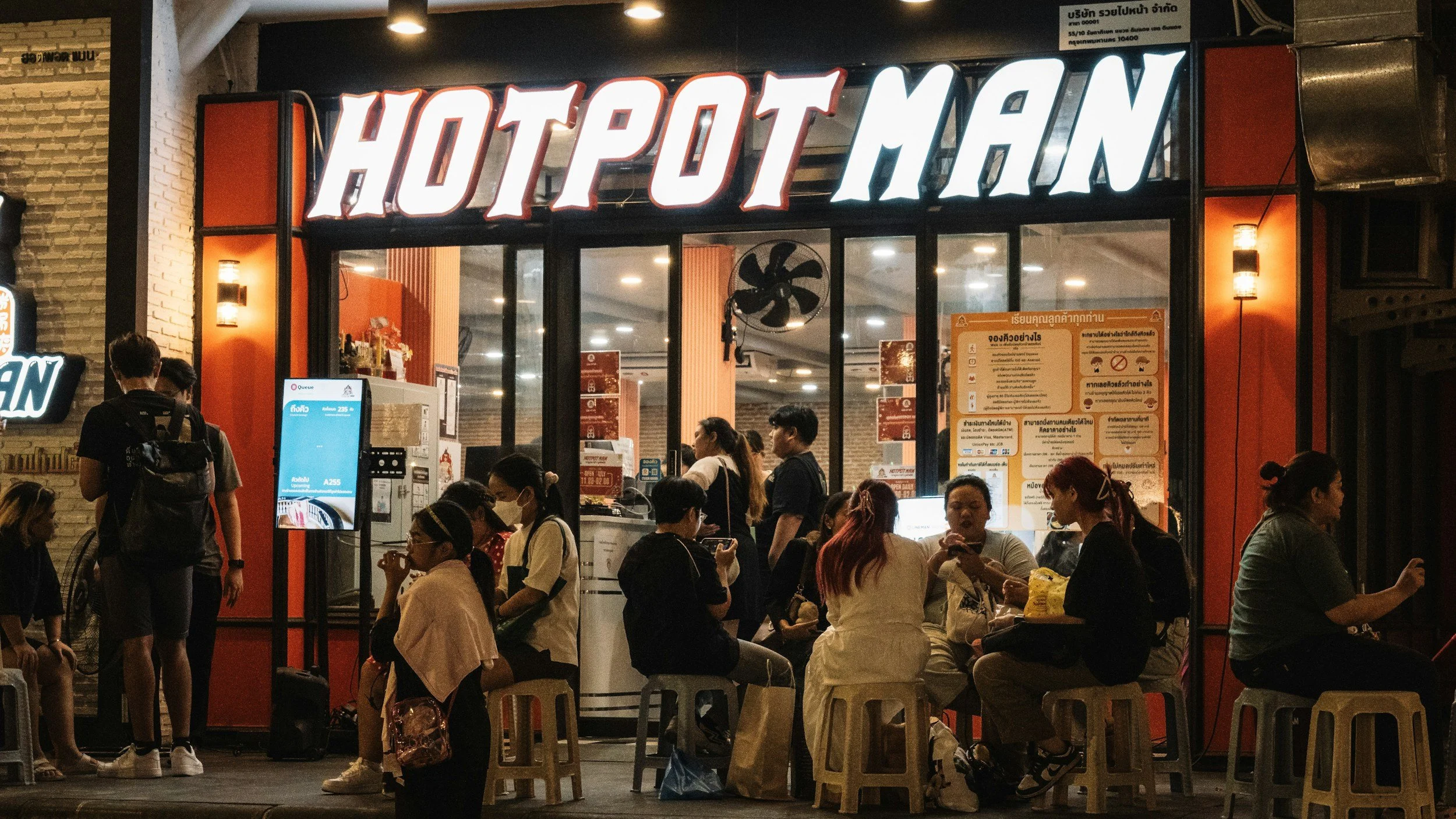
As the sun sets, Chinatown transforms into a glowing maze of neon signs, sizzling woks, queues of hungry locals, and carts piled with noodles, seafood, dim sum, and desserts.
Wander down:
Yaowarat Road for legendary street food
Soi Nana for indie bars and small galleries
Talat Noi for murals, old shophouses, and heritage alleys
It’s loud, chaotic, and completely unfiltered — a must for anyone who wants to feel the pulse of Bangkok after dark.
Talat Phlu (Thonburi)
A brilliant local neighbourhood on Bangkok’s quieter Thonburi side. Famous for its street food — roasted duck, desserts, Thai barbecue, and sweet snacks — Talat Phlu offers a more relaxed, local-first experience away from the main tourist routes.
Pair it with a walk through its small markets and backstreets for a proper look at everyday life.
Local Neighbourhood Walks
Sometimes the best Bangkok experiences happen when you’re not aiming for any specific sight.
Ari
Leafy lanes, tiny cafés, design shops, plant stores, and local bakeries. Calm, creative, and wonderfully walkable.
Banglamphu
Old wooden houses, canal paths, local temples, and small markets hidden away behind busy roads. Great for early-morning exploring.
Charoenkrung’s Creative District
Warehouse 30, galleries, barista cafés, art spaces, and historic shophouses all woven into one of Bangkok’s most fascinating riverside neighbourhoods.
Phrom Phong Backstreets
Quiet residential sois with Japanese bakeries, small parks, family-run restaurants, and cosy cafés — perfect for a slower-paced wander.
Why It Matters
Bangkok’s markets and neighbourhoods reveal the city in its rawest, most characterful form — where history sits beside innovation, where small communities thrive, and where you can experience the everyday rhythms that make the city so compelling.
Exploring on foot brings you closer to the details: the smell of grilled pork at dusk, the clatter of carts in morning markets, the colours of fresh produce, and the mix of old and new that defines Bangkok’s charm.
Food Experiences Worth Travelling For
Bangkok is a city where food becomes an experience — where meals turn into memories and every encounter teaches you something new about Thai culture. These experiences go beyond simply eating; they immerse you in flavours, techniques, people, and traditions.
Street Food Tours
A street food tour is the perfect way to understand Bangkok’s culinary heartbeat.
Instead of wandering blindly, you follow a guide who knows the history behind each stall, the timings, the shortcuts, and the family stories that make each dish special.
You might start in Chinatown’s back alleys with peppery soups, slip into a hidden courtyard for grilled seafood, and end with coconut desserts sold from a cart that’s been in the same spot for 40 years.
It’s part food exploration, part cultural storytelling — and always one of the most fun ways to spend a night in the city.
Cooking Classes
A cooking class gives you a hands-on taste of how Thai food actually works.
Expect:
A market visit full of herbs, spices, vegetables and local chatter
Learning the foundations — balancing sweet, sour, salty, spicy
Making curry paste by hand (hard work, but worth it)
Techniques you’ll never forget, like steaming sticky rice or seasoning pad Thai properly
You finish with a shared meal that always tastes better because you made it — and because now you know how each ingredient earns its place in the bowl.
Market-to-Table Experiences
These experiences blur the line between cooking class and cultural tour.
You’ll follow a chef or local expert into the heart of a fresh market — often Khlong Toei or Or Tor Kor — where vendors shout greetings, produce stacks in bright colours, and the smell of herbs hangs in the air.
Instead of simply browsing, you learn:
Why this fish is used in southern curries;
How to tell if lemongrass is fresh;
Which basil varieties belong to which regional dishes.
Then you head to a kitchen and cook with what you’ve chosen. It’s immersive, meaningful, and one of the best ways to connect with the city.
Regional Thai Tastings
Bangkok is where Thailand’s regional cuisines meet, and guided tastings help you appreciate just how different they are.
These experiences often include small plates from:
Isaan — Fiery som tam, grilled chicken, larb with roasted rice
Northern Thailand — Khao soi, sai ua sausage, tomato-based soups
The South — Bright, turmeric-heavy curries and spicy salads
Rather than overwhelming you, a tasting makes the diversity easier to understand — and gives you a foundation for recognising regional flavours during the rest of your trip.
Why These Experiences Matter
Food experiences in Bangkok bring you beyond the plate.
They introduce you to the people who carry these traditions, the markets that supply them, and the stories that shaped them.
You taste the city, but you also learn the city — its heritage, its regions, its rhythms, and its creativity.
They’re the kind of experiences travellers remember years later.
Culture, Art, and Creative Bangkok
Bangkok’s creative energy is one of its most exciting surprises. Beyond temples and street food, the city has a thriving cultural scene shaped by young artists, independent galleries, heritage warehouses, and experimental spaces where new ideas meet old neighbourhoods. Exploring these pockets offers a fresh perspective on modern Bangkok — vibrant, expressive, and always evolving.
Bangkok Art and Culture Centre (BACC)
BACC is the city’s main contemporary art hub — a spiralling, multi-level building filled with galleries, photography exhibitions, performance spaces, craft studios, and cafés.
You’ll find everything from emerging Thai artists to large installations and cultural events. It’s a brilliant place to spend an afternoon, especially if you want to understand how Bangkok’s younger generations are shaping art and identity.
Warehouse 30 and the Creative District
Down by the river in Charoenkrung sits the Creative District — one of Bangkok’s most dynamic neighbourhoods. Old warehouses along the river have been transformed into design shops, indie galleries, concept cafés, co-working spaces, and cultural venues.
Warehouse 30 itself is a highlight: a cluster of restored WWII-era structures now home to exhibitions, boutiques, film screenings, and pop-up markets. The area blends Bangkok’s trading past with a bold creative future — perfect for slow wandering, photography, and discovering local talent.
Museum of Siam
One of Bangkok’s most engaging museums, Museum of Siam explores Thai identity through interactive exhibits, storytelling rooms, multimedia installations, and clever design. Rather than displaying artefacts behind glass, it unpacks the question: “What does it mean to be Thai?” It’s fun, thoughtful, and great for travellers wanting cultural context without feeling overwhelmed.
Local Galleries and Indie Art Spaces
Bangkok’s independent art scene is thriving, with small galleries dotted through neighbourhoods like Sathorn, Ari, Ekkamai, and Charoenkrung.
A few standouts include:
100 Tonson Foundation – Contemporary art with rotating exhibitions
Bangkok CityCity Gallery – Known for bold, experimental shows
Kalwit Studio & Gallery – A small but exciting space for emerging artists
ATT19 – A design-led gallery and café inside a restored Chinese-Thai building
These are the places where you feel Bangkok’s creativity up close — intimate, unexpected, and full of personality.
Why This Matters
Exploring Bangkok’s cultural and creative scene reveals a city that’s constantly reinventing itself. It shows a modern Bangkok full of ideas, expression, and community — a perfect counterbalance to the temples, markets, and waterways. It’s also where you’ll meet locals, discover new artists, and see how contemporary Thai identity continues to evolve.
Green Escapes and Outdoor Experiences
Bangkok’s pace can feel intense, but the city has a surprising amount of green space — parks, wetlands, cycling trails, and leafy islands in the Chao Phraya where life moves at a gentler rhythm. These places offer a break from the heat and traffic, showing a softer, more relaxed side of the Thai capital.
Lumphini Park
Bangkok’s original urban playground.
Mornings start with tai chi and joggers circling the lake; afternoons bring shade-seekers and families escaping the sun. Monitor lizards laze by the water, paddleboats drift slowly across the lake, and cycling paths loop through palms and banyan trees.
It’s the kind of place where you forget you’re in a megacity — at least for an hour.
Benjakitti Forest Park
One of Bangkok’s newest and most impressive green projects.
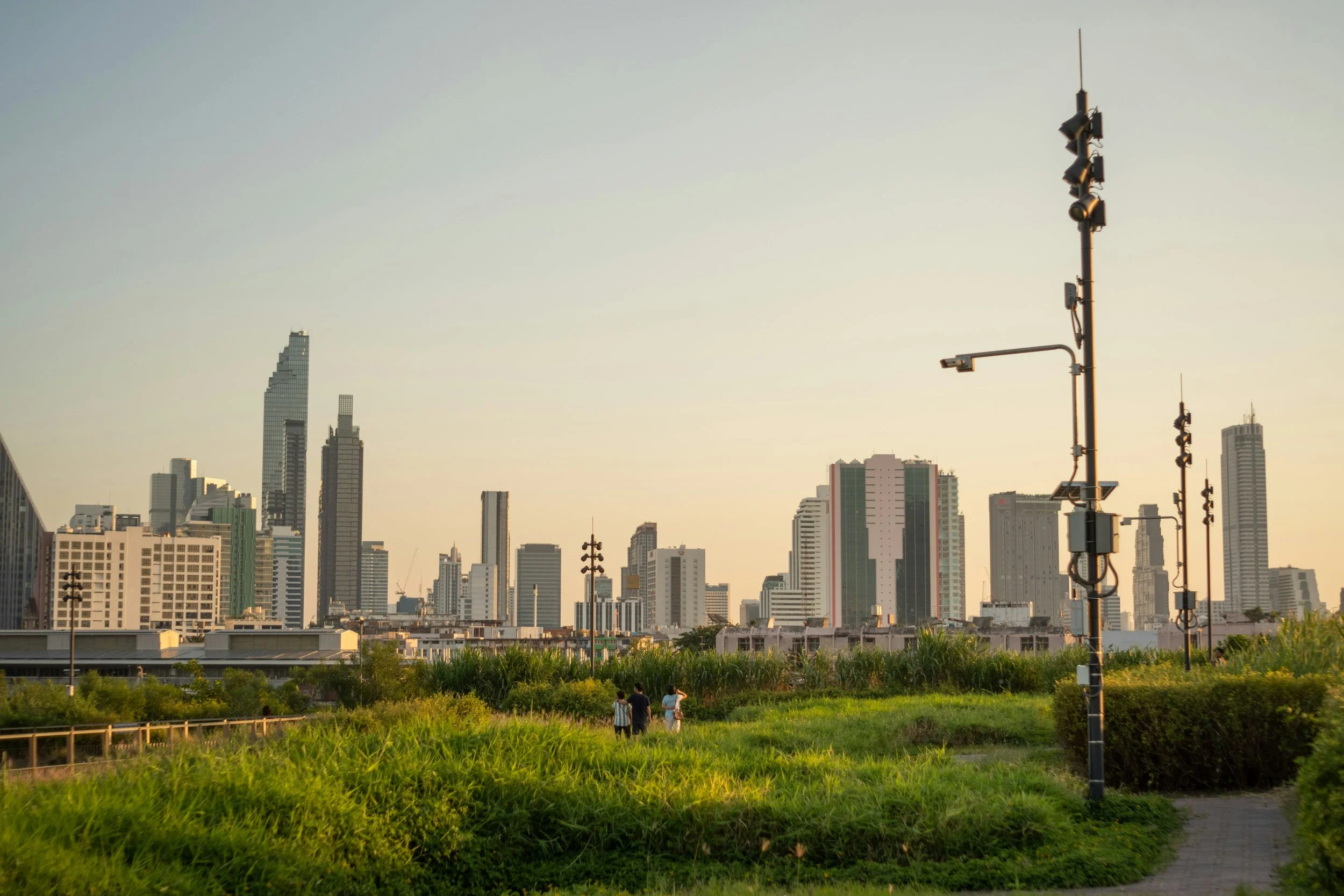
Once an industrial area, it’s now a vast wetland park filled with elevated walkways, boardwalks above marshes, cycling lanes, and mirror-flat lakes backed by the city skyline.
Sunrise and sunset are especially beautiful here, with soft light falling across the water and the whole park glowing gold.
World Locals tip:
Walk the elevated forest loop — the views of Bangkok rising beyond the trees are unreal.
Bang Krachao (Bangkok’s “Green Lung”)
A man-made island of jungle, canals, temples, and stilt houses — and one of the best escapes in the entire city.
Rent a bicycle, wander through tiny lanes shaded by banana leaves, stop at floating cafés, and visit Sri Nakhon Khuean Khan Park for lakes, boardwalks, and birdlife.
It’s peaceful, leafy, and an incredible contrast to the dense urban core just across the river.
Bangkok’s New Elevated Walkways
In recent years, Bangkok has transformed abandoned infrastructure into pedestrian walkways that stitch neighbourhoods together from above street level.
Highlights include:
The Chao Phraya Sky Park – A linear park suspended over the river with gardens, benches, and stunning views.
Benjakitti Elevated Trails – Raised pathways weaving above wetlands and green pockets around the park.
Sathorn–Naradhiwas Walkways – Practical and great for connecting to cafés, markets, and riverside areas.
These elevated paths make Bangkok far more walkable — and offer some brilliant photo spots along the way.
Why These Escapes Matter
Bangkok’s green spaces give travellers room to breathe — literally and figuratively. They balance out the intensity of night markets, temples, and traffic, offering quieter moments where you can reflect, cool down, and see a calmer side of the city. They’re also where you’ll find locals reading, relaxing, picnicking, and slowing down — a glimpse of daily life that’s easy to overlook.
Wellness, Markets and Slow Experiences
Bangkok may be known for its energy, but it also offers moments of calm, restoration, and cultural ritual — the kinds of experiences that reset your senses after a day of traffic, temples, and neon-lit streets. From traditional Thai massage to floating markets and sunset strolls, these slower moments reveal a softer side of the city.
Traditional Thai Massage and Spa Culture
Thai massage is woven into daily life here — a balance of stretching, pressure, rhythm, and breath that leaves you feeling lighter and strangely energised.
You’ll find everything from simple local shops where massages cost less than a meal, to elegant spas set inside restored teak houses. Treatments often include herbal compresses, foot massages, oil blends infused with lemongrass, or cooling post-massage teas.
A massage late afternoon or early evening is a brilliant way to reset before dinner or a night out.
Muay Thai Training Sessions
For something active and deeply cultural, Muay Thai classes are fantastic.
Gyms across Bangkok offer beginner-friendly sessions where you learn the basics — stance, footwork, pad work, and the sport’s ritualistic elements. The atmosphere is welcoming, sweaty, and fun, and it’s a great insight into one of Thailand’s most important traditional disciplines.
Whether you’re a complete beginner or a fitness lover, it’s an unforgettable experience.
Floating Markets (reliable ones)
Some floating markets have become overly touristy, but a few still offer genuine charm and local character.
Two worth visiting:
Amphawa – Best visited in the late afternoon when the heat softens and food stalls line the canal. Known for grilled seafood, sweet snacks, and boat vendors.
Taling Chan – Smaller, relaxed, and close to the city. A good place for grilled fish, fresh fruit, and a slower-paced market atmosphere.
Avoid the overly packaged tours — the smaller markets feel more personal and grounded.
Sunset Walks and Riverside Wandering
Bangkok’s riverside is at its most magical at dusk. As the heat drops, ferries slow on the water, temples glow softly, and the city settles into a quieter rhythm.
Favourite spots include:
The boardwalk around Asiatique
The Chao Phraya Sky Park — a linear park suspended over the river
The paths behind Santa Cruz Church in the Kudi Chin community
Wang Lang Market for snacks and people-watching at sunset
These are the moments where Bangkok feels gentle — warm light, river breezes, and the city’s outline softening against the sky.
Why These Experiences Matter
Bangkok isn’t only about intensity — it’s also about balance.These slower experiences give you the space to pause, breathe, and connect with the city on a more personal level. They offer comfort after long days, context to the culture, and a reminder that even in a megacity, quiet still exists if you know where to look.
Day Trips from Bangkok
Bangkok’s energy is addictive — but step outside the city and you’ll find ancient capitals wrapped in jungle, canals lined with wooden houses, floating markets full of local life, and sprawling cultural parks that feel like stepping into a storybook. These day trips add texture and balance to any Bangkok itinerary, giving travellers a chance to see Thailand’s history, creativity, and calmer landscapes at a different pace.
Ayutthaya
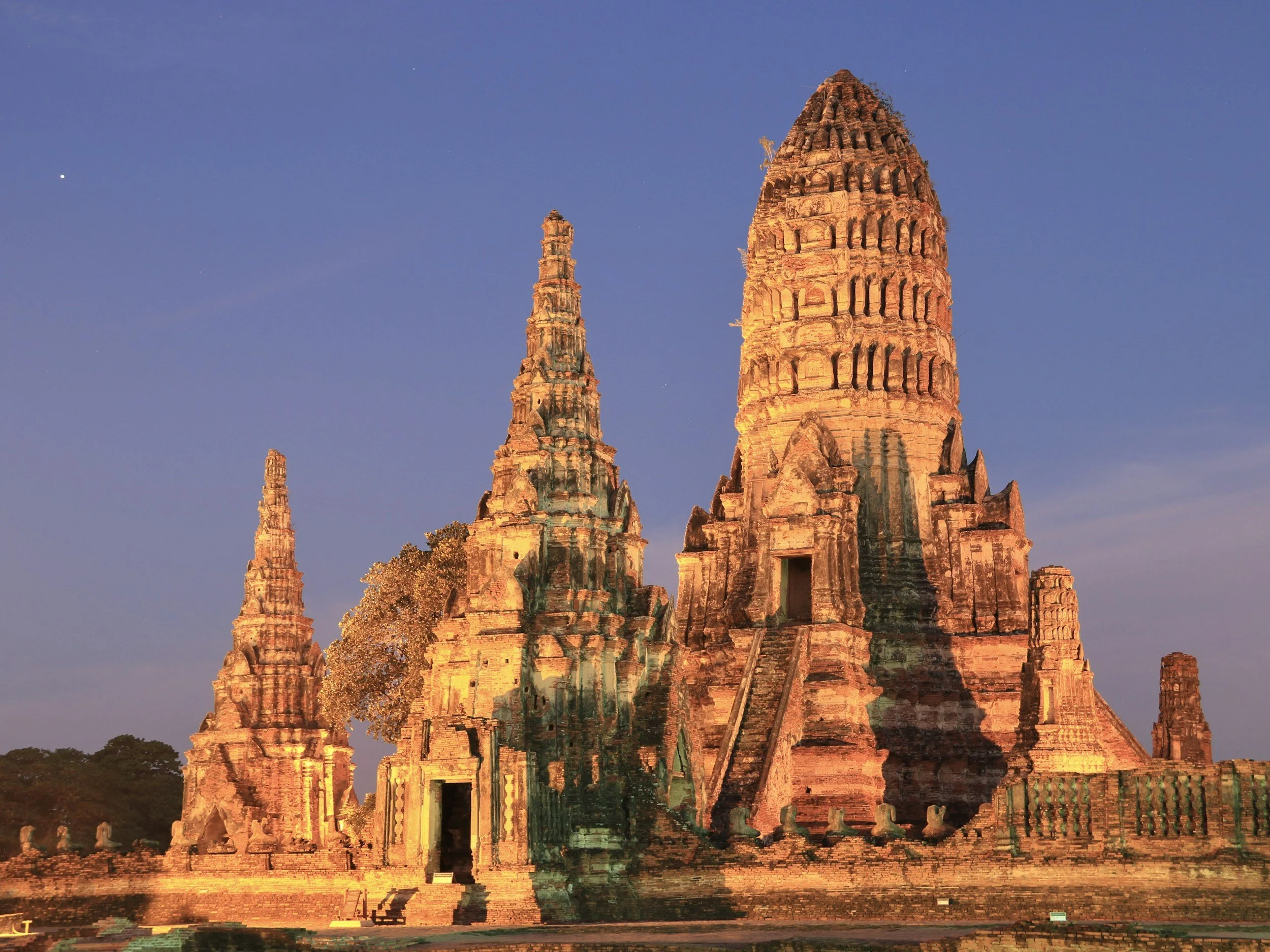
A UNESCO World Heritage site and once the capital of Siam, Ayutthaya was a thriving trading hub between the 14th and 18th centuries. Today, the ruins form an open-air museum of temples, monasteries, prangs and chedis scattered across an island encircled by rivers.
The atmosphere is striking — wide skies, open fields, red-brick structures softened by age, and quiet corners where banyan trees press against ancient stones.
Key highlights include:
Wat Mahathat and the iconic Buddha head embraced by tree roots — a symbol of Ayutthaya around the world.
Wat Phra Si Sanphet, once the royal temple complex, with three giant bell-shaped chedis standing in a perfect line.
Wat Chaiwatthanaram, a Khmer-style riverside temple that’s breathtaking at sunset.
The Foreign Quarters, where Portuguese, Japanese, and Dutch traders once lived — a reminder of the city’s global connections.
How to experience it:
Rent a bicycle for relaxed exploring, or hire a tuk-tuk driver for a full loop. Sunset boat tours around the island offer a beautiful, slower perspective of the ruins.
Amphawa Floating Market
Amphawa is everything travellers hope a floating market will be: lively but local, packed with riverside food stalls, wooden homes, and narrow canals glowing with warm light in late afternoon.
The market really comes alive around 15:00–16:00 as families arrive for early dinners. Vendors grill prawns, fish, squid and shellfish directly over tiny charcoal stoves balanced on their boats. The smell alone is enough to make you hungry.
Wander the boardwalks, snack on coconut desserts, explore side canals, or take a longtail boat deeper into the waterways. As night falls, the atmosphere softens, and firefly boat rides through dark, quiet mangrove corridors become the perfect end to the day — calm, magical, and unmistakably Thai.
Ancient City (Muang Boran)
Ancient City is one of Thailand’s most fascinating cultural attractions — a huge, landscaped park shaped like the map of Thailand, filled with full-scale and scaled-down reconstructions of temples, palaces, shrines, floating villages, royal barges, traditional houses, and mythological sculptures.
It’s peaceful, spacious, and perfect for photography. You can cycle or rent a golf cart, stopping at highlights like:
The intricate Sanphet Prasat Palace reconstruction
The beautiful Floating Market Zone
The Ancient Theatrical Pavilion
The striking, pastel-coloured Pavilion of the Enlightened
It’s a fantastic choice for travellers wanting cultural depth without the crowds.
Bang Krachao
Technically part of Bangkok — but spiritually, a different world entirely. Bang Krachao is a protected green island in the Chao Phraya River, preserved as a giant urban oasis.
Expect:
Car-free lanes shaded by palms and banana leaves
Wooden walkways above canals
Floating cafés and tiny garden restaurants
Small temples and village communities
Birds, butterflies, and lots of greenery
The highlight is Sri Nakhon Khuean Khan Park, a peaceful wetland area with lakes, birdwatching towers, and quiet cycling paths.
Come early for cooler temperatures and enjoy seeing Bangkok’s skyline from a green, tropical escape just a short boat ride away.
Damnoen Saduak (with caveat)
While often over-touristed, Damnoen Saduak can still be worthwhile if you go early and pair it with a local guide who knows the quieter canals. The surrounding countryside is beautiful — coconut plantations, slow-moving waterways, and small communities that still rely heavily on the canals.
It’s best suited for travellers who want the iconic floating market photo and are happy to explore beyond the main busy strip.
Why These Day Trips Matter
Each destination offers something Bangkok can’t:
The space of Ayutthaya’s ruins,
The calm of Bang Krachao’s greenery,
The flavour and rhythm of Amphawa’s canal life, and the cultural storytelling of Ancient City.
They help you understand Thailand beyond its capital — its history, its rural roots, its creative traditions, and the slower, quieter lives that continue just beyond the city’s edge.
Practical Tips for Experiencing Bangkok
Bangkok is exciting, layered, fast, and wonderfully chaotic — but with a little know-how, it becomes surprisingly easy to navigate. These practical tips help travellers move around confidently, understand cultural expectations, and make the most of their time in the city.
Temple Etiquette and Dress Codes
Bangkok’s temples are living religious spaces, so visitors should follow local customs:
Shoulders and knees must be covered (no sheer fabrics).
Remove shoes before entering sacred halls.
Keep voices low; ceremonies or chanting may be in progress.
Avoid posing with your back to Buddha images.
A light scarf or sarong in your day bag is always useful.
Heat, Hydration and Timing
Bangkok gets hot — very hot.
Sightsee early morning or late afternoon.
Carry water; bottled water is cheap and widely available.
Indoor attractions like museums or malls make great midday breaks.
The city is most pleasant between 07:00–10:00 and after 16:00.
Getting Around
Bangkok’s traffic is famous, but you have plenty of smooth options:
BTS Skytrain – Fast, clean, great for Sukhumvit and Silom.
MRT – Ideal for Chinatown, Old Town access, and connecting to markets.
River ferries – Scenic, cheap and perfect for major sights.
Grab – Reliable for taxis; avoids haggling.
Tuk-tuks – Fun, but agree on price before riding.
Private Driver service – Ideal for calmer travel with families or those requiring extra support, learn more here.
If it’s raining heavily, stick to BTS/MRT — surface traffic becomes chaotic.
Navigating Markets and Crowds
Markets are some of the best parts of Bangkok, but they’re busy:
Keep valuables in front pockets or zipped bags.
Move with the flow — stopping suddenly causes mini-traffic jams.
Bring small notes (20/50/100 baht).
Mornings = easier browsing; evenings = best atmosphere.
Food Safety and Street Food
Bangkok’s street food is generally safe if you follow a few guidelines:
Choose stalls with long queues and high turnover.
Look for vendors cooking food fresh to order.
Avoid dishes that have been sitting in the sun.
Ice is usually safe at reputable stalls.
If you’re unsure, start with cooked dishes before moving to salads or raw items.
Cultural Etiquette & Everyday Customs
A few small courtesies go a long way:
A slight bow or smile is the standard greeting.
Public displays of anger or frustration are frowned upon.
Always stand still for the national anthem in public spaces.
Feet are considered the lowest/least respectful part of the body — don’t point them at people or sacred objects.
Money, Scams and Practicalities
Bangkok is generally safe, but be aware:
Avoid tuk-tuk “temple tours” that promise free rides — they often involve gem scams.
Always insist on the meter for taxis (or use Grab).
ATMs charge foreign withdrawal fees; exchange booths often offer better rates.
Carry cash for street stalls; cards are widely accepted in malls and cafés.
Best Times for Key Experiences
Temples: Early morning (cooler + fewer crowds)
Chinatown: Early evening for peak atmosphere
River ferries: Sunset for the best light
Markets: Mornings for browsing, evenings for food
Parks: Sunrise and sunset for cooler weather
Fun Facts About Bangkok Experiences
Bangkok was once almost entirely navigated by boat
In the 19th century, the city had so many canals that early European visitors called it the “Venice of the East.” People travelled, traded, and even held floating markets directly on the waterways.
Wat Arun’s famous porcelain mosaics came from ship ballast
The delicate floral patterns on Wat Arun were created from broken porcelain and ceramics brought by Chinese trading vessels, repurposed into temple decoration.
Chinatown is one of the oldest and largest Chinese communities outside China
Founded in the 1780s, Bangkok’s Chinatown has been a hub of trade, food, and culture for more than 200 years — long before many Southeast Asian cities even existed in their modern forms.
Bangkok has one of Asia’s biggest populations of monitor lizards — and they love Lumphini Park
They’re completely harmless and often seen sunning themselves by the lakes. Locals affectionately call them “hia,” though traditionally the word has a cheeky, slightly rude double meaning.
Bangkok’s skywalks are built on old railway and motorway projects
The Chao Phraya Sky Park — now one of the best viewpoints in the city — was originally meant to be part of an expressway. When plans changed, it was transformed into a pedestrian park.
Ayutthaya once had the world’s largest diplomatic city grid
In its prime, Ayutthaya hosted foreign settlements from Japan, Portugal, France, and the Netherlands — each with their own districts along the river.
Bangkok’s longtail boats are powered by repurposed car and truck engines
Mechanics customise them with dramatic long propeller shafts that allow the boats to slice through shallow canals and tight bends.
The city’s BTS Skytrain was designed to mimic the efficiency of Singapore and Vancouver’s transit systems
It transformed how locals move through the city — especially during rainy season, when roads can flood.
Wang Lang Market is an unofficial lunchtime capital
Thousands of university students, hospital staff, and commuters flock here daily — which is why the food turnover is so fast (and so good).
Bang Krachao is protected by royal decree
The island’s green status is safeguarded to preserve it as Bangkok’s “green lung,” preventing large-scale development and keeping it an oasis in the middle of the metropolis.
“Bangkok is a city that rewards curiosity. It’s a place where the familiar and the unexpected live side by side — golden temples glowing at dawn, markets humming with life, canals that feel frozen in time, and modern neighbourhoods filled with art, cafés and new ideas.
What makes Bangkok unforgettable isn’t just the sights, but the contrasts: the quiet of a temple courtyard after morning chants, the roar of a river boat cutting through the Chao Phraya, the scent of grilled pork drifting through an evening market, and the calm of a green park as the city softens at sunset.
The best way to experience Bangkok is to let the city lead you — drift through the markets, wander into creative corners, step onto a ferry just because it’s leaving, climb temple steps, sip something cold in the heat, and explore the backstreets where daily life unfolds out in the open. The magic is in the small moments as much as the big ones.
Whether it’s your first visit or your fifth, Bangkok always has something new waiting — a hidden gallery, a tiny canal café, a sunrise that catches the skyline just right.
It’s a city that never stops evolving, yet never forgets its roots. And that’s what makes every experience feel alive, layered and endlessly worth exploring.”