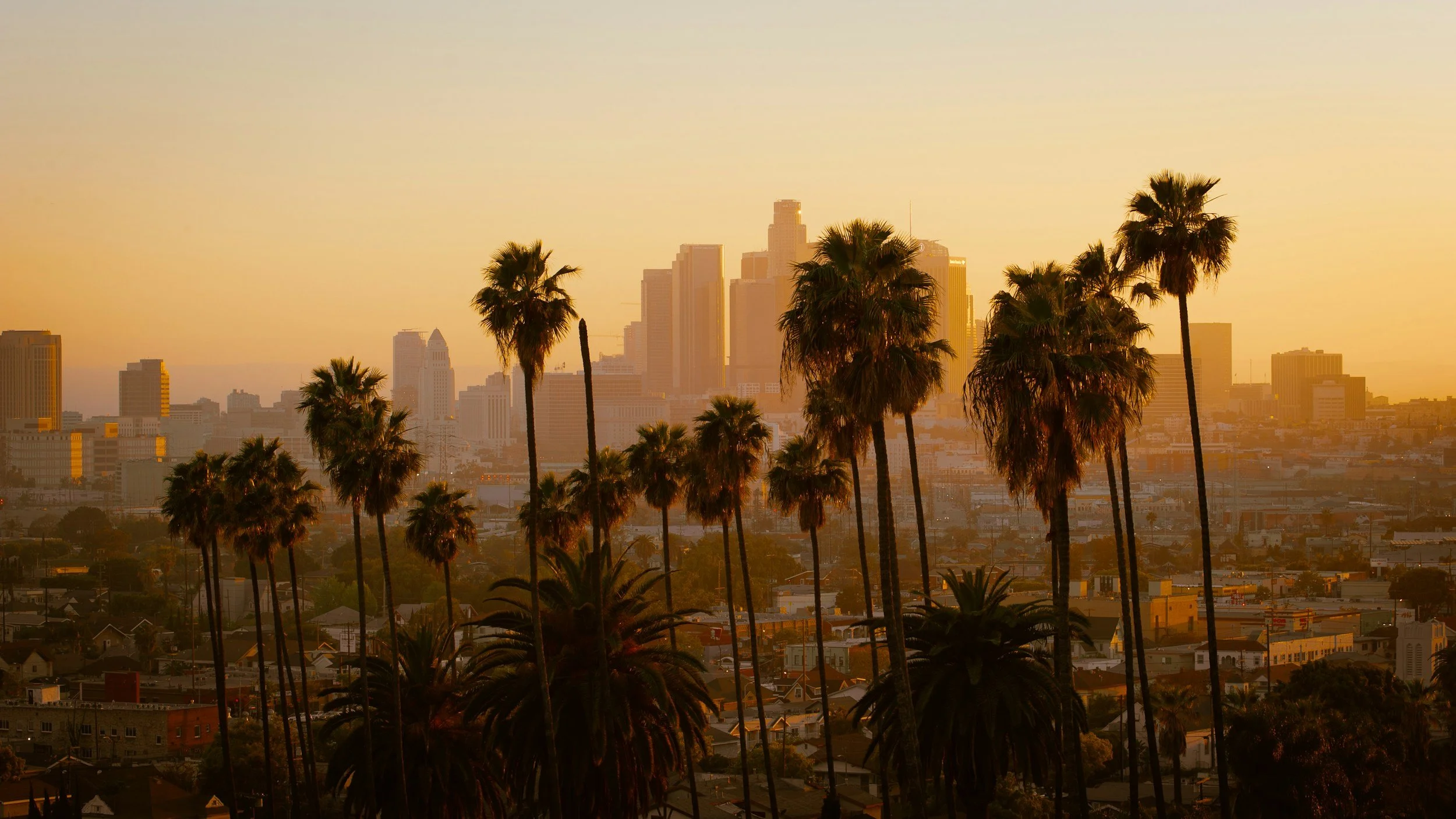
Los Angeles isn’t a city you visit once and fully understand. It’s a place of pockets, perspectives, and parallel lives — where beach towns sit beside concrete downtowns, and quiet hillside neighbourhoods exist just minutes from some of the busiest streets in the world.
Unlike many global cities, LA doesn’t revolve around a single centre. Instead, it unfolds through its neighbourhoods — each with its own rhythm, culture, and way of living. Where you stay doesn’t just affect logistics here; it shapes the entire experience.
This guide breaks Los Angeles down neighbourhood by neighbourhood, helping you decide not just where to sleep, but where you’ll feel most at home. From oceanfront communities and creative enclaves to historic districts and nightlife hubs, each area offers a different version of LA life.
Whether you’re visiting for the first time, returning with a clearer sense of what you love, or planning a longer stay, understanding LA through its neighbourhoods is the key to travelling it well — slower, smarter, and far more locally.
Santa Monica
Set right on the edge of the city, Santa Monica is where Los Angeles feels most liveable. Life here revolves around the outdoors — morning jogs along the beachfront, long café breakfasts, and sunset walks above the coast.
It’s polished without feeling flashy and relaxed without losing energy. For many travellers, this is where LA first starts to make sense.
Why Stay Here
Santa Monica is an excellent base if you’re visiting LA for the first time and want beach access without feeling disconnected from the rest of the city. It suits travellers who value walkability, good food, and a calmer daily pace, while still offering easy links to Venice Beach, West LA, and Malibu.
Evenings tend to be social and relaxed rather than nightlife-focused, making it ideal for slower, more balanced trips.
What to Expect
This is one of LA’s most walkable and well-kept neighbourhoods. The atmosphere is health-conscious and outdoorsy, with cyclists, runners, and yoga studios woven into everyday life.
Areas closest to the Santa Monica Pier and Third Street Promenade are busier and more tourist-driven during the day. Head a few blocks inland — particularly north of Wilshire Boulevard — and the mood quickly becomes quieter, greener, and more residential.
Highlights and Things to Do
The Santa Monica Pier is iconic and worth a visit, but the real appeal lies beyond it. Walking or cycling the coastal path offers a much better sense of the neighbourhood, especially heading south towards Venice Beach or north beneath the cliffs.
Palisades Park, running along the bluffs above the beach, is one of the best sunset spots in the city and a favourite place for locals to wind down. Inland, Third Street Promenade provides shopping and people-watching, while nearby streets reveal a more everyday side of Santa Monica life.
Food and Drink Scene
Santa Monica’s food scene leans fresh, seasonal, and quality-driven, with a strong emphasis on produce-forward Californian cooking. Brunch culture is particularly strong here, and the café scene is one of the best in LA, with plenty of relaxed, work-friendly spots scattered throughout the neighbourhood.
For a true LA classic, Chez Jay is a standout. This old-school bungalow-style restaurant has been serving steaks and martinis since the 1950s and offers a rare glimpse into old Hollywood-era Santa Monica just steps from the beach.
For something more contemporary, Cassia is one of the area’s most respected dining rooms. It blends Southeast Asian flavours with Californian produce in a relaxed but refined setting and is well worth booking ahead.
For casual eating and café hopping, Montana Avenue and Main Street are two of the best areas to explore, packed with neighbourhood favourites rather than tourist-heavy spots.
Where to Stay
Accommodation in Santa Monica generally sits at the mid-range to higher end of LA pricing. You’ll find:
Larger beachfront hotels and ocean-view stays around Ocean Avenue
Smaller boutique hotels and quieter options near Montana Avenue
Serviced apartments and longer-stay accommodation closer to Main Street
Staying closer to the coast offers convenience and views but comes at a premium. For a calmer, more residential feel, the streets north of Wilshire Boulevard strike a better balance between atmosphere and access.
World Locals Tip
Santa Monica is one of the few neighbourhoods in LA where you can comfortably spend your first few days without a car. Explore locally on foot or by bike, then rent one later once you start venturing further across the city.
Venice Beach
Venice Beach is unapologetically itself. Creative, chaotic, and deeply countercultural at heart, this is one of LA’s most characterful neighbourhoods — a place where skate culture, street art, tech money, and long-standing locals all collide.
It’s rougher around the edges than Santa Monica, but that’s exactly the point. Venice feels alive, expressive, and constantly in motion.
Why Stay Here
Venice is best suited to travellers who:
Want to experience LA’s creative and alternative side
Enjoy people-watching and energy over polish
Like being close to the beach but don’t need refinement
Want walkable access to cafés, bars, and coastal paths
It’s especially popular with creatives, younger travellers, and those who prefer atmosphere over comfort.
What to Expect
Venice is gritty, vibrant, and unpredictable. Streets can feel chaotic near the beachfront, while residential pockets just a few blocks inland are surprisingly calm. You’ll see skateboarders, street performers, mural artists, and tech workers all sharing the same space.
The contrast is part of the charm — Venice doesn’t try to be neat or curated. It’s expressive, sometimes overwhelming, but never boring.
Highlights and Things to Do
The heart of the neighbourhood is the Venice Beach Boardwalk, a nonstop stream of performers, stalls, and characters that’s best experienced on foot. Nearby, Muscle Beach remains an iconic slice of LA culture, while the skatepark draws crowds throughout the day.
For something quieter, wander through the Venice Canals, one of the most unexpected and peaceful spots in the city, especially early in the morning. Cycling the beachfront path south towards Manhattan Beach or north to Santa Monica is also one of the best ways to experience the area.
Food and Drink Scene
Venice has one of LA’s strongest casual food scenes, with a focus on quality ingredients, creative cooking, and laid-back settings. Cafés are everywhere, and many double as social hubs for locals working remotely.
For a true neighbourhood favourite, Gjusta is a must. Part bakery, part deli, part café, it’s one of the most popular food spots on the Westside and known for excellent bread, smoked fish, and all-day dining.
For dinner, The Tasting Kitchen offers refined Californian cooking in a relaxed but polished space, while Felix Trattoria is a standout for handmade pasta and consistently excellent Italian food.
For casual wandering, Abbot Kinney Boulevard is the main artery — packed with cafés, boutiques, and bars — though it’s best enjoyed earlier in the day before crowds build.
Where to Stay
Accommodation in Venice is more limited and eclectic than in Santa Monica. Options tend to include:
Smaller boutique hotels close to Abbot Kinney Boulevard
Short-term apartments and guesthouses in residential streets
A handful of beachfront hotels near the boardwalk
Staying a few blocks inland offers a much calmer experience while keeping everything walkable. Beachfront stays are atmospheric but come with noise and crowds.
World Locals Tip
Venice is at its best early in the morning. Walk the boardwalk before 9am, explore the Venice Canals while it’s quiet, then retreat inland as the crowds roll in.
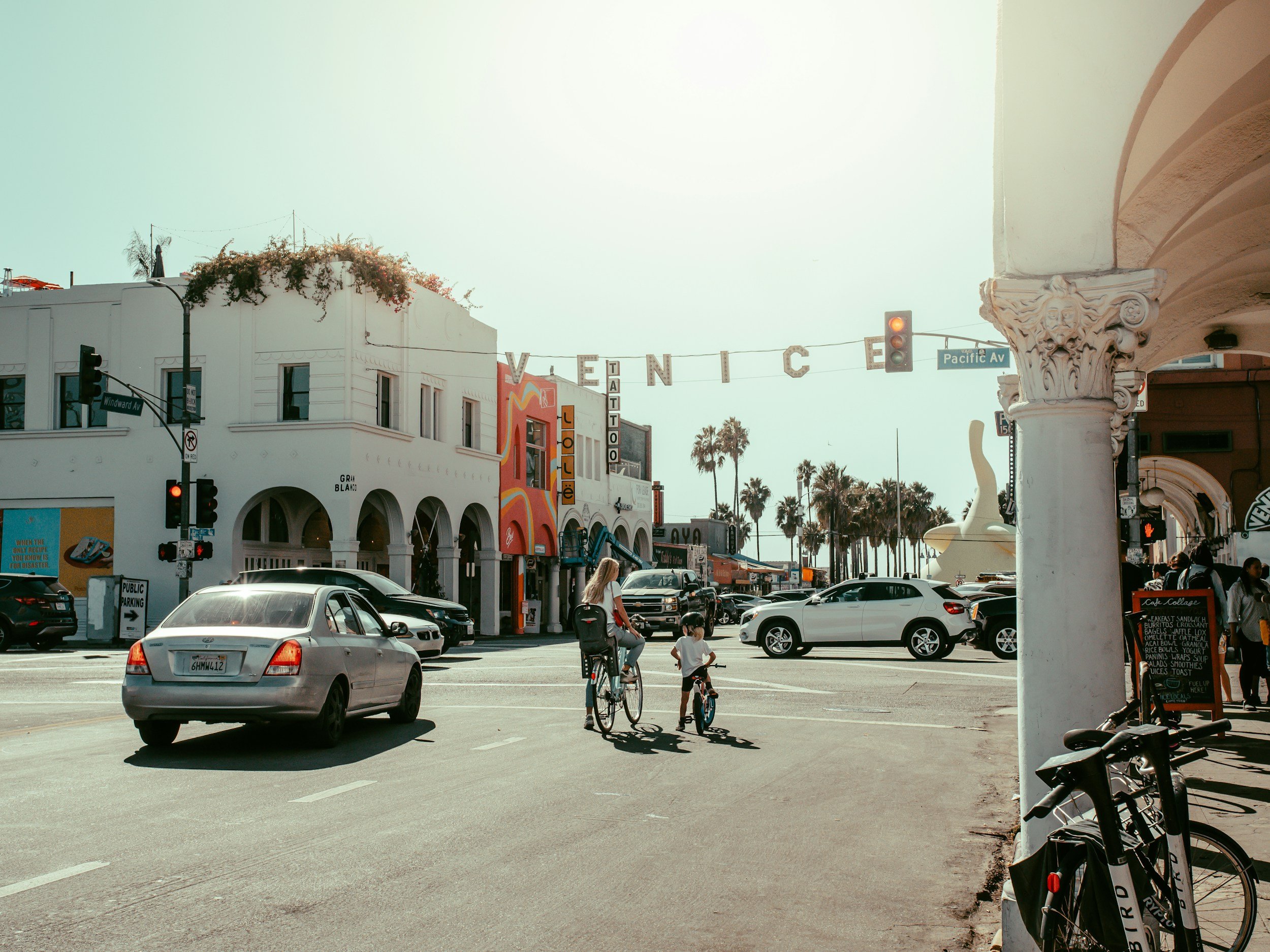
Venice Beach.
Silver Lake
Silver Lake is where Los Angeles turns inward and creative. Leafy hills, independent cafés, record shops, and low-rise streets give this neighbourhood a distinctly local feel — less about spectacle, more about everyday life.
It’s long been associated with artists, musicians, and writers, and while it’s evolved over the years, it still feels thoughtfully lived-in rather than built for visitors.
Why Stay Here
Silver Lake suits travellers who:
Want to experience LA beyond the beach
Prefer neighbourhood cafés and local bars over big attractions
Enjoy walking, people-watching, and slower mornings
Are returning to LA and want something more residential
It’s especially popular with creatives, long-stay travellers, and anyone curious about how locals actually live in the city.
What to Expect
Silver Lake is hilly, green, and relaxed, with a strong sense of community. Streets are lined with mid-century homes, bougainvillea-covered fences, and small independent businesses rather than chains.
The pace is noticeably slower than the coast, particularly during the day. Evenings centre around casual dinners and neighbourhood bars rather than nightlife districts. It feels lived-in, not curated.
Highlights and Things to Do
The neighbourhood’s focal point is the Silver Lake Reservoir, a favourite local walking loop surrounded by views of the hills and city skyline. It’s especially popular in the early morning and around sunset.
For shopping and wandering, Sunset Boulevard cuts through Silver Lake and is lined with vintage stores, bookshops, record shops, and cafés. The stretch between Silver Lake Boulevard and Hyperion Avenue is particularly lively and walkable.
Food and Drink Scene
Silver Lake punches well above its weight when it comes to food, with a strong focus on independent, chef-led spots and relaxed all-day dining. Brunch culture is big here, and many cafés feel like extensions of people’s living rooms.
For a neighbourhood classic, Pine and Crane is a standout. Known for its Taiwanese comfort food, it’s casual, affordable by LA standards, and hugely popular with locals.
For something more refined but still relaxed, Alimento offers thoughtful Italian-inspired dishes in a warm, unfussy setting.
Coffee-wise, Silver Lake has no shortage of good options, with Sunset Boulevard hosting several long-standing favourites ideal for slow mornings or working remotely.
Where to Stay
Accommodation in Silver Lake is mostly low-key and residential. You’ll typically find:
Boutique guesthouses and small hotels
Short-term apartment rentals in hillside streets
A few design-led stays scattered around Sunset Boulevard
It’s not a hotel-heavy area, but that’s part of the appeal. Staying here feels more like borrowing a slice of local life than visiting a traditional tourist base.
World Locals Tip
Silver Lake is best experienced on foot and without a strict plan. Pick a café, walk the reservoir, browse along Sunset Boulevard, and let the day unfold naturally — that’s exactly how locals treat it.
Echo Park
Echo Park sits just east of Downtown and feels like a neighbourhood in motion. Creative, diverse, and proudly unpolished, it blends long-standing local communities with artists, musicians, and young Angelenos who’ve helped shape its modern identity.
It’s energetic without being overwhelming, local without feeling sleepy — a place where LA feels grounded and real.
Why Stay Here
Echo Park is a great choice if you:
Want a local feel close to central LA
Enjoy walkable streets, casual bars, and independent food spots
Are interested in music, arts, and neighbourhood culture
Want quicker access to Downtown LA, Silver Lake, and Hollywood
It suits travellers who like character and atmosphere more than polish.
What to Expect
Echo Park is compact, lively, and socially driven. Streets buzz with cafés, taco stands, corner bars, and vintage shops, while residential areas climb gently into the surrounding hills.
It’s busier than Silver Lake and a little rougher around the edges, but that’s part of its charm. Expect a strong sense of community, plenty of street life, and a neighbourhood that feels active both day and night.
Highlights and Things to Do
The heart of the neighbourhood is Echo Park Lake, one of the most popular green spaces in central LA. The walking path around the lake is a local favourite, especially in the early evening, and pedal boats add a playful touch on sunny days.
Sunset Boulevard runs straight through Echo Park and acts as its main spine, packed with music venues, bars, and independent shops. The stretch between Alvarado Street and Echo Park Avenue is particularly lively and walkable.
Food and Drink Scene
Echo Park’s food scene is casual, affordable by LA standards, and deeply rooted in the neighbourhood. Mexican food is a highlight here, alongside relaxed all-day cafés and late-night spots.
For something iconic, Guisados is a must-visit. Known for slow-braised tacos and handmade tortillas, it’s one of LA’s most beloved taco spots and a genuine local staple.
For brunch or a laid-back lunch, Lowboy is a neighbourhood favourite, serving excellent burgers alongside cocktails in a casual, social setting.
Bars and live-music venues line Sunset Boulevard, giving Echo Park a stronger nightlife pulse than Silver Lake, without tipping into club territory.
Where to Stay
Accommodation in Echo Park is limited but characterful. Most options include:
Short-term apartment rentals in residential streets
Small guesthouses and boutique-style stays
A handful of simple hotels near Sunset Boulevard
Staying slightly uphill or away from the main road offers quieter nights while keeping everything within walking distance.
World Locals Tip
Echo Park shines in the late afternoon into evening. Walk around Echo Park Lake, grab tacos on Sunset Boulevard, then settle into a local bar — it’s one of the easiest neighbourhoods in LA to experience organically.
Downtown Los Angeles
Downtown LA (often shortened to DTLA) is one of the city’s most complex and fast-changing neighbourhoods. Historic theatres sit beside glass skyscrapers, old warehouses house cutting-edge galleries, and rooftop bars overlook streets that feel raw and real.
It’s not LA at its prettiest — but it is LA at its most honest, layered, and culturally dense.
Why Stay Here
Downtown LA suits travellers who:
Want to experience a more urban, city-driven side of LA
Enjoy architecture, arts, and cultural institutions
Prefer walkability and public transport access
Are returning to LA and want something less beach-focused
It’s a strong base for culture lovers and shorter stays, particularly if you want to minimise driving.
What to Expect
DTLA is busy, diverse, and sometimes confronting. You’ll move between polished blocks and rougher edges quickly, often within the same street. That contrast defines the area.
Neighbourhood pockets like Arts District, Historic Core, and Little Tokyo all feel distinct, each offering a different atmosphere — from creative and warehouse-driven to historic and community-focused. Nights are lively, especially around dining and rooftop bar areas, while daytime energy centres around offices, cafés, and cultural venues.
Highlights and Things to Do
The Arts District is one of DTLA’s most enjoyable areas to explore, known for street art, converted warehouses, and independent shops. Nearby, Little Tokyo offers one of the most culturally rich experiences in the city, with temples, museums, and traditional eateries.
The Broad Museum is a major draw for contemporary art, while the historic Grand Central Market is one of the best places in LA to sample a wide range of food under one roof. Architecture lovers will also enjoy wandering the Historic Core, home to early 20th-century buildings and restored cinemas.
Food and Drink Scene
Downtown LA has one of the most exciting and varied food scenes in the city, ranging from casual market stalls to destination dining. It’s a great place to eat widely and adventurously.
For a classic DTLA experience, Grand Central Market is essential. Inside, you’ll find everything from tacos and ramen to classic egg sandwiches, all in a buzzing, communal setting.
In the Arts District, Bestia is one of LA’s most celebrated restaurants, known for bold Italian cooking and a lively industrial atmosphere — bookings are essential.
For drinks, rooftop bars around the Historic Core and South Park areas offer skyline views and a more polished side of downtown nightlife.
Where to Stay
DTLA offers a wider range of accommodation than many LA neighbourhoods. You’ll find:
Large modern hotels around South Park
Stylish boutique hotels in the Historic Core
Loft-style apartments in the Arts District
South Park is generally the most polished and comfortable base, while the Arts District suits travellers looking for a creative, design-led stay. As with much of downtown, choosing the exact location matters.
World Locals Tip
Downtown LA is best explored by pocket rather than all at once. Pick one area — Arts District, Little Tokyo, or Historic Core — and spend time there instead of trying to cover everything in a single day.
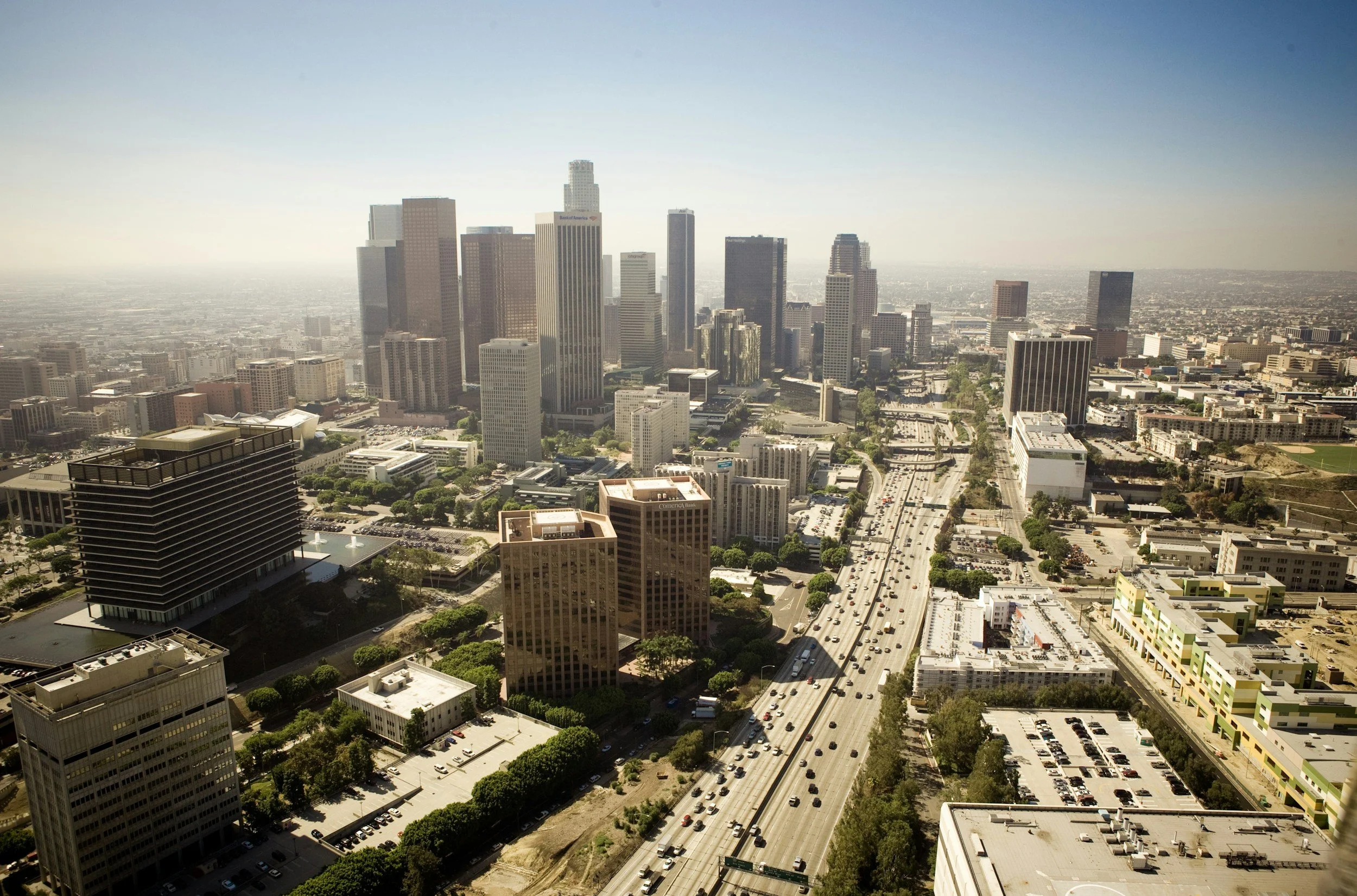
Downtown LA.
West Hollywood
West Hollywood (WeHo) is bold, expressive, and unapologetically social. Compact, walkable, and packed with personality, it’s one of LA’s most energetic neighbourhoods — where nightlife, design, and LGBTQ+ culture sit at the heart of everyday life.
It’s polished but playful, stylish without being stiff, and feels far more like a traditional city neighbourhood than much of sprawling LA.
Why Stay Here
West Hollywood is a great fit if you:
Want walkability and density in a city known for sprawl
Enjoy nightlife, dining, and people-watching
Are interested in fashion, design, and contemporary culture
Want a central base between Hollywood, Beverly Hills, and central LA
It’s especially popular with short-stay visitors who want energy on their doorstep.
What to Expect
WeHo is lively from morning through late night. Streets feel busy, social, and visually striking, with design hotels, cafés, and bars packed closely together. The neighbourhood has a strong identity and a confident sense of self, shaped by its long-standing LGBTQ+ community and creative industries.
There’s very little suburban quiet here — evenings are active, weekends are busy, and the atmosphere is distinctly urban by LA standards.
Highlights and Things to Do
Sunset Boulevard cuts through West Hollywood and is one of the most famous nightlife strips in the world, home to legendary music venues, rooftop bars, and hotels. Even if you’re not heading out, it’s worth walking just to take in the atmosphere.
Along Santa Monica Boulevard, the energy shifts towards bars, clubs, and LGBTQ+ venues that form the social core of the neighbourhood. For something slower, design lovers will enjoy wandering Melrose Avenue, known for boutiques, galleries, and street style.
Food and Drink Scene
West Hollywood is one of LA’s strongest neighbourhoods for dining out, with a dense mix of buzzy restaurants, classic institutions, and stylish bars.
For a true LA staple, Craig's is iconic — known as much for celebrity sightings as for its comfort-driven menu and old-school Hollywood feel.
For something more design-led, Gracias Madre stands out for its plant-based Mexican dishes and beautiful outdoor setting, making it a favourite for both locals and visitors.
Cocktail bars and rooftop lounges are scattered throughout the neighbourhood, particularly along Sunset Boulevard, keeping evenings lively and social.
Where to Stay
West Hollywood offers some of LA’s most stylish accommodation. You’ll find:
Design-forward hotels along Sunset Boulevard
Boutique and mid-range hotels close to Santa Monica Boulevard
A small number of serviced apartments in quieter side streets
Staying near Sunset puts nightlife on your doorstep, while areas slightly south towards Santa Monica Boulevard offer a better balance between energy and rest.
World Locals Tip
If you’re staying in West Hollywood, you likely won’t need a car every day. Walk locally, use rideshares at night, and plan driving-heavy sightseeing for specific days rather than trying to do everything at once.
Beverly Hills
Beverly Hills is calm, manicured, and deliberately composed. Known globally for luxury and celebrity, the reality on the ground is far quieter — leafy residential streets, well-kept parks, and a slower, more polished pace than much of Los Angeles.
It’s not a neighbourhood driven by nightlife or creative chaos, but by comfort, privacy, and space. Beverly Hills feels insulated from the rest of the city, offering a softer, more refined version of LA life.
Why Stay Here
Beverly Hills works best if you:
Prefer quiet, clean, and residential surroundings
Want a comfortable base on the Westside
Enjoy walking, cafés, and people-watching over nightlife
Are travelling as a couple or on a relaxed itinerary
It’s particularly well suited to travellers who value ease and calm over energy.
What to Expect
The neighbourhood is orderly and low-key. Streets are wide and green, traffic feels calmer, and the atmosphere is noticeably more subdued than nearby West Hollywood.
There’s very little late-night activity here. Evenings are quiet, and most restaurants and cafés cater to daytime dining and early dinners rather than nightlife crowds. Beverly Hills feels residential first, visitor-friendly second.
Highlights and Things to Do
The most famous street is Rodeo Drive, synonymous with high-end shopping and luxury brands. Even without shopping, it’s worth a short walk to take in the scale and spectacle.
Running alongside it, Beverly Gardens Park offers a long, pleasant green corridor ideal for walking, with the Beverly Hills Sign marking one of the city’s most recognisable photo spots.
Beyond the centre, wandering the residential streets south of Santa Monica Boulevard gives a better sense of everyday life here — elegant homes, quiet sidewalks, and classic Southern California architecture.
Food and Drink Scene
Dining in Beverly Hills is polished and traditional, leaning more towards established institutions than trend-led openings. It’s less about experimentation and more about consistency, service, and setting.
For a classic LA experience, The Polo Lounge is one of the city’s most storied dining rooms, known for its old Hollywood history and elegant, timeless atmosphere.
For something more contemporary but still refined, Spago remains a benchmark for Californian fine dining, combining seasonal ingredients with global influence in a relaxed yet upscale setting.
For lighter meals and cafés, Canon Drive and Beverly Drive are far more pleasant and local-feeling than Rodeo Drive itself.
Where to Stay
Accommodation in Beverly Hills sits firmly at the higher end of LA pricing. Typical options include:
Luxury hotels clustered around Wilshire Boulevard
Boutique and heritage-style hotels near Rodeo Drive
Serviced apartments in quieter residential areas
Staying here offers comfort and calm, but you’ll almost certainly rely on rideshares or a car to explore the rest of the city.
World Locals Tip
Beverly Hills is best experienced in daylight hours. Come for a slow morning walk, lunch on Canon Drive, and some people-watching — then head elsewhere in the evening if you’re looking for atmosphere or nightlife.
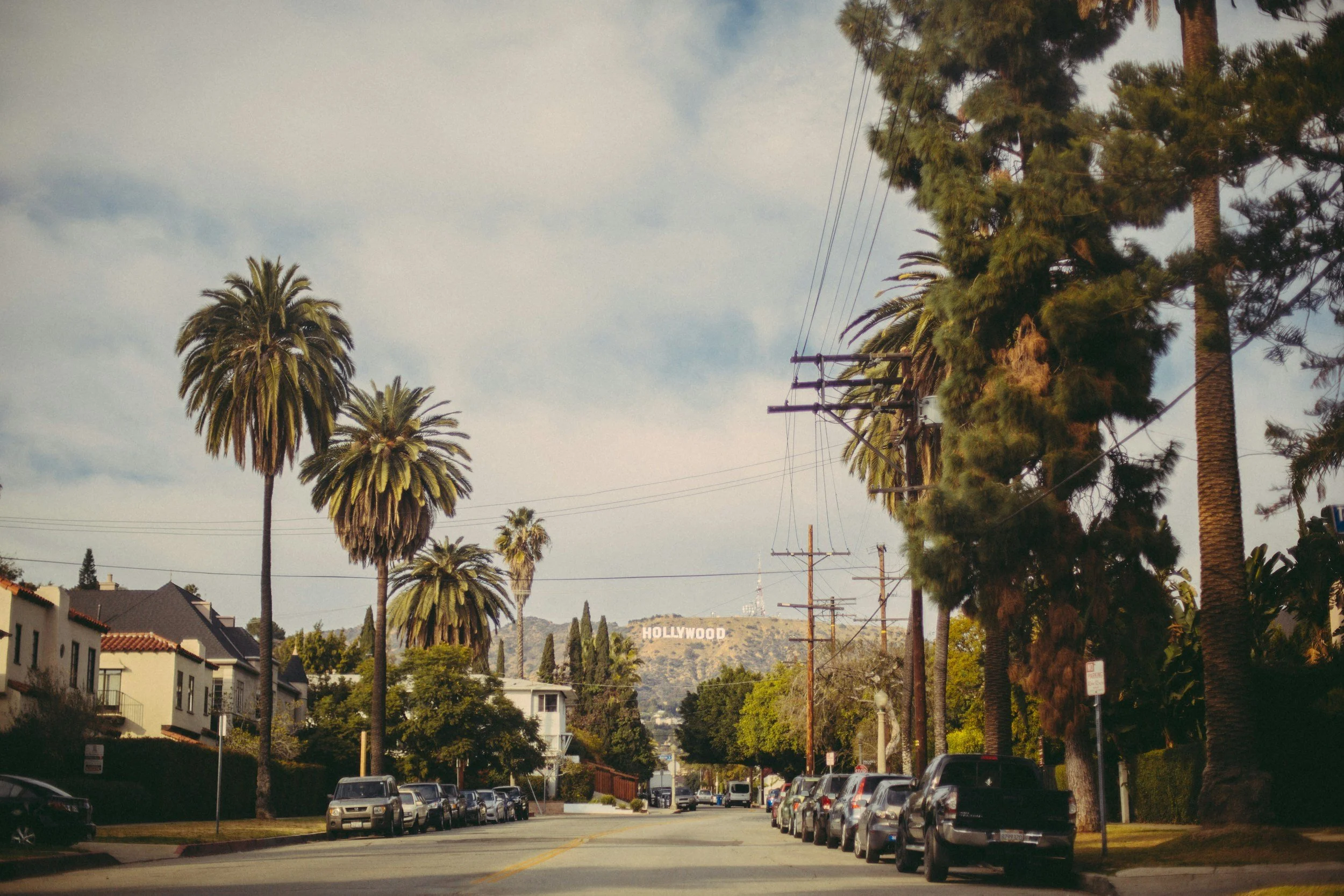
Beverly Hills.
Hollywood
Hollywood is one of LA’s most recognisable names — and one of its most polarising neighbourhoods. It’s where global myth meets everyday reality, with historic landmarks and film history sitting alongside busy streets and crowds of visitors.
It isn’t always glamorous, but it is culturally significant, and understanding Hollywood helps make sense of LA as a whole.
Why Stay Here
Hollywood works best if you:
Are visiting LA for the first time and want to see the classics
Want easy access to major landmarks and attractions
Plan to spend more time sightseeing than relaxing
Prefer central positioning over neighbourhood charm
It’s less about atmosphere and more about proximity.
What to Expect
Hollywood is busy, tourist-heavy, and constantly moving. The area around Hollywood Boulevard is the most intense, with crowds, souvenir shops, and street performers filling the sidewalks throughout the day.
Move slightly away from the main strip and the mood shifts — residential pockets, hills, and quieter streets appear surprisingly quickly. It’s a neighbourhood of contrasts, often within the same block.
Highlights and Things to Do
The Hollywood Walk of Fame runs along Hollywood Boulevard and is the area’s most famous feature. While it’s not particularly scenic, it’s a cultural rite of passage for first-time visitors.
Nearby, the TCL Chinese Theatre remains one of the most iconic cinema buildings in the world, known for its handprints and premieres. For views, heading up towards the Hollywood Hills offers access to hiking trails and lookout points over the city.
The Hollywood Sign itself is best viewed from nearby trails or scenic viewpoints rather than from the street.
Food and Drink Scene
Hollywood’s food scene is mixed, with plenty of tourist-oriented spots near the main attractions, but some solid options if you know where to look.
For a long-standing local favourite, Musso and Frank Grill is one of LA’s oldest restaurants, serving classic American fare in a timeless setting that dates back to 1919.
For something more contemporary, Luv2Eat Thai Bistro is widely regarded as one of the city’s best Thai restaurants, offering bold flavours well beyond the usual Hollywood fare.
Where to Stay
Accommodation in Hollywood ranges widely in quality. You’ll find:
Mid-range and boutique hotels near Hollywood Boulevard
Larger chain hotels close to major attractions
Quieter guesthouses and apartments towards the Hollywood Hills
If staying here, choosing a location slightly removed from the main tourist strip makes a noticeable difference to comfort and noise levels.
World Locals Tip
Hollywood works best as a short, focused stop rather than a long base. See the landmarks, explore the hills, then experience the rest of LA from more liveable neighbourhoods.
Malibu
Malibu feels like a world away from Los Angeles, even though it sits just beyond the city’s western edge. Defined by dramatic coastline, wide beaches, and low-density living, it’s one of the most scenic places in Southern California — and one of the clearest reminders of how varied LA really is.
This is slow, spacious, and nature-led LA. Less about neighbourhood buzz, more about landscape and light.
Why Stay Here
Malibu suits travellers who:
Want to prioritise scenery, space, and calm
Are planning a slower-paced trip or short escape
Enjoy beaches, coastal walks, and outdoor living
Don’t mind being more removed from the city
It’s ideal as a contrast to central LA, or as a short stay at the start or end of a trip.
What to Expect
Malibu is spread out and car-dependent. There’s no real town centre, just a string of beaches, residential enclaves, and small commercial pockets strung along the coast.
Life here revolves around daylight hours — mornings on the beach, long lunches, sunset drives along the ocean. Evenings are quiet, with very little nightlife and limited late-opening venues.
Highlights and Things to Do
Malibu’s main draw is its coastline. Zuma Beach is one of the widest and most popular beaches, ideal for long walks and sunset views, while El Matador State Beach is more dramatic, known for sea stacks and rocky coves.
For something inland, the trails around Malibu Creek State Park offer hiking with views back towards the ocean and surrounding hills. Driving Pacific Coast Highway itself is an experience — especially early in the morning or at golden hour.
Food and Drink Scene
Malibu’s food scene is small but scenic, with dining often focused on location as much as the menu.
For a classic coastal stop, Malibu Farm sits right on the pier and is known for its farm-to-table approach and unbeatable ocean views — best enjoyed earlier in the day to avoid crowds.
For a more traditional, low-key local favourite, Neptune's Net is an institution, popular with surfers and road-trippers for casual seafood right off the highway.
Where to Stay
Accommodation in Malibu is limited and generally expensive. Options typically include:
High-end beachfront hotels
Private homes and short-term rentals along the coast
A small number of boutique-style stays tucked into the hills
Staying here is less about convenience and more about experience. Most visitors combine Malibu with time elsewhere in LA rather than using it as their sole base.
World Locals Tip
Malibu is best enjoyed early and midweek. Visit beaches in the morning, avoid peak weekend traffic on Pacific Coast Highway, and plan meals outside traditional lunch rush hours.
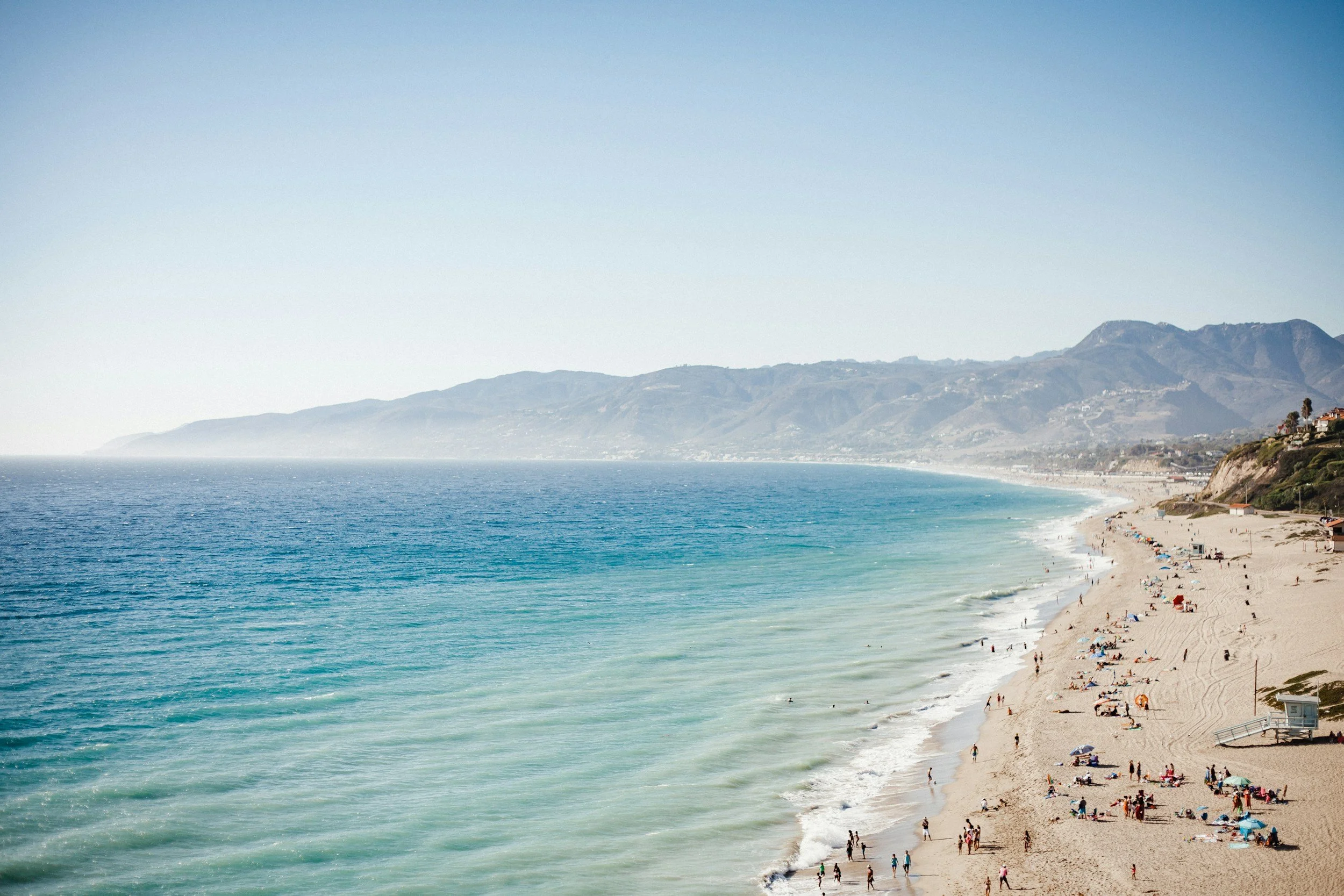
Malibu.
Choosing the Right Neighbourhood in Los Angeles
Los Angeles doesn’t have a single “best” area to stay — the right neighbourhood depends entirely on how you want to experience the city. Below is a quick guide to help match neighbourhoods to travel style.
Best for first-time visitors
Santa Monica – walkable, relaxed, and easy to navigate
Hollywood – close to major landmarks and classic sights
Best for beaches and outdoor living
Santa Monica – balanced and liveable coastal base
Venice Beach – energetic, creative, and people-focused
Malibu – scenic, spacious, and nature-led
Best for creatives and local life
Silver Lake – café culture, independent shops, community feel
Echo Park – lively, diverse, and neighbourhood-driven
Best for nightlife and dining
West Hollywood – compact, social, and nightlife-focused
Downtown LA – cultural depth, rooftop bars, destination dining
Best for calm and comfort
Beverly Hills – quiet, polished, and residential
Malibu – slow-paced, scenic, and secluded
Getting Around Los Angeles
Los Angeles rewards thoughtful planning. Distances are long, traffic is real, and grouping activities by neighbourhood makes a huge difference.
Car hire
Best option for flexibility and longer distances
Ideal for exploring multiple neighbourhoods and Malibu
Often easier to rent for part of the trip rather than the whole stay
Rideshares
Reliable and widely available across the city
Especially useful for evenings and nightlife areas
Good option in Santa Monica, West Hollywood, and Downtown
Public transport
Useful for specific routes, particularly Downtown ↔ Hollywood ↔ Santa Monica
Improving, but not comprehensive enough to fully replace a car
Plan by neighbourhood
Focus on one area per day
Avoid crossing the city repeatedly
You’ll see more and feel far less rushed
“Los Angeles isn’t a city you rush through. It’s best experienced in layers — one neighbourhood at a time. Each area offers a different perspective, from coastal calm and creative pockets to urban density and polished calm.
Choose the neighbourhood that fits your travel style, and LA opens up naturally — slower, more locally, and far more memorably.”