Los Angeles is one of the most exciting food cities in the world — not because of trends or fine dining headlines, but because of the way people actually eat here. Food in LA is shaped by migration, neighbourhoods, and everyday routines, where some of the best meals come from strip malls, food trucks, and family-run spots rather than white-tablecloth restaurants.
This is a city built on movement. Communities arrive, settle, cook, and adapt — and over time, those traditions become part of LA’s culinary fabric. Mexican food isn’t a category here; it’s foundational. Korean BBQ is a social ritual. Farmers’ markets shape menus year-round. And global flavours don’t compete — they coexist.
What makes LA special is that exceptional food is normalised. You don’t need a reservation, a dress code, or a special occasion. You just need to know where you are — and why that neighbourhood eats the way it does.
This guide is designed to help you understand Los Angeles through its food, from the cultural subcultures that define the city to the neighbourhoods where those cuisines are best experienced. Rather than chasing hype across town, it encourages eating locally, travelling slower, and letting meals anchor your days.
In LA, food isn’t something you schedule around sightseeing. It is the experience — one taco stand, late-night table, and sunlit café at a time.
LA’s Food Culture: What Makes It Different
Food in Los Angeles isn’t organised around trends, dining districts, or a single culinary identity. Instead, it’s shaped by communities — by who lives where, what they brought with them, and how those traditions have evolved over time.
Rather than chasing a centre, LA’s food culture spreads outward. Great meals are scattered across neighbourhoods, often hidden in plain sight: strip malls, converted houses, roadside grills, and unassuming storefronts. In this city, appearance is rarely a reliable indicator of quality.
Casual Excellence Comes First
One of the defining traits of eating in Los Angeles is how normalised great casual food is. Some of the city’s most respected meals don’t require reservations, dress codes, or special occasions. They’re eaten standing up, late at night, or at tables that turn quickly and without ceremony.
Tacos, noodles, BBQ, bakeries, diners — these aren’t alternatives to “proper” dining. They are the foundation of how people eat here, day in and day out.
Migration as the Backbone of the City’s Food
Los Angeles’ food culture is inseparable from immigration. Mexican, Korean, Japanese, Chinese, Southeast Asian, Middle Eastern, Persian, Armenian, and Caribbean cuisines didn’t arrive as trends — they arrived as home cooking.
Many of the city’s most important food spaces exist first to serve their own communities. Visitors are welcome, but they’re stepping into something already established. That’s why LA’s food feels lived-in rather than performative, and why understanding context matters as much as knowing what to order.
Neighbourhoods Over Hype
In LA, the locals’ approach to eating is simple: eat near where you are. Each neighbourhood develops its own food identity, shaped by migration patterns, daily routines, and accessibility rather than reputation.
Chasing hype across the city often leads to long drives and underwhelming meals. Eating locally, on the other hand, tends to produce better food, less stress, and a deeper sense of place. Meals become anchors in your day rather than destinations in themselves.
Driving for Food Is Normal
That said, Los Angeles is also a city where driving for food is completely normal. A specific taco, bowl of noodles, or bakery item can justify a cross-city journey — especially if it’s tied to memory, tradition, or routine.
Both approaches coexist. Some of the best meals happen five minutes away; others are worth the drive. Knowing when each applies is part of understanding how LA eats.
What Los Angeles Does Better Than Almost Anywhere Else
There are a few areas where LA genuinely stands apart:
Street tacos at scale and quality
Korean BBQ as an everyday social ritual
Casual global food done exceptionally well
Produce-led cooking shaped by year-round farmers’ markets
Late-night eating that feels normal, not niche
Together, these elements create a food culture that’s flexible, deeply local, and endlessly varied — one where curiosity is rewarded far more than planning.
Korean Food Culture and Koreatown
Korean food is one of the most embedded parts of Los Angeles’ everyday dining culture. Home to one of the largest Korean communities outside Korea, Koreatown isn’t just somewhere people go to eat — it’s a place where food structures social life.
Meals here are rarely rushed. Tables are shared, side dishes arrive together, and evenings often stretch late into the night. Eating Korean food in LA is communal and generous, built around rhythm and repetition rather than courses or ceremony.
How Koreatown Fits Into LA’s Food Culture
Koreatown has quietly shaped how people eat across Los Angeles. Korean BBQ, in particular, has become a familiar part of city life — something people plan evenings around, associate with celebrations, and return to regularly rather than treating as a special occasion.
What stands out in LA is how normalised Korean food feels. It isn’t limited to one neighbourhood or one community. Locals across the city eat it weekly, and the shared, social nature of the meals has influenced how group dining works more broadly.
Rather than feeling like a destination, Korean food in LA functions as part of the city’s everyday rhythm — woven into routines, relationships, and late-night habits.
What Eating Korean Food in LA Looks Like
Meals are interactive and social. BBQ is cooked at the table, dishes are shared, and pacing is relaxed. It’s common for dinners to last hours, moving naturally from food to drinks without a clear end point.
Late-night dining is also central to Koreatown’s identity. Many kitchens stay open well past midnight, reinforcing its reputation as one of the most active neighbourhoods in LA after dark.
Beyond BBQ
While BBQ draws most of the attention, Koreatown’s food culture runs much deeper.
Everyday eating here includes:
Comfort dishes built around soups, stews, and rice
Casual noodle houses and snack-focused spots
Bakeries blending Korean and European influences
Cafés that function as social spaces rather than quick stops
These places are just as important as the headline BBQ halls and often better reflect how locals actually eat.
How to Approach Koreatown as a Visitor
Koreatown rewards flexibility and curiosity. It’s best experienced without rigid plans, allowing time for waits, shared tables, and unhurried meals. Peak dining hours tend to be late, especially on weekends, when the neighbourhood really comes into its own.
It’s also one of the few parts of LA where exploring on foot works well once you arrive, thanks to its density, late-night energy, and concentration of food spots.
Mexican and Chicano Food Culture in Los Angeles
Mexican food isn’t a category in Los Angeles — it’s foundational. Long before LA was framed as a global food city, Mexican and Chicano communities were shaping how, where, and what people ate. Today, that influence runs through every neighbourhood, from street corners and strip malls to markets and family-run dining rooms.
Eating Mexican food in LA is everyday behaviour. It’s breakfast burritos before work, tacos after midnight, weekend tamales, and long lunches built around shared plates. It’s casual, habitual, and deeply tied to place.
How Mexican Food Fits Into LA’s Food Culture
Mexican food structures LA’s daily rhythm in a way few other cuisines do. It’s accessible, affordable, and everywhere — not as a trend, but as a constant. Many locals eat Mexican food multiple times a week, often without thinking twice about it.
What’s distinctive in LA is the breadth. Mexican food here reflects regional diversity — Oaxacan, Yucatecan, Jaliscan, Baja-influenced — shaped by migration patterns and neighbourhood histories rather than a single “style”. The result is a food culture that’s expansive, flexible, and deeply rooted.
Rather than being confined to one district, Mexican food flows across the city. Certain areas have stronger identities, but the cuisine itself belongs everywhere.
Street Food, Taquerias, and Everyday Eating
Street food is central to how Mexican food functions in LA. Taco stands, trucks, and informal setups aren’t side attractions — they’re essential infrastructure. Many operate late into the night, serving neighbourhoods long after other kitchens have closed.
Taquerias play a similar role during the day: quick, reliable, and built around repetition rather than novelty. People return to the same places weekly, sometimes daily, forming routines that anchor their neighbourhoods.
This kind of everyday eating is what gives LA’s Mexican food scene its depth. It’s not about chasing the best taco once — it’s about finding your taco and returning to it.
Regional Influences and Chicano Identity
Chicano food culture in LA reflects generations of adaptation and continuity. Recipes evolve, techniques are preserved, and flavours shift slightly over time — but the connection to family, place, and memory remains strong.
Regional Mexican cuisines are especially visible here. Oaxacan moles, Yucatecan cochinita pibil, and seafood-forward Baja cooking all have space to exist on their own terms, often served by families cooking food tied directly to their heritage.
This layered identity is what gives Mexican food in LA its quiet authority. It isn’t curated for visitors — it exists because it has always existed.
How to Approach Mexican Food in LA as a Visitor
The best way to experience Mexican food in LA is to treat it as part of your daily routine, not a one-off experience. Eat it more than once. Try it at different times of day. Let it happen organically rather than planning around a single destination.
Be open to informality. Some of the best meals come from places with minimal seating, handwritten menus, or no online presence at all. Trust neighbourhood patterns — if a spot is busy with locals, it’s doing something right.
Mexican food in LA isn’t about spectacle. It’s about consistency, familiarity, and flavour that becomes part of the background of the city — in the best possible way.
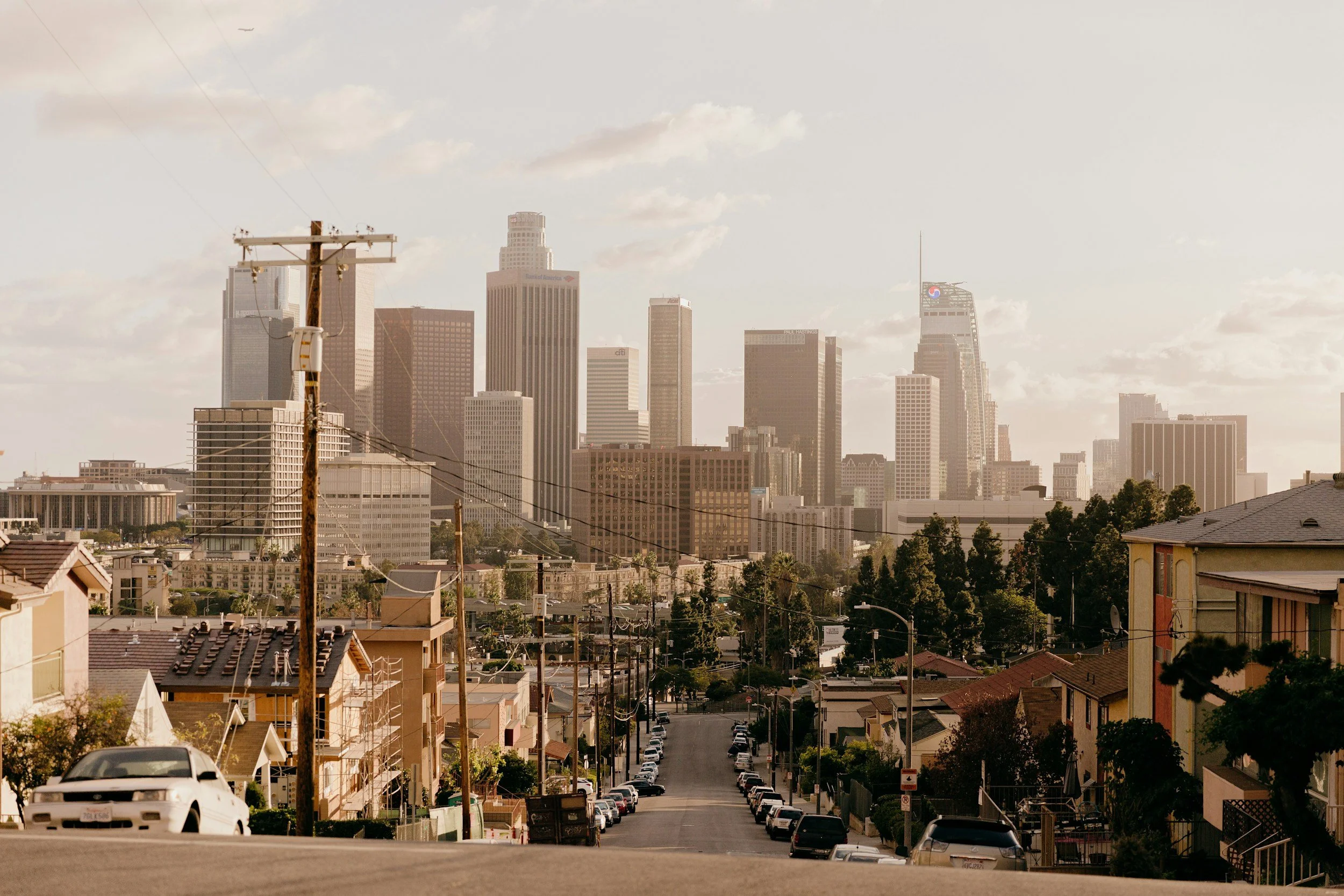
Koreatown.
Japanese Food Culture and Little Tokyo
Japanese food has a long, understated presence in Los Angeles. While it doesn’t announce itself as loudly as some other cuisines, its influence runs deep — shaping everything from everyday lunch spots to some of the city’s most refined dining experiences.
This is a food culture built on precision, repetition, and respect for ingredients. In LA, Japanese food is rarely about spectacle. It’s about reliability, balance, and returning to the same places again and again.
How Japanese Food Fits Into LA’s Food Culture
Japanese food in LA occupies an interesting space: widely loved, quietly trusted, and woven into everyday eating habits. Sushi, ramen, and bento aren’t treated as special-occasion meals — they’re normal parts of the weekly rotation for many locals.
What makes LA distinctive is range. Japanese food here exists at every level, from simple noodle counters and bakeries to high-end omakase dining. That spectrum reflects both the size of the community and the way Japanese cooking has been absorbed into the city’s broader food culture.
Rather than being concentrated in one area, Japanese food spreads outward, adapting to neighbourhoods while maintaining its core principles.
Little Tokyo and Cultural Continuity
Little Tokyo remains the cultural heart of Japanese life in LA. It’s one of the few historic Japantowns left in the United States, and its food culture reflects continuity rather than trend.
Here, eating is practical and purposeful. Ramen shops, sushi counters, bakeries, and casual diners serve locals, office workers, and families who’ve been coming for years. It’s a place where familiarity matters more than novelty.
Food in Little Tokyo often feels restrained and unshowy — but that’s exactly the point. The focus stays on technique, quality, and consistency.
Everyday Japanese Eating in LA
Beyond sushi, everyday Japanese food in LA centres on comfort and routine:
Ramen and udon shops built for regular visits
Curry houses and set-meal dining
Bakeries blending Japanese and European traditions
Casual cafés serving as quiet daytime anchors
These places are often modest in size and design, but deeply reliable. Locals return because they know exactly what they’re getting — and that consistency builds trust over time.
How to Approach Japanese Food in LA as a Visitor
Japanese food in LA rewards repetition rather than one-off experiences. Instead of chasing a single “best” spot, it’s better to eat it more than once, in different formats — a quick lunch, a quiet dinner, a bakery stop mid-morning.
Little Tokyo is an ideal entry point, especially during the day, but some of the most memorable meals happen outside it, tucked into residential neighbourhoods or business districts. As with much of LA, proximity matters more than reputation.
Japanese food here isn’t about discovery in the dramatic sense. It’s about finding places that quietly fit into your day — and letting them do their work.
Southeast Asian Food Cultures in Los Angeles
(Thai, Vietnamese, Filipino)
Southeast Asian food is woven quietly but firmly into Los Angeles’ daily dining habits. These cuisines show up not as trends, but as reliable, repeatable meals — the kind people return to midweek, late at night, or whenever comfort matters more than occasion.
In LA, Thai, Vietnamese, and Filipino food often functions as everyday nourishment rather than destination dining. It’s filling, affordable by city standards, and deeply tied to neighbourhood life.
How Southeast Asian Food Fits Into LA’s Food Culture
What stands out in Los Angeles is how normalised Southeast Asian food feels. Thai takeaways, pho shops, and Filipino bakeries aren’t treated as niche — they’re part of the city’s regular food rotation.
These cuisines thrive because they meet LA where it is: fast-moving, spread out, and informal. Meals are practical, flavour-forward, and designed to be eaten often, not saved for special occasions.
Over time, Southeast Asian food has become one of the city’s most dependable answers to the question, “What should we eat?”
Thai Food and Thai Town
Thai food holds a particularly strong place in LA’s food landscape. The city is home to one of the largest Thai communities outside Thailand, and that presence shows in both quality and depth.
Thai Town, located just east of Hollywood, remains the cultural centre. Here, cooking leans regional and unapologetic — bold heat, deep seasoning, and dishes that go far beyond familiar takeaway staples. Meals are built for sharing and repetition, often eaten late and without ceremony.
Beyond Thai Town, Thai restaurants are scattered across the city, embedded into neighbourhood routines rather than clustered into a single destination.
Vietnamese Food and Everyday Comfort
Vietnamese food in LA is closely associated with comfort and consistency. Pho houses, bánh mì counters, and family-run dining rooms serve as everyday anchors — places people rely on when they want something grounding and familiar.
These spots tend to prioritise balance over intensity. Broths simmer quietly, menus stay focused, and regulars return because the food tastes the same every time. That reliability is the appeal.
Vietnamese bakeries and cafés also play an important role, offering casual meeting points that blend food with routine social life.
Filipino Food and Growing Visibility
Filipino food has long been part of LA’s culinary fabric, but in recent years it’s become more visible — without losing its community roots.
Much of Filipino food culture in LA centres on home-style cooking, bakeries, and casual counters rather than formal restaurants. Flavours are rich, comforting, and deeply nostalgic, often tied to family gatherings and shared meals.
Rather than being concentrated in one neighbourhood, Filipino food appears across the city, integrated into everyday LA life rather than packaged as a singular scene.
How to Approach Southeast Asian Food in LA as a Visitor
The best way to experience Southeast Asian food in LA is through repetition. Eat it more than once. Try it in different contexts — a quick lunch, a late-night bowl, a bakery stop between neighbourhoods.
Thai Town is an excellent place to experience depth and tradition, but many of the most satisfying meals happen outside well-known clusters, tucked into residential areas or mixed-use streets.
As with much of LA, the key isn’t chasing the most talked-about place. It’s finding the spot that fits naturally into your day — and letting it become part of your rhythm.
Middle Eastern and Persian Food Culture in Los Angeles
Middle Eastern and Persian food plays a steady, everyday role in Los Angeles’ dining culture. It’s food built around generosity, repetition, and shared tables — often eaten casually, frequently, and without much ceremony.
Rather than existing as a single “scene”, these cuisines are woven into neighbourhood life across the city, shaped by long-established Iranian, Armenian, Lebanese, and broader Middle Eastern communities.
How Middle Eastern and Persian Food Fits Into LA’s Food Culture
In LA, Middle Eastern and Persian food is part of the weekly routine. Grilled meats, rice dishes, flatbreads, dips, and stews show up as reliable, comforting meals rather than special-occasion dining.
What makes Los Angeles distinctive is scale. The depth of these communities means food remains closely tied to home cooking traditions, even when served in casual restaurants or bakeries. Meals are generous, designed for sharing, and often ordered instinctively rather than from long menus.
This food culture reinforces one of LA’s defining habits: eating together, often and without fuss.
Persian Food and Everyday Ritual
Persian food in LA is deeply rooted in hospitality. Meals revolve around balance — rice, herbs, grilled meats, stews — with an emphasis on freshness and restraint rather than excess.
Eating Persian food here often feels domestic in the best sense. Restaurants function as extensions of home kitchens, places people return to regularly for familiar flavours and predictable comfort. Lunches are unhurried, dinners are social, and leftovers are expected.
Rather than chasing novelty, Persian food in LA values continuity — dishes that taste the way they always have.
Armenian and Levantine Influences
Armenian and Levantine cuisines add further depth to LA’s Middle Eastern food landscape. Bakeries, kebab houses, and small grocery-style eateries anchor neighbourhoods and serve as everyday gathering points.
Flatbreads, grilled meats, mezze, and sweets form the backbone of this eating culture, often enjoyed casually and repeatedly. These are places people rely on — quick lunches, family dinners, or takeaway meals that become part of weekly routine.
The food is practical, generous, and rooted in familiarity rather than presentation.
Neighbourhoods and Food Geography
Middle Eastern and Persian food isn’t confined to one area, but certain neighbourhoods play a key role. West LA has a strong Persian presence, while nearby Glendale is central to Armenian food culture.
What matters more than exact location, though, is proximity. Locals tend to eat at places close to home, reinforcing LA’s broader pattern of neighbourhood-led dining rather than destination chasing.
How to Approach Middle Eastern and Persian Food in LA as a Visitor
This is food best experienced slowly and repeatedly. Look for places that feel lived-in rather than designed for visitors. Expect large portions, shared plates, and menus that haven’t changed much over time.
Meals are often best at lunch or early dinner, when kitchens are calm and regulars pass through. As with much of LA, trust places that seem woven into everyday life — they usually are.
Middle Eastern and Persian food in LA doesn’t demand attention. It rewards familiarity, patience, and return visits.
Chinese and Taiwanese Food Cultures in Los Angeles
Chinese and Taiwanese food in Los Angeles operates with a kind of quiet confidence. It isn’t flashy, heavily marketed, or built for visitors — and that’s exactly why it’s so good. Much of it exists in strip malls, suburban pockets, and neighbourhood centres that reward intention rather than spontaneity.
This is food designed for regular eating: comforting, regional, and deeply consistent. It’s a culture of return visits rather than one-off discoveries.
How Chinese and Taiwanese Food Fits Into LA’s Food Culture
Chinese and Taiwanese food plays a steady, grounding role in how people eat across LA. For many locals, it’s part of the weekly rhythm — noodles for lunch, dumplings for dinner, bakery stops woven into errands.
What sets LA apart is regional depth. Instead of one generic “Chinese” style, the city supports a wide range of regional cuisines, each existing on its own terms. Taiwanese food, in particular, has found a strong foothold, valued for its comfort, balance, and everyday practicality.
This is food that doesn’t chase trends. It simply keeps feeding the people who rely on it.
Regional Diversity and Everyday Eating
Chinese food in LA reflects migration patterns rather than menus designed for outsiders. You’ll find northern wheat-based cooking alongside southern rice-focused dishes, spice-driven regional styles alongside restrained, broth-led meals.
Taiwanese food often centres on comfort and familiarity:
Noodles and rice dishes built for repetition
Dumplings and small plates eaten casually
Bakeries and tea shops tied to daily routines
Meals are often quick, affordable by city standards, and deeply habitual. These are places people visit weekly, sometimes daily.
Strip Malls, Suburbs, and Food Geography
Some of LA’s best Chinese and Taiwanese food exists outside the city’s most tourist-facing areas. Suburban pockets east of downtown — particularly in the San Gabriel Valley — have become essential to understanding this food culture.
Cities like Monterey Park and Alhambra are known for their concentration of regional Chinese and Taiwanese cooking, often clustered in unassuming strip malls where the focus stays firmly on the food.
This reinforces a broader LA pattern: some of the most meaningful meals require intention and travel, but reward it generously.
Bakeries, Tea Culture, and In-Between Meals
Bakeries play a particularly important role in Chinese and Taiwanese food culture. They function as everyday stops — places to pick up breakfast, an afternoon snack, or something to take home.
Tea culture is similarly woven into daily life, with tea shops acting as social spaces rather than novelty destinations. These in-between moments — snacks, drinks, small bites — are just as important as full meals in understanding how people eat.
How to Approach Chinese and Taiwanese Food in LA as a Visitor
This is food best approached with purpose. Do a little research, choose an area, and commit to it rather than trying to fit it into a rushed itinerary.
Once you’re there, trust places that feel functional rather than polished. Menus may be long, dining rooms simple, and service brisk — but consistency and depth matter more than atmosphere.
Chinese and Taiwanese food in LA doesn’t seek attention. It rewards curiosity, return visits, and a willingness to eat where locals actually do.
Caribbean and Cuban Food Influences in Los Angeles
Caribbean and Cuban food in Los Angeles doesn’t dominate the city’s dining conversation, but it holds a quiet, meaningful place within it. These cuisines tend to exist in specific neighbourhood pockets, family-run spaces, and long-standing local institutions rather than citywide “scenes”.
What they offer is something deeply familiar to LA’s food culture: comfort, repetition, and food that’s closely tied to memory and community.
How Caribbean and Cuban Food Fits Into LA’s Food Culture
In LA, Caribbean and Cuban food often functions as home food. It’s the kind of cooking people seek out for familiarity rather than novelty — meals tied to upbringing, migration, and routine rather than trends.
Unlike cities where Caribbean food is highly visible, in Los Angeles it’s more understated. That subtlety reflects the way these communities have integrated into the wider food landscape: present, steady, and deeply personal.
Cuban Food and Café Culture
Cuban food in LA is closely tied to café culture and daytime eating. Sandwiches, slow-cooked meats, rice dishes, and strong coffee anchor menus that prioritise substance and simplicity over reinvention.
These are often places people return to habitually — for lunch, a quick coffee, or food that feels grounding. Cuban food here doesn’t aim to surprise; it aims to satisfy in familiar ways.
Rather than being concentrated in a single district, Cuban spots appear where communities settled, reinforcing LA’s pattern of neighbourhood-led dining.
Caribbean Cooking Beyond a Single Identity
Caribbean food in LA reflects a broad spectrum of islands and traditions rather than one unified style. Jerk-spiced meats, stews, rice dishes, and fried snacks appear in small restaurants and takeaway counters that serve specific communities first.
Much like other subcultures in LA, these kitchens are built around repetition and loyalty. Menus stay tight, flavours stay consistent, and regulars know exactly what they’re ordering before they arrive.
Scale, Visibility, and Why That Matters
The smaller scale of Caribbean and Cuban food in LA is part of what makes it distinctive. These cuisines haven’t been widely repackaged or trend-driven, which allows them to retain a sense of authenticity and everyday purpose.
They exist comfortably alongside LA’s larger food cultures without competing for attention — reinforcing the idea that LA’s culinary strength comes from accumulation rather than dominance.
How to Approach Caribbean and Cuban Food in LA as a Visitor
This is food best discovered through curiosity rather than planning. Look for long-standing neighbourhood spots, modest dining rooms, and menus that haven’t changed much over time.
Approach these meals as part of everyday eating rather than a destination experience. A simple lunch, a takeaway dinner, a coffee stop — these moments often provide the clearest insight into how these cuisines live within the city.
Caribbean and Cuban food in LA may not shout for attention, but it adds important texture to the city’s broader food story — one built on migration, memory, and continuity.
Iconic Food Experiences in Los Angeles
Los Angeles doesn’t have a single defining dish — instead, it has patterns of eating. These experiences cut across neighbourhoods and cultures, shaping how people actually move through the city day to day.
They’re less about individual restaurants and more about habits, timing, and context — the kind of food moments that quickly become part of everyday life.
Street Tacos as Everyday Infrastructure
Tacos are one of the most constant presences in LA’s food landscape. Street stands, pop-ups, and informal setups appear on corners, outside bars, and near busy intersections, often operating late into the night.
This isn’t novelty street food — it’s essential infrastructure. Locals rely on tacos for quick dinners, post-work meals, and late-night stops. The best ones are rarely announced or signposted; they’re recognised through queues, repetition, and familiarity.
Rather than chasing a single “best” taco, most people develop a short list of reliable stands they return to again and again.
Food Trucks and Mobile Kitchens
Food trucks play a quieter role than they once did, but they remain an important part of LA’s eating habits. They often operate on routines — returning to the same streets or neighbourhoods at predictable times — and build loyal followings as a result.
What matters here isn’t variety, but reliability. Locals seek out trucks they trust, often ordering the same dish every time. Food trucks in LA are less about experimentation and more about consistency on the move.
Farmers’ Markets and Produce-Led Eating
Farmers’ markets sit at the heart of LA’s produce-driven food culture. Year-round growing seasons mean fresh fruit, vegetables, and herbs shape how people cook and eat throughout the city.
Markets function as more than shopping spaces — they’re social anchors. People meet for coffee, browse slowly, and plan meals around what looks good rather than what was planned in advance. This produce-first mindset feeds directly into LA’s wider food scene, from home kitchens to restaurants.
Food Halls and Casual Gathering Spaces
Places like Grand Central Market represent another important LA food habit: eating together without formality. These are spaces designed for flexibility — different budgets, tastes, and schedules all coexisting under one roof.
Food halls work well in a city as spread out as LA. They allow groups to eat together without compromise and encourage grazing rather than structured meals.
Old-School Diners and Legacy Spots
Amid constant change, LA still holds onto its diners, coffee shops, and long-running neighbourhood institutions. These places offer familiarity rather than reinvention — predictable menus, steady service, and a sense of continuity.
They’re often overlooked by visitors, but deeply valued by locals. For many Angelenos, these are the places tied to memory: late breakfasts, quiet lunches, and meals that don’t require decision-making.
Late-Night Eating as a Way of Life
In LA, eating late doesn’t feel like an exception — it feels normal. Many kitchens stay open well past traditional dinner hours, especially in areas shaped by nightlife, shift work, and dense residential living.
Late-night food isn’t limited to one cuisine or format. It might be tacos on a corner, noodles in Koreatown, or a casual sit-down meal long after sunset. This flexibility reflects the city’s rhythms and reinforces how food fits around life rather than dictating it.
Eating by Neighbourhood, Not Occasion
Perhaps the most iconic LA food experience of all is eating locally. Meals tend to follow geography rather than planning — lunch near work, dinner near home, snacks wherever you happen to be.
This habit underpins everything else. Instead of building days around restaurants, food slots naturally into movement, routines, and neighbourhood life.
Best Tacos and Mexican Food in Los Angeles
Mexican food is the backbone of everyday eating in Los Angeles, and tacos sit right at the centre of it. They’re quick, affordable, and endlessly repeatable — eaten for breakfast, lunch, dinner, and very often late at night.
What makes LA special isn’t just quality, but consistency at scale. You don’t hunt for tacos here; you live alongside them.
Tacos as Daily Food, Not a Special Event
In LA, tacos aren’t something you “go out for” — they’re something you fit into your day. Stands appear on corners, outside bars, near supermarkets, and along busy streets, often operating on quiet routines rather than publicity.
Locals rarely chase the single best taco. Instead, they build loyalty to a few trusted spots — places they return to weekly, sometimes daily. Familiarity matters more than novelty.
Street Stands vs Taquerias
Both formats play distinct roles in LA’s taco culture.
Street stands
Often operate in the evenings and late at night
Focus on a tight menu done extremely well
Feel informal, fast, and social
Ideal for spontaneous eating
Taquerias
Open earlier and operate throughout the day
Better suited to sit-down meals or takeaway
Broader menus, including plates and specials
Built around routine rather than impulse
Neither is “better” — they simply serve different moments.
Regional Styles You’ll Encounter
LA’s taco culture reflects regional Mexican diversity rather than a single style.
Common influences include:
Oaxacan traditions, with rich moles and handmade tortillas
Baja-style seafood tacos, especially closer to the coast
Jalisco-style meats like birria, often slow-cooked and deeply flavoured
Yucatecan influences, including cochinita pibil and citrus-forward marinades
You don’t need to seek these out deliberately — they tend to appear naturally based on neighbourhood and family history.
What to Order (Without Overthinking It)
This is one of the few areas where light guidance helps.
A good approach:
Order two to three tacos rather than one
Mix one familiar option with something new
Pay attention to tortillas — quality often shows there first
If a stand specialises in one or two meats, trust that focus. Specialisation usually signals repetition and confidence.
Timing Matters More Than Location
Some of the best tacos in LA aren’t available all day. Many stands come alive after dark, while others are strongest in the morning or early afternoon.
Rather than travelling across the city, let tacos meet you where you are:
Late night near nightlife areas
Midday near busy neighbourhood streets
Early morning near markets or commuter routes
Context often matters more than reputation.
How to Approach Tacos Like a Local
The most reliable rule is simple: eat tacos more than once. Try them in different neighbourhoods, at different times, and in different formats.
Tacos in LA aren’t about finding the perfect version — they’re about rhythm, repetition, and trust. Once you find a spot that fits into your routine, you’ll understand why locals keep coming back.
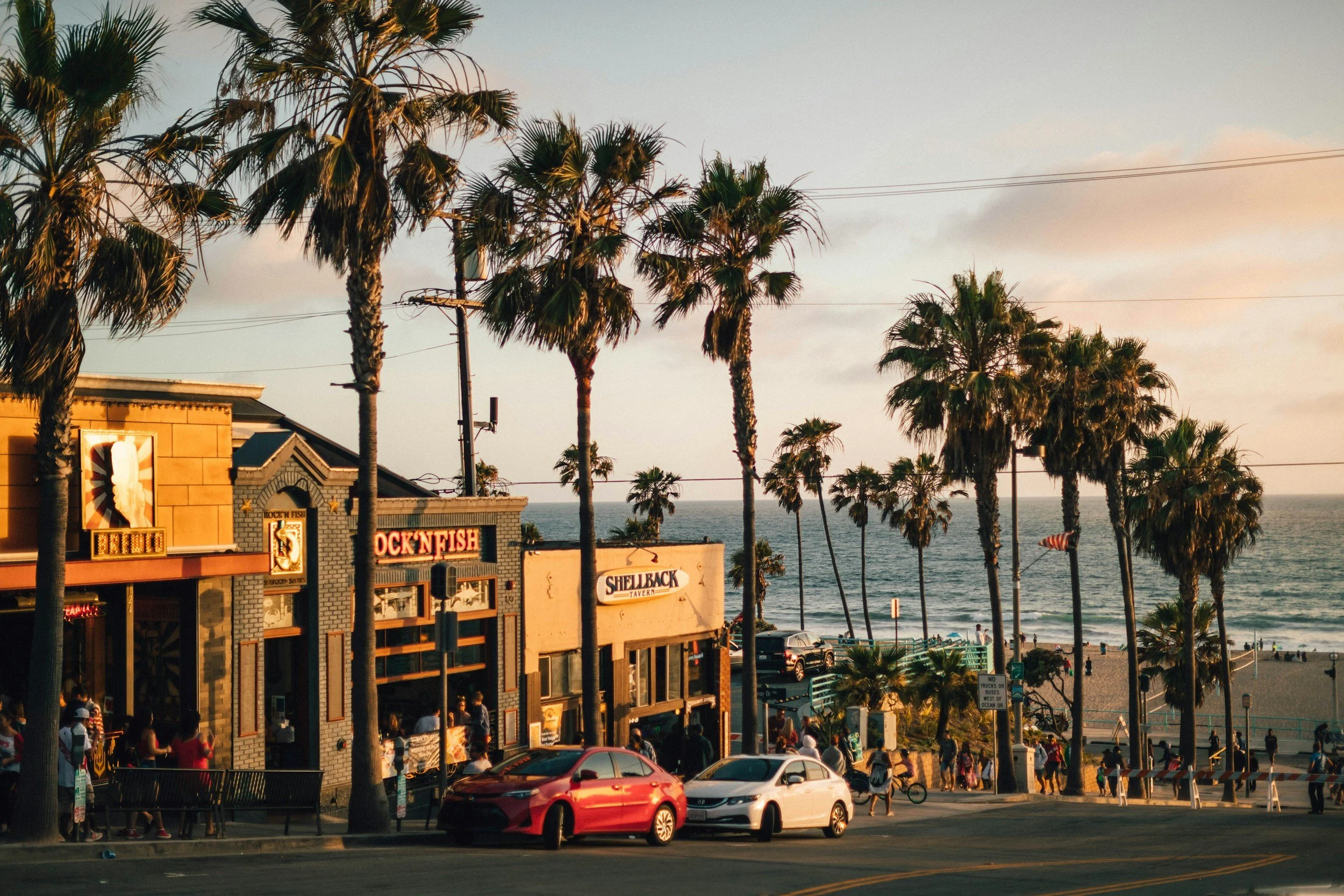
Manhattan Beach.
Santa Monica: Food and Drink Scene
Santa Monica’s food scene reflects its lifestyle — relaxed, produce-led, and built around daytime eating just as much as evenings. This is a neighbourhood where breakfast and lunch matter as much as dinner, and where cafés, bakeries, and coastal dining form the backbone of how people eat.
Rather than chasing trends, Santa Monica leans into consistency: places people return to regularly, often at the same time each week.
How Santa Monica Eats
Food here is closely tied to routine. Morning coffee, long brunches, casual lunches, and early dinners dominate the rhythm of the neighbourhood. Menus skew seasonal, health-conscious, and unfussy, shaped by access to local produce and an outdoors-first way of life.
Dining feels calm and social rather than scene-driven. Even popular spots tend to blend into everyday life rather than feeling like destinations.
Coastal Dining and Classic Institutions
Santa Monica still holds onto a handful of long-standing institutions that feel rooted in place rather than trend.
Chez Jay remains one of the area’s most characterful dining rooms — informal, old-school, and unchanged in spirit for decades. It’s the kind of place locals return to for familiarity rather than reinvention.
Along the coast, restaurants tend to prioritise setting as much as menu. Views matter, but the best experiences come from places that feel relaxed rather than performative.
Modern Californian Cooking
Santa Monica is also a stronghold for contemporary Californian cuisine — food that’s produce-forward, seasonal, and globally influenced without being showy.
Cassia stands out for blending Southeast Asian flavours with local ingredients in a way that feels thoughtful rather than trend-driven. It’s a good example of how Santa Monica balances refinement with approachability.
This style of cooking shows up across the neighbourhood, often in dining rooms that feel equally suited to weeknight meals and slow weekends.
Cafés, Bakeries, and Everyday Eating
Café culture is central to Santa Monica life. Many places function as all-day spaces — coffee in the morning, light meals at lunch, and a steady flow of regulars throughout the day.
Streets like Montana Avenue and Main Street are particularly good for wandering without a plan, offering clusters of bakeries, cafés, and casual spots that feel distinctly local.
These are places people build into their routines rather than seek out once.
When Santa Monica Works Best
Santa Monica shines earlier in the day. Breakfast through early dinner is when the neighbourhood feels most natural, especially midweek when things are calmer.
Evenings are relaxed rather than late, making this a better area for slow dinners than nightlife-focused eating.
World Locals Tip
In Santa Monica, follow the daylight. Eat well in the morning and afternoon, take advantage of café culture and produce-led menus, then head elsewhere in the evening if you’re looking for late-night energy.
Venice Beach: Food and Drink Scene
Venice eats the way it lives — casually, creatively, and without much concern for polish. The food scene here is built around movement and mood rather than occasion: coffee after a surf, a late breakfast that turns into lunch, dinner somewhere that doesn’t mind if you show up sandy or sunburnt.
It’s less refined than Santa Monica, but far more expressive. Food in Venice feels social, spontaneous, and closely tied to the street.
How Venice Eats
Venice food culture is informal and flexible. Meals happen between plans rather than anchoring the day, and many places are designed for quick stops, shared tables, or lingering without pressure.
There’s a strong emphasis on:
Casual daytime eating
Creative, globally influenced menus
Coffee, bakeries, and all-day spots
Places that double as social hubs
Consistency matters, but personality matters more.
Bakeries, Cafés, and All-Day Favourites
Venice is one of LA’s strongest neighbourhoods for bakery-led and all-day eating.
Gjusta is a cornerstone of the neighbourhood — part bakery, part deli, part café — and a place people return to repeatedly rather than treat as a one-off visit. It’s as much about atmosphere as it is about food, and mornings tend to be calmer than peak lunch hours.
Coffee culture is deeply embedded here. Many cafés function as informal meeting points, workspaces, and neighbourhood living rooms, especially along Abbot Kinney Boulevard.
Casual Dining and Evening Eating
Dinner in Venice tends to stay relaxed. Menus lean seasonal and Mediterranean-influenced, often with a Californian sensibility — simple plates, good ingredients, and a low-pressure atmosphere.
Felix Trattoria stands out for its handmade pasta and neighbourhood loyalty. While it attracts attention, it still functions as a place locals return to rather than a special-occasion restaurant.
Evenings in Venice are social rather than late. Food often blends into drinks, conversations, and people-watching rather than feeling like a defined event.
Abbot Kinney and Neighbourhood Geography
Abbot Kinney Boulevard is the spine of Venice’s food scene. It’s where cafés, bakeries, bars, and restaurants cluster most densely, and where wandering without a plan works particularly well.
That said, the best experiences often happen just off the main strip — smaller places tucked into residential streets that feel quieter and more routine-driven.
When Venice Works Best
Venice is at its best from morning through early evening. Breakfast, brunch, and late lunches feel especially natural here, while dinners work well when kept informal and unhurried.
Early mornings are ideal if you want to see the neighbourhood at its calmest — before crowds and beach traffic reshape the pace.
World Locals Tip
In Venice, don’t over-plan meals. Pick a starting point, walk, and let food happen naturally. The neighbourhood rewards spontaneity far more than reservations.
Silver Lake and Echo Park: Food and Drink Scene
Silver Lake and Echo Park share a similar food philosophy: independent, neighbourhood-driven, and built around repeat visits rather than destination dining. This is everyday LA eating — places you fold into your routine, return to weekly, and recommend quietly rather than loudly.
Food here reflects who lives nearby: creatives, long-term residents, families, and people who value familiarity over flash.
How Silver Lake and Echo Park Eat
Eating in these neighbourhoods is unhurried and habitual. Breakfast and lunch are just as important as dinner, and many spots are designed for daytime use — coffee, light meals, and places that don’t mind if you linger.
Menus tend to be:
Chef-led but unfussy
Comfort-forward rather than experimental
Influenced by global flavours without being trend-chasing
The focus is on food that fits into daily life, not food that demands an occasion.
Neighbourhood Institutions and Everyday Favourites
Some of the most defining places here are those that locals return to again and again.
In Silver Lake, Pine and Crane is a staple — casual, reliable, and deeply woven into neighbourhood routine. It’s the kind of place that works just as well for a quick weekday meal as a relaxed weekend lunch.
Nearby, Alimento reflects the area’s approach to dining: thoughtful, seasonal cooking in a space that feels welcoming rather than performative.
In Echo Park, food tends to skew slightly more casual and spontaneous, with many spots designed for walk-ins and late-afternoon eating rather than long formal dinners.
Cafés, Bakeries, and Daytime Culture
Café culture is central here. Many cafés double as workspaces, meeting points, and extensions of people’s living rooms. Coffee stops are built into daily movement — before the reservoir walk, after errands, or between plans.
Stretches of Sunset Boulevard and surrounding side streets are ideal for wandering without a fixed destination, letting food fit naturally into the day rather than structuring it.
Evening Eating and Neighbourhood Bars
Dinner in Silver Lake and Echo Park tends to stay relaxed and social. Evenings are more about conversation than spectacle, with restaurants and bars blending together rather than existing as separate “scenes”.
Echo Park, in particular, has a slightly stronger late-afternoon and early-evening energy, where food often turns into drinks without a clear dividing line.
When These Neighbourhoods Work Best
Silver Lake and Echo Park shine during the day and early evening. Breakfast through dinner feels natural here, especially midweek when things are calmer and more local-feeling.
They’re ideal neighbourhoods to eat well without planning heavily — places where you can show up, see what feels right, and trust that it probably is.
World Locals Tip
In Silver Lake and Echo Park, follow routine over reputation. Eat where people are eating at regular hours — especially midweek — and you’ll experience these neighbourhoods exactly as locals do.
Downtown Los Angeles: Food and Drink Scene
Downtown Los Angeles is where LA’s food scene feels most concentrated and most complex. Historic buildings sit alongside modern towers, and food cultures overlap in tight pockets rather than spreading out. Eating here is less about routine and more about range — markets, destination restaurants, casual counters, and late-night options all within walking distance.
It’s one of the few parts of LA where you can genuinely eat widely without moving far.
How Downtown LA Eats
Downtown eating is shaped by proximity. Office workers, residents, visitors, and creatives all share the same food spaces, which creates a rhythm that changes by time of day.
Mornings and lunches are busy and functional
Afternoons slow into café and bakery culture
Evenings bring destination dining and rooftop bars
Late nights keep certain pockets active
Unlike neighbourhoods built around routine, DTLA rewards exploration.
Markets, Food Halls, and Casual Anchors
Markets play a central role in how Downtown eats.
Grand Central Market is the clearest example — a long-standing food hall where tacos, noodles, sandwiches, and sweets coexist under one roof. It’s practical, democratic, and deeply woven into downtown life rather than built for spectacle.
Markets like this work especially well in DTLA, offering flexibility in a neighbourhood with varied schedules and tastes.
Arts District and Destination Dining
The Arts District has become one of the city’s most important dining areas, shaped by converted warehouses and a strong creative presence.
Restaurants here tend to feel intentional and confident — menus are focused, spaces are industrial, and dining feels social rather than formal. This is where Downtown’s reputation for destination dining is most visible.
Bestia remains one of the area’s defining restaurants, known for bold flavours and a lively atmosphere that reflects the neighbourhood itself.
Little Tokyo and Cultural Continuity
Within Downtown, Little Tokyo offers a very different food rhythm. Eating here is practical, familiar, and tied closely to community.
Ramen shops, bakeries, and casual Japanese dining rooms serve regulars as much as visitors, creating a sense of continuity that contrasts with the newer parts of DTLA. Meals here feel purposeful rather than performative.
Bars, Rooftops, and Evening Eating
Downtown’s drinking culture is layered. Rooftop bars attract evening crowds with skyline views, while ground-level bars and restaurants offer more neighbourhood-driven energy.
Food and drink often blur together here — dinner turns into drinks, or a bar stop becomes an unplanned late meal. This fluidity suits Downtown’s pace and density.
When Downtown LA Works Best
Downtown is at its best when you commit to it fully. Spend a day exploring one or two pockets — Arts District, Historic Core, or Little Tokyo — rather than trying to cover everything.
It works especially well for afternoons into evenings, when the neighbourhood transitions naturally from food to drinks without requiring long journeys.
World Locals Tip
In Downtown LA, think in pockets, not postcodes. Choose an area, walk it slowly, and let food guide your movement — that’s when DTLA reveals its depth.
West Hollywood: Food and Drink Scene
West Hollywood eats with intention. This is one of the most outward-facing food scenes in LA — compact, social, and designed around going out rather than fitting meals quietly into the day. Dining here often sits at the centre of the evening, not around it.
It’s polished and confident, but still rooted in repetition. Many places succeed because people return often, not because they chase constant reinvention.
How West Hollywood Eats
Food in West Hollywood is closely tied to social life. Dinners are planned, tables are shared, and meals often blend seamlessly into drinks and late evenings. Compared to more residential neighbourhoods, eating here feels more deliberate.
The density helps. Restaurants, bars, and hotels sit close together, making it easy to move from one place to the next without much planning — something rare in LA.
Classic LA Institutions and Scene-Driven Dining
West Hollywood balances long-standing institutions with places that thrive on atmosphere.
Craig’s is a defining example — familiar, comfort-driven, and deeply embedded in LA dining culture. It’s less about novelty and more about consistency, familiarity, and the feeling of being part of the city’s long-running social fabric.
These kinds of places anchor the neighbourhood, offering continuity amid a constantly evolving dining landscape.
Contemporary Dining and Design-Led Spaces
Alongside its institutions, West Hollywood supports a steady flow of modern, design-forward restaurants. Menus are often globally influenced, but grounded — confident cooking without excessive experimentation.
Gracias Madre reflects this balance well, combining strong identity with broad appeal in a setting that feels equally suited to weeknights and weekends.
Dining rooms here tend to be part of the experience. Lighting, music, and layout matter — not to distract from the food, but to frame it socially.
Bars, Cocktails, and Late Evenings
Food and drink are tightly intertwined in West Hollywood. Many evenings start with dinner and end with cocktails without a clear dividing line. Bars cluster along major streets, allowing nights to unfold naturally rather than requiring strict plans.
This makes West Hollywood one of the easiest places in LA to eat and drink well in a single area, particularly if you’re short on time.
When West Hollywood Works Best
West Hollywood shines from evening onwards. While there are daytime cafés and lunches worth seeking out, this neighbourhood comes into its own after dark, when restaurants, bars, and streets fill with energy.
Weeknights tend to feel more relaxed, while weekends lean busier and more scene-driven.
World Locals Tip
In West Hollywood, plan one anchor reservation, then let the rest of the evening unfold around it. The neighbourhood rewards flexibility far more than rigid schedules.
Beverly Hills: Food and Drink Scene
Beverly Hills eats differently to much of Los Angeles. Food here is less about discovery and more about consistency, comfort, and setting. Dining tends to be polished, predictable in the best sense, and rooted in long-standing institutions rather than constant change.
This is a neighbourhood where people return to the same places for years — sometimes decades — valuing familiarity over experimentation.
How Beverly Hills Eats
Meals in Beverly Hills follow a steady, daytime-led rhythm. Breakfasts, lunches, and early dinners dominate, with far less emphasis on late-night eating or spontaneous plans.
Dining rooms feel calm and orderly. Service matters, pacing is unhurried, and menus prioritise reliability over reinvention. It’s food that fits neatly into a day rather than reshaping it.
Old-School Institutions and Continuity
Beverly Hills is home to some of LA’s most enduring dining rooms — places that feel tied to the city’s history rather than its current trends.
The Polo Lounge remains one of the area’s defining institutions. More than a restaurant, it’s a social space — known for long lunches, quiet conversations, and a sense of continuity that hasn’t shifted much over time.
These legacy spots anchor the neighbourhood’s food culture, offering familiarity in a city that otherwise changes quickly.
Refined Dining Without the Noise
Alongside its classic institutions, Beverly Hills supports refined, contemporary dining that remains intentionally restrained. Restaurants here tend to focus on technique, service, and setting rather than spectacle.
Spago is a clear example — a long-standing benchmark for Californian cuisine that continues to evolve without losing its sense of identity.
This style of dining suits the neighbourhood’s overall mood: polished, confident, and quietly assured.
Cafés, Lunch Spots, and Daytime Eating
Daytime eating is where Beverly Hills feels most natural. Streets like Canon Drive and Beverly Drive are lined with cafés and casual restaurants that cater to locals running errands, meeting friends, or taking long lunches.
These are places designed for comfort rather than speed — good coffee, reliable menus, and a pace that encourages lingering.
When Beverly Hills Works Best
Beverly Hills is at its best during the day and early evening. Breakfast through dinner feels measured and relaxed, while nights remain quiet compared to nearby West Hollywood.
It’s a strong choice for travellers who want calm, predictability, and polished surroundings rather than nightlife or spontaneity.
World Locals Tip
In Beverly Hills, lean into the daytime rhythm. Plan long lunches, slow coffees, and early dinners — and let other neighbourhoods handle late nights.
Malibu: Food and Drink Scene
Malibu eats at its own pace. Food here is shaped less by neighbourhood routine and more by landscape — long stretches of coastline, limited density, and a rhythm that follows daylight rather than the clock. Meals are often unhurried, scenic, and tied to the idea of being outdoors.
This isn’t a place for variety or spontaneity. It’s a place for moments.
How Malibu Eats
Malibu’s food culture is sparse by design. Restaurants are spread out, menus are generally straightforward, and dining tends to centre on daytime and early evening eating.
Breakfasts, long lunches, and sunset dinners dominate. Late-night food is rare, and many places close earlier than elsewhere in LA. Eating here feels intentional — something you plan around location and light rather than convenience.
Oceanfront Dining and Setting-Led Meals
In Malibu, setting matters as much as what’s on the plate. Many meals are chosen for where they happen rather than culinary ambition.
Malibu Farm, set on the pier, is one of the clearest expressions of this. Menus lean fresh and seasonal, but the real draw is eating over the water, especially earlier in the day when things feel calmer and more local.
Dining in Malibu often works best when expectations are aligned with the environment — simple food, good ingredients, and time to linger.
Casual Stops and Local Institutions
Along the Pacific Coast Highway, a handful of casual institutions anchor Malibu’s food scene.
Neptune’s Net is one of the most recognisable — informal, unfussy, and built around routine rather than reinvention. It’s the kind of place surfers, road-trippers, and locals all use in different ways, at different times.
These stops aren’t about refinement. They’re about reliability and fitting naturally into a day spent outdoors.
When Malibu Works Best
Malibu is at its best during daylight hours. Breakfast through late afternoon feels natural, especially midweek when traffic is lighter and beaches are quieter.
Sunset dinners can be beautiful, but they require patience — traffic, parking, and timing all matter more here than elsewhere in the city.
World Locals Tip
In Malibu, plan one meal and build the day around it. Pair food with a beach walk, coastal drive, or hike, and let the setting do the rest. Trying to fit multiple stops into one visit usually works against the rhythm of the place.
Cafés and Coffee Culture in Los Angeles
Cafés play a central role in how Los Angeles functions day to day. They aren’t just places to grab a quick coffee — they’re workspaces, meeting points, and quiet anchors between plans. In a city defined by movement, cafés provide pause.
LA’s coffee culture is neighbourhood-led rather than trend-driven. People return to the same spots regularly, often at the same time of day, folding cafés into their routines rather than seeking out novelty.
Coffee as Lifestyle, Not Just a Drink
In Los Angeles, coffee is rarely rushed. Cafés are designed for lingering — laptops open, conversations unfolding slowly, errands spaced out between stops. Many places expect you to stay, not turn over tables quickly.
This has shaped the city’s café culture into something calm and functional:
Strong emphasis on seating and light
Menus built around repeat visits
Food that complements coffee rather than competes with it
Cafés here feel lived-in, not performative.
Neighbourhood Cafés and Everyday Routine
The most meaningful cafés in LA are often the least obvious. They’re the ones locals use as extensions of their daily lives — morning stops, mid-afternoon resets, or places to work for an hour without pressure.
Neighbourhoods like Silver Lake, Echo Park, Venice, and Santa Monica are particularly strong for this kind of everyday café culture, where walking in without a plan is part of the appeal.
Rather than citywide “best of” lists, LA cafés make more sense when experienced locally — one neighbourhood at a time.
Roasters, Bakeries, and Hybrid Spaces
Many of LA’s cafés blur boundaries. Roasters double as bakeries, bakeries function as cafés, and coffee is often part of a broader food offering rather than the sole focus.
A few places have become reference points across the city:
Intelligentsia Coffee – influential in shaping LA’s modern coffee culture, with spaces designed for sitting as much as sipping
Blue Bottle Coffee – minimalist, consistent, and often chosen for its calm, work-friendly environments
Gjusta – a bakery-led café experience that reflects how food and coffee often merge in LA
These aren’t destinations in isolation — they’re woven into neighbourhood rhythms.
Cafés as Workspaces
Remote work has long been part of LA life, and cafés reflect that reality. Many spaces are designed with enough room, power outlets, and tolerance for longer stays.
That said, café etiquette still matters. Ordering food as well as coffee, avoiding peak times for extended work sessions, and reading the room go a long way in blending in.
When Cafés Matter Most
Cafés shape LA’s mornings and afternoons. Early hours are often calm and local, while late mornings and early afternoons bring a mix of work, social meetings, and quiet solo time.
They’re especially useful for structuring days in a city without a single centre — natural checkpoints between neighbourhoods, meals, and movement.
World Locals Tip
In LA, cafés are best used as anchors, not objectives. Choose one near where you already are, settle in, and let it shape the pace of your day rather than rushing on to the next stop.
Bars, Cocktails and Nightlife Drinking in Los Angeles
Drinking in Los Angeles mirrors the city itself: spread out, varied, and shaped by neighbourhood rather than a single scene. There’s no universal “night out” here. Instead, evenings are built around where you are, who you’re with, and how far you’re willing to travel.
Bars in LA tend to be destination-light but routine-heavy. Locals return to the same places repeatedly, often folding drinks into dinner plans rather than treating nightlife as a separate event.
Neighbourhoods Over Nightlife Districts
Unlike cities with dense bar quarters, LA’s drinking culture is decentralised. Bars cluster loosely within neighbourhoods, and evenings tend to stay local rather than hopping between areas.
A cocktail in Thunderbolt in Echo Park feels very different to drinks at Employees Only — not because one is better, but because each reflects the pace and personality of its surroundings.
This shapes how nights unfold:
One or two bars, not five
Drinks paired with food rather than replacing it
Less urgency, more lingering
Cocktail Bars and Low-Key Craft
LA’s cocktail scene is confident but restrained. Many of the city’s most respected bars prioritise balance, consistency, and atmosphere over theatrical menus.
Places like Death and Co LA in Downtown lean into classic technique and conversation-friendly spaces, while neighbourhood bars such as Bar Flores feel relaxed and social, designed for repeat visits rather than special occasions.
Cocktails here are often well-made without being performative — the drink matters, but so does the room.
Rooftops and View-Led Drinking
Rooftop bars occupy a particular niche in LA. Views matter — skyline, sunset light, palm-lined streets — and drinks are often chosen to match the setting rather than impress on complexity.
Spots like Perch work best early in the evening, when the city transitions from day to night. These are places for one or two drinks, not long sessions.
The experience is about marking a moment rather than stretching the night.
Bars That Blur Into Restaurants
One of the defining traits of LA drinking culture is how often bars and restaurants overlap. Many evenings begin with dinner and simply continue — same table, same neighbourhood, same pace.
Restaurant bars like Bestia or hotel bars such as Chateau Marmont Bar function as social spaces in their own right, where food and drinks feel inseparable.
This suits LA’s preference for unforced, fluid evenings.
Late-Night Drinking and After-Hours Energy
Late-night drinking exists in LA, but it’s concentrated. Koreatown and parts of Downtown maintain energy well past midnight, while many other neighbourhoods quieten down early.
Bars like The Prince reflect this late-night rhythm, blending drinking with food and social ritual rather than pure nightlife.
Knowing where stays active is more useful than knowing what’s trending.
World Locals Tip
In LA, don’t chase the night. Choose a neighbourhood, pick one anchor bar, and let drinks follow food naturally. The best evenings usually happen without much movement at all.

LA nightlife.
Desserts, Bakeries and Sweet Stops in Los Angeles
Dessert in Los Angeles is rarely an event on its own. More often, it’s something folded into the day — a bakery stop after errands, something sweet picked up to take home, or a late-night pause that doesn’t require much ceremony.
Like much of LA’s food culture, sweets here are neighbourhood-led and habitual. People return to the same places repeatedly, building routines around bakeries and dessert counters rather than chasing novelty.
Bakeries as Everyday Anchors
Bakeries play a central role in how Angelenos eat. They’re morning stops, mid-afternoon resets, and places people rely on for consistency.
Some bakeries have become citywide reference points, but they still function locally. Gjusta, for example, is as much about regular visits as it is about standout pastries, while neighbourhood bakeries across Silver Lake, Echo Park, and the Westside quietly serve the same role without attention.
The appeal is reliability — knowing what something will taste like before you order it.
Ice Cream, Gelato and Warm-Weather Sweets
In a city with year-round sunshine, cold desserts matter. Ice cream and gelato in LA are often treated casually — a short stop rather than a planned destination.
Places like Salt and Straw reflect this mindset, offering inventive flavours without demanding much commitment. Ice cream here is rarely about sitting down for long — it’s about walking, talking, and letting dessert slot into movement.
Cultural Bakeries and Sweet Traditions
Many of LA’s most meaningful desserts come from cultural bakeries rather than dessert-focused shops. These places serve communities first, and visitors second.
Japanese bakeries in and around Little Tokyo, Korean bakeries in Koreatown, and Middle Eastern sweet shops across West LA and nearby areas offer desserts that are part of daily routine rather than special occasions.
These sweets tend to be lighter, less sugary, and designed to be eaten often — paired with coffee, taken home, or shared casually.
Late-Night Desserts and In-Between Moments
Late-night dessert exists in LA, but it’s usually informal. Bakeries that stay open late, cafés serving something sweet alongside drinks, or a shared dessert at the end of a long meal are more common than dedicated dessert outings.
The point isn’t indulgence — it’s balance. Something small to round out the night without resetting the pace.
When Desserts Fit Best
Desserts in LA work best when they’re unplanned. A bakery stop during the day, an ice cream break while walking a neighbourhood, or something sweet picked up on the way home often feels more natural than carving out a dedicated dessert destination.
World Locals Tip
In LA, desserts are at their best when they feel incidental. Let them happen between plans rather than building the day around them — that’s how locals enjoy them.
Practical Food Tips for Los Angeles
Los Angeles rewards a slightly different approach to eating than many global cities. A few practical habits can make the difference between feeling rushed and eating well with ease.
Eat by Neighbourhood, Not by Hype
The single most useful rule in LA: eat near where you already are. Distances are long, traffic is unpredictable, and chasing a restaurant across the city often leads to frustration.
Neighbourhoods develop their own food rhythms. Lean into them, and meals slot naturally into your day rather than disrupting it.
Driving for Food Is Normal — But Optional
Driving for a specific dish is completely normal in LA, especially for food tied to memory or routine. That said, some of the best meals happen five minutes from wherever you’re staying.
A good balance:
Drive when there’s a clear reason
Eat locally the rest of the time
Both approaches are part of how the city eats.
Reservations Matter — Selectively
Reservations are essential for certain destination restaurants, especially in Downtown LA and West Hollywood. Elsewhere, walk-ins dominate.
Street food, taquerias, bakeries, and neighbourhood cafés rarely require planning. Knowing when reservations matter is more important than booking everything.
Timing Shapes the Experience
LA food changes by time of day:
Mornings and afternoons favour cafés and bakeries
Early evenings suit coastal and residential neighbourhoods
Late nights belong to Koreatown, Downtown, and street food
Matching food to timing often matters more than choosing a specific place.
Tipping and Payment
Tipping is standard and expected.
18–22% is typical for table service
Counter service may prompt tipping, but it’s more flexible
Most places accept cards, but smaller stands and street vendors may prefer cash — worth carrying a small amount.
Food Trucks and Informal Setups
Some of LA’s best food comes from places without fixed addresses or online presence. Follow queues, consistency, and local behaviour rather than reviews alone.
If a spot is busy at the same time every night, it’s usually doing something right.

Los Angeles.
“Los Angeles is best eaten slowly. Not because there’s less to see, but because there’s more to absorb — neighbourhoods, routines, and food that’s woven into everyday life rather than built for visitors.
The most memorable meals here often aren’t planned. They happen between plans, after long days, or in places you return to without thinking twice. A taco stand you trust. A café that becomes familiar. A neighbourhood you start to understand through repetition.
Eat locally. Move thoughtfully. Let food anchor your days rather than define them.
That’s when Los Angeles reveals itself — not as a list of places to try, but as a city you begin to know.”