There’s something about an old town that modern cities simply cannot replicate.
It’s the uneven cobblestones. The buildings that lean just slightly from centuries of settling. The quiet courtyards you discover by accident. The sense that life has been unfolding here long before you arrived — and will continue long after you leave.
Old towns are not just pretty backdrops. They are living archives. Within their walls are layers of trade routes, invasions, revolutions, artistry, religion, migration, and everyday routines that have endured for hundreds — sometimes thousands — of years.
Some glow golden at sunset. Some hum with market noise and call to prayer. Some feel like fairy tales. Others feel raw and labyrinthine. All of them invite you to slow down.
For this guide, we’re focusing on historic centres that offer more than photogenic façades. These are places where architecture, atmosphere, culture, and lived experience combine — where wandering without a plan becomes the highlight of your trip.
Let’s step inside the walls.
Dubrovnik Old Town, Croatia
Why It’s One of the Most Beautiful
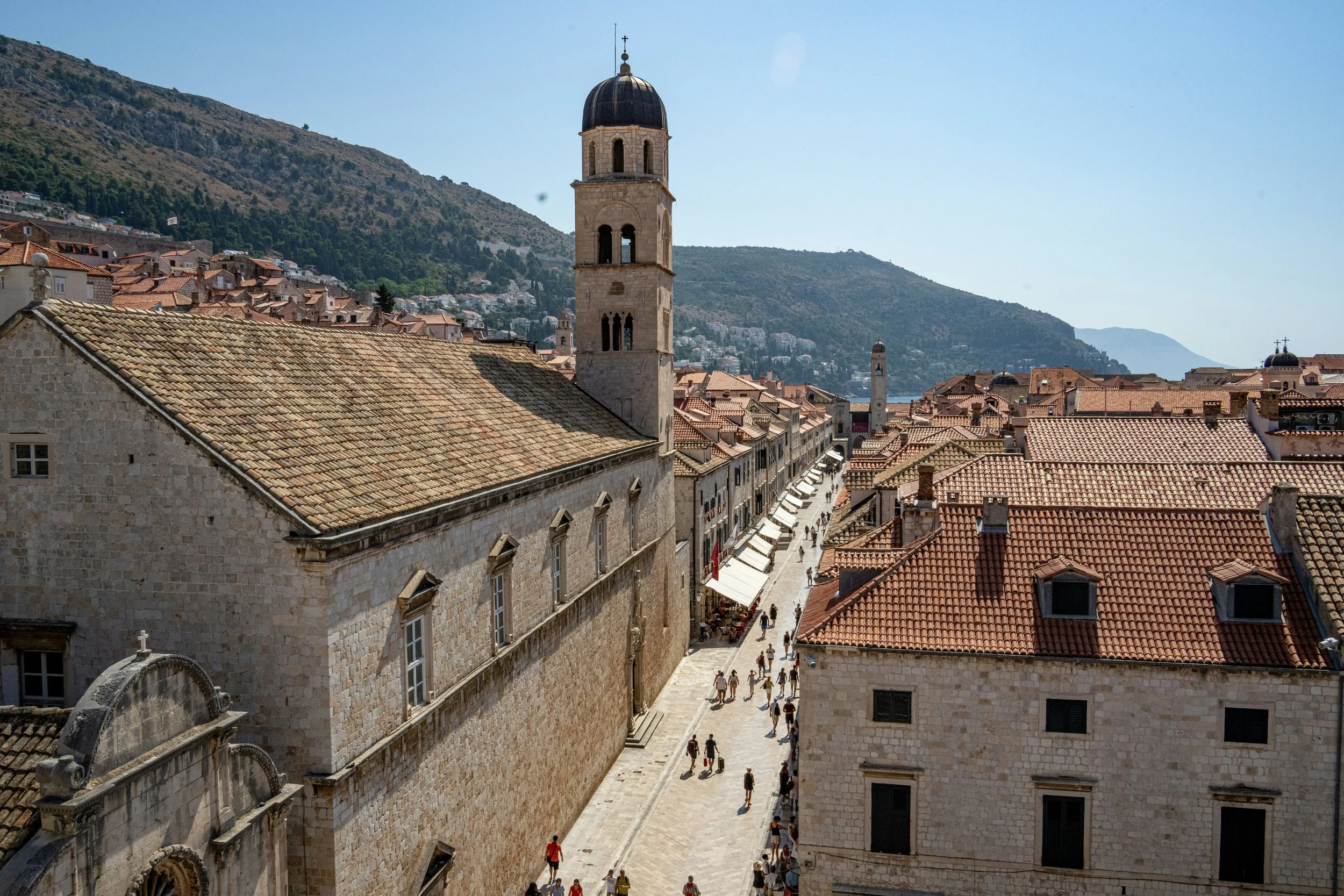
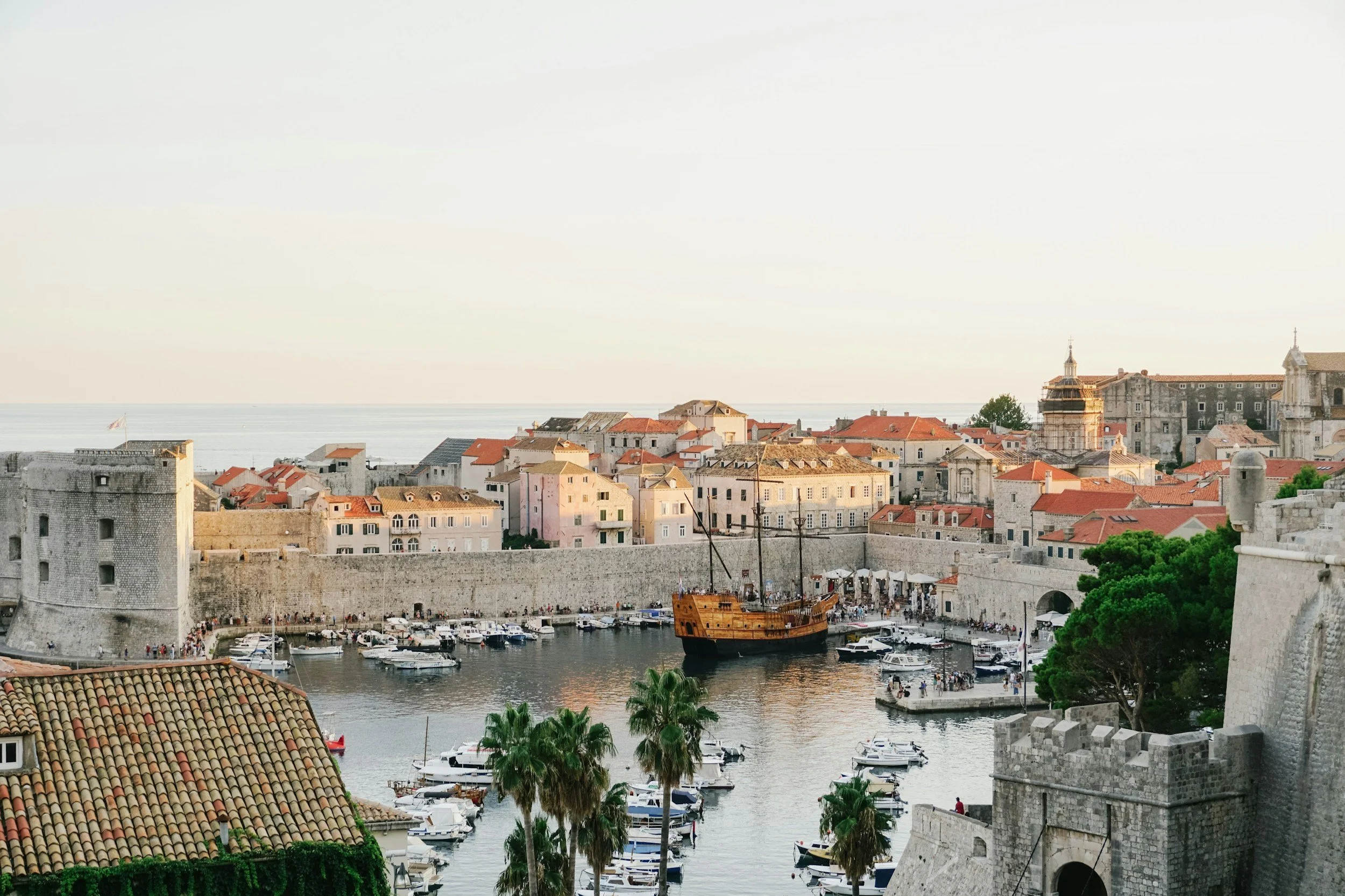
The walled heart of Dubrovnik is one of Europe’s most visually cohesive historic centres, a place where architecture, geography and light come together with remarkable harmony. Encircled by nearly two kilometres of medieval defensive walls, the old town rises from the Adriatic in warm limestone and terracotta, its rooftops clustered tightly within formidable stone fortifications.
Much of what stands today was rebuilt after the catastrophic earthquake of 1667, which led to a carefully planned Baroque reconstruction. As a result, the city feels unusually unified in style: elegant façades line the broad Stradun, narrow lanes branch off in orderly symmetry, and church domes and bell towers punctuate the skyline without overwhelming it. The creamy limestone underfoot has been polished smooth by centuries of footsteps, reflecting the light in a way that makes the entire old town glow, particularly in the late afternoon.
What Makes It Special Beyond the Postcard
While Dubrovnik’s beauty is undeniable, its significance lies equally in its history as the maritime Republic of Ragusa, an independent city-state that prospered through diplomacy and trade between the Ottoman Empire and the West. Its strategic position allowed it to develop wealth, influence and a refined civic identity that still shapes the old town’s layout.
The Rector’s Palace, monasteries, public fountains and defensive towers were not decorative flourishes but symbols of a confident, outward-looking republic. Today, beyond the main thoroughfare, daily life still unfolds in steep residential lanes where locals greet one another, laundry hangs from shuttered windows and small cafés hum quietly away from the busiest corners. It is in these upper streets, away from the cruise-day crowds, that Dubrovnik begins to feel less like a film set and more like a living community.
Don’t Miss
A walk along the full circuit of the city walls remains essential, not simply for the panoramic views across the Adriatic but for the perspective it gives on the town’s compact urban form. From above, the tight grid of rooftops, church courtyards and narrow alleyways reveals just how carefully contained the old town is within its fortifications.
Inside the walls, the Gothic-Renaissance Rector’s Palace offers insight into the political structure of the former republic, while the Franciscan Monastery houses one of Europe’s oldest functioning pharmacies, established in 1317 and still operating today. As evening approaches, stepping outside the walls to one of the cliffside bars carved into the rock provides a different vantage point entirely, with the sun setting over the open sea rather than the tiled rooftops.
Best Time to Visit
Late spring and early autumn offer the most balanced experience, with warm temperatures and clear skies but fewer visitors than the height of summer. July and August bring intense foot traffic and cruise ship arrivals, which can alter the atmosphere during peak hours. In contrast, winter reveals a calmer, more local rhythm, although some seasonal businesses close and the energy becomes noticeably quieter.
Practical Details
Spending one to two full days within the old town allows enough time to explore the walls, visit key historic sites and still wander without purpose. Entry to the city walls is approximately €35 (around £30 / €35 / $38), and the nearest airport, Dubrovnik Airport, is roughly 20 kilometres from the historic centre.
Staying inside the walls immerses you in the atmosphere after day-trippers leave, while accommodation just outside often provides better value and quieter evenings. Whichever you choose, early mornings and late afternoons are when Dubrovnik feels most rewarding, particularly if you are willing to climb a few staircases and step away from the main thoroughfare.
Tallinn Old Town, Estonia
Why It’s One of the Most Beautiful
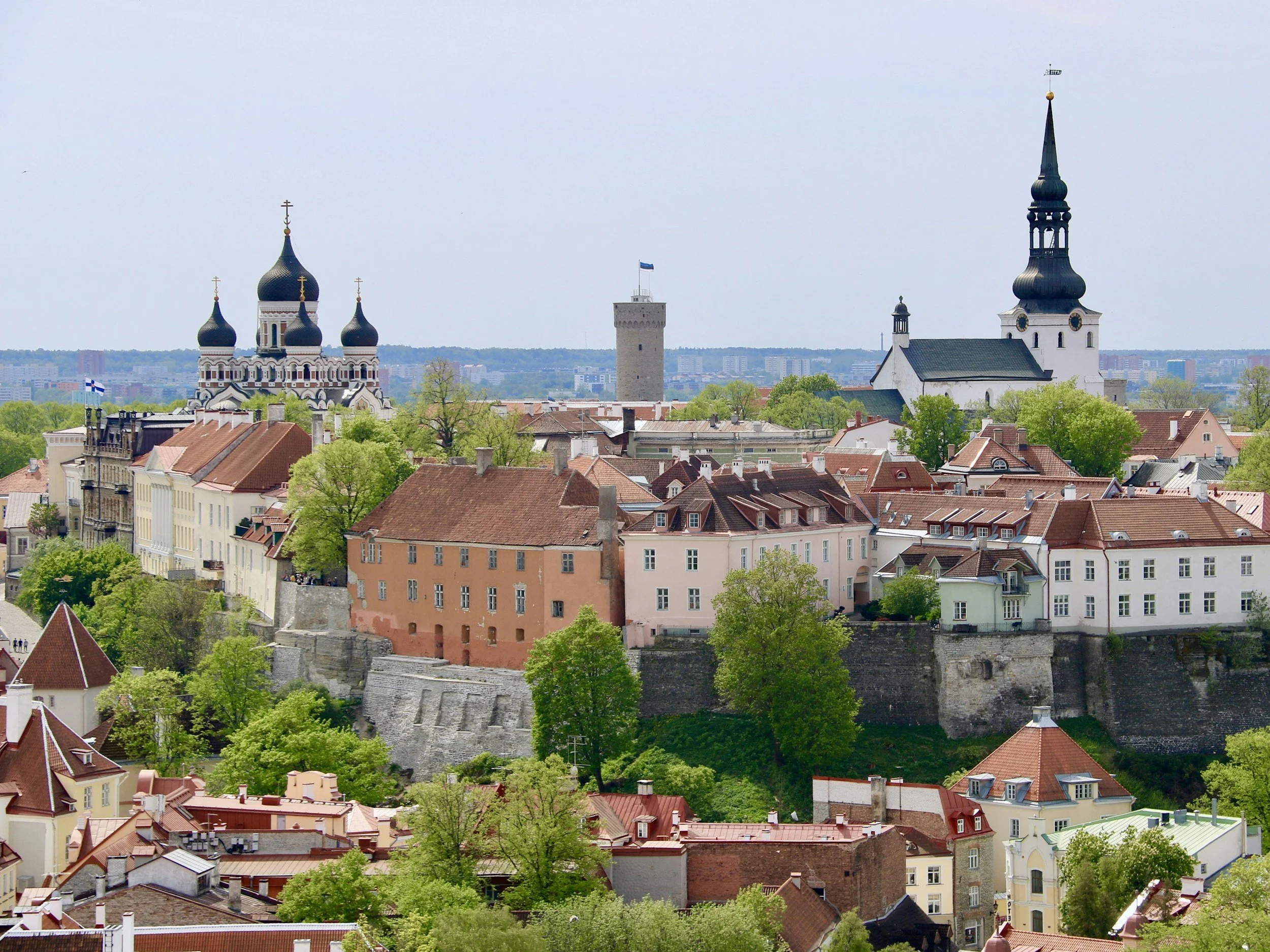
The old town of Tallinn feels as though it has been lifted straight from a medieval manuscript and carefully preserved for centuries. Its skyline is defined by sharp church spires, red-tiled roofs and sturdy stone towers, all enclosed within remarkably intact defensive walls that date back to the 13th and 14th centuries.
Unlike many historic centres that were heavily rebuilt, Tallinn’s old town has retained much of its original medieval structure. Cobbled streets wind organically between merchant houses, guild halls and hidden courtyards, creating a layered and slightly mysterious atmosphere. The Upper Town, Toompea, rises above the Lower Town like a storybook citadel, offering sweeping views over terracotta rooftops and out toward the Baltic Sea.
There is a compactness here that makes it feel intimate rather than grand. Instead of monumental boulevards, you find narrow lanes, pointed archways and pastel façades that soften the otherwise rugged Gothic character. In winter, especially, Tallinn feels almost cinematic, with snow settling on rooftops and market stalls glowing beneath church spires.
What Makes It Special Beyond the Postcard
Tallinn’s beauty is deeply tied to its history as a member of the Hanseatic League, a powerful medieval trading network that connected Northern Europe. Wealth from commerce funded elaborate merchant homes and public buildings, many of which still stand in striking condition.
The town has also experienced Danish, Swedish, German and Russian rule, and those influences subtly shape its architecture and cultural character. Yet despite its long and sometimes turbulent history, Tallinn retains a strong sense of identity, balancing Baltic heritage with a modern, tech-forward present. Step off the main square and you will find design boutiques, contemporary cafés and quiet residential corners that feel lived-in rather than staged.
The old town is not frozen in time; it is simply well-preserved. Local life continues within the walls, particularly in the quieter mornings before tour groups arrive.
Don’t Miss
Raekoja Plats, the medieval Town Hall Square, remains the heart of the Lower Town and one of the best-preserved town squares in Northern Europe. Climbing St Olaf’s Church tower offers panoramic views across the rooftops, while wandering up to Toompea Hill rewards you with postcard perspectives from viewing platforms overlooking the city.
Hidden passages such as St Catherine’s Passage provide a more intimate glimpse into medieval Tallinn, where artisan workshops now occupy centuries-old buildings. If visiting in December, the Christmas market transforms the square into one of Europe’s most atmospheric winter scenes.
Best Time to Visit
Late spring and early autumn provide mild temperatures and fewer crowds, allowing you to explore comfortably. Summer brings longer daylight hours and a lively café culture, though it is the busiest season. Winter, while cold, arguably enhances Tallinn’s medieval charm, especially if snow dusts the rooftops and festive markets are in full swing.
Practical Details
One to two days is ideal for exploring Tallinn’s old town at a relaxed pace. Most of the historic centre is walkable and compact, with no entry fee required to wander the streets themselves. Climbing church towers or entering specific museums typically costs between €5–€15 (approximately £4–£13 / €5–€15 / $5–$16).
Tallinn Airport is located just four kilometres from the city centre, making access straightforward. Staying within the old town allows you to experience the quieter evenings once day visitors depart, while accommodation just outside the walls can offer more contemporary options and slightly lower prices.
Bruges Historic Centre, Belgium
Why It’s One of the Most Beautiful
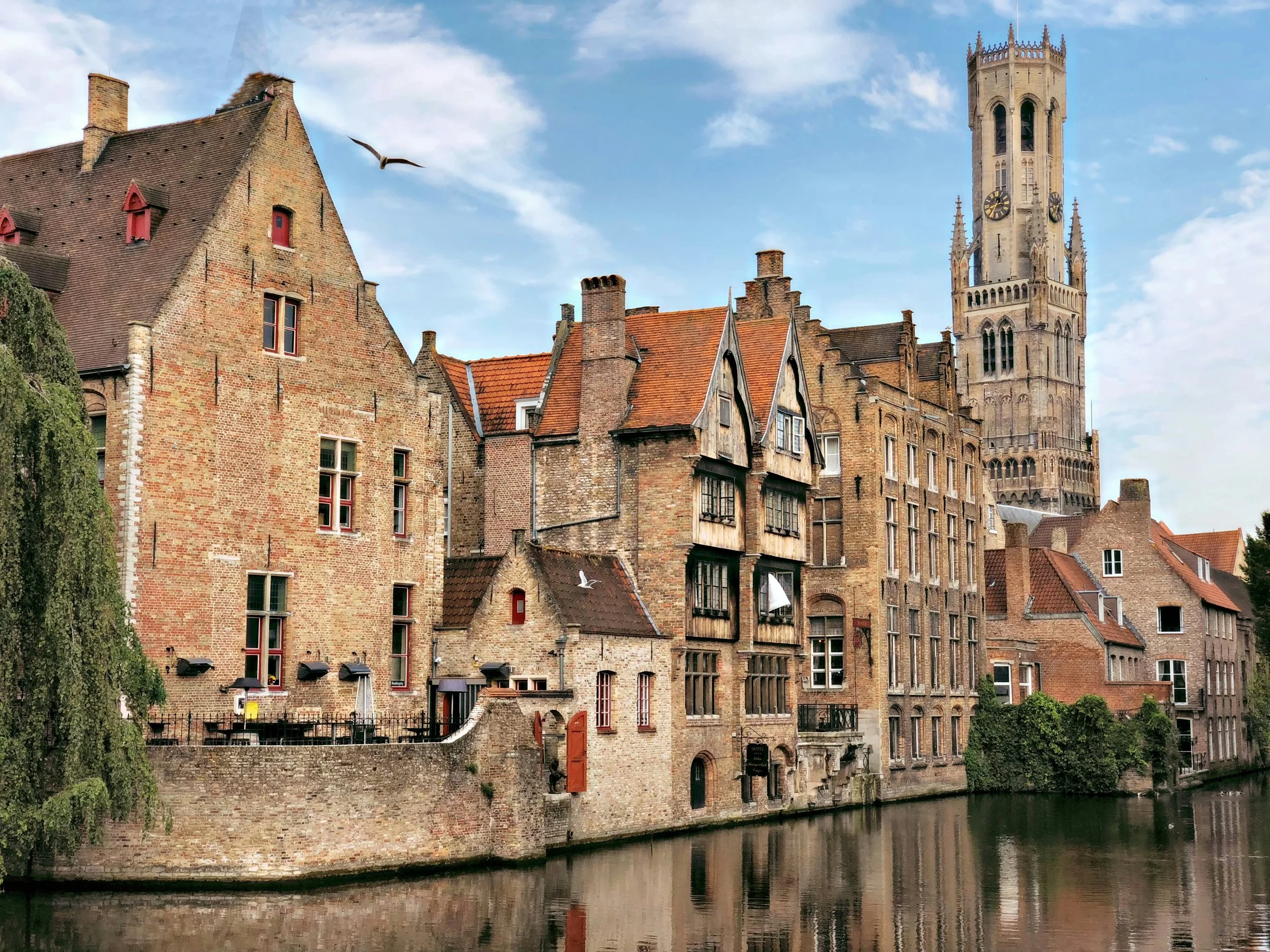
The historic centre of Bruges feels impossibly well preserved, a medieval trading city where brick façades, stepped gables and narrow canals combine in quiet harmony. Often described as the “Venice of the North,” Bruges is laced with waterways that reflect centuries-old houses and church towers, creating a softness that contrasts with its Gothic architecture.
Much of Bruges’ wealth came during the Middle Ages when it was one of Europe’s most important commercial hubs. Its prosperity funded grand guild houses, elaborate churches and civic buildings that remain remarkably intact today. The Markt square, anchored by the Belfry tower, still feels like the beating heart of the city, while smaller lanes wind outwards into calmer residential quarters.
What makes Bruges particularly striking is its scale. It is compact enough to feel intimate, yet architecturally rich enough to reward hours of wandering. The muted tones of brick and stone, combined with still canals and horse-drawn carriages, give the city a timeless quality that is especially powerful in the early morning light.
What Makes It Special Beyond the Postcard
Beyond its postcard-perfect façades, Bruges carries layers of artistic and culinary heritage. The city played a key role in the development of Flemish painting during the Northern Renaissance, and that cultural legacy can still be felt in its museums and churches.
There is also a lived-in quality to Bruges that reveals itself away from the main squares. Residential streets curve around canals where locals cycle to work, bakeries open early with fresh bread, and neighbourhood cafés operate at a slower rhythm than the more central tourist corridors. Bruges is not only a preserved trading town; it is a place where daily life unfolds within centuries-old surroundings.
Food culture is another defining element. Belgian chocolate shops line cobbled lanes, breweries continue long-standing traditions, and small restaurants serve hearty Flemish stews that feel perfectly suited to the city’s medieval setting.
Don’t Miss
Climbing the Belfry of Bruges offers sweeping views across the red rooftops and canal network, giving a clear sense of the city’s medieval layout. The Basilica of the Holy Blood, tucked into Burg Square, provides insight into Bruges’ religious history, while a canal boat ride offers a different perspective on the city’s architecture from water level.
For a quieter experience, walking along the Groenerei canal or visiting the Begijnhof, a peaceful courtyard complex dating back to the 13th century, allows you to step away from the busiest routes and experience a calmer side of the old town.
Best Time to Visit
Spring and autumn strike the ideal balance between manageable crowds and comfortable weather. Summer brings lively terraces and longer days, but also the highest visitor numbers. Winter, particularly around December, transforms Bruges into one of Europe’s most atmospheric festive destinations, with Christmas markets adding warmth to the cold air.
Practical Details
One to two days is sufficient to explore Bruges’ historic centre at a relaxed pace. The old town itself is free to wander, though climbing the Belfry costs around €15 (approximately £13 / €15 / $16). Bruges is easily reached by train from Brussels in roughly one hour, and the historic centre is compact enough to explore entirely on foot.
Staying within the old town enhances the experience after day-trippers leave, when the canals grow quiet and the city regains a sense of stillness that feels closer to its medieval past.
Prague Old Town, Czech Republic
Why It’s One of the Most Beautiful
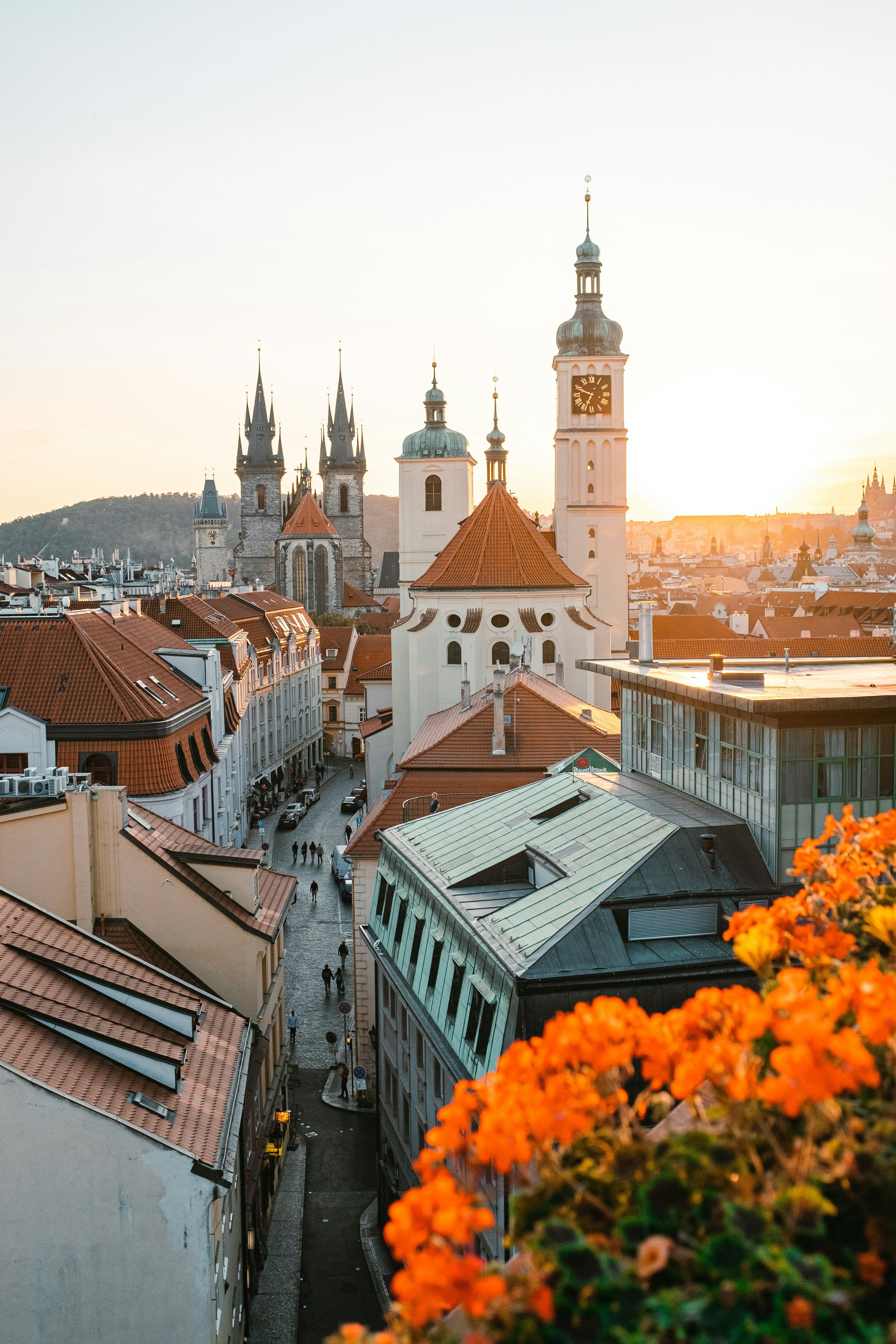
The historic core of Prague feels less like a single old town and more like an architectural timeline unfolding street by street. Gothic spires rise sharply above Baroque façades, Renaissance courtyards sit quietly behind ornate doorways, and the Vltava River curves around the city in a way that amplifies its natural drama.
At the centre lies Old Town Square, a vast open space framed by richly decorated townhouses and anchored by the twin towers of the Church of Our Lady before Týn. The Astronomical Clock, mounted on the Old Town Hall, continues to mark the hours just as it has since the 15th century. Yet what makes Prague exceptional is not simply one square or monument, but the density of preserved architecture that stretches outward in every direction.
Unlike cities heavily reshaped by modern redevelopment, Prague’s historic centre survived much of the 20th century intact. The result is a layered urban landscape where medieval foundations, imperial ambition and artistic flourish coexist within a walkable area that rewards patient exploration.
What Makes It Special Beyond the Postcard
Prague has long been a crossroads of culture and power, shaped by Bohemian kings, Holy Roman Emperors and the Austro-Hungarian Empire. That legacy is visible not only in its architecture but in its intellectual and artistic history, from composers and writers to modern political movements.
Beyond the busiest streets, neighbourhood pockets reveal quieter courtyards, independent bookshops and traditional beer halls where Czech brewing heritage remains central to daily life. Prague’s old town is not a museum; it is a living centre where office workers, students and residents move through centuries-old streets as part of their routine.
Crossing the Charles Bridge at dawn, when mist hangs over the river and statues line the skyline in silhouette, offers a very different experience from midday crowds. It is in those quieter moments that Prague’s depth becomes most apparent.
Don’t Miss
Old Town Square and the Astronomical Clock are essential, particularly if you take time to look beyond the surface and understand their symbolism and history. The Charles Bridge, dating from the 14th century, connects the Old Town with the Lesser Town and provides one of Europe’s most iconic city walks.
Climbing the Old Town Hall Tower gives a panoramic perspective over the rooftops and spires, while venturing slightly uphill toward Prague Castle expands the experience into an even grander historic complex overlooking the entire city.
For something more intimate, seek out smaller passages and hidden courtyards around Týnská Street or explore the Jewish Quarter, where synagogues and memorials add further historical depth to the area.
Best Time to Visit
Late spring and early autumn provide comfortable weather and slightly fewer visitors than peak summer. July and August are lively but busy, particularly around major landmarks. Winter brings a colder atmosphere but also the charm of Christmas markets and fewer daytime crowds outside peak festive periods.
Early mornings and evenings consistently offer the most atmospheric experience, especially along the river and bridge crossings.
Practical Details
Two to three days allow enough time to explore Prague’s Old Town and surrounding historic districts without rushing. Entry to climb the Old Town Hall Tower is around CZK 300 (approximately £10 / €12 / $13), while many streets and squares remain freely accessible.
Václav Havel Airport Prague is about 30 minutes from the city centre by taxi or public transport. Staying within or just beside the Old Town ensures walkable access to most highlights, though accommodation in adjacent neighbourhoods can offer slightly better value while remaining central.
Cartagena Walled City, Colombia
Why It’s One of the Most Beautiful
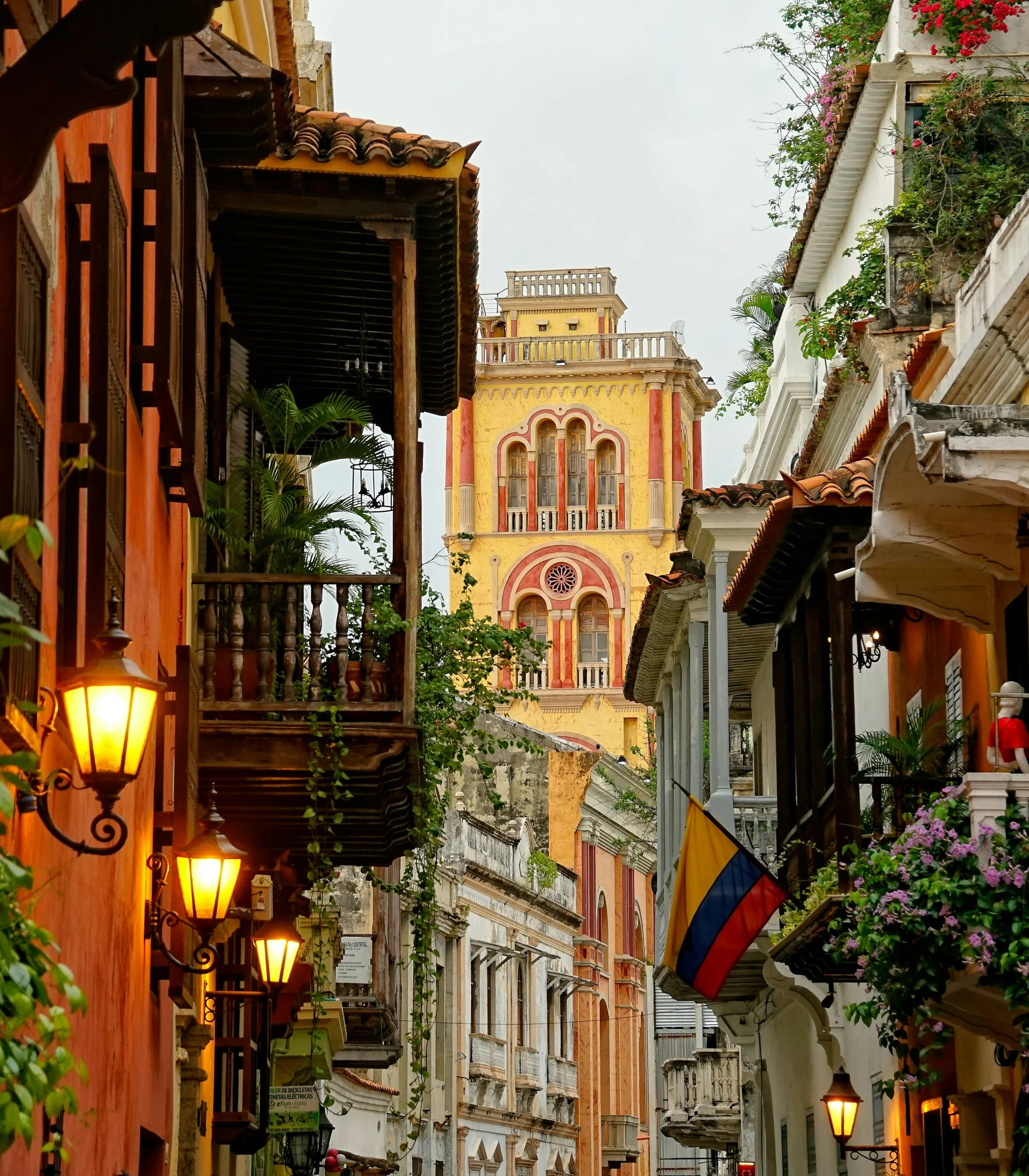
The historic centre of Cartagena feels like a burst of colour contained within centuries-old stone walls. Built as a fortified port during the Spanish colonial era, the Walled City is a grid of pastel façades, wooden balconies draped in bougainvillaea, and heavy carved doors that open onto shaded courtyards.
Completed in the 16th and 17th centuries to protect against pirate attacks, the defensive walls still encircle the old town, offering sweeping views across the Caribbean Sea. Within them, narrow streets are softened by tropical light and salt air, giving Cartagena a warmth that feels entirely different from Europe’s medieval centres.
Architecturally, it blends Andalusian influence with Caribbean vibrancy. Thick stone walls were designed to withstand both cannon fire and humidity, while internal patios provided ventilation long before modern air-conditioning. The result is a historic centre that is both beautiful and climatically intelligent.
What Makes It Special Beyond the Postcard
Cartagena’s history runs deeper than colonial architecture. It was one of Spain’s most important ports in the Americas and a major centre of trade — including the transatlantic slave trade, which profoundly shaped its culture and identity. Today, Afro-Caribbean influence is visible in the city’s music, cuisine and daily rhythms.
Wander beyond the most photographed streets and you’ll hear salsa spilling from open doorways, see residents sitting on stoops in the evening heat, and find small cafés tucked into colourful corners. The nearby district of Getsemaní, just outside the walls, adds another layer — once working-class and now creative and expressive, with street art and a lively plaza culture.
Cartagena’s old town is not delicate or hushed; it is vibrant and humid, energetic and unapologetically alive.
Don’t Miss
Walking the fortified walls at sunset is one of the most memorable experiences, as the sky turns orange over the sea and the city begins to cool. The Plaza Santo Domingo and Plaza Bolívar provide central gathering points framed by historic buildings, while the Palacio de la Inquisición offers insight into a darker chapter of colonial history.
Exploring quiet residential streets such as Calle de Don Sancho reveals balconies overflowing with flowers and hidden boutique hotels behind heavy wooden doors. Even simply wandering without a destination often leads to shaded courtyards and unexpected corners that feel cinematic.
Best Time to Visit
December to April is generally the driest period, with warm temperatures and lower humidity compared to the wetter months. However, Cartagena remains hot year-round, and midday exploration can be intense. Early mornings and evenings are far more comfortable for walking.
Rainy season, particularly from September to November, brings heavier showers but fewer visitors and lush greenery.
Practical Details
Two full days within the Walled City and surrounding historic areas allow enough time to explore without rushing, though many travellers pair Cartagena with nearby islands or coastal escapes. Wandering the streets is free, while entry to museums typically ranges from COP 20,000–30,000 (approximately £4–£6 / €5–€7 / $5–$8).
Rafael Núñez International Airport is located just 15–20 minutes from the old town by taxi. Staying inside the walls offers maximum atmosphere and walkability, while accommodation in Getsemaní often provides slightly better value and a more local feel.
San Miguel de Allende, Mexico
Why It’s One of the Most Beautiful
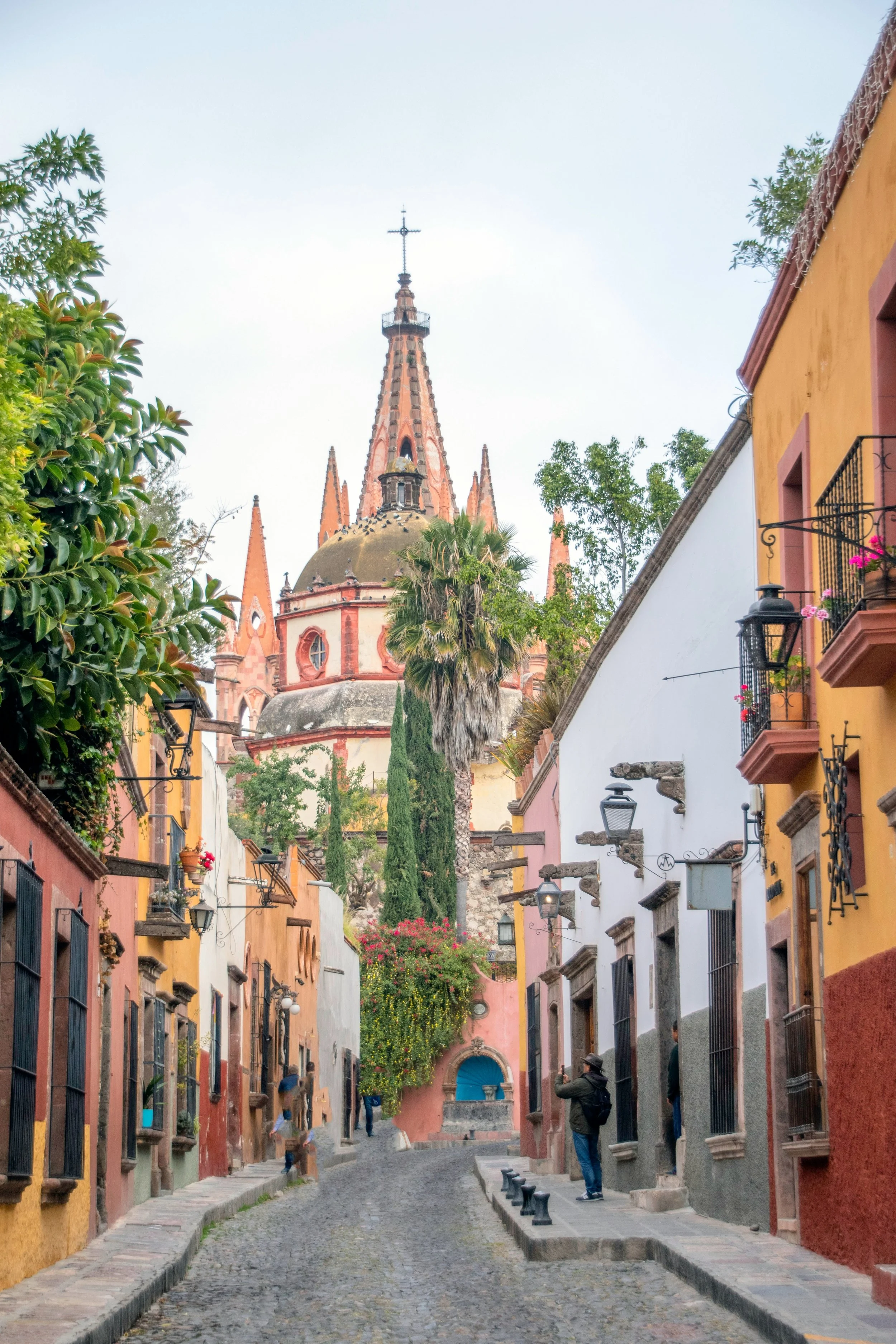
The historic centre of San Miguel de Allende rises from the hills of central Mexico in a palette of terracotta, ochre and dusty rose. At its heart stands the pink spired Parroquia de San Miguel Arcángel, a neo-Gothic church whose silhouette defines the skyline and gives the town an almost storybook quality.
Founded in the 16th century as a Spanish colonial settlement, San Miguel developed around cobbled streets and internal courtyards designed to manage both heat and privacy. Thick stone walls and wooden doors conceal shaded patios filled with fountains and greenery, while wrought-iron balconies overlook narrow lanes that twist gently through the historic core.
Unlike coastal colonial towns, San Miguel sits at altitude, and that elevation shapes its light. The air feels clearer, the evenings cooler, and the sunset tones across its façades particularly rich. The overall effect is cohesive yet warm, grand yet intimate.
What Makes It Special Beyond the Postcard
San Miguel’s beauty is intertwined with its role in Mexico’s independence movement. The town was a key site in the early 19th-century uprising against Spanish rule, and its historic buildings carry that political weight beneath their decorative façades.
Over time, San Miguel also became a magnet for artists and creatives, particularly in the mid-20th century, when art schools and cultural institutions attracted an international community. That influence remains visible today in its galleries, workshops and vibrant cultural calendar. The old town feels animated not only by history but by contemporary creativity.
Daily life unfolds in shaded plazas where families gather in the evening, street vendors sell snacks beneath church towers, and musicians perform as the light fades. It is a town that feels social and communal, rather than simply picturesque.
Don’t Miss
El Jardín Principal, the central plaza, is the natural starting point, framed by colonial arcades and overlooked by the Parroquia. Climbing to rooftop terraces around the square provides sweeping views of the church spires against the hills beyond.
The Instituto Allende and various small galleries scattered through the historic centre reflect the town’s artistic heritage, while simply wandering through side streets such as Calle Aldama reveals some of the most photographed façades in the city. Visiting just before sunset allows you to watch the town shift from bright daylight to golden glow.
Best Time to Visit
October to April offers comfortable temperatures and clearer skies, making it ideal for walking the hilly cobbled streets. Summer months can bring heavier rains in the afternoons, though mornings remain pleasant.
The town’s festivals, particularly around Día de los Muertos in late October and early November, bring a different energy and colour to the historic centre, though also larger crowds.
Practical Details
Two days is ideal to explore the old town at a relaxed pace, allowing time for wandering, rooftop views and museum visits. Wandering the streets is free, while museum entry fees typically range from MXN 80–150 (approximately £4–£7 / €5–€8 / $5–$9).
The nearest major airport is in León or Querétaro, both around 1–1.5 hours away by road. Staying within the historic centre enhances the experience, especially in the evenings when the plaza fills with music and conversation and the church spires are illuminated against the night sky.
Hoi An Ancient Town, Vietnam
Why It’s One of the Most Beautiful
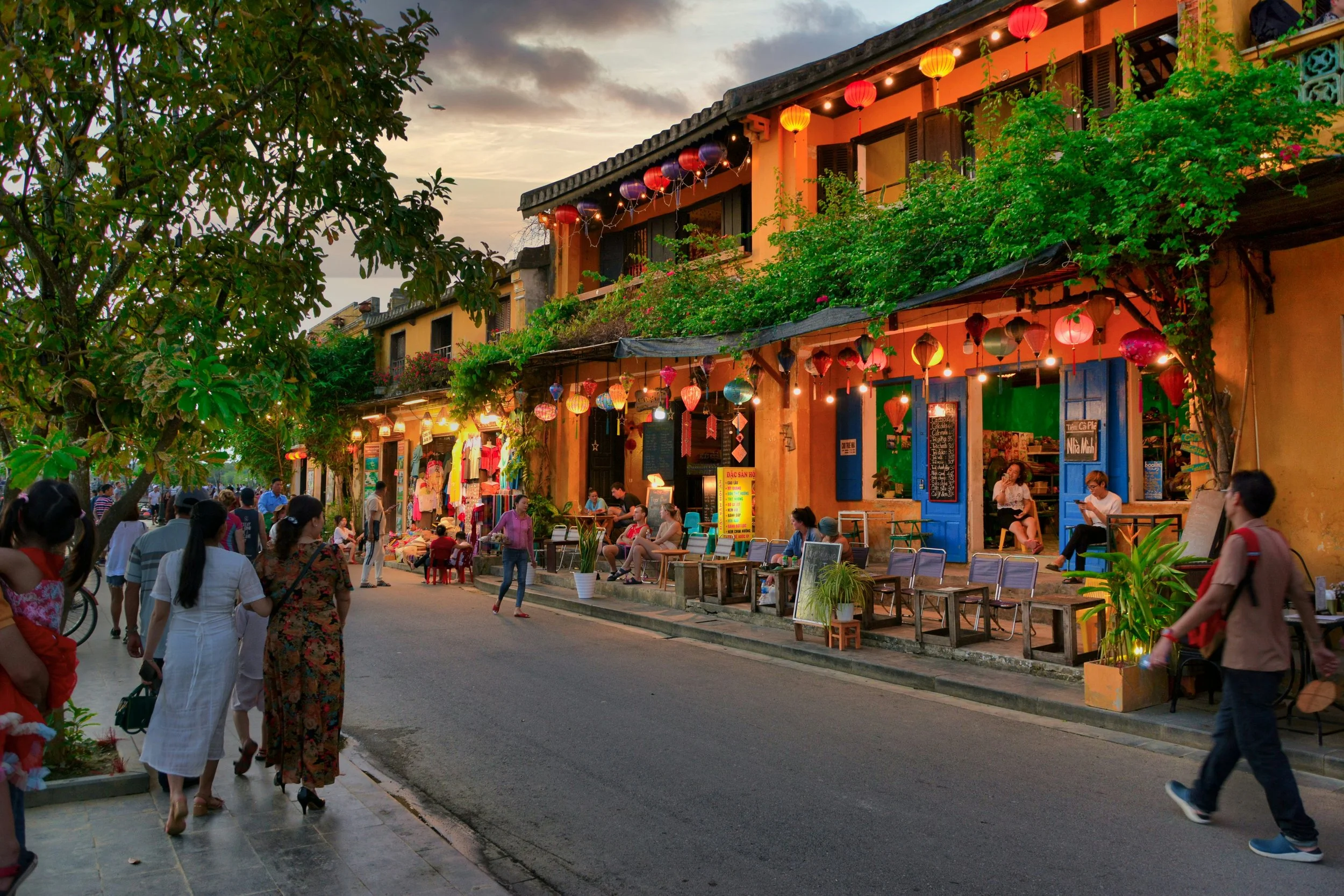
The historic centre of Hoi An is a delicate blend of ochre walls, wooden shophouses and lantern-strung streets that feel suspended between river and sea. Once a major Southeast Asian trading port from the 15th to 19th centuries, Hoi An developed as a meeting point for Vietnamese, Chinese, Japanese and later European merchants, and that layered influence is visible in its architecture.
Timber-framed merchant houses with tiled roofs line narrow streets designed to manage flooding from the Thu Bồn River. Ornate assembly halls reflect the presence of Chinese trading communities, while the iconic Japanese Covered Bridge hints at the multicultural exchanges that shaped the town. The façades, painted in warm yellows and deep mustard tones, glow particularly beautifully in late afternoon light, when the humidity softens the edges and the river reflects the sky.
Unlike grand European squares or fortified colonial cities, Hoi An’s beauty lies in its intimacy and cohesion. The scale is human, the streets walkable, and the historic buildings remarkably well preserved.
What Makes It Special Beyond the Postcard
Hoi An’s significance extends beyond aesthetics. As a former trading hub, it was once one of the most important ports in the region before river silting reduced its maritime prominence. That relative decline, paradoxically, helped preserve its historic centre from large-scale redevelopment.
Today, daily life still unfolds within centuries-old buildings. Tailors operate from wooden shopfronts, family-run cafés spill onto lantern-lit lanes, and food vendors set up as evening approaches. The town is particularly atmospheric after sunset, when colourful lanterns illuminate the streets and small boats drift along the river carrying candles and wishes.
Despite its popularity, stepping just a few streets away from the busiest stretch reveals quieter residential pockets where locals cycle home and life feels unhurried.
Don’t Miss
The Japanese Covered Bridge remains the town’s most recognisable landmark, while the ornate Fujian Assembly Hall offers insight into the Chinese communities that once thrived here. Visiting one of the preserved merchant houses, such as Tan Ky Old House, provides a glimpse into how trade families lived centuries ago.
In the evening, walking along the riverfront as lanterns are lit creates a distinctly different atmosphere from daytime exploration. For a broader perspective, cycling into the surrounding rice fields or toward nearby An Bang Beach reveals how compact the ancient town is within its wider landscape.
Best Time to Visit
February to April generally offers the most comfortable weather, with warm temperatures and lower humidity. September to November can bring heavier rainfall, occasionally leading to flooding in parts of the old town, though the scenery becomes particularly lush.
Even in busier months, early mornings remain calm and beautifully lit, making them ideal for photography and quieter exploration.
Practical Details
One to two days is sufficient to explore Hoi An’s ancient town thoroughly. Access to certain historic houses and assembly halls requires a ticket bundle costing around VND 120,000–150,000 (approximately £4–£5 / €5–€6 / $5–$6).
The nearest airport is in Da Nang, roughly 45 minutes away by car. Staying within or just outside the ancient town allows easy walking access, while nearby beach accommodation offers a quieter base with quick transfers into the historic centre.
Fez Medina, Morocco
Why It’s One of the Most Beautiful
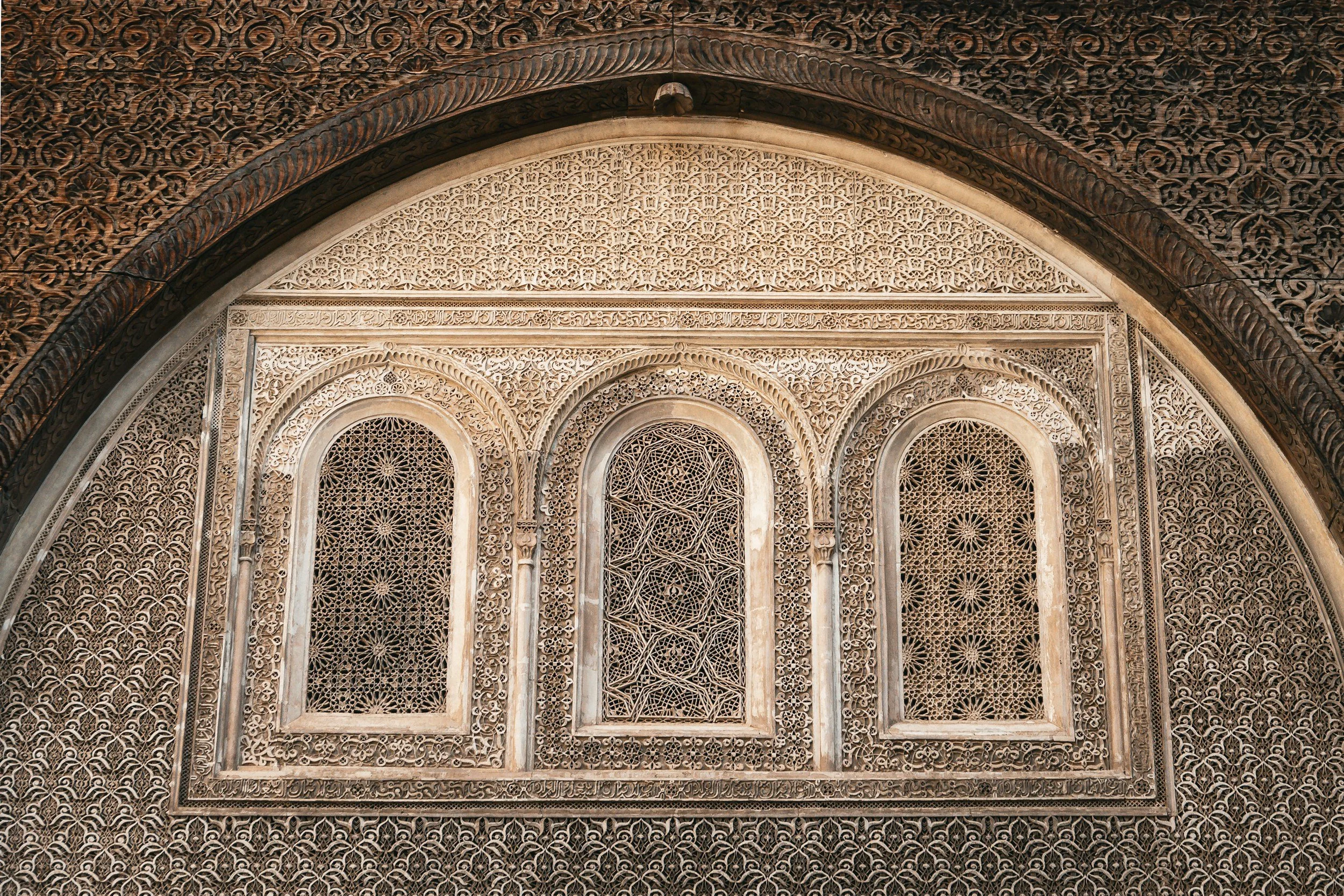
The medina of Fez is not beautiful in the polished, symmetrical sense of European old towns. Its beauty lies in its depth, its age, and the overwhelming intricacy of its design. Founded in the 9th century, Fez el-Bali is often described as the world’s largest car-free urban area, a vast labyrinth of more than 9,000 alleyways weaving between mosques, madrasas, riads and markets.
From above, the medina appears as a dense, earth-toned tapestry stretching across rolling hills, punctuated by minarets and green-tiled roofs. At ground level, its narrow lanes twist unpredictably, sometimes opening into sunlit courtyards, sometimes narrowing to shoulder-width passages. Plasterwork, carved cedar wood and geometric zellige tilework reveal layers of Islamic artistry that have been preserved for centuries.
There is very little uniformity here, and that is precisely what makes it extraordinary. The medina feels organic, built gradually over generations rather than imposed by a single architectural vision.
What Makes It Special Beyond the Postcard
Fez was once the intellectual and spiritual heart of Morocco, and that legacy remains central to its identity. The University of Al Quaraouiyine, founded in 859, is widely regarded as the world’s oldest continually operating university. Religious scholarship, craftsmanship and trade shaped the medina’s development, and many of those traditional crafts still continue today.
Leather tanneries operate much as they did hundreds of years ago, artisans hammer brass in tiny workshops, and spice merchants arrange pyramids of colour in crowded souks. The medina is not simply preserved; it functions. Donkeys still transport goods through alleyways too narrow for vehicles, and families live above the shops where they work.
It can feel intense, particularly for first-time visitors, but it is that intensity — the call to prayer echoing across rooftops, the scent of leather and spices, the sudden glimpse of a tiled courtyard — that defines its character.
Don’t Miss
The Bou Inania Madrasa offers some of the most intricate Islamic architectural detail in the medina, while the Chouara Tannery provides a dramatic and centuries-old view of leather production from surrounding terraces. Wandering through the Seffarine Square area reveals metalworkers shaping copper by hand, and climbing to a rooftop café provides essential perspective over the maze below.
Hiring a knowledgeable local guide for part of your visit can help unlock historical context and prevent complete disorientation, especially given the complexity of the alleyways.
Best Time to Visit
Spring (March to May) and autumn (September to November) offer the most comfortable temperatures for exploring the medina’s narrow lanes. Summer can be intensely hot, particularly within enclosed alleyways, while winter remains mild but occasionally rainy.
Early mornings are the calmest time to explore, before markets reach full intensity.
Practical Details
Two days allows enough time to explore the medina thoughtfully, ideally combining guided exploration with independent wandering. Entry to most streets is free, while access to specific madrasas or museums typically costs between MAD 20–60 (approximately £2–£5 / €2–€6 / $2–$6).
The nearest airport is Fès–Saïs Airport, around 30 minutes by car. Staying in a traditional riad within the medina enhances the experience, offering internal courtyards and rooftop terraces that contrast beautifully with the density of the surrounding streets.
Rothenburg ob der Tauber, Germany
Why It’s One of the Most Beautiful
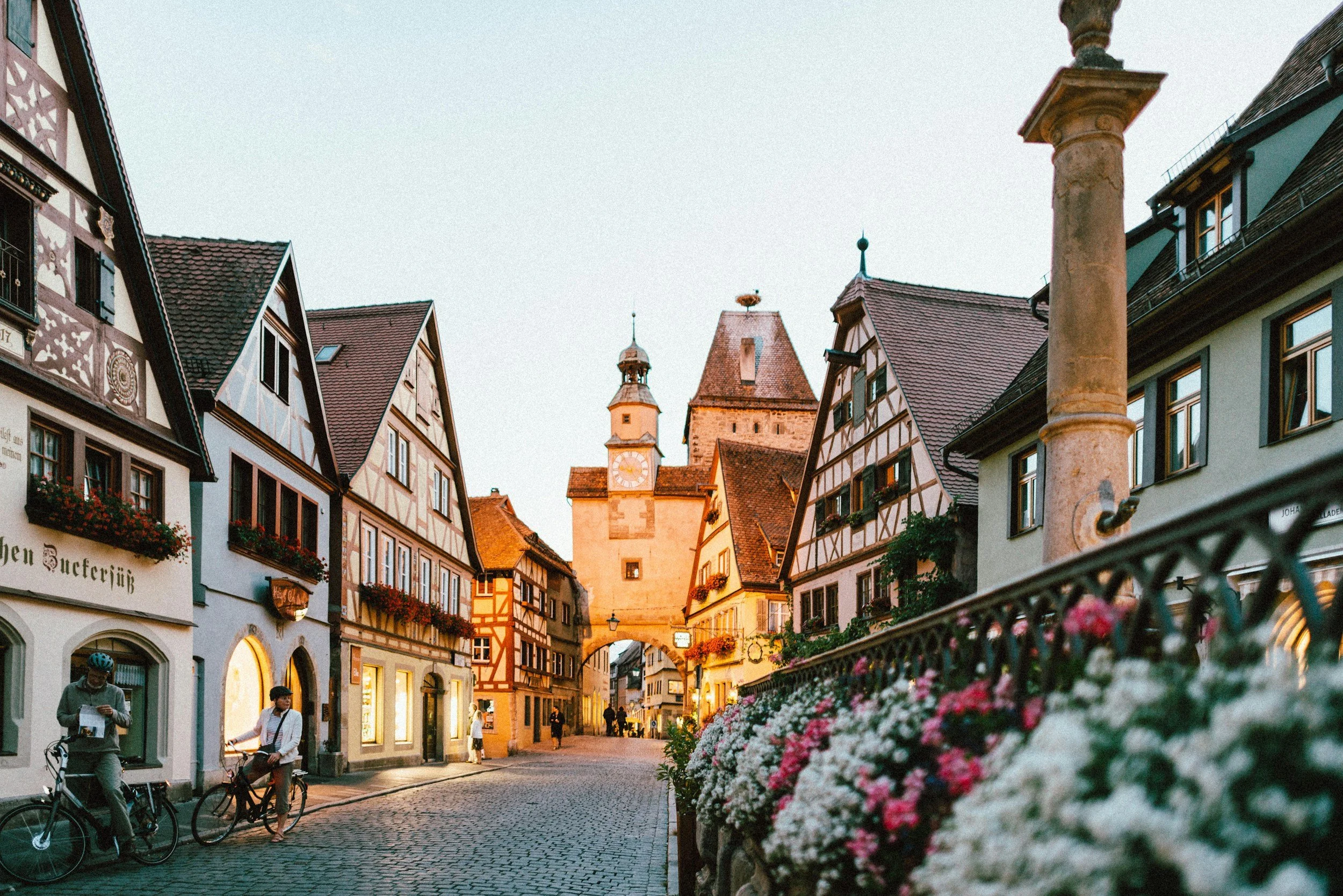
Perched above the Tauber River in Bavaria, Rothenburg ob der Tauber feels like a carefully preserved fragment of the Middle Ages. Encircled by intact defensive walls and punctuated by watchtowers, its historic centre is a composition of half-timbered houses, cobbled lanes and flower-filled window boxes arranged with almost theatrical balance.
Unlike larger historic cities, Rothenburg is compact and highly cohesive. The main square is framed by pastel façades and the imposing Town Hall tower, while narrow streets radiate outward toward quieter residential corners. One of the most photographed spots, Plönlein, where two leaning timber houses sit at a fork in the road beneath a tower, captures the town’s storybook character in a single glance.
Much of Rothenburg’s medieval fabric survived intact, and careful restoration after damage in the Second World War ensured the town retained its historic silhouette. Walking its streets feels less like navigating a city and more like stepping into a living illustration.
What Makes It Special Beyond the Postcard
Rothenburg was once a Free Imperial City within the Holy Roman Empire, prospering through trade before gradually losing prominence. That decline, paradoxically, preserved it from industrial redevelopment, leaving its medieval layout largely undisturbed.
Today, while it welcomes visitors year-round, there is still an unmistakable sense of continuity in its traditions. Local bakeries prepare Schneeballen, a regional pastry dusted in sugar, and seasonal festivals bring historical costumes and performances into the streets. The Night Watchman’s tour, led by a costumed guide after dark, offers insight into how life functioned within the town walls centuries ago.
Beyond the main square, walking the full circuit of the town walls provides perspective on how tightly enclosed the historic centre remains, with views over surrounding countryside that remind you of its strategic defensive position.
Don’t Miss
Climbing the Town Hall Tower offers panoramic views over the tiled rooftops and surrounding valley. The Medieval Crime and Justice Museum provides a fascinating — and sometimes unsettling — look at legal systems of the past, while strolling the town walls at sunset reveals a quieter side of Rothenburg away from daytime visitors.
For a calmer experience, venture toward the Castle Garden at the western edge of town, where open views across the Tauber Valley contrast with the compact streets behind you.
Best Time to Visit
Late spring and early autumn offer pleasant temperatures and fewer tour groups than peak summer months. December transforms Rothenburg into one of Germany’s most atmospheric Christmas destinations, with festive markets and illuminated façades enhancing its fairy-tale quality.
Summer is lively but can feel busy during midday hours, particularly with day trips from Munich or Frankfurt.
Practical Details
One overnight stay or a full day allows enough time to explore Rothenburg thoroughly without rushing. Wandering the town itself is free, while climbing the Town Hall Tower costs around €4–€5 (approximately £3–£4 / €4–€5 / $4–$5).
The nearest major rail connections are via Würzburg or Nuremberg, with regional trains linking to Rothenburg. Staying within the walls offers the most atmospheric experience, particularly in the evening once day-trippers depart and the streets grow noticeably quieter.
Gion District, Kyoto, Japan
Why It’s One of the Most Beautiful
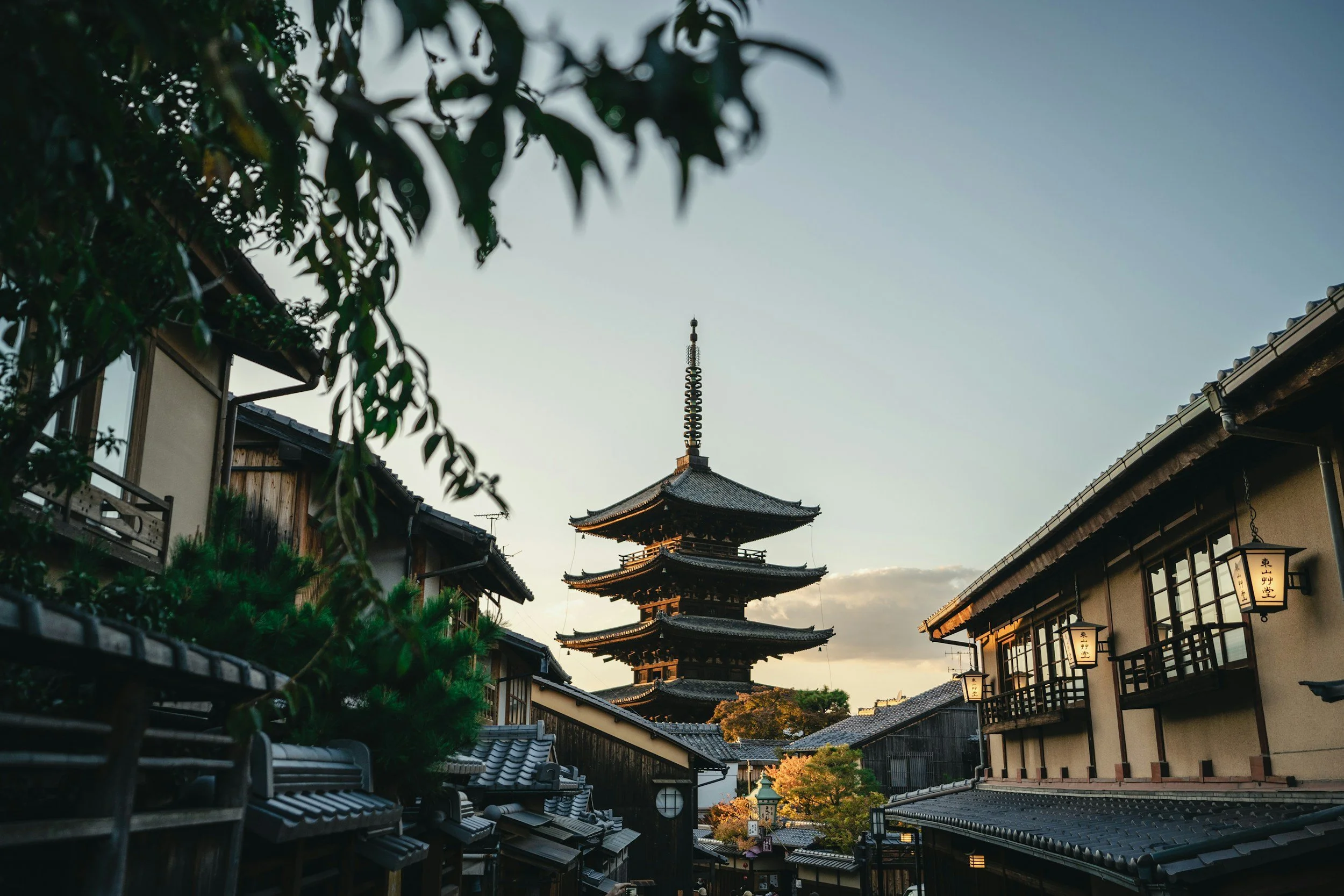
The historic Gion district of Kyoto offers a different expression of old-town beauty — one built on restraint, proportion and texture rather than monumentality. Wooden machiya townhouses line narrow lanes, their latticed façades designed to provide privacy while allowing air and light to circulate. Stone pathways lead past willow trees and traditional tea houses, while tiled roofs curve gently against the backdrop of distant hills.
Unlike fortified European centres or brightly coloured colonial towns, Gion’s charm is subtle. Earthy browns, charcoal greys and soft lantern light define the streetscape. The district developed during the Edo period as an entertainment quarter serving nearby Yasaka Shrine, and much of its layout remains intact.
What makes Gion striking is not a single dramatic landmark, but the consistency of its architecture and atmosphere. The harmony between built form, street width and natural elements creates a sense of calm that feels carefully preserved.
What Makes It Special Beyond the Postcard
Kyoto was Japan’s imperial capital for more than a thousand years, and that cultural weight permeates its historic districts. In Gion, the presence of traditional tea houses and geisha culture connects the area to centuries-old artistic practices involving music, dance and hospitality.
Although sightings of geiko and maiko (Kyoto’s terms for geisha and apprentices) have become part of the district’s mystique, Gion is first and foremost a living neighbourhood. Residents cycle through its lanes, small restaurants operate behind unassuming wooden doors, and shrines remain active places of worship.
The district’s beauty deepens at dusk, when lanterns are lit along Hanamikoji Street and reflections shimmer along the Shirakawa Canal. The pace slows, conversations soften, and the atmosphere becomes almost cinematic without ever feeling theatrical.
Don’t Miss
Hanamikoji Street provides the most iconic introduction to Gion, particularly in the early evening when traditional façades glow under lantern light. Walking along the Shirakawa Canal offers a quieter perspective, with stone bridges and willow trees creating gentle reflections.
Nearby Yasaka Shrine, especially when illuminated at night, connects the district to its spiritual origins. For broader context, combining Gion with a visit to Kiyomizu-dera Temple or strolling through the preserved streets of Higashiyama expands the historic experience beyond a single quarter.
Best Time to Visit
Spring and autumn are particularly beautiful in Kyoto, with cherry blossoms or autumn foliage enhancing the district’s delicate architecture. Summer can be humid, though evenings remain atmospheric. Winter brings fewer visitors and a quieter mood, occasionally dusted with snow.
Early mornings provide the most peaceful exploration, while evenings reveal Gion at its most atmospheric.
Practical Details
One to two days in Kyoto allows ample time to explore Gion alongside nearby historic areas. Wandering the district itself is free, while entry to temples and cultural sites typically ranges from JPY 400–600 (approximately £2–£4 / €3–€5 / $3–$5).
Kansai International Airport (Osaka) is roughly 75–90 minutes away by train, with direct rail connections to Kyoto Station. Staying in or near Gion offers walkable access to many of the city’s most historic neighbourhoods, though accommodation fills quickly during cherry blossom season.
Planning Tips for Visiting Historic Centres
Stay Inside the Old Town — If You Can
Staying within historic walls or central districts changes the experience entirely. Once day-trippers leave, old towns settle into a quieter rhythm that feels far more authentic. Early mornings become yours alone, and evenings reveal a softer atmosphere that is often lost during peak hours.
That said, accommodation inside old towns can come at a premium and sometimes involves navigating stairs, uneven streets or limited vehicle access. If convenience matters more than immersion, staying just outside the historic core often provides better value while remaining within easy walking distance.
Go Early or Stay Late
Old towns are at their best during transitional light. Sunrise brings empty squares, golden façades and a slower pace. Sunset softens colours and reduces the intensity of crowds.
Midday, particularly in peak season, can feel congested — especially in compact centres such as Dubrovnik or Rothenburg. Structuring your day around quieter hours transforms the experience from rushed to reflective.
Wear the Right Shoes
Cobbled streets may look charming, but they demand practical footwear. Uneven stone surfaces, steep staircases and narrow alleyways are common across medieval and colonial towns alike. Comfortable, supportive shoes make a noticeable difference, especially in places built on hills such as San Miguel de Allende or Toompea in Tallinn.
Understand the History Before You Arrive
Old towns are layered spaces shaped by trade, religion, war and migration. Reading briefly about their background before arrival adds depth to what you see on the ground. Knowing that Dubrovnik was once the Republic of Ragusa, that Fez houses one of the world’s oldest universities, or that Hoi An thrived as a multicultural port makes wandering feel more meaningful.
Even a short walking tour on your first day can provide useful context that enhances independent exploration later.
Respect That These Are Living Communities
It is easy to view historic centres as open-air museums, but people live and work within these streets. Being mindful of noise levels, respecting private property and supporting locally run businesses helps preserve the atmosphere that makes these places special in the first place.
In districts such as Gion in Kyoto or residential corners of Cartagena, small behavioural considerations make a tangible difference to the community.
“Old towns endure because they offer something modern environments rarely can: continuity.
Within their walls, architecture has outlasted empires, trade routes have shifted direction, and generations have come and gone — yet the streets remain. Walking through them is not simply about admiring façades; it is about sensing the accumulation of time.
Some old towns feel theatrical and dramatic, like Dubrovnik rising from the Adriatic. Others feel intimate and labyrinthine, like Fez’s medina. Some glow with Caribbean colour or Mexican warmth, while others lean into medieval restraint beneath Baltic skies. Each offers a different expression of history shaped by geography, culture and climate.
What connects them is their invitation to slow down. To wander without urgency. To look up at carved details, pause in quiet courtyards and imagine the centuries that unfolded before you arrived.
In a world increasingly defined by speed and sameness, historic centres remind us that identity is built gradually — stone by stone, generation by generation.
And perhaps that is why we continue to return to them.”