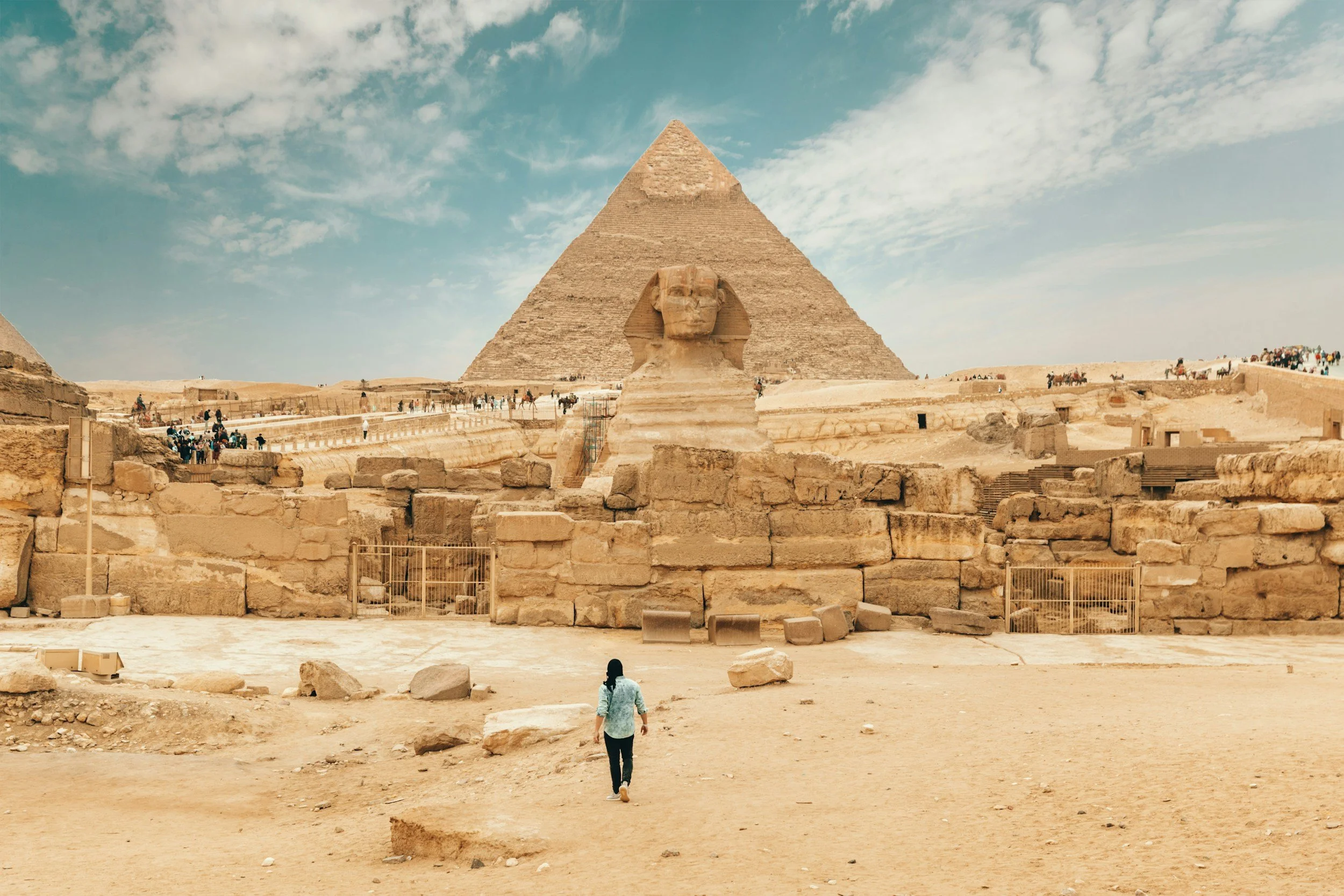
Cairo is often reduced to a single image: pyramids rising from the desert, camels silhouetted against the sun, ancient stone against open sky. And yes, that moment is real — and it’s powerful. But Cairo is far more layered than its postcard.
It’s a city where 4,000-year-old tombs sit within sight of apartment blocks. Where medieval mosques stand a short drive from Belle Époque boulevards. Where the Nile carries feluccas past five-star hotels and fishermen casting lines from the Corniche. The experience of Cairo isn’t contained in one site — it’s found in movement between them.
This guide blends the essential with the immersive. You’ll find the icons here — the Pyramids of Giza, the Grand Egyptian Museum, Islamic Cairo — but also the experiences that give the city depth: sunset on the Nile, wandering Al-Muizz Street at dusk, sitting in an ahwa long enough for the rhythm to shift.
Cairo can feel intense if approached without a plan. Traffic reshapes distances. Heat alters pacing. Some sites deserve an early start; others are better after dark. Doing Cairo well isn’t about rushing — it’s about sequencing. Think of this as your strategic guide to experiencing the city properly. What to prioritise. When to go. What most visitors get wrong. And how to move through Cairo in a way that feels immersive rather than overwhelming.
Let’s begin where most journeys do — at the edge of the desert, beneath the oldest wonder of the ancient world.
The Pyramids of Giza
Few places in the world carry the symbolic weight of the Giza Plateau. Long before arriving in Egypt, most travellers have already formed an image of the pyramids: immense stone structures rising in isolation from endless desert. What tends to surprise visitors, however, is their proximity to the modern city. Cairo stretches almost to their edge, and the transition from urban sprawl to ancient monument happens more abruptly than expected. Yet once you step onto the plateau itself, the sense of scale reasserts control. The traffic noise fades, the desert opens out, and the pyramids dominate the horizon in a way that feels both improbable and deeply grounding.
Standing beneath them, the true achievement of ancient Egypt becomes less abstract. These are not distant silhouettes; they are physical, textured structures composed of individual blocks that you can approach, examine, and quite literally touch. That immediacy is what makes the experience powerful.
Why They Still Matter
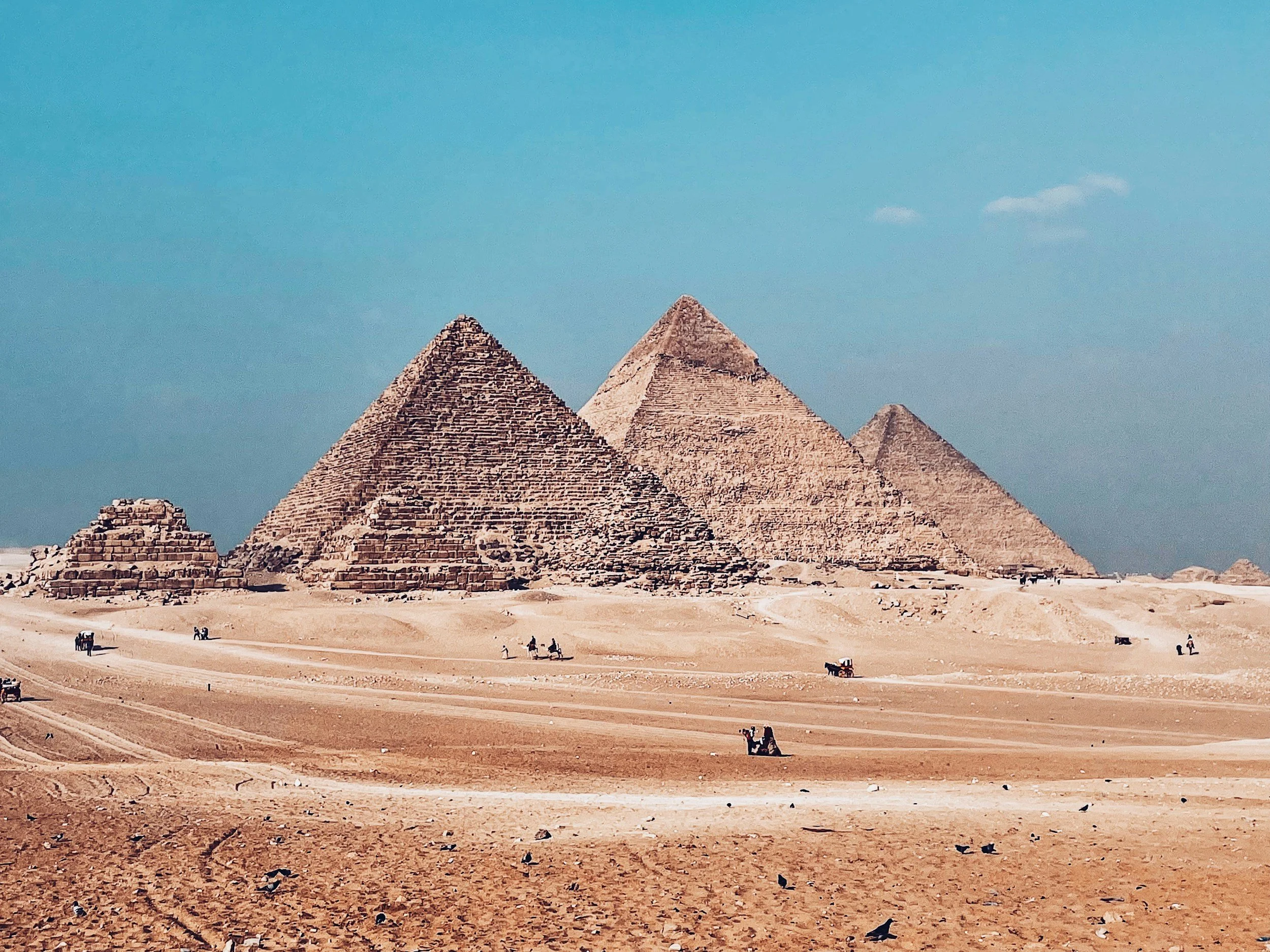
At the heart of the plateau rises the Great Pyramid of Giza, constructed for Pharaoh Khufu around 2560 BC. Originally reaching 146 metres in height, it remained the tallest man-made structure on Earth for nearly four thousand years. Even without its smooth outer casing stones, its precision and mass continue to challenge modern understanding of ancient engineering.
The neighbouring pyramids of Khafre and Menkaure complete the iconic trio, each reflecting evolving architectural ambition during Egypt’s Fourth Dynasty. Nearby, the Great Sphinx of Giza sits carved from a single limestone outcrop, its weathered face still the subject of scholarly debate and popular myth alike.
What gives the site its enduring resonance is not simply its age, but its physical presence. You are confronted not with ruins, but with structures that have endured across empires, invasions, and environmental change. The pyramids are not decorative relics; they are statements of permanence.
How to Visit Strategically
Experiencing the plateau well depends largely on timing and pacing. The site typically opens around 8am, and arriving close to opening time allows you to explore before temperatures rise and organised tour groups begin to dominate the main pathways. In the cooler morning light, the stone takes on softer tones, and the atmosphere feels noticeably calmer.
General entry to the plateau usually ranges from EGP 240–360 (£4–£6 / €4–€6 / $5–$7), with additional tickets required to enter specific pyramids. While entering the Great Pyramid can be a memorable experience, it is important to know what to expect: narrow ascending corridors, limited ventilation, and a relatively austere chamber at the summit. For some, the physical challenge enhances the visit; for others, remaining outside provides sufficient appreciation of the monument’s scale.
Rather than staying close to the entrance area, it is worth walking deeper into the plateau toward the panoramic viewpoint, where all three pyramids align against open desert. This wider perspective restores a sense of spatial context that is easily lost in the busiest sections of the site.
Camel and horse rides are available throughout the plateau and can provide striking photo opportunities, though prices should always be agreed upon clearly in advance.
Allow at least two to three hours for an unhurried visit, and come prepared with water, sun protection, and comfortable footwear. The site is expansive and largely unshaded, and the desert climate demands respect.
What Most Visitors Get Wrong
The most common mistake is attempting to experience the pyramids too quickly. Treated as a brief stop between other attractions, they risk becoming a backdrop rather than the focal point they deserve to be. The plateau rewards time — time to walk, to shift angles, to notice how the geometry changes as you move around each structure.
Equally, underestimating the heat can shorten what should be a meaningful visit. Planning around the climate, rather than fighting against it, makes a considerable difference.
When approached with patience and a willingness to move beyond the most crowded viewpoints, the Pyramids of Giza remain not just iconic landmarks, but one of the most profound architectural encounters in the world.
The Grand Egyptian Museum
Just beyond the edge of the Giza Plateau stands one of the most ambitious cultural projects in modern Egypt: the Grand Egyptian Museum. Positioned deliberately within sight of the pyramids, the museum creates a visual and conceptual dialogue between ancient achievement and contemporary curation. Where the plateau immerses you in monumentality, the museum restores narrative and human scale.
From the moment you enter, the architecture signals intention. Vast glass walls frame desert light, and the monumental statue of Ramses II rises within the atrium, establishing both grandeur and continuity. The space feels expansive and deliberate, designed not simply to display artefacts, but to contextualise them.
Why It Changes the Experience
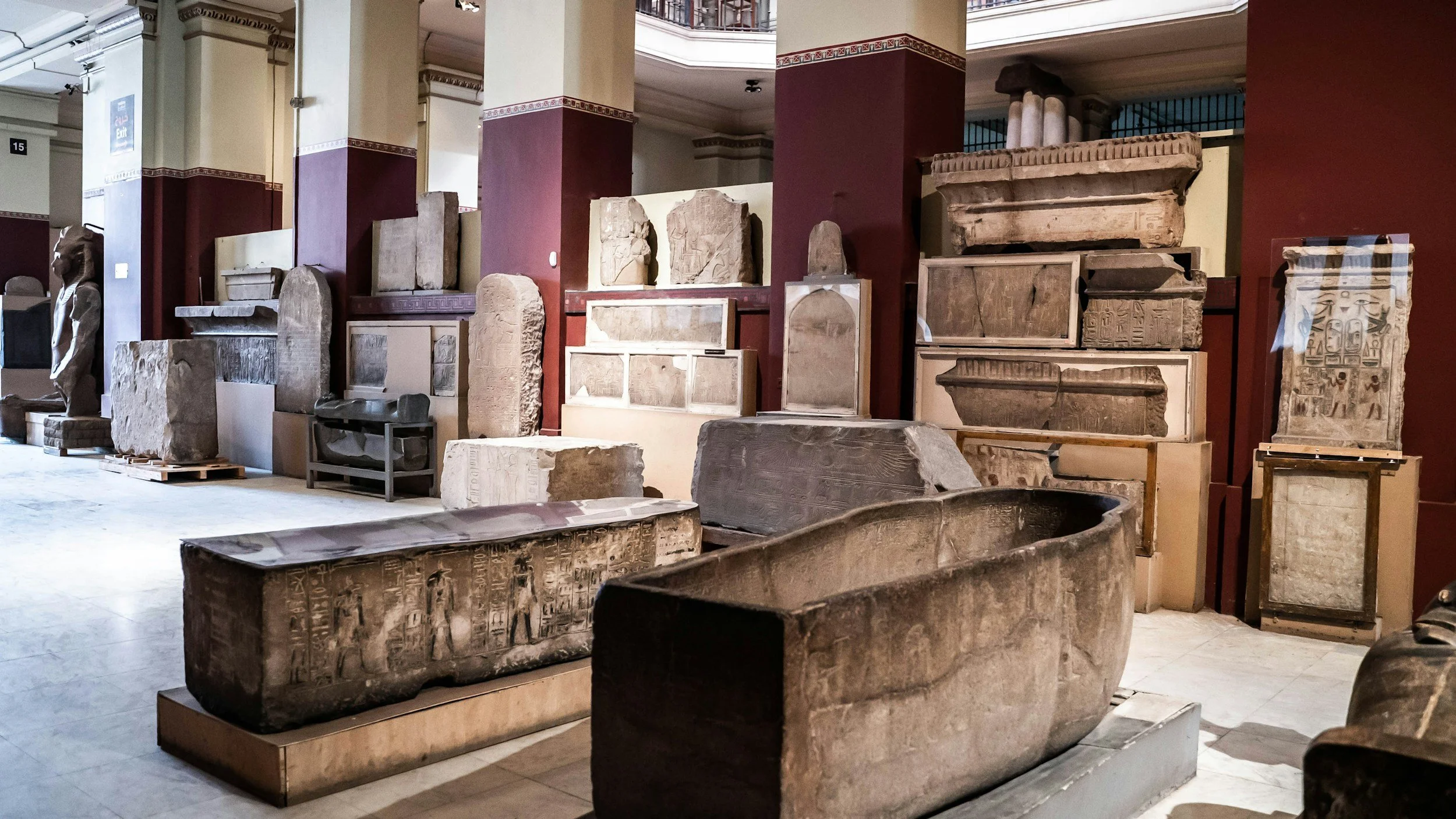
For decades, visitors encountered Egypt’s treasures inside the historic Egyptian Museum in Downtown Cairo, where rooms overflowed with artefacts arranged in dense glass cabinets. While atmospheric, that experience often felt overwhelming and uneven in its storytelling.
The Grand Egyptian Museum approaches things differently. Exhibits are arranged chronologically and thematically, guiding visitors through the development of ancient Egyptian civilisation in a coherent sequence. Artefacts are given space, lighting is carefully considered, and explanatory material supports rather than distracts from the objects themselves.
The most significant shift lies in the presentation of the complete Tutankhamun collection. For the first time, the thousands of items recovered from the tomb are displayed together, allowing the story of the boy king to unfold as a unified narrative rather than fragmented highlights. Seeing ceremonial objects, jewellery, furniture, and funerary artefacts assembled in context deepens understanding in a way that isolated pieces never could.
Rather than feeling like a treasure warehouse, the museum feels curated, modern, and internationally aligned in its presentation.
How to Combine It With Giza
Logistically, the museum pairs naturally with a visit to the pyramids. Many travellers choose to begin early on the plateau, when temperatures are manageable, and then transition indoors during the warmer middle hours of the day. This sequencing allows you to move from physical monumentality to curated interpretation in a way that feels cohesive.
Alternatively, beginning at the museum can provide historical grounding before stepping out onto the plateau itself, especially for visitors who prefer contextual understanding first.
Entry typically ranges between EGP 400–600 (£6–£10 / €7–€11 / $8–$13), depending on access levels and temporary exhibitions. Allow at least two to three hours to move through the galleries without rushing, particularly if you wish to explore the Tutankhamun collection in depth.
Where the pyramids impress through scale and endurance, the museum reconnects those structures to the civilisation that created them. Together, they offer a far more complete understanding of ancient Egypt than either site could provide alone.
The Citadel of Saladin
Rising above the dense urban fabric of Cairo on the Mokattam Hills, the Cairo Citadel offers both historical weight and geographical clarity. Built in the 12th century by Saladin as a defensive stronghold against Crusader forces, the Citadel went on to serve as the seat of Egyptian power for centuries. Its elevated position was strategic; today, it is experiential.
After navigating Cairo at street level — through traffic, markets, and narrow lanes — arriving at the Citadel feels like stepping back to survey the entire city at once.
Why It’s Worth the Climb
The most immediate reward of visiting the Citadel is perspective. From its terraces, Cairo unfolds in layers: tightly packed neighbourhoods, rising minarets, distant high-rises, and, on particularly clear days, the faint silhouette of the pyramids on the western horizon. Seeing the city from above helps contextualise everything you have already experienced at ground level.
Dominating the complex is the Mosque of Muhammad Ali, often referred to as the Alabaster Mosque due to the pale stone lining its interior and exterior walls. Constructed in the 19th century in an Ottoman architectural style inspired by Istanbul’s imperial mosques, it contrasts sharply with the earlier medieval structures of Islamic Cairo below. Its expansive central dome, flanked by semi-domes and framed by twin minarets, creates one of the most recognisable silhouettes in the city.
Inside, vast chandeliers hang beneath the domed ceiling, and patterned carpets soften the scale of the prayer hall. The open courtyard, bordered by elegant arcades, offers uninterrupted views across Cairo, making it one of the most photogenic vantage points in the capital.
Beyond the mosque, smaller museums and additional structures within the Citadel complex provide further historical context, though many visitors focus primarily on the mosque and panoramic views.
Entry typically costs around EGP 200–300 (£3–£5 / €3–£5 / $4–£6), and allowing 1.5 to 2 hours provides sufficient time to explore without rushing.
When to Visit
Late afternoon is particularly rewarding, as the light softens and the city takes on warmer tones. The golden hour enhances both the alabaster surfaces of the mosque and the sprawling skyline beyond. Morning visits, on the other hand, offer cooler temperatures and fewer visitors, which can make the experience feel more contemplative.
The Citadel pairs naturally with a morning in Islamic Cairo, given their proximity. Visiting both in a single day creates a narrative arc — from street-level immersion to elevated overview — that reinforces Cairo’s layered complexity.
From this height, the density of Cairo becomes comprehensible. You begin to see not just isolated monuments, but how centuries of architecture and daily life interlock across the landscape.
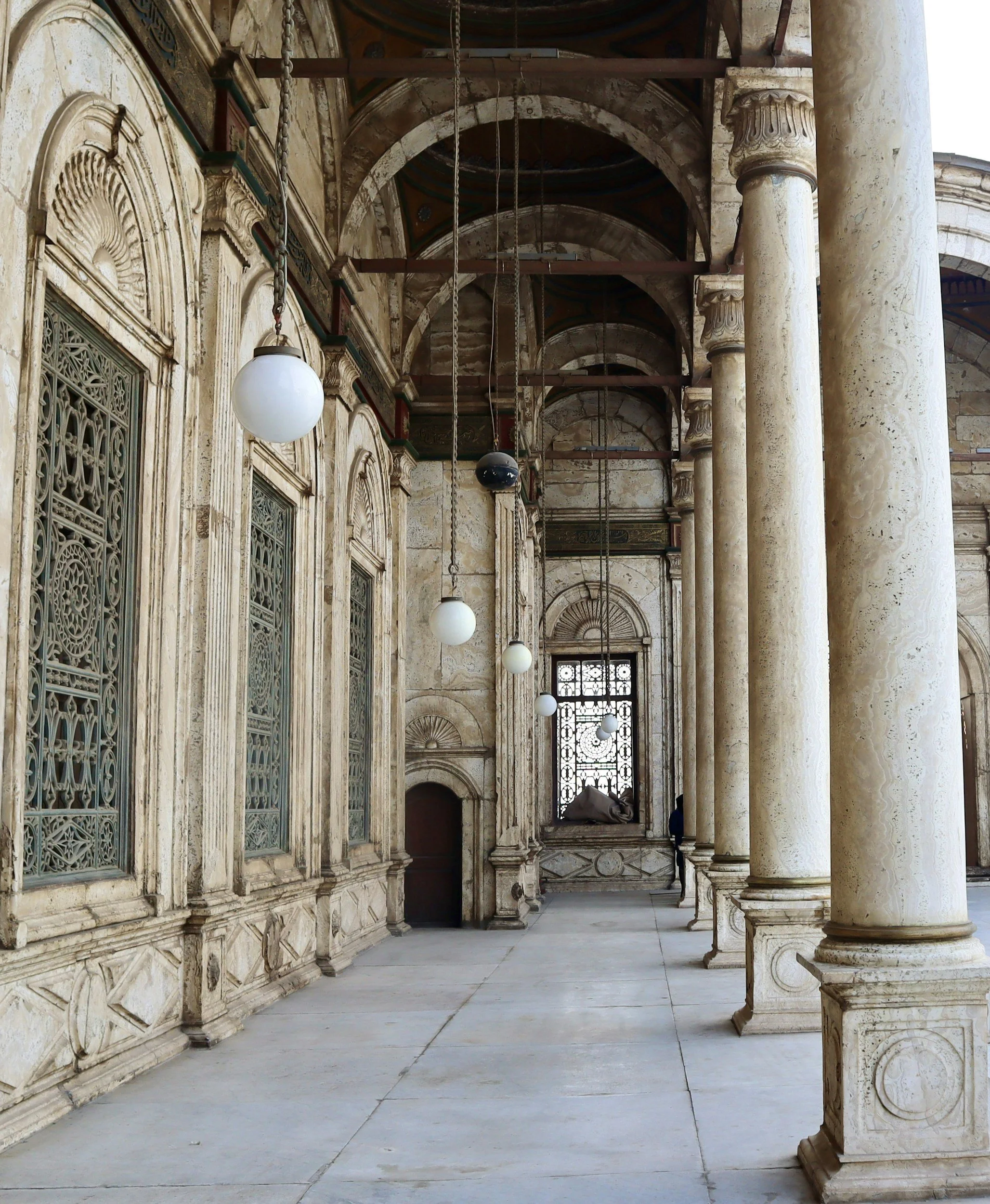
Citadel of Saladin.
Islamic Cairo & Al-Muizz Street
If the pyramids demonstrate scale and the Citadel offers perspective, Islamic Cairo delivers immersion. This is where Cairo contracts into stone corridors, carved façades, and a concentration of architecture that spans nearly a millennium. Rather than isolated monuments separated by modern streets, here the buildings sit shoulder to shoulder, layered into daily life.
Walking through Islamic Cairo is less about moving between landmarks and more about absorbing atmosphere. The density of history is what makes it remarkable.
Walking Through 1,000 Years of Architecture
Islamic Cairo began taking shape in the 10th century under the Fatimid dynasty, and successive rulers — Ayyubid, Mamluk, Ottoman — added mosques, madrasas, mausoleums, and gates that still define the district today. The result is one of the richest collections of medieval Islamic architecture anywhere in the world.
Begin near Al-Azhar Mosque, founded in 970 AD and still one of the most influential centres of Islamic scholarship globally. Its vast marble courtyard provides a calm counterpoint to the surrounding streets, and stepping inside offers a moment of quiet reflection before continuing your exploration.
From there, follow Al-Muizz Street, often described as an open-air museum. Along this thoroughfare, intricately carved stone façades, wooden mashrabiya balconies, and slender minarets rise above you in close succession. Looking upward is essential; much of the architectural detail reveals itself above street level, framed by the sky.
Entry to many of the historic complexes along Al-Muizz Street ranges between EGP 60–200 (£1–£3 / €1–£3 / $1–£4), and combination tickets are sometimes available. Modest dress is required for mosque visits, with shoulders and knees covered and shoes removed before entering prayer halls.
Nearby, Khan el-Khalili unfolds in a maze of market lanes. While some sections are undeniably geared toward visitors, it remains a functioning commercial hub where spice merchants, metalworkers, and fabric sellers continue long-established trades. Wandering without a strict route often reveals quieter corners that feel far removed from the busiest paths.
Best Time to Visit
Morning visits offer cooler temperatures and easier movement through the narrow streets, but late afternoon into early evening transforms the district. As the light warms the stone and lanterns flicker on in shopfronts, the atmosphere becomes markedly more cinematic. The overlapping calls to prayer echo between buildings, creating an experience that feels distinctly Cairo.
Fridays can be busier around midday prayers, and traffic approaching the district may require additional time, so planning accordingly is wise.
Islamic Cairo rewards patience more than speed. Rather than attempting to see every monument, allow yourself to walk slowly, step into courtyards when open, pause for tea, and absorb the rhythm of the neighbourhood. It is in that unhurried movement that the district reveals its depth.
Coptic Cairo (Old Cairo)
Long before Islamic dynasties reshaped Cairo’s skyline, the city was already a significant centre of early Christianity. In the district known today as Old Cairo, Roman foundations, Coptic churches, and later Islamic influences sit within walking distance of one another, revealing a chapter of the city’s story that many visitors overlook.
Coptic Cairo feels noticeably calmer than other parts of the capital. The streets are narrower, traffic is lighter, and the atmosphere is more contained. After the scale of Giza and the architectural density of Islamic Cairo, this district offers a quieter but equally meaningful experience.
The Hanging Church & Early Christian Heritage
At the heart of the district stands the Hanging Church, formally known as Saint Virgin Mary’s Coptic Orthodox Church. Its nickname comes from its construction above the gatehouse of the ancient Roman fortress of Babylon, giving the impression that it is suspended above ground level. The current structure largely dates from the 7th century, though it has undergone several restorations over time.
Inside, carved wooden screens, detailed icons, and a timbered ceiling create an intimate and contemplative space that contrasts sharply with the grand scale of Cairo’s larger mosques. The church remains active, and visiting respectfully — shoulders and knees covered — is essential.
A short walk away, the Coptic Museum houses one of the most important collections of Coptic Christian artefacts in the world. Manuscripts, textiles, stone carvings, and iconography trace the development of Christianity in Egypt from the Roman era through the early Islamic period. The museum is thoughtfully arranged and rarely overcrowded, allowing for a slower, more focused visit.
Nearby churches, including the Church of St. Sergius and Bacchus, traditionally associated with the Holy Family’s flight into Egypt, add further historical context to the district.
Entry fees are modest, generally around EGP 100–200 (£1–£3 / €1–£3 / $1–£4), and 1–2 hours is typically sufficient to explore the core sites without rushing.
Why It Deserves a Place on Your Itinerary
Coptic Cairo completes the narrative of the city. Too often, itineraries focus exclusively on pharaonic monuments and Islamic architecture, unintentionally skipping over Egypt’s Christian heritage. Yet the coexistence of these layers is precisely what makes Cairo distinctive.
Visiting Old Cairo provides balance. It adds nuance to your understanding of Egypt’s cultural evolution and introduces a different architectural vocabulary — one rooted in early Christian tradition rather than monumental stone or Ottoman domes.
Because the district is compact and manageable, it pairs well with Islamic Cairo earlier in the day or a relaxed afternoon nearby. Its quieter atmosphere makes it particularly welcome after the intensity of larger sites.
Coptic Cairo may not dominate postcards, but it enriches the overall experience in a way that feels both grounded and essential.
A Sunset on the Nile
For all its density and noise, Cairo is ultimately shaped by water. The Nile is not simply a geographical feature; it is the city’s spine, its source of life, and its most consistent point of calm. After navigating monuments, markets, and traffic, time spent along the river offers a different perspective entirely.
Experiencing Cairo from the Nile shifts the scale of the city. The skyline recedes slightly, the pace slows, and the constant hum of movement becomes background rather than foreground.
A Traditional Felucca Ride
One of the simplest and most rewarding experiences in Cairo is boarding a felucca at golden hour. These traditional wooden sailboats have travelled the Nile for centuries, and while the skyline behind them has transformed, the act of drifting under sail remains remarkably unchanged.
Feluccas can be arranged along the Corniche in Zamalek or Downtown, often directly at the riverbank. Negotiation is part of the process, but for reference, a private one-hour ride typically costs between EGP 300–600 (£5–£10 / €6–£12 / $7–£15), depending on timing and demand. Always agree on the duration and price before setting off.
The experience itself is less about sightseeing and more about atmosphere. As the sun lowers, the sky shifts through warm tones, bridges illuminate with headlights, and the call to prayer carries softly across the water. Families gather along the banks, couples stroll the Corniche, and the city feels momentarily suspended between day and night.
It is one of the rare moments in Cairo where there is no agenda beyond simply being present.
Dinner Cruises — Setting Expectations
Larger Nile dinner cruises operate nightly, offering buffet-style meals and live entertainment. These experiences tend to be more structured and often include traditional music and dance performances. While they can be enjoyable, it is important to approach them with realistic expectations; the appeal lies more in atmosphere and novelty than in culinary excellence.
For travellers prioritising food quality, a felucca ride followed by dinner at a strong Nile-front restaurant in Zamalek or Garden City often provides a more satisfying combination.
When to Go
Sunset is unquestionably the most atmospheric time on the river. During the hotter months, this also offers welcome relief from daytime temperatures. Weekends can be busier, particularly along the Corniche, but that liveliness forms part of the local experience rather than detracting from it.
Whether aboard a felucca or simply walking beside the water, the Nile introduces a different tempo to Cairo. It reminds you that beneath the city’s energy lies something steady and enduring — the same river that sustained ancient civilisations continues to shape daily life today.
Saqqara & Dahshur: The Smarter Pyramid Day
For many visitors, the pyramids begin and end at Giza. Yet just beyond the city’s western edge lies a quieter, more revealing extension of ancient Egypt — one that often leaves a deeper impression precisely because it is less crowded.
A half-day trip to Saqqara and Dahshur adds context to everything you see at Giza. Instead of encountering the final form of pyramid construction, you witness its evolution.
Why It’s Worth the Detour
At Saqqara stands the Step Pyramid of Djoser, constructed in the 27th century BC and widely considered the world’s oldest large-scale stone structure. Designed by the architect Imhotep, it represents a revolutionary leap in monumental building, transforming earlier mastaba tombs into a stacked, tiered form that laid the foundation for later pyramid design.
Walking through Saqqara feels markedly different from Giza. The site is expansive and far less commercialised, with open desert stretching beyond the monuments. Tomb interiors, decorated with vivid relief carvings and hieroglyphs, offer a more intimate glimpse into daily life and belief systems than the grand external forms alone.
Further south in Dahshur stands the Bent Pyramid, named for its noticeable change in angle midway up its structure. The shift reflects an early engineering adjustment during construction, providing visible evidence of experimentation in pyramid design. Nearby, the Red Pyramid presents one of the earliest successful smooth-sided examples.
What makes these sites compelling is not simply their age, but their relative quiet. Without dense crowds, you are free to walk, observe, and absorb the scale at your own pace.
How to Plan the Day
Saqqara and Dahshur are best visited with a private driver or organised tour, as public transport connections are limited and distances between sites are significant. Starting early in the morning helps avoid the strongest heat, particularly during warmer months.
Allow approximately four to five hours to explore both sites comfortably. Entry fees vary by complex but generally range between EGP 150–300 per site (£2–£5 / €2–£5 / $3–£6), with separate tickets sometimes required for specific tombs.
Pairing Saqqara and Dahshur with Giza on the same day is possible but ambitious. Many travellers find that dedicating a separate half-day creates a more balanced experience and prevents fatigue.
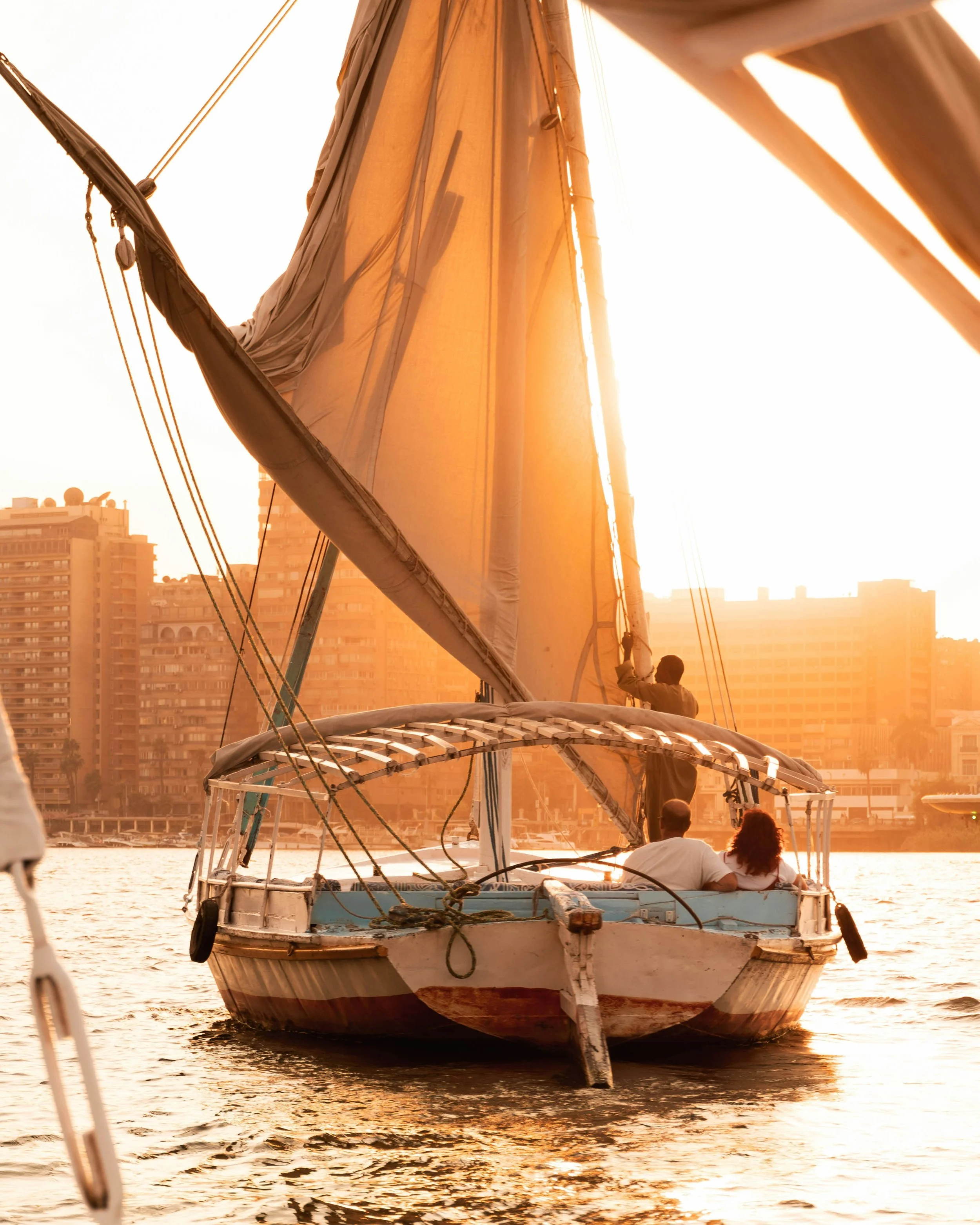
Sunset on the Nile.
A Slower Cairo Experience
Not every meaningful moment in Cairo is tied to a major monument. In fact, some of the city’s most memorable impressions come when you step away from ticketed sites altogether and allow daily life to unfold around you.
Cairo can feel overwhelming when approached as a checklist. When approached with time, it reveals something far more nuanced — rhythm, ritual, and routine layered over centuries.
Sit in an Ahwa and Stay Longer Than Planned
A traditional coffeehouse, or ahwa, is one of the simplest ways to observe Cairo without rushing through it. Order mint tea or strong Egyptian coffee, take a seat, and resist the urge to check your watch.
Around you, conversations stretch without urgency. Backgammon boards click against tabletops. Tea glasses are refilled. There is no pressure to leave after a single drink; lingering is expected. What initially feels unstructured gradually reveals its own order — a steady cadence of social interaction that defines much of the city’s public life.
Spending even an hour in this environment provides insight into Cairo’s tempo in a way that no museum can replicate.
Walk Without a Strict Destination
Some of Cairo’s most revealing scenes appear between landmarks. A bakery stacking fresh baladi bread. A mechanic repairing a car beneath a faded balcony. Children weaving confidently through traffic.
Choose a neighbourhood — Zamalek, Downtown, or a quieter stretch of Islamic Cairo — and walk without a fixed endpoint. The goal is not to accumulate sites, but to observe how the city functions beyond its headline attractions.
This approach works particularly well in the early evening, when the heat subsides and residents emerge for errands, socialising, and strolls along the Corniche.
Visit a Local Market That Isn’t in Every Guidebook
While Khan el-Khalili draws attention for its history, smaller neighbourhood markets often provide a more immediate window into everyday life. Produce stalls, spice vendors, and small grocers operate with minimal ceremony, serving residents rather than visitors.
There is no performance here — just routine. Watching these exchanges unfold reveals how embedded food, trade, and community remain within the urban fabric.
Allow Time Between Major Sites
Perhaps the most practical form of “slowing down” in Cairo is building space into your itinerary. Traffic is unpredictable, distances are larger than they appear on a map, and heat can alter energy levels quickly. Leaving breathing room between major attractions reduces fatigue and allows for spontaneous discoveries.
Cairo rewards those who move with it rather than against it.
Practical Planning Tips
Cairo rewards strategic pacing. The city is vast, traffic is unpredictable, and temperatures can reshape your energy faster than expected. Approaching your itinerary with logic rather than ambition makes a noticeable difference to how the experience feels.
Group Sites Geographically
The single biggest mistake visitors make is zigzagging across the city in one day. Cairo is not compact, and even short distances can stretch under heavy traffic.
A practical approach looks like this:
Giza Plateau + Grand Egyptian Museum on the same day
Islamic Cairo + The Citadel paired together
Coptic Cairo combined with a slower afternoon nearby
Grouping sites reduces transit fatigue and allows you to move through each area with greater focus.
Plan Around Heat
From late spring through early autumn, midday temperatures can be intense. Early starts are not optional — they are strategic.
Aim to:
Begin major outdoor sites at opening
Move indoors during peak midday heat
Schedule river or rooftop experiences later in the day
Hydration and sun protection are essential. Shade is limited at Giza and Saqqara in particular.
When a Guide Adds Value
At complex archaeological sites such as the Pyramids of Giza or Saqqara, a knowledgeable guide can provide context that transforms stone into story. Understanding construction phases, burial rituals, and architectural experimentation deepens appreciation significantly.
In contrast, wandering Islamic Cairo independently can be equally rewarding, as the atmosphere and architecture speak for themselves.
If hiring a guide, use licensed professionals and agree on scope and duration in advance.
2–4 Day Strategy
If time is limited, prioritisation matters.
2 Days
Focus on Giza, the Grand Egyptian Museum, and Islamic Cairo.
3 Days
Add the Citadel and either Coptic Cairo or a Nile sunset experience.
4 Days
Include Saqqara or Dahshur and allow space for slower neighbourhood exploration.
Cairo is not a city that reveals itself fully in a single visit. It benefits from layering rather than cramming.
“Cairo does not unfold neatly. It demands attention, patience, and a willingness to move through complexity. Yet that complexity is precisely what gives it depth.
The pyramids remind you of human ambition. Islamic Cairo reveals centuries of devotion and artistry. The Nile restores balance. Markets and coffeehouses reveal the rhythm of daily life. Together, these layers create a city that feels alive rather than preserved.
To experience Cairo well is not to conquer it, but to move with it — to wake early, pause often, look up, and allow the unexpected to shape the day.
It may feel intense at first. But give it time, and Cairo becomes less overwhelming and more magnetic.
And once it settles in, it tends to stay with you.”