Auckland isn’t a city of grand monuments.
It doesn’t compete with European capitals for architectural drama, nor does it overwhelm with density. Instead, it reveals itself through geography — volcanic cones rising above suburbs, ferries crossing open water, vineyards on offshore islands, black-sand beaches less than an hour away.
The best experiences in Auckland aren’t confined to one district. They’re layered: a sunrise hike, a ferry ride, a museum visit, seafood by the harbour, a west coast sunset.
This is a city you experience outward, not inward.
Let’s explore it properly.
Start with the Skyline: Harbour and City Orientation
Auckland begins to make sense once you see it from above.
Unlike cities that reveal themselves through dense streets or grand boulevards, Auckland is defined by space — by water stretching in multiple directions, by green volcanic cones rising unexpectedly through suburbs, and by the way neighbourhoods spread outward rather than clustering tightly together. Taking time to understand this geography early on changes how you experience everything that follows.
Sky Tower
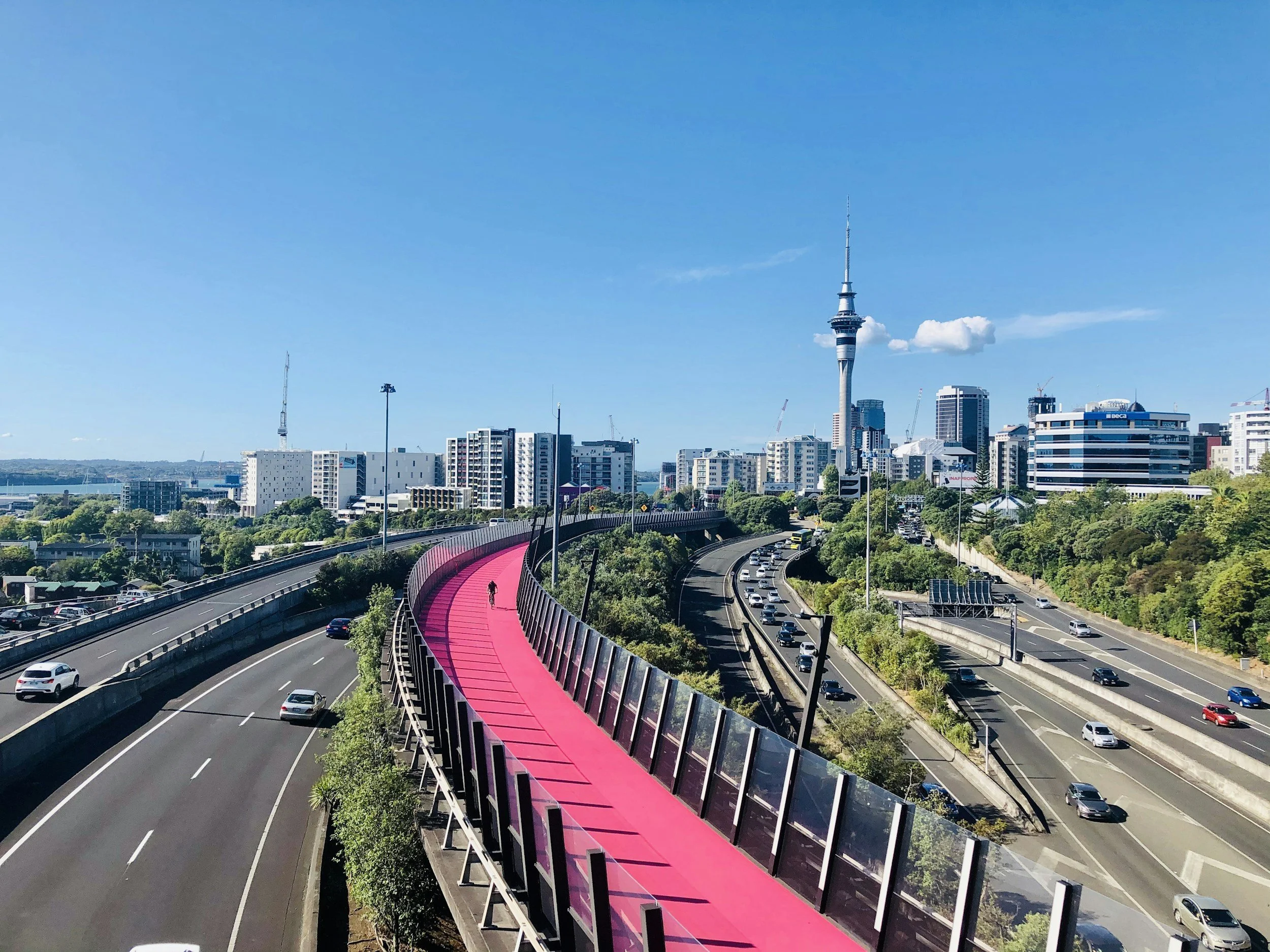
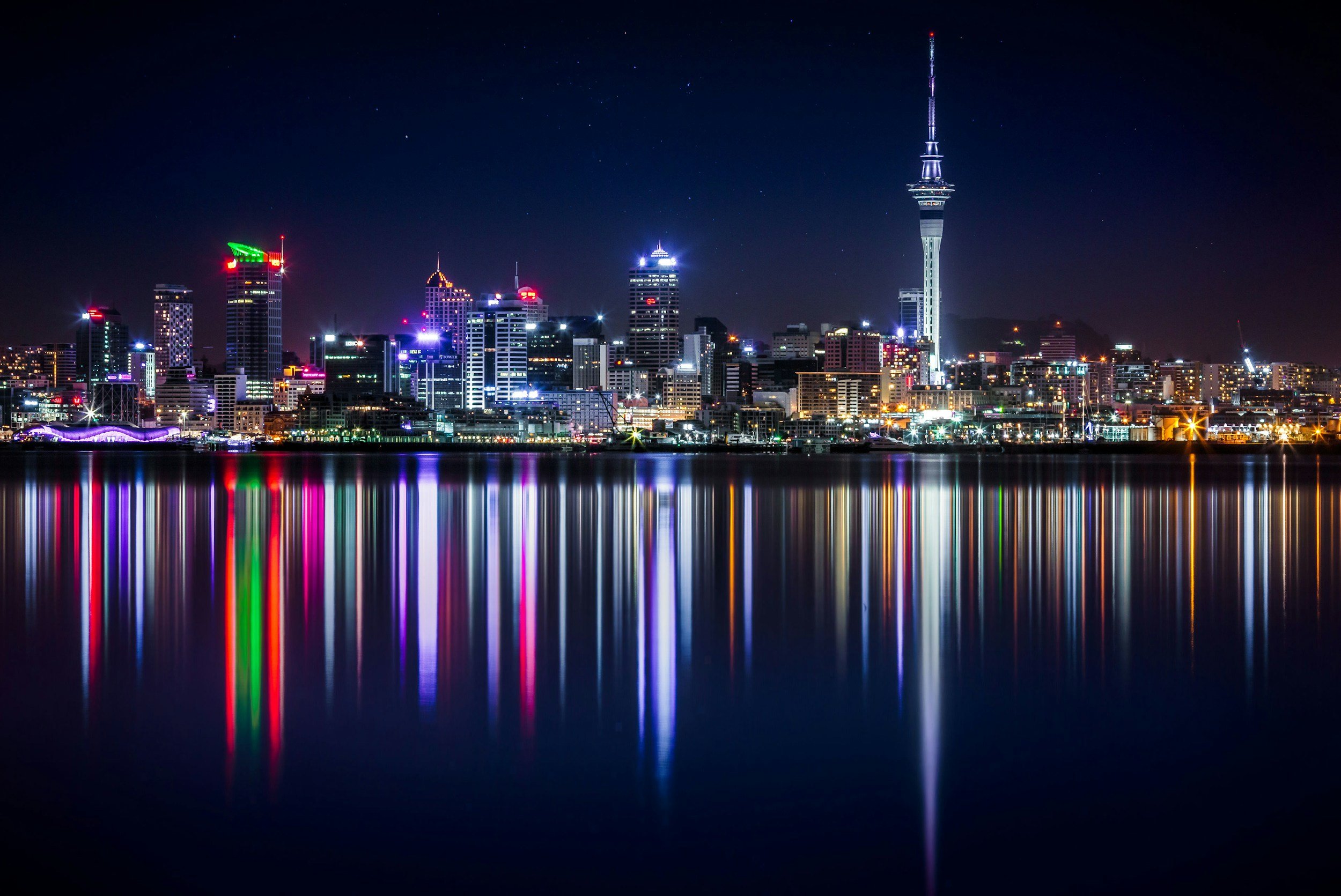
Standing at 328 metres, the Sky Tower remains the most immediate way to grasp Auckland’s layout. From the observation deck, the Waitematā Harbour unfolds to the east, ferries trace lines across the water, and dormant volcanic cones appear scattered across the urban landscape like quiet reminders of the city’s geological origins. On clear days, you can see how narrow the isthmus is — how Auckland sits between two harbours rather than dominating one.
Visiting early in your stay provides more than just a view; it provides context. Entry generally ranges between NZD $32–40 (£15–19 / €19–23 / $19–24), depending on ticket type, and while it isn’t essential for every traveller, it offers a strong introduction for first-time visitors wanting to visualise the terrain before navigating it.
Walk the Waterfront
From the base of the Sky Tower, moving toward the harbour gradually shifts your perspective from skyline to sea. The promenade connecting Commercial Bay, Viaduct Harbour, and Wynyard Quarter offers one of the most accessible and visually rewarding walks in the city. Superyachts line the marina, seafood restaurants open onto boardwalks, and ferries arrive and depart with steady rhythm.
This stretch is not merely decorative; it reveals how Auckland functions. The harbour acts as both backdrop and highway, linking the mainland to islands that form an essential part of the city’s identity. Visiting around sunset allows the skyline to soften in reflected light, reinforcing Auckland’s coastal character in a way no single monument could.
Understand the Ferries Early
Spending time near the ferry terminal in Britomart helps reinforce how outward-facing Auckland truly is. Boats depart regularly for Devonport, Waiheke Island, and Rangitoto Island, and watching that constant movement makes it clear that the city extends well beyond its streets.
Auckland is experienced through motion — across water, up hills, toward islands — and recognising that from the beginning reshapes how you plan your time here.
Volcanic Landscapes and City Hikes
Few cities in the world allow you to climb a dormant volcano before breakfast, look out across two harbours, and still be back in time for coffee.
Auckland sits on a volcanic field made up of more than 50 cones, craters and lava flows. While they are no longer active, they shape both the skyline and the rhythm of daily life. Many are now public reserves, offering walking tracks and panoramic viewpoints that are accessible without leaving the city.
These aren’t extreme hikes. They’re everyday landscapes — integrated into neighbourhoods rather than separated from them.
Mount Eden (Maungawhau)
Mount Eden is perhaps the most iconic of Auckland’s volcanic cones and one of the most rewarding experiences for visitors seeking perspective. The walk to the summit takes around 10–20 minutes depending on your starting point, and the reward is a 360-degree view across the city — harbour, skyline, suburbs and sea unfolding in every direction.
The crater itself remains clearly visible, and interpretive signage explains both geological and Māori significance. Visiting early in the morning offers softer light and fewer crowds, while late afternoon provides dramatic shadows across the crater rim.
Entry is free, and access is straightforward by bus, car, or even on foot if staying nearby.
Mount Victoria
Across the harbour in Devonport, Mount Victoria offers a slightly different perspective — closer to the water, with a more direct view back toward the skyline. The walk is shorter and gentler than Mount Eden, making it an easy addition to a Devonport ferry day.
What makes this viewpoint particularly compelling is its alignment with the harbour. Watching ferries cut across the water while the city rises behind them reinforces Auckland’s maritime identity.
Like Mount Eden, it is free to access and requires little more than comfortable shoes.
One Tree Hill (Maungakiekie)
Located within Cornwall Park, One Tree Hill offers another expansive viewpoint with historical and cultural depth. The summit monument and surrounding parkland create a setting that feels both pastoral and symbolic, with sheep often grazing below the slopes.
The walk is longer than Mount Victoria but still manageable, and it provides a quieter alternative to Mount Eden. Combining the climb with time in Cornwall Park allows you to experience a more rural-feeling landscape without leaving the city boundaries.
Why These Hikes Matter
Climbing one of Auckland’s cones is not just about the view. It reframes the city. From above, the spread-out layout makes sense, the harbours become visible in relation to one another, and the scale feels human rather than overwhelming.
These experiences are accessible, free, and integrated into neighbourhood life. They require little planning but offer disproportionate reward.
In a city without towering cathedrals or ancient ruins, the volcanoes serve as Auckland’s natural monuments.
Harbour and Island Escapes
The harbour is not a backdrop in Auckland; it is a working, living extension of the city. Ferries depart throughout the day, tracing steady routes across the Waitematā Harbour and into the Hauraki Gulf, connecting the mainland to islands that feel both close and distinct.
Spending time on the water is not an optional add-on here. It is one of the defining Auckland experiences.
Waiheke Island
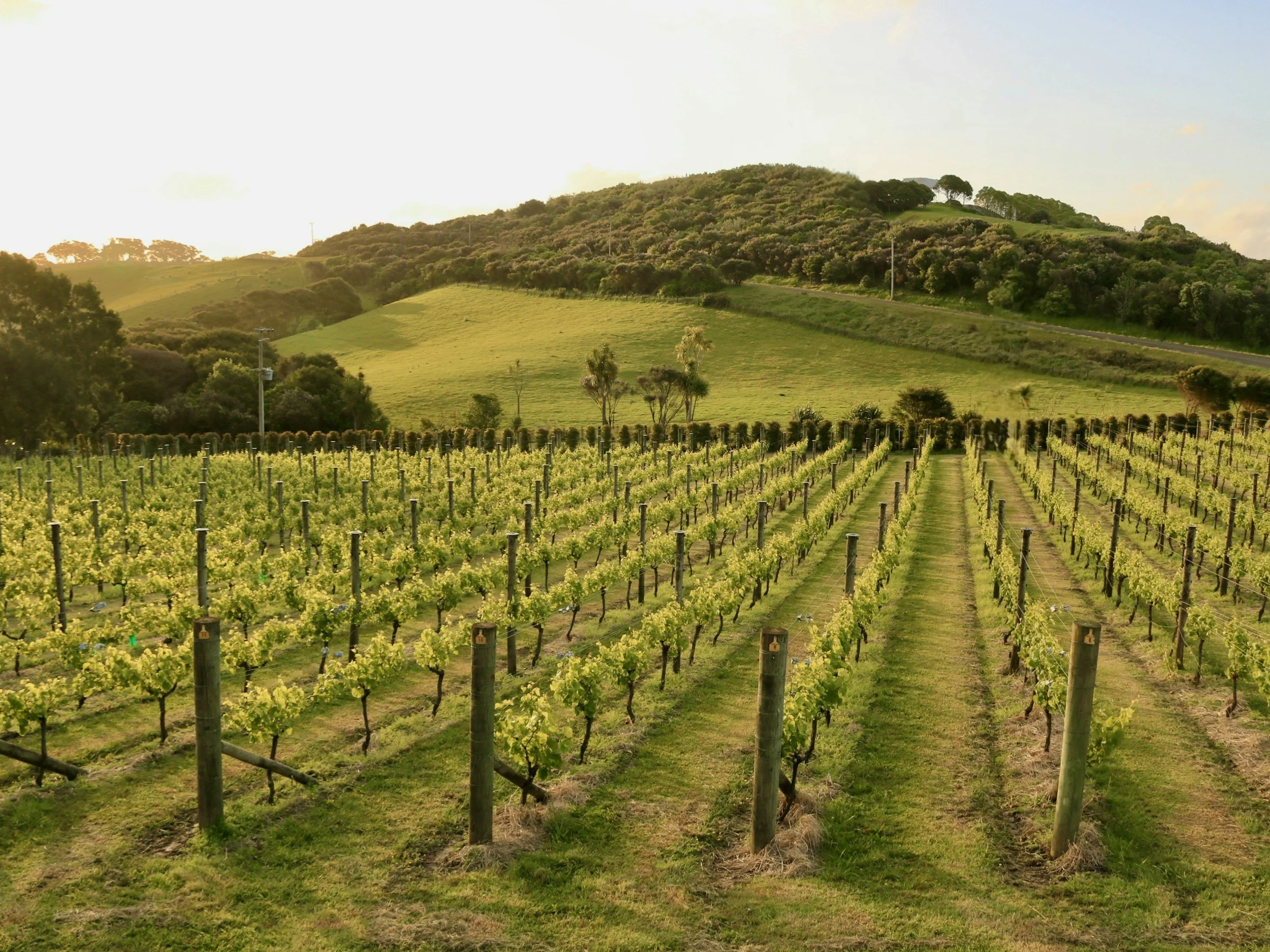
Around 40 minutes by ferry from downtown, Waiheke Island has built a reputation for vineyards, coastal walking tracks, and relaxed beach culture. The approach itself is part of the experience, as the skyline gradually recedes and low, green hills come into view.
Once there, the pace slows noticeably. Vineyards such as Mudbrick and Cable Bay overlook the water, producing Syrah and Bordeaux-style blends that frequently appear on Auckland wine lists. Tastings typically range from NZD $15–25 (£7–12 / €9–15 / $9–15), often redeemable against bottle purchases.
Beyond wine, Waiheke offers coastal walks, small art galleries, and beaches like Oneroa and Onetangi, where you can spend an afternoon without structured plans. Buses meet arriving ferries, making it possible to explore without hiring a car, although having your own vehicle provides greater flexibility.
Waiheke works well as a full-day escape rather than a rushed half-day visit.
Rangitoto Island
Where Waiheke is vineyard-lined and settled, Rangitoto is raw and volcanic. Its symmetrical cone rises directly from the harbour and is visible from much of the city.
The ferry takes around 25 minutes, and the main draw is the summit hike. The walk to the top takes approximately one hour each way, passing through lava fields and pōhutukawa forest before opening into expansive views across the gulf and back toward Auckland.
There are no shops or cafés on the island, so water and food need to be brought with you. The experience feels more elemental than Waiheke — less polished, more defined by landscape.
For visitors wanting to understand Auckland’s geological story, Rangitoto offers a powerful contrast to urban life.
Devonport
Although technically part of the mainland, Devonport feels island-like thanks to its short ferry connection. Spending an afternoon here combines heritage streets, coastal walking, and panoramic viewpoints from Mount Victoria and North Head.
It works particularly well as a half-day addition rather than a full excursion, and the ferry ride itself reinforces how compact yet outward-facing Auckland is.
Why the Harbour Matters
Taking at least one ferry during your stay changes your understanding of the city. From the water, Auckland appears greener, lower, and more dispersed than it does from street level. The skyline becomes part of a broader landscape rather than the focal point.
Few cities integrate accessible island escapes so seamlessly into daily life. In Auckland, the harbour is both connector and contrast — a reminder that nature sits just beyond the urban edge.
Culture and Museums
Auckland’s cultural experiences are not concentrated in a single monumental district. Instead, they are woven into parks, waterfront precincts, and neighbourhood institutions that reflect the city’s layered identity — Māori foundations, Pacific connections, colonial history, and contemporary creativity.
To understand Auckland properly, time spent in its cultural spaces adds necessary context to everything else you’ve seen.
Auckland War Memorial Museum
Set within the sweeping green space of Auckland Domain, the Auckland War Memorial Museum is both a landmark building and one of the most important cultural institutions in the country. The neoclassical façade gives little hint of the depth inside, where Māori and Pacific collections form the heart of the museum’s identity.
Carved meeting houses, waka (canoes), textiles and taonga (treasures) are presented with care, offering insight into Māori cosmology, navigation traditions, and community life. These are not side exhibits; they are foundational narratives.
Entry for international visitors is typically around NZD $28–35 (£13–17 / €16–20 / $17–21), and allowing at least two to three hours ensures you move beyond a surface-level visit. Pairing the museum with a walk through the Domain makes for a well-balanced morning.
Auckland Art Gallery Toi o Tāmaki
Located near Albert Park in the city centre, Auckland Art Gallery blends contemporary architecture with a historic core. The collection spans traditional Māori works, significant New Zealand artists, and international exhibitions.
The gallery feels airy and calm, making it a worthwhile stop between waterfront walks or café visits. General admission to the permanent collection is usually free, with charges applying to special exhibitions.
Its location also makes it easy to integrate into a city-centre afternoon without needing additional transport.
Waterfront and Contemporary Culture
Around Wynyard Quarter and Britomart, cultural expression takes a more contemporary form. Public art installations, design-focused retail spaces, and event venues host rotating exhibitions, performances, and seasonal markets.
Rather than dominating the skyline, culture in Auckland feels integrated into daily life — visible but not overwhelming.
Why Culture Matters Here
Auckland does not present itself as an ancient capital layered with centuries of monumental architecture. Instead, it offers cultural experiences that speak directly to identity — indigenous heritage, Pacific migration, and a modern creative scene shaped by geography and diversity.
Spending time in its museums deepens your understanding of what you see outside them: the volcanic cones, the harbour, the place names that carry Māori language and history.
Culture in Auckland is not decorative.
It is foundational.
West Coast Beaches and Wild Landscapes
If the eastern side of Auckland feels sheltered and vineyard-lined, the west coast feels elemental.
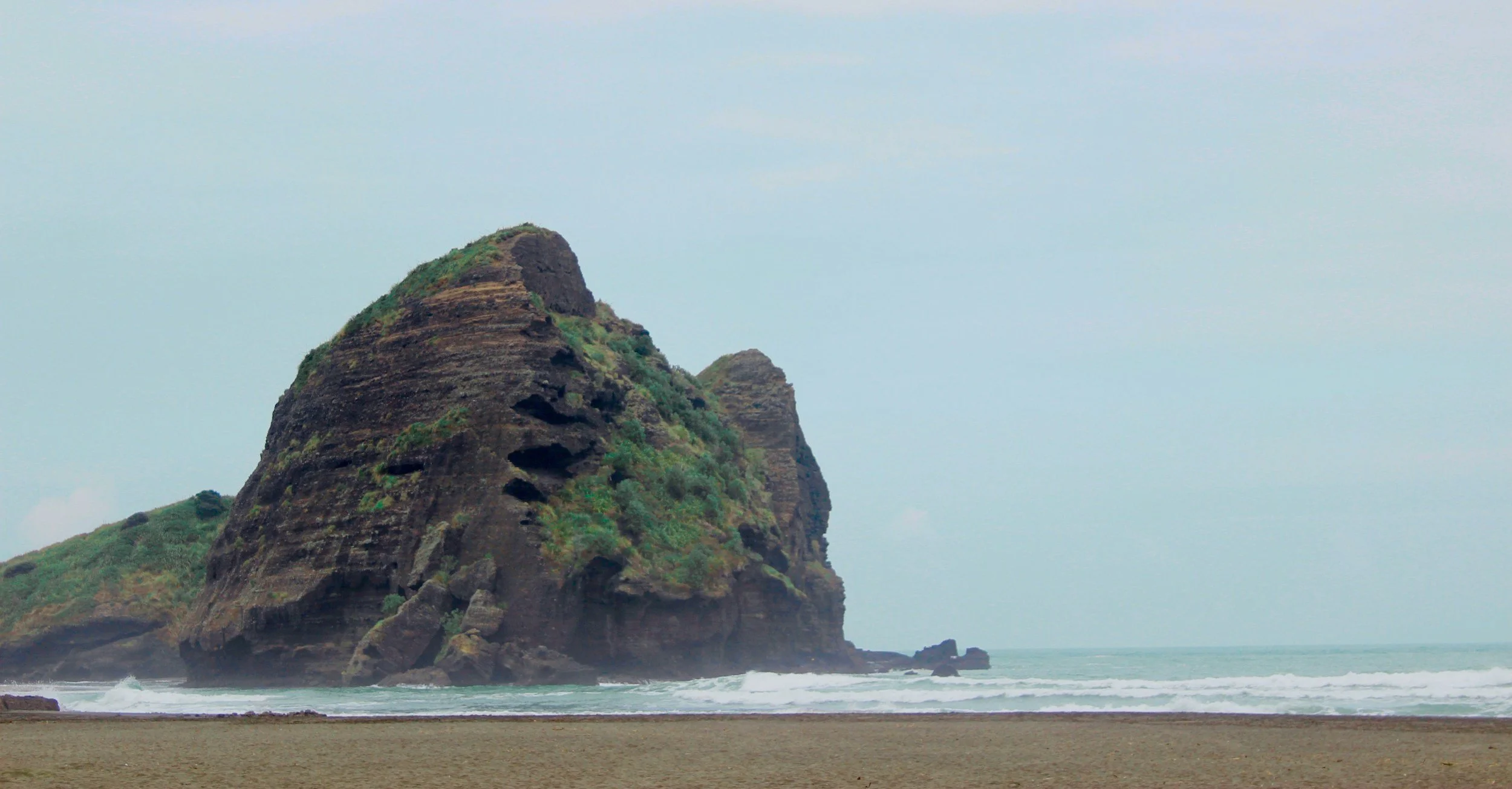
Within an hour’s drive of the city centre, the landscape shifts dramatically. The water grows darker, the sand turns black with iron-rich volcanic minerals, and dense native forest rolls down toward wide, untamed beaches. This is the Tasman Sea side of the isthmus — less polished, more powerful.
Spending time here offers a striking contrast to the marina-lined calm of the harbour.
Piha Beach
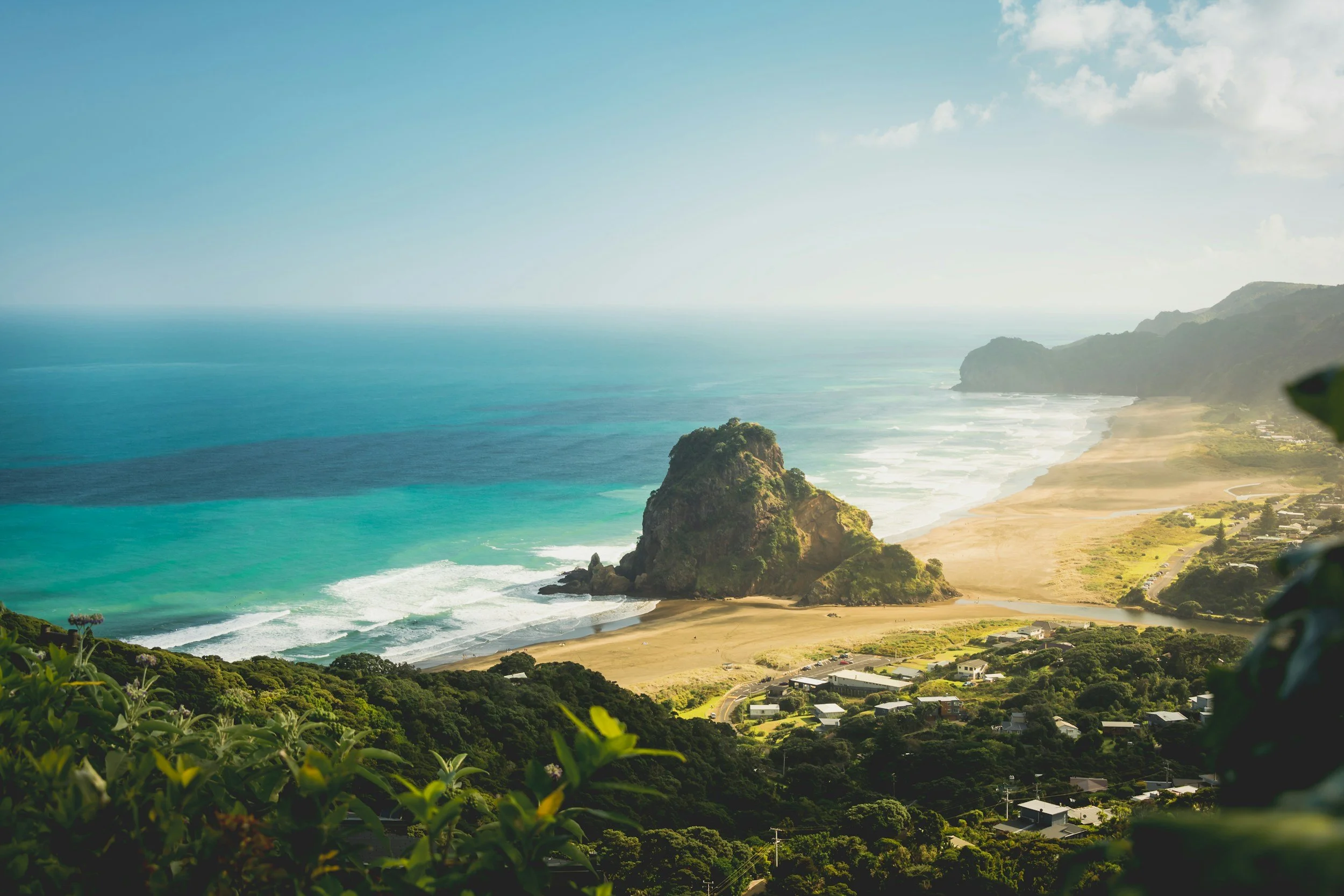
Piha is the most iconic of Auckland’s west coast beaches. Dominated by the towering Lion Rock formation, it stretches wide and windswept beneath steep green hills. The surf can be strong, and swimming should always be done between flagged areas patrolled by lifeguards in summer.
Even if you’re not entering the water, walking the shoreline is a powerful experience. The black sand absorbs heat on sunny days, and the scale of the landscape feels dramatically different from the city.
The drive from central Auckland takes around 45–60 minutes, depending on traffic, and winds through the Waitākere Ranges — making the journey itself part of the experience.
Karekare Beach
Less developed than Piha, Karekare feels even more remote. The beach is backed by dramatic cliffs and native bush, and the atmosphere is noticeably quieter. It’s well suited to travellers looking for a wilder setting with fewer crowds.
Strong currents mean swimming requires caution, but the landscape alone makes the trip worthwhile.
Waitākere Ranges
Beyond the beaches themselves, the Waitākere Ranges Regional Park offers walking tracks through dense rainforest, waterfalls, and elevated viewpoints. Trails vary in length and difficulty, from shorter scenic walks to more challenging routes.
Some tracks periodically close for conservation reasons, so checking official updates before visiting is essential. When open, these walks offer immersion in native forest without travelling far from the city.
Why the West Coast Matters
The west coast reframes Auckland entirely. It reveals how quickly the urban environment gives way to raw landscape, and how strongly the city remains connected to nature.
Unlike destinations where wild beaches require long travel days, here they sit within reach of a morning departure and an afternoon return. The contrast between café culture in Ponsonby and wind-swept sand at Piha within the same day captures something essential about Auckland’s character.
It is a city bordered by wilderness rather than separated from it.
Neighbourhood Wandering and Everyday Auckland
Auckland rewards unstructured time.
While its headline experiences often involve viewpoints, islands or beaches, some of the most memorable moments come from moving slowly through its neighbourhoods — pausing for coffee, stepping into small galleries, or walking streets lined with wooden villas painted in soft coastal tones.
Unlike tightly packed European cities, Auckland offers space. That space invites wandering rather than checklist-style sightseeing.
Ponsonby and Grey Lynn
In Ponsonby, afternoons stretch easily between boutiques, wine bars and cafés. The rhythm is social but not hurried. Walking along Ponsonby Road, you move past design stores, small galleries and restaurants that feel embedded rather than imposed.
Nearby Grey Lynn carries a slightly quieter energy, with leafy residential streets and a strong local café culture. Weekend farmers’ markets and small community events reinforce how lived-in this part of the city feels.
Spending a few unplanned hours here — without a specific destination — often reveals more about Auckland than a structured tour.
Devonport’s Coastal Calm
Across the harbour, Devonport invites slower exploration. Heritage cottages, independent bookstores and shoreline paths create a rhythm that feels removed from the CBD despite being only minutes away by ferry.
Walking from the ferry terminal toward Cheltenham Beach or up to Mount Victoria allows you to experience how tightly connected land and sea are in Auckland’s daily life.
Karangahape Road (K’ Road)
For something edgier, Karangahape Road offers an alternative perspective. Often referred to simply as K’ Road, it blends vintage stores, independent bars, street art and music venues.
It’s less polished than Britomart, more expressive, and gives insight into Auckland’s creative undercurrent. Visiting in the early evening captures the transition from daytime retail to nighttime energy.
Why Wandering Matters
Auckland’s experiences are not always grand or concentrated. They unfold through neighbourhoods, through small interactions, through the spaces between major attractions.
Allowing time to move without urgency — to walk, sit, observe — aligns with the city’s overall tone. Auckland does not demand to be consumed quickly.
It rewards those who slow down.
Practical Tips for Planning Your Time in Auckland
Auckland rarely reveals itself in a single day. While the skyline and waterfront can be covered quickly, the city’s real appeal lies in the way urban life, volcanic landscapes, beaches and islands sit within close reach of one another. Planning your time with that balance in mind makes all the difference.
How Many Days Do You Need?
For a first visit, three full days is a strong baseline. This allows time to orient yourself around the harbour and city centre, climb at least one volcanic cone, and take a ferry to either Waiheke or Rangitoto Island without rushing.
With four to five days, you can add a west coast beach excursion and move more slowly through neighbourhoods like Ponsonby or Devonport. The additional time shifts the experience from sightseeing to immersion.
Auckland can function as a gateway city, but treating it solely as a transit stop underestimates what it offers.
Best Time to Visit
Summer (December to February) brings long daylight hours, warm temperatures and strong beach conditions, but it also attracts the highest visitor numbers and elevated accommodation prices.
Autumn (March to May) is often ideal. The weather remains mild, vineyards on Waiheke are active, and crowds begin to thin. Spring (September to November) also works well, particularly for walking and outdoor exploration.
Winter is cooler and occasionally wet, but the city remains functional. Cafés, museums and neighbourhood dining scenes continue at full pace, even if beach days become less appealing.
Combining Experiences Efficiently
Auckland works best when grouped geographically.
Pair the Sky Tower and waterfront walk with Britomart dining. Combine Devonport with a Mount Victoria climb and coastal stroll. Schedule a Waiheke ferry as a full-day commitment rather than trying to squeeze it between other activities. If heading to Piha or the west coast, dedicate half a day at minimum to account for driving time and slower roads.
Avoid over-fragmenting your itinerary. Auckland’s experiences reward focus rather than constant movement.
Getting Around
Public transport connects central neighbourhoods effectively, but hiring a car adds flexibility if you plan to explore the west coast, regional parks or areas beyond the ferry network.
Within the inner city, walking remains viable, particularly along the waterfront and within neighbourhood hubs. Ferries are efficient and reliable for island connections, and using them at least once enhances your understanding of the city’s layout.
“Auckland does not overwhelm with monuments or density. Instead, it unfolds through geography — volcanic cones rising quietly through suburbs, ferries crossing open water, black-sand beaches within an hour of downtown, vineyards just beyond the harbour.
Its best experiences are not confined to one district or attraction. They are layered: a sunrise climb, a harbour walk, a museum visit, seafood by the water, a ferry ride toward an island that feels far from the mainland despite its proximity.
The city rewards curiosity and balance. It asks you to look outward — toward sea, sky and landscape — rather than inward toward crowded streets.
Spend time above it on a volcanic summit. Cross the harbour by boat. Walk without urgency through its neighbourhoods.
Auckland reveals itself gradually, and in doing so, leaves a stronger impression than it first suggests.”