Barcelona: Experiences Guide
Barcelona is a city that reveals itself through rhythm rather than spectacle. It’s felt in the way mornings unfold slowly, how afternoons pause, and how evenings stretch long after the sun dips behind the buildings. While its landmarks are world-famous, the real experience of the city lives in movement — walking without a plan, lingering in neighbourhood squares, and letting days evolve naturally rather than following a strict itinerary.
This guide looks at Barcelona through experiences rather than sights alone. Some are iconic and unavoidable, others quieter and more local, but all shape how the city actually feels when you’re there. It’s about timing as much as place — knowing when to wander, when to stop, and when to let the city take the lead.
Whether it’s your first visit or a return trip, Barcelona rewards curiosity and flexibility. The best moments often sit between plans: a market detour, a long lunch that runs late, a viewpoint reached without rushing. These are the experiences that linger — not because they were impressive, but because they felt lived in.
Walk the Gothic Quarter and El Born early
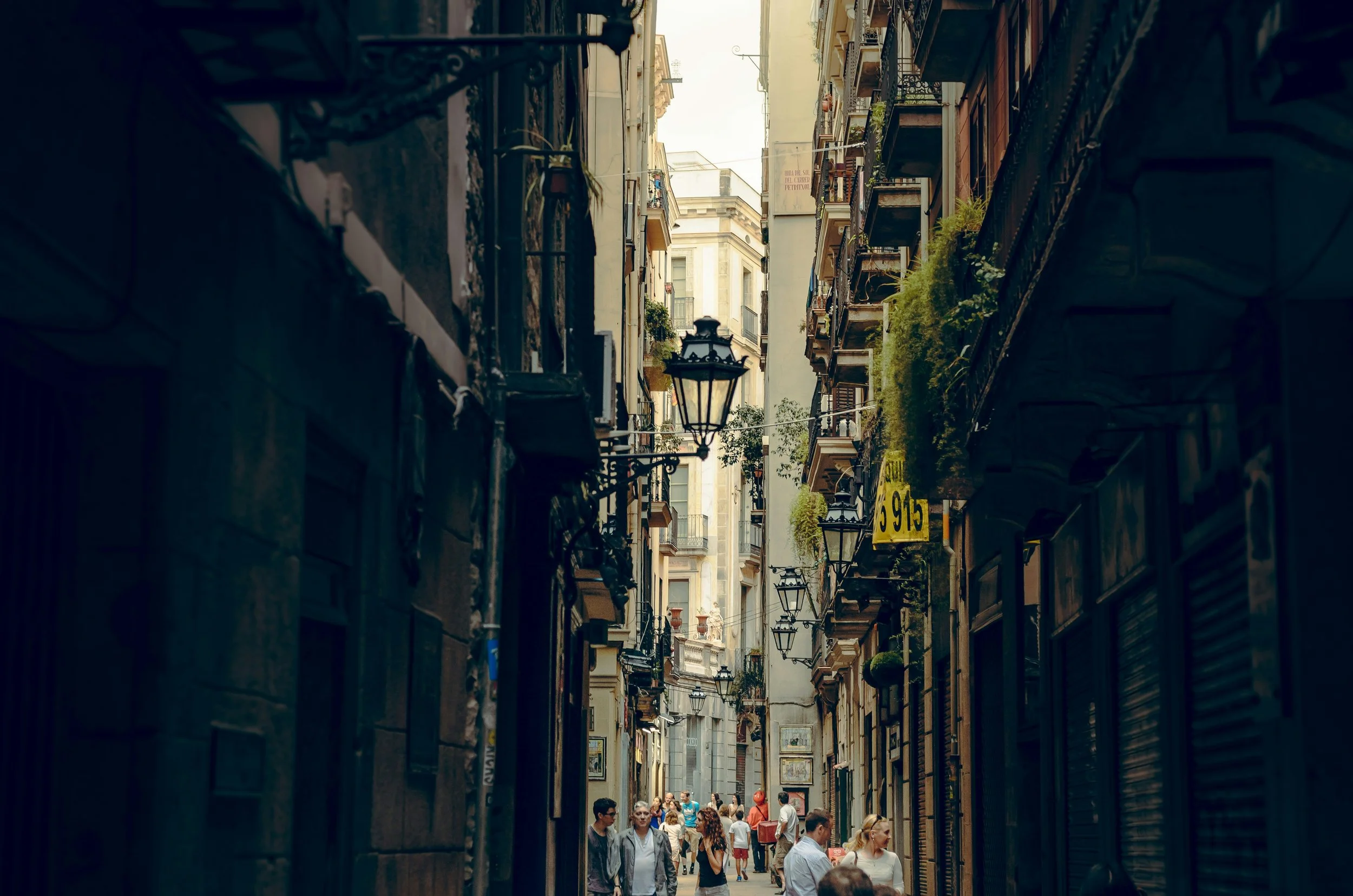
This is one of Barcelona’s most quietly powerful experiences — not because of what you see, but because of when and how you move through it. The Gothic Quarter and El Born were built for foot traffic, shade, and closeness. Experienced early, they reveal the city’s original rhythm before tourism reshaped it.
Just after sunrise, the neighbourhoods feel almost suspended. Metal shutters lift slowly, delivery vans disappear, and footsteps echo across stone streets that have barely changed in centuries. The smell of bread drifts from bakeries, café staff begin setting up terraces, and the city feels momentarily private — a rare state in central Barcelona.
This is when the medieval layout makes sense. Narrow streets bend and compress, then release into small squares designed for meeting, trading, and gathering. Wandering without a route allows these transitions to happen naturally. Let yourself drift — the logic here isn’t linear, and that’s the point.
Move between the darker, denser streets of the Gothic Quarter and the lighter, more open feel of El Born. Pause in places like Plaça del Rei, where layers of Roman and medieval history sit quietly beneath your feet, or stand outside Barcelona Cathedral while it’s still possible to take in the scale without distraction.
This isn’t about covering ground or spotting landmarks. Without a guide or schedule, the neighbourhood reveals itself in fragments — which suits its layered history far better than narration ever could. You begin to understand how Barcelona functioned before boulevards, before grids, before modern planning.
Practical tips
Best time: 7:00–9:00am (earlier on weekends)
How long: 60–90 minutes feels unhurried and complete
Start point: Anywhere central — choose a street, not a destination
What to bring: Comfortable shoes and loose plans
What to avoid: Midday walks, weekends after 10am, rigid route-following
How to approach the walk
Resist the urge to document everything. Look up at balconies and stonework, listen to the sound of the streets, and notice how light behaves differently here than elsewhere in the city. The experience works best when you let the neighbourhood lead rather than trying to extract highlights from it.
World Locals tip
Walk first, eat later. Finish with a simple breakfast or coffee once the neighbourhood starts to wake up — it keeps the experience calm and unforced, and eases you gently into the rest of the day.
Visit the Sagrada Família with context
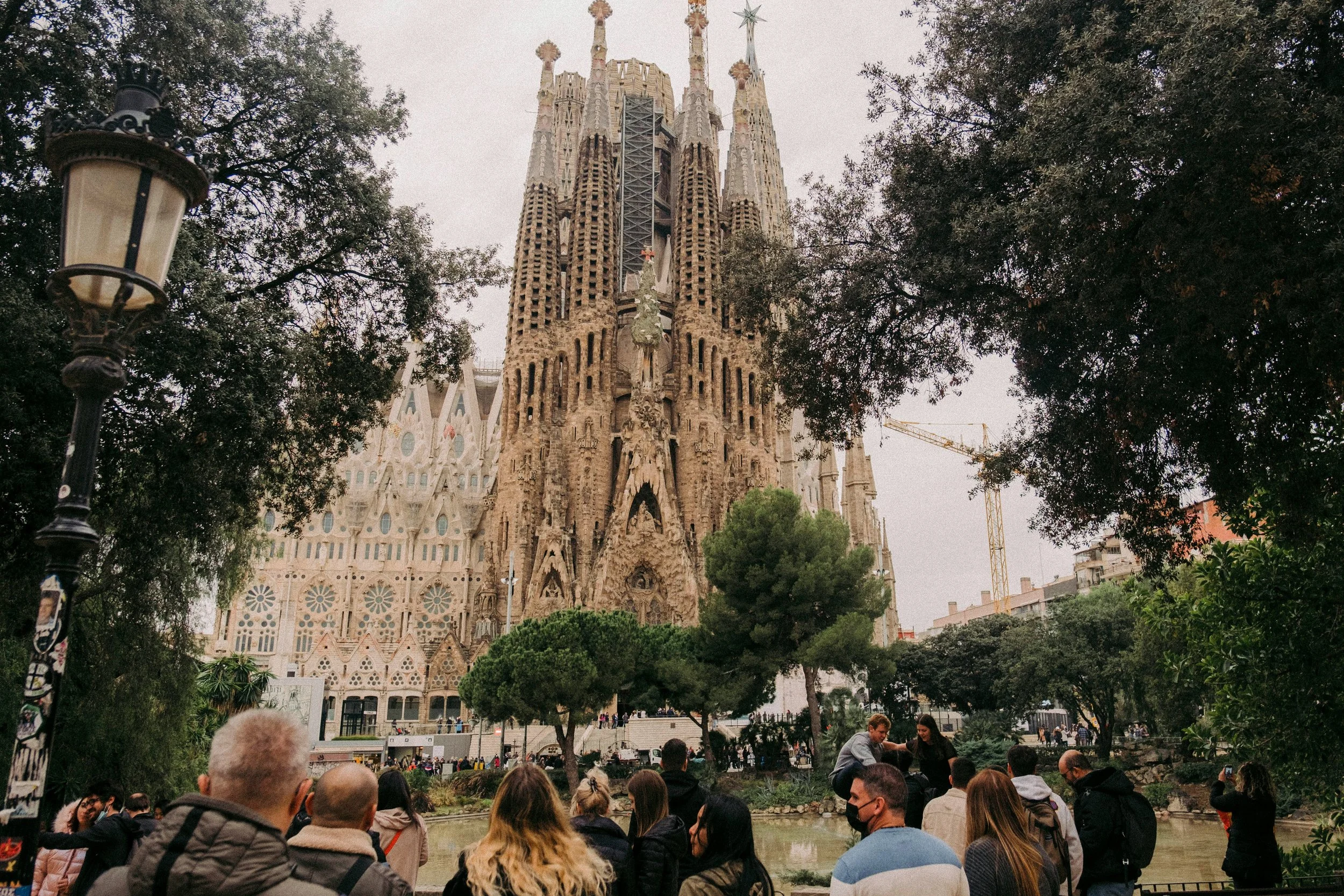
The Sagrada Família is Barcelona’s most recognisable landmark — but it’s also one of its most misunderstood. Many people arrive expecting a quick photo stop and leave overwhelmed by crowds or scale. Experienced with context, it becomes something far more reflective.
Antoni Gaudí designed the basilica as a space to be felt rather than simply observed. The exterior façades tell distinct stories: the Nativity façade is dense and expressive, celebrating life and creation, while the Passion façade is stark and angular, deliberately unsettling in tone. These contrasts are intentional — part of Gaudí’s belief that architecture should communicate emotion as much as function.
Inside, the experience changes completely. Columns branch like trees, light filters through stained glass in shifting colours, and the city noise fades almost instantly. Morning light tends to feel cooler and calmer; late afternoon brings warmer tones that slowly move across the interior. Sitting quietly for a few minutes — rather than walking straight through — is often when the building reveals itself most clearly.
The basilica is still under construction, and that matters. Rather than diminishing the experience, it reinforces the scale of the project: a multi-generational work shaped by patience, craft, and long-term vision. Knowing this adds depth to what you’re seeing — and tempers expectations of “completion”.
Practical tips
Book ahead: Tickets sell out most days; advance booking is essential
Best time: Early morning for calm and clarity, or late afternoon for warmer light
How long: 60–90 minutes inside; allow extra time if visiting the towers
Audio guide: Strongly recommended — it adds narrative without rushing the visit
Towers: Optional, but worthwhile for views and perspective (note: lifts still involve stairs)
Dress code: Modest clothing required (covered shoulders and knees)
How to approach the visit
Go in with one intention: to slow down. This isn’t a place to rush, photograph every angle, or mentally tick boxes. Focus on one façade outside, one section of the interior, and the way light changes as you move. Less coverage often leads to a deeper experience.
World Locals tip
After your visit, don’t rush elsewhere. Walk a few blocks through Eixample’s grid — wide pavements, steady rhythm, everyday cafés — and let the intensity of the basilica settle. The contrast is part of the experience.
Passeig de Gràcia and modernist architecture
Passeig de Gràcia is where Barcelona’s ambition becomes visible. Wide, orderly, and deliberately grand, this avenue cuts through Eixample as a showcase of modernist architecture — buildings designed not just to house people, but to express identity, wealth, and creativity at the turn of the 20th century.
Walking here is less about moving quickly and more about looking up. Ornate façades, wrought-iron balconies, and sculptural details reveal how architecture was used as a form of competition, with families commissioning increasingly bold designs to stand out along the boulevard.
Two buildings dominate the experience. Casa Batlló feels organic and fluid, its curved lines and colourful tiles designed to catch light rather than impose symmetry. A few blocks away, La Pedrera (Casa Milà) is heavier and more austere, with rippling stone and a rooftop that feels almost otherworldly. Seen together, they highlight how varied Barcelona’s modernism really is.
What makes Passeig de Gràcia special isn’t just these headline buildings, but how architecture is folded into everyday life. Offices, shops, cafés, and apartments sit inside some of the city’s most expressive structures, reminding you that design here was never meant to be isolated from daily routines.
Practical tips
Best time: Late morning or early evening for good light and fewer tour groups
How long: 45–60 minutes walking slowly, longer if visiting interiors
What to do: Focus on façades first; interiors are optional, not essential
What to avoid: Treating it like a shopping street — architecture is the experience
How to approach it
Rather than rushing between buildings, walk one side of the avenue slowly, then cross and return on the other. This changes perspective and light, and makes the details easier to spot. Look beyond the famous names — many lesser-known façades are just as expressive if you take the time to notice them.
World Locals tip
Pair Passeig de Gràcia with a longer walk through Eixample’s interior streets afterwards. The contrast between architectural showpieces and everyday neighbourhood life is part of what makes this experience meaningful.
Spend an evening in a neighbourhood square
Neighbourhood squares are where Barcelona slows down and becomes social. They’re not attractions in the traditional sense — they’re shared living rooms, shaped by routine rather than occasion. Spending an evening in one is less about doing something specific and more about settling into the city’s natural pace.
Arrive in the early evening and watch the transition. Cafés set out chairs, locals gather with drinks, children play until it gets dark, and conversation gradually replaces movement. There’s no central performance to watch — the square is the experience.
In Plaça del Sol in Gràcia, energy builds organically as the evening goes on, with people spilling out from bars and sitting wherever there’s space. Nearby, Plaça de la Virreina feels calmer and more residential, anchored by cafés and a steady local crowd. In El Born, Plaça de Sant Pere offers a quieter alternative, where small bars and bakeries frame an unhurried atmosphere.
What matters most is not which square you choose, but how you use it. Order a drink, maybe share a plate, then stay put. Let time pass. Barcelona’s evenings are built around presence rather than progression.
Practical tips
Best time: From 7:30pm onwards; earlier with kids, later for livelier energy
How long: As long as it holds your attention — there’s no set end point
What to order: A drink first; food can follow if it feels right
Where to sit: Anywhere that lets you watch the square, not just your table
What to avoid: Rushing from place to place or booking dinner too early
How to approach the experience
Think of the square as your base for the evening. You might move once, or not at all. Conversations overlap, people come and go, and the night shapes itself without planning. This is one of the simplest ways to feel part of the city rather than a visitor passing through.
World Locals tip
Choose one square and commit to it. Eating less, staying longer, and letting the atmosphere guide you almost always leads to a better evening than hopping between reservations.
Market mornings
Markets are where Barcelona’s day properly begins. Before cafés fill and streets grow busy, neighbourhood markets are already in motion — stallholders setting up, locals doing daily shopping, and regulars stopping for a quick coffee or a simple bite. Experiencing a market in the morning offers a grounded look at how the city actually feeds itself.
The most famous is La Boqueria, and while it’s often crowded later on, early mornings tell a different story. Arrive shortly after opening and you’ll see chefs collecting produce, locals buying fruit or fish, and the market operating as it was intended. This is the moment to wander, observe, and understand — not necessarily to eat everything in sight.
For something more everyday and less performative, Mercat de Sant Antoni offers a clearer picture of daily life. It’s calmer, more spacious, and firmly local, with regulars moving quickly through familiar stalls. Around the market, cafés and bakeries fill steadily, making it an easy place to fold food into the morning rather than build the morning around food.
Markets here aren’t about spectacle. They’re functional, social, and quietly revealing — places where routine matters more than novelty.
Practical tips
Best time: Early morning, ideally within the first hour of opening
How long: 30–45 minutes is plenty without rushing
What to do: Wander first, eat second (if at all)
What to try: Coffee at a counter, a small snack, or fresh fruit
What to avoid: Peak late mornings and arriving hungry with no plan
How to approach the experience
Treat markets as part of the city’s infrastructure, not an attraction. Watch how people move, what they buy, and how little time they spend deciding. That efficiency — and familiarity — is the real insight.
World Locals tip
Combine a market visit with a neighbourhood walk straight after. Markets make the most sense when they’re folded into the flow of the day, not treated as a standalone stop.
Bar-hopping in Poble-sec
Bar-hopping in Poble-sec is one of Barcelona’s most relaxed and social evening experiences. It’s informal, affordable, and built around movement rather than commitment — short stops, a drink and a bite, then on to the next place when the mood shifts.
The centre of gravity is Carrer de Blai, a compact strip lined with pinchos bars and neighbourhood favourites. Evenings here build gradually: locals arrive after work, order one or two small plates, linger briefly, then move on. There’s no expectation to stay put or book ahead — the flow is the point.
Just off the main stretch, places like Quimet & Quimet show the neighbourhood’s deeper roots. Standing-room only, shelves stacked with preserved seafood and bottles, it’s a reminder that Poble-sec’s food culture is about quality without ceremony. A couple of bites, a vermouth or beer, then back into the street.
What makes this experience work is its lack of pressure. You don’t need to know where you’re going next. Let noise levels, crowded counters, and instinct guide you — Poble-sec rewards responsiveness more than planning.
Practical tips
Best time: From 7:30–8pm onwards; earlier midweek, later at weekends
How long: 2–3 hours, moving slowly between stops
What to order: One or two pinchos per place; drinks first, food second
How to pay: Usually per round, especially when standing
What to avoid: Sitting down immediately or ordering too much at the first stop
How to approach the experience
Think of the street as a sequence, not a destination. Start anywhere, keep portions small, and stay flexible. It’s common to eat in stages — a bite here, something else later — rather than sitting down for a full meal.
World Locals tip
Pace yourself. The goal isn’t to fill up quickly, but to let the evening stretch. The best Poble-sec nights end not because you planned them that way, but because the street slowly emptied around you.
Montjuïc viewpoints and walks
Montjuïc offers one of Barcelona’s best counterbalances to the city below. Rising gently above the port, this broad, green hill is where pace slows, views open up, and the city’s density finally gives way to space. It’s less about a single sight and more about movement — walking, pausing, and letting perspective do the work.
Paths wind through gardens, quiet roads, and lookout points, revealing different angles of Barcelona as you go. From the water to the grid of Eixample, the city suddenly feels legible. Viewpoints like Mirador de l'Alcalde de Zalamea offer wide, open panoramas without the crowds you’ll find elsewhere, while shaded routes through landscaped gardens make this an experience that works even on warmer days.
Montjuïc is also layered with culture — museums, Olympic sites, and historic structures — but you don’t need to enter anything to enjoy it. Simply being up here, walking without urgency, gives Barcelona a sense of scale that’s hard to find at street level.
Practical tips
Best time: Late afternoon into early evening for softer light and cooler temperatures
How long: 1.5–3 hours, depending on route and stops
Getting there: Walk up from Poble-sec, take the funicular, or use buses for a gentle ascent
What to bring: Water, comfortable shoes, and time to linger
What to avoid: Treating it like a checklist of attractions
How to approach the experience
Think of Montjuïc as a long pause rather than a destination. Choose one path, one viewpoint, and let the rest unfold naturally. Sitting quietly with a view is just as valid here as walking.
World Locals tip
Pair Montjuïc with Poble-sec. Spend the afternoon walking and watching the light change, then head back down for food or drinks — it’s one of the most natural day-to-evening transitions in the city.
Parc de la Ciutadella and everyday downtime
Parc de la Ciutadella is where Barcelona pauses without needing a reason. It’s not curated or quiet in the way formal gardens are — it’s lived in. People come here to meet friends, stretch out on the grass, play music, read, picnic, or do nothing at all. And that’s exactly the point.
Set just beyond the historic centre, the park acts as a release valve between neighbourhoods. Locals drift in during the afternoon, especially on warm days, turning patches of grass into temporary living rooms. There’s movement everywhere — joggers looping paths, families wandering slowly, groups sitting in loose circles — but very little urgency.
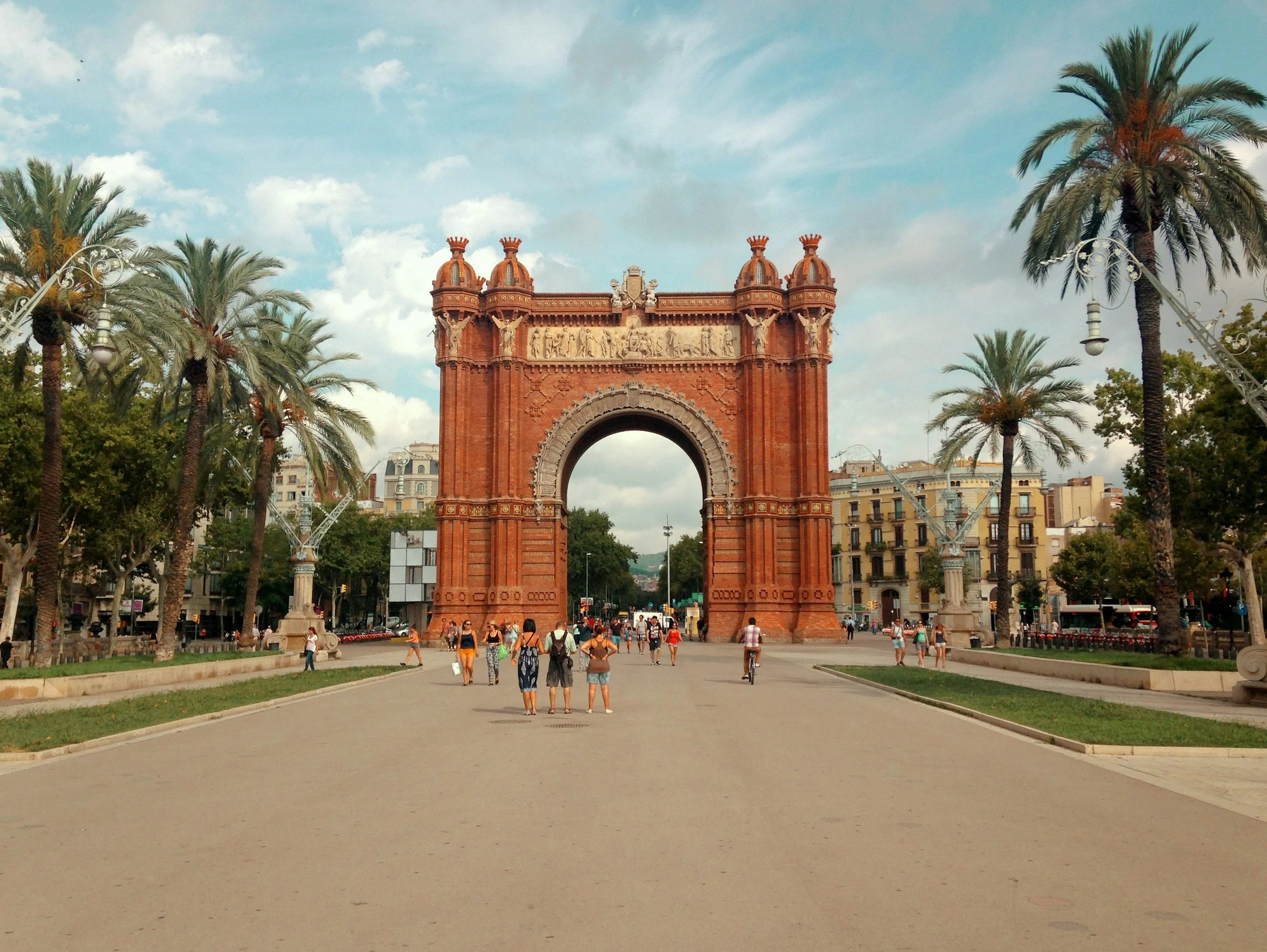
You don’t need a plan here. Walk until something feels comfortable, stop, and stay. The fountain and pathways offer visual anchors, but the real experience is simply being present while the city softens around you. From the park’s edge near Arc de Triomf, you can feel how easily green space folds into daily life.
Practical tips
Best time: Late afternoon for atmosphere; mornings for calm
How long: 45 minutes to a few hours — there’s no right amount
What to bring: A drink, a snack, something to sit on
What to do: Sit first, walk later
What to avoid: Treating it like a sightseeing stop
How to approach the experience
Let the park absorb the gaps in your day. This works best between plans — after a museum, before dinner, or when you don’t quite know what to do next. It’s not about filling time; it’s about letting time stretch.
World Locals tip
Pick up something simple to eat before you enter — bread, fruit, or a pastry — and keep it informal. Ciutadella works best when food is an afterthought, not an event.
Walk or cycle the seafront
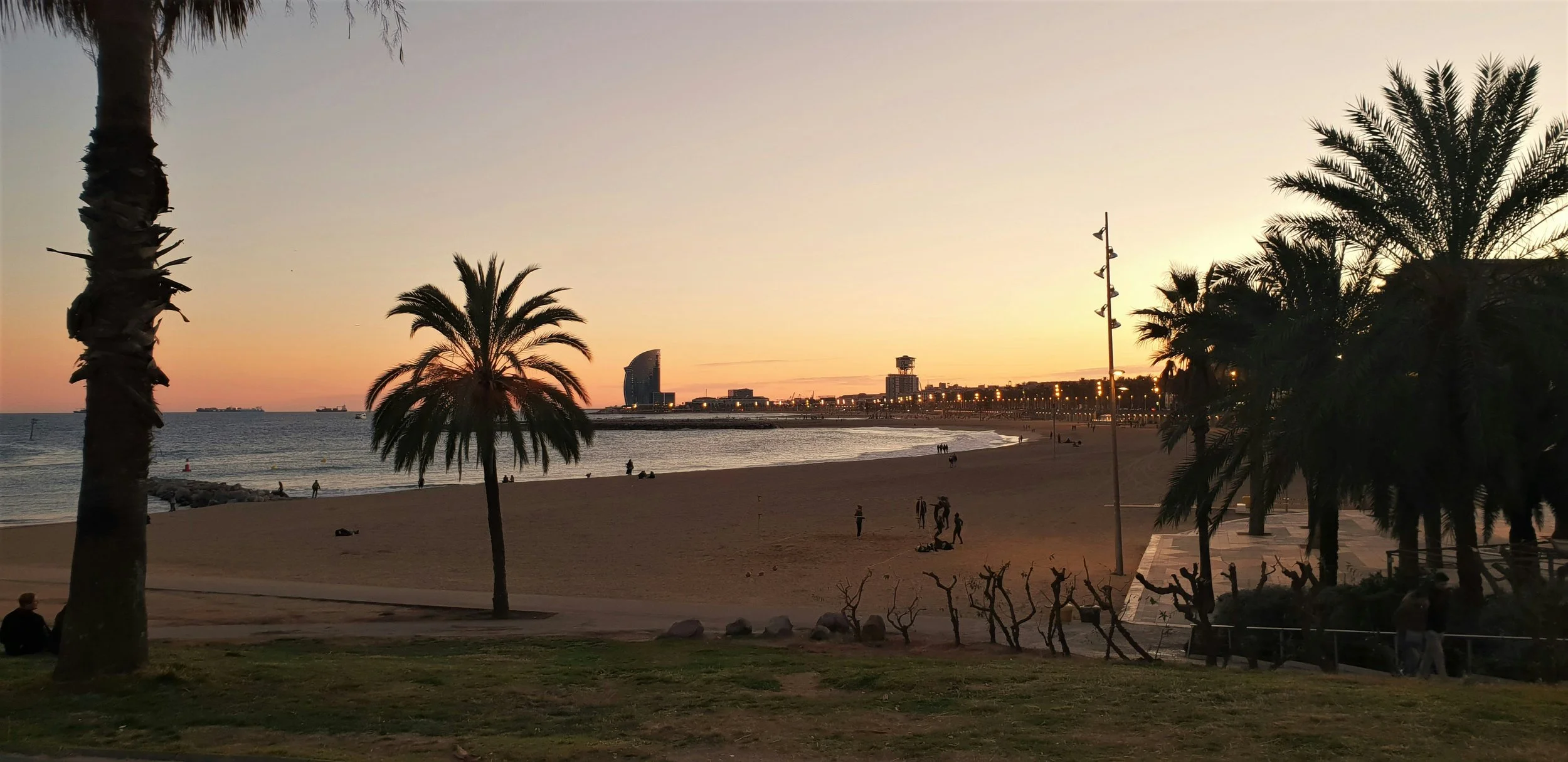
Barcelona’s seafront is less about the beach itself and more about movement. The long, flat promenade connects neighbourhoods, parks, and everyday routines, making it one of the easiest ways to experience the city’s relationship with the Mediterranean without committing to a day on the sand.
Walking or cycling here reveals a different pace. Runners pass early in the morning, commuters cycle through with purpose, and locals drift in and out of cafés along the way. The sea is constant, but it’s rarely the sole focus — it’s a backdrop to daily life rather than a destination in itself.
Stretching from the edge of Barceloneta past Port Olímpic and onwards, the route offers wide paths, open views, and plenty of space to move without friction. It’s especially effective as a transition: a way to clear your head between neighbourhoods, or to ease into (or out of) the day.
Practical tips
Best time: Early morning for calm, or late afternoon as the light softens
How long: 30 minutes to several hours — break it up as needed
Walking vs cycling: Walking suits shorter stretches; cycling works well for longer distances
What to bring: Sun protection and water, especially in warmer months
What to avoid: Peak midday heat and congested beach access points
How to approach the experience
Think of the seafront as connective tissue rather than an attraction. You don’t need to walk the whole thing — even a short stretch offers a sense of space that contrasts sharply with the city’s interior streets.
World Locals tip
Use the seafront as a reset. Walk or cycle without stopping too often, then finish somewhere inland for food or drinks — it’s the contrast that makes the experience work.
Beach time, done right
Barcelona’s beaches work best when you treat them as part of daily life, not the centrepiece of your trip. Locals rarely spend full days here. Instead, they dip in and out — a swim, a walk, a drink — then move back into the city. Approached this way, the beach becomes a welcome pause rather than a crowded obligation.
The most famous stretch is Barceloneta, which is lively, central, and easy to reach. It’s energetic, social, and busy — especially from late morning onwards. For something calmer, head slightly north to Bogatell or Mar Bella, where space opens up and the crowd thins, particularly on weekdays.
Timing is everything. Early mornings feel local and relaxed, with swimmers, walkers, and quiet routines. Late afternoons work well too, when the heat drops and the beach becomes a place to pass through rather than settle into. Midday, especially in summer, is when beaches feel most congested — and least rewarding.
Practical tips
Best time: Before 10am or after 5pm
How long: 30–90 minutes is usually enough
Where to go: Barceloneta for atmosphere; Bogatell or Mar Bella for space
What to bring: Towel, water, and sun protection — keep it minimal
What to avoid: Peak midday heat, weekends at midday, and staying too long
How locals use the beach
For many Barcelonans, the beach is functional. A swim replaces a workout, a walk replaces an errand, and sitting briefly replaces doing nothing at home. Food and drinks usually happen elsewhere — the beach is the interlude, not the event.
World Locals tip
Think of the beach as a transition. Go for a swim, dry off, then head back inland for food or drinks. Barcelona’s beaches are at their best when they frame the day, not when they dominate it.
Arts, culture, and everyday creativity
Barcelona’s cultural life doesn’t sit neatly behind museum doors. It spills into public squares, skate plazas, bookshops, and streets — woven into daily routines rather than reserved for special occasions. Experiencing this side of the city is about noticing how creativity shows up in everyday life.
Museums here work best when they’re folded into a wider day rather than treated as centrepieces. The Picasso Museum in El Born offers insight into the artist’s formative years and the city that shaped him — it’s compact, contextual, and easy to pair with a neighbourhood wander. Over in El Raval, MACBA and the adjacent CCCB reflect a more modern, experimental side of the city.
But just as telling is what happens outside. The plaza in front of MACBA doubles as one of Europe’s most iconic skate spots — a place where locals, creatives, and visitors intersect daily. Street performers appear and disappear, musicians set up briefly, and public space becomes a stage without announcement.
Culture in Barcelona is participatory rather than formal. You don’t need a ticket to experience it — you need time, awareness, and a willingness to linger.
Practical tips
Best time: Late morning or mid-afternoon for museums; early evening for street life
How long: One museum plus a walk is usually enough
What to book: Picasso Museum in advance during busy periods
What to avoid: Stacking multiple museums in one day
How to approach the experience
Choose one cultural anchor — a museum, exhibition, or neighbourhood — then let the rest unfold around it. Walk afterwards. Sit in a square. Watch what’s happening. Barcelona’s creativity often lives in the in-between moments.
World Locals tip
Spend as much time outside cultural spaces as inside them. The conversations, movement, and everyday life around museums often say just as much as the exhibitions themselves.
Experiences for return visitors
Once Barcelona’s headline sights are familiar, the city opens up in quieter, more personal ways. These experiences aren’t about discovery in the traditional sense — they’re about comfort, curiosity, and letting the city meet you where you are.
Neighbourhood wandering without a plan
Some of Barcelona’s best moments come from unstructured walks. Areas like Gràcia, Sant Antoni, or Poblenou reward drifting rather than routing. Streets change mood quickly, cafés appear without warning, and the city feels lived-in rather than presented.
The goal isn’t to find something specific. It’s to notice when a street pulls you in — a bakery doing steady local trade, a bar filling up for lunch, a square that invites you to sit longer than expected.
Independent bookshops, galleries, and small spaces
Return visits are the time to explore Barcelona’s smaller cultural spaces. Independent bookshops, neighbourhood galleries, and community-run venues sit quietly between more obvious attractions, often reflecting local conversations rather than global trends.
You don’t need to research heavily. Step inside places that feel active but unforced, stay briefly, then move on. These spaces work best when they’re part of a wider wander rather than destinations in themselves.
Living on local timing
Repeat visits allow you to shift fully onto local rhythms. Eating later, starting mornings slowly, building days around one or two anchor moments rather than full itineraries. This is when Barcelona feels less like a place you’re visiting and more like one you’re temporarily living in.
Afternoons stretch. Evenings start without urgency. Plans stay flexible.
Practical tips
Best areas: Gràcia, Sant Antoni, Poblenou, and residential Eixample
How long: Open-ended — let time guide you
What to do: Walk, pause, repeat
What to avoid: Chasing “hidden gems” aggressively
How to approach the experience
Return visits work best when you stop trying to optimise. Choose a neighbourhood, give it half a day, and resist the urge to cross the city unnecessarily. Familiarity breeds depth here.
World Locals tip
Treat Barcelona like a place you live, not a place you need to finish. Routine — even briefly — often unlocks more than novelty ever does.
City viewpoints: Bunkers del Carmel and Park Güell
Barcelona is a city that rewards elevation. Seeing it from above — even briefly — adds clarity to everything below. The key with its most famous viewpoints is timing and intent.
Bunkers del Carmel
The Bunkers del Carmel offer one of the most expansive views in the city. From here, Barcelona spreads out in full — the grid of Eixample, the old town, the sea beyond. It’s raw, open, and unfiltered.
That said, its popularity has changed the experience. Sunset is atmospheric but crowded, noisy, and increasingly regulated. Earlier in the day — late morning or mid-afternoon — the viewpoint feels calmer and more reflective, allowing the scale of the city to come through without distraction.
This works best as a short stop rather than a long stay. Take in the view, walk around the perimeter, then move on.
Practical tips
Best time: Late morning or mid-afternoon for space and clarity
How long: 20–30 minutes
Getting there: Bus or metro + uphill walk
What to bring: Water and sturdy shoes
What to avoid: Peak sunset crowds and weekends if you want calm
Park Güell
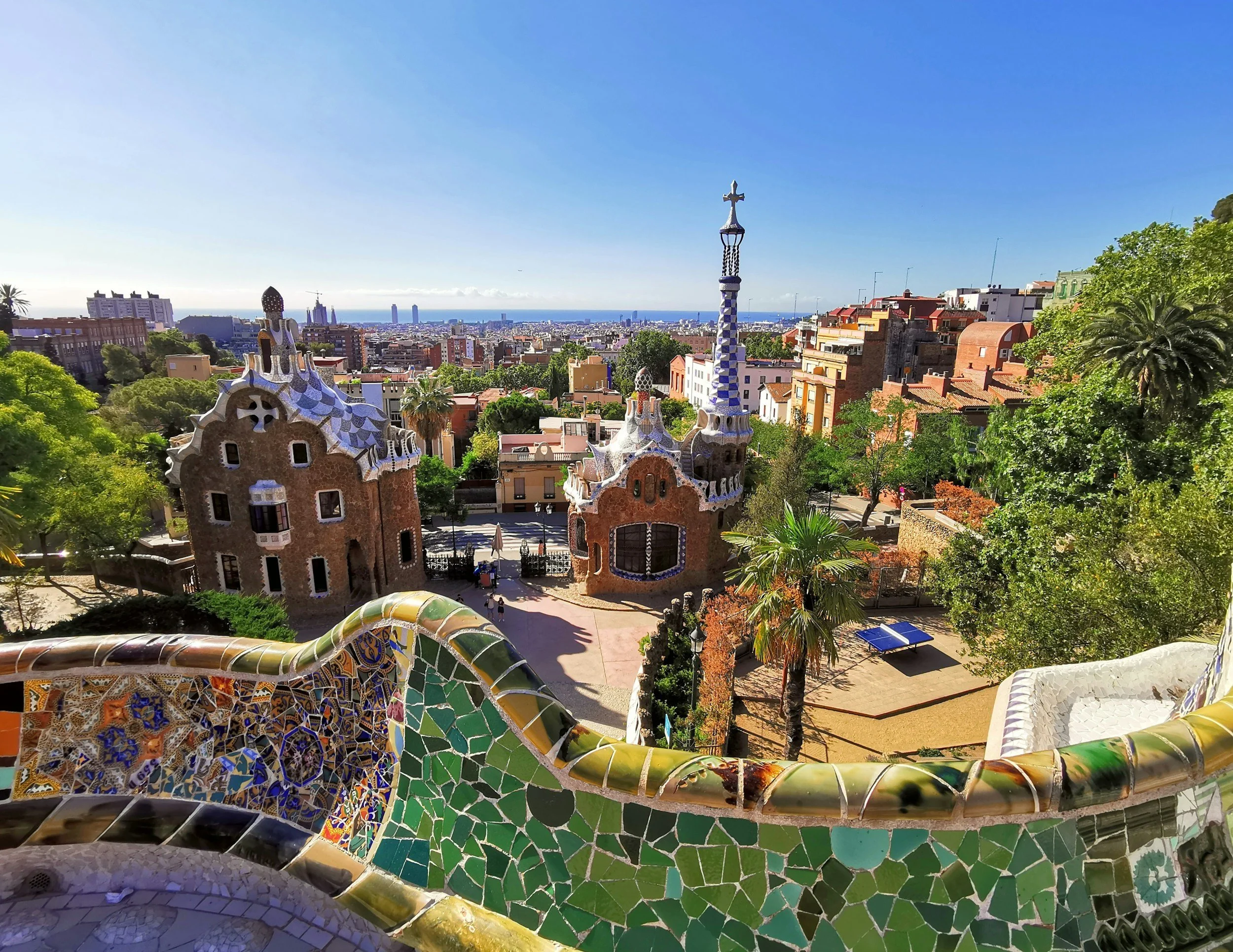
Park Güell is often framed as a must-see, but it works best when approached selectively. The monumental zone — with its mosaics and terraces — requires a ticket and can feel busy. The surrounding park areas, however, remain free and offer quieter paths, views, and shade.
Early morning visits are ideal. Light is softer, crowds thinner, and the park feels closer to what it was intended to be — a space to wander rather than a backdrop for photos. If you do enter the paid area, treat it as one moment within a wider walk rather than the entire experience.
Practical tips
Best time: Early morning
How long: 45–90 minutes depending on pace
Tickets: Required for the monumental zone; book ahead
What to focus on: Views, pathways, and architectural details
What to avoid: Midday heat and rushing the visit
How to choose between them
Choose Bunkers del Carmel if you want a wide, uninterrupted view of the city
Choose Park Güell if you want architecture, greenery, and movement
Avoid trying to do both back-to-back — each works best when unhurried
World Locals tip
Viewpoints are about perspective, not duration. Go up, take it in, then return to street level. Barcelona reveals its character best when you move between heights and neighbourhoods, not when you linger too long in one place.
Practical tips for experiencing Barcelona
Barcelona is easy to enjoy, but it’s even better when you understand how to pace it. These small, practical considerations help everything else fall into place — from how your days flow to how tired (or relaxed) you feel by the end of them.
Timing and pacing your days
Barcelona rewards fewer plans done well. One anchor experience in the morning, a long pause in the afternoon, and something open-ended in the evening usually works better than stacking highlights back to back.
Build days around rhythm rather than distance. Mornings are for walking and sightseeing, afternoons for slowing down, evenings for social time. Trying to fight this — especially in warmer months — leads to burnout quickly.
Walking vs public transport
Barcelona is walkable, but not flatly compact. Walking works best within neighbourhoods; public transport works best between them.
Use the metro to change zones — Gràcia to El Born, Poble-sec to the beach — then walk once you arrive. This keeps days feeling spacious rather than stretched.
What to book ahead (and what not to)
Some experiences benefit from advance planning:
Sagrada Família
Park Güell’s monumental zone
Popular museums during peak season
Many others don’t. Markets, neighbourhood squares, bar-hopping, walks, and beaches work best without bookings. Overplanning removes the flexibility that makes Barcelona enjoyable.
Managing crowds without stress
Crowds are often about timing, not location. Early mornings, late afternoons, and weekdays make a noticeable difference. If somewhere feels overwhelming, step one or two streets away — Barcelona’s density means calm is usually close.
Accept that some places will be busy, then choose when to engage with them rather than trying to avoid them entirely.
Heat, seasons, and comfort
From late spring through early autumn, heat shapes the day. Start early, rest midday, and re-emerge in the evening. Shade, water, and loose plans matter more than ticking things off.
In cooler months, the city opens up — walking becomes easier, museums feel calmer, and evenings still retain their energy without the intensity.
Mindset matters
Barcelona isn’t a city to complete. It’s a city to inhabit briefly. Leaving space — in your schedule and your expectations — often leads to better experiences than chasing everything you’ve heard you “should” see.
World Locals tip
If you ever feel rushed, stop and sit somewhere local — a square, a café, a park bench. Barcelona has a way of resetting you if you let it.
“Barcelona is at its best when you stop trying to “see it all” and start letting it shape your days instead. This is a city that reveals itself through timing, movement, and everyday rituals — early walks, long pauses, unplanned evenings, and moments that sit quietly between plans.
The most meaningful experiences here aren’t always the loudest or most famous. They’re often found in how neighbourhoods feel at different times of day, how food and drink stretch conversations, and how the city opens up when you slow down rather than rush on.
Whether it’s your first visit or your fifth, Barcelona rewards curiosity, flexibility, and presence. Choose a few anchors, leave space around them, and let the rest unfold. That’s when the city feels less like a destination — and more like somewhere you’ve briefly lived.”