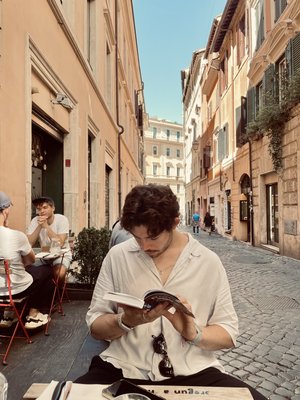
There’s something about spring in Europe that feels like a quiet invitation.
The terraces reappear. The heavy coats disappear. Parks soften into colour. Cities feel alive again — but not yet overwhelmed. It’s that in-between season where you can wander without queues wrapping around blocks, sit outside without melting, and actually hear the rhythm of a place rather than the roar of peak-season tourism.
And the beauty of Europe? It was practically designed for short trips.
Within a two-hour flight or a few hours by train, you can swap languages, cuisines, architecture, and entire cultural identities. One weekend you’re sipping vermouth in southern Spain. The next you’re walking cobbled medieval lanes in Central Europe. Few places in the world offer that kind of density, accessibility, and depth in such a small geographic space.
A 2–3 day trip isn’t about ticking everything off. It’s about immersion. It’s choosing one neighbourhood and exploring it properly. It’s long lunches, slow mornings, golden-hour walks, and that feeling of discovering somewhere just as it’s waking up for the year.
Spring also brings practical advantages:
Flights are often cheaper than summer peak.
Hotels haven’t yet hit their highest rates.
Attractions are open, but not overrun.
Outdoor culture — markets, café life, riverside walks — is back.
Whether you’re based in the UK hopping across the Channel, travelling through Europe by train, or stitching together a multi-country itinerary, a well-chosen weekend city can feel like a complete escape without needing a full week off work.
Below, we’re diving into the best European cities for a 2–3 day getaway this spring — places that are compact, character-filled, easy to reach, and rich enough to leave you inspired long after Sunday evening.
Brussels, Belgium
Why It’s Perfect for a Weekend
Brussels often gets reduced to politics and paperwork, but spend 48 hours here and you’ll find a city layered with charm, creativity, and serious culinary credentials.
It’s compact. Walkable. Architecturally dramatic. The historic centre is tight enough to explore without ever needing public transport, yet diverse enough to feel like you’ve seen multiple sides of the city in just a couple of days.
In spring, it’s particularly appealing. Outdoor cafés spill onto cobbled streets, parks begin to bloom, and the atmosphere feels lively without tipping into peak-season chaos.
It’s also one of Europe’s easiest capitals to reach, making it ideal for a spontaneous Friday-to-Sunday escape.

Top Things to Do in 2–3 Days
Wander the Grand Place
The UNESCO-listed Grand Place is one of Europe’s most ornate central squares. Gilded guildhalls, baroque façades, and intricate detailing make it a dramatic starting point. Visit early morning or just before sunset for the best light and fewer crowds.
Step Inside the Galeries Royales Saint-Hubert
Dating back to 1847, these elegant glass-roofed arcades are among Europe’s oldest covered shopping galleries. Even if you’re not browsing luxury boutiques or artisan chocolate shops, the architecture alone is worth the stop.
Indulge in Belgian Food Culture
Brussels is built for eating well. Fresh waffles dusted with sugar, crispy frites served in paper cones, rich beef stew (stoofvlees), and world-class chocolate are everywhere. Pair it with a Trappist beer and you’ve experienced one of Belgium’s defining pleasures.
Follow the Comic Strip Trail
Belgium is the birthplace of Tintin, and Brussels celebrates that heritage with large comic murals across the city. Exploring them doubles as a self-guided walking tour.
Relax in Parc du Cinquantenaire
If the sun’s out, head to this grand park framed by monumental arches. In spring, locals picnic on the grass and the atmosphere feels calm and residential — a welcome contrast to the historic centre.
Getting There and Accessibility
Brussels is exceptionally well connected.
Around 2 hours by Eurostar from London (city centre to city centre).
Approximately 1 hour 25 minutes by high-speed train from Paris.
Roughly 2 hours by train from Amsterdam.
Direct flights connect Brussels Airport to most major European cities.
Its position at the crossroads of Western Europe makes it perfect as part of a multi-country itinerary — or as a standalone weekend break that doesn’t require complex logistics.
The Spring Advantage
Spring softens Brussels beautifully. Outdoor terraces reopen, parks regain their colour, and the city feels energetic without feeling overwhelmed.
You avoid the heavier summer tour groups, particularly around the Grand Place, and accommodation prices are typically more reasonable than in July and August.
Temperatures are comfortable for long walking days, but cool enough to enjoy cosy cafés in the evening.
Who It’s For
Food lovers (especially beer and chocolate enthusiasts)
Couples seeking a romantic but relaxed escape
Travellers who prioritise ease and accessibility
Architecture and history fans
Anyone wanting a culturally rich city that fits neatly into a 2–3 day window
Brussels proves that a short trip doesn’t have to feel rushed. With the right pace, a weekend here feels complete.
Seville, Spain
Why It’s Perfect for a Weekend
Seville in spring feels almost unfairly beautiful.
Orange trees line the streets. Jasmine hangs in the air. Courtyards open up. The heat of summer hasn’t yet arrived, but the city is already glowing. It’s compact enough to explore on foot, visually striking at every turn, and packed with enough culture, history and food to fill 72 hours without feeling rushed.
Unlike larger Spanish cities, Seville’s historic core is concentrated. You can move between Moorish palaces, cathedral rooftops, tapas bars and shaded plazas within minutes. That density makes it ideal for a short break — everything feels intentional rather than scattered.
Spring is also when Seville truly comes alive. If you time it right, you might catch the tail end of Semana Santa or the energy building towards Feria de Abril.
Top Things to Do in 2–3 Days
Explore the Real Alcázar
The stunning Real Alcázar of Seville is one of Spain’s most impressive royal palaces, blending Islamic, Gothic and Renaissance architecture. The intricate tilework, lush gardens and peaceful courtyards easily justify half a day.
Climb La Giralda at Seville Cathedral
The vast Seville Cathedral is the largest Gothic cathedral in the world. Climbing La Giralda tower rewards you with panoramic views over terracotta rooftops — especially striking in spring light.
Wander Barrio Santa Cruz
Lose yourself in narrow alleyways, hidden squares and flower-draped balconies. It’s touristy, yes — but undeniably atmospheric.
Tapas Hop in Triana
Cross the Guadalquivir River into Triana, historically a working-class and flamenco-rooted neighbourhood. Spend an evening grazing from bar to bar — salmorejo, grilled octopus, Iberian ham — paired with a glass of local sherry.
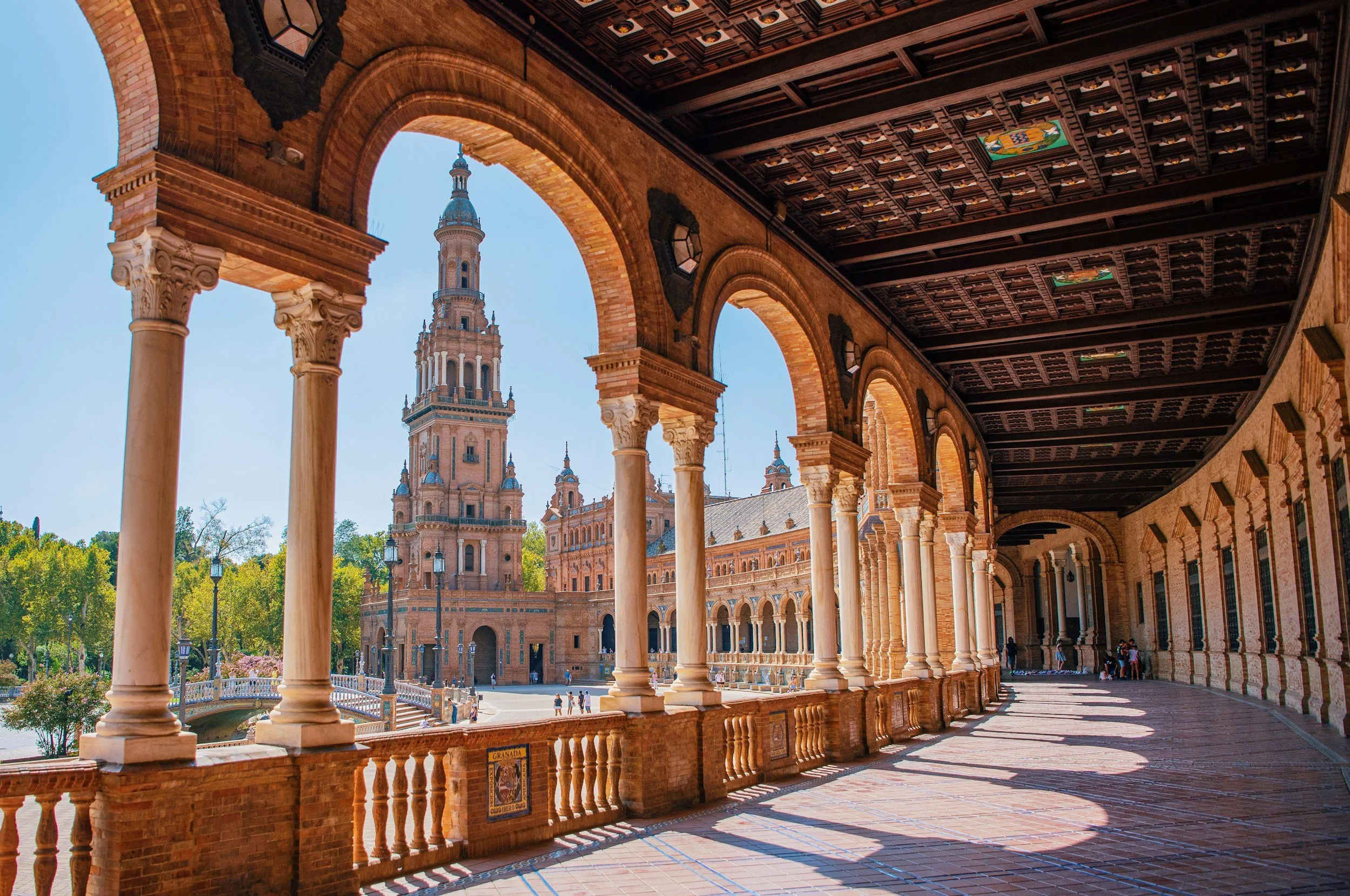
Sunset at Plaza de España
The semi-circular Plaza de España is one of Europe’s most photogenic squares. Come at golden hour when the tiled alcoves and canal glow softly in the evening light.
Getting There and Accessibility
Seville is well connected and works beautifully as a standalone city break.
Direct flights from many UK and European cities (around 2.5 hours from London).
High-speed AVE trains connect Seville to Madrid in roughly 2.5 hours.
Around 1 hour by train from Córdoba.
Around 2 hours from Málaga by train.
It’s particularly convenient for travellers combining Madrid and southern Spain in one trip.
The Spring Advantage
Spring is arguably Seville’s best season.
Summer temperatures regularly exceed 40°C — which can make sightseeing intense. In contrast, March to May offers warm, comfortable days ideal for walking and outdoor dining.
Orange blossoms perfume the streets. Courtyard patios reopen. Evening tapas feel unhurried and relaxed. It’s warm enough for rooftop terraces but not so hot that you’re hiding indoors by midday.
Who It’s For
Couples looking for romance and atmosphere
Culture lovers drawn to Moorish and Andalusian history
Food-focused travellers
Photographers and architecture fans
Anyone wanting sunshine without peak-summer intensity
Seville is one of those cities that feels cinematic even on an ordinary afternoon — and in spring, it’s at its most generous.
Porto, Portugal
Why It’s Perfect for a Weekend
Porto is made for slow mornings and long golden evenings.
Built along the Douro River, the city rises in layers of tiled façades, narrow staircases, and sun-warmed rooftops. It’s compact, characterful, and slightly rough around the edges in a way that feels authentic rather than polished.
You can cross the river on foot, explore medieval streets, tour historic wine cellars, and watch the sunset from multiple viewpoints — all within a 2–3 day window. There’s depth here, but not sprawl. Perfect for a short escape.
Spring adds an extra softness. The light feels brighter, the hills are greener, and outdoor terraces return without the heavy summer cruise-ship crowds.

Top Things to Do in 2–3 Days
Wander Ribeira District
The colourful riverside quarter is Porto’s postcard moment. Cobbled lanes, laundry strung between buildings, and cafés spilling towards the water make it ideal for unstructured wandering.
Cross Dom Luís I Bridge
The dramatic double-deck Dom Luís I Bridge connects Porto with Vila Nova de Gaia. Walk the upper level for panoramic views across the river — especially at sunset.
Visit Livraria Lello
Often cited as one of the world’s most beautiful bookshops, Livraria Lello is famous for its sweeping staircase and neo-Gothic interior. Pre-book tickets to avoid queues.
Tour a Port Wine Cellar in Gaia
Cross the river to Vila Nova de Gaia and explore historic port lodges. Tastings give insight into how port wine has shaped the region’s economy and identity for centuries.
Climb the Clérigos Tower
For sweeping city views, ascend the baroque Clérigos Tower. It’s a short but steep climb — worth it for perspective over the red-tiled rooftops.
Getting There and Accessibility
Porto is easy to reach from across Europe.
Around 2 hours 15 minutes by flight from London.
Direct connections from many major European cities.
Roughly 3 hours by train from Lisbon.
The airport is about 25 minutes from the city centre via metro.
It’s also a strong starting or finishing point for a wider Portugal itinerary — particularly if pairing with Lisbon or the Douro Valley.
The Spring Advantage
Spring is one of Porto’s most enjoyable seasons.
Summer brings heavier tourist traffic and hotter days, especially on steep hills. In contrast, March to May offers pleasant temperatures ideal for walking and viewpoint-hopping.
The Douro sparkles in softer light, outdoor dining feels relaxed rather than crowded, and accommodation prices are typically lower than peak season.
Who It’s For
Wine lovers and food-focused travellers
Couples seeking a romantic riverside setting
Architecture and photography enthusiasts
Travellers who enjoy a slower, scenic pace
Anyone wanting warmth without extreme heat
Porto doesn’t demand a checklist. It rewards wandering, lingering, and letting the river set the rhythm.
Budapest, Hungary
Why It’s Perfect for a Weekend
Budapest feels bigger than a weekend — but that’s exactly why it works.
The city is split by the Danube into Buda and Pest, each with its own character. One side is hilly, historic, and panoramic. The other is flat, energetic, and buzzing with cafés and nightlife. Yet despite its scale, the main highlights sit comfortably within reach of one another.
For a 2–3 day trip, it delivers architecture, thermal baths, river views, nightlife, and strong food culture — without Western European price tags.
Spring is when Budapest feels most balanced. The riverside paths are walkable, the outdoor ruin bars reopen, and the heavy winter grey lifts from the grand façades.

Top Things to Do in 2–3 Days
Explore Buda Castle District
Wander cobbled streets around Buda Castle and enjoy sweeping views over the Parliament building across the Danube. The area feels quieter in spring mornings before tour groups arrive.
Soak in a Thermal Bath
Budapest sits on more than 100 thermal springs. Spend a few hours at Széchenyi Thermal Bath, one of Europe’s largest medicinal bath complexes. Outdoor pools in mild spring weather are ideal — warm water, cool air, no peak-summer chaos.
Visit the Hungarian Parliament Building
The neo-Gothic Hungarian Parliament Building is one of Europe’s most impressive civic buildings. Evening river views from the Pest side are particularly striking.
Discover Ruin Bars in the Jewish Quarter
Budapest’s ruin bars — built inside abandoned buildings and courtyards — are part of the city’s creative identity. Szimpla Kert is the original, but exploring smaller spots adds character to an evening.
Walk the Danube Promenade at Sunset
A simple but memorable experience. The skyline lights up beautifully in spring evenings when temperatures are comfortable enough to linger.
Getting There and Accessibility
Budapest is well connected and often competitively priced.
Around 2 hours 30 minutes by flight from London.
Direct flights from most major European cities.
Approximately 2.5 hours by train from Vienna.
Around 3 hours 30 minutes by train from Bratislava.
The airport sits about 30–40 minutes from the centre by bus or taxi, making arrivals relatively straightforward.
It also pairs well with Vienna and Prague for a longer Central European itinerary.
The Spring Advantage
Summer can be hot and busy, particularly at thermal baths and major landmarks. In contrast, spring offers:
Comfortable walking temperatures
Less crowded bath complexes
Lower accommodation rates than July and August
Lively but manageable nightlife
Parks begin to green up, riverside cafés reopen, and the city feels energetic without being overwhelming.
Who It’s For
Travellers wanting strong value for money
Architecture and history enthusiasts
Groups of friends mixing culture with nightlife
Solo travellers looking for walkable variety
Anyone curious about Central Europe beyond the obvious
Budapest gives you drama, depth, and relaxation in equal measure — all within a weekend timeframe.
Florence, Italy
Why It’s Perfect for a Weekend
Florence is compact in the best possible way.
The historic centre is small enough to cross on foot in 20–30 minutes, yet every street seems to reveal something significant — a Renaissance façade, a quiet piazza, a centuries-old wine window. It’s intensely cultural, but not overwhelming in scale, which makes it ideal for a 2–3 day trip.
Spring is arguably Florence at its most comfortable. Summer heat can be intense and crowds heavy, but March to May offers warm afternoons, blooming gardens, and far more manageable museum queues.
For a short escape, it delivers depth without sprawl — you can immerse yourself fully without feeling rushed.

Top Things to Do in 2–3 Days
Stand Beneath the Duomo
The iconic Florence Cathedral (Cattedrale di Santa Maria del Fiore) dominates the skyline with its terracotta dome designed by Brunelleschi. Climb the dome or Giotto’s Campanile for panoramic views across red-tiled rooftops.
Visit the Uffizi Gallery
The Uffizi Gallery houses masterpieces by Botticelli, Leonardo da Vinci, and Michelangelo. Pre-book timed tickets — even in spring, this is one of Italy’s most visited museums.
Walk Across Ponte Vecchio
The medieval Ponte Vecchio, lined with jewellery shops, offers classic river views and connects you to the quieter Oltrarno district.
Explore Oltrarno
Cross the Arno and wander artisan workshops, small trattorias, and quieter piazzas. It’s less polished than the historic core, but often more local in feel.
Sunset at Piazzale Michelangelo
For the best panoramic view of Florence, head up to Piazzale Michelangelo. In spring evenings, the city glows warm and golden beneath you.
Getting There and Accessibility
Florence is well positioned for short European trips.
Around 2 hours by flight from London.
High-speed trains connect Florence to Rome in about 1 hour 30 minutes.
Roughly 2 hours by train from Milan.
Pisa Airport is about 1 hour away by train, offering additional flight options.
Its central location in Italy makes it easy to pair with Rome, Bologna, or Tuscany’s countryside — but it also stands comfortably alone as a weekend break.
The Spring Advantage
Summer in Florence can exceed 35°C, making long walking days intense. Spring offers:
Comfortable temperatures for sightseeing
Fewer cruise and tour groups than peak months
Blooming Boboli Gardens
More relaxed restaurant reservations
You can sit outside with a glass of wine in the evening without overheating — and enjoy museum visits without peak-season queues.
Who It’s For
Art and Renaissance history lovers
Couples seeking romance and atmosphere
Food and wine enthusiasts
Travellers who prefer culture-heavy weekends
Anyone wanting Italy in a manageable dose
Florence proves that a short trip can still feel deeply immersive. In just a few days, you leave feeling like you’ve touched something timeless.
Ljubljana, Slovenia
Why It’s Perfect for a Weekend
Ljubljana is one of Europe’s most underrated capital cities — and that’s exactly why it works so well for a 2–3 day trip.
It’s compact, calm, and effortlessly walkable. The car-free old town wraps around a gentle river, pastel façades line café terraces, and a hilltop castle watches over everything without feeling imposing.
Unlike larger capitals, Ljubljana doesn’t overwhelm you with scale. You can see the main sights in a weekend while still having time for long lunches, riverside drinks, and spontaneous detours. It feels complete rather than rushed.
Spring is when it truly shines. The riverbanks fill with locals, trees turn vibrant green, and outdoor life returns without the heavy tourist traffic of high summer.

Top Things to Do in 2–3 Days
Climb to Ljubljana Castle
Perched above the city, Ljubljana Castle offers panoramic views over red rooftops and distant mountains. You can walk up through forest trails or take the funicular for ease.
Stroll Along the Ljubljanica River
The heart of the city revolves around the river. Bridges like Triple Bridge connect the old town and modern centre, and riverside cafés are perfect for a slow afternoon.
Visit the Central Market
Designed in part by architect Jože Plečnik, the Ljubljana Central Market is ideal for tasting local cheeses, pastries, and seasonal produce. In spring, stalls feel especially lively.
Explore Metelkova
For something more alternative, Metelkova’s colourful, graffiti-covered complex showcases Ljubljana’s creative edge and independent nightlife scene.
Day Trip to Lake Bled
If you have a third day, Lake Bled is around 45–60 minutes away by bus or car. It’s one of Slovenia’s most iconic landscapes — alpine water, church-topped island, and mountain backdrop.
Getting There and Accessibility
Ljubljana is smaller than many European capitals, but surprisingly accessible.
Around 2 hours by flight from London (limited but growing connections).
Excellent train links from Vienna (around 6 hours) and Zagreb (around 2.5 hours).
Roughly 1 hour by bus from Lake Bled.
The airport is around 25 minutes from the city centre.
It also pairs well with northern Italy or Croatia for a wider regional itinerary.
The Spring Advantage
Ljubljana thrives in spring.
Mild temperatures perfect for outdoor cafés
Fewer international tour groups
Lush green parks and riverside walks
More relaxed accommodation pricing
Summer can bring more visitors due to its proximity to Alpine destinations, but spring keeps the atmosphere local and laid-back.
Who It’s For
Travellers who prefer smaller, calmer capitals
Couples wanting a relaxed riverside setting
Nature lovers mixing city and countryside
Slow travellers who value atmosphere over landmarks
Anyone seeking something less obvious
Ljubljana proves that a weekend getaway doesn’t need headline attractions to be memorable. Sometimes, it’s about scale, simplicity, and a city that invites you to slow down.
Copenhagen, Denmark
Why It’s Perfect for a Weekend
Copenhagen feels tailored for a long weekend.
It’s compact, impeccably designed, and built around bikes, water, and neighbourhood pockets rather than overwhelming landmarks. You can cycle from colourful harbourfront to creative food markets in under 15 minutes, yet the city still feels layered and culturally rich.
Spring is when Copenhagen wakes up properly. Locals reappear at outdoor tables the moment the sun shows itself. Parks soften into green. The city feels social again — but not yet at peak summer prices.
It’s also one of the easiest Scandinavian capitals to navigate in a short time frame. Clean metro lines, flat terrain, and strong English proficiency remove friction from a quick trip.

Top Things to Do in 2–3 Days
Wander Nyhavn
The iconic 17th-century waterfront, Nyhavn, is Copenhagen’s postcard view. Colourful townhouses line the canal, and in spring, outdoor tables fill fast when the sun hits.
Cycle the City
Rent a bike and move like a local. Copenhagen’s cycling infrastructure is world-class, and exploring neighbourhoods like Nørrebro and Vesterbro feels effortless on two wheels.
Visit Tivoli Gardens
The historic Tivoli Gardens is more than a theme park — it’s a landscaped, atmospheric space that feels especially magical in the evening. Spring openings bring seasonal decorations and lighter crowds than summer.
Explore Christianshavn and Freetown Christiania
Christianshavn’s canals offer a quieter alternative to Nyhavn, while nearby Christiania adds a more alternative, countercultural edge to the weekend.
Harbour Sauna or Swim
If you’re feeling bold, try one of the harbour baths. Spring water is still brisk — but that contrast between cool air and Nordic lifestyle is part of the appeal.
Getting There and Accessibility
Copenhagen is extremely well connected.
Around 1 hour 45 minutes by flight from London.
Direct connections from most major European cities.
Approximately 5 hours by train from Hamburg.
Malmö, Sweden is just 35 minutes away by train across the Øresund Bridge.
The airport is roughly 15 minutes by metro from the city centre — one of the most efficient arrivals in Europe.
The Spring Advantage
Summer in Copenhagen is beautiful — but expensive and busy. Spring offers:
Lower accommodation rates than peak season
Fewer crowds at Tivoli and major sights
Comfortable temperatures for cycling
Longer daylight hours returning after winter
You get the social energy without the full tourist surge.
Who It’s For
Design and architecture enthusiasts
Food lovers (especially Nordic and experimental cuisine)
Travellers who appreciate clean, efficient cities
Couples and friends seeking a stylish but relaxed break
Anyone wanting Scandinavia without committing to a longer trip
Copenhagen delivers quality over quantity. In just a weekend, you feel immersed in a way of life that’s calm, considered, and quietly confident.
Strasbourg, France
Why It’s Perfect for a Weekend
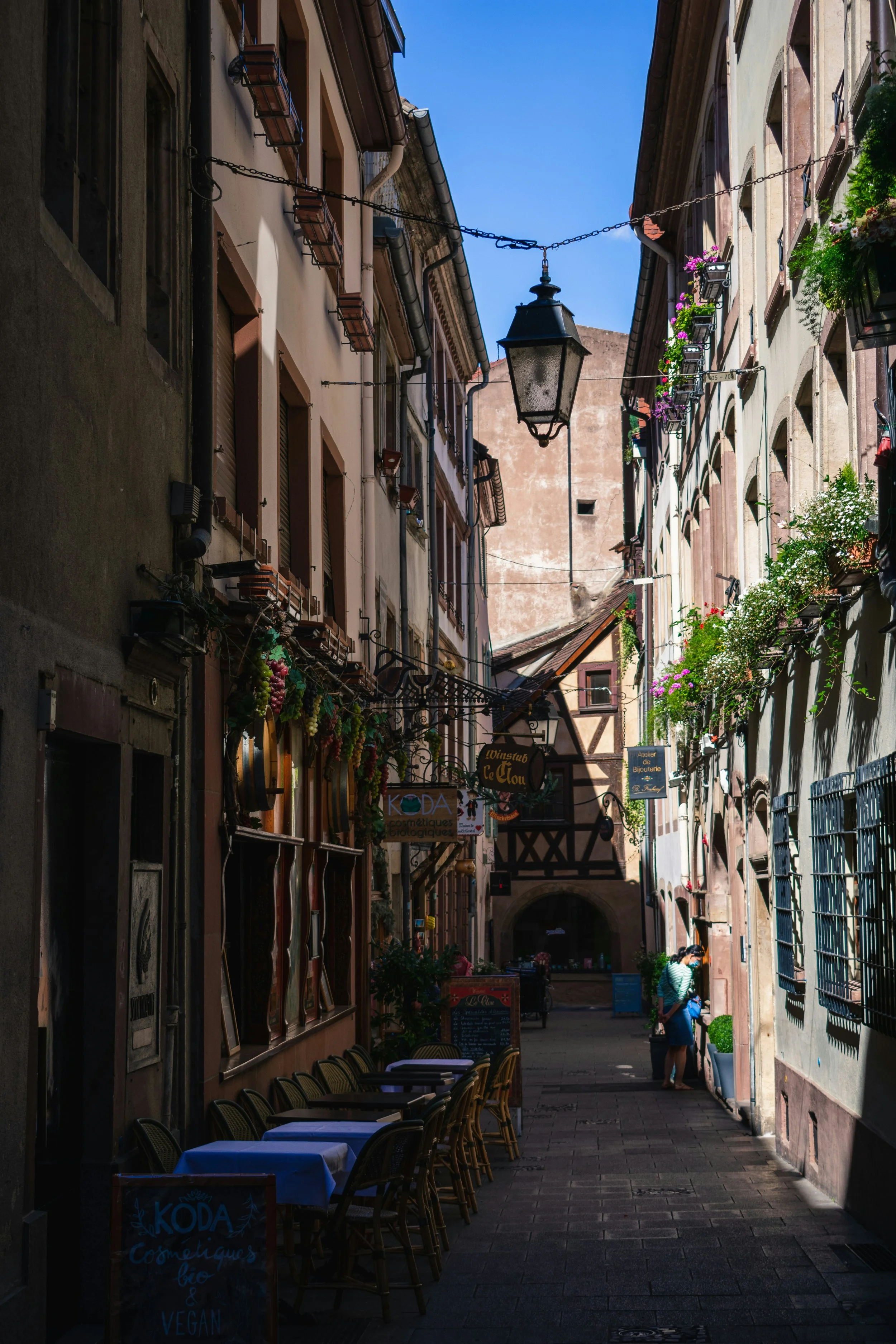
Strasbourg feels like a storybook — but with excellent wine and serious culinary depth.
Sitting on the French-German border, it blends half-timbered houses, canal-lined streets, and Alsatian food culture into a city that’s compact and deeply atmospheric. The historic centre, Grande Île, is small enough to explore fully in 48 hours, yet layered enough to feel immersive rather than rushed.
Spring softens Strasbourg beautifully. Window boxes bloom, riverside paths fill with locals, and the terraces around Petite France return to life without the heavy Christmas market crowds the city is famous for.
It’s romantic, manageable, and culturally distinct — ideal for a short break.

Top Things to Do in 2–3 Days
Visit Strasbourg Cathedral
The soaring Gothic Strasbourg Cathedral dominates the skyline with its intricate façade and astronomical clock. Climb the platform for panoramic views over rooftops and the Rhine plain.
Explore La Petite France
This canal-laced quarter, with timber-framed houses leaning towards the water, is Strasbourg’s most photographed district — and for good reason. Early mornings are especially peaceful.
Boat Along the Ill River
A short river cruise gives context to the city’s layout and history, including views of the European Parliament district.
Sample Alsatian Cuisine
Think tarte flambée, choucroute garnie, and Riesling from nearby vineyards. The Franco-German culinary fusion is a highlight in itself.
Getting There and Accessibility
Strasbourg is surprisingly easy to reach.
Around 1 hour 50 minutes by high-speed train from Paris.
Approximately 2 hours from Frankfurt by train.
Well connected via regional airports in Strasbourg and nearby Basel.
Around 2 hours by train from Zurich.
Its border location makes it ideal for combining France and Germany in one trip.
The Spring Advantage
Spring avoids the winter chill and the intense December Christmas market crowds.
Mild walking temperatures
Flower-filled canals and parks
Outdoor wine terraces reopening
Fewer tour groups than summer
You get the atmosphere without the seasonal intensity.
Who It’s For
Couples seeking romance
Food and wine lovers
Architecture enthusiasts
Travellers wanting a smaller, elegant city
Anyone drawn to borderland culture and blended identities
Strasbourg feels intimate and polished — perfectly scaled for a two-day escape.
Kraków, Poland
Why It’s Perfect for a Weekend
Kraków offers grand architecture, layered history, and strong value — all within a compact, walkable centre.
Unlike some larger Central European capitals, Kraków feels contained. The medieval Old Town, castle hill, and Jewish Quarter sit close together, making it ideal for a short, immersive visit.
Spring is particularly appealing. Outdoor cafés reopen around the main square, trees begin to bloom, and you avoid peak summer tour numbers.
It’s also one of the most affordable cities on this list — a strong option for a budget-friendly weekend.

Top Things to Do in 2–3 Days
Wander Rynek Główny
Kraków’s Main Market Square is one of Europe’s largest medieval squares. St Mary’s Basilica and the Cloth Hall anchor the space, which feels lively but not overwhelming.
Visit Wawel Castle
The hilltop Wawel Castle overlooks the Vistula River and represents centuries of Polish royal history.
Explore Kazimierz
The former Jewish Quarter blends history with creative energy — independent cafés, street art, and atmospheric bars.
Optional Day Trip
Auschwitz-Birkenau and the Wieliczka Salt Mine are both accessible within a day, adding historical depth to a short stay.
Getting There and Accessibility
Around 2 hours 30 minutes by flight from London.
Direct connections across Europe.
Roughly 2.5 hours by train from Warsaw.
The airport is around 20–30 minutes from the centre.
It’s easy, affordable, and well suited to spontaneous travel.
The Spring Advantage
Comfortable sightseeing temperatures
Lower accommodation prices than peak summer
Outdoor café culture returning
Fewer stag-party crowds compared to summer
Spring offers the right balance of atmosphere and breathing space.
Who It’s For
Budget-conscious travellers
History-focused visitors
Groups of friends
Solo travellers seeking walkability
Those curious about Central Europe beyond Vienna and Prague
Kraków feels substantial without being overwhelming — ideal for a well-paced weekend.
Dubrovnik, Croatia
Why It’s Perfect for a Weekend
Dubrovnik in peak summer can feel intense. Dubrovnik in spring feels cinematic.
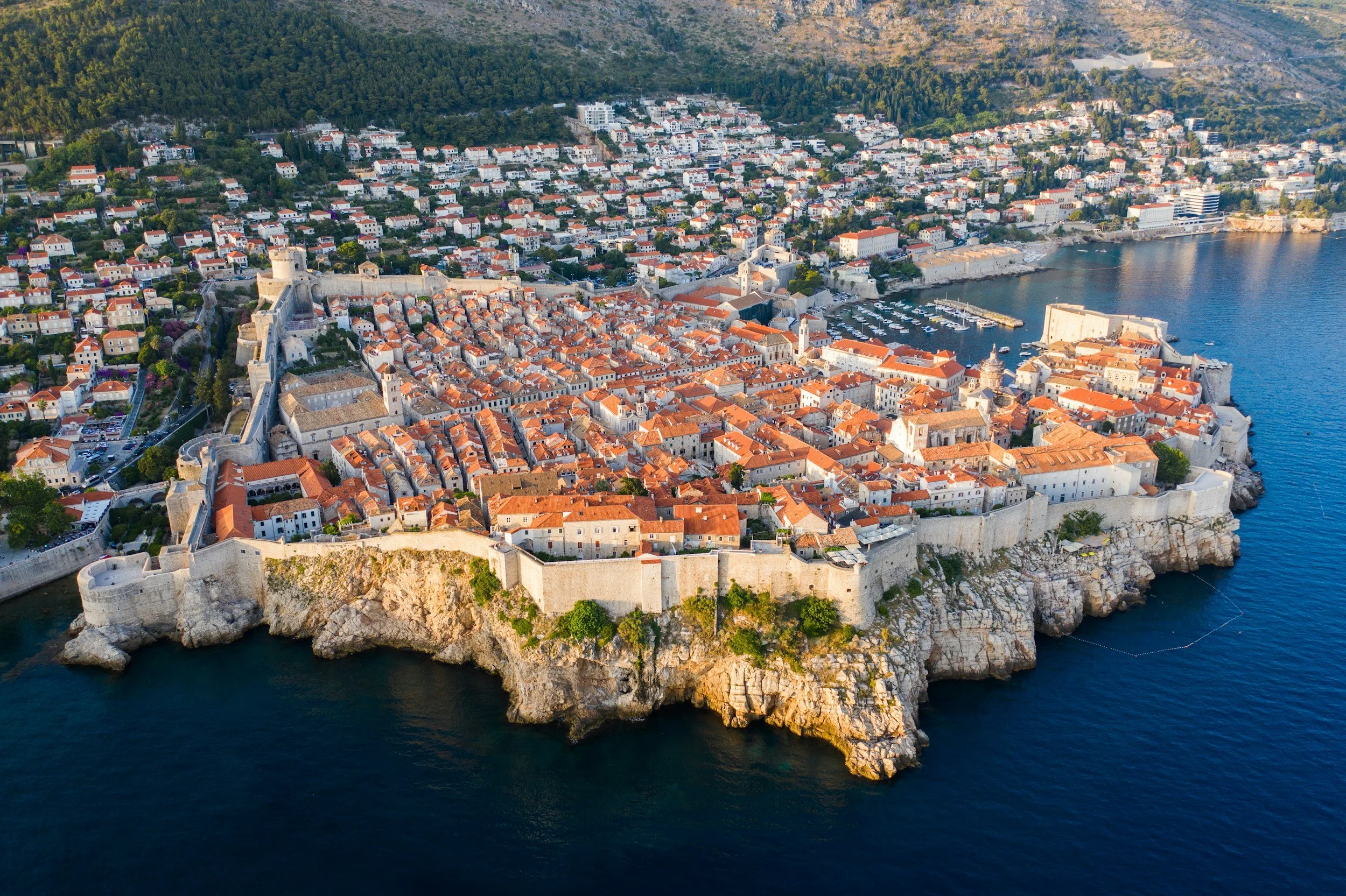
Encircled by medieval stone walls and backed by the Adriatic, the Old Town is compact enough to explore thoroughly in two days. The coastal setting adds something different to this list — a short break that feels like a proper escape.
Spring is the key. Before cruise ships peak and temperatures soar, Dubrovnik feels spacious and atmospheric.
Top Things to Do in 2–3 Days
Walk the City Walls
The defensive walls surrounding the Old Town offer panoramic views over terracotta roofs and deep blue sea — one of Europe’s most iconic walks.
Explore the Old Town
Wander marble streets, small churches, and quiet alleyways branching off the Stradun.
Take the Cable Car to Mount Srđ
Sweeping coastal views make this especially worthwhile in clear spring light.
Swim or Coastal Walk (Weather Permitting)
If temperatures allow, dip into the Adriatic or follow coastal paths beyond the Old Town.
Getting There and Accessibility
Around 2 hours 40 minutes by flight from London.
Strong seasonal European connections.
The airport is around 20–25 minutes from the Old Town.
It works well as a standalone trip or part of a wider Croatia itinerary.
The Spring Advantage
Far fewer cruise passengers
Comfortable walking weather
Lower accommodation rates than July and August
Clear coastal light ideal for photography
Spring transforms Dubrovnik from crowded hotspot to atmospheric coastal city.
Who It’s For
Couples seeking a dramatic setting
Coastal city lovers
Game of Thrones fans
Travellers wanting a Mediterranean feel without peak heat
Anyone craving sea views within a short timeframe
Dubrovnik offers scale and scenery rarely found in such a compact footprint — especially before summer arrives.
How to Plan the Perfect European Weekend Break
A great weekend in Europe isn’t about cramming everything in. It’s about removing friction.
With only 48–72 hours, small decisions make a big difference. Here’s how to get the most from a short trip — especially in spring.
Fly Early, Return Late
If you’re flying, aim for:
Early Friday departure
Late Sunday return
That effectively gives you three usable days rather than two half-days lost to travel. The difference between arriving at 10am versus 6pm is enormous on a short trip.
If possible, prioritise city-centre train routes (Eurostar, AVE, high-speed rail) over airports. Arriving directly into the centre saves time, money, and energy.
Stay Central — It Matters More on a Weekend
On a longer trip, staying slightly outside the centre can work. On a 2–3 day break, it’s rarely worth it.
Choose accommodation within walking distance of the historic core or a key neighbourhood. Every 20-minute commute adds up quickly.
Being able to pop back to your hotel between sightseeing and dinner makes the whole weekend feel easier.
Book One Major Attraction in Advance
Pre-book one “anchor” experience:
A museum (Uffizi in Florence, for example)
A palace or landmark (Real Alcázar in Seville)
A thermal bath slot in Budapest
Beyond that, leave space.
Weekends work best when you allow time for wandering, spontaneous cafés, and neighbourhood discoveries.
Travel Light
Hand luggage only.
You’re travelling for two or three days — pack accordingly. Avoid checked baggage delays, airport waiting, and unnecessary stress.
Spring in Europe typically means:
Light jacket
Comfortable walking shoes
Layers for cooler evenings
Sunglasses (optimism encouraged)
Understand Spring Timing
Spring isn’t one uniform season.
March: Cooler but quieter, especially in Central Europe.
April: Blossoms, longer days, Easter travel spikes.
May: Warm, lively, and often the sweet spot before peak summer prices.
Southern cities like Seville and Dubrovnik warm up earlier. Northern cities like Copenhagen feel best from late April onwards.
Don’t Over-Schedule
You will not see everything — and that’s fine.
A weekend should feel immersive, not rushed. Choose a neighbourhood to explore deeply. Sit somewhere longer than planned. Leave one afternoon intentionally open.
Europe rewards depth over speed.
Which European Weekend Getaway Is Right for You?
With ten strong options, the real question isn’t “where should I go?” — it’s “what kind of weekend do I want?”
Here’s a quick breakdown to help narrow it down.
Best for Food Lovers
If your weekend revolves around what’s on the plate:
Florence – Renaissance art paired with Tuscan wine, pasta, and trattoria culture.
Seville – Tapas hopping in Triana and Andalusian flavour in every corner.
Porto – Port wine cellars, seafood, and slow riverside dining.
Strasbourg – Alsatian cuisine blending French finesse and German heartiness.
Best for Romance
If you’re planning a couple’s escape:
Strasbourg – Canal-lined streets and timber-framed houses.
Florence – Sunset at Piazzale Michelangelo feels almost unfairly cinematic.
Dubrovnik – Medieval walls, Adriatic views, and golden-hour light.
Porto – Rooftop views over the Douro and intimate wine bars.
Best on a Budget
If value matters:
Kraków – Strong cultural depth with lower accommodation and dining costs.
Budapest – Grand architecture and thermal baths without Western European pricing.
Ljubljana – Affordable, compact, and easy to explore on foot.
Best for Sunshine in Spring
If you’re chasing warmth:
Seville – One of Europe’s earliest warm-weather cities.
Dubrovnik – Coastal light and Mediterranean air before peak heat.
Porto – Mild temperatures and bright riverside afternoons.
Best for Architecture and History
If you want visual drama and cultural depth:
Florence – Renaissance mastery in every direction.
Budapest – Neo-Gothic Parliament and grand Austro-Hungarian façades.
Brussels – Ornate guildhalls and layered European history.
Kraków – Medieval square and royal castle setting.
Easiest from the UK
For minimal travel friction:
Brussels – Around 2 hours by Eurostar from London.
Copenhagen – Short direct flights and seamless airport transfers.
Kraków – Strong low-cost airline connections.
Seville – Direct routes and manageable airport transfers.
Best for a Calm, Slower Pace
If you want atmosphere over intensity:
Ljubljana – Car-free centre and riverside cafés.
Porto – Slow mornings, scenic viewpoints, and wine culture.
Strasbourg – Elegant, manageable, and easy to wander.
“You don’t need two weeks off work to feel inspired.
One well-chosen European city. One early flight. One central hotel. A handful of intentional experiences. That’s often all it takes to reset your rhythm.
Spring is the sweet spot. The crowds haven’t peaked, the terraces are reopening, and cities feel lighter — both in atmosphere and in price. It’s warm enough to wander for hours, cool enough to enjoy long dinners, and busy enough to feel alive without feeling overwhelming.
From the tiled streets of Porto to the thermal baths of Budapest, from Seville’s orange blossoms to Dubrovnik’s Adriatic walls, Europe rewards short, focused travel. You don’t need to see everything. You just need to see enough.
The beauty of a weekend break is its simplicity. You commit, you go, you immerse — and by Sunday evening, you’ve experienced a completely different culture without crossing an ocean.
So the real question isn’t whether you have time.
It’s which city you’re choosing first.”