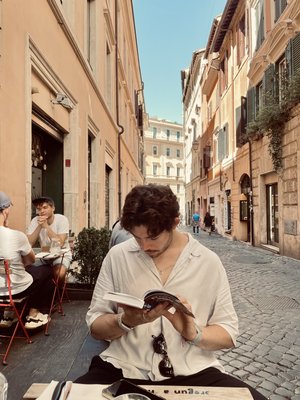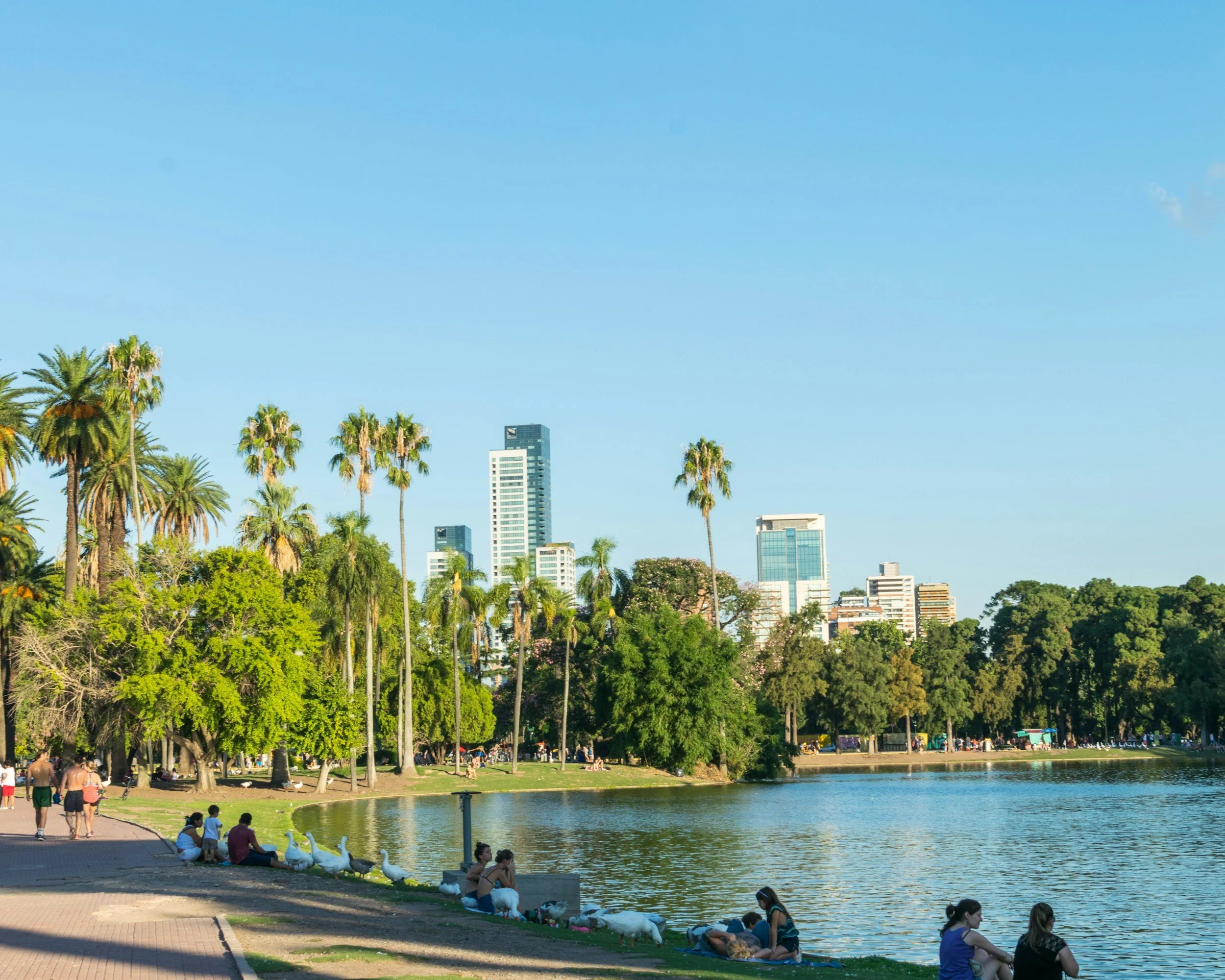
Buenos Aires is a city of long afternoons and even longer dinners. Of crumbling façades beside Belle Époque mansions. Of political murals, late-night tango, football chants echoing from apartment balconies, and cafés that feel unchanged since the 1920s. You don’t rush Buenos Aires — you ease into it.
Often called the “Paris of South America”, the comparison mostly comes from its architecture. In the late 19th and early 20th centuries, Argentina was one of the world’s wealthiest nations, and the city built accordingly — grand avenues like Avenida de Mayo, ornate theatres, and French-inspired mansions that still define areas such as Recoleta. But that European elegance is only one layer.
Buenos Aires is also shaped by immigration — especially from Italy and Spain — which influences everything from its accent to its food culture. The local dialect, Rioplatense Spanish, carries a distinctly Italian rhythm. Dinner rarely starts before 9pm. Coffee isn’t just fuel; it’s ritual. And Sundays belong to family, markets, and football.
What makes this city truly compelling, though, is how differently it feels from one barrio to the next.
Buenos Aires is divided into 48 official neighbourhoods, each with its own personality. Some are polished and leafy. Some are gritty and artistic. Some feel residential and slow; others pulse with nightlife. Where you choose to stay won’t just affect your commute — it will shape your entire experience.
This guide is designed to help you decide:
Where should you base yourself?
Which neighbourhood fits your travel style?
What does each area actually feel like once you’re there?
Because in Buenos Aires, choosing the right barrio isn’t a small decision — it’s the foundation of the trip.
Let’s explore them properly.
Palermo
Palermo is where many travellers begin their Buenos Aires story.
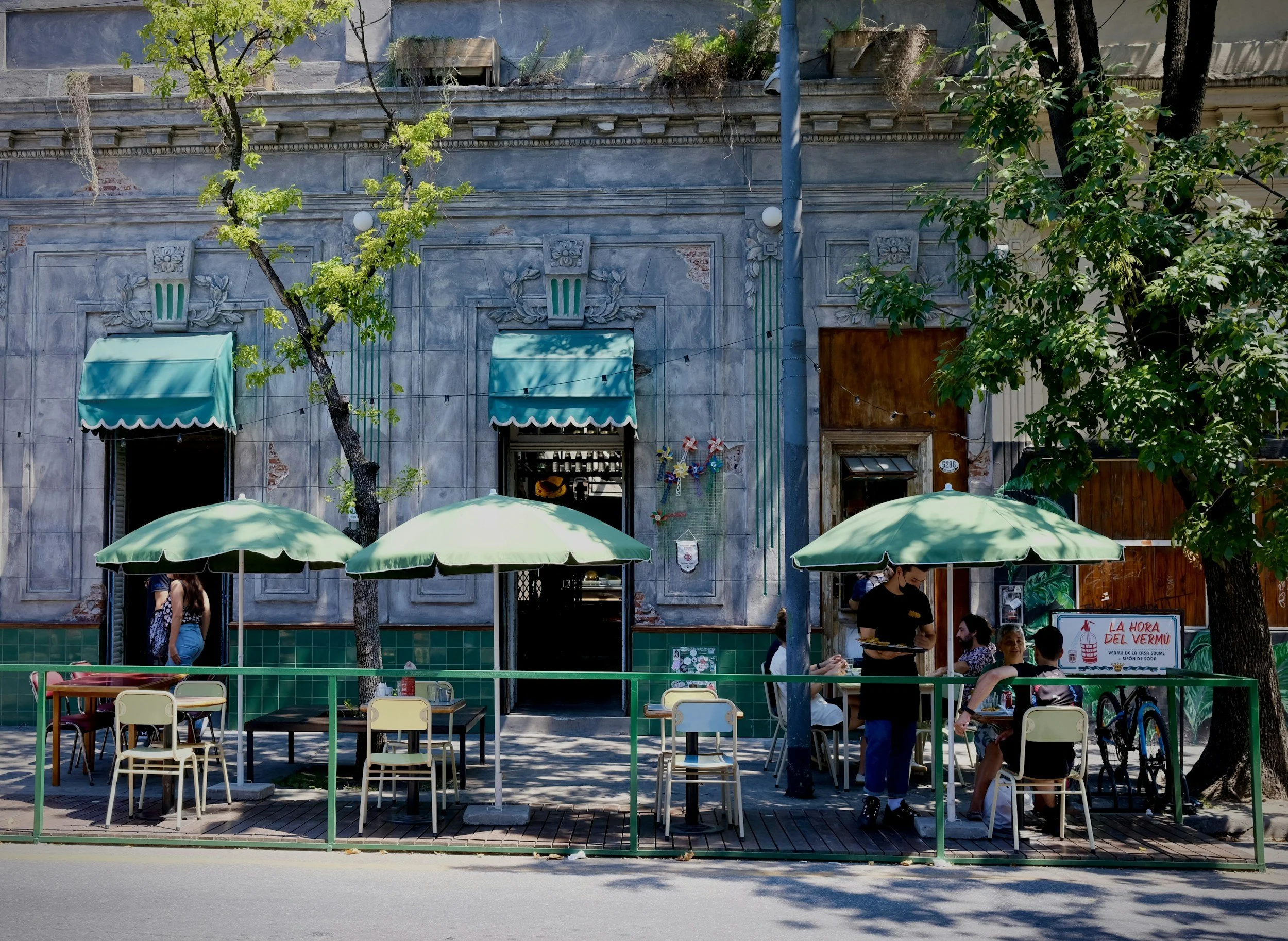
It’s broad, green and sprawling — less a single neighbourhood and more a collection of overlapping identities. You don’t arrive in Palermo and feel historic grandeur; you feel space. Trees. Murals. Pavement tables filling slowly as the day stretches into evening.
If it’s your first time in the city and you want ease — this is the neighbourhood that asks the fewest questions of you.
You can wake up late, wander out for coffee, spend the afternoon in a park, return for a rest, and head back out at 9pm without ever needing a taxi. That rhythm suits Buenos Aires perfectly.
Understanding the Layout
When people say they’re staying in Palermo, they usually mean one of two pockets: Palermo Soho or Palermo Hollywood. The difference matters.
Palermo Soho centres loosely around Plaza Serrano. Streets here are narrower, more boutique-led, with independent designers and cafés tucked between ivy-covered façades. If you stay within a few blocks of the plaza, you’ll have bars and restaurants on your doorstep — but weekends can be lively late into the night. Light sleepers should avoid apartments directly on Avenida Córdoba or the busiest stretches near the square.
Palermo Hollywood sits slightly north-west. It feels more residential by day and more restaurant-driven by night. Streets like Gorriti and Fitz Roy are lined with some of the city’s most respected dining rooms. This pocket works well if evenings are the priority but you’d still like calmer mornings.
If you prefer quieter streets, look west of Santa Fe Avenue. The further you move toward the edge of Bosques de Palermo, the greener and more residential it becomes.
Daily Life in Palermo
Mornings in Palermo are unhurried. Cafés open gradually — this is not a city that leaps out of bed early — and you’ll find locals lingering over medialunas and coffee rather than rushing to offices.
By afternoon, the neighbourhood warms up. Boutiques open their doors, shaded pavements fill, and long lunches begin. If you’re staying nearby, it’s easy to walk to Jardín Botánico Carlos Thays or into the lakes and rose gardens of the Bosques for a break from the city streets.
Evenings are where Palermo shines. Dinner rarely begins before 9pm, and restaurants feel most alive closer to 10. Bars don’t properly fill until 11. If you’re staying here, you don’t need to think about transport — you can wander between wine bars and cocktail spots on foot.
For steak, Don Julio remains one of the most sought-after reservations in the city. It’s not subtle about its reputation — but it earns it. For something more nostalgic, El Preferido de Palermo delivers traditional Argentine dishes in a setting that feels both historic and revived. And if you’re leaning towards something more contemporary, Osaka in Palermo Hollywood shows how international influences have shaped the modern dining scene here.
Cultural Context
Palermo’s current identity wasn’t inevitable. Much of its creative reputation grew after Argentina’s 2001 economic crisis, when artists and designers moved into cheaper warehouse spaces and slowly reshaped the area. What began as affordability evolved into influence.
The Italian imprint on Buenos Aires culture is especially visible here — in the café rituals, in the late dining hours, even in the cadence of local Spanish. Palermo may feel contemporary, but it still carries that layered history.
Is Palermo Right for You?
Palermo works beautifully if you want:
Walkability
Strong food options within minutes of your accommodation
Lively evenings without complex planning
A comfortable, well-connected base
It may not be the right fit if you’re seeking cobbled streets, colonial façades and heavy historic atmosphere — that energy lives more strongly in San Telmo and parts of the centre.
Accommodation here tends to sit in the mid to higher range for the city, particularly in Soho. Boutique hotels and apartment rentals dominate, which suits the neighbourhood’s independent character.
If you’re visiting Buenos Aires for the first time and want the smoothest introduction possible, Palermo makes the city feel accessible.
If you want the Buenos Aires of grand cemeteries, Belle Époque mansions and old-world refinement — we’ll head to Recoleta next.
Recoleta
Recoleta feels like Buenos Aires dressed for the opera.
Wide avenues. Limestone façades. Iron balconies. A sense of old money and inherited elegance. If Palermo is creative and contemporary, Recoleta is classical and composed.
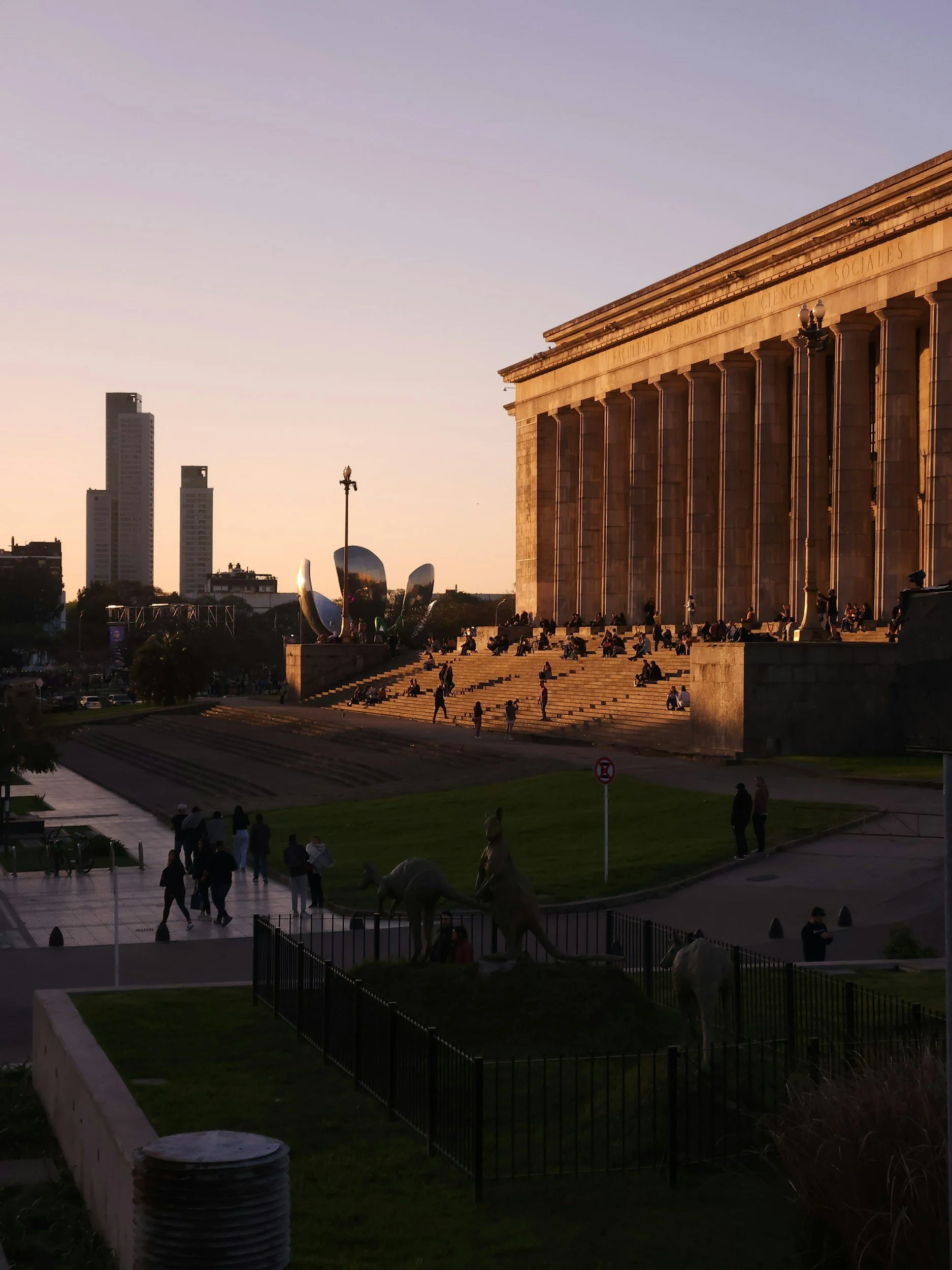
This is where Argentina’s late-19th and early-20th-century wealth made itself visible. When the country was one of the richest in the world, its elite looked to Paris for inspiration — and built accordingly. Walking through Recoleta today, particularly along Avenida Alvear, you can still see that Belle Époque ambition etched into the architecture.
If you’re drawn to European grandeur, museums and slower evenings, this neighbourhood may feel immediately right.
What It’s Like to Stay Here
Recoleta moves at a gentler pace.
Mornings begin with coffee at pavement cafés rather than brunch queues. Afternoons are for museum visits or long walks beneath jacaranda trees (in November, the entire neighbourhood turns violet). Evenings are quieter than Palermo — dinners are still late by European standards, but the energy is more refined than rowdy.
You’re unlikely to stumble into a 1am street party here.
Staying in Recoleta works particularly well if you prefer:
Walking to cultural landmarks
Elegant surroundings
A calmer base after full sightseeing days
Boutique hotels over apartment rentals
Accommodation here tends to be hotel-led rather than short-term rental heavy, and the atmosphere feels more traditionally European.
Landmarks on Your Doorstep
The heart of the neighbourhood is the remarkable Recoleta Cemetery — an extraordinary labyrinth of marble mausoleums and sculpted tombs, including that of Eva Perón. It’s less cemetery, more architectural museum.
Just across the road, the cultural cluster continues with the Museo Nacional de Bellas Artes, home to an impressive collection of European and Argentine art. On weekends, Plaza Francia fills with artisan stalls and local crafts.
Avenida Alvear is worth walking simply to admire the former palaces, many now converted into embassies or luxury hotels.
If you stay here, much of this is within a 10–15 minute walk — no transport required.
Where to Eat and Drink
Recoleta’s dining scene leans traditional and established rather than experimental.
La Biela — one of the city’s historic cafés, once frequented by writers and racing drivers. Ideal for coffee in the afternoon.
El Sanjuanino — known for excellent empanadas and regional Argentine dishes.
Fervor — a dependable parrilla with a strong reputation among locals.
This isn’t the neighbourhood for cutting-edge cocktail dens, but it excels at classic Argentine hospitality.
Practical Considerations
Recoleta is centrally located and well connected by bus, though it’s slightly less direct on the Subte compared to Palermo (Line D runs along the edge at Pueyrredón). Taxis and rideshares are inexpensive by international standards, so reaching San Telmo or Palermo in 15–25 minutes is normal outside rush hour.
It’s generally considered one of the more comfortable and secure-feeling areas for visitors, particularly around the main avenues.
Is Recoleta Right for You?
Choose Recoleta if you imagine Buenos Aires as:
Grand architecture
Museums and cafés
Calm evenings
Historic atmosphere
It may not suit you if:
You want nightlife on your doorstep
You prefer street art and alternative culture
You’re travelling on a tighter budget
Recoleta feels elegant, stable and self-assured. It doesn’t demand attention — it simply assumes it.
If Palermo is where the city experiments, Recoleta is where it remembers.
San Telmo
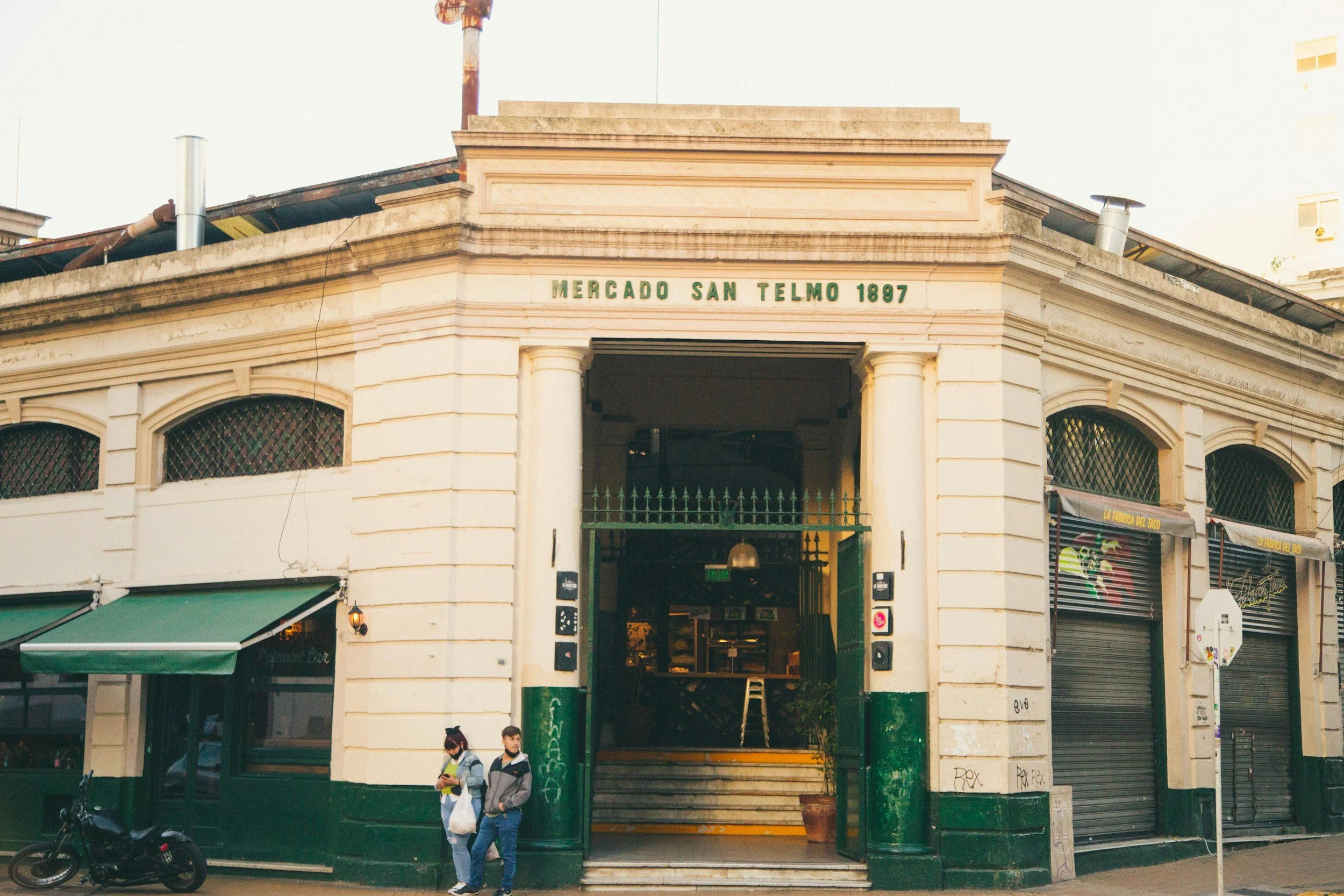
San Telmo is where Buenos Aires feels oldest.
It’s not grand in the way Recoleta is. It’s not polished like parts of Palermo. It’s layered. Worn in places. Beautiful in an unfiltered way.
Founded in the 17th century, this was once home to the city’s elite — until a yellow fever outbreak in 1871 pushed wealthier families north. What they left behind became something else: antique markets, colonial architecture, tango halls and a neighbourhood that feels distinctly lived-in.
If you’re looking for atmosphere — real atmosphere — this is where it lives.
What It’s Like to Stay Here
Staying in San Telmo means stepping straight into texture.
Mornings begin slowly. You’ll hear shutters opening, see locals shopping for produce, and pass cafés that feel unchanged for decades. By late afternoon, the neighbourhood begins to hum — musicians setting up, market stalls expanding, tourists filtering in.
On Sundays, the famous San Telmo Market and the surrounding Feria de San Telmo spill through the streets. Plaza Dorrego becomes the centre of gravity, with tango dancers performing outdoors.
If you stay near Plaza Dorrego, you’ll be in the heart of it — but expect noise on weekends. Move a few blocks south or east for quieter nights.
San Telmo works well for travellers who:
Love walking and photographing
Prefer character over polish
Want historic streets outside their front door
Plan to explore Microcentro and Plaza de Mayo frequently
It’s also one of the most walkable bases for reaching the city’s historic core.
The Feeling on the Ground
Streets here are narrower. Buildings are lower. Paint peels in places. Balconies lean slightly. And that’s the point.
This is the Buenos Aires of tango clubs and bodegones. Of antique shops filled with objects whose stories you’ll never fully know.
It feels intimate.
Evenings can be magical — especially if you stumble across live music or a neighbourhood milonga (tango gathering).
Where to Eat and Drink
San Telmo leans traditional, but it’s not stuck in time.
El Desnivel — a no-frills parrilla that feels authentically local.
Café San Juan — small, intimate and consistently excellent.
Hierbabuena — a lighter option in a meat-heavy city.
Inside the market itself, you’ll now find a mix of antique vendors and modern food stalls, which makes it a good casual lunch stop during the week.
Practical Considerations
San Telmo sits just south of the city centre, which makes it easy to walk to:
Plaza de Mayo
Casa Rosada
Avenida de Mayo
However, parts of the neighbourhood can feel quieter late at night, particularly on weekdays. As with many large cities, awareness matters — but staying near well-lit, active streets reduces concerns.
Accommodation here tends to be boutique hotels, converted mansions and smaller guesthouses. Prices are often slightly lower than Palermo or Recoleta, though quality varies — it’s worth checking reviews carefully.
Is San Telmo Right for You?
Choose San Telmo if you picture Buenos Aires as:
Cobblestones
Tango drifting through plazas
Historic cafés
Markets and antique shops
It may not suit you if:
You want polished luxury
You prioritise nightlife density
You prefer wide, leafy boulevards
San Telmo feels like a story unfolding slowly.
If Recoleta is refined and Palermo is contemporary, San Telmo is soulful.
La Boca
La Boca is not quiet about itself.
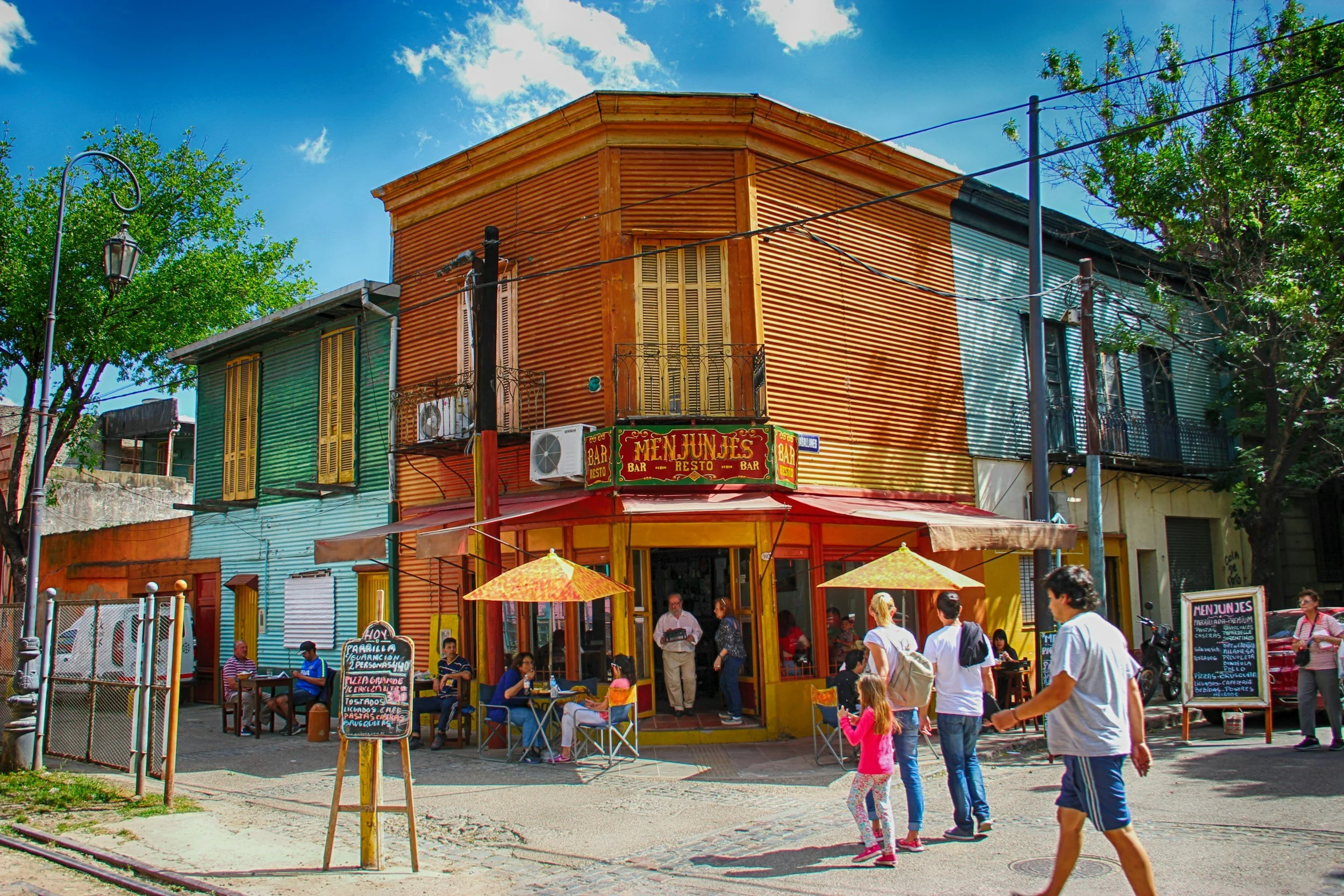
It’s bright, theatrical and unapologetically bold — a neighbourhood shaped by dockworkers, immigration and football loyalty that borders on religion. If San Telmo whispers history, La Boca shouts identity.
In the late 19th century, waves of Italian immigrants — particularly from Genoa — settled here near the port. They built homes from whatever materials were available, painting them with leftover ship paint. The result is the patchwork of colour that still defines the area today.
But La Boca is best understood as a visit — not usually as a base.
What It’s Like to Be Here
Most visitors come for a few hours during the day.
The centre of attention is Caminito, an open-air street museum lined with brightly painted houses, street artists and tango dancers posing for photographs. It’s lively, tourist-focused and undeniably photogenic.
A short walk away stands La Bombonera, home of Boca Juniors. Even if you’re not a football fan, the scale of devotion here is striking. On match days, the atmosphere spills into the streets — drums, chanting, blue-and-yellow shirts everywhere.
There’s a rawness to La Boca that feels different from the rest of the city. It’s less curated, more intense.
Practical Advice
La Boca is generally recommended as a daytime destination only. Stick to the main areas around Caminito and the stadium, and avoid wandering into quiet residential streets further away.
Most travellers visit by taxi or rideshare from Palermo, Recoleta or San Telmo — journeys typically take 15–30 minutes depending on traffic.
There are limited accommodation options here, and it’s not considered one of the safer neighbourhoods to stay overnight. For that reason, it’s rarely recommended as a base.
Where to Eat (If You Visit)
Dining here is mostly casual and tourist-facing, but there are a few worthwhile stops.
El Obrero — a long-standing local favourite serving generous Argentine classics.
Casual parrillas near Caminito for a simple steak lunch before heading back toward the centre.
It’s better to plan your main dinners elsewhere in the city.
Is La Boca Worth It?
Yes — for context.
La Boca tells an important story about immigration, labour and football culture in Buenos Aires. The colours are real. The pride is real. The stadium atmosphere is unforgettable if you time it right.
But it’s not the Buenos Aires most travellers will want to wake up in every morning.
Visit it. Photograph it. Feel it.
Then return to a neighbourhood that fits your travel rhythm.
Puerto Madero
Puerto Madero feels like a different city entirely.
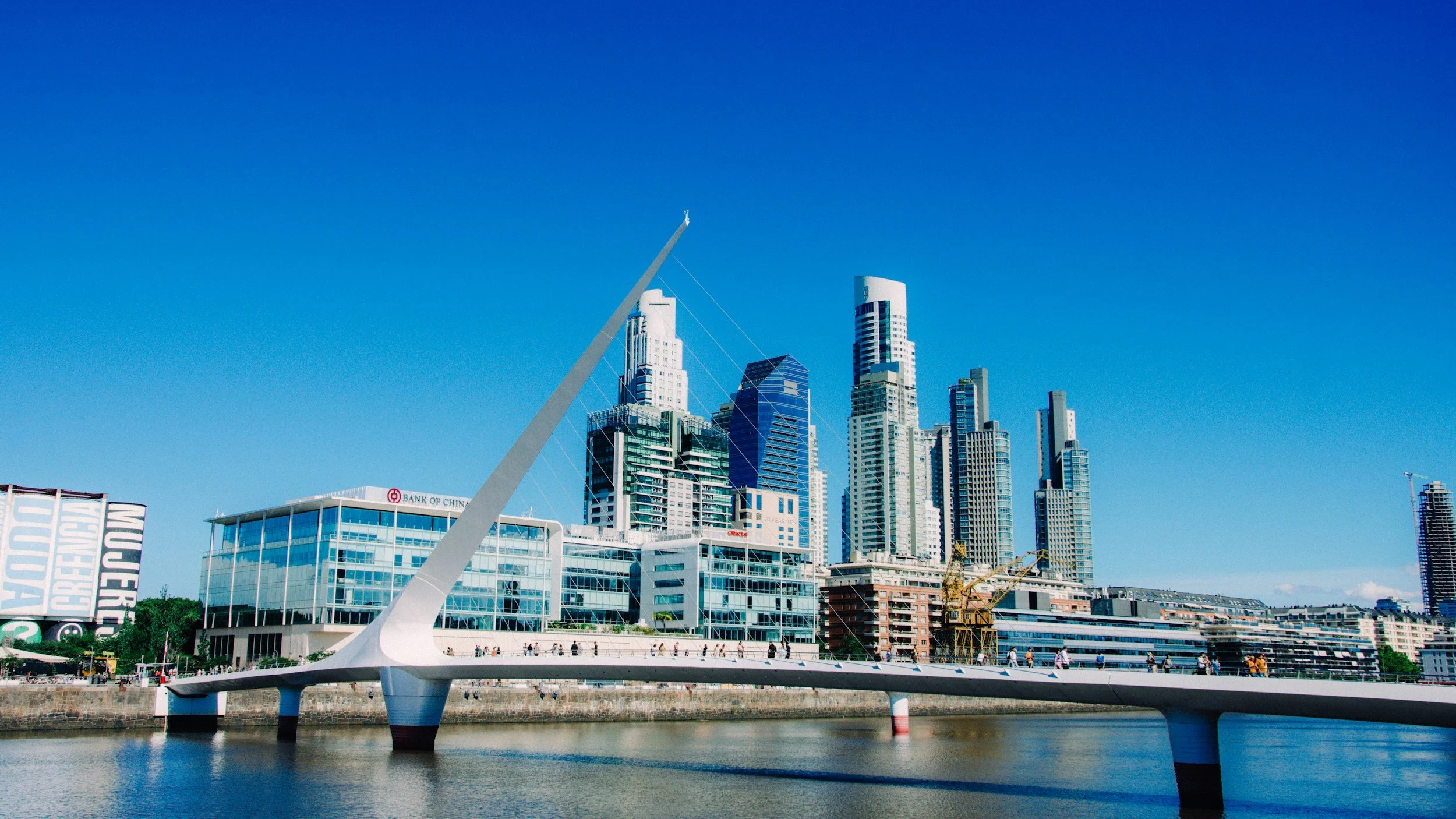
Once a set of abandoned docks along the Río de la Plata, the area was redeveloped in the 1990s into Buenos Aires’ most modern neighbourhood. Red-brick warehouses were converted into restaurants and apartments. Glass towers rose behind them. Boardwalks replaced cargo routes.
If San Telmo tells the city’s past, Puerto Madero represents its attempt at reinvention.
What It’s Like to Stay Here
Puerto Madero is clean, polished and spacious.
Sidewalks are wide. Streets feel orderly. The skyline looks distinctly contemporary. There’s less street noise, fewer corner cafés, and far more residential towers.
You wake up to river views rather than buskers or café chatter.
It works well for:
Short stays
Luxury travellers
Business trips
Visitors prioritising comfort and security
Accommodation here tends to be higher-end hotels and serviced apartments. Prices are typically above the city average, but you’re paying for modern infrastructure and waterfront positioning.
The Atmosphere on the Ground
By day, joggers run along the waterfront and office workers move between towers. The most recognisable landmark is Puente de la Mujer, a striking white pedestrian bridge that has become one of the area’s symbols.
Behind the towers sits the Reserva Ecológica Costanera Sur, a vast ecological reserve of walking and cycling trails — surprisingly wild given its proximity to the city centre. If you’re staying in Puerto Madero, it’s an easy morning activity.
Evenings here revolve around waterfront restaurants. It’s pleasant, but the energy feels contained rather than spontaneous.
Where to Eat
Dining is largely along the dockside promenade. Many restaurants focus on classic Argentine steak and seafood, catering to both visitors and business diners.
It’s a comfortable place for dinner — but if you’re chasing neighbourhood atmosphere or hidden gems, you’ll likely find yourself taking a taxi to Palermo or San Telmo instead.
Practical Considerations
Puerto Madero sits close to Microcentro and Plaza de Mayo, making it convenient for sightseeing on foot during the day.
However, it’s less connected by Subte compared to Palermo. Most visitors rely on taxis or rideshares to reach nightlife districts.
It’s widely considered one of the more secure-feeling areas of the city, which is part of its appeal for certain travellers.
Is Puerto Madero Right for You?
Choose Puerto Madero if you want:
Modern comfort
Waterfront walks
A quieter, more contained environment
Higher-end accommodation
It may not suit you if:
You’re looking for historic atmosphere
You want street culture on your doorstep
You prefer neighbourhood character over skyline views
Puerto Madero is sleek and efficient — but it doesn’t fully capture the layered personality that makes Buenos Aires compelling.
Other Areas to Know About
Not every neighbourhood needs a full breakdown — but a few deserve context before you decide where to stay.
Microcentro
Microcentro is the historic and financial heart of Buenos Aires. It’s where you’ll find Plaza de Mayo, the Casa Rosada and Avenida 9 de Julio.
During the day, it’s busy with office workers and visitors. After business hours, it empties quickly. That shift can feel stark.
Staying here puts you close to landmarks, but the atmosphere can feel commercial rather than residential. It’s convenient — but not especially charming.
Belgrano
Further north, Belgrano is greener and more residential. It feels local, spacious and calmer than Palermo.
It’s well suited to longer stays, families or travellers who prefer a quieter base and don’t mind using public transport. It’s not typically chosen for short first visits, simply because it sits further from the main historic sights.
Almagro
Almagro is more authentic and less polished. Known for its tango culture and traditional cafés, it offers a more everyday version of Buenos Aires.
You won’t find many boutique hotels here, and English isn’t as widely spoken in restaurants — but that’s part of its appeal. It suits confident travellers who want to feel embedded in local life rather than adjacent to it.
Which Neighbourhood Is Right for You?
If you’re visiting Buenos Aires for the first time and want ease, walkability and strong dining options within minutes of your hotel — Palermo is the smoothest introduction.
If you imagine grand architecture, museum mornings and calmer evenings — Recoleta will feel aligned.
If cobblestones, tango and layered history matter more than polish — San Telmo is your atmosphere.
If you want colour and football culture, visit La Boca — but base yourself elsewhere.
If modern comfort, waterfront paths and higher-end hotels are priorities — Puerto Madero offers that security and structure.
The right neighbourhood depends less on what looks good in photos, and more on how you like your days to unfold.
Where First-Time Visitors Often Stay (and Why It’s Tricky)
Many first-time visitors instinctively book accommodation near the city centre — around Microcentro or Avenida 9 de Julio — assuming it’s the most convenient.
Technically, it is central.
But Buenos Aires doesn’t operate like a compact European capital. It’s expansive, and much of its social life happens in Palermo or neighbourhood-based districts rather than the financial core.
Staying in Microcentro means:
Busy streets during the day
Quieter, sometimes deserted evenings
Fewer standout dining options within immediate walking distance
It’s not wrong — it’s just not always the most enjoyable base.
For most short visits (3–5 nights), Palermo or Recoleta tend to provide a better overall rhythm.
Getting Around Buenos Aires
The Subte (underground) is affordable and easy to use, though coverage isn’t as extensive as cities like London or Madrid.
Rideshares and taxis are widely available and relatively inexpensive by international standards. Most cross-city journeys take 15–30 minutes outside peak traffic.
Walking is often the best way to experience individual neighbourhoods — especially Palermo, Recoleta and San Telmo.
The key is to treat Buenos Aires as a collection of villages rather than one concentrated centre.
“Buenos Aires is not a city that reveals itself in one glance.
It’s layered — European and Latin American, elegant and chaotic, nostalgic and forward-looking. And those layers show up most clearly in its neighbourhoods.
Where you stay won’t just determine your commute. It will shape your mornings, your evenings, your café rituals and your sense of the city.
Choose the barrio that matches your pace.
Next, we dive into something Buenos Aires does exceptionally well:
Food and drink.
And trust me — this city deserves a proper deep dive.”