Cairo is a city of scale — in population, in history, in energy. It’s where ancient civilisations and modern life exist side by side, where 1,000-year-old minarets rise above traffic-choked avenues, and where the Nile continues its steady course through it all.
For many travellers, Cairo can feel intense at first. It’s loud, layered, and constantly moving. But beneath that surface is a city of distinct neighbourhoods, each offering its own rhythm and personality. Stay in one district and your experience may feel calm, leafy, and café-lined. Stay in another and you’re stepping straight into medieval alleyways and centuries of history.
That’s why choosing where to stay in Cairo matters more than in many other cities. This isn’t a destination built around one walkable historic core. It’s a collection of areas that have evolved over centuries — Islamic, colonial, modern, residential, diplomatic — all stitched together by bridges, ring roads, and the Nile itself.
Understanding Cairo: A City of Layers
Cairo is one of the largest cities in Africa and the Middle East, home to over 20 million people across Greater Cairo. It’s not compact, and it doesn’t revolve around a single “centre” in the way many European capitals do. Instead, it has expanded in phases — from Fatimid-era Islamic quarters to 19th-century European-inspired Downtown boulevards, to modern desert developments on the city’s edge.
The Nile acts as Cairo’s anchor. Gezira Island — home to Zamalek — sits within the river, offering one of the city’s calmest bases. Downtown Cairo stretches along the eastern bank, its faded grandeur reflecting a period when the city was reshaped under Khedive Ismail to mirror Paris. Further east lies Historic Islamic Cairo, a UNESCO-recognised area dense with mosques, markets, and medieval streets. Cross west over the river and you reach Giza, where the city thins into desert and the pyramids rise unexpectedly from the urban edge.
Traffic is part of everyday life. A 5km journey can take 15 minutes — or 45. Walkability varies dramatically. Some districts feel surprisingly manageable; others are intense but unforgettable.
Cairo rewards travellers who choose their base intentionally. Whether you’re here for ancient history, Nile sunsets, rooftop cafés, or simply to understand one of the world’s great megacities, the neighbourhood you choose will shape how the city reveals itself to you.
Zamalek (Gezira Island)
Zamalek sits on Gezira Island in the middle of the Nile, and for many travellers, it strikes the best balance in Cairo. It’s central without being overwhelming, leafy without feeling disconnected, and walkable — at least by Cairo standards.
If you want a base that feels calm after long days exploring pyramids, mosques, and museums, this is often where the city feels most manageable.
Why Stay in Zamalek?
Zamalek offers breathing room.
The streets are lined with trees rather than constant traffic. Embassies, cultural institutes, and long-established apartment buildings give it a residential, slightly European feel compared to other districts. It’s one of the few areas in Cairo where you can comfortably wander without a rigid itinerary.
It’s also centrally located. Downtown is typically 10–20 minutes away by Uber outside peak traffic. Islamic Cairo is reachable in around 20–30 minutes. Giza and the pyramids are further — allow 45–60 minutes depending on the time of day.
For first-time visitors unsure where to base themselves, Zamalek is often the most balanced introduction to Cairo.
What It’s Like to Stay Here
Expect wide pavements (rare in Cairo), independent boutiques, art galleries, and cafés that spill onto the street. The pace feels noticeably slower than Downtown. Evenings are relaxed — couples strolling along the Nile, friends gathering at rooftop terraces, locals walking dogs beneath jacaranda trees.
That said, it’s still Cairo. Traffic hums around the bridges connecting the island to the mainland, and rush hour can create bottlenecks at entry and exit points.
Accommodation ranges from boutique hotels to mid-range guesthouses and high-end Nile-facing stays. It’s not the cheapest part of the city, but it offers comfort and consistency.
Key Highlights Nearby
Zamalek is more about atmosphere than major landmarks, but it still places you close to important cultural sites.
Cairo Tower — At 187 metres tall, this 1960s landmark offers panoramic views over the Nile and across to Giza on clear days. Sunset visits are particularly popular. Entry is typically around EGP 200–300 (approximately £3–£5 / €3–€5 / $4–$6).
Cairo Opera House — Egypt’s primary performing arts venue, hosting ballet, orchestras, theatre, and cultural festivals. Even if you don’t attend a performance, the surrounding grounds are pleasant to wander.
Museum of Modern Egyptian Art — Located within the Opera House complex, showcasing 20th-century Egyptian artists.
Nile Corniche walks — Particularly atmospheric in the evening when the river fills with illuminated felucca boats and floating restaurants.
You’re also a short drive from the Egyptian Museum in Downtown, home to thousands of artefacts including treasures from Tutankhamun’s tomb (though many headline pieces are gradually moving to the new museum in Giza).
Food and Drink Scene
Zamalek has one of Cairo’s strongest contemporary dining scenes, making it ideal if food is a central part of your trip.
Notable spots include:
Abou El Sid — A long-standing favourite for traditional Egyptian cuisine in an atmospheric setting. Expect dishes like molokhia, fatta, and slow-cooked meats. It’s a solid introduction to classic flavours in a comfortable environment.
Zooba (Zamalek branch) — A modern take on Egyptian street food, serving elevated koshary, taameya (Egyptian falafel), and fresh juices in a casual setting.
Crimson Bar & Grill — A rooftop restaurant overlooking the Nile, popular for sunset drinks and grilled dishes.
Pier 88 — A more upscale, contemporary option for dinner and cocktails, with a stylish setting by the water.
Left Bank — Reliable for breakfast, brunch, and coffee, with outdoor seating and a relaxed atmosphere.
Zamalek is also one of the few areas in Cairo where you’ll find a concentration of wine bars and cocktail lounges. While Egypt isn’t known globally for its alcohol culture, licensed venues here cater comfortably to international travellers.
Who It Suits
First-time visitors to Cairo
Couples
Solo travellers
Remote workers
Travellers wanting balance between calm and access
If your trip includes a mix of history, food, and relaxed evenings, Zamalek works exceptionally well.
Trade-Offs to Consider
Accommodation prices are generally higher than Downtown
You won’t have direct views of the pyramids
Traffic leaving the island during peak hours can add time to journeys
Zamalek isn’t the most historic district — but it may be the most liveable. It offers a softer introduction to a city that can otherwise feel intense, making it a strong and strategic base for many travellers.
Downtown Cairo (Wust el-Balad)
If Zamalek is Cairo’s composed, leafy counterpart, Downtown is its raw, beating heart.
Built in the late 19th century under Khedive Ismail, this district was designed to rival Paris — wide boulevards, grand façades, and European-style apartment buildings with wrought-iron balconies. Today, that grandeur remains, but it’s faded and layered with decades of history. Staying here means stepping directly into Cairo’s intensity — noise, movement, politics, culture — all unfolding outside your door.
For travellers who want immersion over polish, Downtown delivers.
Why Stay in Downtown?
Downtown places you in the centre of Cairo’s modern history.
You’re within walking distance (or a very short ride) of major museums, historic cafés, and some of the city’s most significant political landmarks. It’s one of the most convenient bases if you plan to explore multiple areas and don’t mind the city’s energy.
Accommodation here often offers better value than Zamalek, with boutique hotels and restored heritage buildings becoming increasingly popular.
If you want Cairo unfiltered — this is it.
What It’s Like to Stay Here
Expect sound. Expect movement. Expect life happening at full volume.
Streets are busy from early morning until late at night. Vendors sell tea and roasted nuts from carts. Old cinemas sit beside contemporary cafés. The architecture feels cinematic — crumbling yet elegant, with sweeping staircases and high ceilings in many older buildings.
You’ll likely walk more here than in other districts. Pavements aren’t always perfect, but major landmarks are clustered relatively close together.
Downtown feels historic, chaotic, and undeniably real.
Key Highlights Nearby
Downtown gives you access to some of Cairo’s most important landmarks.
Tahrir Square — The symbolic heart of modern Egypt. It was the focal point of the 2011 revolution and remains one of the most recognisable public spaces in the country.
Egyptian Museum — Home to over 100,000 artefacts, including treasures from Tutankhamun’s tomb. Entry is typically around EGP 200–300 (approximately £3–£5 / €3–€5 / $4–$6). Allow at least two to three hours to explore.
Abdeen Palace — Once a royal residence, this 19th-century palace showcases Egypt’s more recent monarchical history.
Khan el-Khalili — While technically in Islamic Cairo, this historic market is easily accessible from Downtown and one of the oldest souks in the Middle East.
You’re also well positioned to explore the Nile Corniche and cross into Zamalek via nearby bridges.
Food and Drink Scene
Downtown is home to some of Cairo’s most historic eateries — places that have served locals for decades.
Koshary Abou Tarek — Perhaps the city’s most famous spot for koshary, Egypt’s beloved carb-loaded national dish of rice, pasta, lentils, chickpeas, fried onions, and tomato sauce.
Café Riche — Open since 1908, this legendary café has hosted writers, revolutionaries, and intellectuals for over a century. It’s more about atmosphere than cutting-edge cuisine — but that’s exactly the point.
Felfela — A long-standing restaurant serving classic Egyptian dishes in a charming, traditional interior.
Estoril — A historic restaurant once frequented by artists and journalists.
Rooftop hotel terraces around Talaat Harb Square — often offering Nile glimpses and classic city views.
Downtown isn’t as polished as Zamalek when it comes to contemporary dining, but it offers depth, history, and authenticity.
Who It Suits
History lovers
Budget-conscious travellers
Travellers who want immersion
Visitors comfortable with noise and movement
If you want to step outside and feel Cairo immediately, Downtown is unmatched.
Trade-Offs to Consider
Noise levels can be high
Traffic congestion is constant
Some buildings show their age (which is either charm or inconvenience, depending on perspective)
Downtown Cairo isn’t curated — it’s layered. Staying here means embracing the city’s contrasts: faded elegance, political history, street energy, and a sense that something important has always happened here.
Islamic Cairo (Historic Cairo)
If Downtown tells the story of modern Egypt, Islamic Cairo reveals its medieval heart.
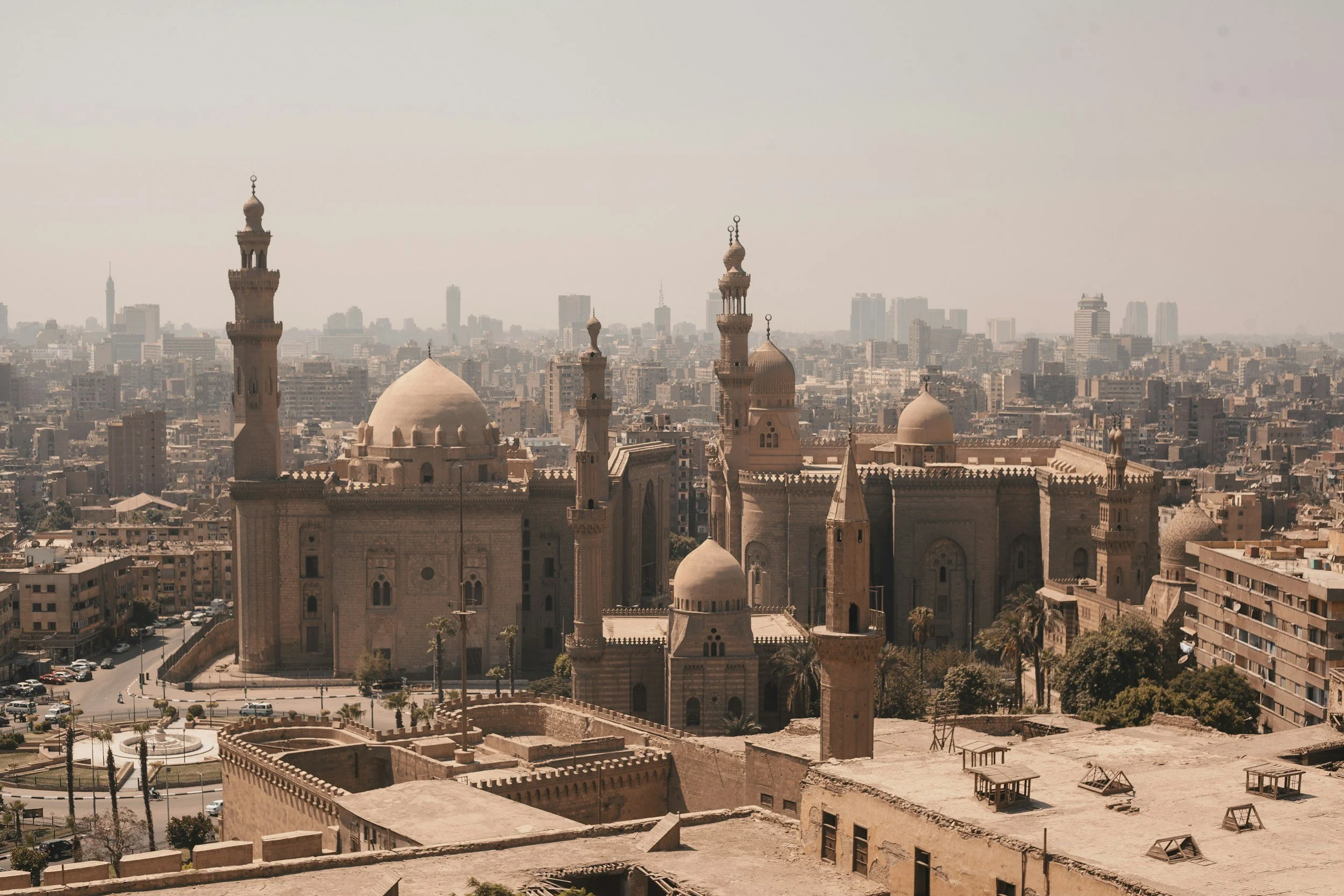
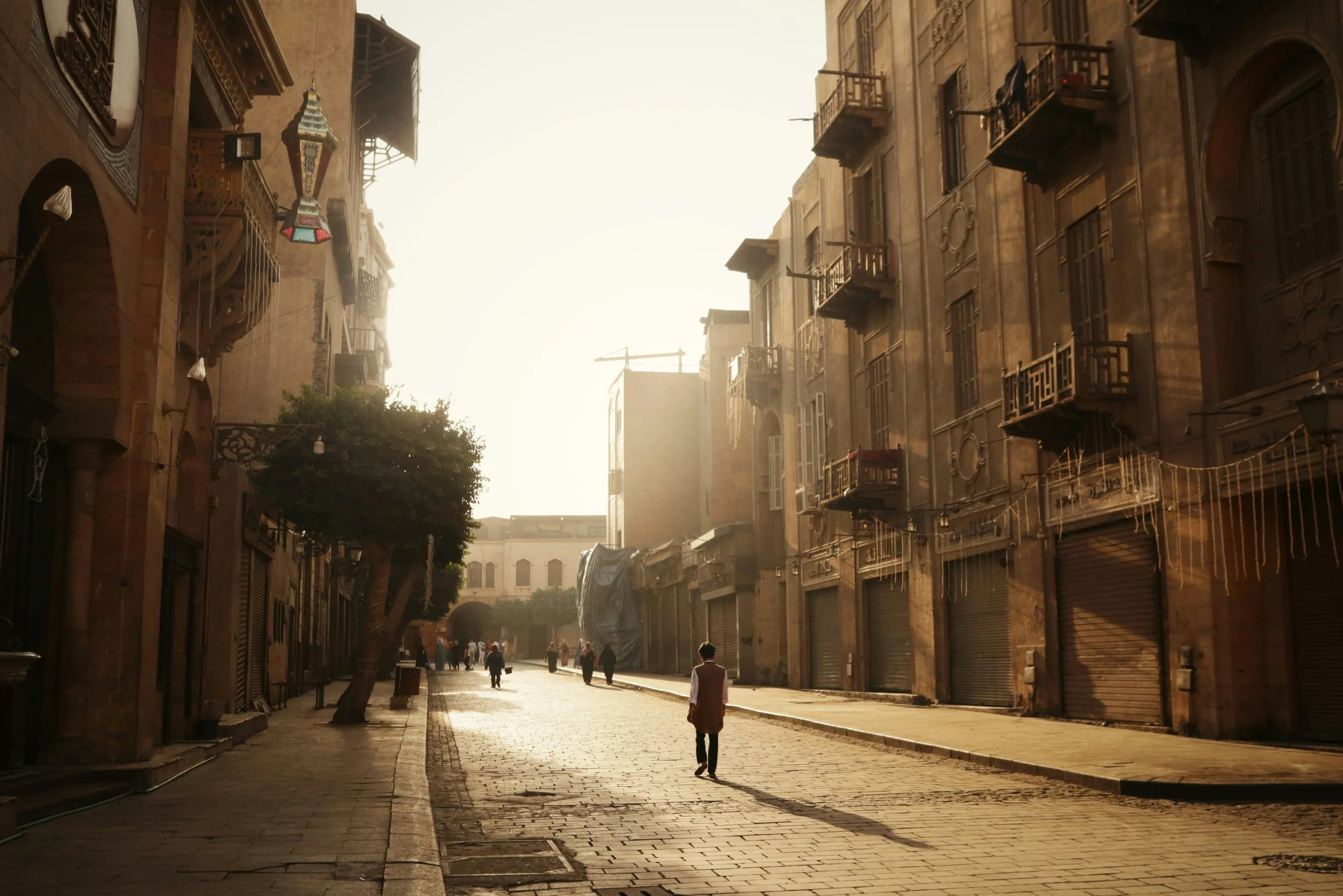
Designated a UNESCO World Heritage Site, this district dates back to the Fatimid dynasty in the 10th century and remains one of the most densely layered historic areas in the Islamic world. Here, minarets pierce the skyline, alleyways twist unexpectedly, and the call to prayer rolls across rooftops five times a day.
Staying in Islamic Cairo means choosing atmosphere over convenience — and history over polish.
Why Stay in Islamic Cairo?
This is the deepest cultural immersion you’ll find in the city.
You’ll wake to the sound of shop shutters opening in centuries-old lanes. You’ll pass carved wooden mashrabiya balconies and sandstone façades on your way to breakfast. And you’ll be within walking distance of some of Cairo’s most significant mosques, madrasas, and markets.
If your trip is centred on architecture, photography, and understanding Egypt’s Islamic heritage, this district places you directly inside it.
What It’s Like to Stay Here
Islamic Cairo is dense, textured, and alive from morning until late evening.
Streets can be narrow and busy, particularly around market areas. Vehicles are limited in some lanes, so you may need to walk short distances from drop-off points. Accommodation is typically boutique guesthouses or restored heritage properties rather than large international hotels.
Evenings feel atmospheric. Lantern light spills from shopfronts. Tea houses fill with conversation. The skyline glows with illuminated minarets.
Comfort levels vary — some properties are beautifully restored; others are more basic. It’s essential to check recent reviews before booking.
Key Highlights Nearby
This neighbourhood is packed with significant landmarks, many within walking distance of each other.
Al-Azhar Mosque — Founded in 970 AD, it is one of the oldest universities in the world and a central institution in Islamic scholarship.
Khan el-Khalili — A vast and historic souk dating back to the 14th century. Expect spices, jewellery, brassware, textiles, and plenty of negotiation.
Mosque of Muhammad Ali — Located within the Citadel of Saladin, this Ottoman-style mosque offers sweeping views over Cairo.
Al-Muizz Street — Often described as one of the greatest concentrations of medieval Islamic architecture in the world. Walking this street feels like moving through an open-air museum.
Entry fees for individual mosques and historic sites typically range between EGP 60–200 (approximately £1–£3 / €1–€3 / $1–$4), though combination tickets are sometimes available.
Food and Drink Scene
Dining in Islamic Cairo leans traditional and atmospheric rather than contemporary.
Naguib Mahfouz Café (inside Khan el-Khalili) — Named after Egypt’s Nobel Prize-winning author, this long-standing restaurant is known for classic Egyptian dishes in an ornate setting.
El Fishawy Café — Operating for over 200 years, this iconic coffeehouse is famous for mint tea and strong Arabic coffee served beneath mirrored ceilings.
Khan El Khalili Restaurant & Naguib Mahfouz Restaurant — Good for traditional mezze and grilled meats in historic surroundings.
Street food is abundant — expect taameya (Egyptian falafel), shawarma, fresh bread, and sweet pastries. This area is less about rooftop cocktails and more about tea, coffee, and simple local fare.
Alcohol options are limited compared to Zamalek or Downtown, as this is a more traditional district.
Who It Suits
Culture-focused travellers
Photographers
History enthusiasts
Visitors comfortable with lively, busy environments
If you want to feel immersed in Cairo’s historic soul, this is the district that delivers.
Trade-Offs to Consider
Fewer luxury hotel options
Narrow streets can make transport logistics slower
Noise from markets and early morning activity
Limited nightlife beyond traditional cafés
Islamic Cairo isn’t polished or curated — it’s lived-in history. Staying here means trading convenience for depth, and comfort for character. For the right traveller, that trade is more than worth it.
Giza (Pyramids Area)
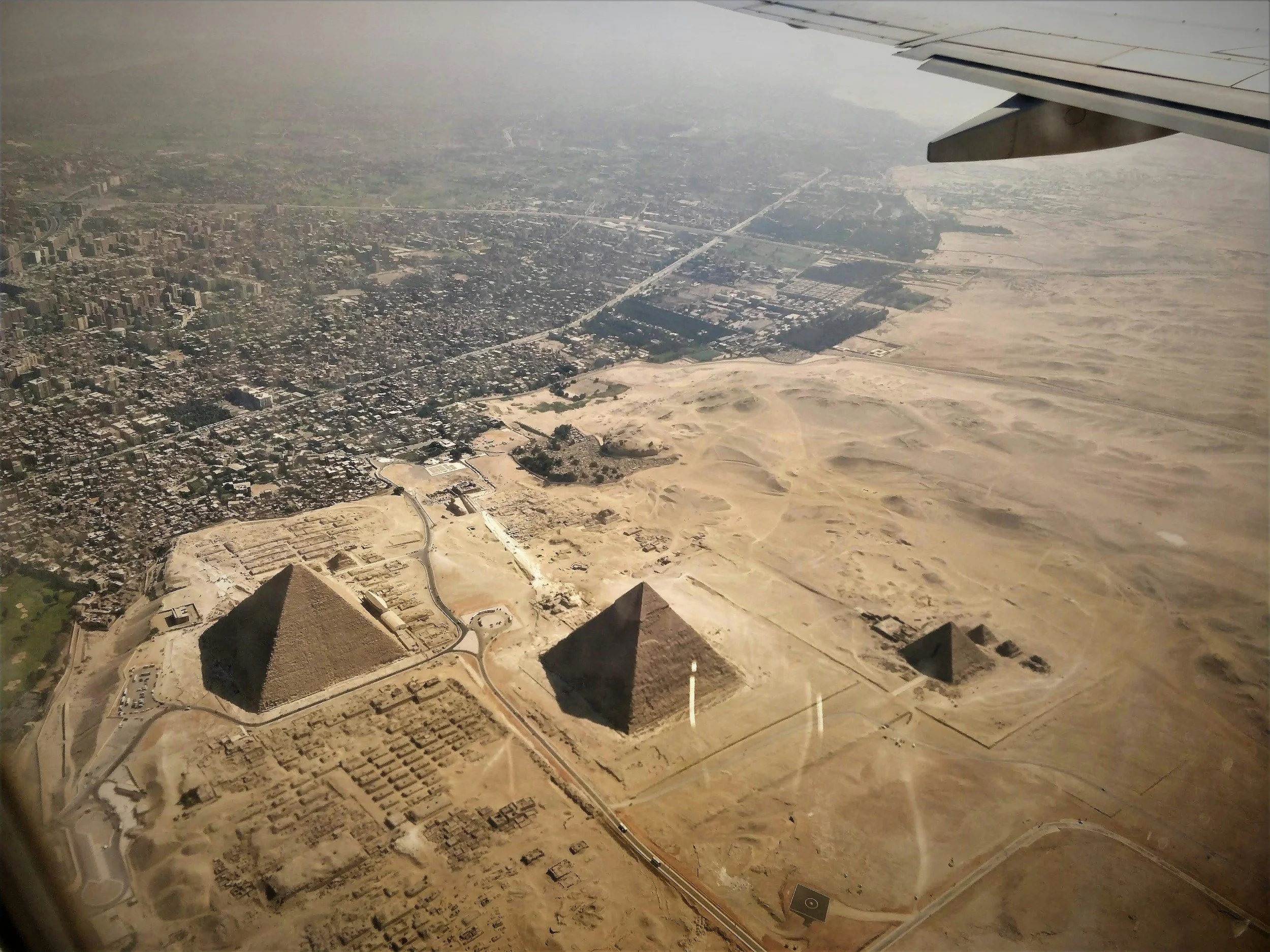
Giza sits on the western edge of Greater Cairo, where the city gradually thins and the desert begins. It’s here that one of the world’s most recognisable skylines rises from the sand — the pyramids, impossibly close to apartment blocks and roadside cafés.
Staying in Giza is a very different experience from basing yourself in central Cairo. It’s less about urban life and more about proximity to ancient wonders. If your trip to Egypt is built around the pyramids, this is the neighbourhood that puts them on your doorstep.
Why Stay in Giza?
The primary reason is simple: views.
Waking up and seeing the pyramids from your balcony is a bucket-list moment for many travellers. Staying here also allows you to reach the archaeological site early — before tour buses arrive and temperatures climb.
You’ll also be close to the new Grand Egyptian Museum, located near the Giza Plateau. Once fully operational, it will be one of the largest archaeological museums in the world, housing thousands of ancient artefacts including the complete Tutankhamun collection.
If your focus is ancient Egypt rather than contemporary Cairo, Giza makes logistical sense.
What It’s Like to Stay Here
Giza feels more local and less polished than Zamalek, and more suburban than Downtown.
Streets near the pyramids can be busy with tour vehicles, souvenir vendors, and camel handlers during the day, but evenings tend to quieten. Many hotels and guesthouses are clustered along streets facing the Giza Plateau, designed to maximise pyramid views from rooftops.
Accommodation ranges from simple budget guesthouses to well-reviewed boutique hotels with panoramic terraces. Large international chains are fewer here than in central Cairo.
It’s important to manage expectations: this is not a desert oasis removed from urban life. The pyramids rise dramatically — but just beyond them are neighbourhoods, shops, and daily life continuing as normal.
Key Highlights Nearby
This area is home to Egypt’s most iconic landmarks.
Great Pyramid of Giza — The last remaining wonder of the ancient world, built around 2560 BC for Pharaoh Khufu.
Great Sphinx of Giza — The colossal limestone statue with a lion’s body and human head, believed to represent Pharaoh Khafre.
Giza Plateau — Encompassing the three main pyramids (Khufu, Khafre, and Menkaure) and smaller satellite pyramids and tombs.
Entry to the Giza Plateau typically costs around EGP 240–360 (approximately £4–£6 / €4–€6 / $5–$7), with additional tickets required to enter specific pyramids.
Grand Egyptian Museum — Located just outside the plateau, this vast modern complex is gradually opening galleries and is set to become the primary home for many of Egypt’s most significant artefacts.
Being based here allows you to visit the site early (gates usually open around 8am), which makes a significant difference in both crowd levels and heat.
Food and Drink Scene
Dining in Giza is largely hotel-based or centred around rooftop terraces with pyramid views.
Notable options include:
9 Pyramids Lounge — Located inside the archaeological site, offering views directly across the pyramids. It’s popular for lunch after exploring.
The rooftop restaurants along Al Haram Street — Many boutique hotels operate terraces specifically positioned for sunrise and sunset dining.
Felfela (Giza branch) — A reliable option for traditional Egyptian cuisine.
Expect straightforward menus: grilled meats, mezze, koshary, shawarma, and Egyptian breakfasts. The scene is less diverse than Zamalek or Downtown, and nightlife is limited.
For wider restaurant variety, you’ll likely travel into central Cairo.
Who It Suits
Travellers focused primarily on the pyramids
Short-stay visitors (1–2 nights)
Photographers seeking sunrise or sunset shots
Early risers wanting to beat tour groups
If seeing the pyramids is the emotional centre of your trip, staying here amplifies that experience.
Trade-Offs to Consider
45–90 minutes from central Cairo depending on traffic
Fewer dining and nightlife options
Surrounding streets can feel less polished
Less access to other major Cairo attractions
Giza offers proximity over diversity. It’s not the most rounded base for exploring the wider city — but if waking up to one of the Seven Wonders of the Ancient World is your priority, few places on Earth compete.
Garden City
Tucked along a bend of the Nile just south of Downtown, Garden City feels like a quieter counterpoint to Cairo’s intensity. Originally developed in the early 20th century as an upscale residential quarter, it’s known for its grand villas, embassies, and riverfront position.
If Downtown is energetic and Zamalek is balanced, Garden City is refined. It’s central, but it doesn’t shout.
Why Stay in Garden City?
Garden City offers proximity without the full force of Downtown’s chaos.
You’re within walking distance of Tahrir Square and a short drive from major landmarks, yet the streets feel noticeably calmer. Its diplomatic character — home to numerous embassies and official residences — gives the area a sense of security and order.
It’s also one of the best areas in Cairo for Nile-facing luxury hotels. If river views and a polished stay are priorities, this neighbourhood delivers.
What It’s Like to Stay Here
Garden City’s layout is more residential and less commercial than surrounding districts. Streets curve gently rather than running in rigid grids, and many buildings date back to the early 1900s, with ornate façades and balconies.
It’s quieter at night than Downtown, with fewer street vendors and less pedestrian traffic. That doesn’t mean it’s silent — this is still central Cairo — but the atmosphere feels more contained.
Accommodation here leans toward the higher end. You’ll find international-standard hotels with strong amenities, riverside dining, and concierge services rather than backpacker hostels or budget guesthouses.
Key Highlights Nearby
Garden City isn’t packed with headline attractions, but its location gives you easy access to several key sites.
Tahrir Square — Around 10–15 minutes on foot from parts of the neighbourhood.
Egyptian Museum — Easily reachable by car or a longer walk depending on your exact base.
Nile Corniche — Ideal for early morning or evening strolls along the river.
Manial Palace — Located just across the river, this lesser-visited palace complex blends Ottoman, Persian, and Moorish influences and is worth considering if you’re staying nearby.
Garden City works particularly well as a logistical base — close enough to everything, without sitting directly inside the busiest zones.
Food and Drink Scene
Dining here is largely anchored around hotel restaurants and upscale venues.
Notable spots include:
Zitouni (at the Four Seasons Nile Plaza) — Known for its Egyptian buffet and Nile views, offering refined takes on traditional dishes.
8 Restaurant (also Four Seasons Nile Plaza) — Cantonese cuisine in a sleek setting.
The Blue Restaurant & Grill — European-inspired fine dining with river views.
Rooftop lounges within Nile-facing hotels — Popular for sunset drinks overlooking the river.
While you won’t find the same density of independent cafés as in Zamalek, Garden City is well-suited for travellers who prioritise comfort and service.
Who It Suits
Luxury travellers
Business travellers
Couples seeking a refined stay
Visitors who want central access without full immersion in chaos
If you want to be close to Cairo’s highlights but retreat somewhere calm each evening, Garden City strikes that balance.
Trade-Offs to Consider
Higher accommodation costs
Limited budget options
Fewer independent cafés and nightlife spots
Less “local street energy” compared to Downtown or Islamic Cairo
Garden City offers ease. It may not have the layered character of Islamic Cairo or the cultural buzz of Zamalek, but it provides comfort, river views, and strong central positioning — a composed base in a city that rarely slows down.
Other Areas to Know About
Cairo is vast, and while the previous neighbourhoods suit most short-stay visitors, there are several other districts you’ll likely hear about. These areas aren’t necessarily the best base for first-time travellers — but depending on your priorities, they may make sense.
Maadi
Located south of central Cairo along the Nile, Maadi is known for its leafy streets, international schools, and large expat community.
It feels suburban, relaxed, and noticeably greener than much of the city. You’ll find cafés, international restaurants, and quieter residential roads — a very different pace from Downtown or Islamic Cairo.
Maadi works well for:
Longer stays
Remote workers
Families
Travellers returning to Cairo who want calm over centrality
The trade-off is distance. Expect 30–60 minutes to reach central attractions depending on traffic.
Heliopolis
Situated northeast of central Cairo and closer to the airport, Heliopolis is one of the city’s older suburbs, known for its distinctive early 20th-century architecture and wide avenues.
It feels more structured and less chaotic than central Cairo, with shopping malls, restaurants, and residential blocks dominating the landscape.
Heliopolis may suit:
Travellers with early or late flights
Business visitors
Repeat visitors exploring beyond the main tourist zones
However, it’s not ideal for short sightseeing trips focused on the pyramids or Islamic Cairo, as you’ll face longer cross-city journeys.
New Cairo
New Cairo lies east of the historic city and represents modern, planned expansion — gated communities, large villas, shopping centres, and wide roads.
It feels very different from what most travellers imagine when picturing Cairo. There’s little historic atmosphere, but infrastructure is modern and space is abundant.
New Cairo is best for:
Long-term stays
Business trips
Visitors prioritising modern amenities
For first-time visitors wanting historic immersion, it’s generally too far removed from Cairo’s core landmarks.
Which Neighbourhood Is Right for You?
Choosing the right base comes down to priorities.
If it’s your first time in Cairo and you want balance → Zamalek
If you want to be immersed in historic urban energy → Downtown Cairo
If medieval streets and architectural depth are your focus → Islamic Cairo
If waking up to pyramid views is non-negotiable → Giza
If you prefer a refined, riverfront stay → Garden City
There isn’t a universal “best” area — only the one that aligns with how you want to experience the city.
Where First-Time Visitors Often Stay (And Why It’s Tricky)
Many travellers book accommodation purely based on a “pyramid view” photo without realising how far Giza is from the rest of Cairo’s major attractions. Others assume the city is walkable in the way European capitals are.
Cairo doesn’t function like that.
Traffic is unpredictable. Distances matter. Staying in the wrong place can mean spending hours each day in transit.
It’s also important to check recent reviews carefully. Some buildings in older districts vary significantly in quality, and photos don’t always tell the full story.
Planning with awareness — rather than just visuals — makes a noticeable difference here.
Getting Around Cairo
Cairo isn’t a walking city in the traditional sense, but it’s manageable with the right approach.
Uber is widely used and often the most straightforward way to move between districts.
The Cairo Metro is inexpensive and useful for certain routes, though coverage is limited for tourists.
Traffic peaks between roughly 8–10am and 4–8pm — plan longer journeys outside these windows if possible.
Crossing roads requires confidence and patience — follow locals and move steadily rather than hesitating.
Allow extra time for everything. Cairo operates on its own rhythm.
“Cairo doesn’t reveal itself all at once. It unfolds in layers — ancient, colonial, modern — and each neighbourhood offers a different doorway into the city.
Choose Zamalek and you’ll experience balance: leafy streets, strong dining, and a softer landing into one of Africa’s largest capitals. Base yourself in Downtown and you’re stepping directly into Cairo’s political and cultural heartbeat. Stay in Islamic Cairo and you’ll wake to minarets and centuries of history woven into daily life. Opt for Giza and the pyramids become part of your morning routine. Settle in Garden City and the Nile becomes your backdrop.
There is no perfect neighbourhood — only the one that matches the pace and purpose of your trip.
Cairo rewards curiosity, patience, and perspective. It isn’t always smooth or simple, but that’s part of its magnetism. Choose your base wisely, allow extra time for everything, and lean into the rhythm rather than resisting it.
Because once Cairo clicks — once you stop trying to control it and start moving with it — it becomes one of the most fascinating cities in the world.
Ready to explore it properly?”