Dubai: Neighbourhoods Guide
Dubai is a city best understood in layers. Scratch beneath the skyline and you’ll find a place shaped as much by wind-tower courtyards and trading creeks as it is by glass towers and beachfront resorts. To experience Dubai properly, you need to look at it neighbourhood by neighbourhood — because here, where you stay and where you spend your time genuinely defines the trip.
One moment you’re wandering quiet lanes where the city began, crossing the creek by wooden abra as traders have done for generations. The next, you’re watching the sun dip behind futuristic towers, or walking a palm-lined promenade with the Arabian Gulf at your feet. Old and new don’t compete in Dubai — they sit side by side, often just a few Metro stops apart.
This guide breaks Dubai down by its key neighbourhoods, each with its own rhythm, personality, and purpose. From cultural quarters and creative districts to beachside communities and resort-style escapes, we’ll help you understand what each area offers, who it’s best for, and how it fits into the bigger picture of the city.
Whether you’re visiting for the first time, returning to see a different side of Dubai, or trying to decide where to base yourself, this neighbourhood-by-neighbourhood approach will help you build a trip that feels intentional — not just impressive.
Let’s dive in.
Downtown Dubai
Downtown Dubai is the city at its most cinematic. Built around some of the world’s most recognisable modern landmarks, this neighbourhood represents Dubai’s rapid transformation from desert trading post to global city. Everything here feels deliberate — wide boulevards, reflective towers, and carefully curated public spaces — designed to showcase scale, ambition, and spectacle.
It’s not the most intimate or traditionally local part of Dubai, but it is one of the most memorable. For first-time visitors especially, Downtown offers an immediate sense of the city’s energy and confidence, with major sights clustered into a surprisingly walkable area by Dubai standards.
What to Expect
Downtown runs on a steady rhythm from morning to late evening. During the day, it’s calmer, with visitors exploring landmarks and locals moving between offices and cafés. After sunset, the neighbourhood shifts — lights come on, fountains start flowing, and the area fills with people heading out for dinner or evening strolls.
The atmosphere is polished and international. You’ll hear dozens of languages, see a mix of residents and travellers, and notice that much of life here revolves around indoor spaces — malls, hotels, and restaurants — particularly during the hotter months.
Highlights and Experiences
Downtown is packed with headline experiences, many within walking distance of each other. Watching the Dubai Fountain after dark is one of the city’s most iconic moments, especially when combined with a lakeside walk. For skyline views, observation decks and rooftop terraces offer sweeping perspectives across the city, particularly striking at sunset.
Dubai Mall, while undeniably busy, is worth experiencing beyond shopping alone — it’s home to cafés overlooking the fountains, entertainment venues, and easy access to Burj Lake. Early mornings are ideal for quieter walks around the area, when the scale of the architecture feels more impressive without the crowds.
Food and Drink Scene
The food scene in Downtown is heavily international and leans towards the upscale end. You’ll find refined Middle Eastern restaurants alongside Japanese, Italian, French, and contemporary fusion dining, many located within hotels or overlooking the lake.
Cafés are plentiful and tend to be stylish rather than purely functional — good for relaxed mornings or people-watching. Rooftop lounges and hotel bars are particularly popular in the evenings, offering skyline views and a more social atmosphere. While prices are higher than in other parts of the city, Downtown is one of the best areas for a “special” meal or celebratory night out.
Where to Stay
Accommodation in Downtown is dominated by luxury hotels and serviced apartments, many offering direct views of the skyline or Burj Lake. This makes it an excellent base for short stays or first-time visits, especially if you want to minimise travel time between major sights.
Serviced apartments are a good option for longer stays, offering more space and kitchen facilities while still keeping you central. Budget accommodation is limited here, and travellers watching costs may find better value in nearby neighbourhoods with Metro access.
World Locals Tip
Downtown rewards early starts and late finishes. Visit major sights first thing in the morning for cooler temperatures and fewer crowds, then return in the evening for fountains, skyline views, and dinner. Midday is best reserved for indoor attractions or a long café break.
Dubai Marina and JBR
Dubai Marina and JBR showcase a different side of the city — one shaped by water, walkable promenades, and an outdoors-first lifestyle. Built around a man-made canal and stretching down to the beachfront, this area blends high-rise living with sea views, cafés, and a noticeably more relaxed pace than Downtown.
For many travellers, this is where Dubai feels most liveable. It’s social without being overwhelming, polished but less formal, and particularly appealing if you want to balance sightseeing with beach time.
What to Expect
Life in the Marina revolves around the water. Mornings are calm, with runners, dog walkers, and café-goers along the promenade. By afternoon and evening, the neighbourhood becomes lively, especially around JBR, where beachgoers, families, and travellers gather for sunset and dinner.
The atmosphere is international and youthful, with a mix of long-term expats, digital nomads, and visitors. Compared to Downtown, it feels more casual and residential, with a strong focus on outdoor spaces — especially during the cooler months.
Highlights and Experiences
The Marina Walk is the backbone of the neighbourhood, ideal for long strolls, people-watching, and waterfront dining. Boat cruises and water taxis offer a different perspective of the skyline, while JBR Beach provides easy access to the sea without needing a resort pass.
Beach clubs, parasailing, paddleboarding, and jet-skiing are all popular here, particularly around JBR. In the evenings, the beachfront promenade comes alive with street performers, pop-up stalls, and diners spilling out onto terraces. It’s one of the best areas in Dubai for a relaxed, unstructured evening.
Food and Drink Scene
Dining in the Marina and JBR is varied and approachable. Expect a mix of casual cafés, international restaurants, and beachfront dining, with plenty of options for breakfast, brunch, and sunset drinks. The brunch culture here is strong, especially on weekends, with many venues offering relaxed, social settings rather than formal fine dining.
While there are upscale options, prices tend to be slightly more forgiving than Downtown, particularly away from the beachfront. It’s an easy area to eat well without planning too far ahead — ideal for spontaneous meals and café hopping.
Where to Stay
Accommodation here ranges from mid-range hotels to luxury high-rises and serviced apartments. Many travellers choose the Marina for longer stays, thanks to the balance of space, amenities, and walkability. Serviced apartments are especially popular, offering balconies, marina views, and access to pools and gyms.
JBR leans more resort-style, with beachfront hotels offering direct access to the sand. Budget options are limited, but overall value is often better here than in Downtown for the amount of space and facilities you get.
World Locals Tip
If you’re staying in this area, choose accommodation closer to Marina Walk or JBR Beach rather than the outer edges — it makes a big difference to walkability. For quieter moments, explore early mornings or late evenings when the promenade is calmer and the heat has eased.
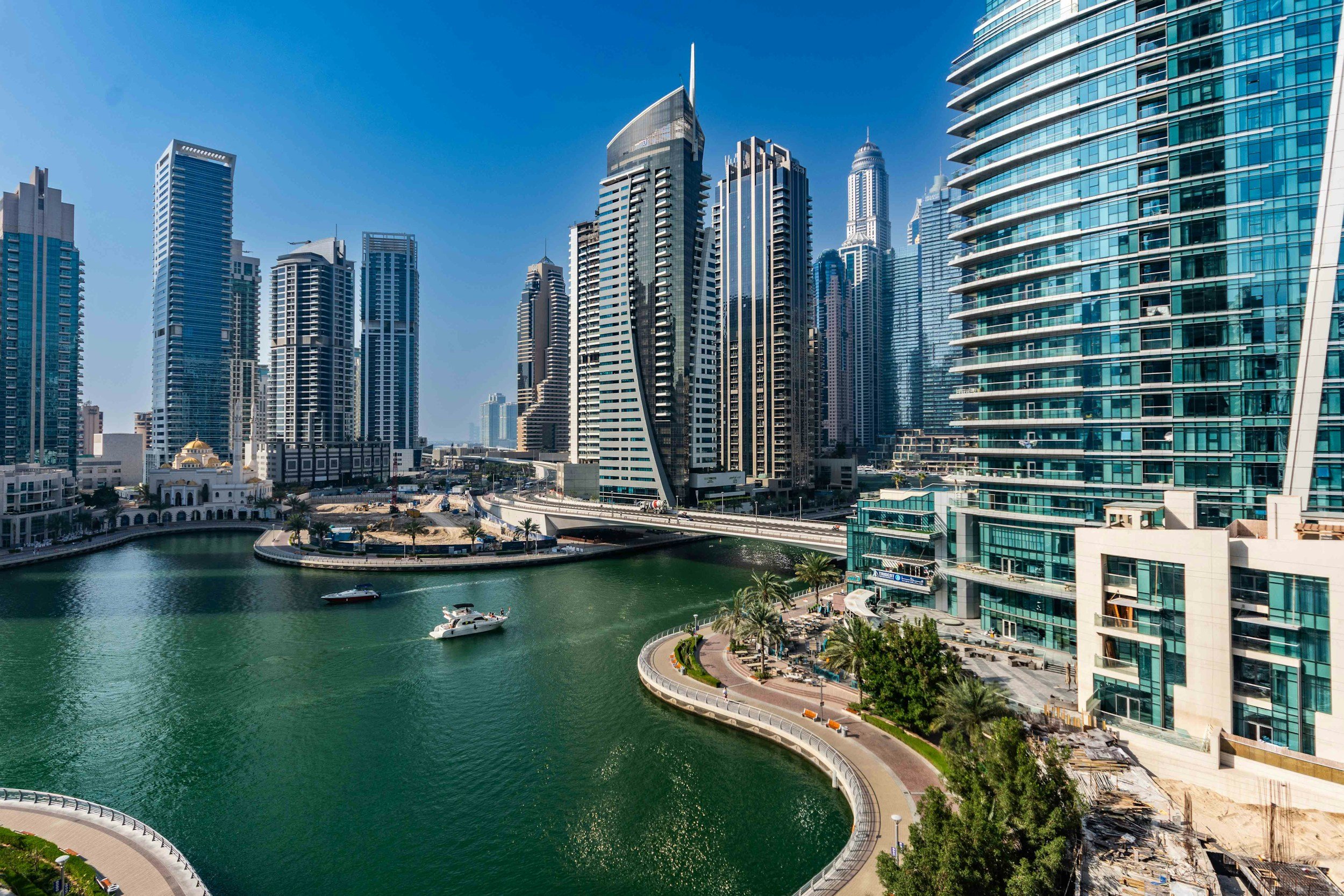
Dubai Marina.
Old Dubai: Deira and Bur Dubai
Old Dubai is where the city’s story begins. Long before glass towers and man-made islands, Dubai grew along the banks of the creek as a trading port linking Arabia, East Africa, Persia, and the Indian subcontinent. Deira and Bur Dubai still carry that legacy today — busy, lived-in, and deeply connected to everyday life in the city.
This part of Dubai feels worlds away from Downtown and the Marina. It’s louder, messier, and far more local, offering a glimpse into the rhythms of the city that existed long before tourism took centre stage.
What to Expect
Expect energy, movement, and sensory overload — especially in Deira. Streets are packed with shops, markets, cafés, and people going about their day. Bur Dubai, on the opposite side of the creek, feels slightly calmer but equally rooted in local life.
This is a working part of the city, home to long-established communities and small family-run businesses. English is widely spoken, but you’ll also hear Arabic, Hindi, Urdu, and countless other languages reflecting Dubai’s trading past and present.
Highlights and Experiences
The Dubai Creek is the heart of Old Dubai. Crossing it by traditional wooden abra is one of the city’s simplest and most authentic experiences, offering views of trading dhows, mosques, and low-rise buildings lining the water.
Deira’s souks are a major draw — gold, spice, textile, and perfume markets packed into narrow lanes where bargaining is expected. In Bur Dubai, heritage areas and creekside walks provide a quieter counterbalance, ideal for slowing down and absorbing the atmosphere.
Wandering without a strict plan works particularly well here. This is a neighbourhood where small moments — a shopkeeper’s greeting, the smell of spices, the sound of the call to prayer — define the experience more than ticking off sights.
Food and Drink Scene
Old Dubai is one of the best places in the city to eat well on a budget. The food scene is unapologetically local and regional, with strong influences from South Asia, Iran, and the wider Middle East.
Expect simple restaurants serving biryani, curries, grilled meats, fresh breads, and sweet chai, often in no-frills settings that prioritise flavour over presentation. This is where many locals and long-term residents eat daily, making it ideal for travellers looking to step away from polished dining rooms and experience Dubai’s everyday food culture.
Where to Stay
Accommodation in Old Dubai is generally more affordable than in newer neighbourhoods. Options range from simple hotels to restored heritage-style stays, particularly around Bur Dubai and the creek.
While you won’t find the luxury resorts of the Marina or Downtown, staying here offers excellent value and a more immersive experience. It’s especially well suited to travellers interested in culture, history, and local life, with good Metro connections to the rest of the city.
World Locals Tip
Visit the souks early in the morning or later in the evening to avoid peak crowds and heat. When crossing the creek by abra, have small change ready and treat the journey as part of the experience, not just transport.
Al Fahidi Historical Neighbourhood
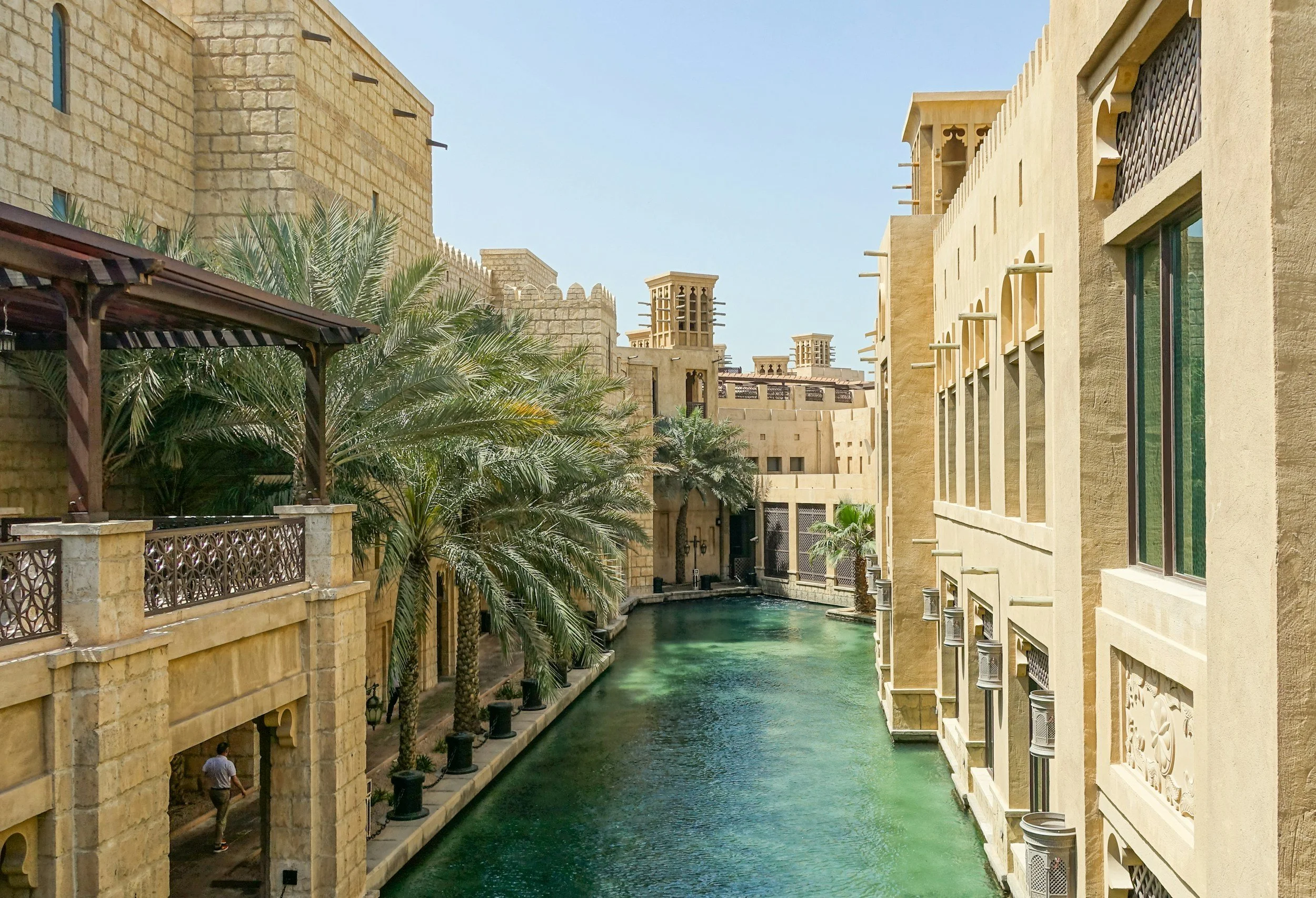
Al Fahidi offers a rare glimpse of Dubai before the skyscrapers. Tucked along the Bur Dubai side of the creek, this restored historic quarter preserves the scale, architecture, and pace of the city as it once was. Wind towers rise above sand-coloured lanes, courtyards sit quietly behind wooden doors, and the noise of modern Dubai fades into the background.
It’s one of the most atmospheric parts of the city — less about spectacle, more about context.
What to Expect
Expect calm, walkable streets and a noticeably slower rhythm. Al Fahidi is compact and best explored on foot, with shaded alleyways offering welcome relief from the heat. The neighbourhood feels contemplative rather than busy, attracting travellers interested in history, architecture, and culture rather than shopping or nightlife.
You’ll find museums, galleries, and cultural centres housed within traditional buildings, many restored using original materials and techniques. It’s quiet during the day and particularly peaceful in the early morning and late afternoon.
Highlights and Experiences
Exploring Al Fahidi is about wandering rather than ticking off sights. The wind towers themselves are a highlight, showcasing early passive cooling techniques long before air conditioning shaped the city.
Small museums and cultural spaces offer insight into Emirati life, trade, and traditions, while courtyards provide spots to pause and take it all in. Walking tours and cultural talks run regularly, adding depth for those keen to learn more about Dubai’s past.
The neighbourhood also connects easily to the creek, making it simple to combine a visit here with an abra crossing or a longer walk through Bur Dubai.
Food and Drink Scene
Food in Al Fahidi leans traditional and relaxed. Courtyard cafés serve Arabic coffee, dates, and light meals, while a handful of long-standing restaurants focus on Emirati and regional dishes.
Dining here is less about choice and more about atmosphere — shaded courtyards, slow lunches, and a sense of stepping away from the city’s usual pace. It’s an ideal place for a calm break between busier neighbourhoods.
Where to Stay
Accommodation options are limited but distinctive. Boutique heritage stays offer a unique chance to sleep within restored traditional buildings, often centred around quiet courtyards.
These stays prioritise character over amenities, making them best suited to travellers who value atmosphere and location rather than pools or large facilities.
World Locals Tip
Visit Al Fahidi early in the morning for cooler temperatures and near-empty lanes, or late afternoon when the light softens and the neighbourhood feels especially photogenic. Pair it with an abra ride across the creek for a perfectly paced half-day.
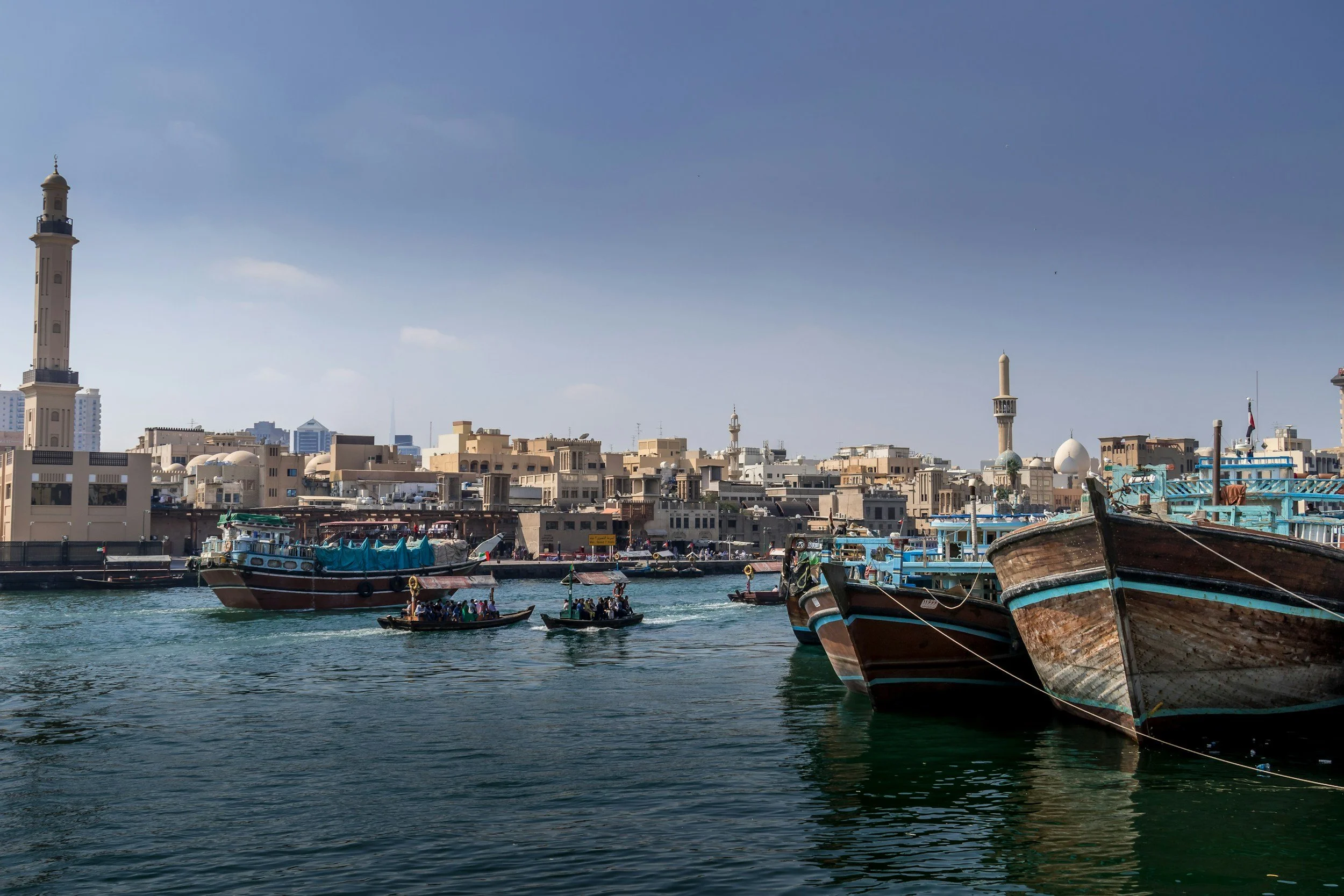
Dubai Creek.
Jumeirah and Umm Suqeim
Jumeirah and Umm Suqeim reveal a quieter, more residential version of Dubai. Stretching along the coast west of Downtown, these neighbouring areas are defined by low-rise villas, public beaches, neighbourhood cafés, and a slower, more everyday rhythm of life. This is where Dubai feels less like a destination and more like a place people actually live.
It’s a welcome contrast to the city’s high-rise districts — open, walkable in parts, and shaped by the sea rather than the skyline.
What to Expect
Expect a calm, laid-back atmosphere with a strong local presence. Streets are wider and greener, traffic is lighter, and daily life revolves around cafés, schools, beaches, and small shopping strips rather than malls.
These neighbourhoods don’t have a single centre; instead, they unfold gradually along the coast. Life here is best enjoyed slowly — morning swims, long lunches, sunset walks — rather than rushing between attractions.
Highlights and Experiences
The beaches are the main draw. Public stretches of sand are clean, spacious, and easily accessible, offering some of the best sunset views in the city. Coastal walks and cycling paths run parallel to the sea, popular with locals in the early mornings and evenings.
Jumeirah and Umm Suqeim are also home to several cultural and community-focused spaces, with mosques, small galleries, and neighbourhood parks dotted throughout. It’s an ideal area for travellers who want to experience Dubai beyond its headline sights.
Food and Drink Scene
The food scene here is understated but strong. Independent cafés, bakeries, and casual restaurants dominate, many catering to locals who visit daily rather than tourists passing through.
You’ll find excellent coffee, relaxed brunch spots, and simple neighbourhood eateries serving Middle Eastern and international food. Dining is generally more affordable than Downtown or the Marina, and far less formal — perfect for easy mornings and unplanned meals.
Where to Stay
Accommodation is more limited than in other parts of the city, but what exists tends to be boutique hotels, smaller resorts, and serviced villas. Staying here suits travellers looking for a quieter base close to the beach, particularly families or longer-term visitors.
Many people choose to stay nearby and visit Jumeirah and Umm Suqeim during the day, combining beach time with cafés and coastal walks.
World Locals Tip
Public beaches here are free and far less crowded than resort beaches. Arrive early morning or just before sunset for the best atmosphere, and don’t underestimate how refreshing the sea breeze can be after a hot day inland.
Palm Jumeirah
Palm Jumeirah is Dubai at its most indulgent. Shaped like a palm tree stretching into the Arabian Gulf, this man-made island is synonymous with luxury, private beaches, and resort-style living. It’s less about sightseeing and more about switching off — a self-contained world designed for relaxation, views, and comfort.
Unlike other neighbourhoods, the Palm doesn’t feel like part of the city’s daily flow. It’s deliberately removed, offering a slower, more insulated experience that contrasts sharply with the buzz of Downtown or the Marina.
What to Expect
Expect calm, space, and a resort-focused atmosphere. Life on the Palm revolves around hotels, beaches, spas, and dining rather than wandering streets or neighbourhood exploration. Movement here is more car- or taxi-based, and days tend to blur into a rhythm of swimming, eating, and lounging.
The pace is noticeably slower, and the crowd more leisure-focused — honeymooners, families, and travellers looking for a polished, stress-free stay rather than cultural immersion.
Highlights and Experiences
Beach time is the main event. Private hotel beaches are immaculately maintained, while views back towards the Dubai skyline are particularly striking at sunset. Many resorts offer water sports, boat trips, and spa experiences, making it easy to spend entire days without leaving the island.
The Palm’s monorail provides scenic transport along the trunk, offering elevated views across the fronds and the Gulf. Even a short ride gives a sense of the scale and ambition behind the project.
Food and Drink Scene
Dining on the Palm is dominated by hotel restaurants, many led by international chefs or focused on high-end global cuisine. Expect polished settings, sea views, and destination-style dining rather than casual neighbourhood spots.
Brunches and evening dining are especially popular here, often paired with beach clubs or lounges. Prices are firmly at the higher end, but the experience — particularly beachfront or sunset dining — is a key part of staying on the Palm.
Where to Stay
Accommodation on Palm Jumeirah is almost entirely luxury-focused. Large resorts, private beach hotels, and serviced residences dominate, many offering all-inclusive-style stays with multiple restaurants and facilities on site.
This is one of the best areas in Dubai for travellers looking to prioritise comfort, privacy, and beach access, though it’s less practical for those wanting to explore multiple neighbourhoods each day.
World Locals Tip
Palm Jumeirah works best when treated as a destination in its own right. If you want a balance between beach time and city exploration, consider splitting your stay — a few nights on the Palm followed by time elsewhere in the city.
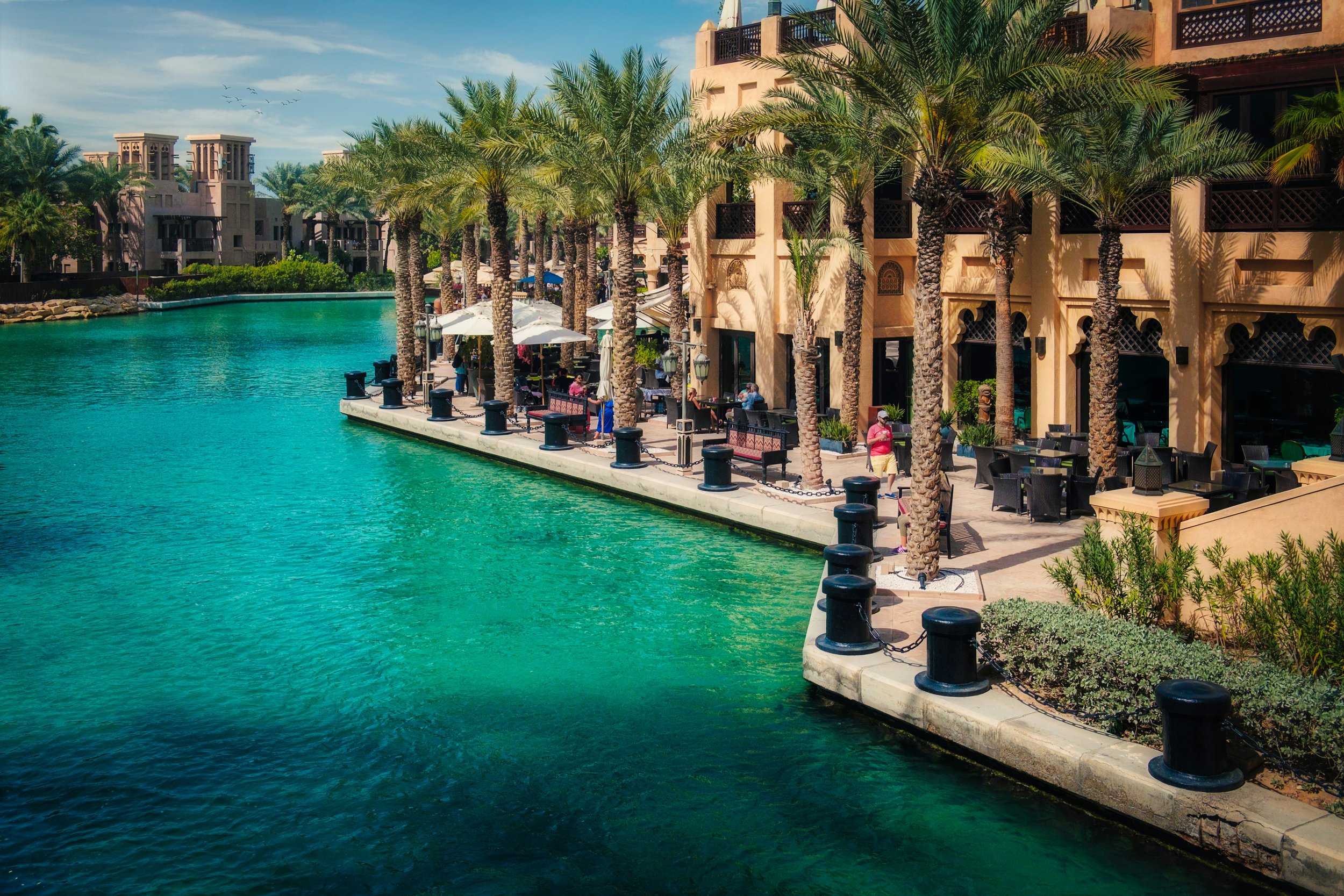
Jumeirah.
Al Quoz
Al Quoz is Dubai stripped back and reimagined. Once a purely industrial area of warehouses and workshops, it has evolved into the city’s creative heart — a place where art galleries, concept cafés, independent studios, and cultural spaces now sit alongside mechanics and storage yards. It’s raw, unconventional, and deliberately unpolished.
This is not a neighbourhood most travellers stumble into by accident, but for those who do, it often becomes one of the most surprising parts of the city.
What to Expect
Expect contrast. One street might be lined with lorries and loading bays, the next with contemporary art spaces and minimalist cafés. Al Quoz feels functional rather than decorative, and that’s part of its appeal — it offers a version of Dubai that feels experimental, lived-in, and creatively driven.
It’s not walkable in the traditional sense, and getting around usually requires taxis or ride-hailing apps. This is a place you visit with intention, rather than wander casually.
Highlights and Experiences
Al Quoz is best known for its art scene. Converted warehouses house galleries showcasing regional and international artists, with regular exhibitions, talks, and openings. Creative hubs and cultural centres add to the mix, making this the focal point for Dubai’s contemporary art and design community.
Beyond galleries, the area is home to concept spaces that blend retail, cafés, studios, and event venues. These multi-use spaces often host pop-ups, markets, and workshops, offering a glimpse into Dubai’s growing creative undercurrent.
Food and Drink Scene
The food scene in Al Quoz is small but distinctive. Expect specialty coffee shops, bakeries, and experimental cafés rather than traditional restaurants. Many spaces are design-led, with a strong focus on quality, community, and atmosphere.
Dining here feels intentional — somewhere you go specifically rather than stumble upon — and it’s one of the best areas in Dubai for travellers looking to step away from hotel dining and discover something more independent.
Where to Stay
Accommodation in Al Quoz is extremely limited, making it better suited as a place to visit rather than base yourself. Most travellers stay in nearby neighbourhoods and make a half-day or full-day trip here to explore galleries and cafés.
World Locals Tip
Visit Al Quoz in the late morning or afternoon, when galleries and cafés are fully open and the area feels more active. Check exhibition schedules in advance — many spaces rotate shows frequently, and timing your visit well can make all the difference.
Choosing the Right Neighbourhood in Dubai
Dubai isn’t a one-size-fits-all city. Where you stay will shape not just your itinerary, but the feel of your entire trip — from how much time you spend in taxis to whether your days revolve around beaches, culture, or late-night dining. Here’s how the city’s neighbourhoods stack up by travel style.
First-Time Visitors
If this is your first time in the city, Downtown Dubai is the easiest introduction. Major landmarks are clustered close together, the area is walkable by Dubai standards, and everything feels immediate and impressive. It’s ideal for short stays where you want maximum impact with minimal planning.
Beach Lovers
For travellers who want sand, sea, and sunset walks built into daily life, Dubai Marina and JBR offers the best balance. You get easy beach access, a lively promenade, and plenty of dining options without being locked into a resort. For a quieter, more residential beach vibe, Jumeirah and Umm Suqeim are a strong alternative.
Luxury and Resort-Style Travellers
If relaxation is the priority, Palm Jumeirah is unmatched. Private beaches, spas, and destination dining make it perfect for honeymooners, families, or travellers looking to slow the pace and stay largely in one place.
Culture-Focused Travellers
For those interested in history, local life, and Dubai’s trading roots, Old Dubai: Deira and Bur Dubai offer the most immersive experience. Pair this with time in Al Fahidi Historical Neighbourhood for a deeper understanding of the city’s past and everyday rhythms.
Creative and Alternative Explorers
If you’re curious about Dubai’s contemporary culture beyond malls and landmarks, Al Quoz is worth building into your trip. While not ideal as a base, it adds texture and surprise — galleries, cafés, and creative spaces that challenge the city’s glossy reputation.
Longer Stays and Remote Workers
Travellers staying longer often gravitate towards areas that feel liveable rather than spectacular. Dubai Marina offers space, amenities, and walkability, while Jumeirah provides a calmer, more residential rhythm close to the sea.
World Locals tip: Dubai works brilliantly as a split stay. Pair a few nights in Downtown or Old Dubai with time by the beach or on the Palm to experience both the city’s intensity and its slower, more relaxed side.
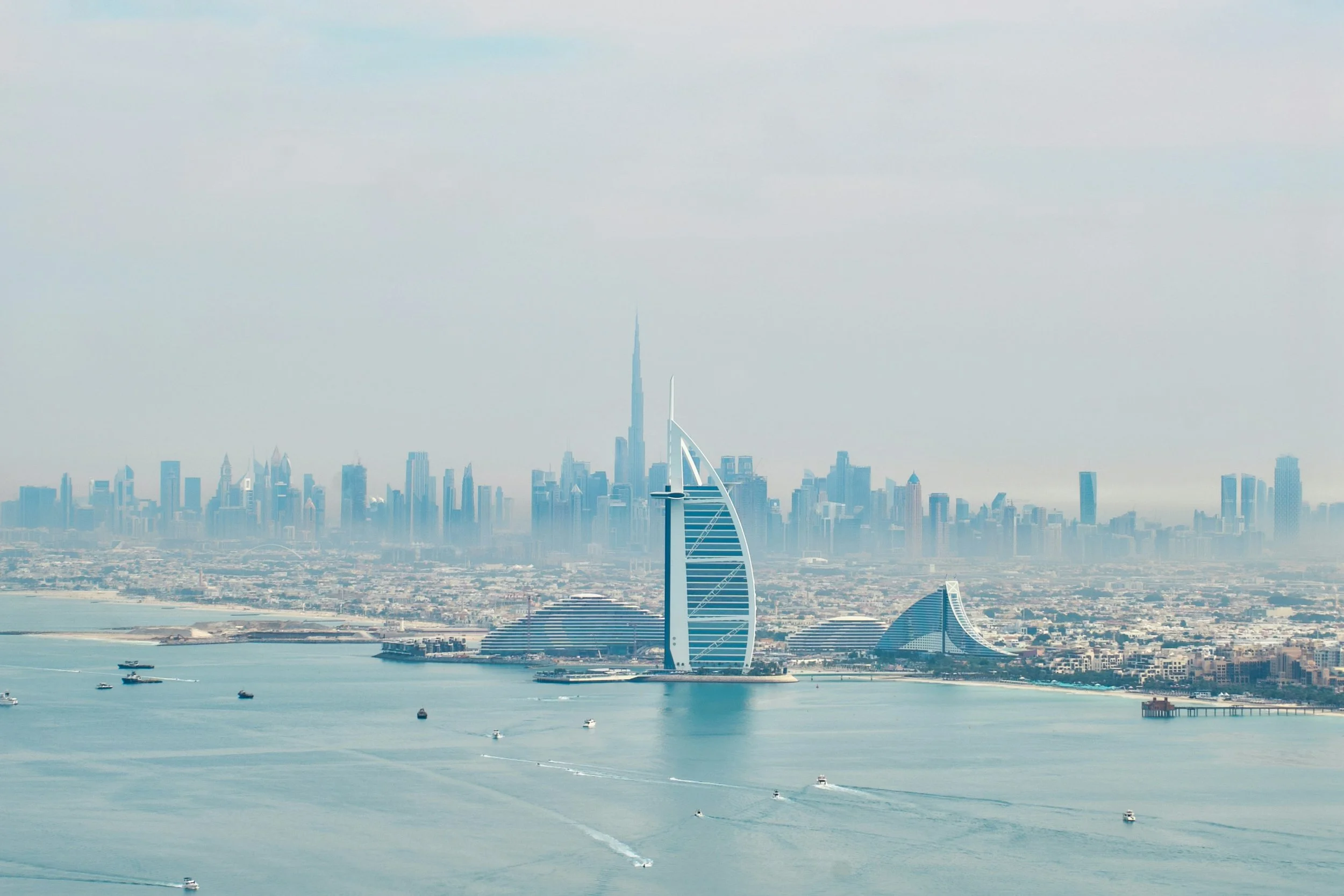
Dubai Skyline.
Getting Around Dubai
Dubai is a sprawling city, and while some neighbourhoods are walkable in pockets, getting around usually means mixing transport options. The good news? It’s efficient, affordable by global city standards, and surprisingly easy once you understand what works where.
Dubai Metro
The Dubai Metro is clean, air-conditioned, and reliable, making it one of the best ways to move between key areas. It’s particularly useful for travelling between the airport, Downtown Dubai, Old Dubai, and parts of the Marina.
Trains run frequently, signage is clear, and stations are well connected to major landmarks. That said, stations can still be a walk away from final destinations, especially in hotter months, so it’s often paired with a short taxi ride at either end.
Taxis and Ride-Hailing
Taxis are everywhere and relatively affordable compared to many major cities. They’re metered, regulated, and generally the most convenient way to get door-to-door, especially when moving between neighbourhoods like Downtown, Jumeirah, and Al Quoz.
Ride-hailing apps such as Careem and Uber are widely used and reliable, with Careem often being the local favourite. For short trips or late evenings, taxis are usually faster and less hassle than public transport.
Walking (When It Works)
Dubai isn’t a walking city in the traditional sense, but certain areas are pedestrian-friendly. Downtown Dubai, Dubai Marina, JBR, Al Fahidi, and parts of Jumeirah are all enjoyable on foot — especially early morning or after sunset.
Outside these pockets, distances grow quickly, pavements can disappear, and heat becomes a factor. Walking works best as a neighbourhood-level activity rather than a citywide way of getting around.
Renting a Car
Car hire makes sense if you’re planning to explore beyond the city — desert drives, day trips, or multiple beach stops — but within Dubai itself, it’s rarely essential. Traffic can be heavy at peak times, parking varies by area, and taxis are often simpler.
Timing Matters
Rush hour (roughly early morning and late afternoon on weekdays) can significantly increase travel times, especially between business districts and residential areas. Planning sightseeing early in the day or later in the evening not only avoids crowds but also cuts down on time spent stuck in traffic.
World Locals tip: Combine transport modes rather than relying on one. Metro for long, direct routes; taxis for flexibility; walking for neighbourhood exploration. Dubai becomes much easier once you stop trying to move everywhere the same way.
“Dubai isn’t a city you experience in one fixed way. It shifts depending on where you base yourself, how you move through it, and which neighbourhoods you choose to prioritise. From heritage quarters along the creek to beachfront promenades, creative warehouse districts, and self-contained resort islands, each area offers a completely different lens on the same city.
What makes Dubai so compelling is that these contrasts don’t compete — they coexist. You can spend the morning wandering wind-tower lanes in Al Fahidi, the afternoon swimming off a public beach in Jumeirah, and the evening watching fountains dance beneath a futuristic skyline. Few cities allow that kind of range with such ease.
The key to enjoying Dubai is intention. Choose neighbourhoods that match how you like to travel, build in time to slow down as well as moments to be impressed, and don’t try to see everything at once. Whether you’re here for culture, comfort, creativity, or coastline, there’s a version of Dubai that fits — and often, the best trips come from stitching two or three of them together.”