London: Food and Drink Guide
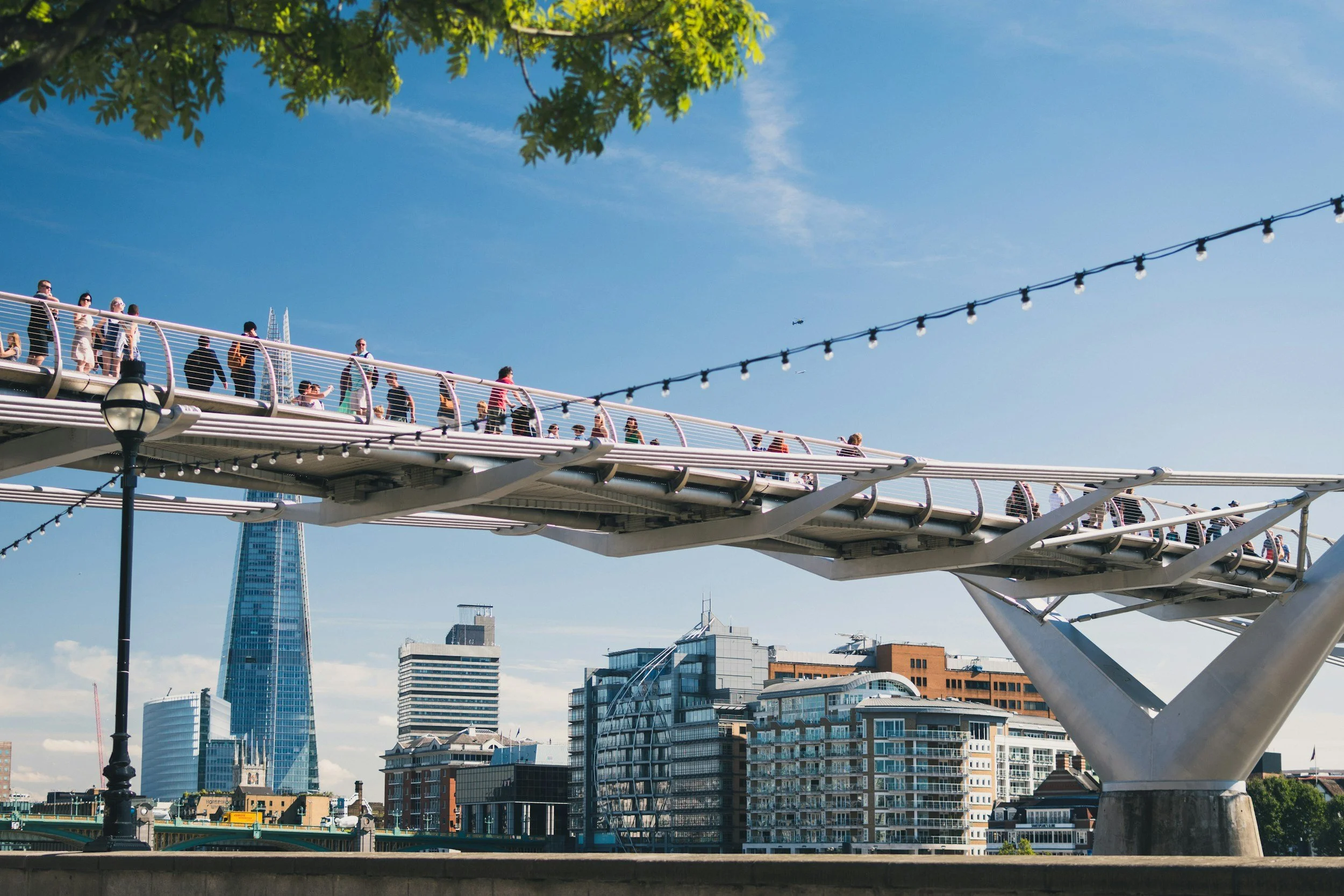
London is one of the world’s great food capitals — a city where centuries-old traditions sit comfortably alongside flavours from every corner of the globe. Walk a few streets and you’ll move from historic pubs serving roast dinners and pies to bustling markets filled with artisanal pastries, Caribbean patties, steaming bowls of ramen, Ethiopian injera, and some of the most exciting modern cooking anywhere in Europe.
London’s food culture is shaped by the people who’ve made the city home. Waves of migration have embedded global influences into everyday eating: South Asian curry houses, Turkish ocakbasi grills, Afro-Caribbean bakeries, Middle Eastern mezze joints, Hong Kong cafés, West African kitchens, and Polish delis — all woven into the city’s neighbourhoods. The result is a food scene defined by diversity, creativity, and constant reinvention.
But London also remains proudly British in its own way. The city still knows the comfort of a proper Full English, the ritual of a Sunday roast, the simple joy of well-fried fish and chips, and the elegance of afternoon tea. Its historic markets — from Borough to Broadway — offer a glimpse into London’s culinary backbone, while new-wave cafés, bakeries, breweries, and natural wine bars show how quickly the city adapts to fresh ideas.
Whether you’re after no-frills legends, fine dining with global recognition, or street food eaten beside a canal, London delivers it all — and then some. This guide takes you through the heart of the city’s food and drink culture, neighbourhood by neighbourhood, plate by plate.
Traditional and Iconic British Eats
London’s classic dishes are woven into the city’s history — born in pubs, cafés, markets, and working-class kitchens, then carried into the present day by both traditional institutions and modern, creative takes. Whether you’re after comfort food, a true local experience, or a nostalgic taste of Britain, these are the dishes that anchor the city’s culinary identity.
Full English Breakfast
A cornerstone of British comfort food, the Full English is hearty, satisfying, and best enjoyed in a proper café or “greasy spoon.” Expect eggs, bacon, sausages, beans, mushrooms, grilled tomatoes, toast, and sometimes black pudding. London does this in two ways:
Classic cafés where breakfasts come on metal counters with builders’ tea.
Modern brunch spots offering elevated versions with sourdough, heritage sausages, and house-made beans.
It’s the perfect dish to set you up for a day of exploring.
Fish and Chips
Few things are more quintessentially British. Traditionally served wrapped in paper, fish and chips is a dish rooted in seaside culture — but London has no shortage of brilliant chippies. You’ll find everything from no-frills shops serving flaky cod and crispy chips to contemporary takes using sustainably sourced fish, triple-cooked potatoes, and homemade tartare.
Pair it with mushy peas for the full experience, and if you can, enjoy it on a park bench or by the river — it always tastes better outdoors.
Sunday Roast
A London ritual. The Sunday roast is more than a meal; it’s a weekly gathering tradition. Expect roast beef, chicken, pork belly, or nut roasts, served with towering Yorkshire puddings, roast potatoes, seasonal veg, gravy, and often a dash of horseradish or apple sauce. Pubs across the city take real pride in their roasts, and many book out weeks in advance.
It’s best enjoyed slowly, ideally in a cosy pub with low lighting, wooden beams, and a crowd of locals winding down their weekend.
Pies and Mash
One of London’s oldest working-class dishes, pies and mash has deep roots in the East End. Minced beef or chicken pies are paired with mashed potatoes and a parsley liquor — a green sauce made from stock and herbs. Traditional pie and mash shops still have their original marble counters and tiled interiors, offering a taste of older London that’s becoming increasingly rare.
It’s simple, comforting, and packed with heritage.
Afternoon Tea
A British classic that London elevates beautifully. Afternoon tea ranges from luxury, high-society experiences in grand hotels to modern, creative versions in boutique cafés. Expect finger sandwiches, scones with clotted cream and jam, pastries, and endless tea refills — often served on ornate tiered stands.
Some spots offer experimental menus with seasonal twists, while others stick to tradition, complete with silver teapots and delicate china. It’s an indulgent way to spend an afternoon and a perfect pause from city exploring.
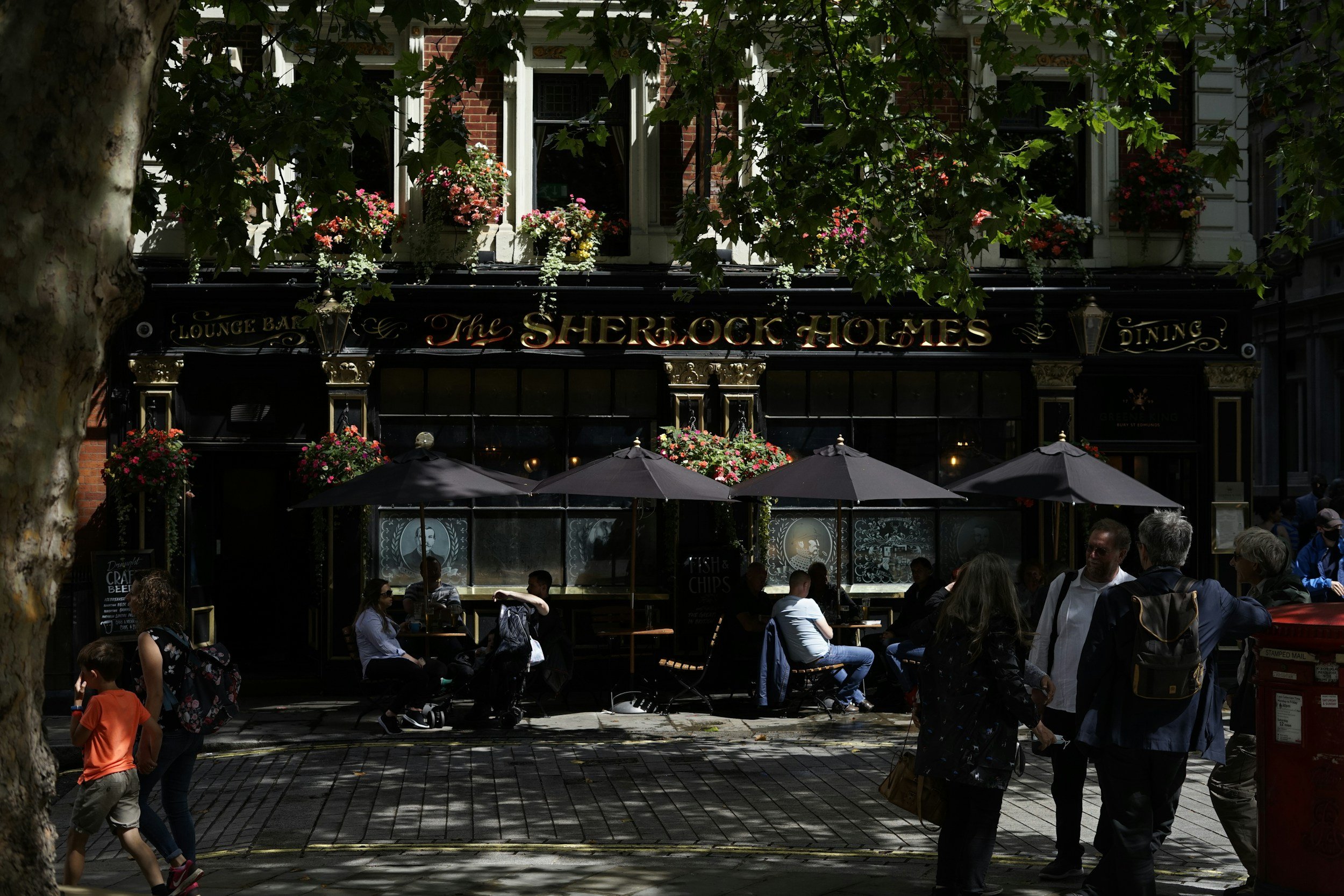
A typical London pub.
Global Flavours Across London
London’s food scene is shaped by the communities who’ve built their lives here. Every neighbourhood carries flavours from around the world — curry houses rooted in South Asian migration, Turkish grills shaped by decades of London’s ocakbasi culture, West African kitchens serving recipes passed down generations, and East Asian eateries that show the city’s deep ties with East and Southeast Asia. Eating globally in London isn’t just possible — it’s essential.
Indian and Pakistani Cuisine
London has some of the best South Asian food outside the Subcontinent. Brick Lane remains iconic for its curry houses, but the city’s modern South Asian dining scene has expanded far beyond. You’ll find regional dishes, tandoori grills, biryanis, chaats, and contemporary takes on classics across Soho, Covent Garden, and the East End.
Southall and Tooting are hotspots for Punjabi, Pakistani, and Sri Lankan food — rich curries, freshly grilled kebabs, dosa, and street snacks served in family-run restaurants. Expect bold spices, long-simmered sauces, and dishes that reflect the diversity of South Asian communities across London.
Caribbean Food
Caribbean cuisine has shaped London’s food identity for decades, especially in Brixton and Notting Hill. Jerk chicken, fried plantain, patties, escovitch fish, curry goat, and ackee and saltfish are staples across these neighbourhoods. Brixton Village is a hub of Afro-Caribbean eateries where you’ll find both classic and modern dishes served with true London-Caribbean warmth.
Food stalls at Notting Hill Carnival each summer add another layer, filling the streets with the smell of smoke, spice, and grilled meats — a celebration of Caribbean heritage woven into the city.
Middle Eastern and Turkish
From traditional mezze to charcoal-grilled kebabs, London’s Middle Eastern and Turkish food scene is exceptional. Green Lanes in Harringay is famous for its Turkish ocakbasi restaurants, filled with the aroma of freshly baked flatbreads and grilled meats. Across the city, Lebanese, Palestinian, Iranian, and Syrian eateries offer everything from shawarma and falafel to saffron rice dishes and fragrant stews.
These spots are often generous, family-run, and perfect for group dining.
East Asian Food
East Asian cuisine is a cornerstone of modern London dining. Chinatown offers dim sum, Cantonese roast meats hanging in windows, and Hong Kong cafés serving comfort classics. Outside the West End, you’ll find outstanding ramen in Soho, Japanese curry and izakaya dishes in the East End, and Korean BBQ and street food around Tottenham, New Malden, and central London.
Bubble tea, Taiwanese bakeries, hotpot restaurants, and regional Chinese kitchens (Sichuan, Xinjiang, Shanghainese) add even more depth, showing London’s broad East Asian culinary connections.
West African Cuisine
London’s West African food scene is thriving, especially in south and north London. Peckham, Tottenham, and Dalston have long housed Nigerian and Ghanaian communities, with local restaurants serving smoky suya, spicy jollof rice, egusi stew, grilled tilapia, puff-puff, and kelewele.
Many West African eateries are proudly no-frills — warm, communal, flavour-first — and increasingly, modern West African chefs are bringing their heritage into contemporary dining spaces across the city.
European Cafés and Bakeries
London’s European influences shine through its cafés and bakeries. French patisseries, Italian delis, Portuguese pastelarias, and Scandinavian bakeries are dotted across the city, especially in Soho, Notting Hill, and Hackney. Expect fresh pastries, excellent coffee, sourdough loaves, focaccia slices, pastel de nata, and seasonal cakes.
This side of London is soft, cosy, and perfect for slow mornings or mid-afternoon pick-me-ups between neighbourhood explorations.
London’s Best Markets
London’s markets are the heart of its food identity — places where traders, bakers, farmers, chefs, and street cooks come together to showcase flavours from across the world. Some are historic institutions that have served the city for centuries; others are modern, creative food halls reinventing how Londoners eat. Each one offers something different, whether you’re after artisan produce, global street food, or a true taste of local life.
Borough Market
One of London’s oldest and most iconic markets, Borough Market sits beneath Victorian railway arches near London Bridge. It’s a sensory rush of aromas, colours, and flavours — bakers selling still-warm sourdough, cheesemongers offering samples of British cheeses, spice traders filling the air with cardamom and chilli, and stalls grilling everything from raclette to chorizo rolls.
Many traders source directly from small farms and producers, giving the market a strong regional connection. Weekends are its busiest, but weekday mornings offer a calmer, more immersive experience. It’s a must-visit for anyone wanting to understand the backbone of British and European produce.
Camden Market
Camden Market is London at its most eclectic — bold colours, global flavours, and constant movement. The food section spills out along the canal, with stalls serving dishes from across the world: Middle Eastern wraps, Venezuelan arepas, Korean fried chicken, fresh pasta, churros, churros, and more. It’s a youthful, energetic market that appeals to travellers looking for quick bites, casual eats, and street food eaten outdoors.
Vintage shops, record stores, and artists’ stalls wrap around the food area, making it a full-day wander if you lean into Camden’s creative spirit.
Maltby Street Market
Tucked under railway arches in Bermondsey, Maltby Street Market is one of London’s most atmospheric weekend food spots. Smaller than Borough Market but just as impressive, it offers a curated line-up of artisan traders selling pastries, raclette, craft gin, cured meats, wood-fired sandwiches, doughnuts, oysters, and more.
The “Ropewalk” — a narrow, bustling lane — fills with locals on weekends. It’s a brilliant example of modern London food culture: high-quality produce, small-batch makers, and a relaxed, community feel.
Broadway Market
Set at the heart of Hackney, Broadway Market captures East London’s creative, laid-back vibe. On Saturdays, the entire street transforms into a lively market filled with independent traders selling handmade pasta, vegan pastries, organic produce, cold-brew coffee, fresh flowers, and international street food.
But Broadway Market is more than its stalls — the surrounding cafés, pubs, delis, and bakeries give it a year-round buzz. It’s the perfect stop before a stroll along Regent’s Canal or a picnic in London Fields.
Seven Dials Market and Other Food Halls
London’s modern food halls have become a huge part of the city’s dining landscape. Seven Dials Market in Covent Garden brings together street food concepts under one roof — from bao buns and tacos to handmade pasta, ice cream, and creative dessert bars.
Other notable food halls include:
Mercato Metropolitano (Elephant and Castle) — community-focused, sustainability-led, with global kitchens.
Boxpark Shoreditch & Croydon — shipping-container street food hubs.
Eataly (Liverpool Street) — Italian produce, wine, and dining.
These food halls are ideal for groups, picky eaters, and travellers wanting to sample multiple dishes in one go.
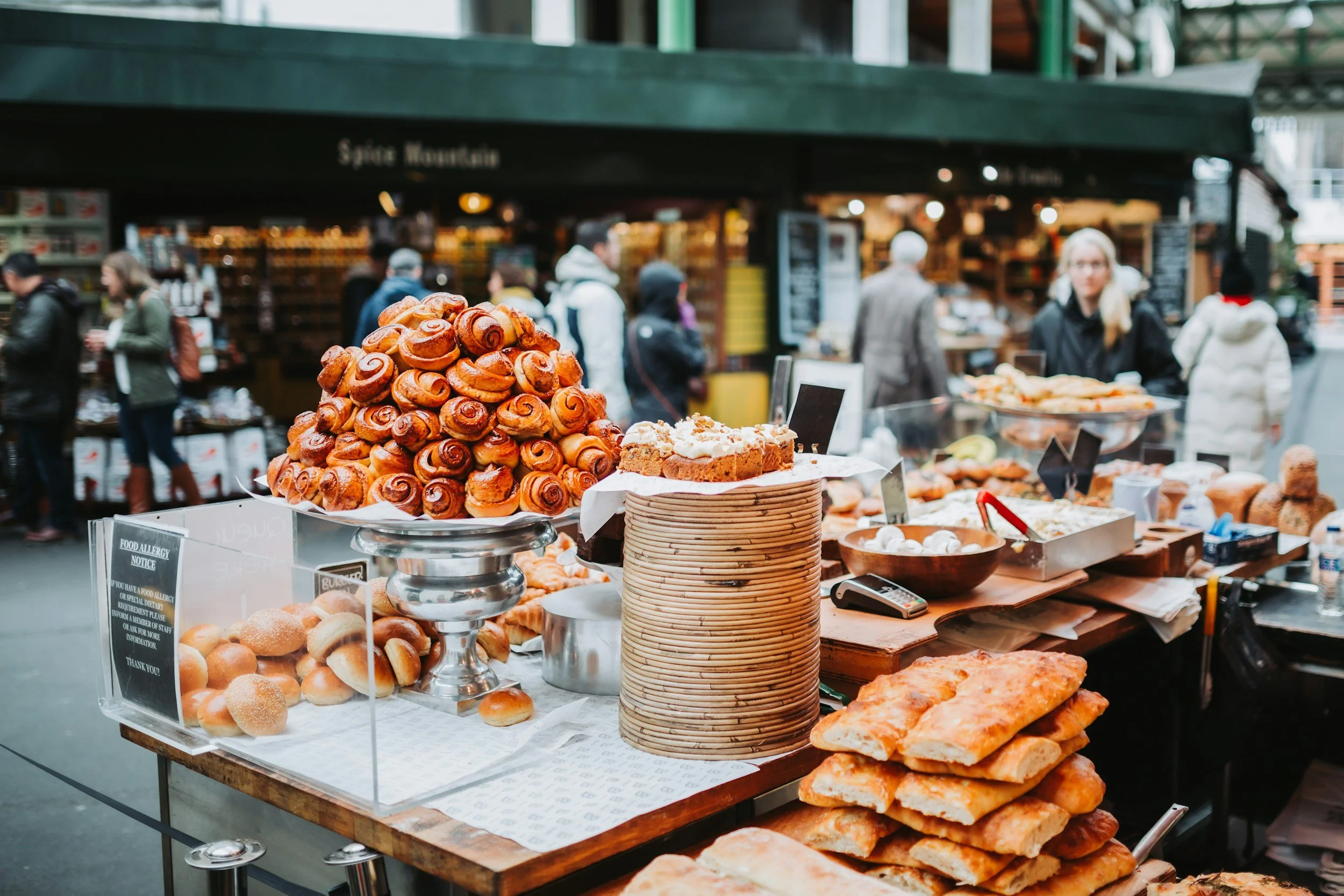
Borough Market.
Where to Drink
London’s drinking culture is woven into its identity — from centuries-old pubs with wooden beams and creaking floors to sleek rooftop cocktail bars, independent breweries tucked beneath railway arches, and cosy neighbourhood wine rooms. Whether you’re after a quiet pint, a craft beer flight, a glass of natural wine, or an expertly mixed cocktail, London’s drinking scene is wonderfully varied and full of personality.
Historic Pubs
London’s pub heritage is unmatched, with many establishments dating back hundreds of years. These are places where low ceilings, fireplaces, and age-worn wooden bars tell a story of generations before.
Across the city you’ll find riverside pubs overlooking the Thames, Victorian taverns decorated with etched glass and brass fittings, and tiny corner locals where regulars still greet each other by name. Expect cask ales, hearty comfort food, and that distinctly British warmth that makes pub culture so integral to London life.
Look for pubs tucked down alleys, beside parks, or along the riverbanks — these often hold the most charm.
Craft Beer and Breweries
London’s craft beer scene has exploded in recent years, and nowhere captures it better than the Bermondsey Beer Mile — a long stretch of railway arches housing independent breweries, each offering tasting flights, seasonal brews, and small-batch experiments. Saturdays see locals hop between taprooms, sampling everything from hazy IPAs to stouts and sour beers.
Beyond Bermondsey, neighbourhood breweries can be found across Hackney, Tottenham, and Wandsworth — many offering open taprooms and brewery tours. It’s the perfect way to explore London’s modern drinking culture at street level.
Wine Bars
London’s wine bars range from candlelit cellars serving old-world classics to laid-back natural wine spots with handwritten chalkboard menus. You’ll find cosy neighbourhood haunts across Soho, Shoreditch, Islington, and Hackney, many focused on small producers and biodynamic bottles.
Expect sharing plates, low-intervention wines, seasonal snacks, and shelves lined with interesting labels. These bars are ideal for slow evenings, relaxed conversations, and discovering varieties you won’t find on supermarket shelves.
Cocktail Bars
London’s cocktail scene is world-class. The city is home to some of the most creative bartenders and mixology teams anywhere, with menus ranging from classic to avant-garde.
Speakeasies hidden behind unmarked doors.
Hotel bars mixing refined classics in glamorous settings.
Rooftop bars offering skyline views over the Thames.
Neighbourhood cocktail spots that feel intimate and understated.
Expect detail-driven drinks, inventive flavour combinations, and beautifully designed spaces that make a night out feel special.
Coffee Culture
London’s coffee scene has matured into something brilliant — especially across East and North London. Specialist roasters in Shoreditch and Hackney draw crowds for flat whites, filter coffees, and buttery pastries. In Fitzrovia and Bloomsbury, small cafés spill onto pavements with locals working, chatting, or reading by the window.
Independent cafés champion single-origin beans, minimalist interiors, and slow mornings. For anyone exploring London neighbourhood by neighbourhood, coffee stops become part of the mini-ritual: brew, walk, discover.
Hidden Gems and Local Favourites
Beyond the headline restaurants and famous markets, London’s true food culture thrives in its neighbourhood joints — the bakeries serving pastries at sunrise, the tiny cafés that spill into side streets, the no-frills eateries packed at lunchtime, and the global kitchens run by families who’ve brought their home recipes to the city. These are the spots that feel lived-in, authentic, and quietly brilliant.
Neighbourhood Bakeries and Pastry Spots
London’s bakery scene has grown massively, and some of the best places aren’t in the tourist districts at all. Tucked into side streets in Hackney, Islington, Peckham, and Notting Hill, you’ll find small bakeries specialising in sourdough, croissants, handmade buns, and seasonal cakes. Expect queues out the door on weekend mornings, the smell of butter lingering in the air, and pastries that disappear by noon.
These bakeries often double as community hubs — the kind of places where people chat to staff, grab a coffee, and settle on a bench outside to watch the neighbourhood wake up.
No-Frills Legends
Every Londoner has a go-to no-frills spot — usually a hole-in-the-wall serving dishes done incredibly well. Think classics like salt-beef sandwiches, steaming bowls of pho, fresh falafel wraps, jerk chicken with smoky charred skin, or humble cafés doing perfect bacon rolls.
These places rarely look fancy from the outside, but inside you’ll find some of the most flavour-packed, comforting food in the city. They’re fast, affordable, and full of regulars — always a good sign.
Family-Run Restaurants
Some of London’s best meals come from long-standing, family-run spots that quietly serve excellent food day after day. You’ll find them across nearly every neighbourhood: Caribbean restaurants in Brixton and Harlesden, Turkish grills in Harringay, Italian trattorias in Clerkenwell, Vietnamese kitchens in Deptford, and neighbourhood curry houses in Tooting and Southall.
The menus tend to be generous, flavourful, and deeply rooted in community history. These are the kinds of places that tell you as much about London as any major sight.
Underrated Cafés and Coffee Shops
While East London gets a lot of attention, some of the city’s best cafés are scattered more widely — beautifully designed spaces in Clerkenwell, cosy garden cafés in Hampstead, and tiny espresso bars hidden down mews streets in Marylebone. Expect thoughtful brewing, homemade pastries, friendly staff, and a quieter alternative to the big-name coffee spots.
They’re perfect for slow mornings, laptop sessions, or resetting between neighbourhood wanders.
Street-Food Stalls and Local Favourites
Beyond the big markets, London is full of street-food gems dotted around smaller neighbourhood hubs. Independent stalls serving handmade dumplings, Nigerian suya, empanadas, bao buns, Ethiopian stews, Lebanese wraps, or fresh seafood rolls pop up in local markets, squares, and under railway arches.
These stalls capture the creativity and global spirit that make London’s food scene so exciting — quick, flavour-driven, and constantly evolving.
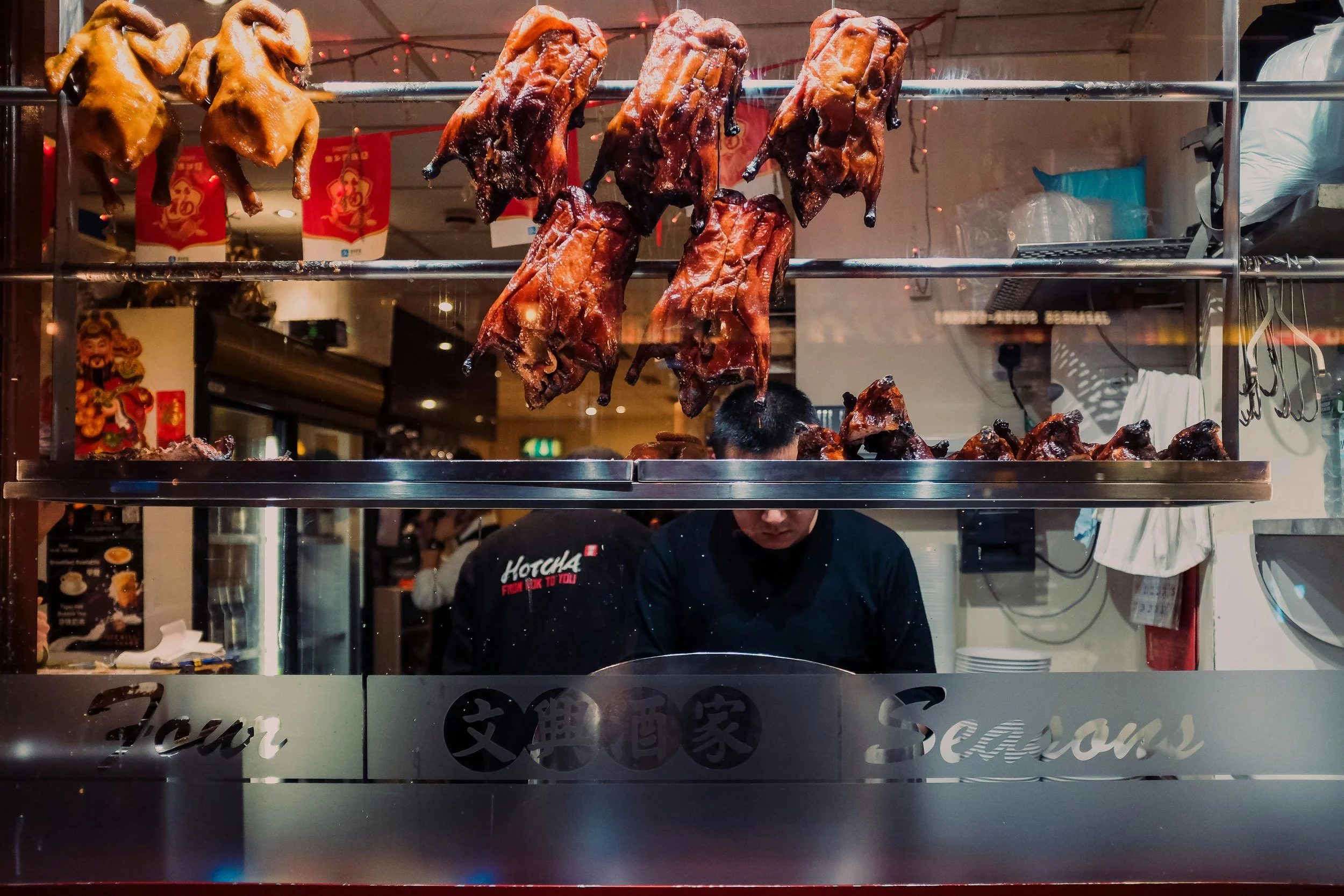
Chinatown.
10 Must-Visit Restaurants in London
1. Mangal 2 — Dalston
Mangal 2 isn’t just a restaurant — it’s part of the fabric of Dalston. For decades, this neighbourhood was home to the twin institutions Mangal 1 and Mangal 2, both classic Turkish ocakbaşı grill houses serving smoky kebabs and charcoal-fired meats to late-night crowds and local families. But the true transformation happened when the second-generation Dirik brothers took over Mangal 2 and reimagined what it could be. Their modern interpretation honours the deep Anatolian heritage of the original while embracing London’s evolving food culture — seasonal British produce, contemporary plating, and a menu that blends tradition with innovation.
Inside, the restaurant feels calm, warm, and understated, with a dining room shaped as much by East London’s creative energy as by the Turkish cooking techniques that define it.
Where is it: Dalston, East London
What to order: Charcoal-grilled lamb chops, mushroom manti, sourdough pide, seasonal vegetable plates
Why it’s worth visiting: It tells a true East London story — immigration, family, reinvention, and food with identity. A modern classic built on old foundations.
2. Dishoom — Shoreditch
Dishoom has grown into a London-wide empire, but its heart has always been in Shoreditch — the first branch that introduced the city to its cinematic reinterpretation of Bombay’s Irani cafés. These cafés were once cultural melting pots in mid-century Mumbai: egalitarian spaces where students, writers, workers, lawyers, artists, and families shared tables under whirring fans. Dishoom captures that atmosphere through careful design — distressed mirrors, vintage portraits, soft amber lighting, retro signage, and the smell of spices simmering in the open kitchen.
Despite being a chain, Dishoom intentionally makes each branch different, and Shoreditch feels the most eclectic — the one that matches its neighbourhood’s creative, bohemian character.
Where is it: Shoreditch, East London
What to order: Bacon naan roll, black daal, chicken ruby, okra fries, bottomless chai
Why it’s worth visiting: It’s one of London’s most consistently excellent dining experiences. Welcoming, nostalgic, flavour-rich, and comfort-driven — the closest thing London has to a universally loved restaurant.
3. Manteca — Shoreditch / Spitalfields
Manteca is a restaurant driven by craft — the craft of butchery, the craft of pasta, and the craft of fire. What sets it apart is its commitment to nose-to-tail cooking, where each cut of meat is used thoughtfully, whether grilled over wood embers or slow-cooked into rich ragùs.
The open kitchen is the heartbeat of the dining room. Flames crackle, pasta is rolled by hand, and the air is filled with the aroma of roasting meats and toasted spices. The food isn’t Italian in a traditional sense — it’s Italian-inspired London cooking: confident, hearty, smoky, and unpretentious.
Where is it: Between Shoreditch and Spitalfields
What to order: Rigatoni with kale and pork, beef ragu pappardelle, nduja mussels, wood-fired focaccia
Why it’s worth visiting: Few restaurants manage to balance finesse with comfort this well. It’s bold, textural, and utterly satisfying — a true East London heavyweight.
4. Ikoyi — Strand
Ikoyi operates on a different plane entirely — one of the most forward-thinking restaurants in Europe. Its foundation lies in West African spice profiles, but its execution is hyper-modern, drawing on global fermentations, ultra-seasonal British produce, and an almost architectural approach to plating.
The dishes are layered, complex, and emotionally resonant — a reinterpretation rather than replication of West African cuisine, shaped by the creativity of chef Jeremy Chan. The dining room mirrors the philosophy: minimalist but luxurious, with soft lighting and a sense of calm that heightens the experience.
Every element feels deliberate, from the ceramics to the pacing of the courses.
Where is it: Strand / Embankment
What to order: The tasting menu — constantly evolving, always surprising
Why it’s worth visiting: It’s not just dinner. It’s art. A restaurant that expands what London dining can be.
5. The Pig and Butcher — Islington
Set in a handsome corner building in Islington, The Pig and Butcher is the definition of a neighbourhood gastropub done right. Specialising in farm-to-table dining, it sources whole animals directly from British farms, breaking them down in-house and tailoring the menu to the seasons.
The result is soulful, deeply British cooking — game in autumn, slow-cooked stews in winter, fresh vegetables and grilled meats in summer. The Sunday roast is a London rite of passage: crisp potatoes, huge Yorkshire puddings, and rich, glossy gravy.
Inside, the pub feels timeless: worn wooden tables, chalkboard menus, warm lighting, and a hum of conversation that makes you want to settle in for hours.
Where is it: Islington, North London
What to order: Sunday roast, seasonal game, sticky toffee pudding
Why it’s worth visiting: It captures the essence of modern British food — unpretentious, seasonal, warm, and quietly exceptional.
6. Blacklock — Shoreditch
Blacklock is loud, generous, and full of life — the kind of place where the tables fill fast, the cocktails flow freely, and the plates arrive piled high. Inspired by the traditions of old London chophouses, it focuses on high-quality meat cooked over charcoal, with an emphasis on flavour rather than fuss.
The “All In” option is legendary: a tower of chops from different cuts, laid over crispy flatbread that soaks up all the juices. The sides are indulgent, the atmosphere buzzing, and the price remarkably reasonable for the quality.
Where is it: Shoreditch, East London
What to order: “All In” chop platter, lamb cutlets, white chocolate cheesecake
Why it’s worth visiting: It’s everything a great London restaurant should be — joyful, communal, bold, and fantastic value.
7. Chishuru — Fitzrovia
Chishuru brings West African cooking into a new spotlight, delivering dishes rooted in heritage but expressed through precise, contemporary technique. The flavours are vivid and layered — fermented elements, grilled meats, complex sauces, deep spices, and thoughtful uses of grains and vegetables.
What makes Chishuru remarkable is its clarity of identity. Each dish feels connected to a story, a memory, or a tradition, but the execution is elegant and modern.
Where is it: Fitzrovia, Central London
What to order: Egusi, suya-spiced meats, plantain variations, tasting menu
Why it’s worth visiting: It’s one of London’s most important new restaurants — a celebration of West African cuisine through a contemporary lens.
8. Kiln — Soho
Kiln is fire-driven, energetic, and unapologetically bold. Counter dining surrounds an open kitchen where chefs cook over flames, stir clay pots, and chop herbs at lightning speed. Northern Thai flavours take centre stage: spicy, smoky, aromatic, and deeply satisfying.
The restaurant is compact and always busy, but that’s part of its charm — it feels like an alleyway kitchen transplanted into the heart of Soho.
Where is it: Soho, Central London
What to order: Clay pot baked glass noodles, aged beef curry, jungle curry
Why it’s worth visiting: For pure flavour, Kiln is one of London’s greats. Intense, exciting, and endlessly memorable.
9. Padella — London Bridge / Shoreditch
Padella is the city’s most beloved pasta bar — famous for its queues, its simplicity, and the sheer quality of its dishes. Everything is made by hand, from the silky dough to the sauces that cling perfectly to each shape.
The style is minimalist, but the flavours are rich, comforting, and beautifully balanced. There’s no ego here — just excellent pasta at prices far below what you’d expect.
Where is it: London Bridge + Shoreditch
What to order: Pici cacio e pepe, beef shin pappardelle, seasonal ravioli
Why it’s worth visiting: It proves that exceptional food doesn’t need to be expensive — one of London’s essential dining experiences.
10. Roti King — Euston
A basement restaurant next to Euston station might not look like much, but Roti King is home to some of the most comforting food in London. The roti is the star: stretched by hand, fried until blistered and flaky, then served with rich Malaysian curries.
The space is tiny, the décor simple, and the queue often long — but the food is extraordinary, the portions generous, and the atmosphere full of warmth.
Where is it: Euston, Central/North London
What to order: Roti canai with dhal or kari, beef rendang, teh tarik
Why it’s worth visiting: It’s the definition of a local legend — affordable, authentic, and unforgettable.
How Much to Budget for Eating and Drinking
London has a reputation for being pricey, but the reality is far more nuanced. The city’s food scene is wonderfully layered — you can eat exceptionally well at any price point, from no-frills Malaysian roti to Michelin-starred tasting menus. Here’s what travellers can realistically expect to spend across different styles of dining, with prices in GBP and approximate equivalents in EUR and USD.
Breakfast and Coffee
Londoners take breakfast seriously — from grab-and-go pastries to leisurely plates at neighbourhood cafés.
Typical costs:
Coffee (flat white, latte, filter): £3.50–£4.50 (€4–€5 / $4.50–$5.70)
Pastries or bakery items: £3–£5 (€3.50–€6 / $3.80–$7)
Café breakfast/brunch: £10–£18 (€12–€21 / $13–$23)
Full English breakfast: £12–£18 (€14–€21 / $15–$23)
Local insight: East London has some of the city’s best independent coffee shops, while classic greasy spoons offer hearty breakfasts at unbeatable value.
Street Food and Markets
London’s markets feed half the city — quick, flavourful, global, and usually affordable.
Typical costs:
Street-food dishes (bao, noodles, burgers, arepas): £8–£12 (€9–€14 / $10–$15)
Market snacks or small plates: £4–£8 (€5–€9 / $5–$10)
Fresh bakery or deli items: £3–£6 (€3.50–€7 / $3.80–$7.50)
Local insight: Borough Market is premium; Maltby Street and Broadway Market often have better value with equally brilliant options.
Casual Dining
Relaxed restaurants, pub food, neighbourhood favourites — the backbone of London eating.
Typical costs:
Mains at casual restaurants: £12–£20 (€14–€23 / $15–$26)
Burgers, ramen, tacos, noodles: £10–£18 (€12–€21 / $13–$23)
Pub classics (pie, fish and chips, roast): £14–£22 (€16–€26 / $18–$29)
Local insight: You’ll find the best value in neighbourhood restaurants outside Zone 1 — think Dalston, Peckham, Camden, Tooting, Hamstead.
Mid-Range Restaurants
Great food without the fine-dining prices — think Manteca, Dishoom, Kiln, or Blacklock.
Typical costs:
Starters: £6–£12 (€7–€14 / $7.50–$15)
Mains: £16–£28 (€18–€33 / $20–$36)
Desserts: £6–£10 (€7–€12 / $7.50–$13)
Meals with drinks: £30–£45 per person (€35–€53 / $38–$57)
Local insight: Book dinners in advance for Soho, Covent Garden and Shoreditch — walk-ins are possible but risky.
High-End and Fine Dining
London is home to some of the world’s most celebrated chefs — from modern tasting menus to classic British institutions.
Typical costs:
Fine-dining lunch: £45–£80 (€53–€94 / $57–$102)
Tasting menus: £90–£160 (€106–€188 / $115–$205)
Top-tier restaurants (e.g., Ikoyi, Core, Gymkhana): £150–£250 (€175–€294 / $190–$320)
Local insight: Many high-end restaurants offer excellent weekday lunch menus at a fraction of dinner prices.
Pubs, Pints and Drinks
London’s pub culture is iconic — cosy corners, riverside terraces, and centuries-old taverns.
Typical costs:
Pint of beer: £6–£7.50 (€7–€9 / $7.50–$9.50)
Glass of wine: £6–£9 (€7–€10.50 / $7.50–$11.50)
Cocktails in central London: £12–£16 (€14–€19 / $15–$21)
Natural wine bars / East London spots: £6.50–£9.50 (€7.50–€11 / $8–$12)
Local insight: Pints are significantly cheaper outside central London — neighbourhood pubs offer the best value.
Cafés, Bakeries and Desserts
From Portuguese pastel de nata to Scandinavian buns and classic British puddings.
Typical costs:
Pastries and buns: £3–£5 (€3.50–€6 / $3.80–$7)
Cakes and desserts: £4–£7 (€5–€8 / $5–$9)
Gelato/ice cream: £3.50–£5 (€4–€6 / $4.50–$7)
Afternoon tea: £35–£70 (€41–€82 / $45–$90)
Local insight: Afternoon tea is a splurge — but neighbourhood bakeries offer equally memorable experiences at everyday prices.
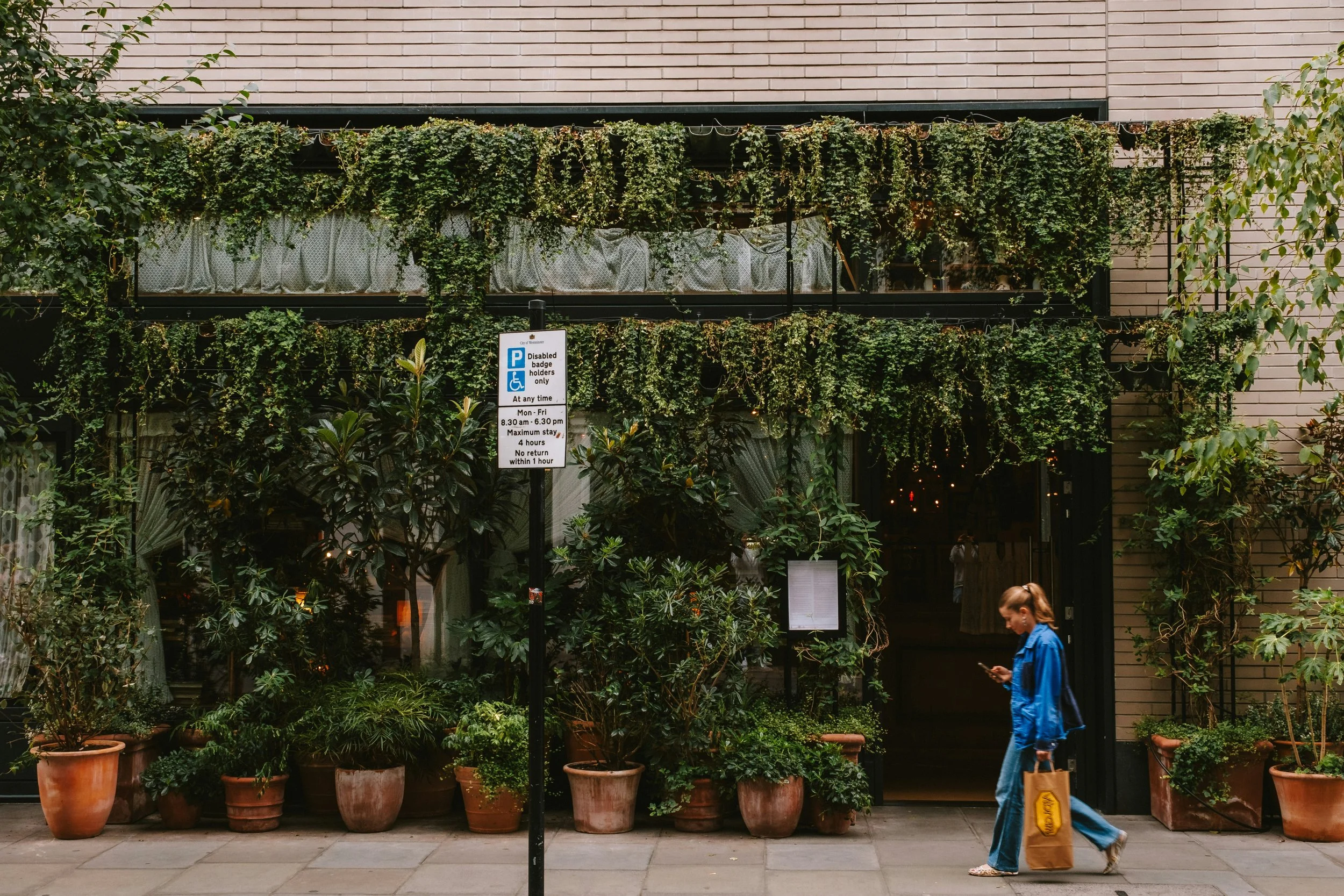
Circolo Popolare, London.
Tips for Eating Like a Local
London’s food scene works on its own rhythm — a mix of global influences, neighbourhood favourites, and city-specific quirks that can shape everything from where to eat to when to go. These insider tips help travellers navigate London like someone who lives here.
Booking Culture
Londoners plan ahead — especially for dinner.
Popular restaurants in Soho, Shoreditch, Fitzrovia, and Covent Garden often fill weeks in advance, particularly on Thursdays to Sundays.
Book ahead: Modern hotspots (like Manteca, Kiln, Chishuru).
Walk-in friendly: Pubs, neighbourhood restaurants, many cafés, and street-food markets.
Hybrid: Places like Dishoom use virtual queues, making walk-ins easier.
Local insight: Weekday lunches are your best chance for spontaneous dining.
Queueing Etiquette
Queues are part of London life — and an acceptable trade-off for great food.
Places like Padella, Roti King, and many market stalls operate almost exclusively on walk-in queues.
Stand on the pavement, not the road.
Keep the queue single-file.
Servers usually manage the line — just follow their lead.
Local insight: At Padella and Roti King, go early or mid-afternoon to avoid peak queues.
Market Timing
Markets can be magical — or overwhelming.
Borough Market: Best on weekday mornings; weekends are packed.
Maltby Street Market: Saturday and Sunday; smaller but excellent value.
Broadway Market: Saturday only; go early for pastries and coffee.
Local insight: For Borough Market, arrive before 11am for the best combo of fresh produce and space to move.
Sunday Roast Traditions
The Sunday roast is sacred. Pubs take it seriously — and locals book ahead.
Roasts usually start around noon and sell out by mid-afternoon.
Meat cuts vary seasonally.
Gravy and Yorkshire pudding quality is a point of pride.
Local insight: The best pubs often stop serving roasts once they’re out — so book early or go right at opening.
How Londoners Actually Eat Out
Londoners tend to:
Eat dinner earlier than Southern Europe (6pm–8pm is standard).
Favour neighbourhood spots during the week and central restaurants on weekends.
Mix cuisines constantly — Caribbean for lunch, Turkish for dinner, Italian for drinks.
Local insight: London’s culinary identity is multicultural; exploring different cuisines across different neighbourhoods is part of the culture.
Service Charge and Tipping
Most restaurants add a 12.5% service charge to the bill automatically.
If it’s included, you don’t need to tip extra.
If it’s not included, tipping 10–12% is standard.
In pubs, tipping is not expected unless you’re ordering food at the table.
Local insight: You can always ask for the service charge to be removed — but locals generally leave it on unless service was poor.
Casual Lunching
London’s best value is often at lunch:
Many fine-dining restaurants offer set menus at a fraction of their evening price.
Markets and food halls shine during the daytime.
Bakeries frequently sell discounted items near closing.
Local insight: A weekday lunch at a high-end restaurant can be one of the best-value meals in the city.
Exploring Neighbourhoods Through Food
London’s diversity is best experienced by eating your way through its districts:
Dalston: Turkish grills, vegan cafés, small plates
Brixton: Afro-Caribbean kitchens, West African food, street eats
Soho: Global fusion, counter dining, late-night noodles
Peckham: Pan-African flavours, sourdough bakeries, natural wine
Camden: Street food, alternative eats
Notting Hill: Delis, brunch cafés, European bakeries
Local insight: The further you wander from the main sightseeing zones, the more interesting (and affordable) the food becomes.
London’s Late-Night Food
The city isn’t 24/7 like New York, but you can still eat well late into the evening:
Chinatown stays open later than most.
Soho has the best after-hours options.
Many doners, bao shops, and noodle spots run till midnight or later.
Local insight: Night Tube weekends make late-night eating easier — especially for Soho and East London.
“London’s food scene is a reflection of the city itself — layered, multicultural, constantly evolving, and endlessly surprising. It’s a place where centuries-old pubs serve roast dinners beside contemporary kitchens pushing global flavours into new territory; where markets hum with energy, tiny basements become cult favourites, and neighbourhood restaurants feel as much a part of the local community as the corner shop.
What makes eating in London special isn’t just the variety — it’s the sense of discovery. One day you can be tasting hand-pulled Malaysian roti in Euston, the next you’re exploring Turkish grill culture in Dalston or diving into modern West African cooking in Fitzrovia. You can wander through Borough Market sampling British cheeses and seasonal produce, then end the evening with natural wine in Hackney or cocktails in Soho. No two meals feel the same.
This guide is a starting point. The real joy of London’s food and drink scene lies in wandering through its neighbourhoods, finding the places that speak to you, and letting curiosity lead the way. Whether you’re seeking comfort classics, creative tasting menus, street food from around the world, or local favourites loved by Londoners, the city has a table waiting for you.
Eat widely, explore boldly, and let London show you its flavour — one neighbourhood at a time.”