Rome: Food and Drink Guide
Food in Rome isn’t something you slot in between sights — it is the structure of the day. Meals here follow a rhythm shaped by habit, tradition and time of day, and understanding that rhythm makes a bigger difference to your experience than knowing the name of any single restaurant.
Roman cooking is famously simple, but it’s also fiercely protected. Dishes are built around a handful of ingredients, prepared in very specific ways, and rarely adapted to suit trends or visitor expectations. What you’ll see on menus today is often what Romans have been eating for generations — not because of nostalgia, but because it works.
This guide is designed to help you eat well in Rome by understanding how Romans eat, not just what to order. From when to drink coffee and how long meals tend to last, to where everyday eating actually happens, the aim is to give you confidence — so you’re not second-guessing menus, timings or etiquette once you arrive.
Approach Rome with a little patience, eat in step with local routines, and the city rewards you generously.
Rome’s food culture at a glance
To eat well in Rome, it helps to understand that this is a city with very strong opinions about food — and very little interest in reinventing it. Roman cuisine is built on tradition, repetition and restraint. Recipes are simple, but the rules around them are not.
Most classic dishes use only a handful of ingredients, which means quality matters and shortcuts are obvious. Pasta sauces are expected to taste a certain way. Cheese choices are deliberate. Substitutions are rarely encouraged. This isn’t about being inflexible — it’s about preserving a food culture that’s rooted in history and habit rather than novelty.
Timing also matters. Romans eat to a daily rhythm that hasn’t changed much over time, and restaurants follow it closely. Kitchens open and close at set hours, menus don’t shift throughout the day, and eating “between meals” is less common than visitors might expect.
Perhaps most importantly, food in Rome is everyday. Even the city’s most famous dishes were born out of practicality — feeding workers, using inexpensive cuts, making the most of limited ingredients. That practicality still shapes how and where Romans eat today.
Once you understand this, menus make more sense, meal times feel less confusing, and eating in Rome becomes far more rewarding — not because it’s flashy, but because it’s deeply consistent and confidently itself.
Coffee culture in Rome
Coffee in Rome is part of the city’s daily infrastructure rather than a slow, social ritual. Locals drink it quickly, often several times a day, and usually standing at the bar. It’s less about the experience and more about keeping the rhythm of the day moving.
Most Romans order simply. An espresso is just caffè. A macchiato is common mid-morning. Cappuccino is firmly a morning drink and rarely ordered after breakfast. Milk-heavy coffees later in the day are unusual, not because they’re forbidden, but because they don’t fit how locals eat.
The bar itself is important. Standing at the counter is faster, cheaper and how most people drink coffee. Sitting down is normal in some places, but it’s slower and often priced higher. Neither is wrong — it’s just useful to know what to expect.
Coffee also happens at specific moments. Early morning with a pastry. Mid-morning between errands. After lunch as a reset. It’s rarely lingered over, and almost never paired with a laptop.
For visitors, the key isn’t copying locals perfectly — it’s understanding the pace. Once you do, coffee stops being confusing and becomes one of the easiest ways to slip into Roman daily life.
Markets and everyday eating
Markets play a quiet but important role in how Rome eats. They aren’t tourist attractions first and foremost — they’re working spaces where locals shop for produce, meat, cheese and prepared foods as part of their regular routine. Even if you’re not cooking for yourself, markets are one of the best places to understand how Roman food culture works day to day.
Most neighbourhood markets are busiest in the morning and close by early afternoon. Shopping is often done for the day rather than the week, and what’s available reflects seasonality rather than choice. You’ll see fewer imported items, more repetition, and a strong emphasis on freshness and familiarity.
Certain markets are easier to drop into than others and help bring Rome’s food culture into focus.
Mercato di Testaccio
This is one of the most useful markets in Rome for visitors. It’s modern, well organised and firmly local, with stalls selling fruit and vegetables, meat, fish, cheese and bread alongside casual lunch counters.
Even if you’re not self-catering, it’s an excellent place to eat. Many Romans come here for lunch during the working week, choosing simple, filling meals rather than sitting down at a restaurant. Late morning is the best time to visit, when the market is active but not rushed.
Campo de' Fiori Market
Campo de’ Fiori is Rome’s most famous outdoor market and the most central. It’s colourful and lively, but it’s also more visitor-oriented than most neighbourhood markets.
It works well as a short stop, particularly in the morning. Prices tend to be higher and many stalls cater to tourists rather than locals, but it still offers useful context for how markets historically functioned in the city.
Mercato Trionfale
Located near the Vatican, Mercato Trionfale is one of Rome’s largest and most traditional markets. It’s very much a local shopping space, with a wide range of produce, meats and regional specialities.
This is a good place to see the ingredients that underpin Roman cooking, from cheeses and cured meats to seasonal vegetables. It’s less polished than Testaccio, but more representative of how Romans actually shop.
Beyond markets, much of Rome’s everyday eating happens in places designed for speed and routine rather than ceremony. Bakeries, pizza al taglio counters and small lunch spots feed people who eat out regularly during the week. Lunch is often substantial and practical, while dinner is slower and more social.
Understanding this split helps explain why Rome doesn’t cater well to all-day dining. Many places specialise in a specific time of day, and kitchens often close between services. Once you align with that rhythm, eating in Rome becomes simpler and far more rewarding.
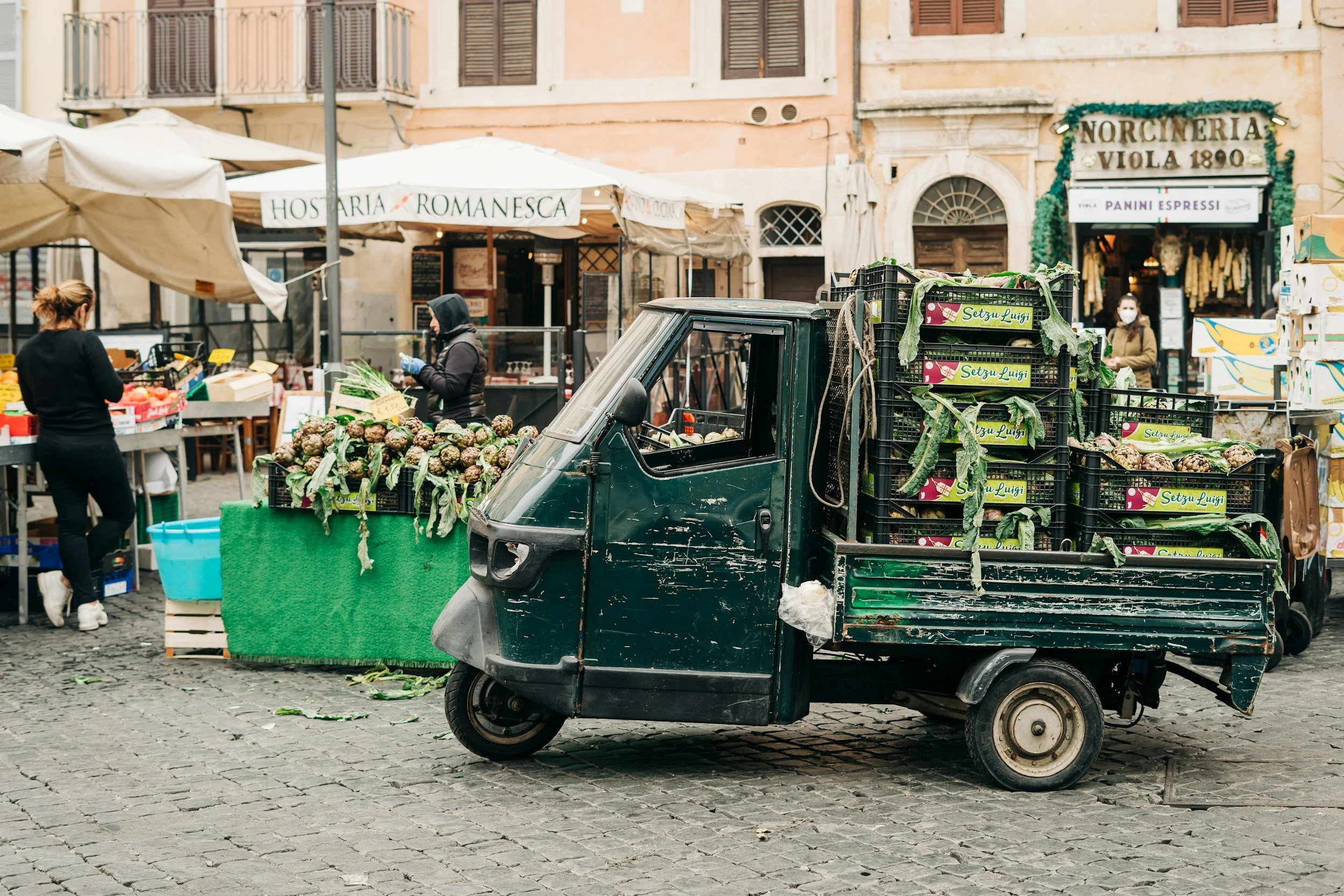
Campo de' Fiori farmers' market.
Iconic Roman dishes (and how to order them)
Roman food is built on a relatively small repertoire, but that repertoire runs deep. Dishes repeat across menus because they’re tied to seasonality, history and habit — not because kitchens lack imagination. Once you understand the logic behind Roman cooking, menus stop feeling limited and start feeling reassuring.
Most traditional dishes fall into three broad categories: pasta, everyday street food, and slow-cooked main courses rooted in cucina povera. Vegetables are never an afterthought, and desserts are intentionally restrained.
The four classic Roman pasta dishes
These are the foundation of Roman cuisine, and they appear so often because they’re expected to. A restaurant that prepares these well doesn’t need to prove much else.
Cacio e pepe
The simplest and most revealing Roman dish. Made with pecorino romano, black pepper and pasta water, it relies entirely on technique. When done properly, the sauce emulsifies into something creamy without cream. When done badly, it splits or clumps. If a restaurant gets this right, it’s usually a good sign.
Carbonara
Eggs, pecorino romano, guanciale and black pepper. No cream, no garlic, no onion. In Rome, carbonara is rich, filling and unapologetically savoury. Portions are often generous, and it’s usually enough as a main meal on its own.
Amatriciana
A tomato-based sauce made with guanciale and pecorino romano. It’s bolder and more assertive than carbonara, and slightly less heavy. You’ll see it everywhere, often served with bucatini.
Gricia
Essentially the base of carbonara without egg. Guanciale, pecorino romano and black pepper. It’s less commonly ordered by visitors, but deeply traditional and a good choice if you want something rich without the heaviness of egg.
These dishes are rarely modified. Asking for changes usually marks you out as a visitor and often makes the dish worse rather than better.
Roman pizza and everyday street food
Much of what Romans eat regularly doesn’t involve sitting down at a restaurant. Everyday food is quick, filling and designed to fit around work and routine.
Pizza al taglio
Sold in rectangular slices and priced by weight, this is one of Rome’s most common meals. Bases are thin and crisp, toppings change with the seasons, and it’s eaten standing or on the go. It works just as well for lunch as it does for a quick dinner.
Supplì
Fried rice balls filled with tomato sauce and mozzarella, sometimes with variations like cacio e pepe or amatriciana fillings. Traditionally eaten as a snack or starter, often alongside pizza.
Fiori di zucca fritti
Zucchini flowers, usually stuffed with mozzarella and anchovy, then fried. Common in spring and early summer, and a good example of how vegetables feature prominently in Roman cooking.
Trapizzino
A more recent Roman invention that combines pizza dough with traditional fillings such as chicken cacciatore or oxtail. While modern, it’s firmly rooted in Roman flavours and widely accepted.
Main courses and traditional Roman meat dishes
Roman cuisine makes extensive use of cuts that were historically inexpensive. These dishes are often slow-cooked, deeply flavoured and tied to specific parts of the city.
Saltimbocca alla romana
Veal topped with prosciutto and sage, cooked quickly in white wine. It’s straightforward, rich and widely available.
Coda alla vaccinara
Braised oxtail cooked slowly with tomato, celery and spices. Strongly associated with Testaccio, this is one of Rome’s most iconic slow-cooked dishes.
Trippa alla romana
Tripe cooked with tomato, mint and pecorino romano. It’s not for everyone, but it’s deeply traditional and still widely eaten.
Abbacchio
Lamb, often roasted or grilled, traditionally eaten in spring. Seasonal menus will often highlight it when it’s available.
These dishes are usually listed under secondi and are often served without sides — vegetables are ordered separately.
Vegetables and side dishes (contorni)
Vegetables are central to Roman meals, but they’re rarely presented as elaborate dishes. Instead, they’re cooked simply and seasoned confidently.
Common contorni include:
Carciofi alla romana – braised artichokes with herbs
Carciofi alla giudia – deep-fried artichokes, crisp and golden
Cicoria ripassata – sautéed chicory with garlic and chilli
Puntarelle – raw chicory with anchovy dressing (seasonal)
These are often some of the best things on the table and are designed to be shared.
Bread, cheese and Roman staples
Bread in Rome is typically unsalted and served automatically. It’s used to mop up sauces rather than eaten on its own. Pecorino romano appears everywhere — sharper and saltier than parmesan, and central to Roman flavour profiles.
Olive oil is used generously, but rarely flavoured or infused. Simplicity is key.
Desserts and sweet traditions
Desserts are not a major focus of Roman dining. Many meals end with coffee rather than something sweet.
That said, a few classics are worth knowing:
Maritozzo – a sweet bun filled with whipped cream, often eaten in the morning
Ricotta-based desserts – reflecting Rome’s long association with sheep’s milk cheeses
Gelato is widely available, but it’s often treated as a separate outing rather than part of a sit-down meal.
How to order like a local
Roman meals don’t need to be elaborate. Many locals order:
One pasta and a vegetable
Or a main course with a side
Sharing is common, especially with vegetables and starters. Lunch is often quicker and more practical; dinner is slower and social but still structured.
If you’re unsure, stick to the classics, avoid substitutions, and trust repetition. In Rome, familiarity is usually a sign that you’re on the right track.
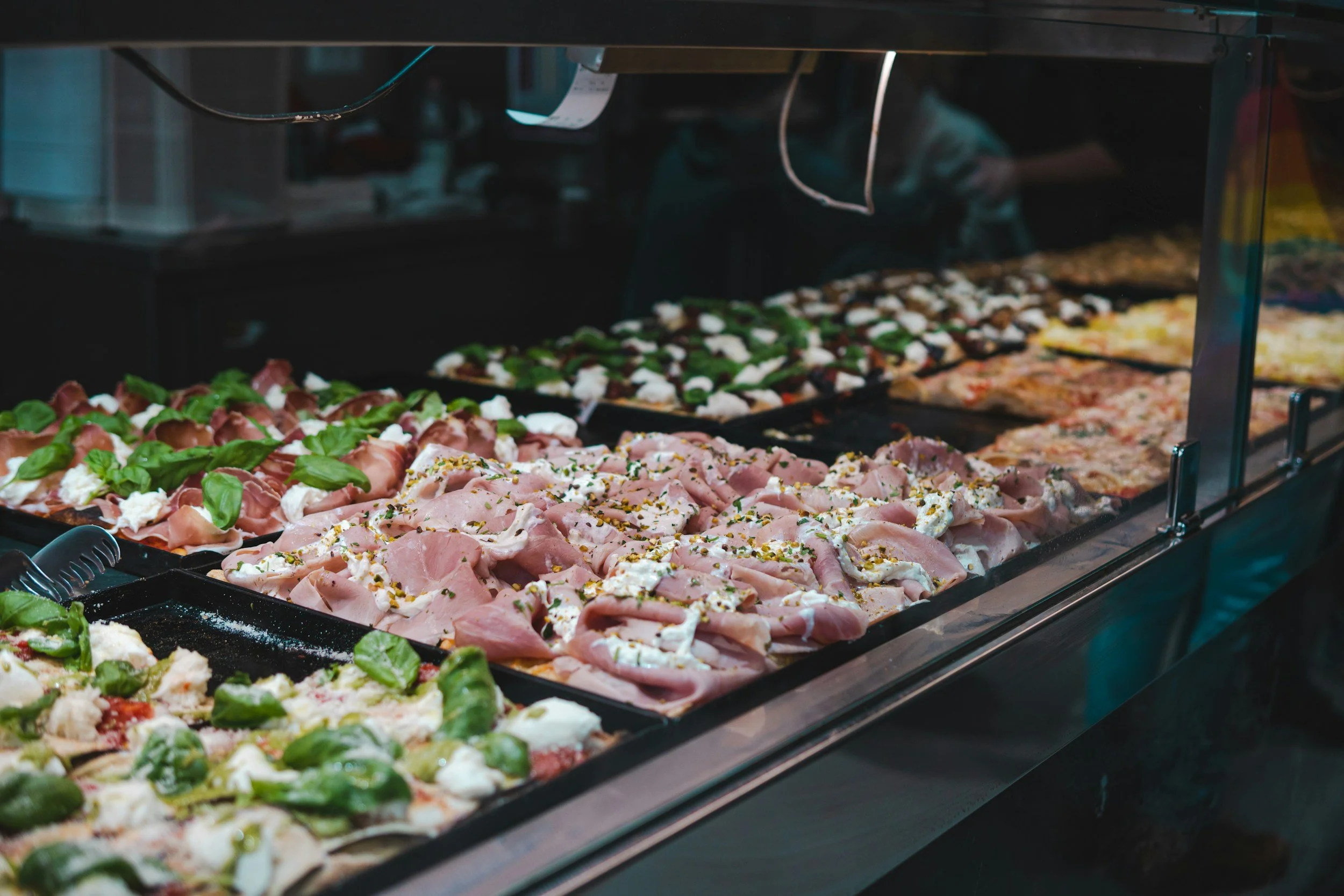
Roman Pizza.
Neighbourhood food scenes
Rome doesn’t organise its food scene around trends or restaurant districts. Instead, different parts of the city emphasise different ways of eating, shaped by history, routine and who lives there. Knowing how this plays out by neighbourhood makes choosing where to eat far easier.
Testaccio
Testaccio is Rome’s most food-driven area, with a reputation built on substance rather than spectacle. Its cooking traditions are closely tied to the old slaughterhouse district, where many classic Roman dishes using off-cuts and slow cooking were refined.
Eating here feels purposeful. Menus are often short, dishes are cooked with confidence, and presentation is secondary to flavour. Lunch plays a particularly important role, with markets and casual spots busy throughout the working week.
Where to eat in Testaccio
Felice a Testaccio – A reference point for classic Roman pasta, particularly cacio e pepe. Reliable, traditional and taken seriously by locals.
Da Remo – Known for thin, crisp Roman-style pizza. Best for a casual dinner rather than a long meal.
Flavio al Velavevodetto – Strong on traditional dishes, including offal-based classics tied to the neighbourhood’s history.
Mercato di Testaccio – Excellent for lunch counters and everyday eating, especially late morning.
If food is central to your Rome trip, Testaccio is one of the most rewarding places to eat — particularly if you value tradition over trend.
Trastevere
Trastevere’s food scene is shaped by its social nature. Dining here is as much about atmosphere as cooking, with evenings stretching late and tables filling quickly. Quality varies more than in Testaccio, especially near the busiest streets, but good choices are still plentiful.
This is an area best suited to relaxed dinners and unhurried evenings rather than targeted food hunting.
Where to eat in Trastevere
Da Enzo al 29 – Small, traditional and popular for a reason. Expect queues and classic Roman dishes done well.
Osteria der Belli – Seafood-leaning Roman cooking with a loyal local following.
Taverna Trilussa – Known for generous portions and a lively, social atmosphere.
Enoteca Ferrara – A solid option for wine-led evenings with food to match.
Trastevere works best when you accept a bit of unpredictability — follow the energy, eat a little later, and settle in for the evening.
Monti
Monti blends traditional Roman cooking with a more contemporary approach. Restaurants here tend to be smaller, more considered, and slightly more experimental — without losing sight of local flavours.
Wine bars play a bigger role, and aperitivo often flows naturally into dinner.
Where to eat in Monti
Ai Tre Scalini – A long-standing wine bar with a strong local crowd and simple food.
La Taverna dei Fori Imperiali – Family-run and traditional, with a loyal following and a no-nonsense menu.
Urbana 47 – A more modern take on Roman and Italian cooking, with a focus on ingredients.
Cuoco & Camicia – Casual, contemporary and popular with locals for relaxed meals.
Monti is a good choice if you want Roman food that respects tradition but feels slightly lighter and more current.
Across all three areas, the difference isn’t just what you eat — it’s how eating fits into the day. Testaccio is food-first and practical. Trastevere is social and evening-led. Monti sits somewhere in between, blending neighbourhood routine with a modern edge.
Cafés and sweet stops
Cafés in Rome are functional rather than indulgent. They exist to keep daily life moving, not to slow it down, and most Romans use them briefly but often. Breakfast is usually sweet, coffee is quick, and lingering is the exception rather than the rule.
Most locals start the day with a coffee and a pastry, often standing at the bar. Savoury breakfasts are rare, and cafés are busiest early in the morning and again mid-morning. By lunchtime, many quieten down as Romans shift towards markets, bakeries or lunch counters.
Sweet treats later in the day tend to happen outside cafés. Bakeries remain important throughout the afternoon, and gelato is often treated as its own outing rather than a dessert ordered at the table.
Where to stop for coffee and something sweet
Sant'Eustachio Il Caffè – One of Rome’s best-known coffee spots, close to the Pantheon. Strong, traditional espresso and a quick, local rhythm.
Tazza d'Oro – Another historic café nearby, popular for espresso and granita di caffè in warmer months.
Pasticceria Regoli – A classic Roman pastry shop known for maritozzi and traditional sweets. Best earlier in the day.
Roscioli Caffè – A good bridge between café and bakery culture, with quality pastries and coffee, particularly useful for a more relaxed breakfast.
Dessert menus in restaurants are often short, and many Romans skip them entirely, opting for coffee instead. This isn’t because desserts aren’t valued — they’re just not the focal point of most meals.
Gelato is the main exception. It’s common to walk for gelato after dinner, especially in the evening, rather than ordering something sweet at the table.
Where to go for gelato
Gelateria del Teatro – Known for seasonal flavours and a focus on ingredients rather than colour or spectacle.
Giolitti – A historic option close to the Pantheon, popular with both locals and visitors.
Approach cafés and sweet stops casually. Drop in, grab what you need, move on. They’re small moments rather than centrepieces — but they’re an essential part of how Rome eats.
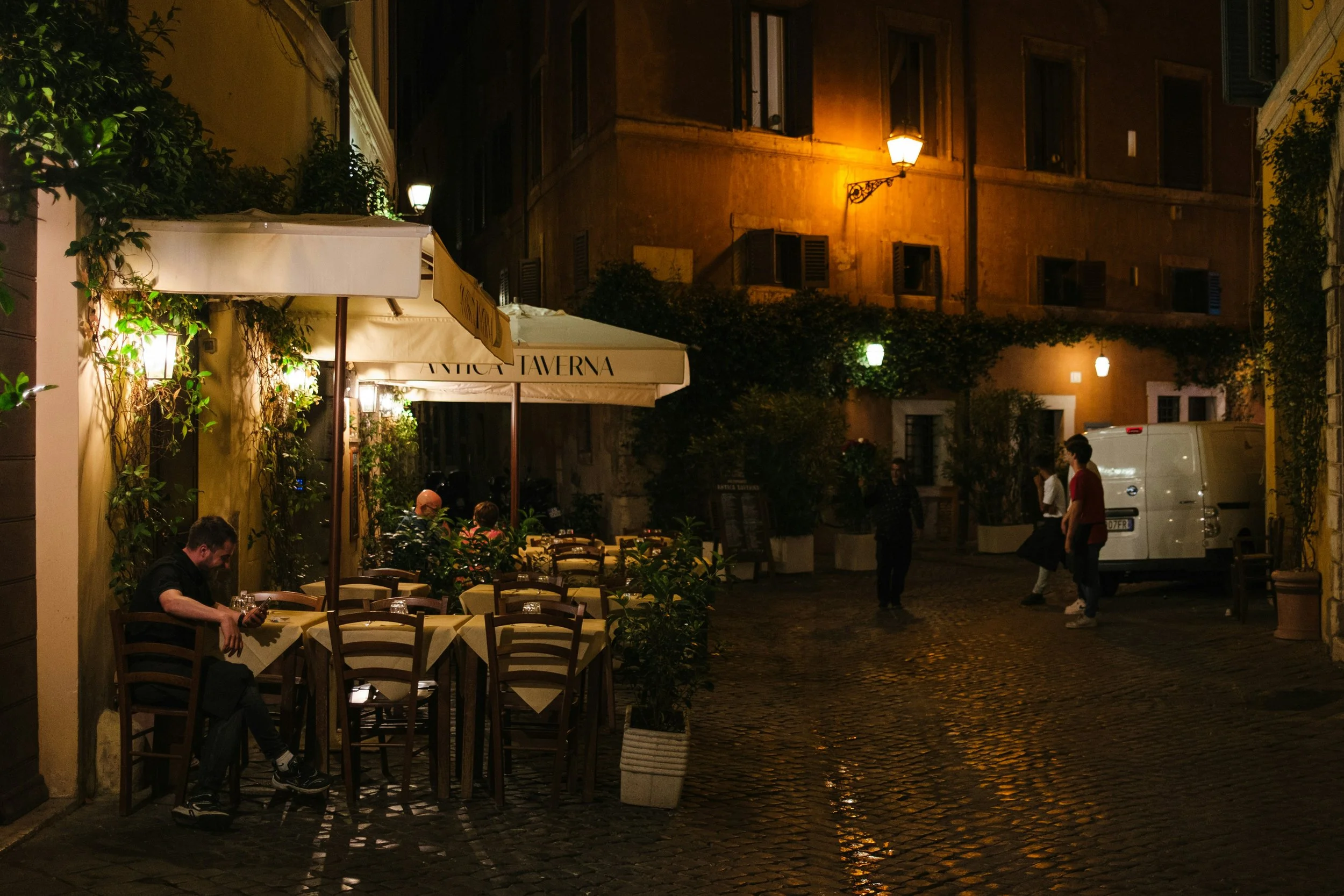
Antica Taverna.
Wine bars and aperitivo
In Rome, drinking is woven into daily life rather than treated as an event in its own right. Wine is the default choice, aperitivo is understated, and evenings tend to unfold slowly rather than build towards late-night intensity.
Most Romans drink with food, not instead of it. Aperitivo usually happens early in the evening and is closer to a pre-dinner pause than a full social occasion. Snacks are minimal, conversations linger, and the focus is on easing into the night.
Wine bars play an important role in this rhythm, particularly in neighbourhoods like Monti and Trastevere. These are places to sit, talk and stay awhile — not to rush through rounds.
Where to go for wine and aperitivo
Enoteca Ferrara – A long-standing Trastevere institution with a strong Italian wine list and food that comfortably carries you through the evening.
Ai Tre Scalini – One of Monti’s most reliable spots for wine-led evenings, with a relaxed, local crowd and simple food.
Il Goccetto – A classic Roman enoteca near Campo de’ Fiori, known for its atmosphere and traditional approach to wine drinking.
Freni e Frizioni – Popular for aperitivo in Trastevere, particularly early in the evening. Best approached casually rather than as a late-night destination.
After dinner, many Romans opt for a digestivo rather than another drink. Amaro, grappa or limoncello are common, especially after long meals. Accepting one is optional, but it’s a familiar way to bring the evening to a close.
For visitors, the easiest way to drink well in Rome is to follow local habits. Choose wine over cocktails, drink alongside food, and keep evenings unhurried. Rome rewards conversation and patience far more than excess.
Practical food tips for visitors
Eating well in Rome is less about hunting down the “best” restaurant and more about understanding how the city works. A few practical adjustments can make a noticeable difference to your experience.
Meal times matter.
Lunch is typically served from around midday until mid-afternoon, and many kitchens close afterwards. Dinner starts later than many visitors expect, often not before 7.30pm or 8pm. Turning up outside these windows usually means limited options or tourist-oriented places.
Reservations are useful, not always essential.
For popular trattorias, especially in Trastevere and Monti, booking ahead for dinner is a good idea. At lunch, many places operate more casually and don’t require reservations.
Menus are often simple — and that’s intentional.
Short menus are a good sign. Repetition across menus isn’t laziness; it reflects regional focus and confidence. If something appears everywhere, it’s usually because it’s done well.
Don’t over-order.
Roman portions are generous, and locals often eat just one course, particularly at lunch. A pasta with a vegetable side is a very normal meal. Ordering antipasto, primo and secondo every time isn’t expected.
Vegetables are ordered separately.
Side dishes (contorni) don’t automatically come with main courses. If you want vegetables, you’ll need to order them.
Bread and cover charges.
Bread is usually brought automatically, and a small coperto (cover charge) is common. This isn’t a tip — it’s a standard part of dining in Italy.
Tipping is modest.
Service is included. Rounding up or leaving small change is appreciated but not expected. Large tips are unusual.
Tourist menus are a red flag.
Photos, multilingual “tourist menus” and staff calling out to passers-by usually indicate food aimed at visitors rather than locals.
Trust neighbourhood places.
Restaurants filled with locals at ordinary times of day are often a better bet than places highlighted by signs or social media hype.
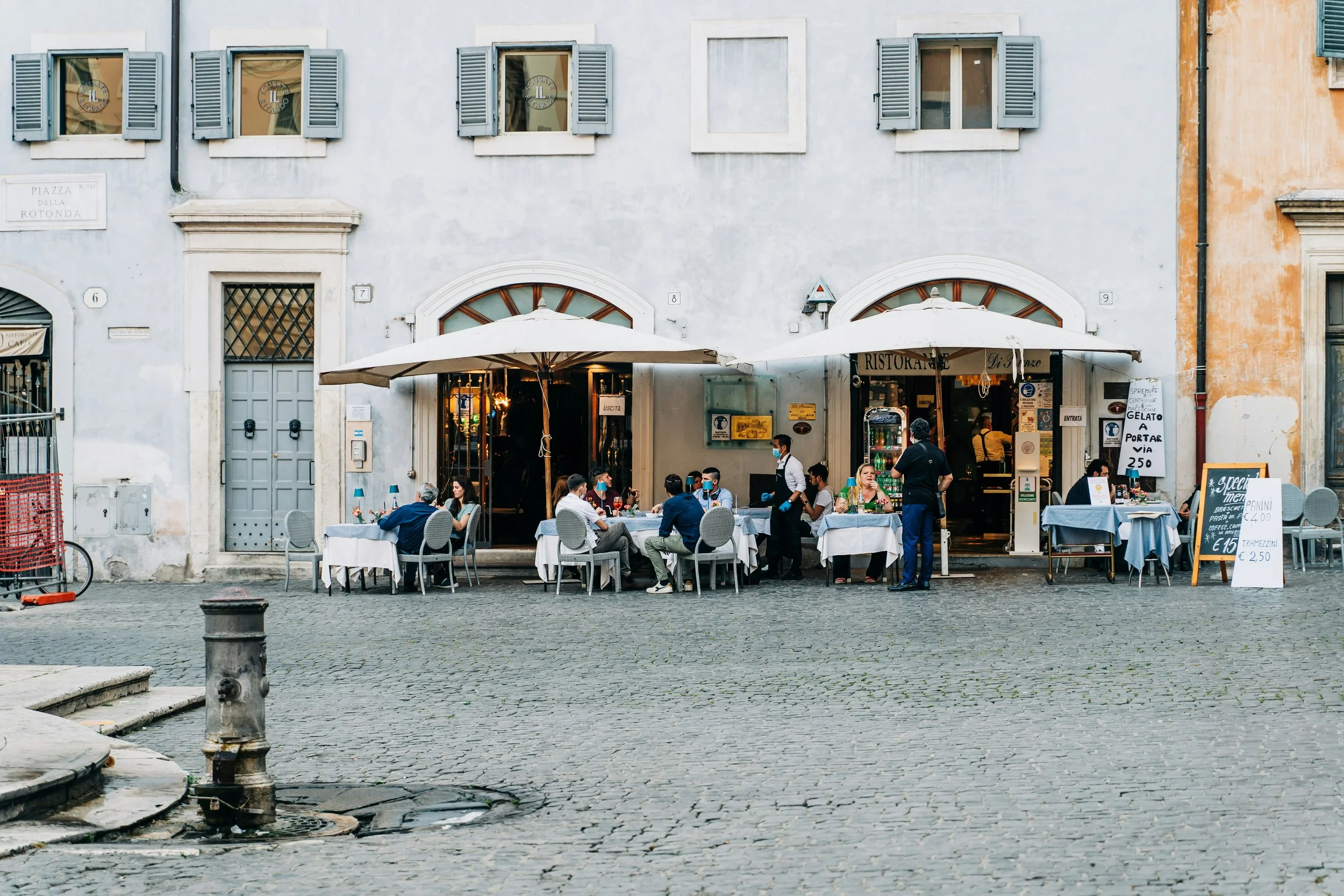
Roman eating.
“Rome rewards patience at the table. Meals are shaped by routine rather than convenience, and the city rarely bends its habits to suit visitors — but that’s part of what makes eating here so satisfying.
Once you understand the rhythm — when to eat, what to order, and how much is enough — food becomes one of the most natural ways to experience the city. Whether it’s a quick lunch at a market, a simple pasta in a neighbourhood trattoria, or a long dinner that stretches into the evening, Rome’s food culture reveals itself quietly, course by course.
Eat simply, eat seasonally, and let the city set the pace.”