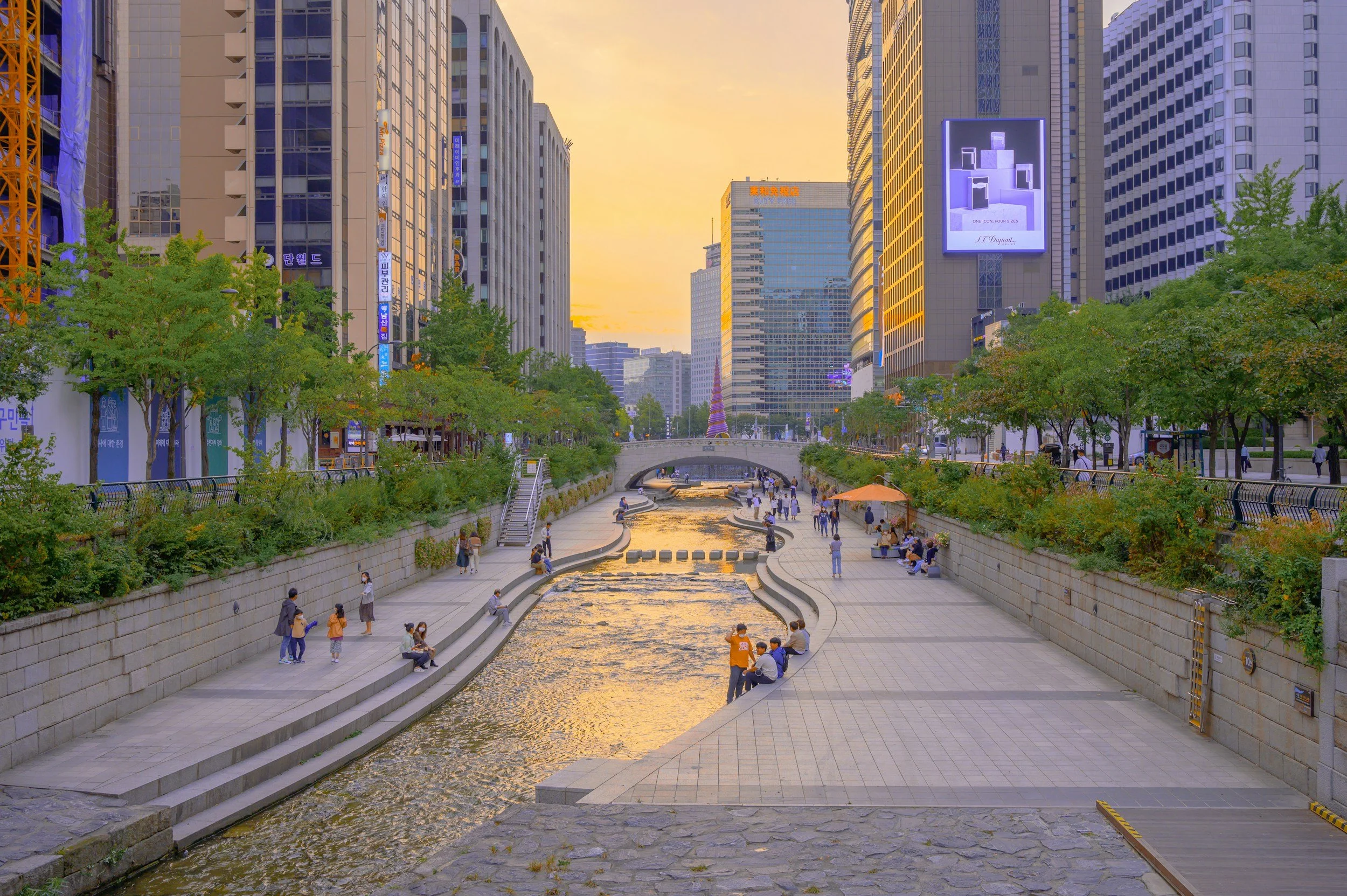
Seoul is the kind of city that stays with you because it never seems to move in just one direction. It is a place of palace walls and glass towers, of quiet hanok lanes and neon-lit avenues, of smoky barbecue restaurants, late-night convenience stores, mountain-backed viewpoints, and side streets that seem to shift character from one hour to the next. At first glance, it can feel immense, fast, and hard to grasp in full. Spend a little more time with it, though, and Seoul begins to reveal itself as a city of distinct moods, each neighbourhood offering its own version of the capital.
That is what makes choosing where to stay in Seoul so important. This is not a city where one area suits everyone, nor one where the most famous district will automatically give you the most memorable trip. Stay in one part of Seoul and your days might begin with grand gates, traditional tea houses, and walks through streets layered with history. Base yourself elsewhere and you might find yourself surrounded by late-night cafés, creative studios, shopping boulevards, or some of the city’s best food. The neighbourhood you choose shapes the pace of your trip, the atmosphere you return to each evening, and the side of Seoul you come to know best.
This guide is here to help you find that fit. Rather than treating Seoul as a checklist of districts, it looks at the city through the places travellers are most likely to stay, focusing on what each area feels like, who it suits, what you will find there, and the trade-offs worth knowing before booking. The aim is not simply to tell you where to stay, but to help you picture the kind of Seoul experience each neighbourhood offers.
Because that is often how the city is remembered in the end: not only through the landmarks you tick off, but through the rhythm of the streets below your hotel, the café you return to in the morning, the walk to the station at dusk, and the feeling of the area you called home for a few days. Choose the right neighbourhood, and Seoul does not just become easier to navigate — it becomes more personal, more immersive, and far more memorable.
How to use this guide
Think of this as a stay-decision guide rather than a sightseeing roundup. Each neighbourhood section looks at what the area feels like, who it suits, what you will find there, and what to consider before booking, so you can work out not just where to stay, but which version of Seoul feels right for your trip.
Myeong-dong
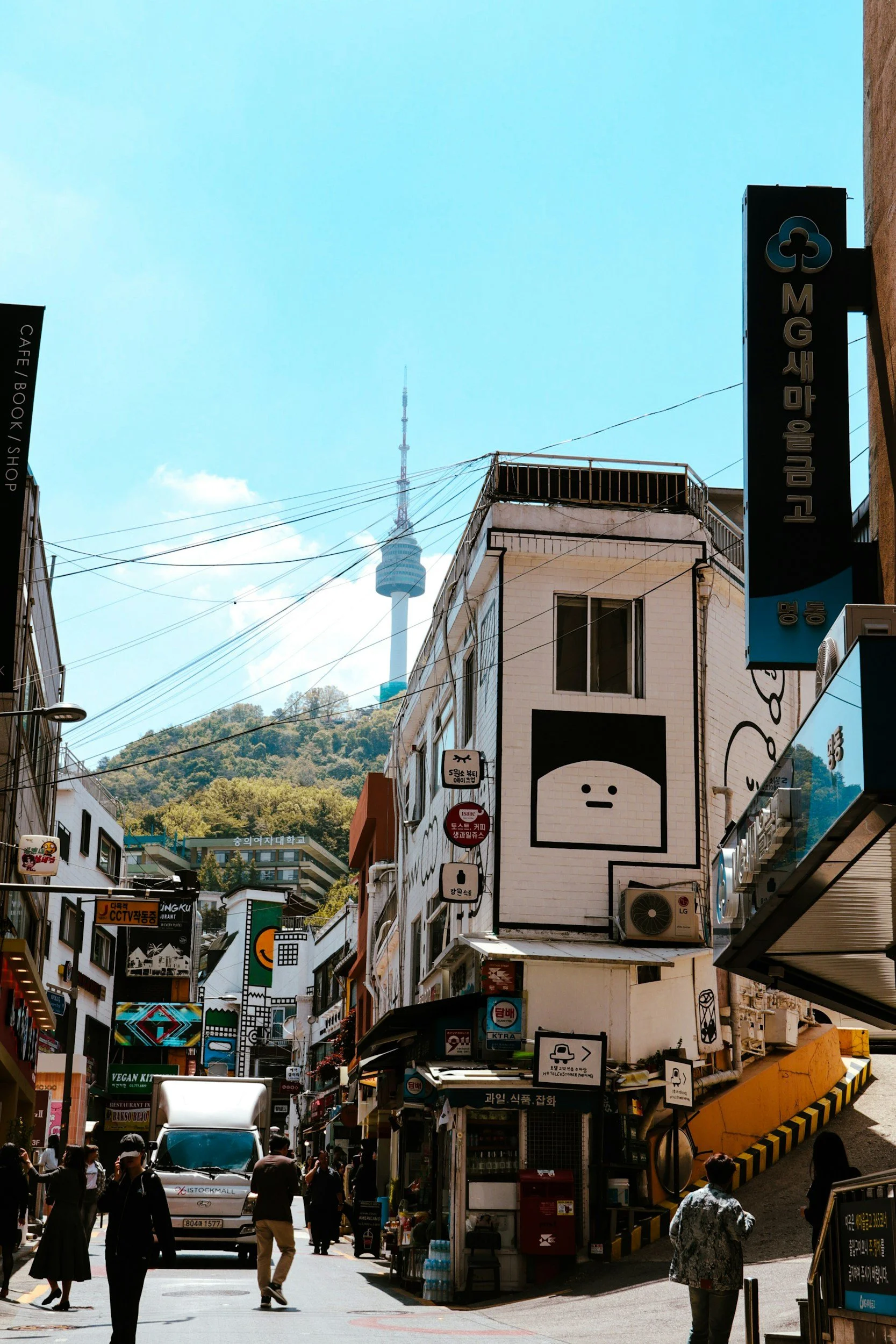
If you arrive in Seoul wanting the city to feel immediately easy, bright, and within reach, Myeong-dong makes a strong case for itself. This is one of the best-known visitor areas in the capital, and for good reason: it sits in a central part of the city, has excellent transport links, and places you in the middle of a district long associated with shopping, commerce, and tourism. It is more useful to think of Myeong-dong as Seoul at its most convenient and fast-moving rather than simply Seoul at its most stylish.
Why stay here
Myeong-dong suits first-time visitors who want their trip to run smoothly from the moment they land. If you want simple transport connections, plenty of accommodation, late-opening shops, street-food stalls, and a base that feels straightforward rather than complicated, this is one of the easiest places to choose. It is particularly well suited to shorter stays, especially when you want to fit a lot into a few days without constantly second-guessing where to eat, how to get back, or whether the area will still feel lively in the evening.
What it feels like
Myeong-dong feels busy in a very polished, highly visible sort of way. By day, the streets are full of shoppers moving between flagship stores, cosmetic brands, department stores, and cafés. By evening, the area takes on a brighter, more theatrical energy as signs glow above the main streets and food stalls draw people into the lanes. It is not the Seoul of quiet corners or slow discovery, but that is not really the point. Myeong-dong works because it gives you momentum. You step outside and the city is already happening around you.
What you’ll find here
This is one of the most practical bases in Seoul if you want to stay central and move around easily. You are close to major shopping streets and department stores, and you are also well placed for sights just beyond the district itself, including places in central Seoul such as City Hall, Namsan, and the broader Jung-gu and Jongno areas. Myeong-dong also has its own landmark in Myeong-dong Cathedral, which adds a little historical weight to an area better known for energy and commerce.
Food and drink scene
The food scene here is more about variety and accessibility than about Seoul at its most atmospheric. You will find plenty of street snacks, dessert stops, chain cafés, casual restaurants, and busy places geared towards travellers and shoppers, which makes the area easy and low-stress, especially on a first visit. The upside is that you are never short of options; the trade-off is that meals here can feel more convenience-led than neighbourhood-led. Myeong-dong works well for grabbing food between plans, but readers wanting a stronger sense of Seoul’s more characterful café culture or more local-feeling evening dining may end up spending more time elsewhere.
Things to consider
This is not the part of Seoul I would choose for charm alone. It can feel crowded, commercial, and at times a little detached from the slower, more textured side of the city. If you want a base with a stronger neighbourhood identity, more independent cafés, or a more local everyday feel, you may find areas like Euljiro, Hongdae, or Seongsu more rewarding. Myeong-dong is often best when treated as the easiest base rather than the most soulful one.
World Locals tip
Choose Myeong-dong if you want Seoul to feel simple on a first trip, but plan to spend plenty of your days and evenings exploring beyond it. It is at its best as a practical launchpad rather than the full story of the city.
Jongno and Euljiro
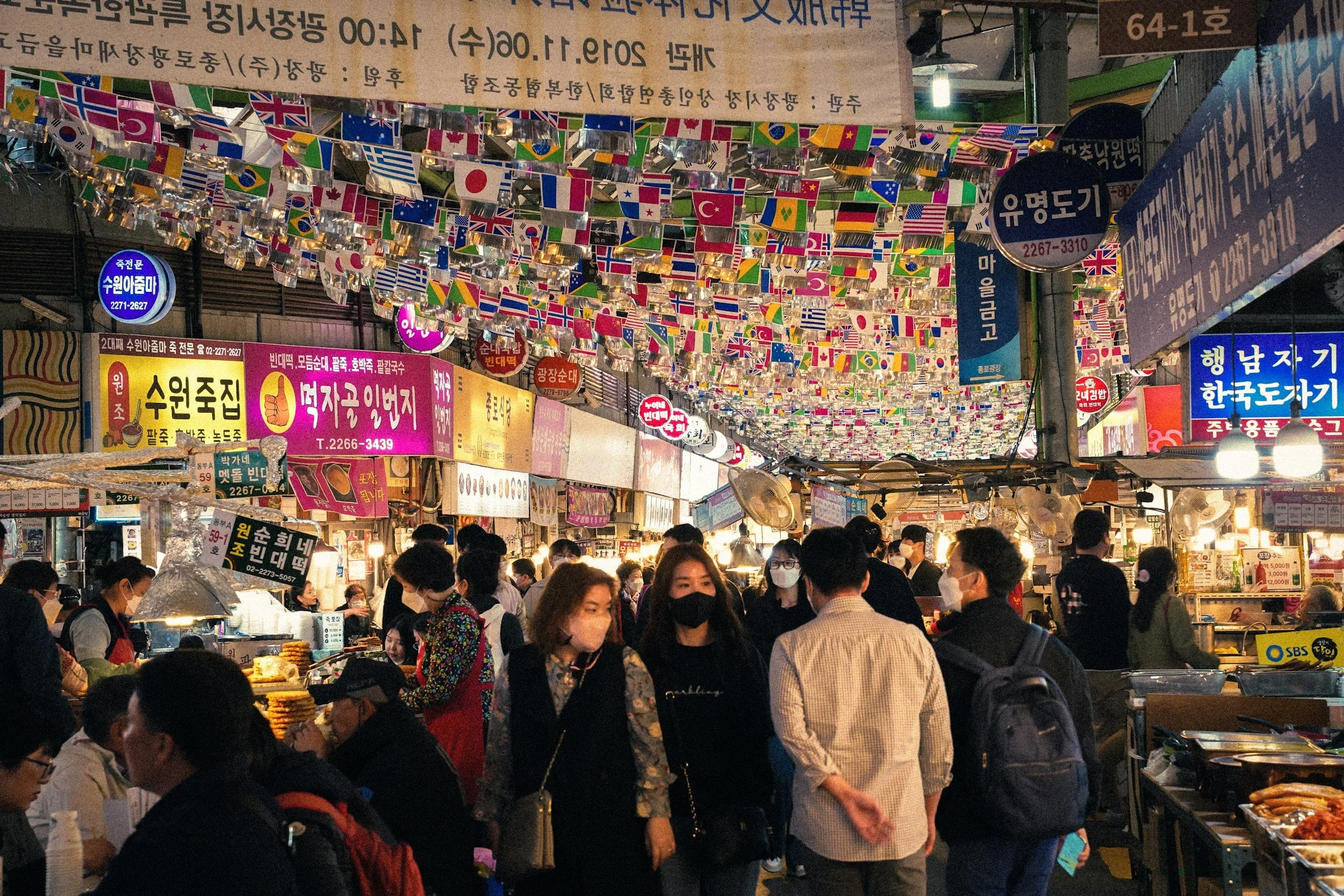
If Myeong-dong is Seoul at its most straightforward, Jongno and Euljiro feel more like Seoul with a little more texture left intact. This part of the city carries much of the capital’s older soul, where palace districts, long-established streets, workshops, market life, and newer cafés and bars sit close together without ever feeling forced. It is one of the most rewarding areas to stay if you want a base that feels central but not overly polished, historic but still very much alive.
Why stay here
Jongno and Euljiro suit travellers who want to feel closer to the city’s layers rather than simply its highlights. If you like the idea of waking up in an area that gives you easier access to old Seoul, while still keeping you close to excellent transport, local restaurants, and lively evenings, this is a strong choice. It works particularly well for travellers who want a more characterful first stay, or for anyone returning to Seoul and looking for a base with more atmosphere than the city’s most commercial districts.
What it feels like
This is one of those parts of Seoul where the city feels as though it is unfolding in front of you rather than presenting itself all at once. In Jongno, there is a stronger sense of historical Seoul, with palace-adjacent streets, older buildings, and pockets of tradition that still shape the rhythm of the area. Euljiro, meanwhile, feels rougher around the edges in the best way, with narrow lanes, industrial traces, old workshops, and a nightlife scene that has grown around them without sanding away the area’s character. Together, they create a part of Seoul that feels lived-in, layered, and a little more surprising than the polished image many first-time visitors arrive with.
What you’ll find here
This is a brilliant base for exploring some of Seoul’s most important historic and cultural sights, while still staying connected to the rest of the city. From here, you are well placed for palace visits, traditional streets, markets, and central walking routes, but you are also close to some of Seoul’s most interesting after-dark areas. One of the real strengths of staying here is that your days do not need to be neatly separated into sightseeing and nightlife. In Jongno and Euljiro, those sides of the city sit close enough together that the day can shift naturally from one into the other.
Food and drink scene
This is one of the biggest reasons to stay here. The food and drink scene feels more rooted than in more tourist-heavy districts, with long-established local spots sitting alongside newer bars, cafés, and casual restaurants. Euljiro in particular has become known for its evening energy, with hidden alleys, old-school streets, and a more atmospheric style of drinking and dining than you will find in Seoul’s more polished nightlife areas. Jongno adds another layer, with traditional food streets, older restaurants, and access to some of the city’s most classic eating experiences. If you want a neighbourhood where dinner can easily turn into a late evening without much planning, this area does that well.
Things to consider
This is not the most polished or immediately easy part of Seoul in the same way Myeong-dong is. Parts of Euljiro can feel slightly scruffier, more low-key, and less obviously visitor-friendly on first impression, which is part of the appeal for some travellers and a drawback for others. Accommodation options can also feel a little more mixed depending on exactly where you stay. If you want a glossy, convenience-first base with big hotel density and very obvious tourist infrastructure, you may find this area less straightforward. It rewards travellers who enjoy a little character and do not mind a city feeling slightly imperfect.
World Locals tip
Choose Jongno and Euljiro if you want Seoul to feel layered from the start. This is one of the best areas to stay when you want history, atmosphere, strong food, and evenings with a little edge, all without losing the advantages of a central location.
Insadong and Bukchon
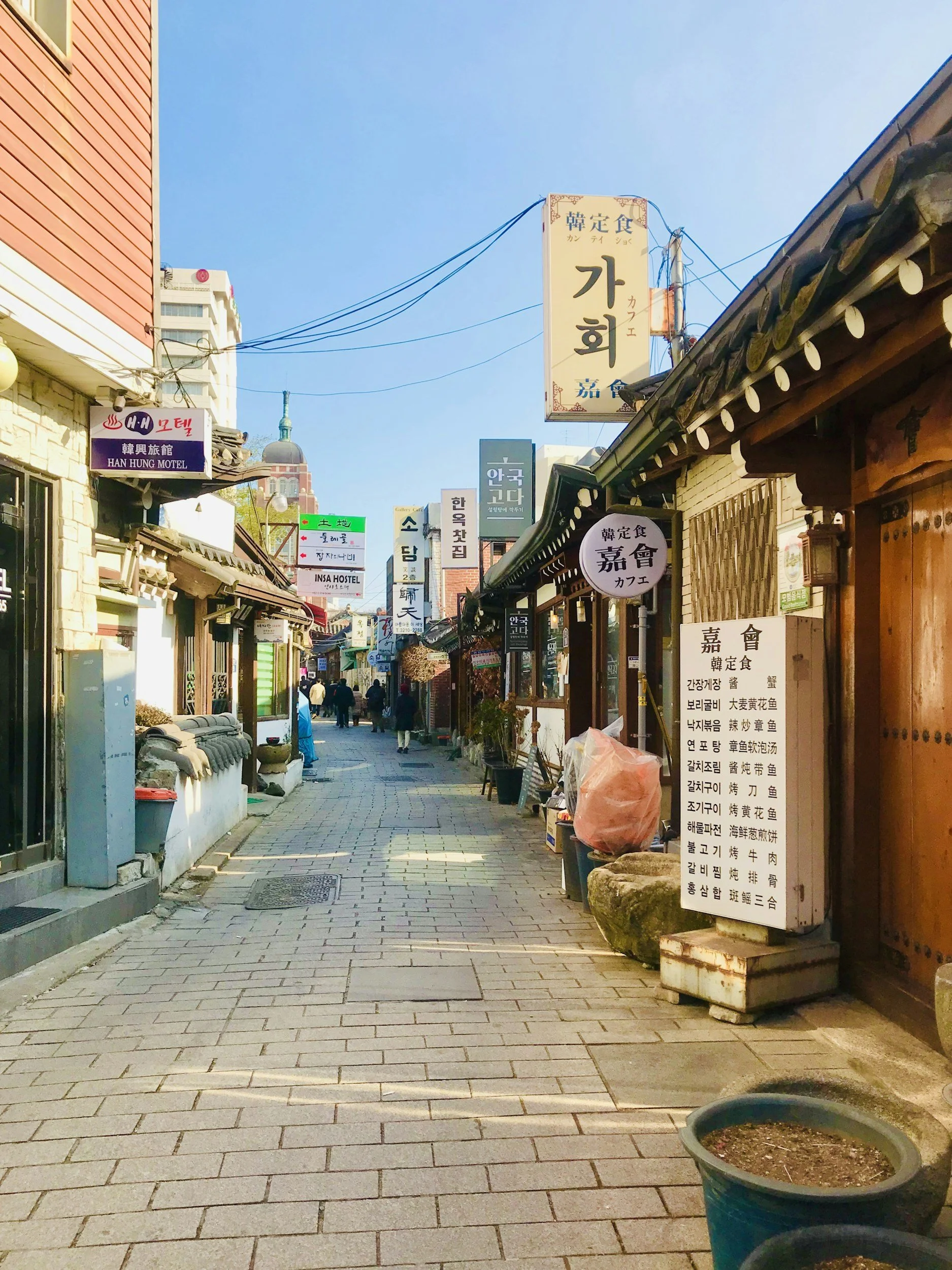
If you picture Seoul as a city of tiled roofs, narrow lanes, teahouses, craft shops, palace walks, and quiet corners tucked behind busier streets, this is the part of the capital that most closely matches that image. Insadong and Bukchon sit within one of Seoul’s most historically resonant areas, and staying here gives the city a softer, more reflective feel from the outset. It is not untouched or hidden, and at times it can be very well-trodden, but it still offers one of the clearest senses of Seoul’s older character.
Why stay here
Insadong and Bukchon suit travellers who want their stay to feel rooted in the city’s cultural and historical side. If your ideal Seoul trip includes palace visits, traditional streets, galleries, tea houses, slower mornings, and a base that feels visually distinctive, this area makes a lot of sense. It works particularly well for first-time visitors who want the city’s heritage close at hand, as well as for travellers who prefer atmosphere and walkability over nightlife or a highly polished urban edge.
What it feels like
This part of Seoul feels gentler than many of the city’s more commercial districts. In Bukchon, the hills, hanok-lined streets, and quieter residential atmosphere create a sense of stepping into a version of the city that moves at a different pace, even if the wider capital is never far away. Insadong, meanwhile, feels livelier and a little more visitor-facing, with its mix of traditional goods, galleries, tea houses, and main-street energy. Together, they create an area that feels elegant, cultural, and full of visual character, especially for travellers arriving in Seoul wanting a strong first impression.
What you’ll find here
This is one of the best places to stay if you want easy access to some of Seoul’s most famous historical sights and a base that encourages wandering on foot. You are well placed for palace districts, hanok lanes, traditional culture spaces, and central neighbourhoods that reveal their appeal gradually rather than all at once. It is also a good area for travellers who enjoy spending part of the day simply walking without a strict plan, dipping into side streets, courtyards, galleries, and quiet viewpoints rather than racing between major sights.
Food and drink scene
The food and drink scene here leans more traditional and atmospheric than trend-driven. You will find tea houses, long-running local restaurants, street snacks nearby, and cafés that often feel shaped by the area’s historical setting rather than by Seoul’s more contemporary café culture. The upside is that eating and drinking here can feel very much part of the neighbourhood experience itself. The trade-off is that it is not always the area with the most exciting nightlife, nor the place I would choose if your priority is the city’s most dynamic bar scene or most forward-looking food culture. It is better for slow afternoons, traditional flavours, and evenings that stay relatively relaxed.
Things to consider
This area can be beautiful, but it can also feel a little too polished or overly visited in parts, particularly around the most photographed lanes and busiest stretches. Bukchon in particular is still a residential area, which means staying or sightseeing here comes with a different atmosphere from a district built around nightlife or commerce. Depending on where you stay, there may also be hills, smaller streets, and slightly less of the plug-and-play convenience you get in places like Myeong-dong. If you want Seoul at its most energetic, modern, or spontaneous after dark, other neighbourhoods may suit you better.
World Locals tip
Choose Insadong and Bukchon if you want to wake up in a part of Seoul that feels steeped in atmosphere. This is one of the best areas for travellers who want history, beauty, and a stronger sense of old Seoul, but it works best when paired with time elsewhere in the city too.
Hongdae and Yeonnam-dong
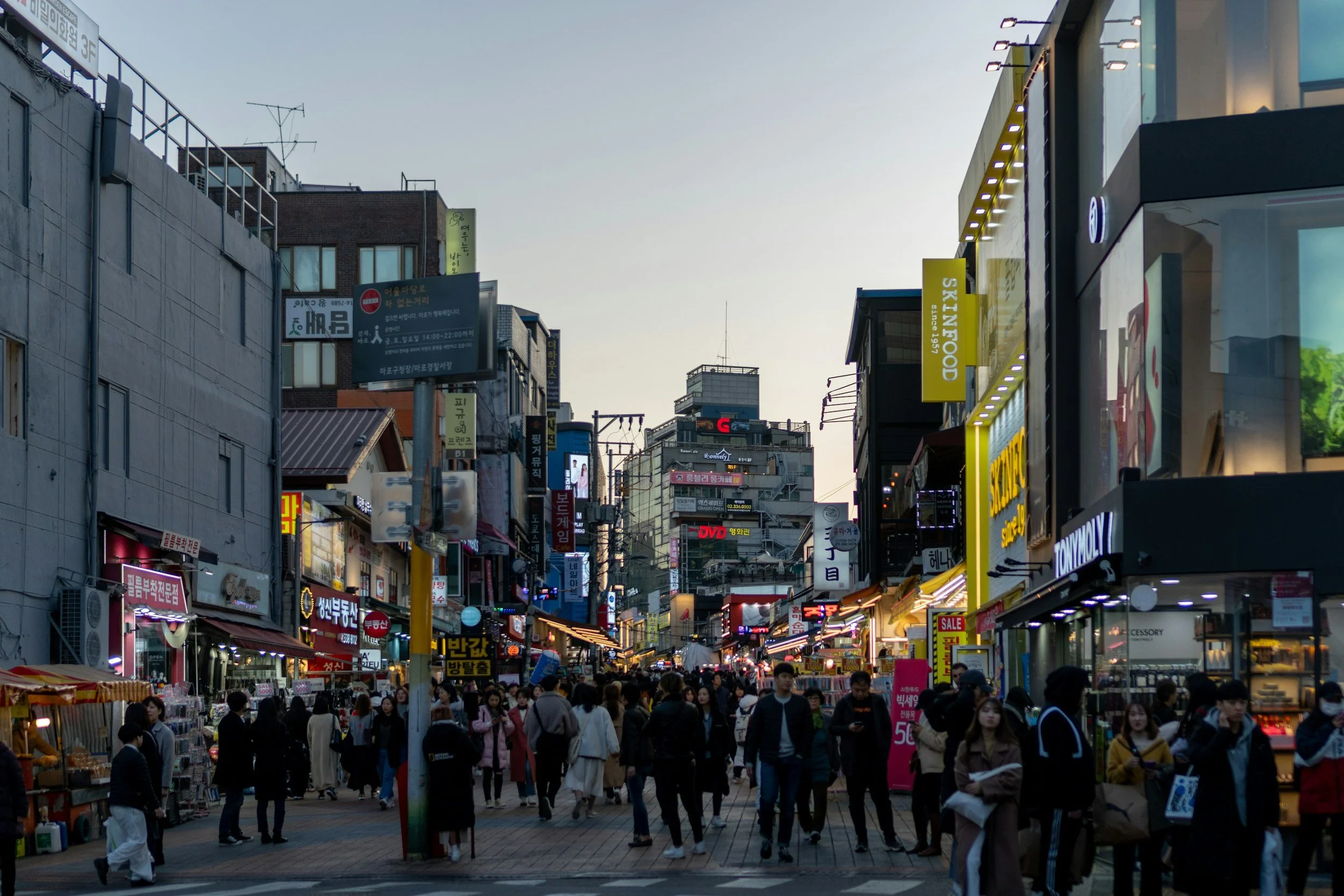
If you want Seoul to feel youthful, creative, and full of movement, Hongdae and Yeonnam-dong are two of the city’s most compelling bases. This is the side of Seoul that many travellers imagine before they arrive: busy café streets, late-night energy, independent shops, live music, art-led spaces, and neighbourhood corners that seem to pull people outdoors rather than indoors. It is lively without feeling purely corporate or polished, and although the area has become one of Seoul’s best-known creative districts, it still carries a sense of spontaneity that makes it easy to enjoy.
Why stay here
Hongdae and Yeonnam-dong suit travellers who want Seoul to feel social, walkable, and full of character from the moment they step outside. If you are drawn to neighbourhoods with strong café culture, casual nightlife, younger energy, and plenty of places to dip into without much planning, this is one of the easiest areas to love. It works particularly well for solo travellers, couples, groups of friends, and anyone who wants their evenings to unfold naturally rather than end once the sightseeing is done.
What it feels like
Hongdae feels energetic, expressive, and very much awake. There is a constant sense of movement here, from street performers and students to people drifting between shops, bars, and cafés late into the evening. Yeonnam-dong, just next to it, softens that energy slightly. It feels a little more relaxed, more residential in parts, and more shaped by independent cafés, small restaurants, design shops, and quieter side streets. Together, they create a part of Seoul that feels youthful and creative without being one-dimensional. You can have a loud, lively night out, then begin the next morning with coffee and a slower walk through leafier streets.
What you’ll find here
This area is one of the best places in Seoul for travellers who like to explore on foot and let the day develop as they go. You will find café-lined lanes, shopping streets, creative spaces, music venues, bars, and a strong sense of neighbourhood life that extends well beyond major sights. Yeonnam-dong in particular adds another layer, with its calmer streets and easy-going atmosphere making it feel less intense than the busiest parts of Hongdae. One of the strengths of staying here is that the area gives you enough to do close to home, so you do not always need to cross the city for a good evening or a good coffee.
Food and drink scene
This is one of Seoul’s strongest areas for casual, enjoyable eating and drinking, especially if you like variety and atmosphere. There are plenty of cafés, dessert spots, bars, and laid-back restaurants, along with streets where it feels easy to settle in for the evening. Hongdae brings the louder side of the scene, with busy nightlife and music-led energy, while Yeonnam-dong feels more relaxed and café-driven, with a slightly more curated feel. If you enjoy places where food and drink are woven into the wider social life of the neighbourhood rather than treated as a standalone attraction, this part of Seoul does that very well.
Things to consider
This is not the best choice for everyone. Hongdae can feel noisy, busy, and a little relentless, especially on weekends or if you stay too close to the most active streets. If you are looking for old Seoul, easy palace access, or a more traditionally atmospheric base, other areas will suit you better. It is also less central for some of the city’s historical highlights than neighbourhoods around Jongno. The key here is choosing the right balance: stay close enough to enjoy the energy, but not so close that the area starts to feel exhausting.
World Locals tip
Choose Hongdae and Yeonnam-dong if you want Seoul to feel creative, sociable, and full of life after dark. For many travellers, Yeonnam-dong offers the better balance of character and calm, while Hongdae keeps the city’s louder energy within easy reach.
Itaewon and Hannam-dong
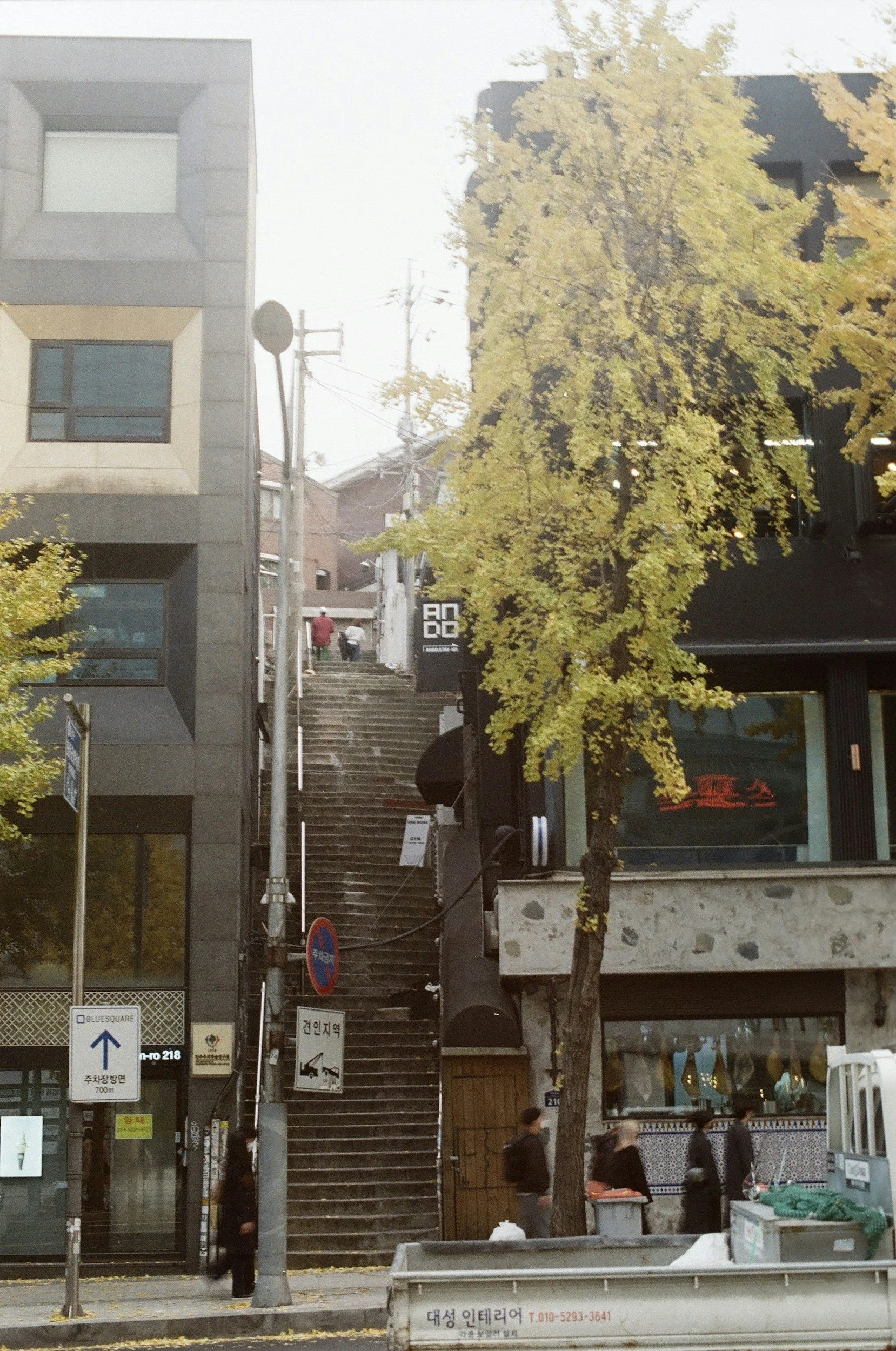
If you want to experience a side of Seoul that feels more international, design-conscious, and outward-looking, Itaewon and Hannam-dong make a strong pairing. These neighbouring areas sit on the southern edge of central Seoul and offer a version of the city that feels less tied to palaces and traditional streets, and more shaped by dining, nightlife, fashion, galleries, and a broader mix of global influences.
Why stay here
Itaewon and Hannam-dong suit travellers who want Seoul to feel stylish, social, and a little more globally connected from the outset. If your ideal trip includes good restaurants, bars, interesting shops, creative spaces, and evenings that stretch naturally into the night, this area has a lot going for it. It works especially well for travellers who have been to Seoul before and want a base with more personality than a straightforward first-timer district, though it can also suit newcomers who care more about atmosphere and food than about being closest to the palace-and-market core.
What it feels like
Itaewon feels lively, varied, and constantly in motion, with a long-standing reputation for international restaurants, nightlife, and a more mixed, outward-facing energy than many other parts of the city. Hannam-dong, just beyond it, feels more refined and a little more curated, with quieter streets, galleries, cafés, flagship lifestyle stores, and a polished residential feel in places. Together, they offer a version of Seoul that feels contemporary and expressive rather than historic, and although the mood shifts from one street to the next, there is a strong sense that this part of the city is shaped by taste, culture, and after-dark energy.
What you’ll find here
This is a strong base for travellers who like their days to revolve around neighbourhood wandering rather than ticking off sights one by one. In Itaewon, you will find busy streets, nightlife, international food, and easy access to a part of Seoul that has long been associated with diversity and cultural crossover. Hannam-dong adds another layer with its galleries, creative spaces, and design-led stops. One of the advantages of staying here is that the area itself provides enough texture to make unplanned afternoons and evenings feel rewarding.
Food and drink scene
Food and drink are the main reason many travellers choose this part of Seoul. Itaewon is known for its range and variety, particularly if you want a break from eating the same style of meal every day or you enjoy neighbourhoods where bars and restaurants shape the atmosphere as much as the streets themselves. Hannam-dong feels more polished, with lifestyle cafés, brunch spots, teahouses, and a more design-conscious dining scene. If you want a base where eating out feels central to the trip rather than something slotted between attractions, this area does that well.
Things to consider
This is not the most obvious base for a classic first trip focused on old Seoul. If your priorities are palaces, hanok streets, or a stronger sense of historical atmosphere, areas around Jongno or Bukchon will feel more natural. Itaewon can also be busy and nightlife-heavy in places, while Hannam-dong can feel more expensive and less practical if you are travelling on a tighter budget. The trade-off here is simple: you gain atmosphere, food, and a more contemporary urban feel, but you lose some of the plug-and-play convenience and historical immersion found elsewhere.
World Locals tip
Choose Itaewon and Hannam-dong if you want Seoul to feel stylish, social, and a little more grown-up. For many travellers, the best balance comes from staying close enough to enjoy Itaewon’s energy, while using Hannam-dong for slower mornings, cafés, and a more polished neighbourhood feel.
Gangnam
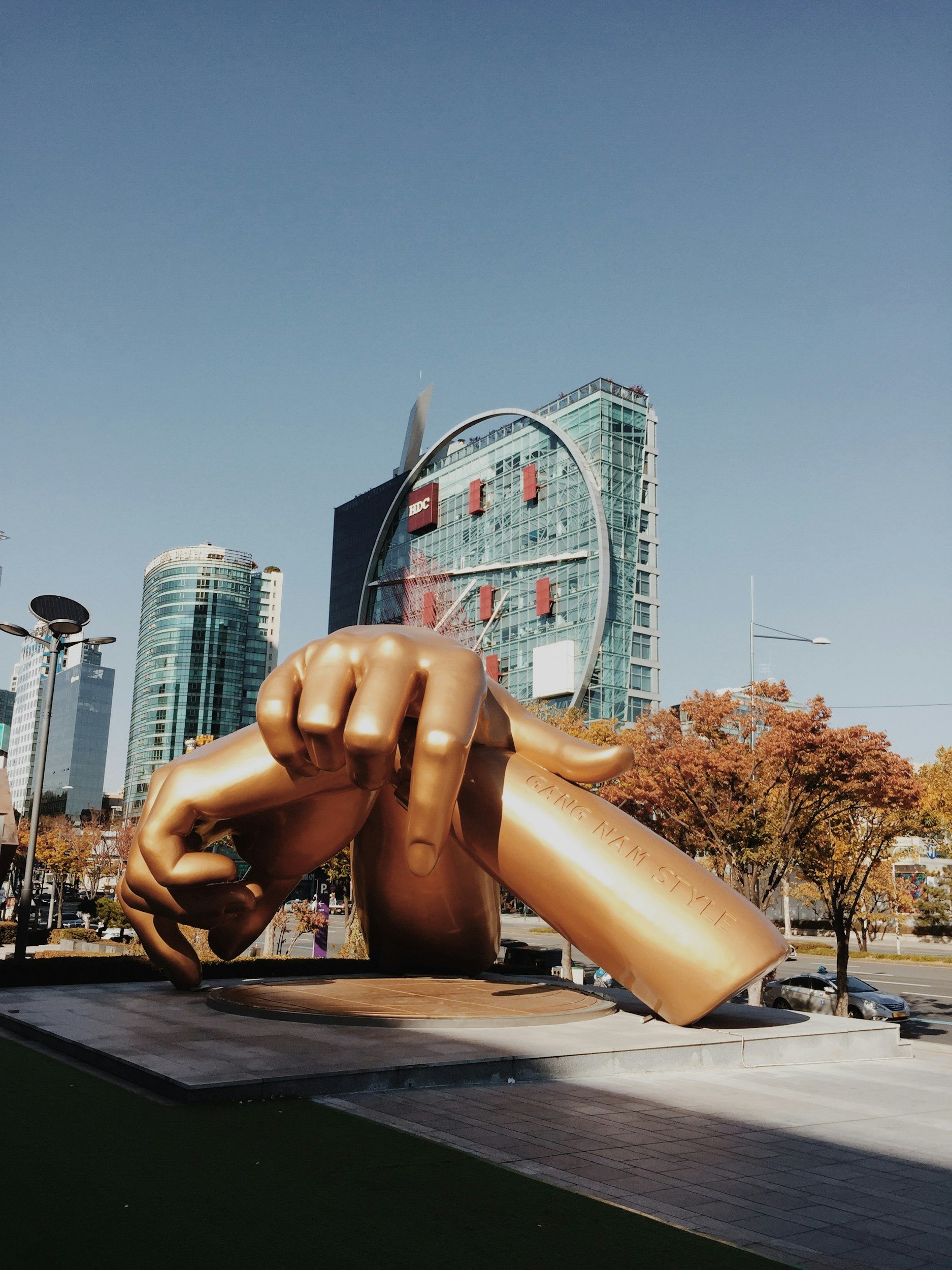
Gangnam is the version of Seoul that many people recognise before they have even visited: sleek towers, polished shopping streets, high-rise hotels, beauty clinics, business districts, and a pace that feels glossy, efficient, and unmistakably modern. Staying here gives you a very different introduction to the city from the palace-lined streets of Jongno or the creative edges of Hongdae. This is Seoul at its more polished and contemporary, where the mood is defined less by history and more by momentum, image, and scale.
Why stay here
Gangnam suits travellers who want comfort, convenience, and a more modern city feel from the moment they arrive. If your ideal base includes smart hotels, broad avenues, easy shopping, stylish cafés, and a neighbourhood that feels clean, well-connected, and easy to navigate, Gangnam does a lot well. It is especially appealing for business travellers, repeat visitors, travellers who enjoy a more polished urban atmosphere, or anyone who wants to experience the side of Seoul associated with fashion, beauty, and contemporary lifestyle.
What it feels like
Gangnam feels spacious by Seoul standards, with wider streets, taller buildings, and a more structured urban rhythm than many of the older districts north of the river. There is a certain confidence to it, from the design of the streets to the type of shops and cafés that line them. During the day, it can feel brisk and businesslike in places, while in the evening it shifts into something more social, with restaurants, bars, and shopping areas keeping the district active well after office hours. It is not the part of Seoul that feels most intimate, but it does feel distinctly modern and very much part of the city’s present identity.
What you’ll find here
This is a strong base if you want access to shopping, dining, nightlife, beauty and wellness culture, and a more contemporary side of Seoul. You will find major commercial streets, department stores, stylish cafés, upscale dining, and neighbourhood pockets that feel built around lifestyle rather than sightseeing. Gangnam also places you closer to attractions and areas south of the Han River, which can make sense if you want a Seoul trip shaped less by historical landmarks and more by modern city life. One of its strengths is that it gives you a clear, consistent atmosphere: if you choose Gangnam, you more or less know the version of Seoul you are signing up for.
Food and drink scene
Gangnam’s food and drink scene is broad, polished, and often trend-aware. There are excellent restaurants here, along with stylish cafés, dessert spots, cocktail bars, and plenty of places designed for long lunches or late dinners. The scene feels more refined and contemporary than old-school, with fewer rough-around-the-edges discoveries and more of the slick, lifestyle-driven side of Seoul dining. If you enjoy fashionable neighbourhoods where eating out feels part of a wider urban experience of shopping, beauty, and nightlife, Gangnam does that very well. If you are looking for the city’s most atmospheric traditional streets or its more improvised, alleyway-style evenings, you may find more character elsewhere.
Things to consider
Gangnam can feel a little impersonal if what you want from Seoul is old streets, visible history, and a stronger sense of the city’s traditional character. It is also less convenient for some of the capital’s classic first-time sights north of the river, which means you may spend more time crossing the city if palaces, Bukchon, or Jongno are high on your list. For some travellers, that modern polish is exactly the appeal. For others, it can make the area feel a little removed from the version of Seoul they came hoping to experience.
World Locals tip
Choose Gangnam if you want Seoul to feel sleek, comfortable, and unmistakably modern. It is a strong fit for travellers drawn to contemporary city life, but it works best when you are happy to balance that polished base with time spent exploring Seoul’s older and more textured districts.
Seongsu-dong
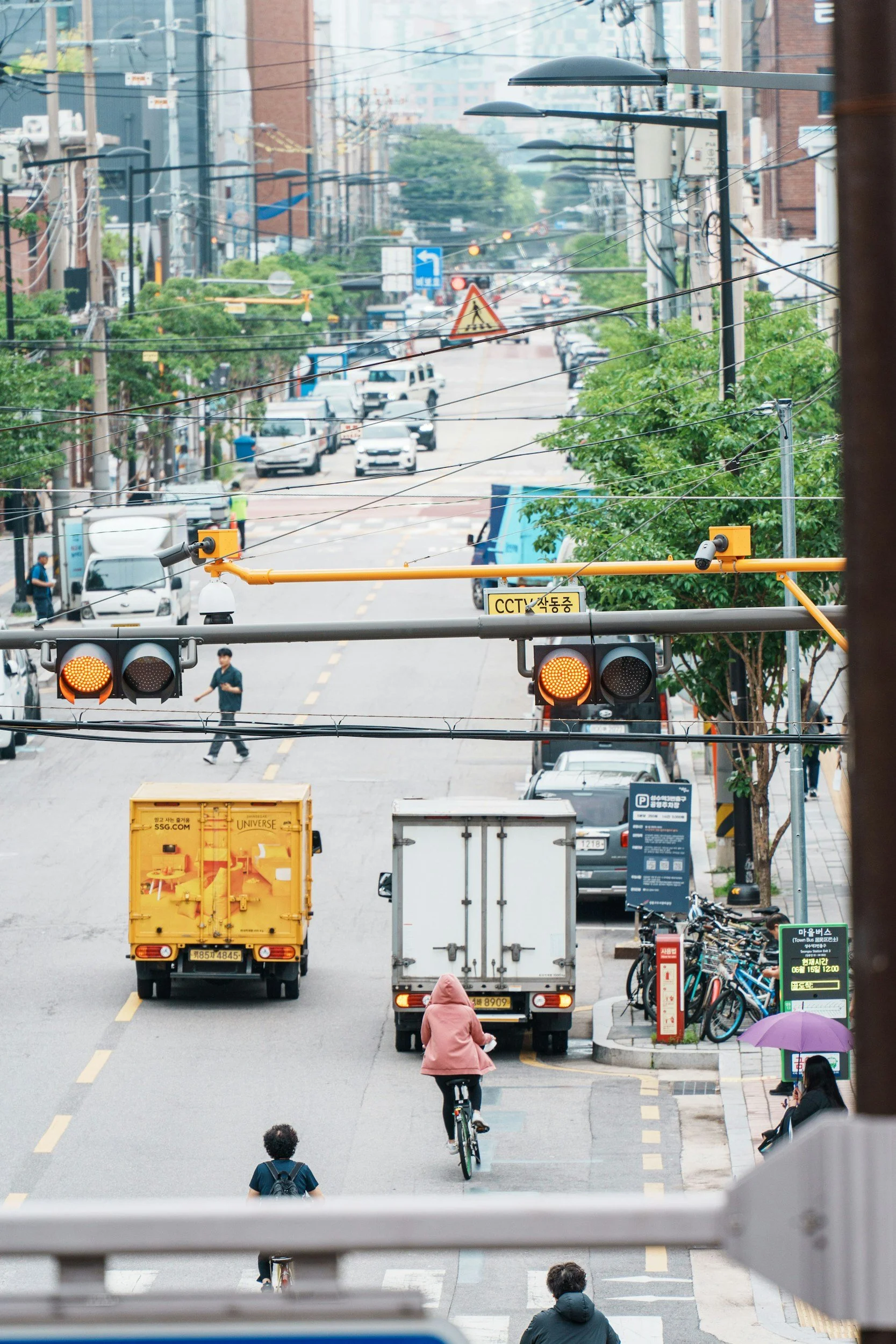
Seongsu-dong is one of the clearest examples of Seoul’s ability to reinvent itself without entirely losing its past. Once known more for workshops, warehouses, and its long-established shoe-making industry, it has evolved into one of the city’s most talked-about creative districts, where former industrial spaces now hold cafés, pop-ups, galleries, design stores, and restaurants that draw a steady stream of locals and visitors. It is often described as one of Seoul’s trendiest areas, but what makes Seongsu interesting is not simply that it is fashionable. It is that the neighbourhood still feels as though its older bones are visible beneath the newer gloss.
Why stay here
Seongsu-dong suits travellers who want Seoul to feel contemporary, creative, and a little more locally current from the start. If you are drawn to design-led neighbourhoods, café culture, independent shops, and places where wandering without a fixed plan is part of the appeal, this is a strong choice. It works especially well for return visitors, creative travellers, couples, and anyone more interested in atmosphere and lifestyle than in staying beside the city’s classic historical sights.
What it feels like
There is a different kind of energy in Seongsu from the louder, more immediate buzz of Hongdae or the polished confidence of Gangnam. It feels creative but not overly manic, stylish without being too formal, and full of the kind of streets where the day can slip by easily between coffee, window-shopping, and unplanned stops. Former factory buildings and warehouse-style spaces give the area a slightly rough-edged backdrop, while newer openings keep the neighbourhood feeling current. Around Seoul Forest, the mood softens further, with greener streets and a more relaxed pace that balances the district’s trend-led appeal.
What you’ll find here
Seongsu is a strong base for travellers who enjoy spending time in the neighbourhood itself rather than treating it simply as somewhere to sleep. You will find café streets, design shops, fashion pop-ups, cultural spaces, and traces of the area’s older identity, including its handmade shoe heritage. The proximity to Seoul Forest adds another layer, giving the district a greener edge and making it easier to break up urban days with time outdoors. One of Seongsu’s strengths is that it feels current without becoming entirely generic. Even when the area is busy, it still feels rooted in place rather than built solely for visitors.
Food and drink scene
This is one of Seoul’s most enjoyable neighbourhoods for café-hopping, casual dining, and spending long, unhurried afternoons moving between different kinds of spaces. The food and drink scene feels design-conscious and trend-aware, with plenty of stylish cafés, bakeries, modern restaurants, and pop-up concepts woven into the wider life of the district. It is less about traditional Seoul dining and more about contemporary city culture. That said, the area still has enough range to avoid feeling one-note, and it works particularly well for travellers who see cafés and neighbourhood dining as part of the travel experience rather than just practical stops.
Things to consider
Seongsu is not the most practical base for everyone. If this is your first visit to Seoul and your priority is quick access to palaces, Bukchon, Insadong, and the historical heart of the city, other neighbourhoods will make more sense. It can also feel a little style-led in places, which some travellers will love and others may find less grounding than areas with a deeper sense of traditional street life. The appeal here is very much tied to contemporary Seoul, so it is best suited to travellers who actively want that version of the city.
World Locals tip
Choose Seongsu-dong if you want Seoul to feel creative, current, and easy to explore at your own pace. It is one of the best areas for travellers who care as much about neighbourhood atmosphere, cafés, and design culture as they do about major sights.
Other areas to know about
Seoul is not a city that can be neatly contained within a handful of neighbourhoods, and even beyond the main bases above, there are several other areas worth knowing about as you plan your trip. Some work better as places to visit than places to stay, while others will be exactly right for certain travellers even if they are less universally appealing.
Jamsil
Jamsil offers a different side of Seoul again, one that feels more spacious, family-friendly, and built around major landmarks rather than intimate street life. This is where you will find Seokchon Lake, Lotte World Tower, large shopping complexes, and a more open, orderly feel than in many of the older central districts. It can be a good fit for families, for travellers drawn to Seoul’s skyline-and-lakeside side, or for anyone who wants a base that feels calmer and a little less hectic. The trade-off is that it can feel more functional than atmospheric, especially if what you are looking for is café-lined character or a stronger sense of old Seoul.
Apgujeong and Cheongdam
If Gangnam feels polished, Apgujeong and Cheongdam feel even more curated. These are neighbourhoods of designer boutiques, luxury brands, beauty culture, smart cafés, and restaurants that often lean more towards style than spontaneity. For some travellers, that makes them exciting. For others, it can make them feel a little too glossy and removed. They are worth knowing about if your Seoul trip is shaped by fashion, skincare, upscale dining, or K-culture references, but for most readers they tend to work better as places to explore for an afternoon rather than the most rounded base for a first stay.
Dongdaemun
Dongdaemun is one of those parts of Seoul that travellers often know by name before they understand how it feels. It is busy, practical, and tied to shopping, markets, late-night energy, and major design landmarks, but it can also feel more functional than charming. There is useful transport here, plenty of activity, and a strong sense of movement, especially after dark, yet it is not always the area people fall in love with. It can suit travellers who prioritise access, shopping, and being in the middle of things, though it rarely has the same emotional pull as Seoul’s more characterful neighbourhoods.
Ikseon-dong
Ikseon-dong has become one of the most talked-about corners of central Seoul, with hanok lanes now filled with cafés, restaurants, and small shops that make it incredibly appealing at first glance. It is atmospheric, photogenic, and very easy to enjoy, especially if you like the idea of old architectural bones filled with contemporary energy. The reason I would keep it in this section rather than give it a full standalone neighbourhood profile is that it works best as part of a wider stay around Jongno rather than as a separate base in its own right. Think of it less as a district to build your whole trip around and more as one of the most enjoyable pockets within central Seoul to spend time in.
Yeouido
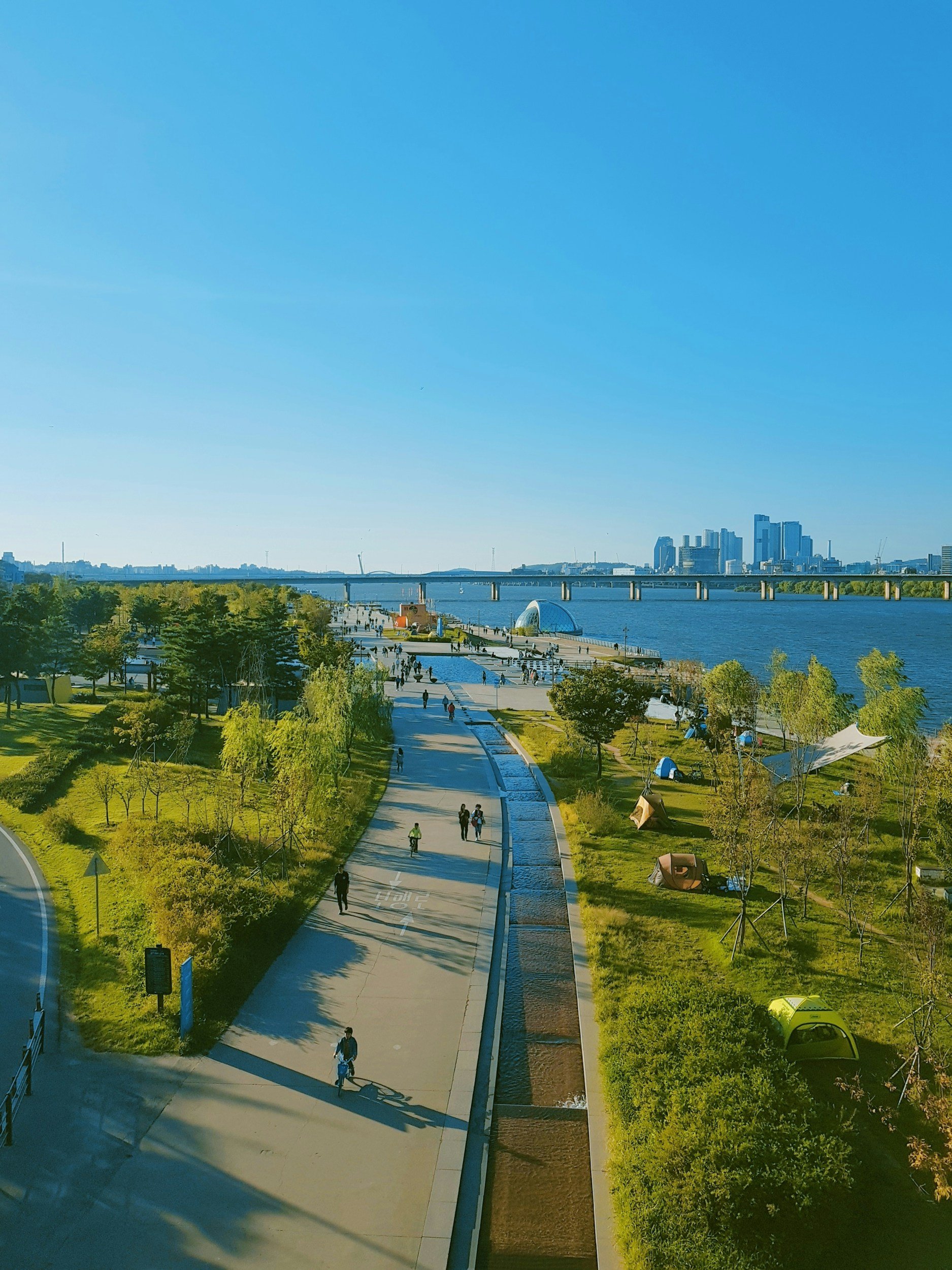
Yeouido gives you yet another version of the capital: broader, more businesslike, and more defined by parks, office towers, riverside views, and a cleaner, more corporate rhythm. It can be a strong fit for travellers visiting Seoul for work, for those who want easy access to the Han River, or for anyone who prefers a slightly calmer, less crowded-feeling part of the city. What it tends to lack, though, is the layered neighbourhood charm that makes areas like Jongno, Hongdae, or Seongsu so memorable. It is practical, pleasant, and useful, but not usually the first place I would point a leisure traveller towards unless there is a specific reason to stay there.
Which neighbourhood is right for you?
The best neighbourhood in Seoul really depends on the kind of trip you want to have, because this is a city where your base shapes the atmosphere of the whole experience. Some areas make Seoul feel easy and immediate, while others bring out its historic, creative, or more contemporary sides. Rather than searching for one perfect answer, it is more useful to think about which version of the city you want to return to each evening.
If this is your first time in Seoul and you want a base that feels simple, central, and easy to navigate, Myeong-dong is often the most straightforward choice. It gives you convenience, transport, plenty of accommodation, and an area that stays lively after dark. It may not be the city’s most characterful neighbourhood, but it does make a short first trip feel smooth.
If you want history, atmosphere, and a stronger sense of old Seoul, Jongno and Euljiro are hard to beat. This is one of the best options for travellers who want palace access, traditional streets, a more rooted food and drink scene, and a base that feels layered rather than polished. It suits people who want centrality without losing character.
If you are drawn to hanok lanes, tea houses, galleries, and a more cultural, visually distinctive side of the city, Insadong and Bukchon make a beautiful base. This area is particularly good for travellers who want Seoul to feel reflective and historically grounded, though it is better for atmosphere and slow wandering than for nightlife.
If you want café culture, youthful energy, and evenings that do not require much planning, Hongdae and Yeonnam-dong are among the most enjoyable parts of the city to stay in. They work especially well for solo travellers, couples, and anyone who wants a social, creative base with plenty happening on the doorstep. Of the two, Yeonnam-dong often gives the slightly calmer and more balanced experience.
If your trip is shaped by restaurants, bars, style, and a more international feel, Itaewon and Hannam-dong are strong contenders. This is a good fit for travellers who want a more contemporary, outward-looking side of Seoul, and for anyone who is happy to trade some historical atmosphere for food, nightlife, and design-led neighbourhood life.
If you prefer sleek hotels, shopping, beauty culture, and a polished modern city feel, Gangnam makes the most sense. It suits travellers who are drawn to contemporary Seoul and do not mind being a little further from the traditional heart of the city. For some, it will feel exciting and stylish. For others, it may feel a touch too polished.
If you want creative energy, design shops, café-hopping, and a neighbourhood that feels current and locally popular, Seongsu-dong is one of the most interesting choices. It is particularly well suited to return visitors or travellers who care more about atmosphere and lifestyle than ticking off classic first-time sights.
In the end, the right neighbourhood comes down to the kind of memories you want Seoul to leave you with. If you want ease, choose Myeong-dong. If you want layers, choose Jongno and Euljiro. If you want beauty and heritage, choose Insadong and Bukchon. If you want energy, choose Hongdae and Yeonnam-dong. If you want style and dining, choose Itaewon and Hannam-dong. If you want modern polish, choose Gangnam. If you want creative Seoul, choose Seongsu-dong. None of them show you the whole city on their own, but the right one will help the right version of Seoul come into focus.
Where first-time visitors often stay — and why it’s not always the best fit
For many first-time visitors, Myeong-dong is the default choice, and that instinct makes sense. It is central, easy to navigate, well connected, and full of hotels, shops, and places to eat, which can make Seoul feel far less intimidating on a first trip. If you are only in the city for a few days and want somewhere straightforward, lively, and practical, it does the job very well.
The reason it is not always the best fit is that convenience and atmosphere are not quite the same thing. Myeong-dong gives you a very easy version of Seoul, but not always the most memorable one. Travellers who choose it for simplicity often end up spending their most enjoyable hours elsewhere, whether that means wandering the historic streets around Jongno, café-hopping in Yeonnam-dong, or spending an afternoon in the creative corners of Seongsu. In other words, it works well as a base, but it does not always feel like the fullest expression of the city.
That is why it helps to think beyond the most obvious choice. If you are a first-time visitor who wants history, atmosphere, and centrality, Jongno and Euljiro may suit you better. If you want a trip shaped by cafés, neighbourhood life, and a younger, more social energy, Hongdae and Yeonnam-dong can be a stronger match. If you care most about design, contemporary culture, and a more local-feeling creative scene, Seongsu-dong may leave a bigger impression, even if it is not the classic first-timer recommendation.
For some travellers, Myeong-dong will still be exactly right, especially if the priority is ease. But if what you really want is a base that feels more distinctive, more textured, or more reflective of the version of Seoul you have imagined, it is worth looking a little further.
“Seoul is not a city that can be reduced to one perfect neighbourhood, and that is part of what makes it so compelling. It is a capital of contrasts, where old and new, polished and improvised, traditional and trend-led all exist side by side, often only a few stations apart. The area you choose will not determine everything about your trip, but it will shape the mood of it in ways that matter more than many travellers expect.
For some, the right base will be somewhere central and convenient, where the city feels easy to step into. For others, it will be a neighbourhood with more edge, more history, more café culture, or a stronger sense of local rhythm. What matters is not finding the area that everyone else says is best, but finding the one that matches how you want Seoul to feel while you are there.
That is the beauty of the city. You can experience Seoul through palace walks and old lanes, through neon evenings and barbecue dinners, through design stores and quiet coffee shops, through river views, market streets, and late-night wanderings that stretch longer than planned. Each neighbourhood opens a different side of the capital, and part of the pleasure of visiting is discovering which one feels most like yours.
Choose well, and Seoul will begin to make sense not just as a city you visited, but as a city you inhabited, even if only for a few days.”