Choosing where to stay in Athens is not simply a question of finding the hotel closest to the Acropolis. The city spreads out around ancient hills, busy commercial streets, residential squares and a coastline that sits well beyond the historic centre. Two neighbourhoods can appear almost adjacent on a map yet offer completely different versions of Athens once the heat, hills, traffic and evening atmosphere are taken into account.
For most first-time visitors, the central decision is whether to prioritise historic atmosphere, transport convenience or a neighbourhood that feels more lived-in. Plaka places you beneath the Acropolis, Monastiraki puts the city’s noise and nightlife at your door, while Koukaki offers a calmer balance of sightseeing and everyday Athens.
This guide breaks down the best neighbourhoods in Athens so you can choose a base that suits the trip you actually want.
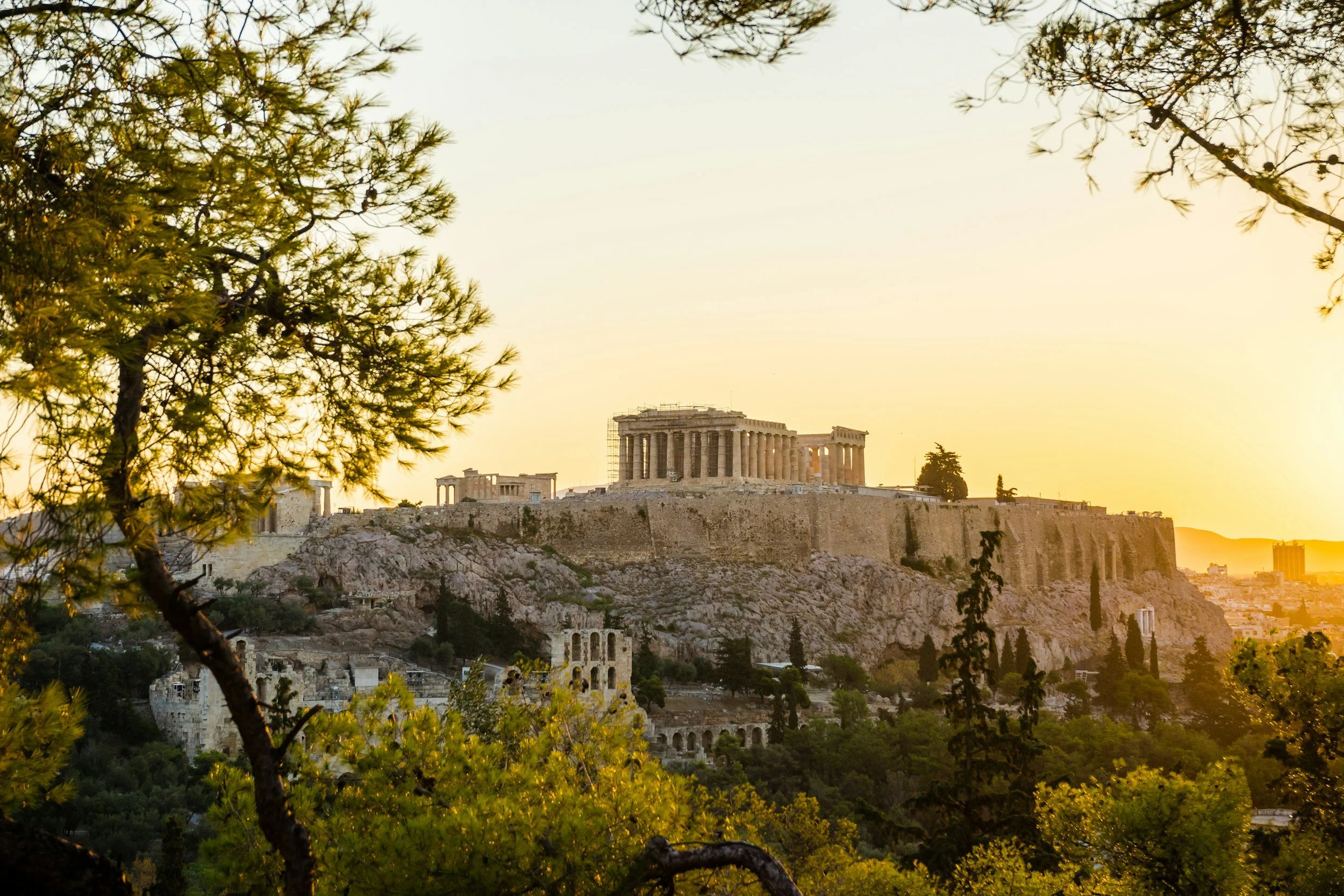
Where to Stay in Athens: Quick Answer
Best overall: Koukaki and Makrygianni
Best for first-time visitors: Koukaki
Best for couples: Thissio
Best for nightlife: Psyrri
Best for food and a local feel: Pangrati
Best for luxury: Kolonaki
Best for a short stay: Syntagma
Best for historic atmosphere: Plaka
Best for combining Athens with the coast: Glyfada
For most travellers, Koukaki is the strongest all-round choice. It keeps the Acropolis, Plaka and the historic centre within easy reach, but gives the trip more breathing room than Monastiraki or central Plaka.
Choose Syntagma when transport and efficiency matter most, Pangrati when neighbourhood life is the priority, and Glyfada only when the coast is a central part of the trip.
How Athens Is Laid Out
Central Athens is organised around several overlapping centres rather than one compact old town.
Syntagma is the political and transport centre, Monastiraki is one of the city’s main tourist and commercial hubs, while the Acropolis rises between Plaka, Makrygianni, Koukaki and Thissio.
The modern historic centre broadly sits between Syntagma, Monastiraki and Omonia. This is where many of the city’s commercial streets, hotels and transport connections are found. The ancient sites lie immediately south and west of this area, while neighbourhoods such as Kolonaki, Pangrati and Exarchia spread uphill or further away from the most visited archaeological sites.
Athens rewards walking, but it isn’t uniformly easy to cross on foot. Hills, narrow pavements, polished stone, traffic and high summer temperatures can make a seemingly short route more demanding than expected.
Metro access therefore matters more than it may appear while planning from home. Syntagma and Monastiraki sit directly on the airport metro line, while Koukaki is served by Acropoli and Syngrou-Fix stations. Areas such as Pangrati and Exarchia require more walking or greater reliance on buses.
The main choice is between staying beside the historic sights and moving slightly further out for stronger neighbourhood life. Neither approach is automatically better. It depends on whether you want Athens to feel effortless or more residential.
What to Consider Before Choosing a Neighbourhood
First Trip or Return Visit
For a first trip, Koukaki, Plaka, Syntagma and Monastiraki reduce travel time and make central Athens easier to understand.
On a return visit, Pangrati, Exarchia or the coast give you more room to experience Athens beyond its archaeological centre.
Atmosphere or Convenience
Plaka and Thissio deliver the strongest visual sense of historic Athens.
Syntagma provides the simplest transport and hotel logistics. Koukaki falls between the two, which is why it works so well for a broad range of travellers.
Nightlife and Street Noise
Central Athens remains active late into the evening.
Psyrri, Monastiraki and parts of Plaka can be noisy, particularly around rooftop bars, restaurant streets and nightlife squares. Check recent accommodation reviews for soundproofing and street noise rather than relying on the neighbourhood name alone.
Heat and Hills
Kolonaki, Mets, Exarchia and the upper streets of Plaka involve more climbing.
This is manageable in cooler months but becomes more significant during summer or for travellers with mobility concerns. A hotel that appears close to the centre may still involve a steep return walk.
Airport Access
Syntagma and Monastiraki provide the easiest public transport connections to Athens Airport.
Koukaki is still convenient but usually requires a change. Glyfada may be relatively accessible by road from the airport, although public transport connections are less direct.
City or Coast
Glyfada isn’t a substitute for central Athens if your priority is archaeological sightseeing.
It works when swimming, coastal restaurants and a slower resort rhythm are equally important. Travellers staying only two or three nights should generally remain in the centre.
The Best Neighbourhoods in Athens
Koukaki and Makrygianni: Best Overall for a First Trip
Best for: First-time visitors who want the Acropolis nearby without staying inside the busiest tourist streets.
What It Feels Like
Koukaki sits south of the Acropolis, where apartment blocks, neoclassical houses and small cafés meet the monument-lined Dionysiou Areopagitou promenade.
Makrygianni, around the Acropolis Museum, feels more visitor-oriented, while the streets deeper into Koukaki become increasingly residential. Drakou Street and the roads around Olympiou fill with tables in the evening, but the area rarely feels as compressed as Monastiraki or Plaka.
The opening of the Acropolis Museum and the pedestrian route around the city’s ancient monuments helped turn Koukaki into one of central Athens’ most desirable places to stay. Despite its popularity, the neighbourhood still feels connected to contemporary Athens.
Why Stay Here
You can walk to the Acropolis Museum, Acropolis entrances, Plaka, Philopappou Hill and the historic centre while retaining access to neighbourhood cafés and restaurants.
It is central without feeling entirely organised around visitors.
Who It Suits
Koukaki works particularly well for first trips, couples, solo travellers and anyone staying three or four nights.
It is also a sensible choice for travellers who want to start sightseeing early, before the busiest hours.
What’s Nearby
The Acropolis Museum, Dionysiou Areopagitou promenade, Philopappou Hill, the Odeon of Herodes Atticus and the National Museum of Contemporary Art are all within the wider area.
Plaka and Thissio can be reached on foot without needing to cross the commercial centre.
Check out Best Experiences in Athens for moreTransport and Walkability
Acropoli station on Metro Line 2 serves Makrygianni, while Syngrou-Fix is useful for southern Koukaki.
The streets around the museum are relatively easy to navigate, although the slopes towards Philopappou Hill become steeper.
The Trade-Off
Koukaki is no longer a low-cost alternative to Plaka.
Its popularity has increased accommodation prices, and the streets closest to the museum can feel heavily visitor-oriented.
Who Should Stay Elsewhere
Choose Monastiraki or Psyrri if nightlife is the centre of the trip.
Choose Syntagma if you have an early flight, very limited time or heavy luggage.
Where to Stay
Herodion Hotel: A strong mid-range choice directly behind the Acropolis Museum. Its main advantage is location rather than a resort-style hotel experience, making it best for travellers planning busy sightseeing days.
COCO-MAT Athens BC: A more design-led option close to Acropoli station and the museum. It suits travellers who want contemporary interiors and stronger hotel facilities while remaining firmly within the archaeological centre.
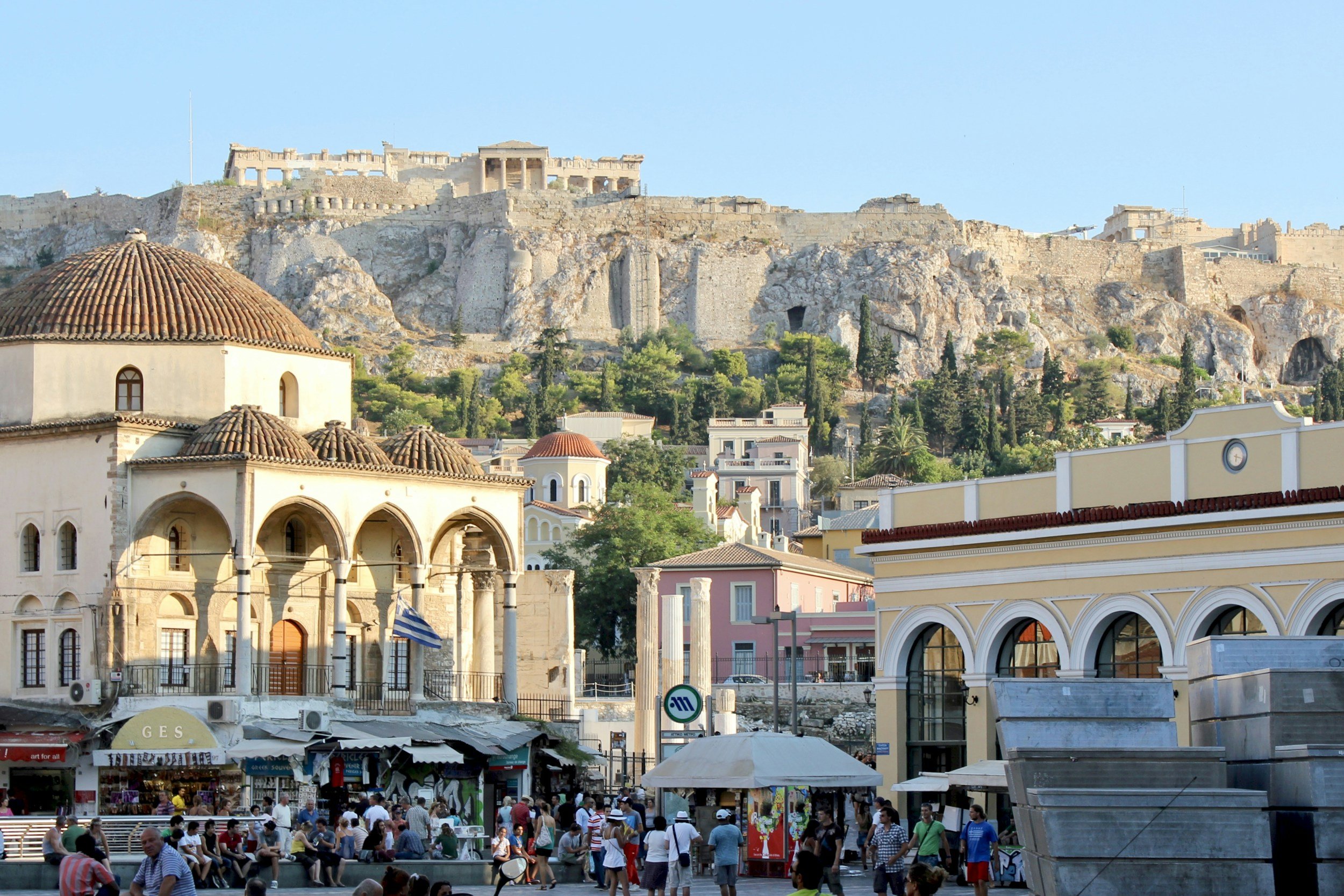
Plaka: Best for Historic Atmosphere
Best for: First-time visitors who want pedestrian streets and the Acropolis immediately nearby.
What It Feels Like
Plaka climbs along the northern and eastern slopes of the Acropolis.
Its lanes pass Byzantine churches, restored neoclassical houses, small museums, restaurants and souvenir shops, with Anafiotika tucked into the higher slope beneath the ancient citadel.
The area contains some of central Athens’ most recognisable streets, but it is also the neighbourhood where tourism is most visible. By late morning, parts of Plaka fill with tour groups, restaurant terraces and visitors moving between the Acropolis and Syntagma.
Why Stay Here
Few areas make early-morning or evening sightseeing easier.
You can walk through the neighbourhood before day visitors arrive, reach the Acropolis entrances quickly and move between Syntagma, Monastiraki and Makrygianni without using transport.
Who It Suits
Plaka works for first-time visitors, couples, families and travellers who value setting over nightlife or price.
What’s Nearby
The Acropolis, Roman Agora, Hadrian’s Library, Anafiotika and several smaller museums are all nearby.
Check out 48 Hours in Athens for moreTransport and Walkability
Plaka itself doesn’t have a metro station.
Most hotels are reached from Syntagma, Monastiraki or Acropoli. Lower Plaka is straightforward to navigate, while the upper lanes contain steps, slopes and uneven paving.
The Trade-Off
Restaurants and shops often cater predominantly to visitors, and the area can feel busy from late morning onwards.
Hotel taxis may also be unable to stop directly outside properties on pedestrianised or narrow streets.
Who Should Stay Elsewhere
Choose Pangrati for everyday neighbourhood life, Koukaki for better balance, or Syntagma for easier luggage and airport logistics.
Where to Stay
Electra Palace Athens: A premium, traditional hotel in the wider Plaka area. Its main strengths are its established facilities, central position and Acropolis views. The style is more classic than minimalist, which will suit travellers looking for a traditional hotel experience.
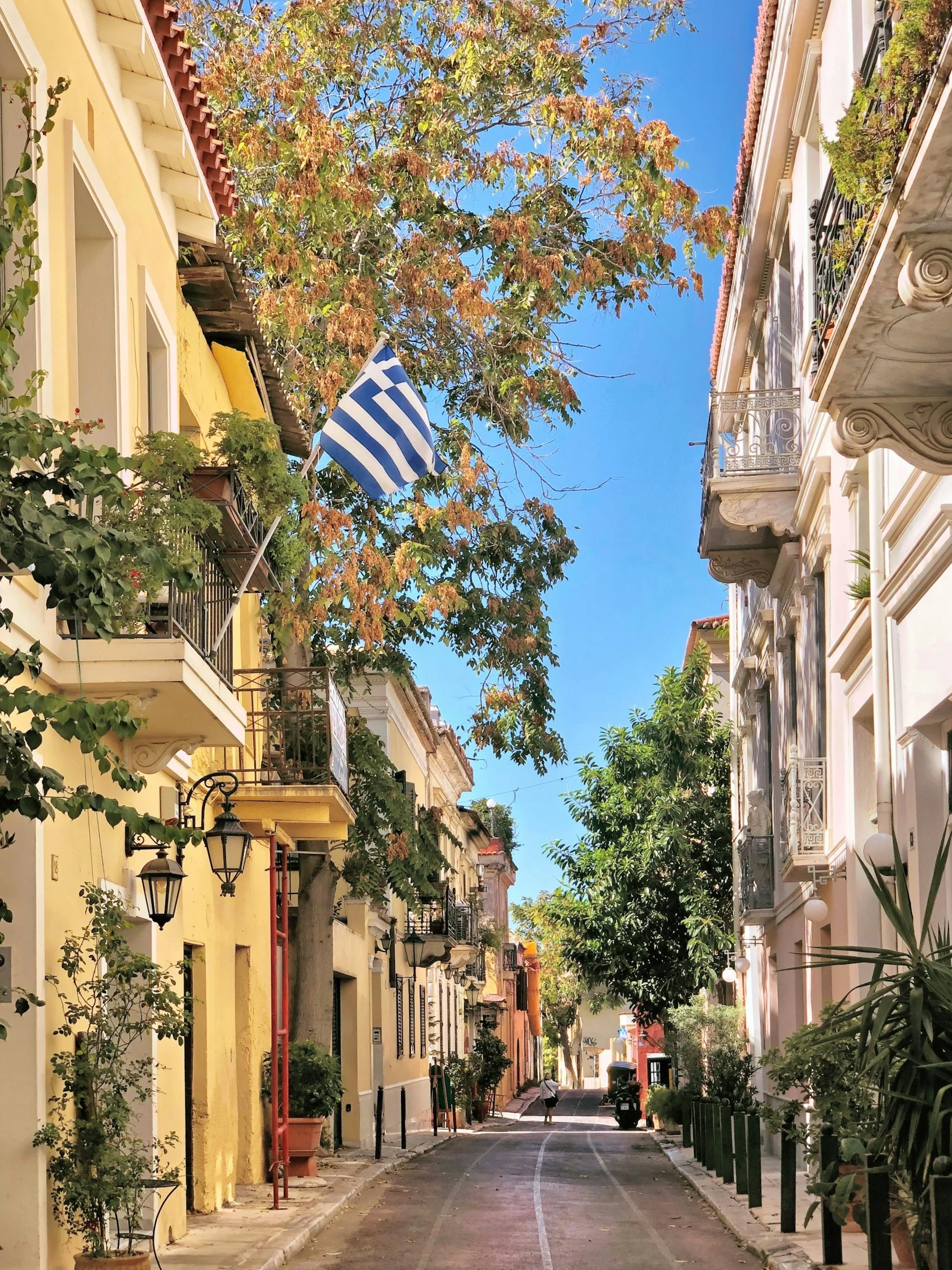
Monastiraki and Psyrri: Best for Food, Nightlife and Energy
Best for: Travellers who want restaurants, bars, markets and transport immediately outside the hotel.
What It Feels Like
Monastiraki is Athens at its most compressed.
A Byzantine church, Ottoman mosque, ancient remains, flea-market shops, rooftop bars and the metro all meet around the same square. Psyrri begins immediately north-west, replacing much of the daytime market traffic with restaurants, workshops, street art and late-night drinking.
That layered character is the appeal, but it also makes this one of the city’s busiest places to stay.
Why Stay Here
You are within walking distance of the Ancient Agora, Plaka, the Acropolis, the central market and many of the city centre’s strongest food and cocktail areas.
Who It Suits
This is the better choice for groups of friends, food-focused weekends, nightlife and very short stays where centrality matters more than quiet.
What’s Nearby
Monastiraki Flea Market, the Ancient Agora, Ermou Street, Athinas Street, Psyrri’s restaurant streets and the historic commercial centre are all close.
Check out Athens Food and Drink Guide for moreTransport and Walkability
Monastiraki station serves Metro Lines 1 and 3, providing direct connections towards the airport and Piraeus.
This is one of the most useful transport positions in Athens.
The Trade-Off
Crowds, rooftop music, restaurant traffic and late-night noise are genuine considerations.
The area also requires more awareness of belongings, particularly around busy squares, markets and public transport.
Who Should Stay Elsewhere
Choose Koukaki or Thissio if quiet evenings matter.
Choose Plaka if historic atmosphere is more important than nightlife.
Where to Stay
A for Athens: Positioned immediately above Monastiraki Square, this is an efficient mid-range option for travellers who want the metro, nightlife and Acropolis views nearby. The location is the selling point, but noise-sensitive guests should select rooms carefully.
The Foundry Suites: A more distinctive option in Psyrri, housed in a converted industrial building with apartment-style suites. It works particularly well for longer stays or travellers who value more space, although the surrounding streets remain lively.
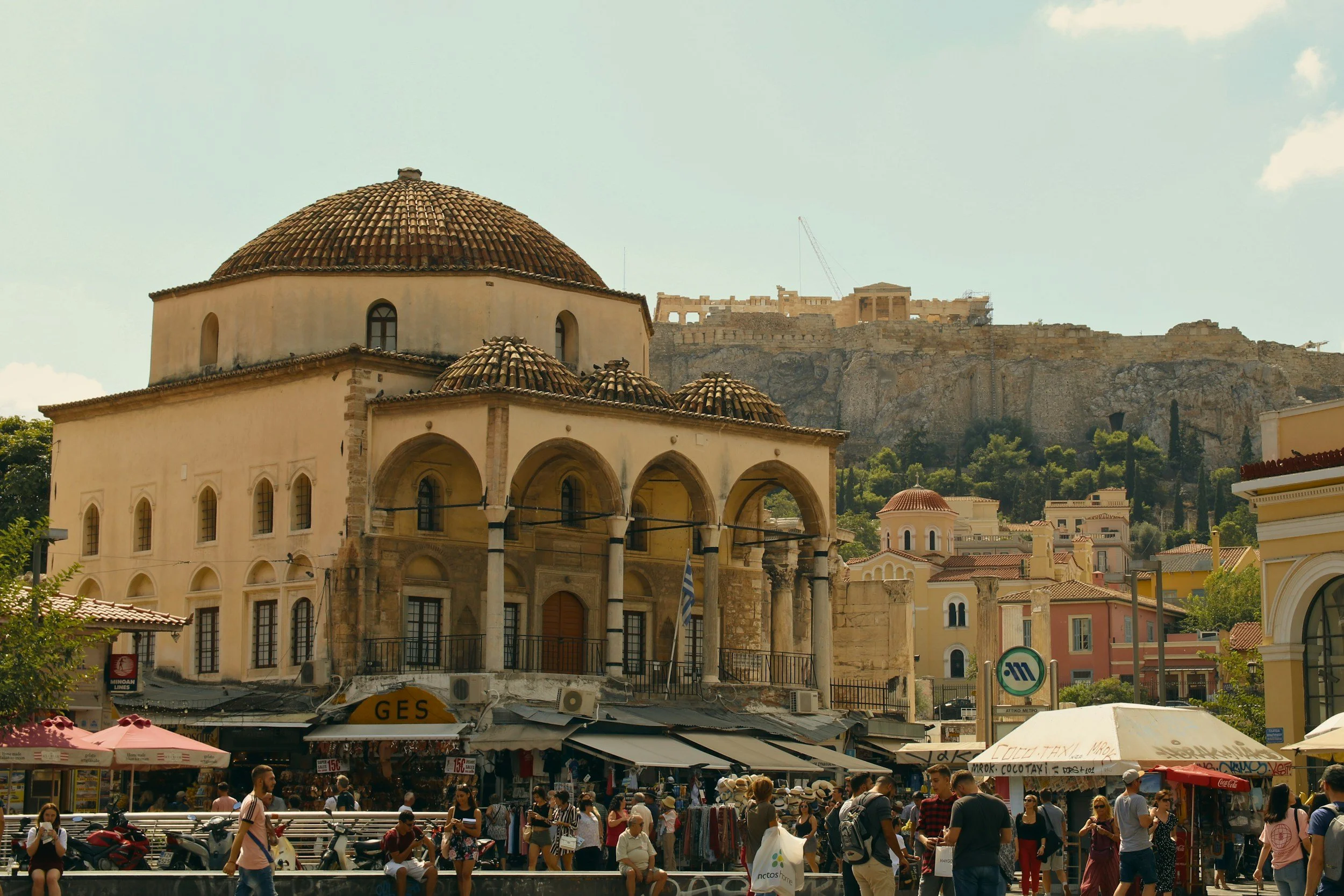
Syntagma: Best for Convenience and Short Stays
Best for: Travellers prioritising airport access, central transport and straightforward hotel logistics.
What It Feels Like
Syntagma is formal, busy and functional.
Parliament faces the square, major avenues meet here, and the National Garden provides a greener edge towards the south. The surrounding streets contain department stores, established hotels, offices and the polished upper end of the historic centre.
It feels less intimate than Plaka and less distinctive than Pangrati, but no central neighbourhood is easier to use.
Why Stay Here
Syntagma allows you to reach most central districts on foot while providing direct metro and airport-bus connections.
It is particularly useful for late arrivals, early departures or one-night stopovers before travelling elsewhere in Greece.
Who It Suits
Short-break visitors, business travellers, luxury travellers and anyone who values convenience above neighbourhood character.
What’s Nearby
Parliament, the National Garden, Ermou Street, Plaka, Kolonaki and the northern side of the historic centre are all nearby.
Transport and Walkability
Syntagma is served by Metro Lines 2 and 3.
It also provides one of the simplest airport-bus connections in central Athens.
The Trade-Off
Traffic, large roads and commercial activity reduce the sense of staying in a contained neighbourhood.
Demonstrations and public gatherings can also affect the square during major political or national events.
Who Should Stay Elsewhere
Choose Plaka for historic streets, Koukaki for a calmer balance, or Pangrati if you want evenings among neighbourhood restaurants rather than central hotels.
Where to Stay
innAthens: A smaller boutique option near Syntagma, reached through a central courtyard. It combines easy transport with a quieter immediate setting than the square itself.
Hotel Grande Bretagne: Athens’ established luxury address, directly on Syntagma Square. It is the strongest choice for traditional five-star service and immediate access to Parliament, the National Garden and the metro.
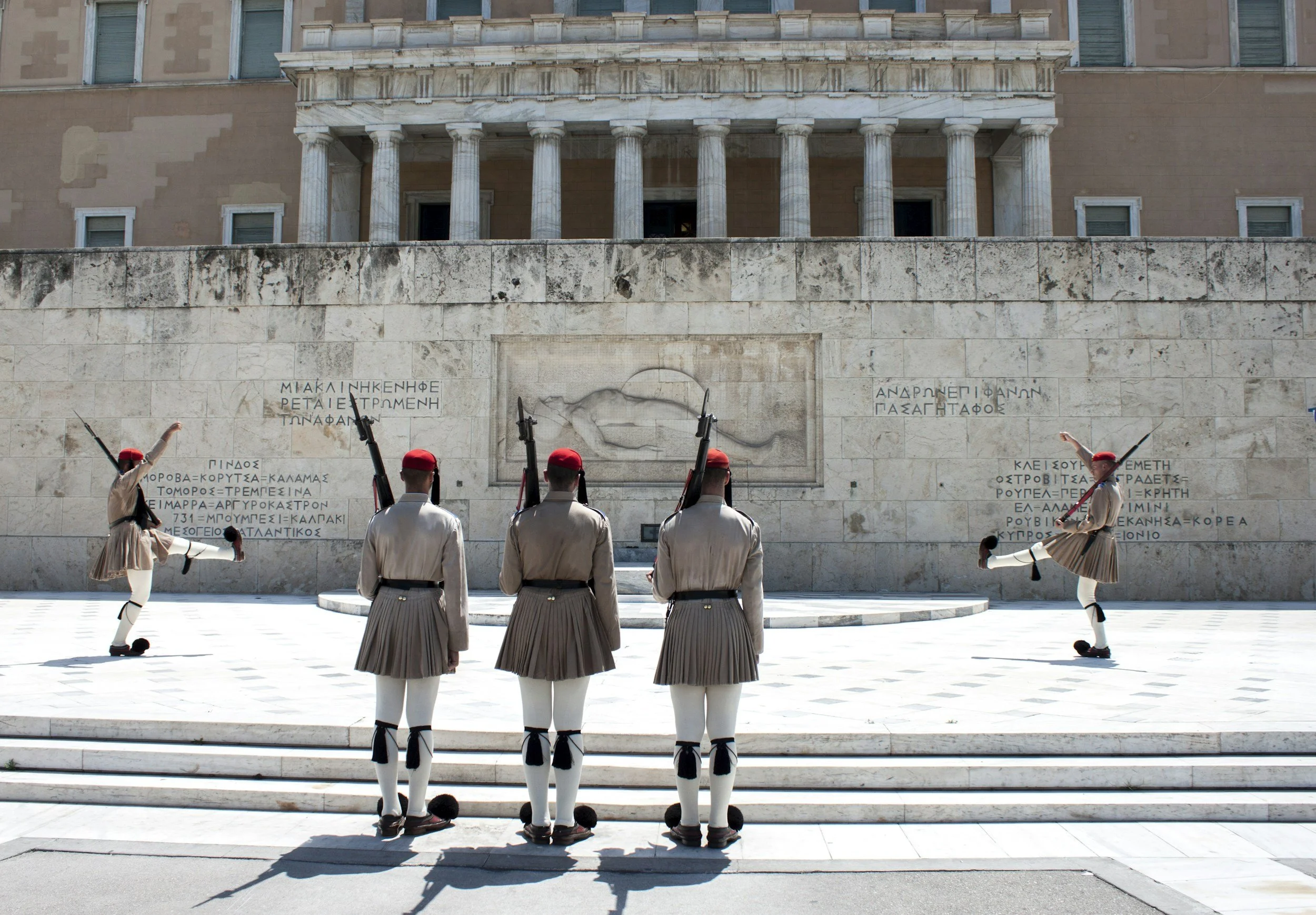
Thissio: Best for Couples and Evening Walks
Best for: Couples who want Acropolis views, cafés and a slower historic-centre stay.
What It Feels Like
Thissio extends west from the Ancient Agora towards Philopappou Hill and Petralona.
Its defining feature is the pedestrian route along Apostolou Pavlou, where evening walkers, musicians and café tables gather beneath views of the Acropolis.
The neighbourhood shares residential roots with neighbouring Petralona. Although it has become more polished, local tavernas and period houses still give it more community texture than much of the visitor centre.
Why Stay Here
You can walk around the Acropolis, reach Monastiraki easily and spend evenings close to the centre without being surrounded by Psyrri’s nightlife.
Who It Suits
Couples, repeat visitors, photographers and travellers who enjoy evening walks and slower meals.
What’s Nearby
The Ancient Agora, Kerameikos, Philopappou Hill, Apostolou Pavlou and the quieter streets leading towards Ano Petralona are all close.
Transport and Walkability
Thissio station sits on Metro Line 1, one stop from Monastiraki.
The area is walkable, although parts rise towards Philopappou Hill and Petralona.
The Trade-Off
The hotel selection is smaller, and some accommodation listed as Thissio is actually closer to Petralona or Kerameikos.
Check the exact map position before booking.
Who Should Stay Elsewhere
Choose Koukaki if museum and Acropolis access matter more.
Choose Monastiraki if you want a direct airport metro connection.
Where to Stay
Be My Guest Athens: A contemporary small hotel positioned between Thissio and Petralona. It is best for travellers wanting a quieter hotel within walking distance of the historic centre rather than extensive on-site facilities.
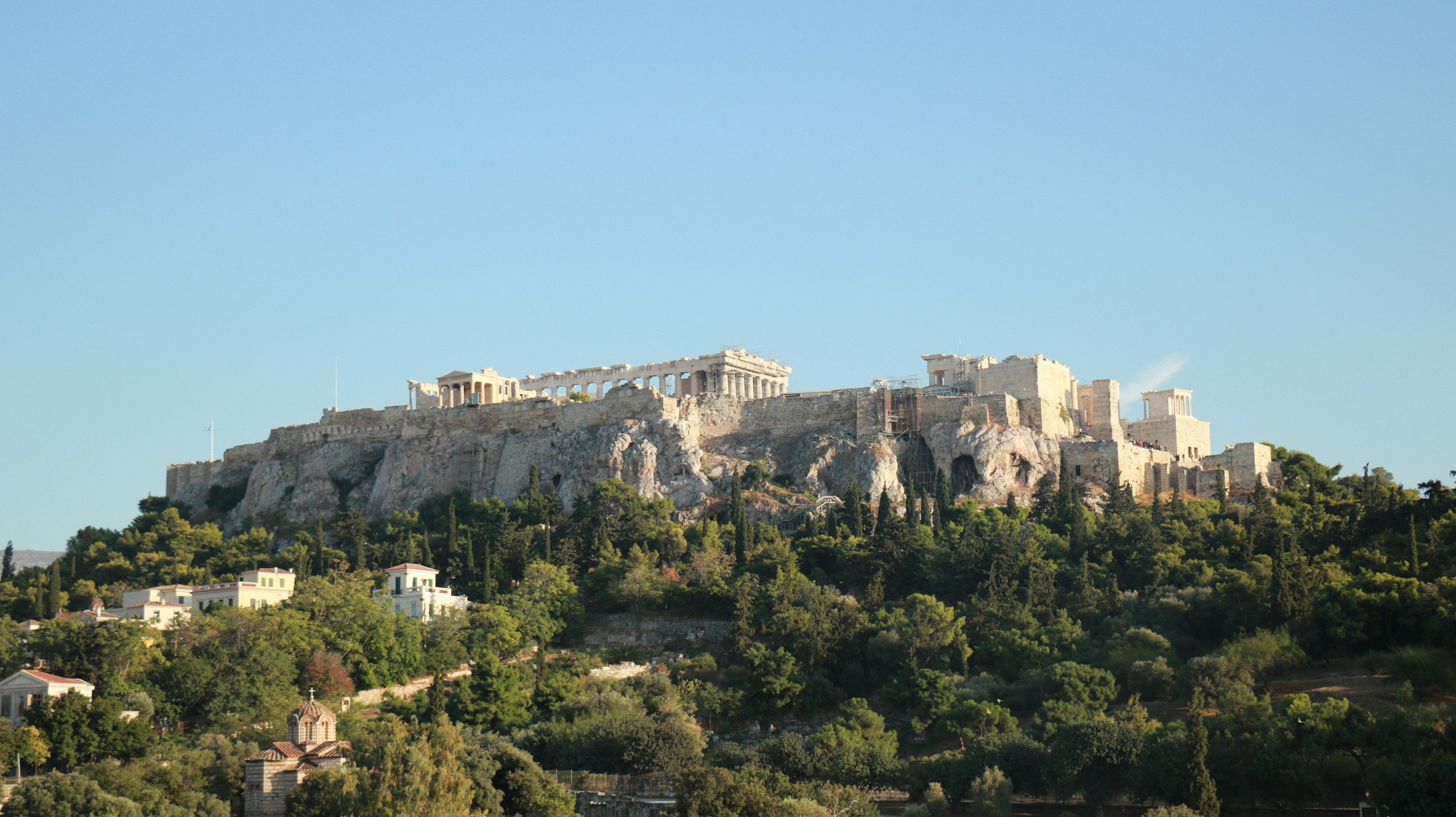
Kolonaki: Best for Luxury, Shopping and Museums
Best for: Travellers who want polished hotels, galleries, shopping and a quieter evening setting.
What It Feels Like
Kolonaki rises from the city centre towards Lycabettus Hill.
Smart apartment buildings, fashion boutiques, galleries and cafés define its lower streets, while the upper slopes around Dexameni become calmer and more residential.
The area has long been associated with Athens’ café culture, professional classes and high-end shopping. Dexameni Square adds a more understated side, with outdoor cafés and a neighbourhood rhythm that feels removed from the busiest tourist routes.
Why Stay Here
Kolonaki provides access to some of Athens’ strongest museums and hotels without the visitor density of Plaka.
It feels composed, particularly in the evenings.
Who It Suits
Luxury travellers, couples, design-conscious visitors, museum-focused trips and anyone who prefers polished neighbourhoods to nightlife districts.
What’s Nearby
The Museum of Cycladic Art, Benaki Museum, National Gallery, Lycabettus Hill and Evangelismos are all nearby.
Transport and Walkability
Evangelismos station on Metro Line 3 provides convenient airport access.
Lower Kolonaki is accessible, but the neighbourhood climbs sharply towards Lycabettus.
The Trade-Off
Room rates, cafés and shops are generally more expensive.
It is also less convenient for repeatedly walking to the Ancient Agora or Psyrri.
Who Should Stay Elsewhere
Choose Syntagma for flatter streets and simpler logistics.
Choose Pangrati for a less polished, more everyday version of eastern central Athens.
Where to Stay
COCO-MAT Hotel Athens: A design-focused hotel on Patriarchou Ioakeim Street. It suits travellers who want a smaller contemporary hotel in the centre of Kolonaki’s shopping and café district.
The Modernist Athens: Located near Evangelismos on Kolonaki’s quieter edge, this is the better option for understated interiors, gallery access and convenient airport transport.
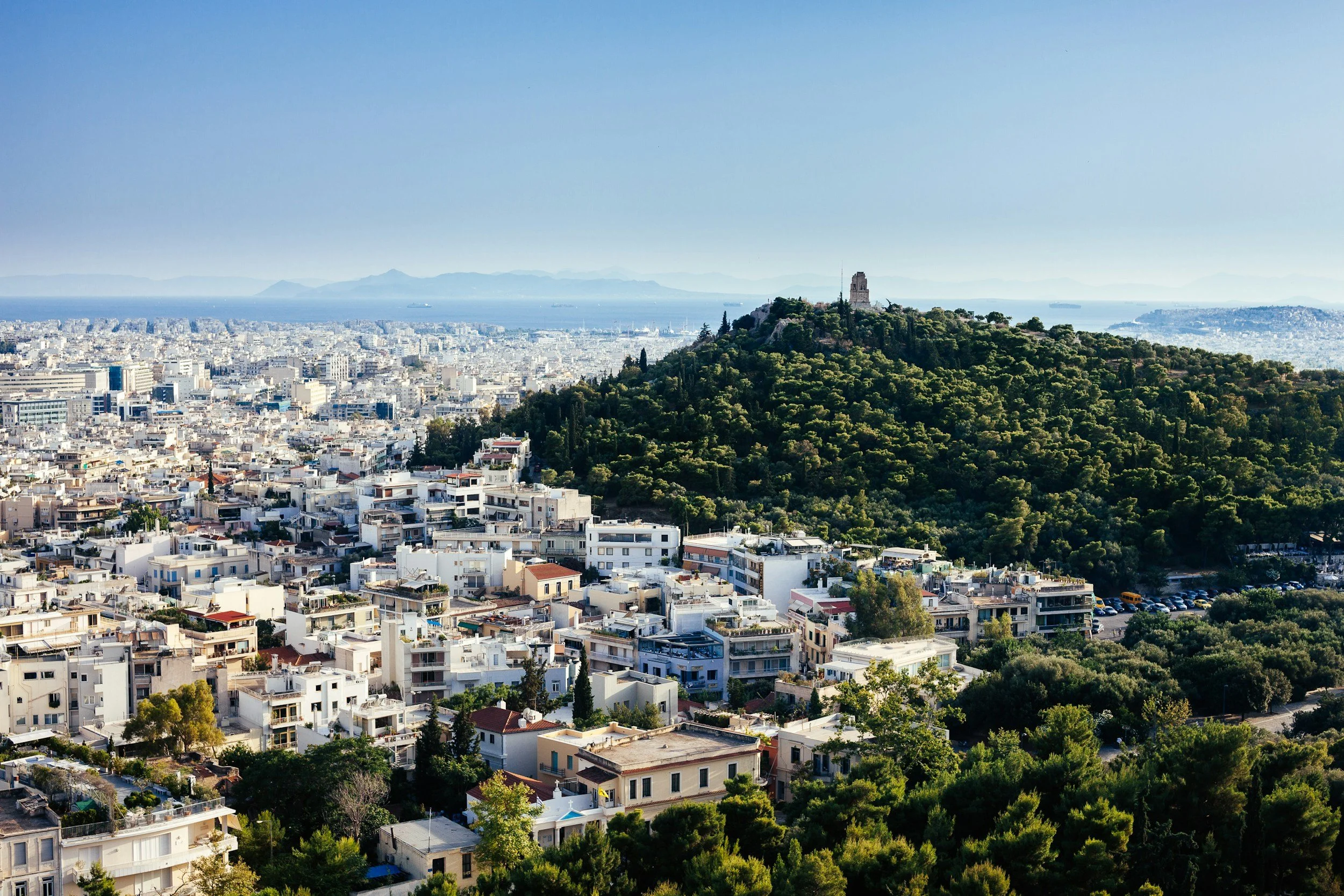
Pangrati and Mets: Best for Local Atmosphere and Food
Best for: Returning visitors and food-focused travellers who want to live at a more residential rhythm.
What It Feels Like
Pangrati spreads east of the Panathenaic Stadium, organised around café-lined squares such as Varnava and Proskopon.
Mets sits closer to the stadium and Ardittos Hill, with narrower, quieter streets and neoclassical houses climbing above the First Cemetery.
The appeal is not one headline landmark. It is the pattern of bakeries, bars, restaurants, apartment buildings and neighbourhood squares that remain active throughout the day.
New restaurants and cafés have brought a younger audience to Pangrati without completely replacing its residential character.
Why Stay Here
Evenings feel less organised around tourism.
The area is particularly strong for eating, coffee and slower days built around the National Garden, Panathenaic Stadium and nearby museums.
Who It Suits
Repeat visitors, couples, longer stays, food travellers and people who would rather commute to the Acropolis than sleep beside it.
What’s Nearby
The Panathenaic Stadium, Goulandris Foundation, National Garden, First Cemetery, Ardittos Hill and the restaurant streets around Pangrati’s squares are all nearby.
Check out Athens Food and Drink Guide for moreTransport and Walkability
There is no metro station inside central Pangrati.
Evangelismos is useful for the northern side, while buses and trolleybuses serve the wider district. Walking to Syntagma is realistic from Mets, but distances increase further east.
The Trade-Off
You will spend more time travelling to Monastiraki, the Ancient Agora and the Acropolis.
Hotel choice is also limited compared with Koukaki or Syntagma.
Who Should Stay Elsewhere
Choose Koukaki for a first visit or Syntagma for a two-night trip.
Pangrati is better when experiencing contemporary Athens is part of the objective.
Where to Stay
Pi Athens: A small boutique property on a residential street beside the Panathenaic Stadium. It is best suited to couples or independent travellers who want the quieter edge of Mets while remaining within walking distance of the National Garden and Syntagma.
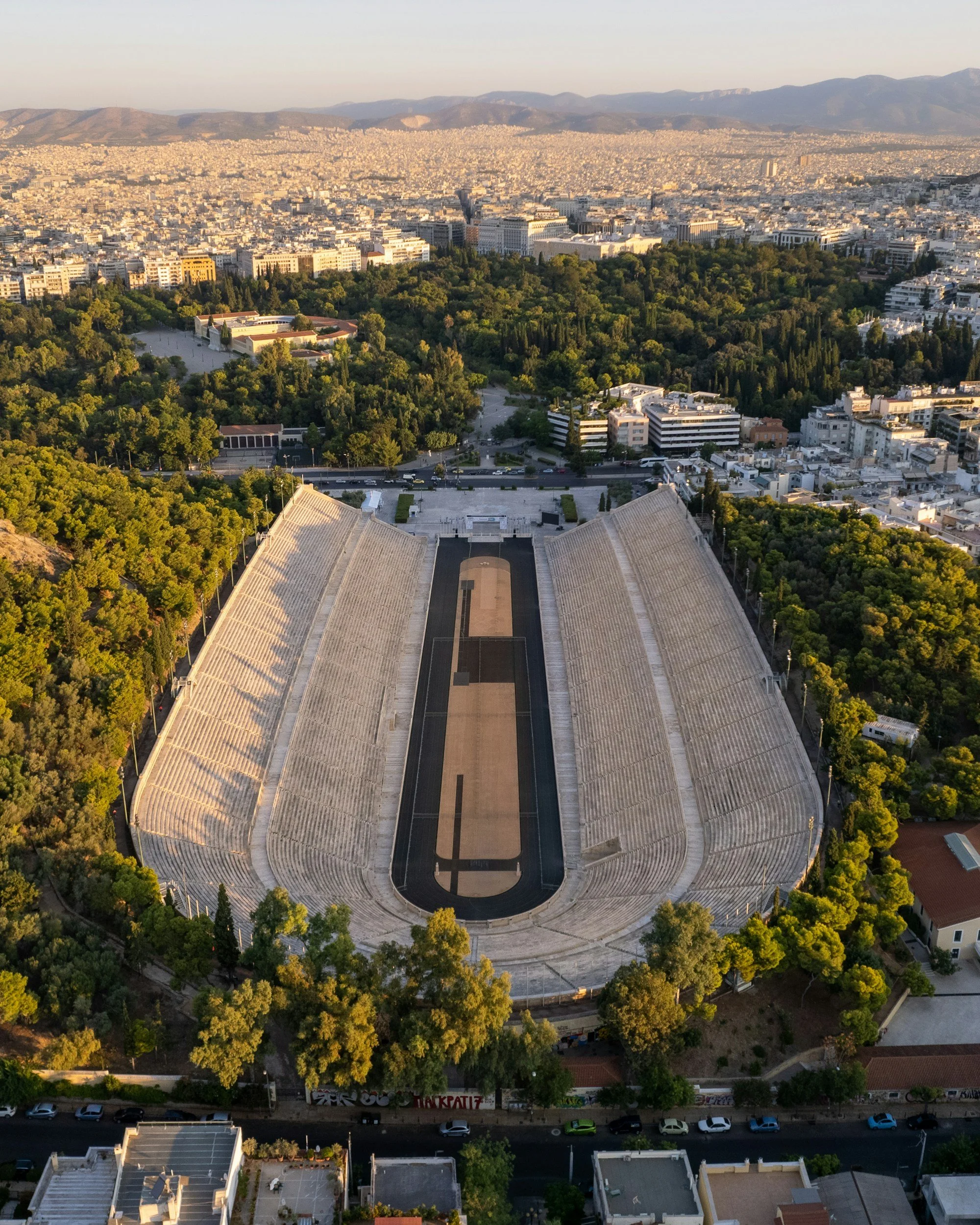
Exarchia: Best for Counter-Culture and Value
Best for: Independent travellers interested in books, music, street art and political culture.
What It Feels Like
Exarchia sits between Kolonaki, Omonia and the National Archaeological Museum.
Publishing houses, bookshops, record stores, inexpensive restaurants, student bars and extensive street art reflect its long association with radical politics and counter-culture.
Kallidromiou Street provides one of the neighbourhood’s strongest everyday scenes, particularly around its market and cafés. The immediate area around Exarchia Square can feel more intense and unpredictable.
Why Stay Here
Accommodation can offer better value than the historic centre, and the neighbourhood provides a version of Athens that is creative, political and largely separate from the Acropolis tourism economy.
Who It Suits
Solo travellers, repeat visitors, students, music and book enthusiasts, and travellers comfortable in visibly urban neighbourhoods.
What’s Nearby
The National Archaeological Museum, Strefi Hill, independent cultural spaces, record shops and the northern side of Kolonaki are all nearby.
Transport and Walkability
Exarchia doesn’t currently have its own operating metro station.
Omonia and Panepistimio are the main nearby options, depending on the exact address. The district rises towards Lycabettus and contains narrow, uneven pavements.
The Trade-Off
The street environment varies, demonstrations can affect the area, and the hotel market is thinner.
Travellers expecting a polished visitor district may find it unnecessarily demanding.
Who Should Stay Elsewhere
First-time visitors with only two or three days should generally choose Koukaki.
Travellers sensitive to graffiti, political activity or late-night street noise will be more comfortable in Pangrati or Kolonaki.
Where to Stay
COLORS Hotel Athens: Located on the southern edge of Exarchia, this provides easier access to the commercial centre than accommodation deeper inside the neighbourhood. It suits value-conscious visitors who want contemporary rooms while remaining close to alternative bars and cafés.
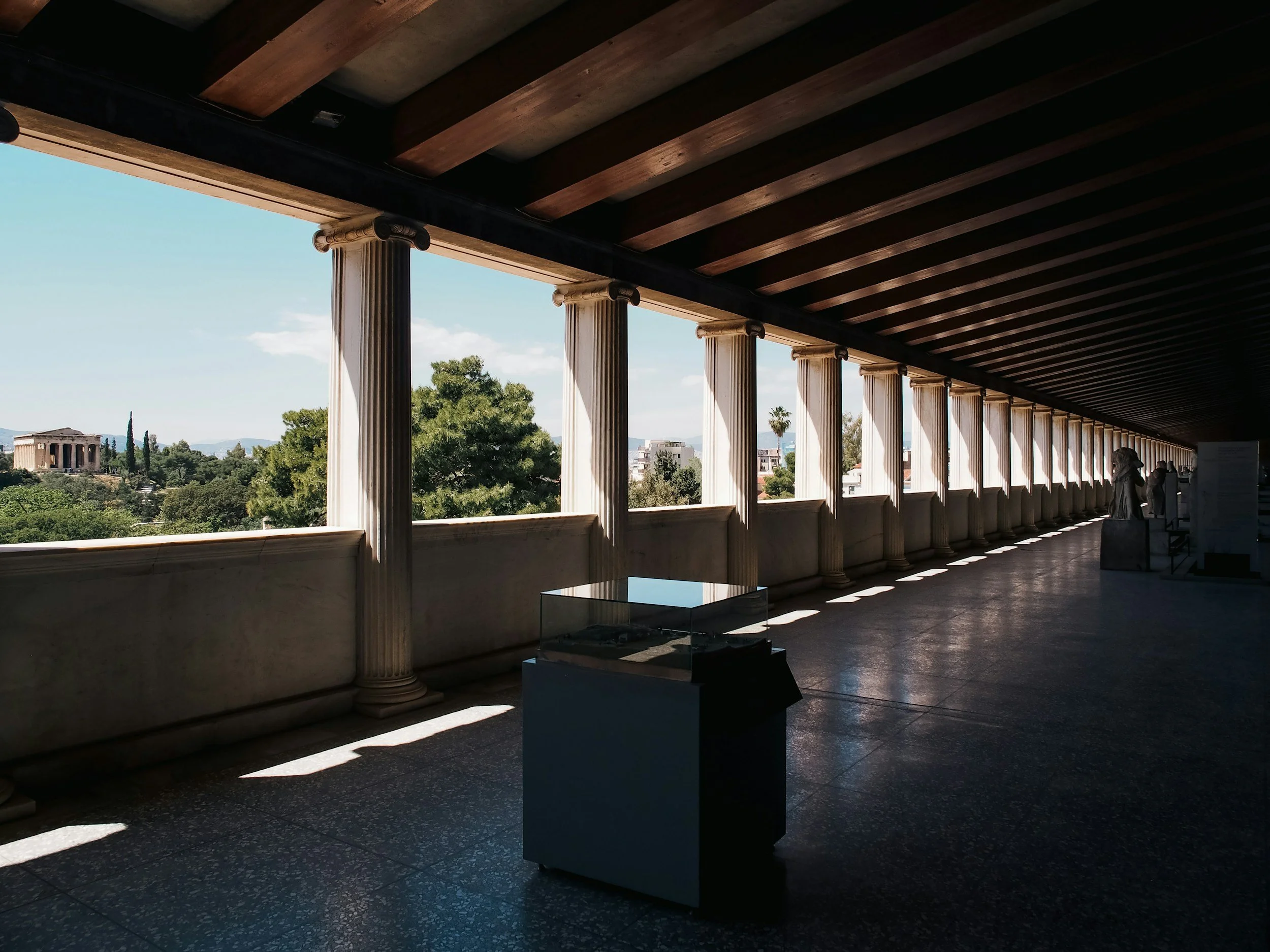
Glyfada: Best for Combining Athens with the Coast
Best for: Summer trips where swimming and coastal time matter as much as central sightseeing.
What It Feels Like
Glyfada is a self-contained coastal suburb with shopping streets, restaurants, marinas, beach clubs and hotels spread around the lower Athens Riviera.
It feels more like a Mediterranean resort district than an extension of the historic centre.
The area changes quickly, particularly its restaurants and nightlife venues, but the main character remains contemporary, social and strongly connected to the sea.
Why Stay Here
You can build slower mornings around swimming, spend afternoons by the pool and still travel into central Athens when required.
It also works as a transition between a city break and an island or Riviera trip.
Who It Suits
Summer travellers, couples, resort-focused trips, families and visitors staying long enough to divide their time between city and coast.
What’s Nearby
Glyfada’s shopping centre, marinas, coastal restaurants, beaches and the wider route towards Voula and Vouliagmeni are all nearby.
Transport and Walkability
The tram connects central Athens with the coast, although reaching Glyfada from the centre takes considerably longer than a metro journey.
Airport buses also operate along the coastal corridor, while taxis are often the most straightforward choice with luggage.
The Trade-Off
Glyfada is too far from the historic centre for travellers planning consecutive days around the Acropolis, museums and central nightlife.
Traffic can also make road journeys unpredictable.
Who Should Stay Elsewhere
Stay centrally when visiting Athens for fewer than four nights.
Glyfada becomes worthwhile when the coast is a core part of the trip rather than a possible afternoon excursion.
Where to Stay
Ace Hotel and Swim Club Athens: A design-led coastal hotel with a substantial pool and a more social, creative atmosphere than a conventional beach resort. It sits near the coast rather than in Glyfada’s busiest shopping streets, and public transport or taxis are still needed for central Athens.
One&Only Aesthesis: A full luxury resort set across coastal grounds. It is the stronger choice when the trip is primarily about privacy, beach access and resort facilities, with central Athens treated as a day trip rather than the daily focus.

Areas to Approach More Carefully
Athens is generally manageable for visitors, but neighbourhood names alone don’t tell you enough. In the commercial centre, the feel of a street can change within a few blocks.
Omonia
Omonia has improved its hotel selection and remains an important transport hub, but the surrounding area is inconsistent.
Some streets are busy and well lit, while others may feel uncomfortable late at night to first-time visitors. Check the exact property location and recent guest comments rather than booking solely because the metro appears nearby.
Metaxourgeio
Metaxourgeio contains restaurants, galleries and design-led hotels, but it isn’t the easiest default for a first trip.
Street conditions vary, and the walking route back from the historic centre may feel less straightforward after dark.
Psyrri and Monastiraki Nightlife Streets
The immediate nightlife streets of Psyrri and Monastiraki require care if sleep matters.
A hotel may be highly rated yet still sit above a bar, beside a late-night restaurant or underneath a rooftop terrace.
Demonstrations and Public Gatherings
Exarchia Square and central Syntagma can be affected by demonstrations or public gatherings.
These are significant parts of Athenian civic life rather than reasons to avoid the city, but travellers should follow local advice and avoid active protests.
Across the centre, keep valuables secure on crowded public transport and around major tourist squares.
Best Athens Neighbourhood by Trip Type
Best for First-Time Visitors: Koukaki
Koukaki keeps the Acropolis, museum and Plaka within easy reach while providing better evening balance than the busiest parts of the historic centre.
Best for Couples: Thissio
Thissio works particularly well for evening walks, outdoor dining and Acropolis views without requiring you to stay in the centre of the crowds.
Best for Food and Drink: Pangrati
Pangrati’s strength comes from neighbourhood restaurants, cafés and bars used throughout the week, not only by visitors.
Best for Nightlife: Psyrri
Psyrri places you beside cocktail bars, busy restaurant streets and late-night activity. The cost of that convenience is predictable: noise.
Best for Culture and History: Plaka
For direct access to the Acropolis slopes, Byzantine churches, smaller museums and the ancient centre, Plaka remains difficult to beat.
Best for Luxury: Kolonaki
Kolonaki combines strong boutique hotels, established luxury options nearby, high-end shopping and several of Athens’ best museums.
Best for Budget-Conscious Travellers: Exarchia
Exarchia generally provides better-value rooms and inexpensive food, but it suits travellers comfortable with a less polished street environment.
Best for Local Atmosphere: Pangrati
Pangrati’s squares, apartment streets, bakeries and café culture give visitors a clearer sense of contemporary residential Athens.
Best for a Quieter Stay: Mets
Mets is close to the Panathenaic Stadium and National Garden but feels calmer than central Pangrati or Koukaki.
Best for a Short Weekend: Syntagma
Direct airport transport and easy walks into Plaka, Monastiraki and Kolonaki make Syntagma the most efficient two-night base.
Best for Returning Visitors: Exarchia
Exarchia offers independent culture, political history and a more complicated urban character after you have already covered the central sights.
Best for Combining Athens with the Beach: Glyfada
Glyfada is the clearest compromise between a functioning coastal district and access to central Athens, provided you accept longer sightseeing journeys.
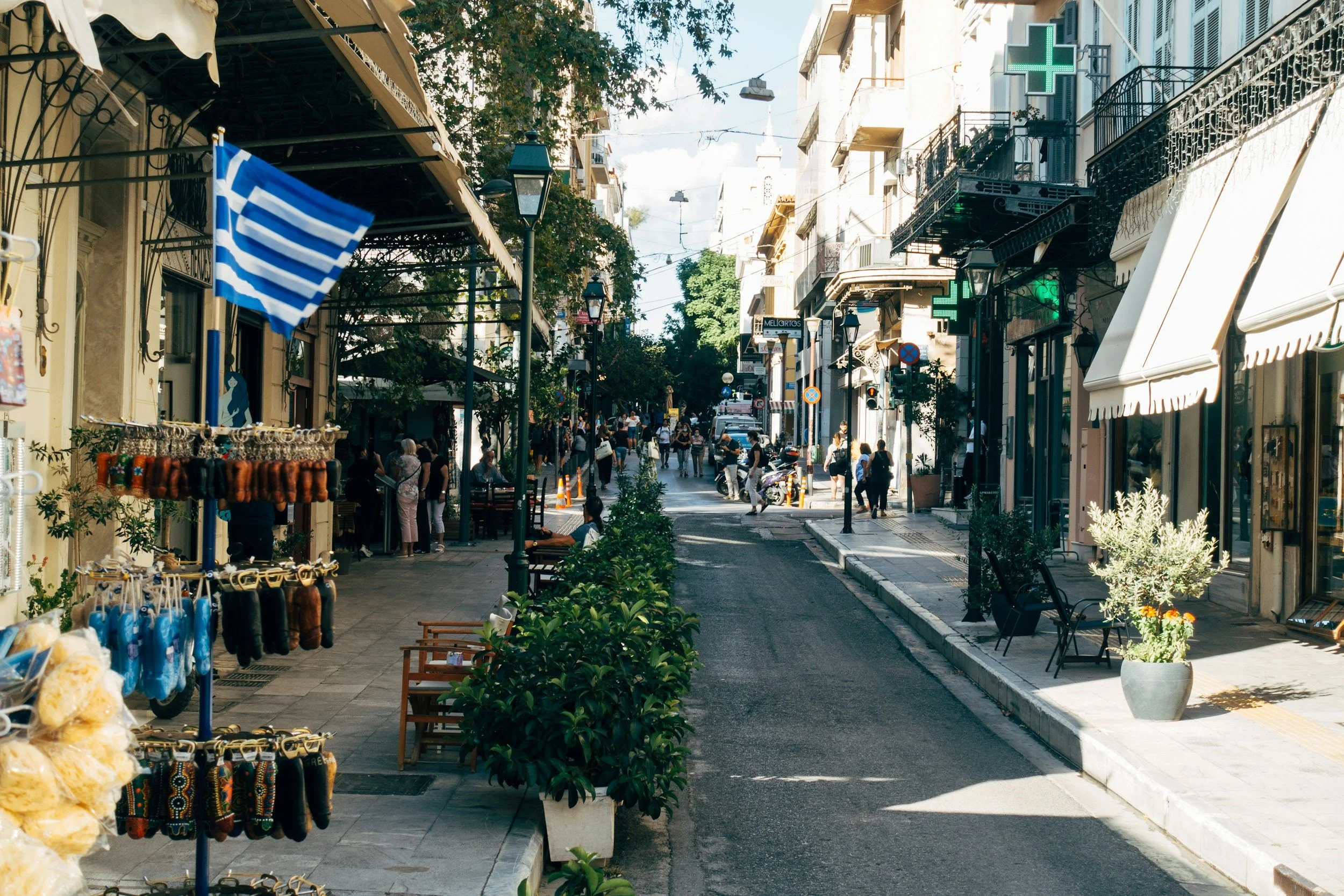
“For most first-time visitors, Koukaki is the safest overall recommendation.
It removes much of the friction from visiting the Acropolis and historic centre, but its cafés, apartment streets and evening restaurants stop the trip from feeling entirely contained inside a visitor district.
Choose Plaka when atmosphere is the priority and you’re willing to accept crowds, tourist-focused restaurants and less straightforward access by car.
Choose Syntagma when transport, a short itinerary or an early departure matters more than neighbourhood character.
Pangrati is the better option for a slower stay, particularly if you’ve visited Athens before or want the trip to revolve around food, cafés and ordinary city life. Glyfada should only replace a central base when the coast is central to the holiday, not merely a pleasant extra.
The final decision comes down to what you want immediately outside the hotel. Book beside the Acropolis for convenience and atmosphere, or move one neighbourhood further out for better evenings and a more rounded view of Athens.”
Frequently Asked Questions
What Is the Best Area to Stay in Athens for a First Visit?
Koukaki is the strongest overall option.
It is close to the Acropolis, Acropolis Museum and Plaka but generally calmer and more residential than Monastiraki.
Is Plaka or Monastiraki Better for Staying in Athens?
Choose Plaka for historic streets and a quieter evening atmosphere.
Choose Monastiraki for transport, food, nightlife and direct airport access.
Is It Worth Staying Near the Acropolis?
Yes, particularly for a first trip of two to four nights.
Staying in Koukaki, Makrygianni or Plaka lets you visit early and reduces time spent travelling between major sights.
How Many Nights Should You Stay in Athens?
Three nights gives most first-time visitors enough time for the Acropolis, central neighbourhoods, museums and a slower food-focused evening.
Four or five nights allows time for the Riviera, Piraeus or a day trip.
Is Athens Easy to Explore on Foot?
The central neighbourhoods are highly walkable, but heat, hills and uneven pavements can make routes more tiring than their map distance suggests.
Use the metro for longer cross-city journeys in summer.
Which Athens Neighbourhood Is Best for Nightlife?
Psyrri is the strongest central choice for bars and late-night restaurants.
Gazi and Keramikos offer more club-focused nightlife but are less convenient for first-time sightseeing.
Where Should Couples Stay in Athens?
Thissio is the strongest choice for couples who want evening walks, outdoor dining and Acropolis views.
Koukaki is the better option if convenience and sightseeing matter more.
Which Part of Athens Has the Easiest Airport Connection?
Syntagma and Monastiraki both sit directly on Metro Line 3 from the airport.
Syntagma also provides a direct airport-bus connection.
Should You Stay in Central Athens or on the Athens Riviera?
Stay centrally if sightseeing is the main purpose of the trip or you’re visiting for fewer than four nights.
Choose the Riviera when swimming, coastal restaurants and resort time are equally important.