Where to Eat in Berlin: The Best Food Neighbourhoods, Restaurants and Markets
Berlin isn't a city you understand through one signature dish. Currywurst and döner matter, but they only tell part of the story. Modern Berlin eats through its neighbourhoods, shaped by migration, changing communities, international chefs, old market halls, independent bakeries and a restaurant culture that rarely feels contained by one definition of German food.
That means where you eat matters almost as much as what you order.
Kreuzberg is still one of the strongest areas for Turkish food, markets, contemporary restaurants and bars. Neukölln takes that multicultural energy in a more casual, neighbourhood-led direction. Mitte has some of the city's most ambitious restaurants and polished bakeries, but requires more filtering. Charlottenburg's Kantstraße has become essential for Asian food, while Prenzlauer Berg makes more sense for bakeries, coffee and slower evenings.
This guide breaks down the best food neighbourhoods, restaurants, markets, bakeries and casual eats in Berlin so you can spend less time working through enormous lists and more time actually eating well.
Berlin Food at a Glance
Best neighbourhood for food overall: Kreuzberg. The strongest combination of Turkish food, markets, independent restaurants, bars and contemporary dining.
Best for casual eating: Neukölln. Particularly around Reuterkiez, Sonnenallee and northern Neukölln, where international food and neighbourhood restaurants overlap.
Best for Turkish and Middle Eastern food: Kreuzberg and Neukölln. Berlin's Turkish communities have played a major role in shaping how the city eats today.
Best for Asian food: Charlottenburg. Kantstraße remains one of Berlin's most useful streets for Taiwanese, Chinese, Vietnamese, Japanese and Thai food.
Best for modern restaurants: Mitte. This is where you'll find everything from Rutz to Cookies Cream alongside less formal contemporary restaurants. Berlin's 2026 Michelin selection remains particularly strong in and around central Berlin.
Best for bakeries and cafés: Prenzlauer Berg and Mitte. Both work well for mornings built around good bread, pastries and coffee.
Best market experience: Markthalle Neun. The Kreuzberg market hall remains Berlin's most useful food market for visitors, especially when timed with its larger markets or Street Food Thursday.
Best for a special dinner: Mitte or Neukölln. Mitte has the largest concentration of destination dining, while Neukölln offers restaurants such as Hallmann & Klee without losing the neighbourhood setting.
Best for a slower food-led day: Prenzlauer Berg. Start with a bakery, stay for lunch, walk around Kollwitzkiez or Mauerpark and book dinner nearby.
What Food Is Berlin Known For?
Berlin's food identity makes more sense when you separate what is traditionally Berliner from what has become Berliner through migration and modern city life.
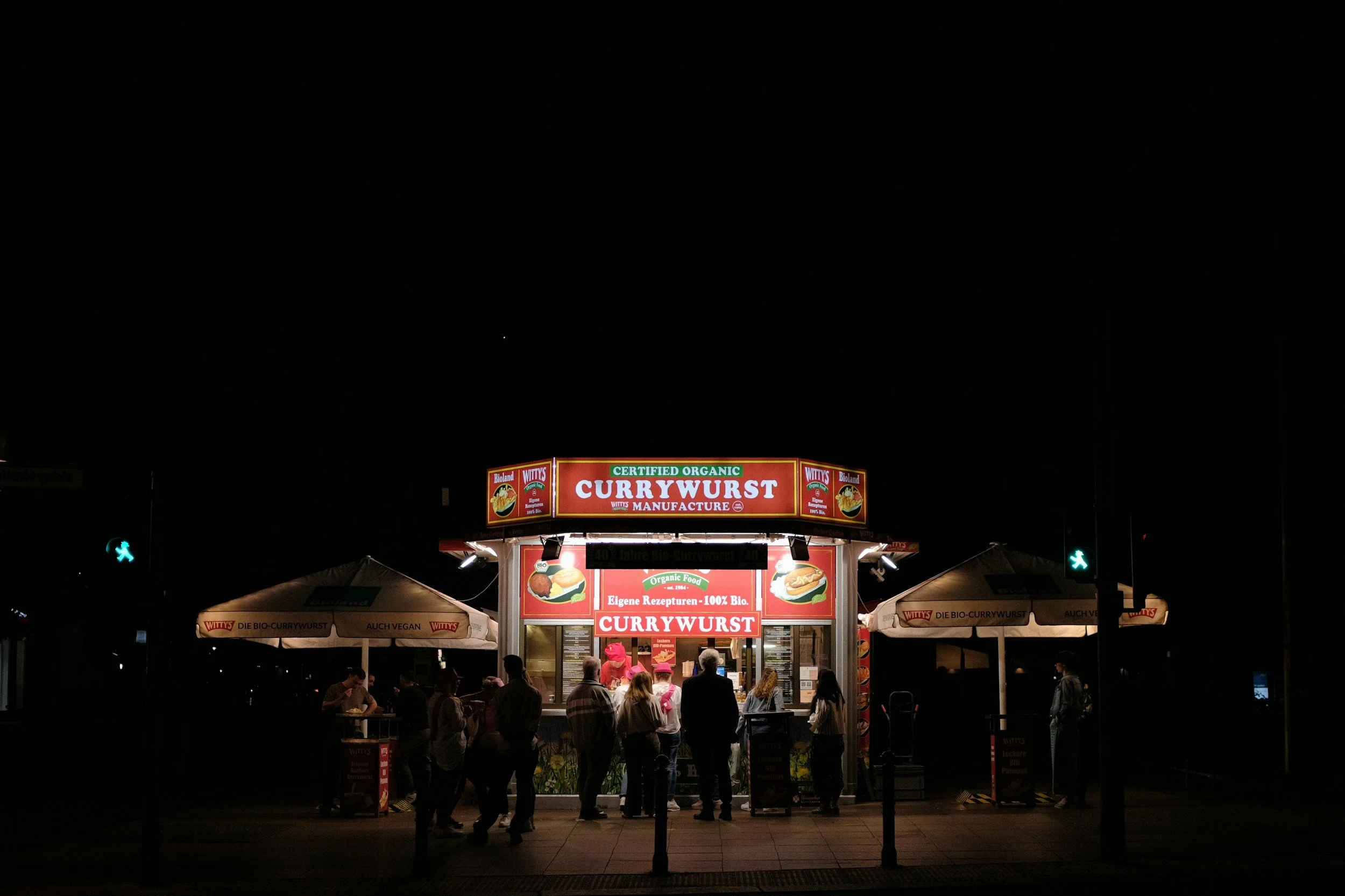
Currywurst
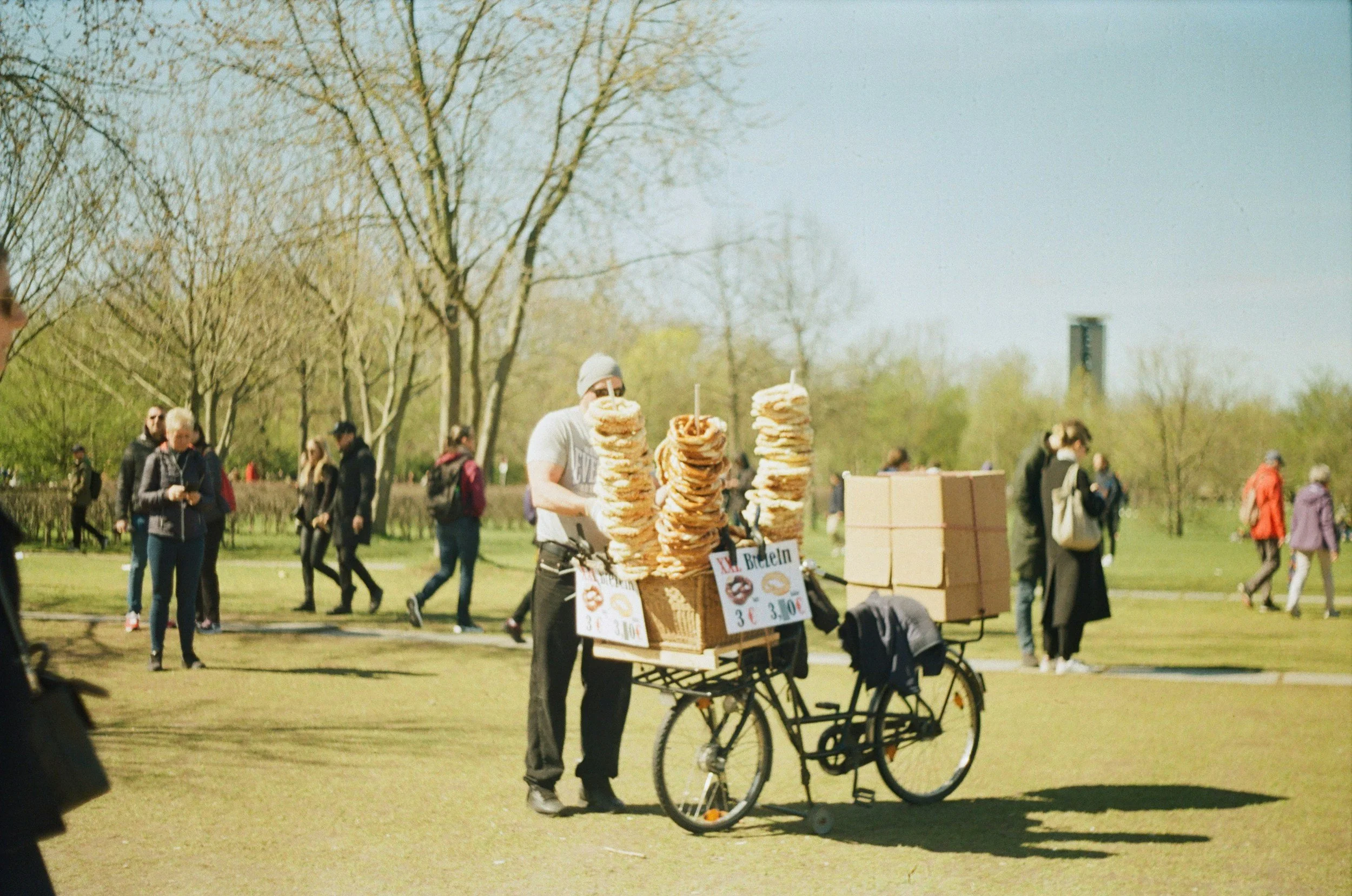
Currywurst is the obvious traditional street-food stop: sausage cut into pieces and served with a tomato-based curry sauce, usually alongside chips or a bread roll.
You don't need to build a morning around finding the theoretically perfect one, but it's worth trying once.
Curry 36 at Mehringdamm remains one of the best-known places to do it and continues to operate four Berlin locations.
For a more historic version, Konnopke's Imbiss beneath the elevated railway at Eberswalder Straße traces its sausage-selling roots to 1930 and remains open in Prenzlauer Berg.
Döner
Döner is even more important to understanding modern Berlin.
The vertical spit itself has much older Ottoman origins, but the familiar sandwich format became deeply associated with Berlin through Turkish migration in the 1970s. The precise claim that the modern sandwich was "invented in Berlin" remains contested, so it's better understood as a food that Berlin helped transform into the form now familiar across Germany and Europe.
Rather than joining the city's longest queue simply because you've seen it online, try Imren Grill for a more meat-focused Turkish-style döner or Rüyam Gemüse Kebab for the vegetable-heavy Berlin interpretation. Both continue to operate multiple Berlin locations.
Turkish and Middle Eastern food
The bigger mistake is treating Turkish food as a single döner stop.
Berlin's Turkish communities have shaped bakeries, grills, restaurants, markets and everyday food culture across Kreuzberg, Neukölln, Wedding and beyond. The Maybachufer market still runs twice weekly with produce, Turkish specialities and food stalls along the canal.
Sonnenallee and northern Neukölln add significant Lebanese, Syrian, Palestinian and wider Middle Eastern influences to the picture. Berlin's official tourism material now describes Neukölln through exactly this mix, from Arabian bakeries and Vietnamese snack bars to newer restaurants.
Asian Berlin
Berlin also has a significant Asian food scene.
Charlottenburg's Kantstraße is the clearest place to experience it in a concentrated stretch, particularly for Taiwanese, Chinese, Vietnamese, Thai and Japanese food. VisitBerlin describes the street as a major Asian food corridor, with long-standing restaurants sitting alongside newer arrivals.
Modern Berlin cooking
At the other end of the spectrum, contemporary Berlin restaurants increasingly look towards Brandenburg and surrounding regions for vegetables, meat, fish and seasonal ingredients. That regional approach has become an important part of the city's more ambitious restaurant scene.
It's one of the reasons a modern Berlin dinner can feel very different from traditional German restaurant food.
The Best Food Neighbourhoods in Berlin
Kreuzberg: Best Overall for Food and Drink
If you only explore one Berlin neighbourhood specifically for food, make it Kreuzberg.
The appeal isn't one type of restaurant. It's the overlap between Turkish food, cafés, contemporary restaurants, bars, bakeries, markets and neighbourhood life.
What the area is good for
Kreuzberg works particularly well for:
Turkish food
contemporary casual restaurants
bakeries
food markets
wine and bars
late lunches
dinner followed by drinks
Graefekiez is better for a slower food-led afternoon. Around Oranienstraße things become busier and more evening-focused. Eastern Kreuzberg around Markthalle Neun gives you one of the city's strongest combinations of food and neighbourhood atmosphere.
Where to eat
Markthalle Neun is the obvious starting point. The restored nineteenth-century market hall now combines food producers, traders and events, with larger markets on Fridays and Saturdays and Street Food Thursday currently running from 5pm to 10pm.
It's better approached as a food experience than as a single meal. Browse, try something, then continue into the surrounding streets.
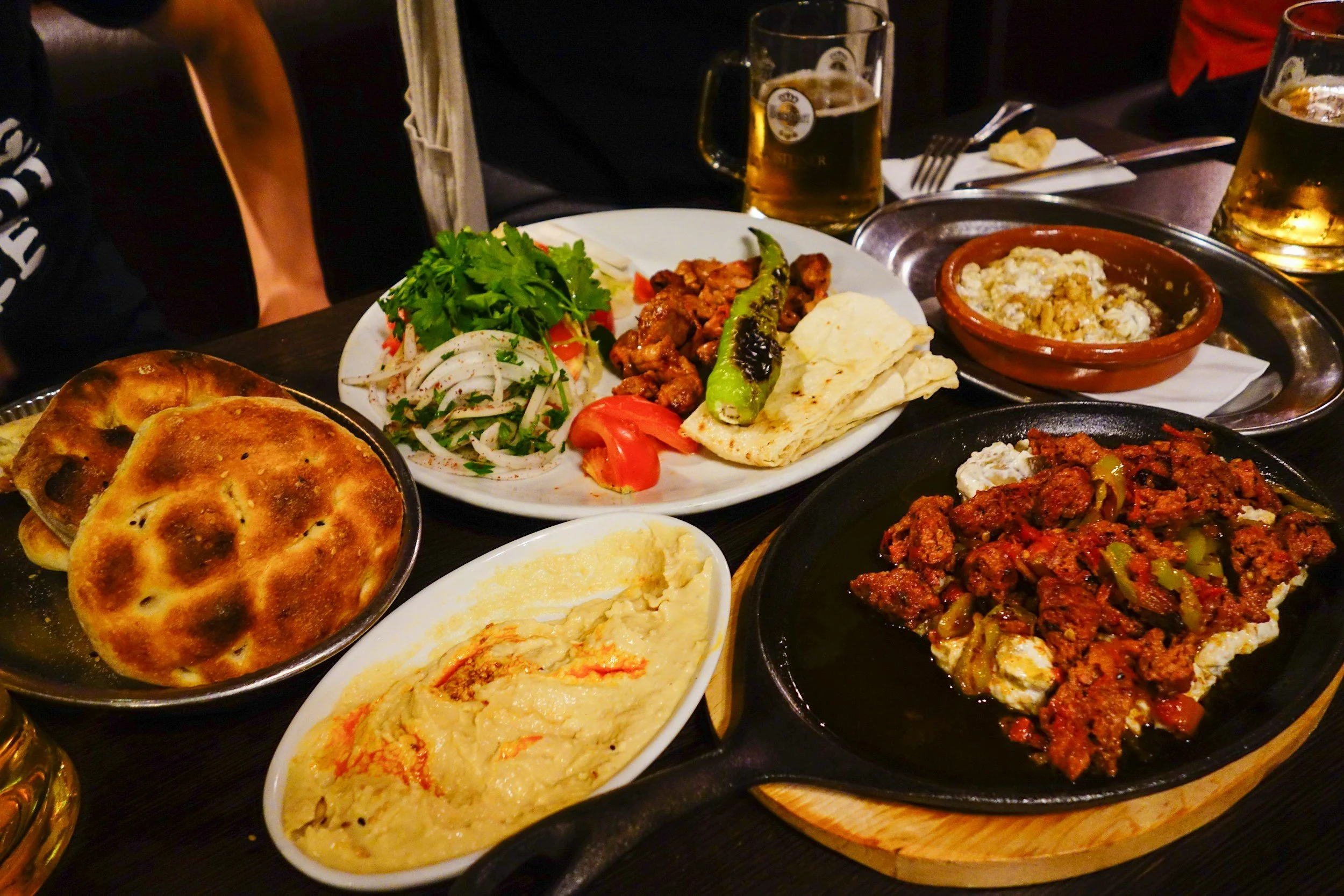
For a proper Turkish dinner, FES Turkish BBQ on Hasenheide turns grilling into part of the meal, with diners cooking meat over tabletop grills alongside mezze. It remains open and accepts reservations, making it useful for a planned evening rather than an improvised snack.
For something much more ambitious, Horváth represents the other side of Kreuzberg's food scene. It remains part of Berlin's 2026 Michelin-starred selection, with Sebastian Frank's cooking built around a highly individual Central European and vegetable-led approach.
Where to drink
The better move in Kreuzberg is usually to let dinner turn into drinks naturally.
Oranienstraße and the streets around Graefekiez have enough wine bars, cocktail bars and neighbourhood pubs that you don't need to cross Berlin after dinner.
What to explore nearby
Combine Markthalle Neun with a walk towards the Landwehr Canal, then continue into Graefekiez or Oranienstraße depending on the time of day.
The Turkish Market at Maybachufer also sits along the Kreuzberg-Neukölln border and works well as part of the same food-focused afternoon.
The trade-off
Kreuzberg's reputation means the strongest restaurants can be busy and some formerly inexpensive parts of the neighbourhood no longer feel particularly cheap.
Don't assume somewhere is good simply because it has a Kreuzberg postcode.
Neukölln: Best for Casual and Neighbourhood-Led Eating
Neukölln feels less consolidated than Kreuzberg.
That's part of the appeal. Good food appears around Reuterkiez, Weserstraße, Sonnenallee, Karl-Marx-Straße and smaller residential pockets rather than one obvious restaurant strip.
What the area is good for
Come to Neukölln for:
Middle Eastern food
casual restaurants
bakeries
international food
contemporary neighbourhood restaurants
bars
good value relative to the most polished central areas
Sonnenallee is particularly important if you want to understand how Syrian, Lebanese, Palestinian and other Middle Eastern communities contribute to the city's food culture.
Where to eat
Hallmann & Klee is the neighbourhood's strongest example of how far Neukölln's restaurant scene now stretches. Sarah Hallmann's restaurant on Böhmische Straße remains Michelin-starred in the 2026 guide, with a restrained modern menu served Wednesday to Saturday evenings.
It's a destination dinner, but the setting still feels more like a neighbourhood restaurant than a formal hotel dining room.
Barra offers a less formal interpretation of contemporary Berlin cooking. It remains in the Michelin Guide's current Berlin selection and centres its approach around smaller plates designed for sharing.
For everyday eating, spend time around Sonnenallee instead of chasing one famous address. Arabian bakeries, grills, falafel, shawarma and sweet shops are part of the street's value precisely because this food culture isn't designed exclusively for visitors.
What to explore nearby
Reuterkiez and the canal combine particularly well with food.
On Tuesdays and Fridays, the Maybachufer market brings produce, Turkish specialities, fabrics and street food to the waterside.
Farther south, KINDL Centre for Contemporary Art gives you an easy cultural anchor if you want something between meals.
The trade-off
Neukölln is large.
Saying a restaurant is "in Neukölln" tells you less than you might think. Plan around one small area rather than crossing the district repeatedly.
It's also less convenient for sightseeing-heavy days, so it works particularly well as a deliberate afternoon and evening rather than somewhere you continually travel in and out of.
Mitte: Best for Destination Restaurants and Polished Dining
Mitte is where Berlin's food scene becomes harder to generalise.
There are forgettable restaurants built around passing visitor traffic, but there are also some of Germany's most ambitious dining rooms, excellent bakeries and a strong contemporary restaurant scene.
Filtering matters here.
What the area is good for
Mitte is strongest for:
destination dining
contemporary German cooking
vegetarian fine dining
bakeries
polished restaurants
wine
meals that need to be booked rather than stumbled into
Where to eat
At the top end, Rutz remains Berlin's three-Michelin-star restaurant in the 2026 guide. Its modern cooking is closely connected to regional produce and contemporary interpretations of German ingredients.
This isn't a casual Berlin dinner. It's the meal to book when the restaurant itself is one of the main experiences of the trip.
Nobelhart & Schmutzig takes a different route. The Michelin-starred restaurant on Friedrichstraße focuses strongly on regional ingredients and producers, making it one of the clearest expressions of Berlin's local-sourcing movement. It remains starred in the 2026 Michelin Guide.
For vegetarian dining, Cookies Cream remains one of the most established names in Berlin. It retained its Michelin star for 2026 and now offers vegetarian and vegan tasting menus from its hidden Mitte location.
Bakeries and daytime food
Sofi Bakery is one of the strongest reasons to make Mitte part of your morning. The courtyard bakery describes itself as a neighbourhood bakery focused on low-intervention craft baking, with sourdough and pastries made on site.
The trade-off
Mitte contains both exceptional food and some of Berlin's weakest value.
Avoid choosing restaurants because they're beside Checkpoint Charlie, Alexanderplatz or another major attraction. The better restaurants tend to be worth seeking deliberately.
Charlottenburg: Best for Asian Food and Old West Berlin
Charlottenburg deserves more attention from anyone planning Berlin around food.
The centre of gravity is Kantstraße, one of the city's most established Asian food corridors, running through City West close to Savignyplatz.
What the area is good for
Charlottenburg works particularly well for:
Taiwanese food
Chinese restaurants
Vietnamese food
Thai food
Japanese-inspired restaurants
longer dinners
a more established West Berlin restaurant scene
Where to eat
Lon Men's Noodle House has served Taiwanese food on Kantstraße since 2003. Beef noodle soup, wontons and other Taiwanese staples are the reason to go. The restaurant does not accept reservations, so treat it as a casual stop rather than a tightly scheduled dinner.
Papaya is another useful Kantstraße institution, particularly for Thai food. VisitBerlin's current guide highlights its papaya salad, fried rice and regional Thai menu.
For something much more theatrical, 893 Ryotei serves contemporary Japanese-influenced food behind an intentionally understated exterior on Kantstraße. It remains listed by Berlin's tourism organisation as one of the area's notable restaurants.
A useful new addition is DUFTE, which opened in Charlottenburg in 2026 inside the historic Kant-Garagenpalast. The concept combines four kitchens, two bars, a bakery, café and cultural programme under one roof.
It isn't a replacement for exploring Kantstraße itself, but it's another reason City West is becoming increasingly interesting for food.
What to explore nearby
Build the area around Kantstraße and Savignyplatz.
Bookshops, galleries and the streets around City West make this one of the easiest neighbourhoods to combine with an unhurried lunch or dinner.
The trade-off
Charlottenburg isn't where most first-time visitors imagine Berlin's food scene to be.
That's exactly why it's useful, but it also means travelling west if your itinerary is otherwise concentrated around Kreuzberg, Mitte and Neukölln.
Prenzlauer Berg: Best for Bakeries, Coffee and a Slower Food Day
Prenzlauer Berg is the neighbourhood to choose when eating well doesn't need to feel like an expedition.
Start with coffee and a bakery, walk around Kollwitzkiez or Helmholtzkiez, stop for lunch and stay nearby for dinner.
What the area is good for
Prenzlauer Berg works particularly well for:
bakeries
breakfast
coffee
slower lunches
modern neighbourhood restaurants
date-night dinners
Japanese food
organic markets
Where to eat
Otto on Oderberger Straße describes itself simply as a small, lively neighbourhood restaurant, which is a useful summary. It remains in the 2026 Michelin Guide and serves dinner seven nights a week, with reservations handled through its website.
The food is contemporary and ingredient-led without turning the evening into a formal tasting-menu exercise. For World Locals, this is one of the most useful special-but-not-too-special dinners in Berlin.
November Brasserie is the stronger choice for Japanese food. The contemporary Japanese brasserie on Husemannstraße retains a Bib Gourmand in the 2026 Michelin Guide, with seafood, sushi and sashimi central to the menu.
Markets and daytime food
Kollwitzplatz remains one of the neighbourhood's best food anchors. The organic market has operated on Thursdays since 1996, with regional producers and organic food stalls. It celebrates its 30th anniversary in 2026. (visitberlin.de)
The trade-off
Prenzlauer Berg is easier and more polished than Neukölln or Kreuzberg.
That's excellent if you want a relaxed trip. Less so if you're searching specifically for Berlin's rougher-edged, late-night food culture.
Best Food Markets in Berlin
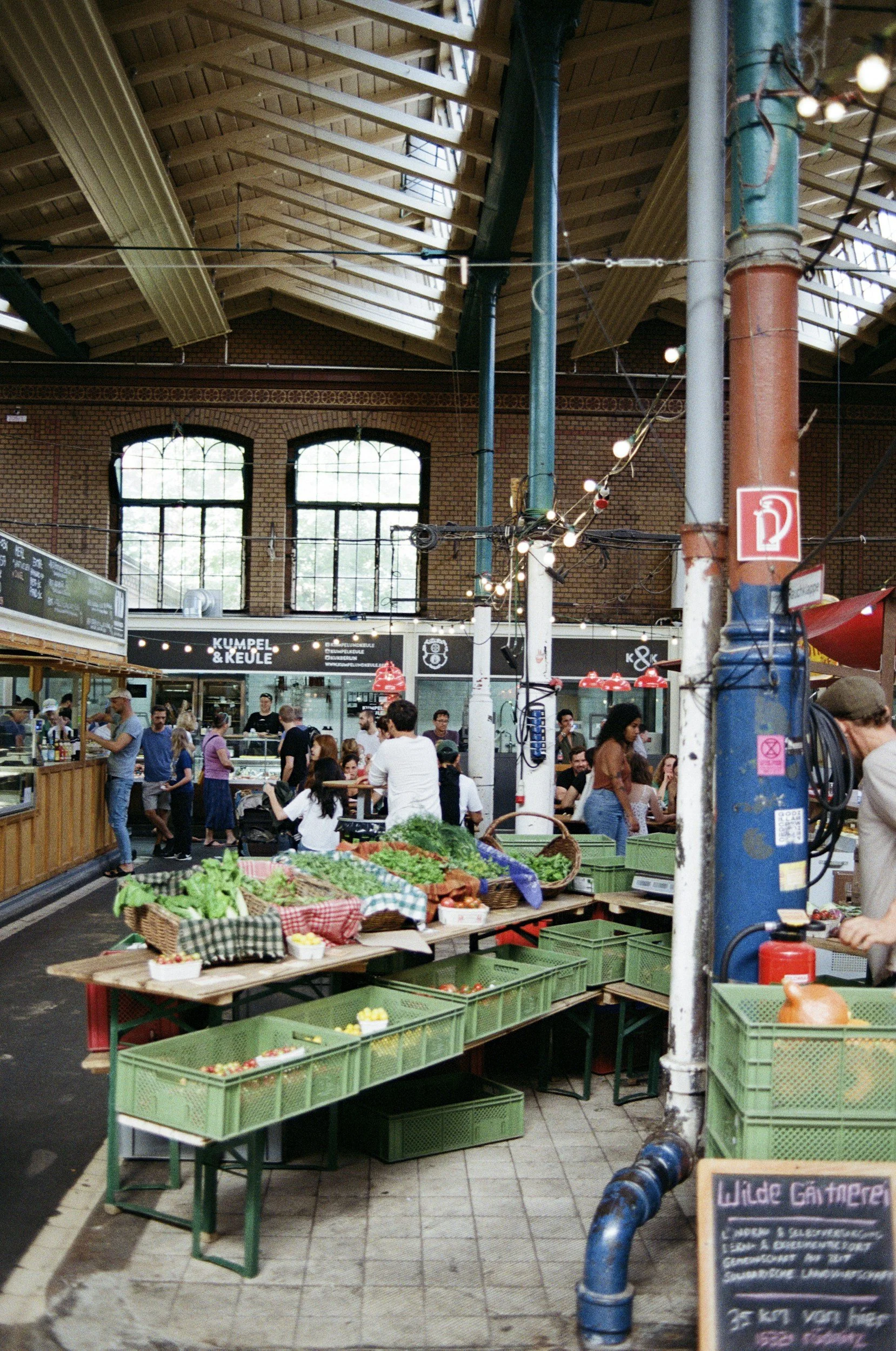
Markthalle Neun
Best overall
If you visit one food market, make it Markthalle Neun in Kreuzberg.
The historic hall combines permanent food producers with changing markets and events. Street Food Thursday currently runs each Thursday evening from 5pm to 10pm, while larger regular markets operate on Fridays and Saturdays.
Pair it with Kreuzberg rather than treating it as an isolated stop.
Turkish Market at Maybachufer
Best for neighbourhood atmosphere
The market runs twice weekly beside the Landwehr Canal and combines produce, Turkish specialities, street food, fabrics and household goods.
It's particularly good as part of a longer walk through Reuterkiez and Kreuzberg.
Ökomarkt at Kollwitzplatz
Best for regional produce
Prenzlauer Berg's Thursday organic market brings producers from Berlin and the surrounding region into Kollwitzplatz. The market reaches its 30th year in 2026.
Come for breakfast or lunch and build the rest of the day around Prenzlauer Berg.
Arminiusmarkthalle
Best lesser-known covered market
Moabit's historic Arminius market hall remains open Monday to Saturday, combining traditional food shopping with restaurant and food-stall options.
I wouldn't prioritise it over Markthalle Neun on a first weekend, but it's a useful option if you're staying near Moabit or Hauptbahnhof.
Street Food auf Achse
Best Sunday option
The street-food market at Kulturbrauerei runs on Sundays through much of 2026, bringing rotating international stalls into Prenzlauer Berg.
Pair it with Mauerpark and the surrounding neighbourhood rather than crossing the city solely for lunch.
Best Bakeries and Cafés in Berlin
Berlin's modern bakery scene deserves more attention than it usually gets in traditional city guides. Sourdough, long fermentation and smaller craft bakeries have become increasingly prominent across the city.
Sofi Bakery
The strongest all-round recommendation in Mitte.
Go for naturally fermented bread and pastries in the small courtyard bakery rather than an elaborate sit-down breakfast at Sofi Bakery.
Albatross
A Kreuzberg bakery particularly useful for pastries and bread around Graefekiez. Current 2026 Berlin bakery guides continue to list it among the city's leading independent bakeries.
Zeit für Brot
No longer a tiny independent secret, but still useful.
The Berlin-founded organic bakery continues to make its bread and well-known cinnamon rolls by hand, with several branches across the city.
Use it when convenience matters rather than crossing Berlin specifically for it.
FREA Bakery
A strong plant-based and sustainability-focused option in Mitte, combining breads and pastries with a zero-waste philosophy.
Gorilla Bakery
Another useful craft-bakery option, known for long-fermented bread and pastries. Berlin's tourism board currently lists locations in Neukölln and Schöneberg among its recommended artisan bakeries.
Best Restaurants in Berlin for a Special Dinner
You don't need a Michelin-starred meal to eat well in Berlin, but the city has enough serious restaurants that one ambitious dinner can add something different to a food-led trip.
Rutz
For the full destination-dining experience
Berlin's three-Michelin-star restaurant remains the city's headline fine-dining reservation in 2026. Choose it when dinner itself is the evening's main event.
Nobelhart & Schmutzig
For regional Berlin cooking
One of the best options if you're interested in contemporary cooking rooted strongly in Berlin and its surrounding region rather than imported luxury ingredients. It retains a Michelin star in 2026.
Hallmann & Klee
For fine dining that still feels like Neukölln
The Michelin-starred Böhmische Straße restaurant offers a more intimate neighbourhood setting than the city's grandest dining rooms.
Cookies Cream
For vegetarian fine dining
Still one of Berlin's most credible special-occasion choices for vegetarian and vegan food, with its Michelin star retained in 2026.
Otto
For something special without the ceremony
Otto is probably the World Locals pick of this group. It's ambitious enough to feel like an occasion, but still fundamentally a small Prenzlauer Berg neighbourhood restaurant.
Best Cheap and Casual Eats in Berlin
Imren Grill
Choose Imren when you want a more meat-led Turkish döner rather than the vegetable-heavy version seen at many Berlin kebab shops. The group continues to operate several Berlin locations.
Rüyam Gemüse Kebab
A very good introduction to Berlin's chicken-and-grilled-vegetable interpretation of the döner, with current locations in Schöneberg and Prenzlauer Berg.
Curry 36
Curry 36: The obvious casual currywurst stop if you're already around Mehringdamm.
It's popular for a reason, but treat it as a Berlin snack rather than devoting half your afternoon to proving you've eaten one.
Konnopke's Imbiss
The better choice if you want currywurst with a little more Berlin history attached.
Its Prenzlauer Berg kiosk remains under the elevated U-Bahn at Schönhauser Allee.
Lon Men's Noodle House
Lon Men’s is one of the most useful inexpensive meals on Kantstraße and a good reason to build Charlottenburg into a food-focused trip. No reservations means there may be a wait at busy times.
Where to Eat in Berlin by Occasion
Best for Breakfast
Sofi Bakery if you're staying central.
Choose Prenzlauer Berg instead if you want breakfast to turn naturally into a slow morning around cafés, Kollwitzplatz and the surrounding streets.
Best for a Quick Lunch
Lon Men's Noodle House for Taiwanese noodles in Charlottenburg or Imren Grill for Turkish food when you're closer to Kreuzberg, Neukölln or one of its other locations.
Best for a Casual Dinner
FES Turkish BBQ works well for friends or couples who want dinner to feel social rather than formal.
Best for a Date Night
Otto in Prenzlauer Berg.
Small room, strong food and a neighbourhood you can actually continue exploring afterwards.
Best for a Special Occasion
Rutz if you want the full fine-dining experience.
Choose Hallmann & Klee for something that feels more intimate and embedded in the city around it. Both are part of Berlin's current Michelin-starred selection.
Best for Vegetarians and Vegans
Cookies Cream for an occasion-led dinner.
Berlin's plant-based scene extends far beyond fine dining, but this is the clearest destination restaurant if you want vegetables to be the point rather than the accommodation.
Best for Late-Night Food
Keep it simple.
Döner remains the most Berlin answer, particularly after drinks in Kreuzberg, Neukölln or Friedrichshain.
Best for Food Markets
Markthalle Neun, particularly on Thursday evening or during the larger Friday and Saturday markets.
Best if You Only Have One Day
Start with a good bakery in Mitte or Prenzlauer Berg, have lunch around Kreuzberg, explore Markthalle Neun or Maybachufer if the timing works, then stay in Kreuzberg or Neukölln for dinner.
Don't cross the city four times for four famous restaurants. Berlin food makes considerably more sense when geography is allowed to do some of the planning.
What to Book in Advance
For Berlin's Michelin-starred and destination restaurants, booking ahead is the sensible default.
Restaurants such as Rutz, Nobelhart & Schmutzig, Hallmann & Klee and Cookies Cream should be treated as planned meals rather than places to attempt spontaneously. All remain part of Berlin's current Michelin selection, and their own sites or Michelin listings provide reservation options.
I'd also reserve Otto, particularly for a Friday or Saturday evening. Its official channels currently direct diners to book through the restaurant website.
FES accepts reservations and is worth booking for a weekend dinner.
At the other end of the spectrum, Lon Men's Noodle House explicitly doesn't take reservations, so build some flexibility into the plan.
Markets, bakeries, currywurst stands and döner shops are where you can leave the spreadsheet at home.
A First-Timer's Berlin Food Shortlist
If you only have three days, these are the food experiences I'd prioritise.
Eat more than one version of Turkish Berlin. Have a döner, but also make time for a proper Turkish restaurant or market.
Spend an afternoon eating through Kreuzberg. Markthalle Neun, Graefekiez and the surrounding streets give you the strongest introduction to the city's food neighbourhoods.
Walk the Maybachufer market if your dates line up. It connects food, migration and neighbourhood life more effectively than another polished food hall.
Explore Kantstraße. Berlin's Asian food scene deserves its own part of the trip, rather than being treated as an alternative when you tire of German food.
Have one properly good bakery morning. Sofi, Albatross or another craft bakery gives you a more current side of Berlin's food culture.
Try currywurst once. Then move on. Berlin has considerably more important things for you to eat.
Book one contemporary Berlin dinner. Otto is the best balance for most visitors; Hallmann & Klee or Nobelhart & Schmutzig make sense if food is a major reason for the trip.
Spend an evening in Neukölln without a famous-restaurant checklist. Eat around Sonnenallee or Reuterkiez, then stay nearby for drinks.
Leave space for an unplanned meal. Berlin's size makes rigid restaurant hopping an efficient way to spend a weekend on public transport.
Where I Would Eat on a First Trip to Berlin
If I were putting together a first Berlin food trip, I'd keep it deliberately simple.
Breakfast: Sofi Bakery in Mitte before a central sightseeing day.
Market: Markthalle Neun, preferably when one of its larger markets or Street Food Thursday is running.
Casual lunch: Lon Men's Noodle House if the day takes me west, or Imren Grill if I'm around Kreuzberg and Neukölln.
Neighbourhood dinner: FES in Kreuzberg or an evening eating more casually around Neukölln.
Special dinner: Otto for the best combination of serious cooking, atmosphere and a neighbourhood setting.
Late-night stop: döner, wherever the evening happens to finish.
That gives you Turkish Berlin, Asian Berlin, the modern bakery scene, a market and contemporary cooking without spending three days racing between restaurant reservations.
“The best way to eat in Berlin is the same way you should explore it: neighbourhood by neighbourhood.
Don’t build the trip around a ranking of twenty restaurants scattered across a city nearly 40 kilometres wide. Choose one or two strong food areas each day and let the restaurants, bakeries, markets and bars around them create the rhythm.
For a first trip, that means eating Turkish food in Kreuzberg or Neukölln, exploring Kantstraße, visiting a market, starting at least one morning in a good bakery and booking one contemporary Berlin dinner.
Currywurst can come too.
It just doesn’t need to run the itinerary.”
DISCOVER GERMANY