Kuala Lumpur Neighbourhood Guide: Where to Stay for Every Kind of Trip
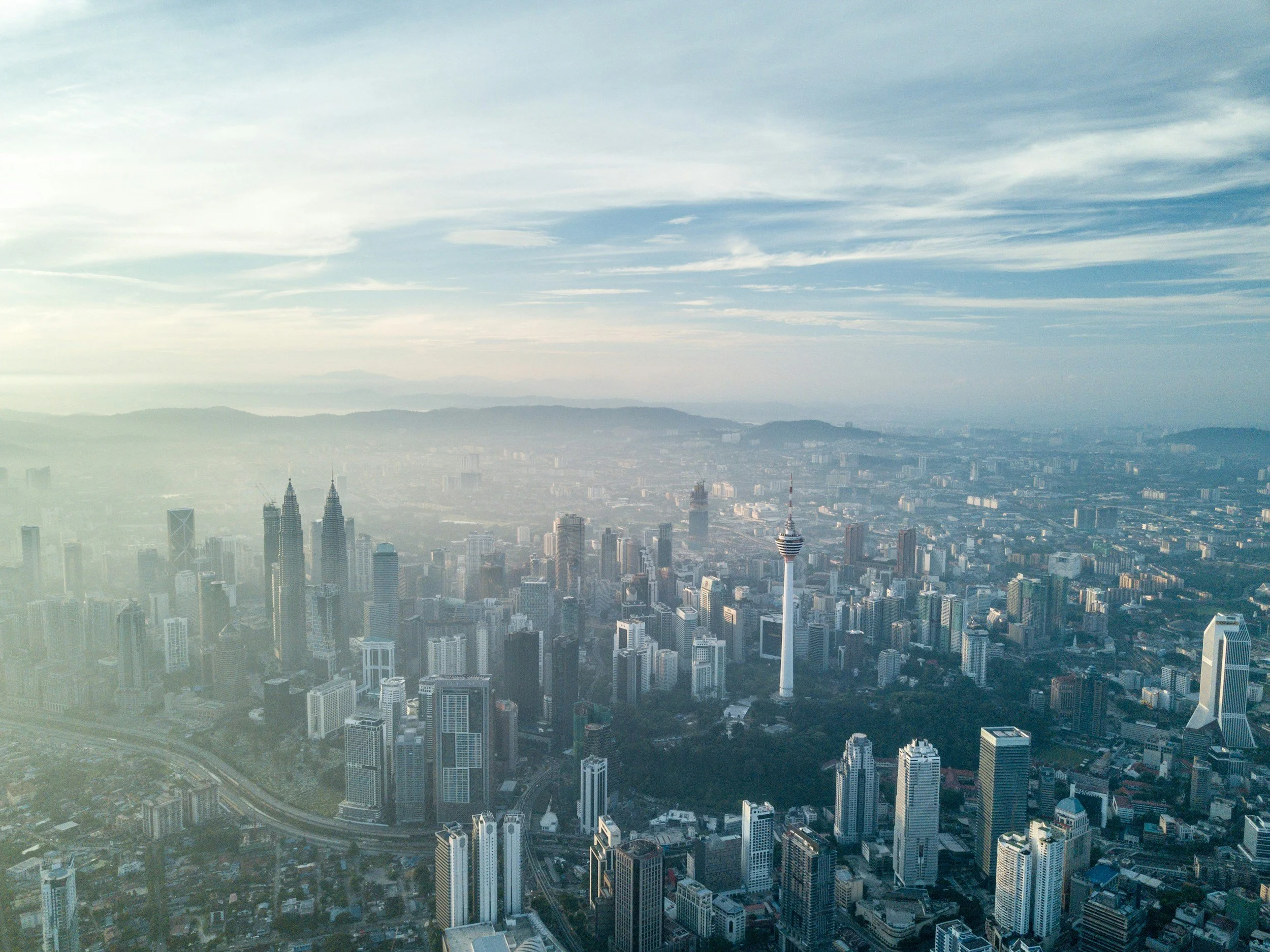
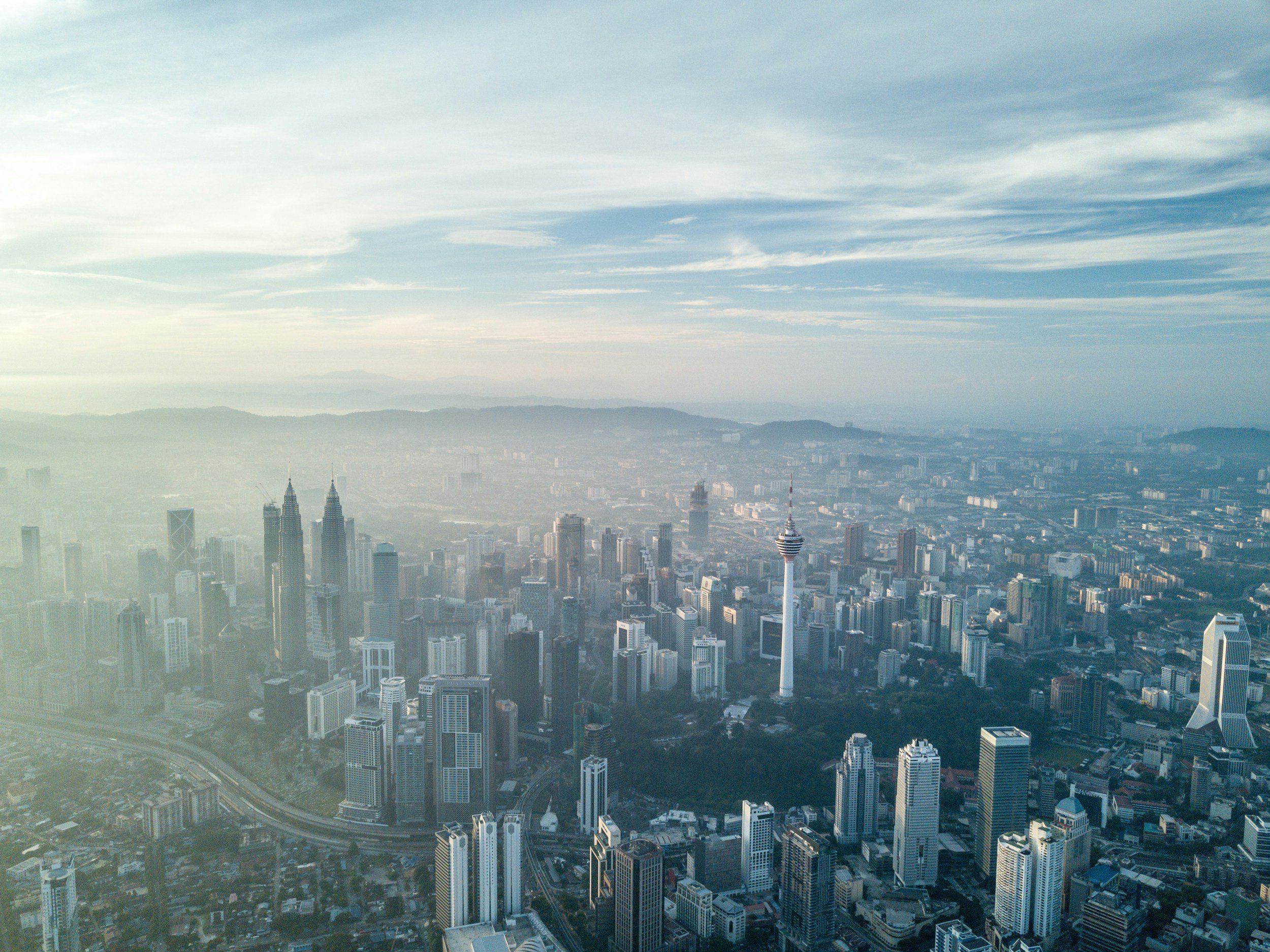
Kuala Lumpur doesn’t revolve around one compact historic core. The modern towers and landscaped spaces of KLCC sit east of Bukit Bintang’s shopping, restaurants and nightlife. Chinatown and Pasar Seni bring you closer to the city’s older commercial streets, temples and markets. KL Sentral anchors the transport network further southwest, while places such as Bangsar and Chow Kit offer a different rhythm again.
That fragmented layout makes more sense when you understand how Kuala Lumpur developed. The city began growing around the Klang and Gombak rivers in the 19th century, initially connected to tin mining, before expanding dramatically as Malaysia’s national capital. Later transport infrastructure, roads and new commercial centres pushed the city outwards rather than concentrating everything into one downtown district.
For most first-time visitors, Bukit Bintang is the best place to start. It combines food, shopping, nightlife, strong transport and relatively easy access to KLCC and Chinatown. But it isn’t automatically the best neighbourhood for every trip.
Choose KLCC if the Petronas Twin Towers, luxury hotels and a more polished environment matter more. Choose Chinatown if you want heritage, food and stronger value. Choose KL Sentral if your itinerary depends heavily on trains or airport connections. And once you’re prepared to sacrifice a little sightseeing efficiency, Bangsar, Chow Kit and Bukit Ceylon become much more interesting.
Where to Stay in Kuala Lumpur: The Quick Answer
Best overall for a first trip: Bukit Bintang
Best for the Petronas Towers and skyline: KLCC
Best for heritage, street food and value: Chinatown / Pasar Seni
Best for transport connections: KL Sentral / Brickfields
Best for a more local, food-led stay: Chow Kit
Best for cafés, restaurants and a slower neighbourhood feel: Bangsar
Best for a quieter central base: Bukit Ceylon
Best for nightlife: Bukit Bintang
Best for couples wanting somewhere calmer but central: Bukit Ceylon or KLCC
For a first visit, the decision usually comes down to Bukit Bintang or KLCC. Bukit Bintang is the more flexible option. KLCC is the more polished one. If you’d rather stay somewhere with older streets, temples, markets and easier access to Kuala Lumpur’s historic core, Chinatown is the strongest alternative. Recent 2026 accommodation guides broadly reach the same conclusion, with Bukit Bintang consistently emerging as the easiest first-time base.
How Kuala Lumpur Is Laid Out
Kuala Lumpur has several centres
The city’s oldest urban core developed around the Klang and Gombak rivers. Today, Chinatown, Pasar Seni, Masjid Jamek and Merdeka Square give you some of the clearest connections to that earlier Kuala Lumpur.
Petaling Street remains one of the best-known parts of this historic centre, surrounded by shophouses, clan houses and temples that reflect the role Chinese communities played in the city’s development. Nearby Central Market, religious buildings and colonial-era civic architecture add other layers to the area.
Move east and the city becomes noticeably more modern: Bukit Bintang is one of Kuala Lumpur’s main retail, entertainment and dining districts. Its evolution from an earlier settlement into a major commercial area mirrors the wider expansion of the capital. Today, malls, hotels, restaurants and nightlife dominate the visitor experience.
Further east again, KLCC revolves around the Petronas Twin Towers, KLCC Park, offices, hotels and large-scale commercial development.
The Petronas Twin Towers were part of Kuala Lumpur’s late-20th-century push towards a new international city centre, one of several major developments that reshaped the capital as it expanded.
KL Sentral changes the geography again
Southwest of the historic centre, KL Sentral functions as Kuala Lumpur’s main transport hub.
That makes it much more important to travellers than its sightseeing credentials might suggest. The KLIA Ekspres currently connects KL Sentral with KLIA Terminal 1 in 28 minutes, while urban rail connections make the area a useful interchange for moving elsewhere in Kuala Lumpur.
Immediately beside it, Brickfields gives the area a stronger cultural identity through Kuala Lumpur’s Little India, where Indian restaurants, textile stores, religious sites and shops sit around one of the city’s major transport districts. Tourism Malaysia continues to identify Brickfields specifically with Kuala Lumpur’s Indian cultural traditions.
Transport matters more than the map suggests
Kuala Lumpur has extensive rail coverage, but not every centrally located neighbourhood is equally convenient.
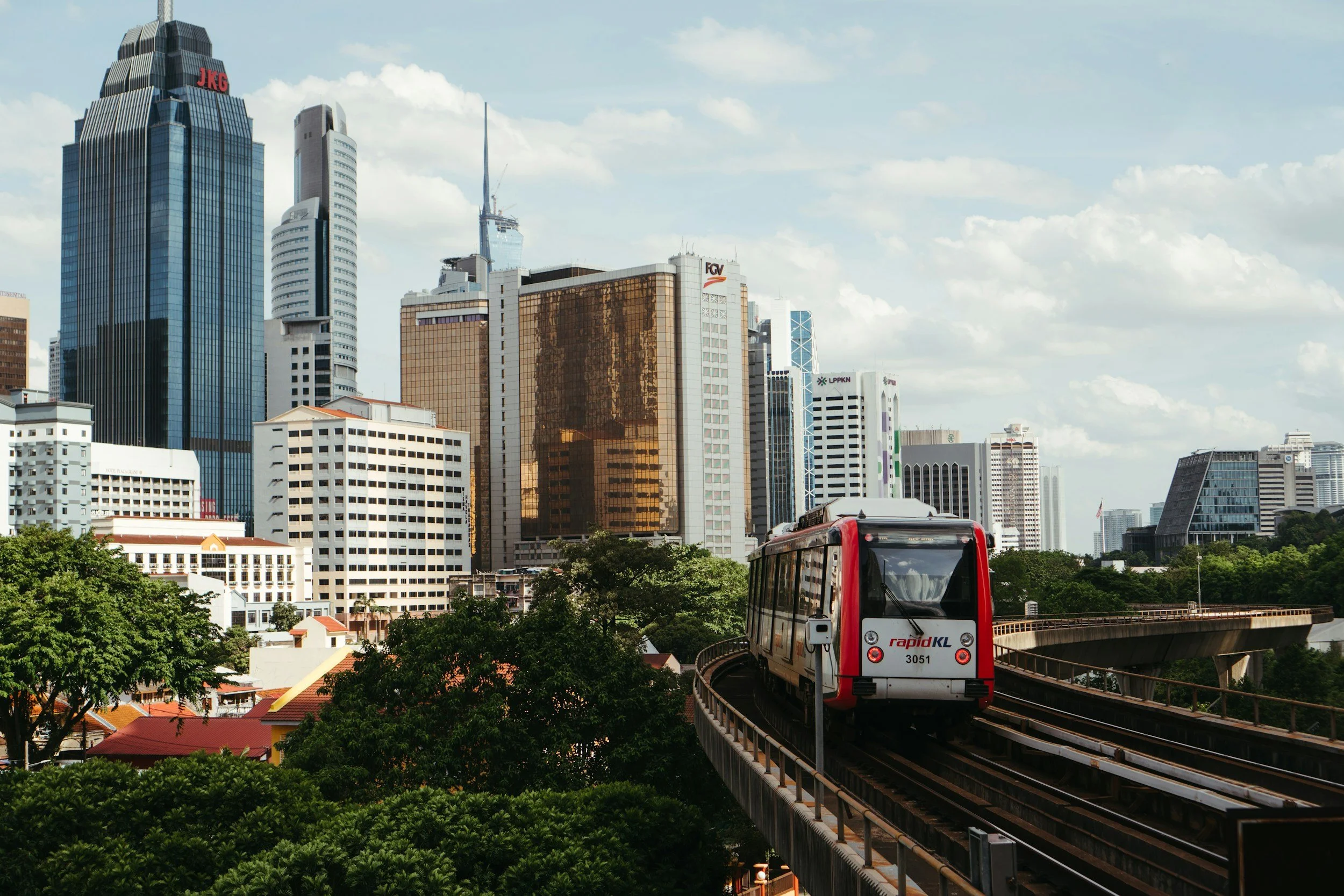
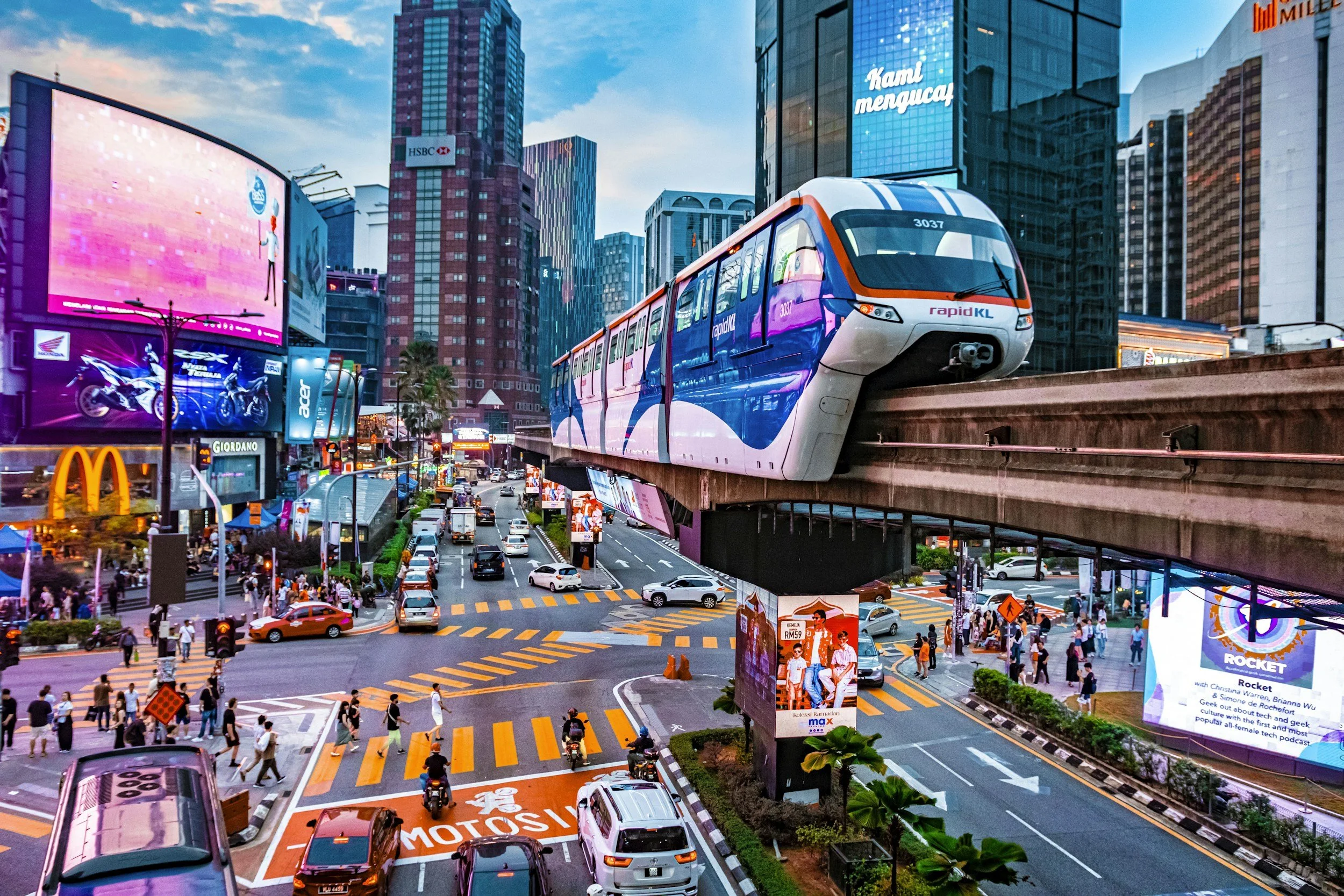
Bukit Bintang and Pasar Seni are on the Kajang MRT Line. KLCC is served by the Kelana Jaya LRT, with Persiaran KLCC providing access to the Putrajaya MRT Line. KL Sentral links several rail systems, while the Monorail connects KL Sentral, Bukit Bintang and Chow Kit.
That matters because walking in Kuala Lumpur can be less straightforward than the map suggests. Heat, wide roads, hills and inconsistent pedestrian routes can turn an apparently short journey into one you’d rather make by train or Grab. In KL, being near the right transport connection can be more useful than simply being near the geographical centre.
The Best Neighbourhoods to Stay in Kuala Lumpur
Bukit Bintang: Best Overall for a First Kuala Lumpur Trip
Bukit Bintang is the easiest place to recommend if you want Kuala Lumpur to feel immediately accessible.
It’s one of the city’s major shopping and entertainment districts, with Pavilion Kuala Lumpur, Lot 10, restaurants, hotels and nightlife packed into a relatively concentrated area. Jalan Alor sits nearby and remains one of Kuala Lumpur’s best-known evening food streets, with stalls generally operating from late afternoon into the night.
Why stay in Bukit Bintang?
Bukit Bintang gives a first-time visitor flexibility.
You can spend the afternoon sightseeing elsewhere and return without needing to make another journey for dinner. Shopping, restaurants and nightlife are already around you. If you haven’t planned every evening before arriving, that convenience becomes particularly valuable.
Transport strengthens the case. Bukit Bintang MRT sits on the Kajang Line, directly connecting the area with Pasar Seni for Chinatown. The Monorail adds connections towards KL Sentral and Chow Kit. The area around Pavilion is also linked towards the Kuala Lumpur Convention Centre and KLCC precinct through a covered pedestrian route.
The result is a neighbourhood that works even when the itinerary doesn’t.
Who should stay in Bukit Bintang?
Bukit Bintang is particularly strong for first-time visitors, solo travellers, short city breaks, shopping-focused trips, nightlife and anyone who wants restaurants and activity close to the hotel.
It’s also one of the easiest choices if you’re unsure what kind of Kuala Lumpur trip you want. You don’t need to commit particularly heavily to food, history, luxury or neighbourhood living because the location keeps most of those options accessible.
What’s nearby?
Jalan Alor, Pavilion Kuala Lumpur, Lot 10 and the wider Bukit Bintang shopping district sit within the neighbourhood.
KLCC is close enough to combine with Bukit Bintang relatively easily, particularly around the covered pedestrian connection towards the convention centre.
Chinatown is a straightforward MRT journey from Bukit Bintang to Pasar Seni.
The trade-off
Bukit Bintang is convenient precisely because it’s busy.
Large malls, traffic, bright advertising, international brands and visitors are part of the neighbourhood’s identity. If your priority is waking up somewhere calm, residential or particularly rooted in Kuala Lumpur’s older streets, this isn’t the obvious choice.
The exact street also matters. Staying directly around the busiest nightlife areas can produce a very different trip from staying towards quieter parts of Imbi or Jalan Bukit Bintang.
Where to stay in Bukit Bintang
KLoé Hotel is the design-led choice. The hotel sits in the Bukit Bintang district and has 85 rooms built around a courtyard and pool, with interiors and dedicated lofts shaped around Malaysian art, craft and creative culture. It works particularly well if you want a smaller hotel with more personality than one of the large international properties nearby.
citizenM Kuala Lumpur is a useful option if you prefer a modern, compact hotel and want to stay towards the Pudu side of Bukit Bintang rather than directly beside Pavilion.
PARKROYAL COLLECTION Kuala Lumpur is the stronger full-service choice if you want more hotel facilities while remaining firmly inside the Bukit Bintang district.
Choose Bukit Bintang if: you want Kuala Lumpur to feel easy from the moment you arrive, with food, shopping, nightlife and transport all competing for your attention rather than requiring a plan.
Read next: Where to Eat in Kuala Lumpur
KUALA LUMPUR’S NAME MEANS “MUDDY CONFLUENCE”
The city developed in 1857 around the meeting of the Klang and Gombak rivers, with its early growth closely tied to tin mining in the Klang Valley.
KLCC: Best for Skyline Views, Landmarks and Luxury
KLCC is the Kuala Lumpur of postcards and skyline photographs.
The district is centred on the Petronas Twin Towers, Suria KLCC, KLCC Park, Kuala Lumpur Convention Centre and a concentration of high-end hotels, offices and residential towers.
The area feels noticeably more planned than Chinatown or Chow Kit. Streets are broader, buildings newer and much of the visitor experience revolves around large developments rather than traditional shophouse streets.
Why stay in KLCC?
KLCC works when you want Kuala Lumpur’s biggest landmarks to feel effortless.
The Petronas Twin Towers are outside rather than a journey away. KLCC Park creates a rare amount of green space inside central Kuala Lumpur, and Suria KLCC gives the district substantial shopping and dining without needing to leave the immediate area.
The Kelana Jaya LRT connects KLCC with Pasar Seni, KL Sentral and Bangsar, while Persiaran KLCC adds Putrajaya Line access around the wider precinct.
Bukit Bintang is also much easier to reach than the road layout initially suggests because of the pedestrian connection between the two commercial districts.
For a two- or three-night trip where landmarks and comfort matter more than neighbourhood wandering, that combination is difficult to fault.
Who should stay in KLCC?
KLCC works particularly well for couples, luxury travellers, families who value full-service hotels, business travellers adding leisure time and first-time visitors who want Kuala Lumpur’s skyline to be part of the stay.
It’s also a strong option if you prefer returning somewhere relatively ordered after spending the day in busier parts of the city.
What’s nearby?
The Petronas Twin Towers, Suria KLCC, KLCC Park, Aquaria KLCC and Kuala Lumpur Convention Centre all sit within the district.
Bukit Bintang is close enough to use for dinner and nightlife, while the LRT makes Chinatown and KL Sentral straightforward.
The trade-off
KLCC can feel polished to the point of being somewhat self-contained.
Your immediate surroundings are dominated by towers, malls, hotels and corporate development. If you want street markets, shophouses, traditional food businesses and older architecture outside your hotel, Chinatown or Chow Kit gives you considerably more texture.
Accommodation also tends to skew towards the upper end of the market.
Where to stay in KLCC
The RuMa Hotel and Residences is the design-conscious luxury choice. It sits within the Golden Triangle close to KLCC and deliberately draws on Malaysian identity and heritage rather than feeling like a generic international city hotel.
Mandarin Oriental, Kuala Lumpur is the landmark luxury option beside the KLCC precinct, with direct proximity to the Petronas Towers and park. The property has also incorporated Malaysian artwork and design references throughout the hotel.
Impiana KLCC Hotel is the more practical alternative. It sits opposite the convention centre and connects into the KLCC pedestrian system, making it particularly useful if location matters more than staying at the very top of the luxury market.
Choose KLCC if: skyline views, major landmarks, stronger full-service hotels and a polished central base matter more than having Kuala Lumpur’s street life immediately outside.
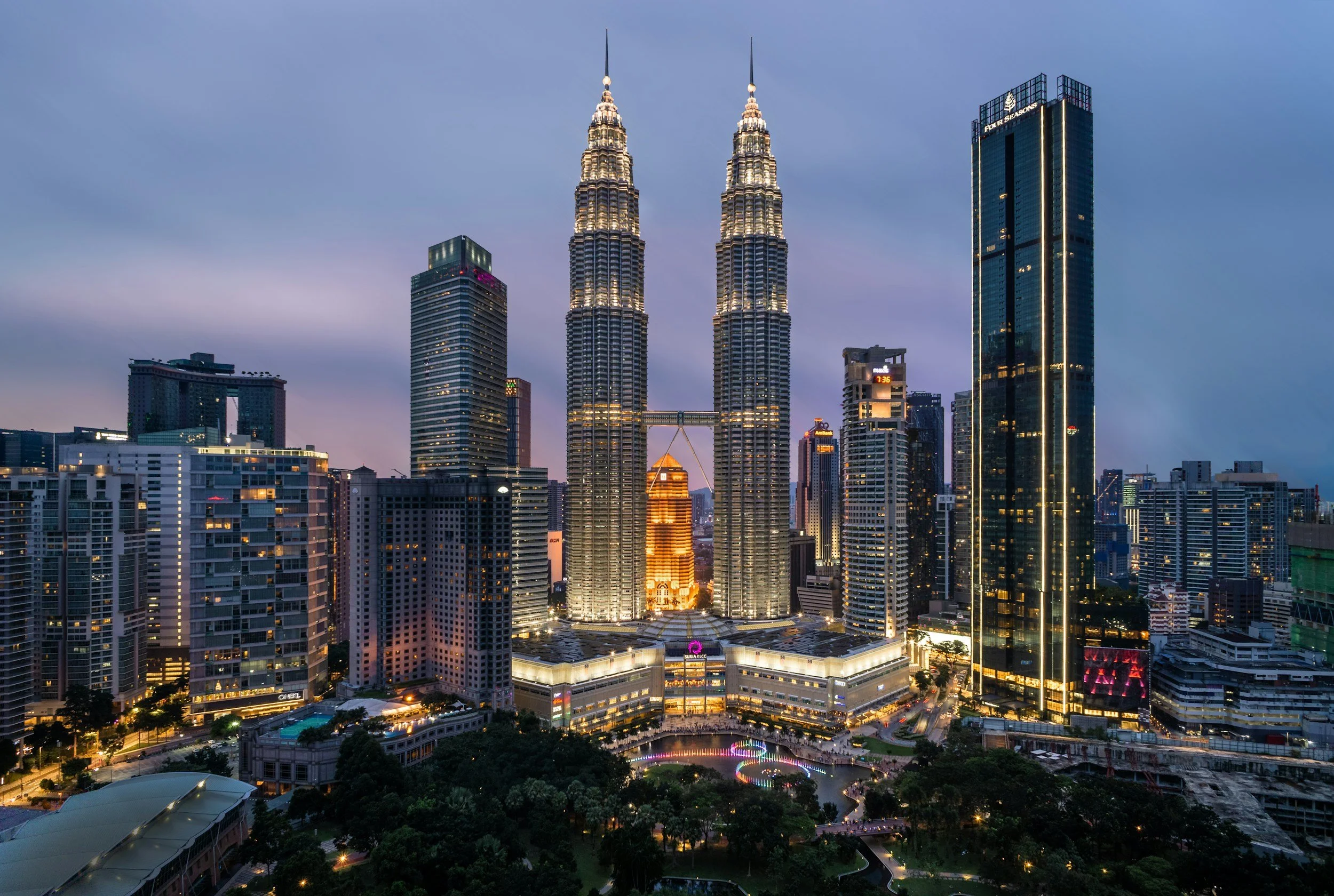
THE PETRONAS TWIN TOWERS ARE STILL THE WORLD’S TALLEST TWIN TOWERS
Each tower rises 452 metres, has 88 storeys, and uses an eight-pointed star-shaped floor plan inspired by Islamic geometric design.
Chinatown and Pasar Seni: Best for Heritage, Food and Value
Chinatown brings you closer to Kuala Lumpur’s earlier layers.
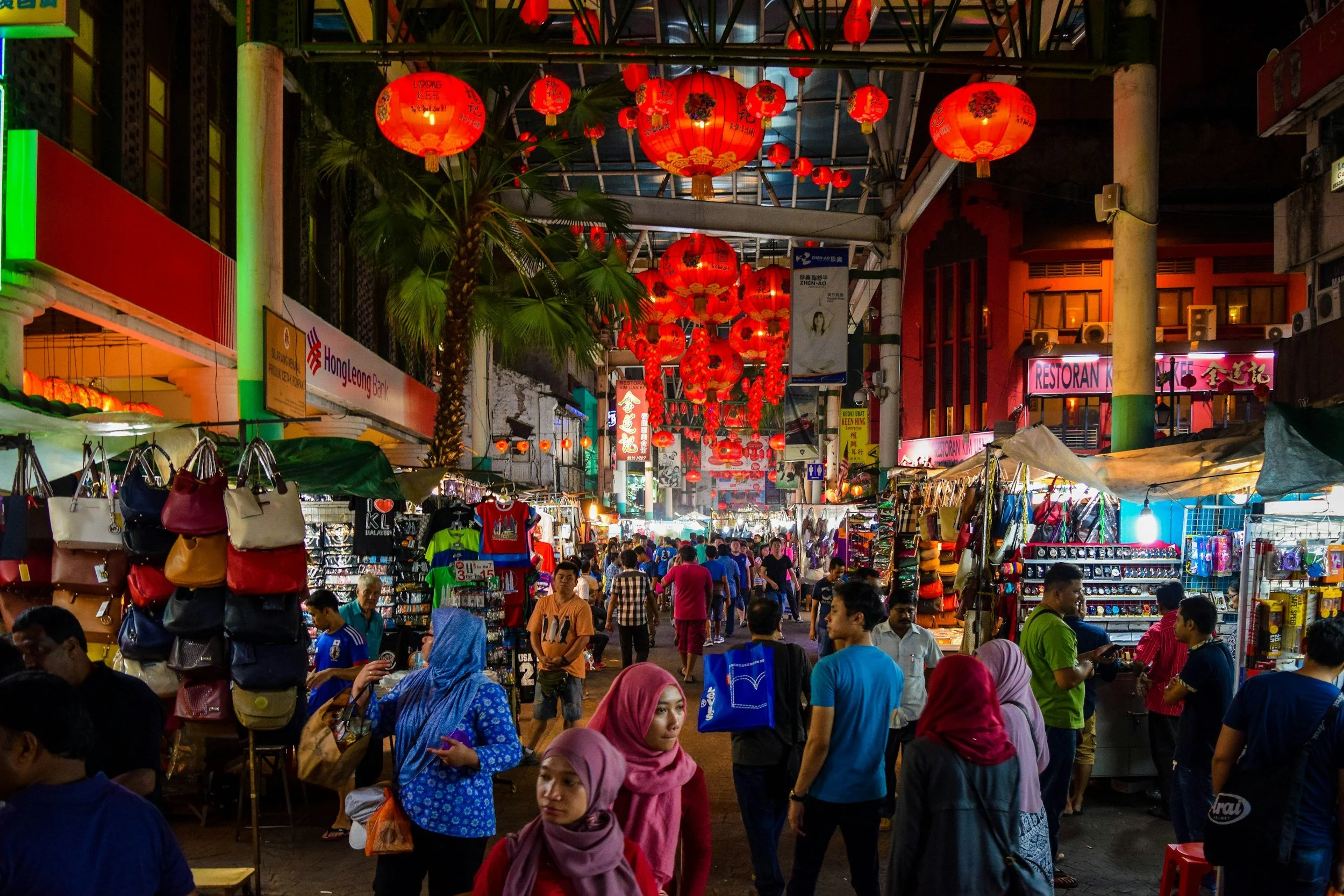
Petaling Street is the obvious landmark, but the neighbourhood is more interesting once you move beyond the market canopy. Shophouses, temples, traditional businesses, newer cafés and bars sit within a district shaped heavily by the Chinese communities involved in Kuala Lumpur’s early commercial development.
Tourism Malaysia highlights the clan houses and temples around Petaling Street as part of Kuala Lumpur’s surviving architectural heritage.
This is one of the areas where The World Locals idea of understanding before planning matters.
Why stay in Chinatown?
Stay here if you want mornings and evenings to happen somewhere with more visible historical texture.
Petaling Street, Central Market, Sri Maha Mariamman Temple, Sin Sze Si Ya Temple, Masjid Jamek and the wider historic centre can all fit naturally into days on foot.
The food is another major advantage: Petaling Street still has long-running stalls selling dishes such as Hokkien mee, asam laksa, wantan mee and curry noodles, while the wider neighbourhood has undergone a more recent wave of cafés, restaurants and bars occupying older buildings.
Transport is unusually good for an older district. Pasar Seni serves both the Kajang MRT and Kelana Jaya LRT, giving you direct connections towards Bukit Bintang and KLCC. MyRapid continues to identify Pasar Seni as an important interchange between the two systems.
Who should stay in Chinatown?
Chinatown works particularly well for food-focused travellers, cultural trips, budget-conscious visitors, solo travellers and anyone who would rather wake up around older streets than malls.
It’s also a good alternative for first-time visitors who find Bukit Bintang too commercial but still want strong transport.
What’s nearby?
Petaling Street and Central Market are the immediate anchors.
Merdeka Square, Masjid Jamek and the River of Life area are relatively close, while Merdeka 118 now adds a very different architectural landmark nearby.
Bukit Bintang is accessible directly by MRT from Pasar Seni.
The trade-off
Chinatown is busier and rougher around the edges than KLCC.
Pavements, market activity, traffic and older buildings are part of the experience. Petaling Street itself is also heavily oriented towards visitors.
Hotel quality varies considerably, making the exact property more important here than simply booking anything labelled Chinatown.
Where to stay in Chinatown
Else Kuala Lumpur is the boutique choice. Occupying a heritage building on Jalan Tun H S Lee, it suits travellers who want the accommodation itself to feel connected to Chinatown’s architectural character.
Four Points by Sheraton Kuala Lumpur, Chinatown combines a larger full-service hotel with a genuinely useful location close to Pasar Seni MRT and LRT. Its interiors deliberately reference the surrounding neighbourhood, while the rooftop gives a more contemporary counterpoint to the old streets below.
Moxy Kuala Lumpur Chinatown is the newer, more playful option. It has 316 rooms plus rooftop facilities and sits directly within the Chinatown district, making it useful if you like the area but prefer a contemporary hotel rather than a heritage property.
Choose Chinatown if: you want history, street food and older Kuala Lumpur to feel like part of the stay rather than something you visit for an afternoon.
Read next: Best Experiences in Kuala Lumpur
MALAYSIA’S INDEPENDENCE WAS PROCLAIMED IN KUALA LUMPUR IN 1957
On 31 August 1957, thousands gathered at Stadium Merdeka as Tunku Abdul Rahman read the Proclamation of Independence and famously shouted “Merdeka” seven times.
KL Sentral and Brickfields: Best for Transport and Airport Connections
KL Sentral is the easiest neighbourhood in this guide to underestimate.
The station itself is the reason most travellers know the name. It’s Kuala Lumpur’s major transport interchange, connecting urban rail, longer-distance services and the airport railway.
The KLIA Ekspres currently runs between KL Sentral and KLIA Terminal 1 in around 28 minutes, with trains operating every 20 minutes during the current timetable.
That alone makes the area extremely useful for short stays, early flights and trips involving onward travel.
Brickfields gives the area its identity
Immediately around the station sits Brickfields, home to Kuala Lumpur’s Little India.
Indian restaurants, textile shops, religious buildings and grocery stores give the district a strong cultural identity that sits somewhat incongruously beside the modern towers and transport infrastructure of KL Sentral.
Tourism Malaysia continues to highlight Brickfields for its Indian food, cultural traditions, traditional clothing and specialist shops. That contrast is part of what makes staying here more interesting than the phrase “transport hub” implies.
Why stay in KL Sentral?
Convenience.
If you land late, leave early or plan several journeys away from central Kuala Lumpur, KL Sentral removes friction.
The city’s rail network radiates from or connects through the area, and getting to the airport becomes particularly straightforward.
It can also work well for a one- or two-night stopover where your priority is seeing some of Kuala Lumpur without creating unnecessary transfer time.
Who should stay here?
KL Sentral works best for stopovers, airport-focused stays, train travellers, business trips and itineraries involving several day trips or onward journeys.
Brickfields makes it more appealing for food-focused travellers than you might expect, but I still wouldn’t rank it above Bukit Bintang or Chinatown for a conventional first city break.
What’s nearby?
Brickfields is immediately outside.
The National Museum and Perdana Botanical Gardens side of the city is relatively close, while the Kelana Jaya LRT provides useful access towards Pasar Seni and KLCC.
The trade-off
KL Sentral is functional first.
The station complex, offices, towers and roads dominate parts of the immediate environment. You can eat very well in Brickfields, but the wider area doesn’t produce the same evening atmosphere as Bukit Bintang or Chinatown.
If you have four days and no unusual transport requirements, you probably don’t need to optimise the entire trip around the station.
Where to stay around KL Sentral
Easy Hotel KL Sentral is the value choice in Brickfields, particularly if the objective is simply affordable accommodation close to the station.
Aloft Kuala Lumpur Sentral is the stronger mid-range/full-service option directly around the transport hub, with modern rooms and a rooftop pool.
Le Méridien Kuala Lumpur is the more upscale choice. It sits opposite KL Sentral and explicitly positions its location around access to the integrated rail network and the KLIA Ekspres.
Choose KL Sentral if: the journey matters almost as much as the destination and you want Kuala Lumpur’s transport network working in your favour from the moment you arrive.
Chow Kit: Best for Markets, Food and a Different Side of Central KL
Chow Kit sits surprisingly close to Kuala Lumpur’s polished centre while feeling noticeably removed from it.
This is an older commercial district built around markets, food businesses and streets where day-to-day city life remains far more visible than around KLCC.
Chow Kit Market is one of the defining anchors, and Tourism Malaysia continues to include the neighbourhood in Kuala Lumpur food experiences because of its markets and mix of Malay, Indian-Muslim, Chinese and Indonesian culinary influences.
That makes Chow Kit interesting for a particular type of traveller. Not someone trying to make Kuala Lumpur as frictionless as possible, someone who wants to see more of it.
Why stay in Chow Kit?
Food and neighbourhood character are the strongest reasons.
Markets, kopitiams, traditional restaurants and newer cafés exist within the same district. The arrival of more design-conscious hotels and restaurants has added another layer without completely smoothing away Chow Kit’s older commercial identity.
Malaysia Tourism’s current café coverage, for example, includes contemporary speciality coffee alongside the area’s more established food culture.
The Monorail gives the neighbourhood a practical connection south towards Bukit Bintang and KL Sentral.
Kampung Baru is also close, putting one of Kuala Lumpur’s most significant Malay enclaves and food districts within relatively easy reach. Tourism Malaysia continues to describe Kampung Baru as a traditional Malay enclave within the modern capital.
Who should stay in Chow Kit?
Chow Kit is strongest for food-focused trips, repeat visitors, travellers interested in markets and neighbourhood life, and anyone who finds Bukit Bintang or KLCC slightly too polished.
It can also offer better accommodation value.
What’s nearby?
Chow Kit Market is the obvious starting point.
Jalan Tuanku Abdul Rahman, Kampung Baru and the northern side of central Kuala Lumpur are all useful nearby areas, while the Monorail puts Bukit Bintang within relatively easy reach.
The trade-off
Chow Kit asks you to be slightly more comfortable with Kuala Lumpur as a working city.
Streets can feel busier and less curated, pedestrian infrastructure varies and the exact hotel location matters.
For someone nervous about their first trip to Southeast Asia, Bukit Bintang is probably easier. For someone who already knows they prefer markets to malls, the calculation changes.
Where to stay in Chow Kit
MoMo's Kuala Lumpur is the more budget-oriented, social option. Its continued operation and 2026 offers are currently promoted through Tourism Malaysia alongside its sister property in the neighbourhood.
The Chow Kit – An Ormond Hotel is the standout boutique option. Its 86 rooms and 27 suites deliberately reference Chow Kit’s history and creative culture, while its restaurant draws on Malaysian food traditions and ingredients from the nearby market.
Fairfield by Marriott Chow Kit Kuala Lumpur is the straightforward full-service alternative, with Chow Kit Market, Kampung Baru and multiple transport options nearby.
Choose Chow Kit if: markets, Malaysian food and a less manicured version of Kuala Lumpur sound more appealing than having Pavilion outside your hotel.
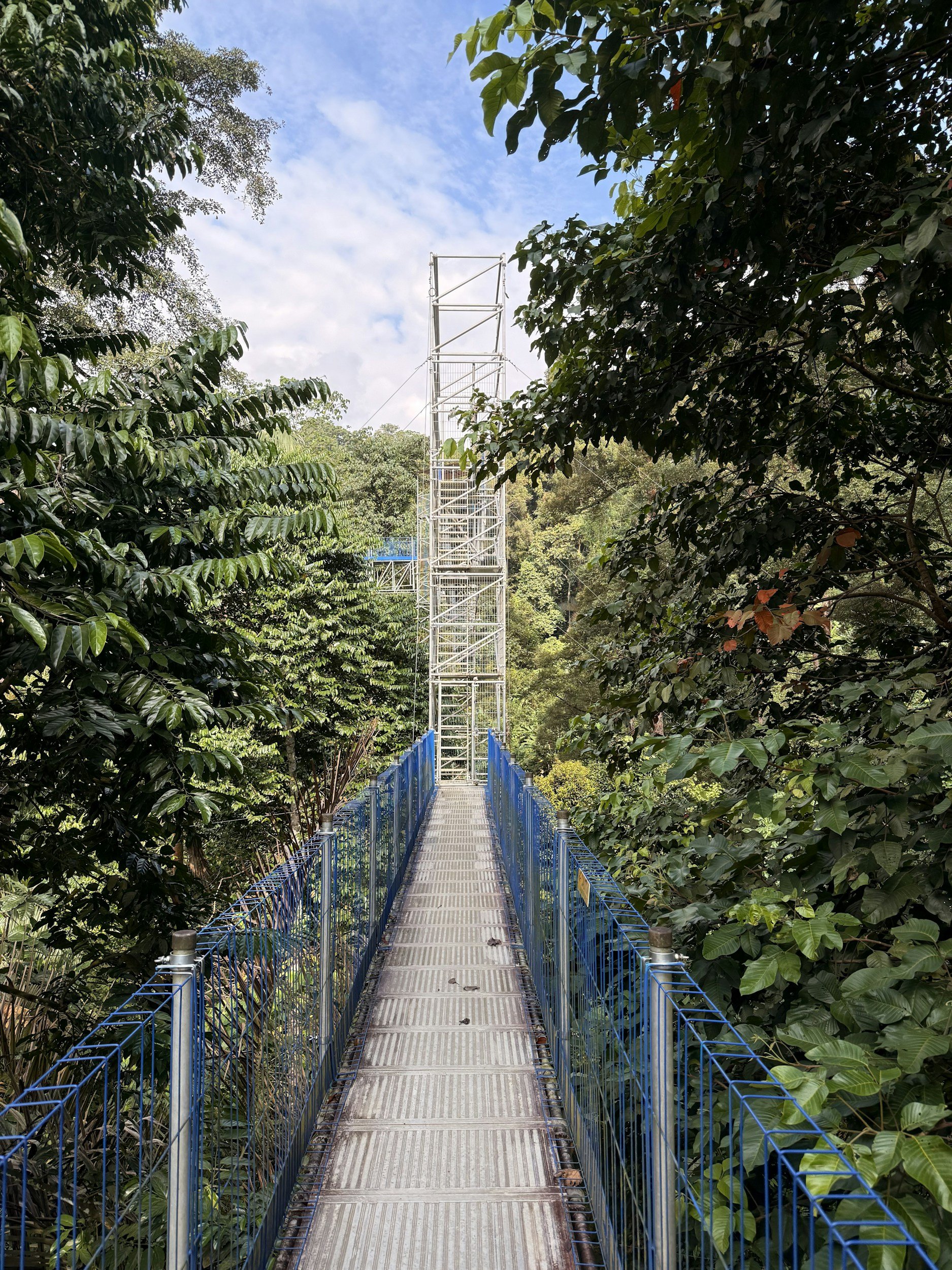
THERE’S A CENTURY-OLD RAINFOREST IN THE MIDDLE OF THE CITY
KL Forest Eco Park, formerly Bukit Nanas Forest Reserve, was established in 1906 and remains one of Malaysia’s oldest conservation areas, despite sitting beside central Kuala Lumpur.
Bangsar: Best for Cafés, Restaurants and a Slower Stay
Bangsar is where the question changes.
Instead of asking what sights are nearby?, it makes more sense to ask would I actually enjoy spending time in this neighbourhood?
For many travellers, the answer is yes. Bangsar sits southwest of the central visitor districts and has a more residential character, with restaurants, cafés, bars and independent businesses around Bangsar Baru and Jalan Telawi.
Tourism Malaysia has long identified Bangsar as one of Kuala Lumpur’s suburban shopping and dining enclaves rather than part of the headline tourist core.
Why stay in Bangsar?
Bangsar works when you don’t need every morning to begin beside a major attraction.
Days can start with coffee, move slowly into lunch and end around neighbourhood restaurants without automatically returning to Bukit Bintang.
It’s particularly well suited to a longer stay where you want Kuala Lumpur to feel slightly more lived-in.
Bangsar LRT sits on the Kelana Jaya Line, connecting the area with KL Sentral, Pasar Seni and KLCC.
But there’s an important practical detail: the most appealing parts of Bangsar aren’t all clustered directly around the station.
Who should stay in Bangsar?
Bangsar works particularly well for couples, repeat visitors, longer trips, café-heavy weekends and travellers who like neighbourhood restaurants more than major attractions.
It’s also a strong choice for people working remotely or staying in Kuala Lumpur for longer than the typical city break.
What’s nearby?
Bangsar Village, Jalan Telawi and the surrounding dining streets are the main anchors.
Mid Valley sits nearby in a broader sense, while KL Sentral is one LRT stop from Bangsar station.
The trade-off
You are deliberately moving away from the core sightseeing districts.
That means more journeys to Chinatown, Bukit Bintang and KLCC.
For a two-night first visit, I wouldn’t make that trade.
For five or six nights, or a second trip, Bangsar becomes considerably more persuasive.
Where to stay in Bangsar
Bangsar has fewer obvious visitor hotels than Bukit Bintang or KLCC, so this is one neighbourhood where I wouldn’t force a long recommendation list.
Holiday Inn Kuala Lumpur Bangsar is the straightforward central option. The hotel opened in the Jalan Maarof/Jalan Bangsar area and is around a five-minute walk from Bangsar LRT according to IHG, which solves one of the neighbourhood’s main logistical weaknesses.
Alila Bangsar Kuala Lumpur sits towards the Brickfields edge of the wider Bangsar area and is the more design-led, higher-end option, with minimalist interiors and skyline views.
Choose Bangsar if: you want Kuala Lumpur to feel like somewhere you’re living for a few days rather than a centre you’re systematically sightseeing through.
Bukit Ceylon: Best for a Quieter Central Stay
Bukit Ceylon is the compromise neighbourhood.
You remain close to Bukit Bintang, Changkat, KL Tower and the wider Golden Triangle, but move away from some of the busiest commercial streets.
The area is hillier, greener and more residential, with serviced apartments and hotels scattered along quieter roads.
That combination makes it particularly appealing if you like the convenience of Bukit Bintang but don’t necessarily want Bukit Bintang outside your bedroom window.
Why stay in Bukit Ceylon?
Location without quite as much noise.
You can still reach the restaurants and nightlife around Changkat relatively easily, and the wider Golden Triangle remains close, but returning to the hotel can feel calmer.
Longer-stay accommodation is another advantage: Serviced apartments and larger rooms are more common here than on the densest parts of Jalan Bukit Bintang, which makes Bukit Ceylon useful for couples, families or anyone staying longer.
Who should stay here?
Bukit Ceylon suits couples, longer stays, travellers who want more room, light sleepers who still value centrality and anyone who thinks Bukit Bintang sounds useful but exhausting.
What’s nearby?
Changkat Bukit Bintang, Bukit Bintang itself, KL Tower and parts of the Golden Triangle are relatively close.
The practical catch is that the exact side of the hill matters.
Raja Chulan, Bukit Bintang and other stations may all be useful depending on the property, but there’s no single transport connection that defines Bukit Ceylon in the way Pasar Seni defines Chinatown.
The trade-off
The clue is in the name (it’s a hill). A hotel can look extremely close to Bukit Bintang on the map while producing a less appealing walk in Kuala Lumpur heat.
Check the actual route before booking rather than trusting the straight-line distance.
Where to stay in Bukit Ceylon
Verdant Hill Hotel Kuala Lumpur is the more affordable conventional hotel option on Changkat Raja Chulan, keeping you close to the busier central neighbourhoods without being directly inside them.
Lanson Place Bukit Ceylon, Kuala Lumpur is the stronger choice for space and longer stays. Its serviced apartments start substantially larger than a typical hotel room, and the property specifically positions itself for access to KL Tower, KLCC and Changkat while retaining a more residential setting.
Choose Bukit Ceylon if: you want central Kuala Lumpur close enough to use whenever you want it, but not quite close enough to hear all of it.
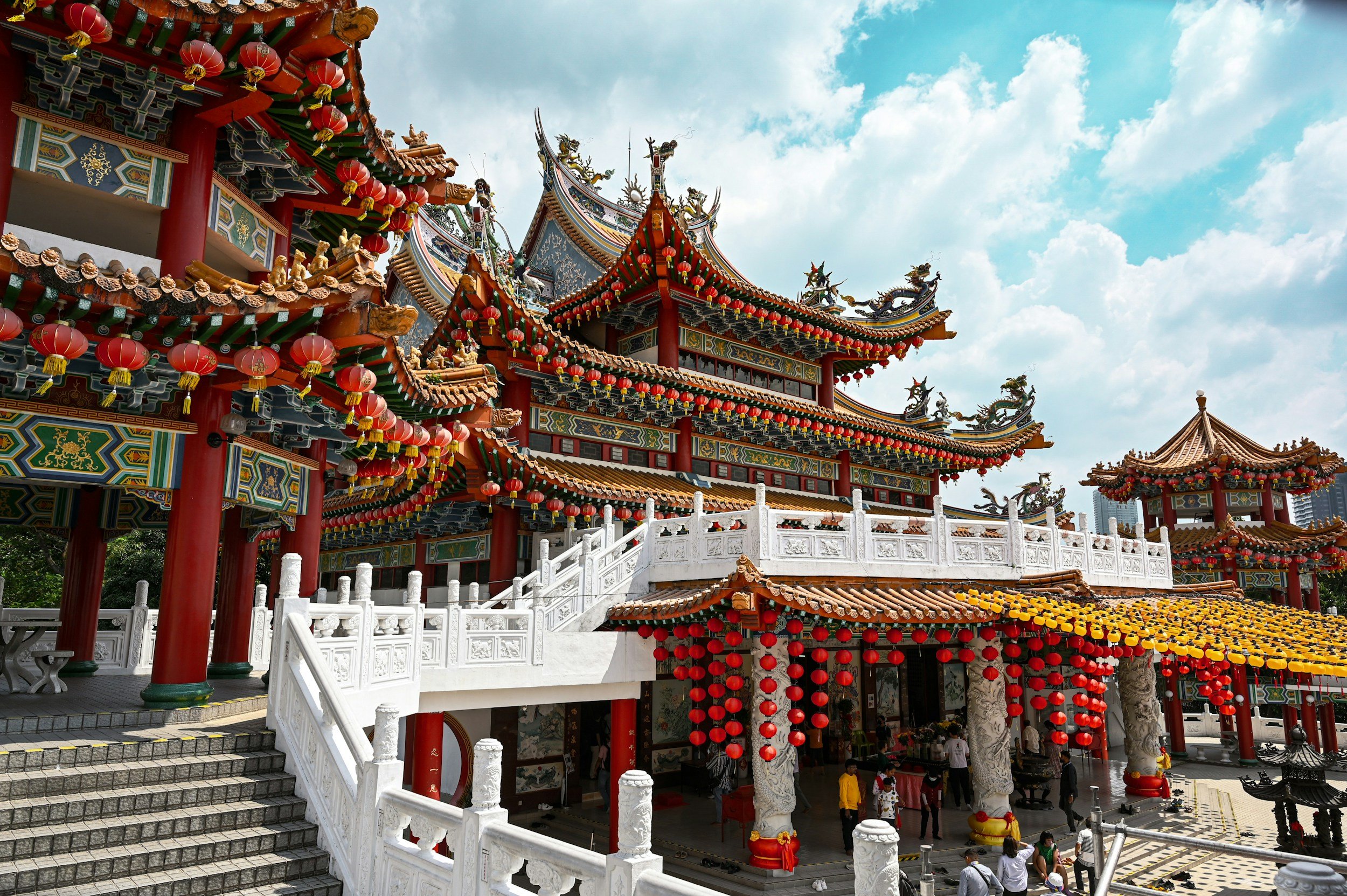
KUALA LUMPUR ONLY BECAME A FEDERAL TERRITORY IN 1974
The city received official city status in 1972, then separated administratively from Selangor two years later to become Malaysia’s first Federal Territory.
Bukit Bintang or KLCC: Which Is Better?
This is the comparison most first-time visitors actually need. Both are central. Both have strong hotels. Both put major attractions within relatively easy reach. But they produce different trips.
Choose Bukit Bintang for energy
Bukit Bintang wins for restaurants, nightlife, shopping and flexibility.
There is simply more happening at street level. You can finish sightseeing without needing to decide what the evening looks like because plenty of options already exist nearby.
It also has excellent transport for visitors, with both MRT and Monorail access.
Choose KLCC for polish
KLCC wins for skyline views, luxury hotels, KLCC Park and direct access to the Petronas Twin Towers.
The neighbourhood feels calmer and more spacious than Bukit Bintang, although much of that experience happens around malls, towers and major developments rather than independent streets.
Which is better for first-time visitors?
Bukit Bintang, narrowly.
It gives you slightly more flexibility and a better mix of everyday visitor needs.
But this is not a case where choosing KLCC would materially damage the trip.
If you find a hotel you love in KLCC, book it.
The two neighbourhoods are close enough that you’ll probably use both anyway.
Which is better for couples?
KLCC if you want luxury and skyline views.
Bukit Ceylon if you want somewhere quieter without moving too far away.
Bukit Bintang if food and evenings out are central to the trip.
Which is better for nightlife?
Bukit Bintang.
No contest required.
What to Know Before Booking Accommodation in Kuala Lumpur
Look at the station, not just the neighbourhood
“Central Kuala Lumpur” is too vague to be useful.
A hotel five minutes from Pasar Seni MRT can be more convenient than one geographically closer to your planned attractions but awkward to reach on foot.
Check the nearest useful station, not simply whether Google Maps displays a rail symbol nearby.
Walking distances can be deceptive
Kuala Lumpur’s heat alone changes the calculation.
Add major roads, hills, covered walkways, pedestrian bridges and inconsistent pavements, and 15 minutes on a map can feel longer than expected.
This matters particularly around Bukit Ceylon, Bangsar and some parts of KLCC.
Grab is useful, but don’t build the whole trip around it
Ride-hailing is inexpensive relative to many major cities and extremely useful in Kuala Lumpur.
But road traffic still exists.
Having MRT, LRT or Monorail as another option means you aren’t completely dependent on road conditions.
The covered KLCC pedestrian network is genuinely useful
The relationship between KLCC and Bukit Bintang looks awkward from the road network.
On foot, parts of the journey become much easier thanks to the covered pedestrian connection around Pavilion, Kuala Lumpur Convention Centre and KLCC.
That makes both neighbourhoods stronger bases than the map alone suggests.
Hotel location matters inside the neighbourhood
A Bukit Bintang hotel beside Changkat produces a different stay from one further towards Imbi.
A Chinatown property immediately around Petaling Street feels different from one on the quieter edge of the district.
A Bangsar hotel beside the LRT is much easier for sightseeing than accommodation deeper inside the residential streets.
Don’t stop researching once you’ve chosen the neighbourhood.
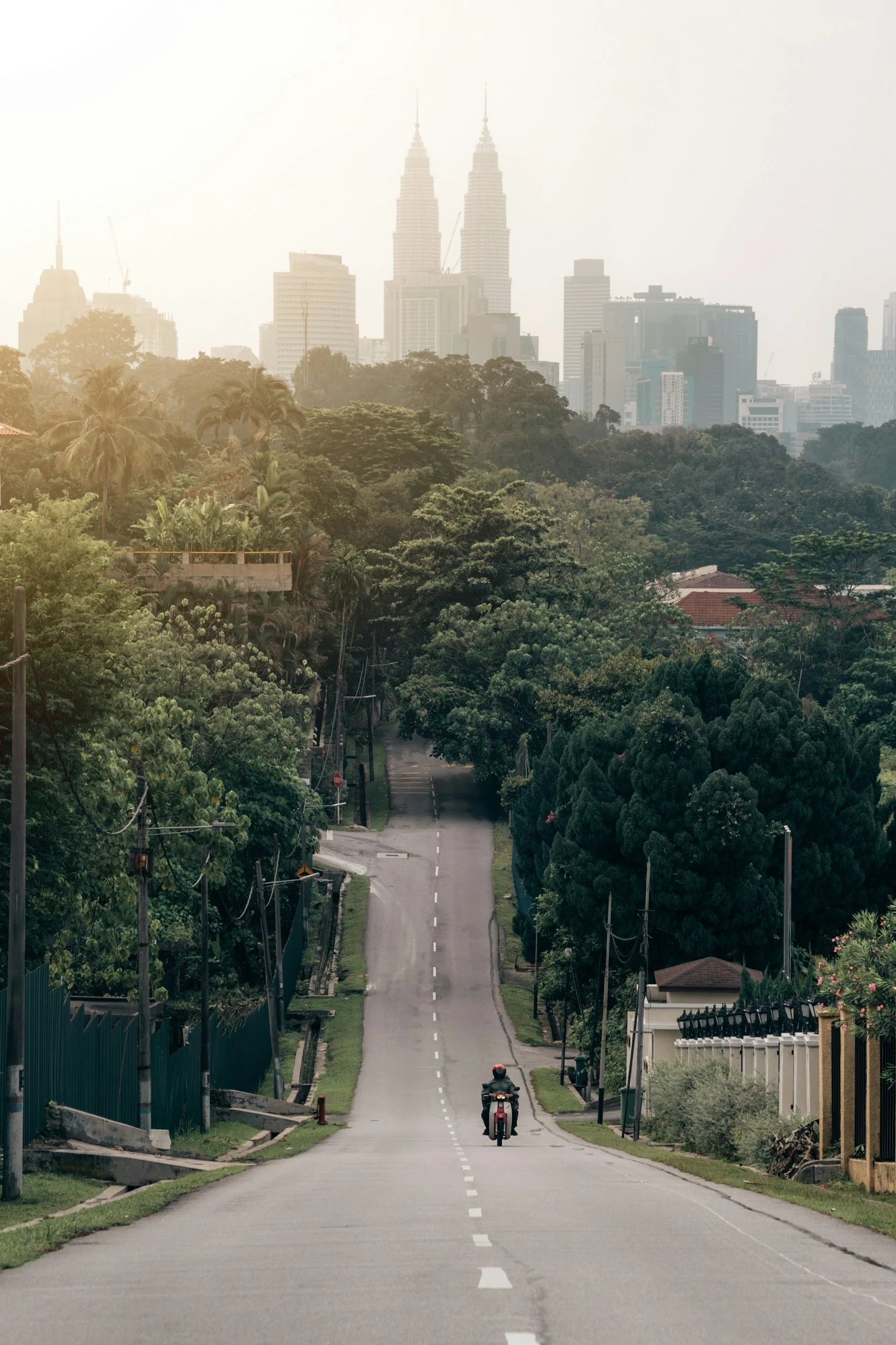
KUALA LUMPUR IS HOME TO THE WORLD’S SECOND-TALLEST BUILDING
Merdeka 118 reaches 678.9 metres and is also the tallest building in Southeast Asia. Its 118-storey form now dominates the skyline above the historic Merdeka precinct.
Where to Stay in Kuala Lumpur for Every Kind of Trip
-
Bukit Bintang gives you the easiest balance of food, transport, hotels, shopping and evening activity.
Alternative: KLCC if you want a calmer and more polished first trip.
-
Choose Chinatown for traditional Chinese-Malaysian food, hawker culture and a growing modern dining scene.
Choose Chow Kit if markets and Malay food are a bigger part of the trip.
Bukit Bintang remains the easiest choice for sheer variety.
-
Stay close enough to use the area late into the evening without needing to organise transport back across the city.
-
Bukit Ceylon offers more calm.
KLCC offers more polish.
Choose according to whether you’d rather have a residential base or skyline views.
-
This is where Kuala Lumpur has its strongest concentration of high-end hotels around major landmarks and the Golden Triangle.
-
The historic centre, temples, markets and older urban fabric give you the strongest immediate connection to Kuala Lumpur’s early development.
-
The neighbourhood has a broad accommodation range and excellent public transport.
Brickfields and Chow Kit can also provide strong value if their locations suit your itinerary.
-
The 28-minute KLIA Ekspres journey to Terminal 1 makes this the obvious choice when transfers matter.
-
Central enough to remain useful, but noticeably removed from the busiest streets.
-
Choose Bangsar if you want neighbourhood life.
Choose Bukit Ceylon if centrality still matters.
-
Both make more sense once you no longer need to organise the entire trip around Kuala Lumpur’s headline attractions.
-
Both keep food, public transport and activity close.
Bukit Bintang is easier.
Chinatown is more characterful.
Kuala Lumpur Neighbourhoods You May Prefer to Visit Rather Than Stay In
Kampung Baru
Kampung Baru is one of the most interesting contrasts in central Kuala Lumpur.
Traditional Malay houses, restaurants and community life sit immediately beside one of Southeast Asia’s most modern skylines. Tourism Malaysia continues to highlight it as a traditional Malay enclave and an important place to experience Malay food and everyday neighbourhood culture.
It deserves time. But I wouldn’t make it the default accommodation recommendation for a first trip.
Hotel choice is more limited than around KLCC, Bukit Bintang or Chinatown, and staying nearby gives you much of the same access without narrowing your options.
Visit Kampung Baru for: Malay food, neighbourhood context and one of Kuala Lumpur’s sharpest old-city/new-city contrasts.
Stay there only if: you’ve deliberately found accommodation you like and want this specific part of the city to shape the trip.
TTDI
Taman Tun Dr Ismail sits much further from the central sightseeing circuit.
It has neighbourhood restaurants, cafés, markets and MRT access, and for someone spending several weeks in Kuala Lumpur that can be appealing.
For a three- or four-day first trip, you’d be solving a problem you don’t need to create.
Visit or stay in TTDI if: you already know Kuala Lumpur, have a longer trip or specifically want a residential experience.
Stay centrally instead if: Petronas, Chinatown, Bukit Bintang and the historic centre are still major parts of the itinerary.
“For a first trip to Kuala Lumpur, stay in Bukit Bintang. It gives you the best balance of transport, restaurants, nightlife, shopping and access to the rest of the city. The Kajang MRT makes Chinatown straightforward, the Monorail connects with KL Sentral and Chow Kit, and the pedestrian connection towards KLCC means the Petronas Towers are still easy to reach without having to build your whole stay around them.
And if this isn’t your first time in KL, look harder at Bangsar or Chow Kit. They ask slightly more of you logistically, but they show a different side of the city.
The right Kuala Lumpur neighbourhood isn’t simply the one closest to the landmarks. It’s the one that makes the kind of trip you want easier!”