A good day of eating in Mexico City rarely stays neatly inside breakfast, lunch and dinner.
It might start with coffee and pan dulce, move into a taco eaten standing beside a counter, stretch into a long afternoon lunch and end with al pastor carved from a trompo after dark. Somewhere between those meals there will probably be another taco. This is not a planning failure.
The challenge in Mexico City isn't finding good food. It's deciding what deserves one of your limited meals.
The city brings together cooking traditions from across Mexico, alongside its own street-food culture, public markets, old-school institutions, immigrant influences and a contemporary restaurant scene that now includes some of the country's most recognised kitchens. In the 2026 Michelin Guide alone, Mexico City retains both of Mexico's two-star restaurants and several one-star restaurants, but some of the most useful meals in this guide cost a fraction of a tasting menu.
This isn't a list of every restaurant worth knowing. It's a guide to eating Mexico City properly: what to try, where different kinds of food make sense, which places justify crossing town and when the better move is simply to eat well in the neighbourhood you're already exploring.
Where to Eat in Mexico City: The Quick Guide
Best neighbourhood for food overall: Roma Norte. The easiest concentration of destination restaurants, contemporary Mexican cooking, bakeries, cafés, wine bars and casual places for a first food-focused trip.
Best for tacos: Across the city, not one neighbourhood. Pastor, suadero, barbacoa, guisados and carnitas reward different places. Build around taco style rather than searching for one universal winner.
Best for traditional Mexican cooking: Centro Histórico and Nicos. Centro has long-established institutions such as El Cardenal and Café de Tacuba; Nicos is worth leaving the central visitor circuit for if traditional cooking is a priority.
Best for contemporary Mexican dining: Roma Norte. Rosetta, Máximo and Expendio de Maíz offer very different interpretations of contemporary Mexican cooking within the same broader neighbourhood. All hold a Michelin star in the 2026 guide.
Best for fine dining: Polanco. Pujol and Quintonil remain Mexico City's two two-star Michelin restaurants in 2026.
Best market for a first trip: Mercado de Coyoacán. Easy to combine with a day in Coyoacán, particularly for tostadas and an introduction to market eating.
Best market for food-focused travellers: Mercado Medellín. More neighbourhood-oriented and particularly interesting for its wider Latin American food influences.
Best traditional bakery experience: Pastelería Ideal. Operating since 1927, with a vast range of pan dulce and pastries in Centro Histórico.
Best contemporary bakery: Panadería Rosetta. Sourdough, conchas, laminated pastries and Mexican ingredients in Roma Norte.
Best for nightlife plus food: Juárez. Restaurants, late-night options and a broader range of international influences make it particularly easy to keep eating once dinner becomes drinks.
Best for a special lunch: Contramar. Mexico City's most useful destination seafood restaurant, especially if you prefer a long lunch to a tasting menu.
Best for food-focused first-time visitors: Roma Norte and Condesa. Stay here for density and convenience, then deliberately leave the neighbourhood when the food justifies the journey.
What to Eat in Mexico City
Before deciding where to eat, it helps to understand what you're looking for.
Mexican food is far too regionally diverse to compress into a handful of national dishes. Mexico City makes that especially obvious. Migration from across the country has long brought regional cooking traditions into the capital, while generations of international migration have changed the city's food too. Historian Jeffrey Pilcher describes Mexico City as a place where migrants brought regional cooking into the growing metropolis, helping build the remarkably broad popular food culture found there today.
Underlying much of it is maize.
Traditional Mexican cuisine was inscribed on UNESCO’s Representative List of the Intangible Cultural Heritage of Humanity in 2010. UNESCO specifically identifies maize, beans and chilli as fundamental, alongside agricultural systems such as the milpa and chinampa and processes including nixtamalisation, where maize is treated with an alkaline solution before being ground into masa.
Understanding that makes the taco, tlacoyo or tamal in front of you considerably more interesting than treating masa as merely the edible plate carrying the filling.
Tacos al Pastor
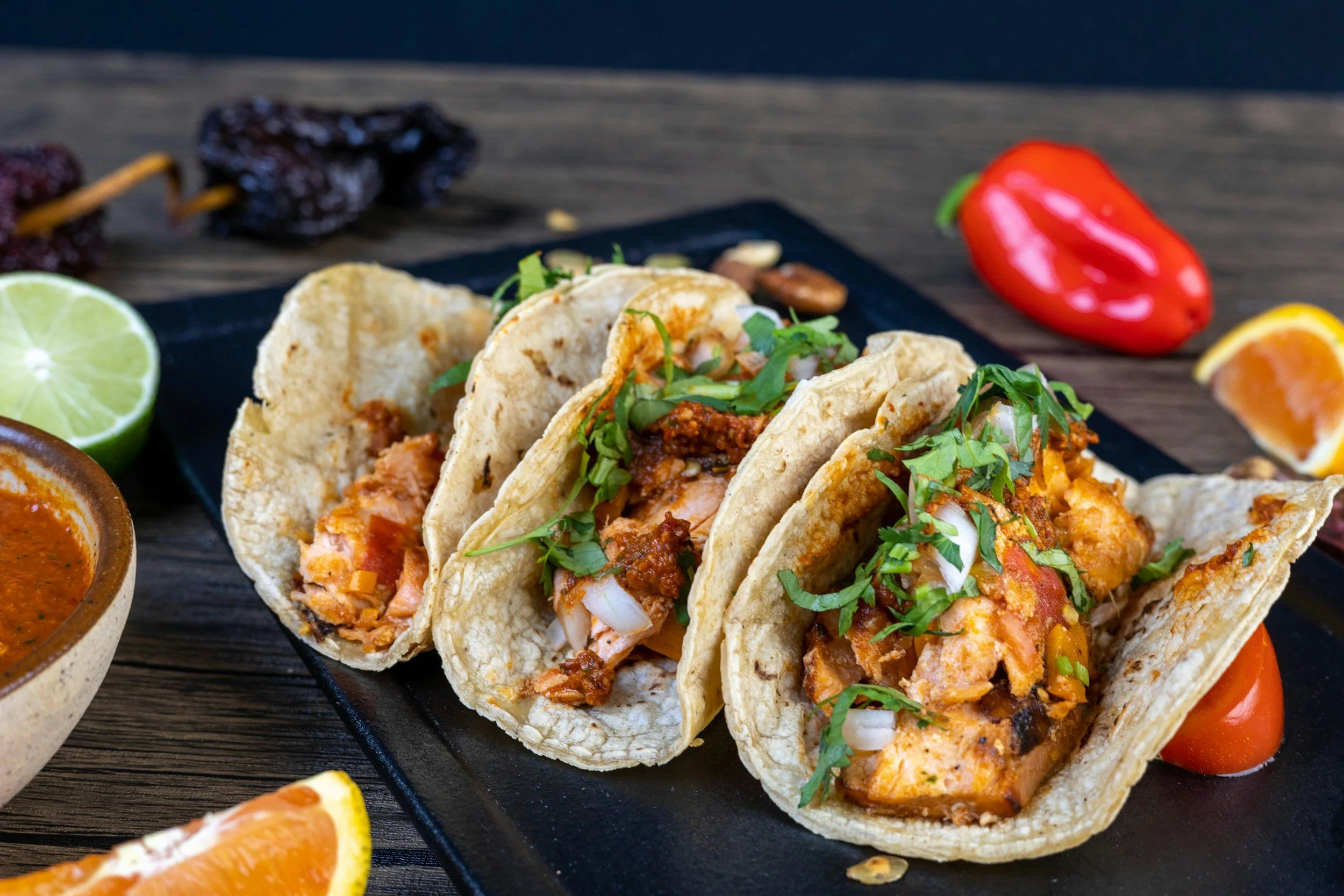
Pastor is the natural starting point: Marinated pork rotates vertically on a trompo, the outside caramelising against the heat before a taquero slices it directly onto small tortillas. Onion, coriander, salsa and sometimes pineapple finish the job.
Its history is one of Mexico City's better examples of food changing through migration. Lebanese immigrants brought vertical-spit cooking traditions into Mexico; subsequent generations adapted them through pork, tortillas and Mexican seasonings. By the 1960s, tacos al pastor had become established as a distinct Mexican style.
Pastor is particularly good after dark, when the trompo has developed caramelised edges and the taquería is busy enough that meat barely has time to sit around.
Tacos de Suadero
Suadero is a different kind of pleasure: The beef cut comes from around the breast and flank area and is cooked slowly in fat until tender, then often crisped on the plancha before being chopped into a tortilla.
Where pastor gives you char, spice and movement from the trompo, good suadero is softer, richer and almost silky.
At Los Cocuyos in Centro Histórico, Michelin specifically recommends trying the suadero later in the day, after the meat has spent longer braising in the pot.
Tacos de Canasta
Tacos de canasta are the quiet counterpoint to the theatrical pastor trompo.
They're filled tacos packed into a basket, layered and kept warm so the tortillas soften and effectively steam together. Common fillings include potato, beans and chicharrón.
Mexico City's tourism office describes them as especially associated with morning preparation and daytime sale, often historically carried by bicycle into workplaces and streets around the city.
They're inexpensive, soft, compact and much closer to everyday working-city food than destination dining.
Tacos de Guisado
Guisado tacos are worth understanding because they make the word "taco" considerably broader.
Instead of meat sliced from a spit or grill, tortillas are filled from pots of cooked dishes: picadillo, chile relleno, potatoes with chorizo, stewed pork, chicken, beans and whatever else the taquería is serving that day.
Tacos Hola El Güero in Condesa has operated since 1968 and remains one of the strongest introductions to the style. Its counter holds multiple ceramic pots of different guisados, with picadillo, chorizo with potato and chile relleno among the recurring favourites.
Barbacoa
Barbacoa isn't simply a flavour. It's a cooking tradition. Different parts of Mexico prepare it differently, traditionally using slow-cooked meat and techniques that can involve earth ovens. Mexico City draws barbacoa traditions from surrounding states as well as further afield.
For a visitor, the practical detail is simpler: barbacoa often makes most sense earlier in the day or at weekends, rather than as the late-night taco you order after drinks.
Barbacoa Gonzalitos offers a contemporary northern interpretation in Roma Norte, including beef barbacoa served soft or dorado, where the tortilla is crisped.
Carnitas
Carnitas take pork in another direction: Traditionally associated particularly strongly with Michoacán, different cuts of pork are slowly cooked in fat until tender, with diners able to choose lean meat or more textural parts.
If you want to make carnitas a destination, El Gran Abanico in the Tránsito neighbourhood remains a strong current recommendation. Eater's April 2026 Mexico City update specifically highlights its carnitas and recommends the surtida, combining leaner and fattier cuts.
This is one I'd travel for if carnitas are high on the list, rather than because the internet insisted you need to collect every famous taco in Mexico City.
Tlacoyos
Tlacoyos bring the focus back to masa.
They're thicker, oval-shaped masa cakes traditionally filled with ingredients such as beans or fava beans, cooked on a comal and topped with combinations of nopales, salsa, cheese and other ingredients.
The wider tradition belongs to the same maize system recognised by UNESCO, where nixtamalised corn underpins tortillas, tamales and a much larger family of masa preparations.
Tamales and the Guajolota
Tamales appear particularly naturally in the morning.
Masa is wrapped around fillings, enclosed in corn husks or leaves and steamed. Regional variations are enormous, which means "try a tamal" isn't remotely the end of the subject.
Mexico City adds another layer with the guajolota, where a tamal is placed inside a bread roll. Nutritionally restrained it is not. Effective fuel for a morning of walking is another matter.
Pair it with atole if you want the fuller breakfast experience.
Chilaquiles
Chilaquiles turn tortilla pieces into breakfast. They're cooked with red or green salsa, then finished in numerous ways with cream, cheese, onions, eggs or meat.
The important detail is texture. Good chilaquiles shouldn't simply be dry tortilla chips with salsa sitting politely on top. The sauce and tortilla need to meet properly, while leaving enough structure that the whole thing doesn't immediately become porridge.
For a traditional sit-down breakfast, El Cardenal is one of the easiest places to explore the broader breakfast culture rather than treating chilaquiles as a single dish to tick off.
Mole
Mole is not one sauce, it's a broad family of preparations whose recipes, ingredients and regional traditions vary enormously. Some combine dried chillies, seeds, nuts, spices and other ingredients in deeply layered sauces; others look and taste entirely different.
Don't make the mistake of thinking Mexico City's job is to give you "the Mexico City mole". One of the capital's strengths is instead that you can encounter cooking traditions from Oaxaca, Puebla and elsewhere without leaving the city.
If you want the high-end contemporary expression, Pujol's long-running mole madre has become one of Mexico's most internationally recognised restaurant dishes. Michelin continues to highlight it, and Pujol retains two Michelin stars in 2026.
You do not, however, need a two-star tasting menu to understand mole.
Pan Dulce and Mexico City's Bakeries
Mexico City can comfortably support an entire breakfast strategy built around bread.
Conchas are the obvious starting point: soft sweet buns with their recognisable patterned topping. But you'll encounter an enormous family of Mexican sweet breads alongside European-influenced pastry techniques.
Two stops show the range particularly well.
Pastelería Ideal was founded in 1927 and still operates multiple branches, including its enormous Centro Histórico locations.
Panadería Rosetta, opened in Roma in 2012, approaches bread through sourdough, slow fermentation, organic flours and a mixture of Mexican and European baking traditions.
Do both rather than arguing which is more legitimate. They are telling different parts of the same city.
Other Things Worth Trying
You could build a much longer glossary, but for a first trip I'd also keep an eye out for esquites, elotes, quesadillas, tortas, pambazos, pozole and tostadas.
The useful principle is not to chase each one across town.
If a market stall looks busy and specialises in tostadas, eat a tostada. If someone is selling esquites on the street during an evening walk, that is probably a better moment than inserting "17:40: esquites" into Google Calendar.
The food deserves slightly better than that.
Where to Eat Tacos in Mexico City
There is no single best taco in Mexico City. That isn't diplomatic evasion. A suadero taco and an al pastor taco are solving different problems. The smarter way to plan is to try different styles at places that do those styles particularly well.
Best Tacos al Pastor: El Vilsito
If you want one destination pastor experience, make it El Vilsito in Narvarte.
During the day, the address operates as an auto workshop. At night, the setting shifts towards tacos and the pastor trompo. Michelin includes El Vilsito in its recommendations, and Mexican chef Lucho Martínez specifically singled out its pastor planchado as his go-to pastor stop.
This is one of the taco places where leaving Roma or Condesa genuinely makes sense.
Come hungry. Keep the rest of the evening relatively loose.
Best Suadero and Cabeza: Los Cocuyos
Taquería Los Cocuyos has been operating in Centro Histórico since 1980.
The kitchen works around a large cauldron of braising meats, with cabeza and suadero among the strongest reasons to visit. Michelin currently lists it as an inexpensive recommended restaurant and suggests suadero later in the evening.
The other reason Los Cocuyos works is logistical.
You don't need to cross the city purely to eat here. Build it into a day exploring Centro Histórico and let the taco stop improve the route rather than dictate it.
Best Guisado Tacos: Tacos Hola El Güero
On Avenida Ámsterdam in Condesa, Tacos Hola El Güero is a lesson in why not every great taco needs a trompo.
The focus is guisados, with pots of fillings lined up ready for tortillas. The taquería has been operating since 1968.
Go around breakfast or lunch, look at what's available, order a couple of different fillings and treat this as a quick neighbourhood meal rather than a production.
Best Corn-Focused Taco Stop: Siembra Tortillería
Siembra Tortilleria in Polanco is particularly useful if you want to understand how much difference the tortilla itself makes.
Founded in 2019 by chefs Karina Mejía and Israel Montero, the project nixtamalises Mexican corn on site and originally combined a mill, tortillería and taquería.
The campechano and taco de fideo have been specifically recommended by Michelin-listed chef Lucho Martínez.
This is a good Polanco counterpoint to the idea that the neighbourhood is only tasting menus and expensive hotel restaurants.
Best Northern-Style Barbacoa: Barbacoa Gonzalitos
In Roma Norte, Barbacoa Gonzalitos works particularly well for an earlier taco session.
Its speciality is northern-style beef barbacoa, available in corn or flour tortillas and particularly good dorado, when the tortilla is shallow-fried to crisp it.
If you're already staying in Roma, this is exactly the kind of strong food stop you don't need to replace with a 45-minute taxi across town.
Best Contemporary Taquería: Tacos Los Alexis
Tacos Los Alexis takes a more chef-driven approach without losing the recognisable taquería format.
Chef Alexis Ayala combines northern and Mexico City influences through carne asada, costras and a taurino filling of cecina, chicharrón and longaniza. There is also a thoughtful vegetarian huitlacoche taco.
It's useful precisely because it demonstrates that contemporary tacos needn't mean adding truffle to something and tripling the price for moral support.
Best Carnitas Worth Travelling For: El Gran Abanico
El Gran Abanico is the exception to my general rule against crossing large sections of Mexico City simply because a taquería appeared on a list.
Carnitas are the reason.
The focus should be the pork rather than the broad menu. Order a mixed surtida taco if you want to explore different textures, or choose a specific cut if you already know what you like.
If carnitas aren't particularly important to you, don't make the journey just for completionism.
Best Late-Night Option: Los Parados
Los Parados has been operating since 1965 and still stays open well into the night, with the restaurant publishing hours extending to 3am on several weekdays and 5am on Friday and Saturday.
As the name implies, standing is part of the format.
Pastor is the obvious order, although the broader menu includes grilled meats, volcanes and quesadillas.
This is practical nightlife food, not something you need to structure Tuesday afternoon around.
A Note on Michelin-Starred Tacos
Mexico City's relationship with Michelin produced one of the food world's better headlines when El Califa de León became the first Mexican taco stand to receive a star.
Things have already moved on. The 2026 Michelin selection no longer gives El Califa de León a star, while La Once Mil has entered the one-star list.
This is precisely why I'd avoid planning a taco trip around awards. Stars can be useful signals. They are not a substitute for deciding whether you want pastor, suadero, carnitas or an elaborate chef-driven taco in the first place.
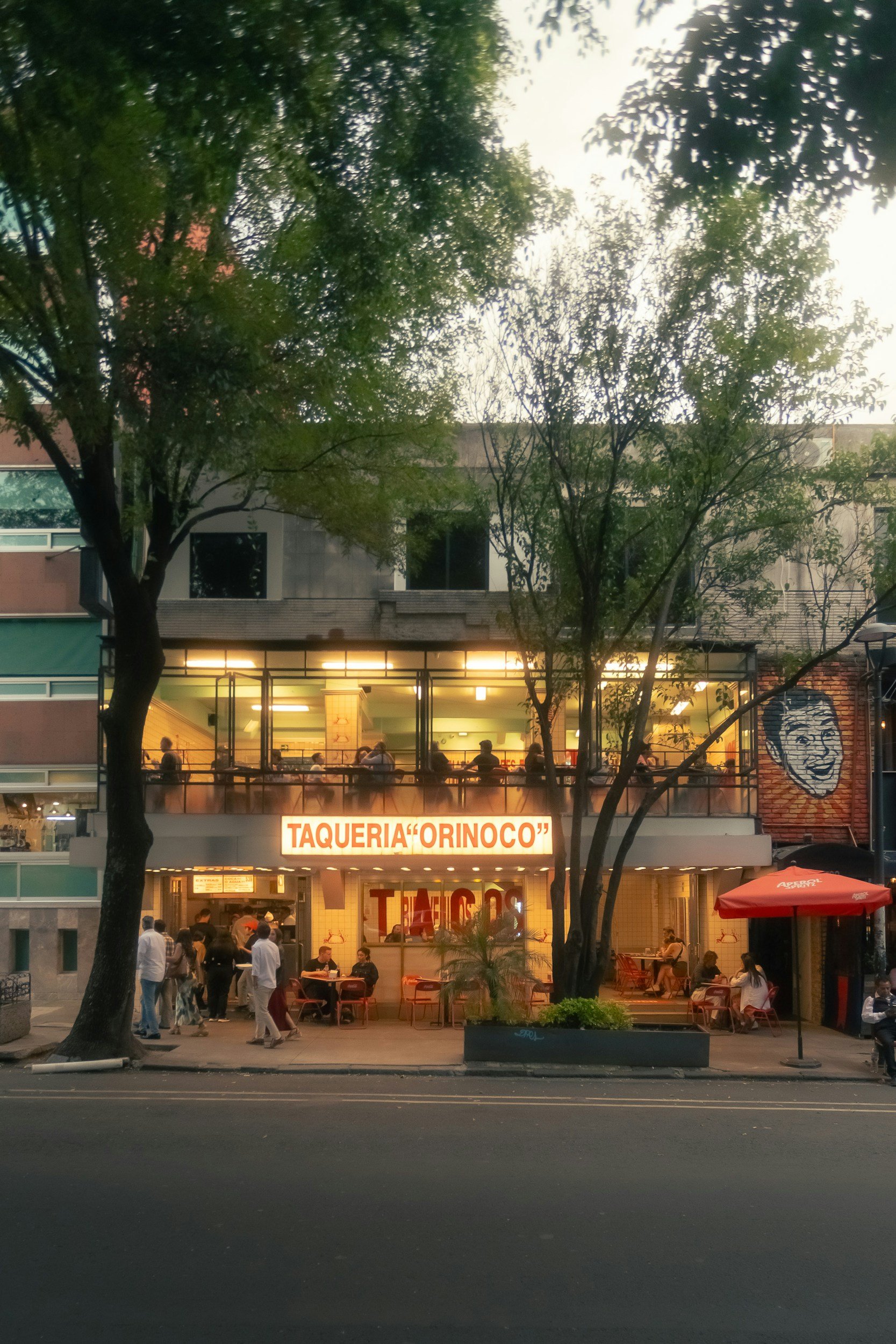
The Best Food Markets in Mexico City
Mexico City's public markets are not simply attractions.
The city's tourism authority lists hundreds of public markets, many operating primarily as everyday neighbourhood infrastructure rather than visitor destinations.
You don't need to visit five markets because a travel itinerary says markets are "authentic". Pick one or two that genuinely add something to the trip.
Mercado de Coyoacán: Best for a First Visit
Mercado de Coyoacán is the easiest recommendation for most first-time visitors because it fits naturally into a day already worth taking.
The market sits within walking distance of the Frida Kahlo Museum and is particularly known among visitors for its tostadas, with toppings ranging from seafood to tinga, mushrooms and vegetables.
Come for lunch during a Coyoacán day. The market is busy and visitor-friendly, so don't confuse accessibility with lack of value. Sometimes convenient and worthwhile are allowed to be the same thing.
Mercado Medellín: Best Neighbourhood Market for Food Travellers
Mercado Medellín in Roma Sur is one of the markets I'd prioritise if food itself is the reason for going.
The market became particularly associated with Cuban, Colombian, Peruvian and Venezuelan vendors following migration into the area after the 1985 earthquake. Today you'll find ingredients and foods from across Latin America alongside the Mexican market staples.
This makes Medellín interesting for what it tells you about Mexico City as a migration city, not simply as somewhere to buy lunch.
If you're based in Roma or Condesa, it is also very easy to fold into the day.
Mercado de San Juan Pugibet: Best for Ingredients and Culinary Curiosity
Mercado de San Juan Pugibet is often described as Mexico City's gourmet market.
That is both accurate and slightly misleading if you arrive expecting the city's greatest market lunch.
Its strength is specialist produce: imported ingredients, cheeses, charcuterie, unusual meats, seafood and products sourced for restaurant kitchens. Mexico City's official guide notes its long relationship with chefs and its reputation for more specialised goods.
Go because you're interested in ingredients and food culture. For a straightforward prepared-food market meal, I'd put Coyoacán or a strong neighbourhood fonda ahead of it.
La Merced: Best for Scale
La Merced is about understanding the sheer infrastructure behind the city's food.
The wider market complex is enormous. If prepared food is your goal, the dedicated Mercado de Comidas section is the more useful target; the official city guide specifically identifies it as the part best suited to comida corrida and prepared meals.
This can be overwhelming for a first-time independent visitor.
A food tour or knowledgeable guide makes more sense here than it does in a small, straightforward market, particularly if you want context rather than merely walking through one giant aisle after another.
Mercado Jamaica: Best as a Broader Market Experience
Mercado Jamaica is one of Mexico City's great visual markets, but food isn't the strongest reason I'd send a first-time visitor there.
Flowers are.
The market specialises in flowers and ornamental plants, with Mexico City's tourism authority describing it as the city's leading flower market.
There is food, including carnitas and other market cooking, but if meals are the priority rather than the broader market experience, choose elsewhere.
That's the difference between an interesting market and the best market for your lunch.
The Mexico City Restaurants Worth Booking
Mexico City's 2026 Michelin selection includes Pujol and Quintonil with two stars, while Rosetta, Máximo, Masala y Maíz and Expendio de Maíz are among the capital's one-star restaurants.
Useful information.
Still not a dining plan.
For a first visit, I'd divide the restaurants into three groups: one destination meal, one excellent but less ceremonial restaurant, and plenty of food that needs no reservation at all.
Quintonil: Best High-End Tasting Menu for Food-First Travellers
If I were choosing one of Mexico City's major tasting menus, Quintonil would be high on the shortlist.
Chef Jorge Vallejo's Polanco restaurant works with Mexican ingredients through a contemporary framework, and the restaurant explicitly describes its cooking around freshness, seasonality and Mexican gastronomic tradition.
It retains two Michelin stars in 2026 alongside Pujol.
Best for: travellers who genuinely enjoy long tasting-menu experiences.
The trade-off: cost, time and the fact that one major tasting menu can consume a substantial portion of the day's appetite as well as the evening.
Book well ahead.
Pujol: Best for the Big-Name Mexico City Dining Experience
Pujol. Enrique Olvera's restaurant helped move contemporary Mexican cooking onto the international fine-dining stage, and its mole madre has become one of the city's most recognised modern restaurant dishes. Pujol remains two-starred in Michelin's 2026 Mexico guide.
It currently operates Monday to Saturday from its Tennyson address in Polanco.
Would I call it compulsory? No.
If spending several hours and a considerable amount of money on a globally famous tasting menu excites you, book it.
If you'd rather use that budget across tacos, a market lunch, Contramar and a neighbourhood dinner, Mexico City will not consider the trip invalid.
Contramar: Best Long Lunch
Contramar may be the restaurant I'd recommend most confidently to a broader range of first-time visitors.
The seafood-focused restaurant in Roma Norte is particularly associated with long lunches rather than late dinners. Its current hours run through the day and finish at 8pm, reinforcing that rhythm.
The pescado a la talla, served with contrasting red chilli and parsley preparations, remains one of its signatures, while tostadas and seasonal seafood make it easy to build a meal for sharing.
Best for: couples, friends and anyone who wants one meal to turn into an afternoon.
Book: yes. Particularly for prime times.
Rosetta: Best for a Romantic, Design-Led Dinner
Chef Elena Reygadas' Rosetta sits inside a townhouse on Colima in Roma Norte.
The cooking moves between Mexican ingredients and Italian-influenced pasta and technique, with the current menu including dishes built around ingredients such as cacahuazintle corn, nopales, Ocosingo cheese, huitlacoche, pipián and romeritos alongside handmade pasta.
Rosetta retains a Michelin star in 2026, and the restaurant also accepts reservations online through Tock.
Best for: couples and travellers who want the room and atmosphere to matter alongside the food.
Máximo: Best Contemporary Restaurant Without the Tasting-Menu Theatre
Máximo is the place I'd consider when you want serious cooking without making the meal feel ceremonial.
Chef Eduardo García's kitchen focuses on seasonal Mexican produce, working closely with suppliers while incorporating traditional techniques into a broader contemporary style. The restaurant is currently open Monday to Saturday in Roma Norte.
Máximo holds one Michelin star in the 2026 guide.
Best for: people who care about restaurants but don't necessarily want to spend the night progressing through twelve tiny courses.
Expendio de Maíz: Most Distinctive Casual Experience
Expendio de Maíz may be the best example of why the boundary between casual and fine dining isn't particularly helpful in Mexico City.
There are four communal tables, no fixed menu, no reservations and cash-only payment. The kitchen works heavily around heirloom maize, nixtamalising and grinding corn in-house before turning the masa into tortillas, sopes and huaraches topped with changing ingredients.
In 2026, it holds a Michelin star. This is the sort of restaurant where the experience is distinctive enough to justify the wait, but I still wouldn't sacrifice half a day to a monstrous queue.
Go early. If the wait has become silly, Mexico City contains alternatives.
Masala y Maíz: Best Example of Mexico City's Migrant Food Story
Masala y Maíz is difficult to fit into a neat category, which is part of its appeal.
Chefs Norma Listman and Saqib Keval explore the movement of ingredients, people and culinary techniques between Mexico, South Asia and East Africa. The restaurant explicitly frames the cooking around migration, family history and cultural exchange rather than generic "fusion".
It also holds a Michelin star in 2026. Reservations are recommended through the restaurant's own booking system.
Best for: travellers interested in understanding contemporary Mexico City as a city shaped by migration rather than seeing Mexican cuisine as something frozen in a pre-modern past.
Nicos: Best Traditional Mexican Restaurant Worth Leaving the Tourist Core For
Nicos has been serving Mexican cooking for more than six decades from its original Clavería location.
The restaurant describes its cooking as cocina chilanga and works with small Mexican producers, traditional preparations and seasonal dishes.
This is the kind of place I'd choose if you want a substantial traditional meal and are willing to leave Roma, Condesa and Centro for it.
Best for: travellers who care enough about Mexican cooking to let the restaurant determine the geography for one meal.
El Cardenal: Best Traditional Breakfast
El Cardenal is considerably easier to fit into a sightseeing day.
The restaurant has operated since 1969 and now has several Mexico City locations. It continues to emphasise traditional processes around bread, chocolate, tortillas, cheese and Mexican regional cooking.
Breakfast is the move - Fresh bread, hot chocolate, chilaquiles and eggs make it a useful introduction to a proper Mexican sit-down breakfast before a day around Centro.
Best for: traditional breakfast without turning breakfast into a logistical expedition.
Café de Tacuba: Best Historic Dining Room
Café de Tacuba opened in 1912 inside a much older building in Centro Histórico and remains one of Mexico City's best-known historic restaurants.
The current menu includes enchiladas, mole poblano, tamales, chilaquiles, Mexican hot chocolate and pan dulce.
Would I call it the best food in Centro? Not necessarily.
Would I recommend it if you're interested in the overlap between food, architecture and Mexico City history? Absolutely.
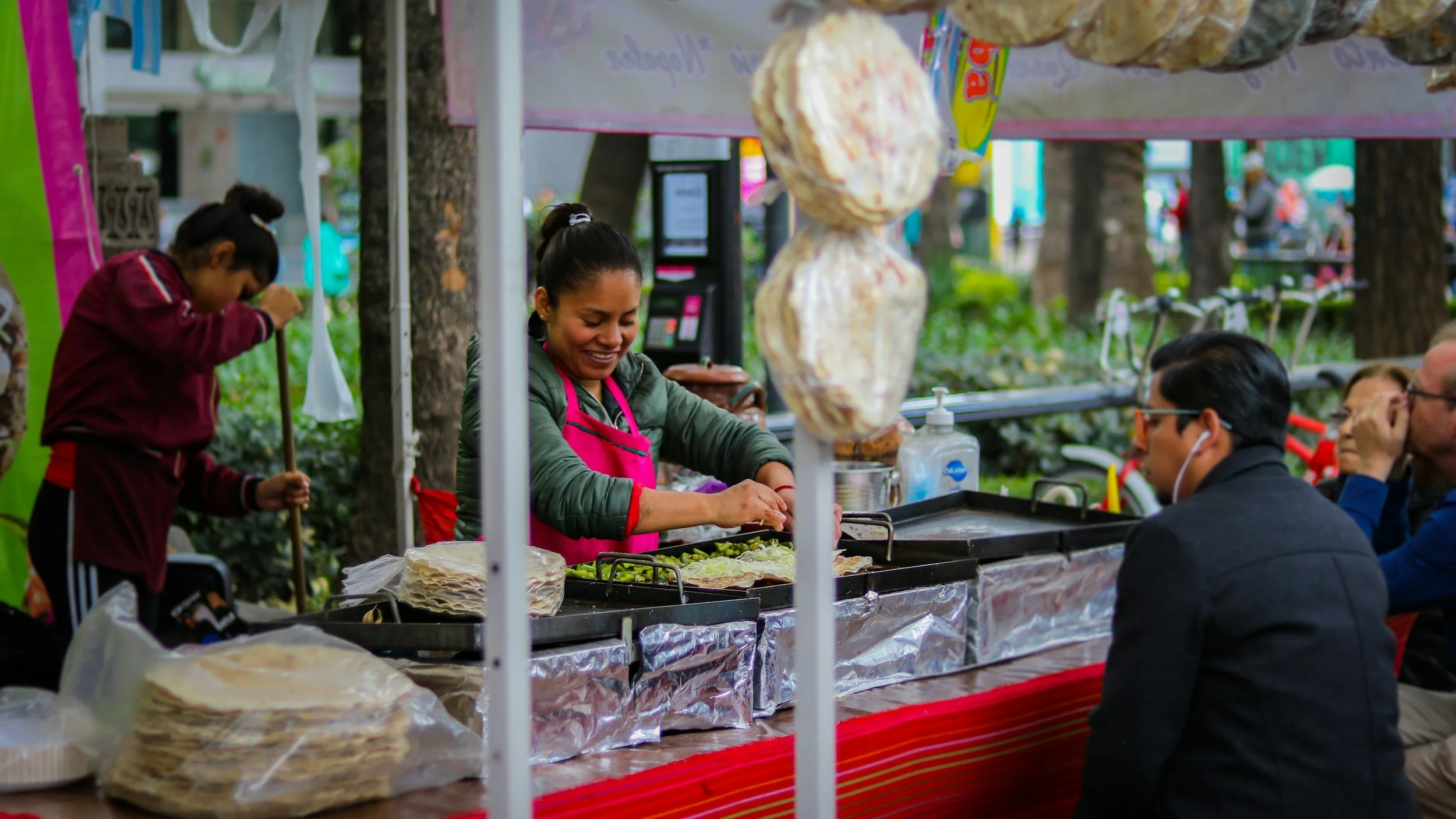
Where to Eat Breakfast in Mexico City
Breakfast can be one of the easiest meals to waste in Mexico City by automatically searching for the nearest avocado toast.
There are better options.
Traditional Breakfast: El Cardenal
Start here if you want breakfast to teach you something about Mexican dining rather than merely provide caffeine.
Go for chilaquiles, eggs, fresh bread and the house chocolate.
Guisado Taco Breakfast: Tacos Hola El Güero
If breakfast doesn't need cutlery, Condesa's Tacos Hola El Güero starts serving in the morning.
Pick whichever guisados look strongest rather than arriving with an inflexible order prepared from a six-month-old TikTok.
Bakery Breakfast: Panadería Rosetta
Panadería Rosetta's breads are made daily through sourdough and slow fermentation, with both Mexican and European baking traditions represented.
The guava roll has become the headline order, but there is enough range that you don't need to treat acquiring one specific pastry as a competitive sport.
Old-School Bakery: Pastelería Ideal
Go to Pastelería Ideal partly for breakfast and partly because the scale is entertaining.
Founded in 1927, the bakery still produces an enormous range of pan dulce, pastries, biscuits and cakes. Its Centro branches open early daily. Take a tray. Make decisions you will later discover were optimistic.
Coffee: BUNA
For speciality coffee, BUNA is one of the easiest current recommendations.
Its Roma café sits close to Plaza Río de Janeiro, and the company also operates locations in Condesa and elsewhere in the city.
I'd build coffee around wherever you already are rather than spending an hour travelling for one supposedly definitive flat white.
Mexico City's Best Bakeries and Cafés
Panadería Rosetta
Best for a contemporary Mexico City bakery experience.
Come for the pastries, but notice the approach to grain and fermentation too. Rosetta describes its bread as a mixture of Mexican cultural influences, ancestral grains and European technique.
Pastelería Ideal
Best for traditional scale and variety. The 16 de Septiembre and República de Uruguay branches in Centro make this particularly easy to combine with historic sightseeing.
BUNA
Best for speciality coffee without too much ceremony. Roma is the most useful visitor location, although the company operates several cafés.
Churrería El Moro
Not technically a bakery, but it belongs in this part of the day.
El Moro traces its Mexico City history to 1935 and serves churros with Mexican cacao-based chocolate. The original Centro Histórico location is currently open 24 hours, with branches across Roma, Condesa, Polanco, Coyoacán and elsewhere.
This is one famous institution where the expanding branch network is actually useful. Don't cross the city for the original if an El Moro is ten minutes from your hotel and you're primarily there for churros.
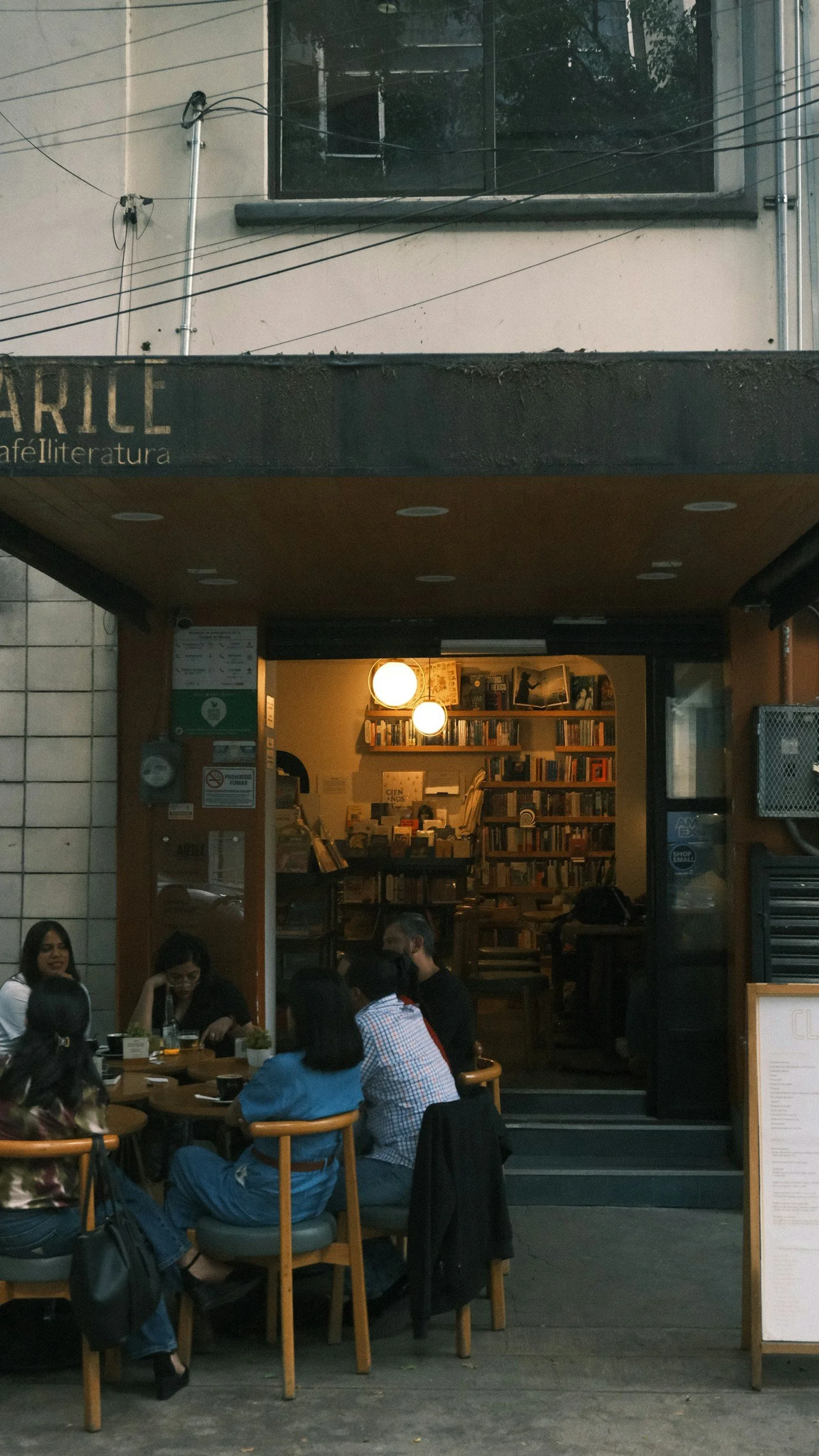
Vegetarian and Vegan Food in Mexico City
Eating vegetarian in Mexico City is easier than a taco-heavy first impression suggests.
But there is one important distinction:
vegetables on the menu don't automatically mean vegetarian preparation.
Beans, masa dishes, soups and sauces may use lard, meat stock or other animal ingredients. Ask rather than assume.
Por Siempre Vegana Taquería
For a dedicated vegan taco experience, Por Siempre Vegana in Roma Norte is the most straightforward recommendation.
The menu revolves around plant-based versions of taco styles including milanesa, pastor and other familiar taquería preparations. The restaurant remains active in Roma and operates into the evening.
This is useful for mixed groups too. You don't need to be vegan to enjoy a taco made intelligently from plants.
Malportaco
If Narvarte is already part of the food plan, Malportaco gives you another fully plant-based taquería, with current operating information showing evening service during the week.
I wouldn't necessarily cross the city solely for it on a first trip, but it pairs nicely with the broader Narvarte taco circuit.
Expendio de Maíz
Expendio deserves mentioning again because the vegetable-led, masa-centred format can make it unusually interesting for diners who don't want every Mexican meal built around meat.
Because the menu changes and dishes arrive without a fixed menu, explain dietary restrictions clearly at the start.
The Best Mexico City Neighbourhoods for Food
Roma Norte: Best Overall for Restaurants
Roma Norte wins on density: Contramar, Rosetta, Máximo and Expendio de Maíz sit within the broader neighbourhood, joined by bakeries, cafés, bars, taco shops and a constantly changing collection of smaller restaurants.
For a first food-focused trip, this means fewer bad logistical decisions.
You can have a serious lunch, return to the hotel, wander for coffee and find dinner without putting every meal into a vehicle.
The trade-off is popularity - Roma is heavily visited, reservations matter more than they once did and parts of the food scene can feel like an international restaurant district as much as a neighbourhood.
That doesn't make it bad. It simply means Roma shouldn't be mistaken for the entirety of Mexico City's food culture.
Condesa: Best for Cafés, Breakfast and Easy Neighbourhood Eating
Condesa's strength is less about destination restaurants and more about how easy eating becomes.
Tacos Hola El Güero handles a casual morning or lunch. Cafés and bakeries sit around the parks. Roma is walking distance when you want a more serious dinner.
Stay here if you want food to fit naturally around the day rather than organising the day entirely around food.
Juárez: Best for Variety and Nightlife
Juárez feels less singular than Roma, and that's useful.
The neighbourhood includes traditional Mexican options, newer restaurants, bars, Zona Rosa and a significant Korean food presence around the area often called Pequeño Seúl.
Masala y Maíz also sits within the wider Juárez/Centro edge, reinforcing how international influences have become part of contemporary Mexico City eating rather than something separate from it.
Choose Juárez when you want dinner to have somewhere to go afterwards.
Centro Histórico: Best for Traditional Institutions
Centro gives you food with history attached.
Café de Tacuba, El Cardenal, Pastelería Ideal and Los Cocuyos can all fit around a day of museums, architecture and historic streets.
This is exactly how I'd approach eating here. Don't abandon Centro at lunchtime to travel across town because Instagram told you the city's "best" taco is elsewhere. Eat something excellent that belongs to the area you're already exploring.
Polanco: Best for Fine Dining
Pujol and Quintonil make Polanco the obvious fine-dining neighbourhood.
But it isn't only that.
Siembra Tortillería gives you one of the more interesting contemporary tortilla-focused projects in the city, demonstrating why reducing Polanco to expensive restaurants doesn't quite work.
Still, if your budget and interest lie in tasting menus, this is the neighbourhood most likely to reshape your dinner reservations.
Coyoacán: Best for Market Food and a Slower Day
Coyoacán's food makes the most sense as part of the neighbourhood.
Eat tostadas in Mercado de Coyoacán, walk the streets, get coffee, have churros and let lunch blend into sightseeing.
The official city guide specifically highlights the combination of market tostadas, quesadillas, coffee and long-established food traditions around the historic centre.
Narvarte: Best for a Dedicated Taco Evening
If you want one food neighbourhood beyond the obvious first-time bases, choose Narvarte.
El Vilsito alone provides a strong reason to visit after dark, and the wider area has a deep taquería culture without the same concentration of destination restaurants and visitors found in Roma.
This is exactly the kind of area to save for an evening built around tacos.
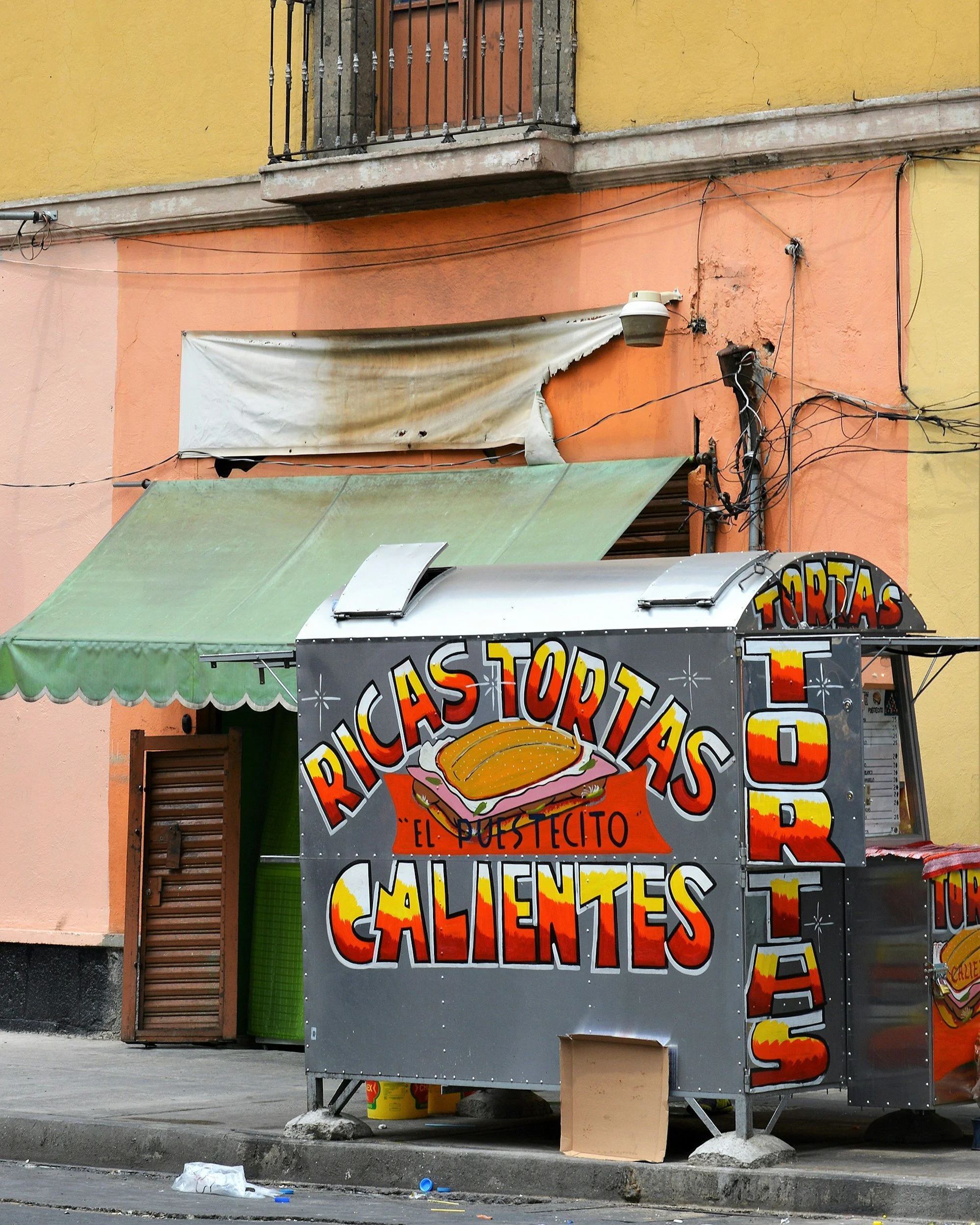
Where to Eat Depending on the Kind of Meal You Want
Best Quick Breakfast
Tacos Hola El Güero
Guisado tacos, quick service, minimal ceremony.
Best Long Breakfast
El Cardenal
Traditional dishes, proper table service and enough substance to make lunch a distant concern.
Best Taco Lunch
Tacos Hola El Güero for guisados or Siembra if you're around Polanco.
Best Casual Lunch
Expendio de Maíz, provided the queue is reasonable.
Best Long Lunch
Contramar
Possibly the clearest recommendation in the whole guide.
Best Traditional Lunch
Nicos
Worth the journey if traditional Mexican cooking is one of the trip's priorities.
Best Special Dinner
Quintonil if you want the full tasting-menu experience.
Best Romantic Dinner
Rosetta
Food, architecture and atmosphere work together particularly well.
Best Late-Night Food
Los Parados, or whatever busy neighbourhood taquería is functioning properly between you and your hotel.
The second option may ultimately prove wiser.
Best Market Meal
Mercado de Coyoacán for ease, La Merced for depth and complexity.
Best Meal You Don't Need to Plan
A taco stand you discover while already hungry.
This sounds suspiciously convenient because it is.
Which Mexico City Restaurants Should You Book in Advance?
Book Well Ahead
Pujol and Quintonil should be reserved as soon as your plans are reasonably firm.
They're globally recognised restaurants with limited seating and remain Mexico City's two two-star Michelin restaurants in 2026.
I'd also book Rosetta, particularly for dinner and weekends. The restaurant currently uses Tock for online reservations.
Reserve If You Know You Want It
Book Contramar rather than hoping prime lunch times happen to work out.
Likewise, reservations make sense for Máximo and Masala y Maíz if they're important to the trip. Both are Michelin-starred in 2026.
Don't Try to Reserve
Expendio de Maíz doesn't accept reservations. Arrive and join the on-site queue.
Taquerías and market meals generally belong in the more spontaneous part of the trip.
The aim is not to reserve 14 consecutive meals and then discover that your holiday has become a catering schedule.
How Expensive Is Eating in Mexico City?
Mexico City lets you spend almost any amount of money on dinner.
That flexibility is part of what makes eating here interesting.
At one end, taco stands, markets and fondas allow you to eat for relatively little. Michelin itself highlighted Mexico City in 2026 as an unusually affordable destination for food-focused travellers, pointing towards street food, La Merced and comida corrida as particularly strong-value ways to eat.
At the other end, Pujol and Quintonil sit firmly within international fine-dining territory.
Between them is the part of the food scene most visitors will probably use most:
taquerías
bakeries
fondas
market lunches
casual neighbourhood restaurants
contemporary mid-range restaurants
one or two destination meals
The useful budgeting principle is mixing formats.
A great Mexico City food trip doesn't require tasting-menu money every night. In fact, doing that may leave you with a remarkably poor understanding of how most of the city actually eats.
What to Know Before Eating Out in Mexico City
Lunch Matters
Mexico City's own visitor guidance places typical lunch around roughly 1pm to 3pm, while its guide to fondas describes lunch as a particularly important meal and comida corrida as the everyday fixed-price lunch format served by many neighbourhood kitchens.
This helps explain why somewhere like Contramar feels naturally suited to a long afternoon meal. Don't assume the most interesting reservation of the day has to be at 8pm.
Learn to Use a Fonda
One of the best things you can add to this guide is a meal that isn't on this guide.
A fonda is essentially a straightforward neighbourhood lunch counter, often offering comida corrida: a fixed-price menu potentially including soup, rice or another starter, a main dish and a drink.
If you've spent two days eating tacos and restaurant food, this can be the meal your body and wallet quietly request.
Tipping
Mexico City's official visitor guidance says tips of around 10% are customary, rising towards 15% for particularly good service. The national tourism FAQ gives the same general 10–15% range. Check whether service has already been added before tipping again.
Carry Some Cash
Cards are widely useful in established restaurants and cafés, but cash remains worth carrying for markets and small street-food stands.
Some noteworthy places remain explicitly cash-only. Expendio de Maíz is one of them.
Small notes are more useful than approaching a taco stand with the financial equivalent of a ceremonial bank transfer.
Drinking Water
Current UK government travel-health advice recommends drinking bottled or boiled water in Mexico rather than tap water and also advises caution around ice.
Follow current official health guidance rather than internet folklore. In established restaurants and hotels, ask if you're unsure how water or ice is handled.
Street Food
Street food is not inherently unsafe.
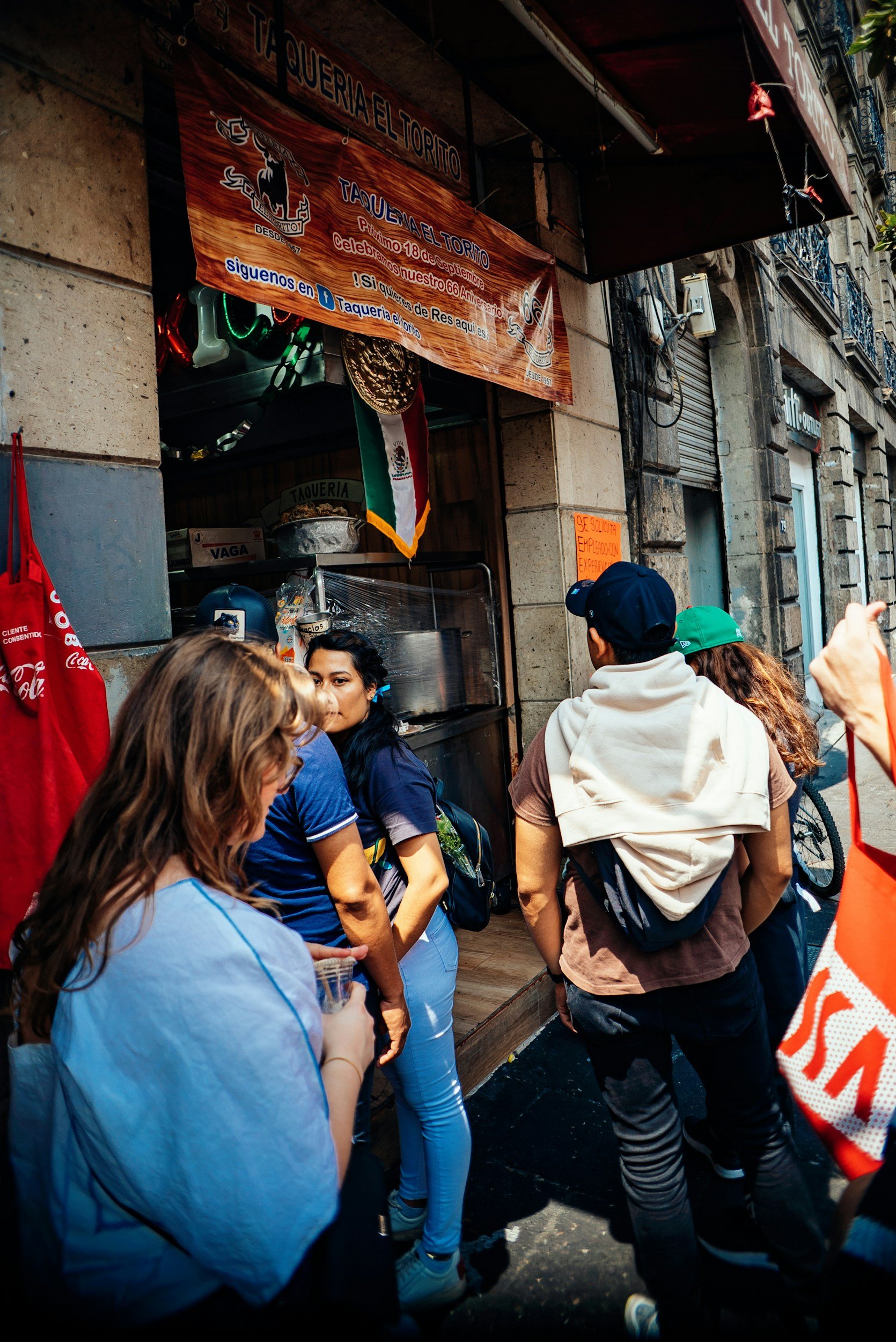
Mexico City's own visitor guidance recommends looking for stands with obvious turnover and a strong local crowd, which is useful advice for quality as well as food handling.
Look for food being actively cooked, busy stalls and ingredients moving quickly. A spotless logo and exposed brickwork are not recognised microbiological protections.
Taste the Salsa First
Some salsas exist to add acidity. Some exist to add smoke. Some appear to be conducting a personal dispute with the person eating them.
Try a small amount first. You can always add more. Mexico City has yet to invent a reliable method for putting it back.
Don't Queue Automatically
A queue tells you something is popular. Twenty minutes for a taco you've deliberately travelled for can be entirely reasonable.
Ninety minutes because a video told four million other people to arrive at the same bakery is another proposition.
When the line starts consuming the trip, choose somewhere else.
How to Eat Street Food in Mexico City
Street food becomes much easier once you stop expecting every place to behave like a restaurant.
Watch what other customers are doing.
If everyone orders at the counter, orders appear rapidly and people are eating standing up, you probably don't need to wait for someone to escort you formally to Table 14.
At taco stands:
ask what the speciality is if you're unsure
order a couple first rather than committing to six
add salsa gradually
use the lime
keep napkins nearby
have small cash available
move aside once you've ordered if the stand is busy
And learn con todo.
At many taquerías, ordering con todo gets you the standard combination of garnishes appropriate to the taco.
If there is an ingredient you don't want, ask.
This is substantially easier than conducting a silent hostage negotiation with a plate of raw onion afterwards.
What to Eat if You Only Have 3 Days in Mexico City
If you've only got three days, don't try to eat the entire internet.
I'd build the food side of the trip around range.
One Excellent Pastor Session
Make it El Vilsito if you're prepared to go to Narvarte.
If not, choose a busy taquería convenient to your plans.
The important thing is experiencing proper pastor, not obtaining a particular geotag.
One Different Taco Style
Suadero at Los Cocuyos.
Guisados at Tacos Hola.
Carnitas at El Gran Abanico.
Pick one.
One Market
Mercado de Coyoacán is easiest to integrate into sightseeing.
Choose Medellín instead if food culture is more important than checking off Coyoacán attractions.
One Traditional Meal
El Cardenal for breakfast is the most efficient way of doing this.
Nicos is the more committed food-person option.
One Contemporary Mexican Restaurant
Máximo or Expendio de Maíz would be my strongest middle-ground choices.
Both tell you far more about modern Mexican cooking than simply ordering an expensive tasting menu because you feel obliged to.
One Big Destination Meal
Only if you actually want one.
Quintonil, Pujol, Rosetta or Contramar.
For many travellers, I'd make it Contramar.
One Bakery Stop
Panadería Rosetta for contemporary baking.
Pastelería Ideal for the older Mexico City institution.
Ideally both, because this remains breakfast and not a constitutional referendum.
Leave One Meal Unplanned
This may be the most important recommendation in the article.
The Food Experiences You Don't Need to Schedule
Not every good thing in Mexico City accepts reservations.
Nor should it.
Leave gaps for:
an unexpected taco stand
a panadería you pass in the morning
a fonda full of people at lunch
street corn in the evening
a café you notice because you need to sit down
the second meal you have somewhere because the first one was that good
One of the easiest ways to make a food-focused trip worse is to schedule every meal so tightly that you can no longer respond to actually being there.
This is particularly important in a city as large as Mexico City.
If you're already in Coyoacán and hungry, eat in Coyoacán.
Do not spend 50 minutes travelling back to Roma because an algorithm has determined that lunch is occurring elsewhere.
The World Locals Mexico City Food Shortlist
If you ignore most of this article and want one practical shortlist, make it this:
El Vilsito — pastor: worth the Narvarte trip for one dedicated taco night.
Los Cocuyos — suadero and cabeza: one of the easiest excellent taco stops to pair with Centro Histórico.
Tacos Hola El Güero — guisados: a strong morning or lunch stop in Condesa.
El Gran Abanico — carnitas: worth travelling for if carnitas are genuinely a priority.
Siembra Tortillería — maize and tortillas: one of the best places to focus on the tortilla rather than treating it as packaging.
Mercado de Coyoacán — market lunch: tostadas and an easy introduction to market eating.
Mercado Medellín — neighbourhood market: especially interesting for its wider Latin American food culture.
Contramar — long seafood lunch: the destination restaurant I'd recommend to the widest range of first-time visitors.
Expendio de Maíz — modern maize cooking: one of the city's most distinctive contemporary food experiences, with no menu or reservations.
Máximo — contemporary restaurant: serious cooking without requiring the full tasting-menu commitment.
Nicos — traditional Mexican cooking: go when the food itself justifies leaving the central visitor neighbourhoods.
El Cardenal — traditional breakfast: an efficient and very good way to make breakfast part of the cultural experience.
Panadería Rosetta — contemporary bakery: Mexican ingredients and contemporary baking in Roma.
Pastelería Ideal — traditional bakery: go for pan dulce, scale and nearly a century of Mexico City bakery history.
Quintonil — special-occasion tasting menu: our high-end pick if you genuinely want one major fine-dining experience. (Quintonil)
That's enough. You don't need 47 saved restaurants to eat well for four days. You need enough good options that the day can change without your food plan collapsing.
Mexico City Food FAQs
What food is Mexico City famous for?
Tacos are the obvious starting point, particularly al pastor, suadero, guisado and tacos de canasta, but Mexico City's food extends through tamales, tlacoyos, chilaquiles, tortas, pozole, pan dulce, market cooking and regional cuisines from across Mexico.
What tacos should you try in Mexico City?
For a first trip, try al pastor, suadero, guisado, carnitas and either barbacoa or tacos de canasta. The point isn't to find one best taco but to experience several distinct styles.
What is the best neighbourhood in Mexico City for food?
Roma Norte is the easiest overall food neighbourhood for first-time visitors. Its concentration of restaurants, bakeries, cafés and bars is difficult to beat.
It should be your base, not your boundary.
Is Roma Norte the best area for restaurants?
For restaurant density and variety, probably.
For tacos, traditional institutions, markets and some regional food, other parts of Mexico City are equally or more important.
What is the best food market in Mexico City?
For a first trip, Mercado de Coyoacán is the easiest recommendation because it combines well with exploring the neighbourhood.
For a more food-focused market visit, Mercado Medellín is particularly interesting.
Do you need restaurant reservations in Mexico City?
For Pujol, Quintonil, Rosetta and other destination restaurants, yes.
Many taquerías, markets and casual restaurants require no planning at all, while Expendio de Maíz specifically does not accept reservations.
Is street food safe to eat in Mexico City?
Street food shouldn't automatically be treated as unsafe. Mexico City's own visitor guidance recommends choosing busy stands with strong turnover and obvious demand.
Follow sensible food hygiene precautions and current official travel-health guidance.
Is Mexico City expensive for food?
It can be, but it doesn't need to be.
Mexico City combines inexpensive tacos, markets and fondas with some of Latin America's most expensive fine-dining restaurants. Mixing these formats gives you a much better picture of the city than choosing only one price level.
What time do people eat in Mexico City?
Lunch is generally an important meal, with Mexico City's tourism guidance putting the typical lunch period around 1pm to 3pm. Dinner can happen significantly later than many British travellers are accustomed to.
You don't need to imitate local meal times rigidly, but knowing the rhythm helps when planning restaurants.
What should you eat for breakfast in Mexico City?
Chilaquiles, tamales, guajolotas, Mexican-style eggs, pan dulce and guisado tacos are all good places to start.
For a sit-down first breakfast, El Cardenal is our pick.
Is Mexico City good for vegetarians and vegans?
Yes, particularly in neighbourhoods such as Roma and Condesa.
Dedicated vegan taquerías such as Por Siempre Vegana also make it possible to experience recognisable taco styles without meat.
Still, ask about cooking fats and stocks in traditional dishes rather than assuming vegetable-heavy dishes are automatically vegetarian.
How much should you tip in Mexico City restaurants?
Around 10–15% is the standard range given by official Mexico City and national tourism guidance, depending on service.
“If it’s your first trip, stay somewhere around Roma or Condesa if that suits the rest of your itinerary, then eat beyond them deliberately rather than constantly.
Use Roma for restaurant density. Go to Centro for historic institutions and Los Cocuyos. Use Coyoacán for a market lunch. Head to Narvarte for one dedicated taco evening. Visit Polanco if Quintonil, Pujol or another high-end restaurant genuinely interests you. And eat one proper Mexican breakfast somewhere that doesn’t describe itself as an all-day brunch concept.
For tacos, forget the hunt for a universal winner. Eat different styles. For markets, choose one or two with a reason to visit. For fine dining, one significant reservation is enough on most short trips. For everything else, give the city some freedom.
The strongest Mexico City food trip isn’t the one containing the greatest number of famous restaurants.
It’s the one where breakfast, tacos, markets, neighbourhood meals, traditional cooking and one or two more ambitious restaurants start to show you how the city eats, and why its food can’t be reduced to a reservation list.”
Discover Mexico