A morning with a major art collection, an afternoon beside the Thames and a view across the rooftops can all cost nothing in London. Some of the city's most rewarding experiences are free, provided you know which parts are included and which visits need arranging.
As a London local, exploring the parks, visiting museums and taking long walks along the river are among my favourite ways to spend time here. Battersea Park and Greenwich are particular favourites, and both deserve consideration alongside the central sights.
This guide brings together free museums, walks, viewpoints and smaller cultural stops, with practical advice on choosing between them. For the wider trip, start with our London Travel Guide.
The Best Free Things to Do in London at a Glance
- For a first riverside walk: follow the South Bank towards Bankside, with views of Parliament and St Paul's along the way.
- For painting: choose the National Gallery; for modern and contemporary art, head to Tate Modern.
- For history: give the British Museum a focused visit, or try the smaller London Mithraeum.
- For a rooftop view: book Horizon 22 or Sky Garden, or keep The Garden at 120 as the more flexible option.
- For green space: walk beside the Serpentine in Hyde Park, or spend longer in Battersea Park or Greenwich.
- For a rainy-day cultural stop: explore the British Library's Treasures Gallery.
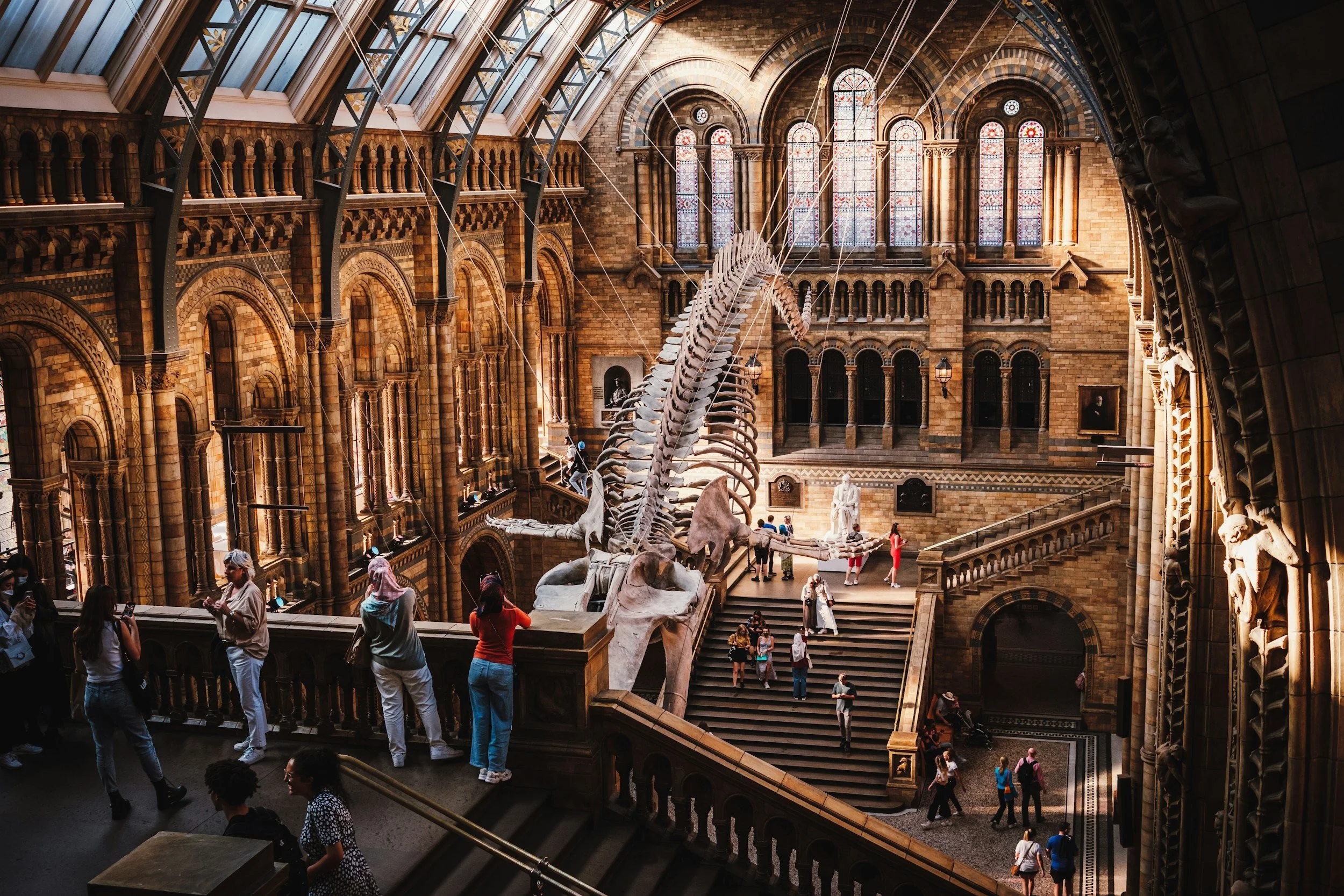
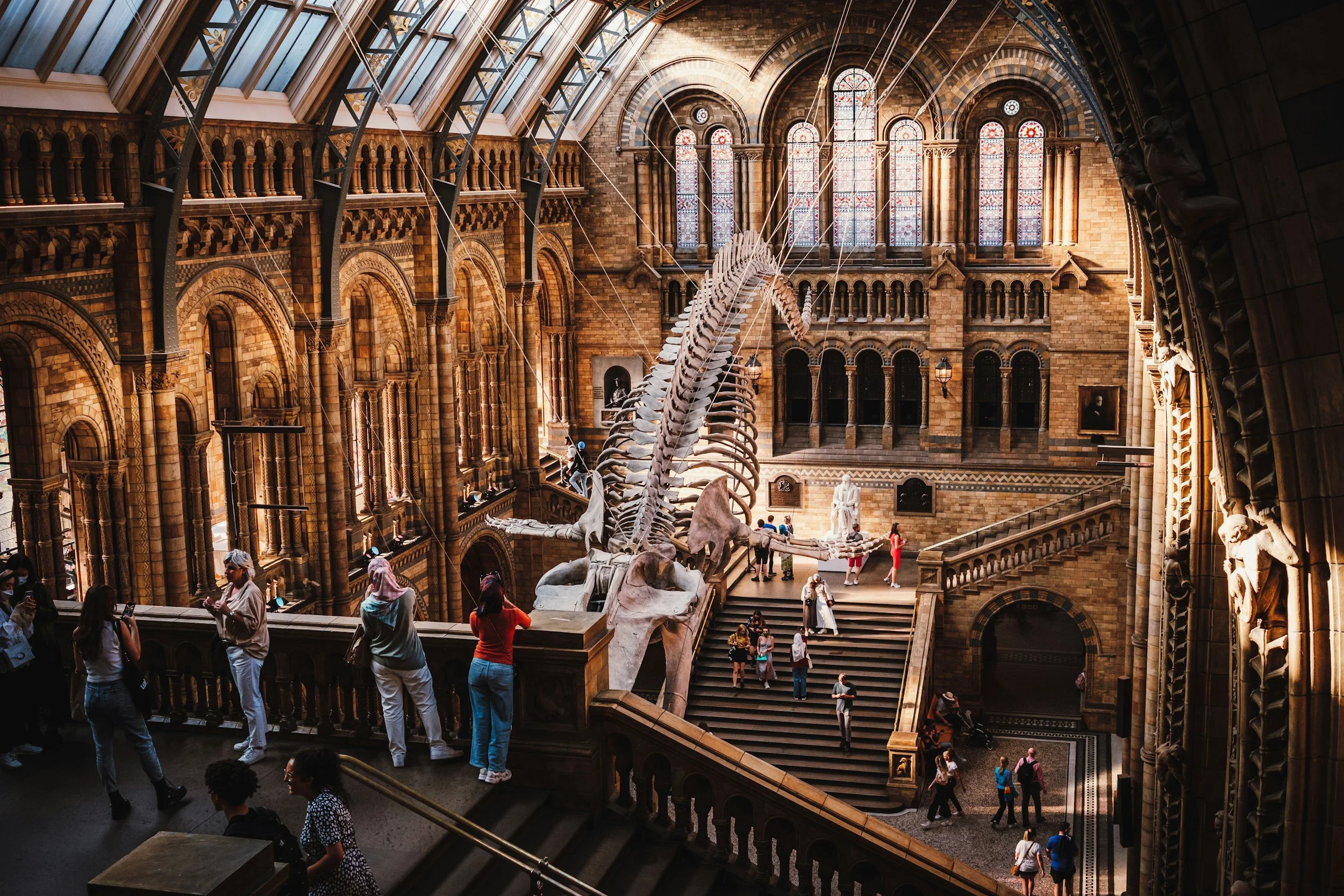
NATURAL HISTORY MUSEUM
During restoration in the 1990s, a damaged wolf sculpture on the museum’s west façade was replaced with a mythical creature based on architect Alfred Waterhouse’s sketches. It’s an unusual exception among the building’s depictions of real animals.
Free Museums and Galleries Worth Your Time
The free offer usually covers a museum's permanent collection or general galleries. Special exhibitions, tours and events can have separate charges. Choose one substantial collection for a morning or afternoon rather than trying to fit several into the same block.
The British Museum
The British Museum in Bloomsbury suits visitors interested in archaeology and the connections between cultures. Its galleries range across ancient Egypt, Greece and many other parts of the world, with the Great Court providing a useful place to orient yourself.
Start with a subject you want to understand. Two or three hours in selected galleries will be more rewarding than rushing through the building to say you have seen it. Alongside the objects themselves, read the interpretation about their origins and how they entered the collection.
Permanent galleries are free. Reserve a free timed entry slot if the visit is important to your plans; walk-up entry depends on capacity. Paid exhibitions are separate. Visit London's British Museum information explains the admission arrangements.
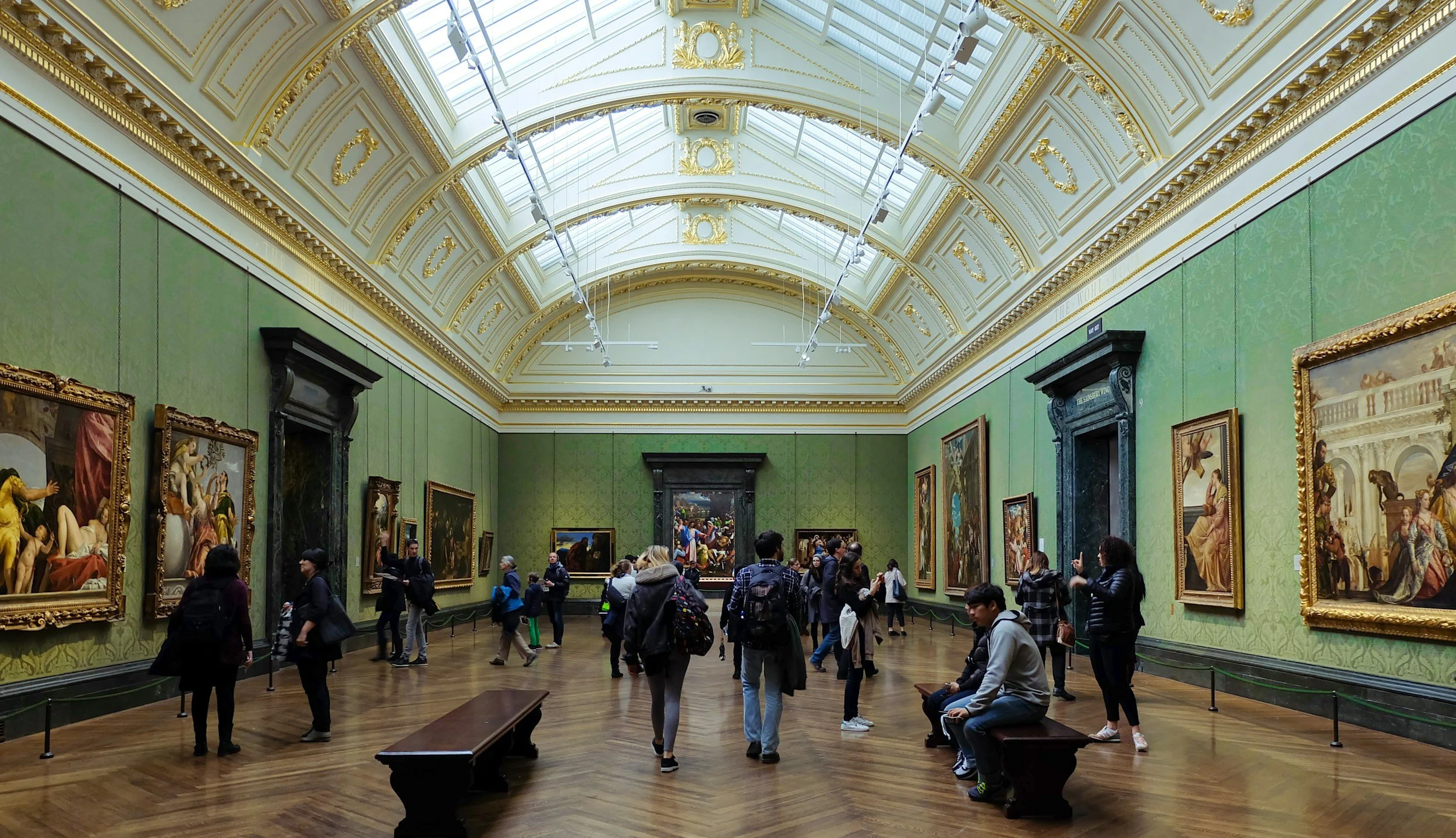
The National Gallery
The National Gallery is the straightforward choice for European painting and a museum visit that fits naturally into central London. Its position on Trafalgar Square makes it easy to combine with Westminster, St James's Park or the West End.
Choose a handful of artists or rooms rather than trying to cover the whole collection. A focused hour can be satisfying if you know what you want to see; leave longer if painting is a major interest.
General admission is free, with charges for some exhibitions. You can book a free ticket for fast-track entry, although walk-up entry is also available. The Sainsbury Wing is the main entrance.
Tate Modern
Tate Modern gives you international modern and contemporary art in the former Bankside Power Station. The building's scale is part of the appeal, especially around the Turbine Hall, and the visit works particularly well alongside a walk on the southern riverbank.
Allow a couple of hours if you want to explore the collection properly. If you are passing through Bankside, a shorter visit can still give you time with a few works and the building itself. Check what is on rather than assuming a particular artwork or installation will be available.
The gallery's general collection is free; special exhibitions and events may charge. Visit London's Tate Modern information distinguishes the free gallery from paid extras.
V&A South Kensington
Choose the V&A for art, design and the things people make and use. Its range gives you room to follow an interest in fashion, furniture, ceramics or craftsmanship, without committing to one period of history.
It is a good option when you want to look closely at objects and understand the ideas behind them. Pick a theme or a few galleries before arriving and allow around two hours as a starting point.
General admission to V&A South Kensington is free and does not require booking. Some exhibitions and events charge, and individual galleries can close, so check access if a particular collection is the reason for coming. The Natural History Museum is nearby, but doing both thoroughly can easily fill the day.
The Natural History Museum
The Natural History Museum is the strongest choice here for fossils, the natural world and scientific discovery. It is an obvious family option, though adults visiting without children will also find plenty to hold their attention. The building itself gives the visit an architectural dimension.
Leave at least a substantial part of a morning or afternoon and choose the galleries that matter most to you. Popular areas can be busy, particularly during school holidays and weekends.
The general galleries are free. Book a free entry ticket to guarantee admission rather than relying on the walk-up queue. Some exhibitions and events are charged separately. If your interest leans towards design and objects rather than natural science, choose the neighbouring V&A instead.
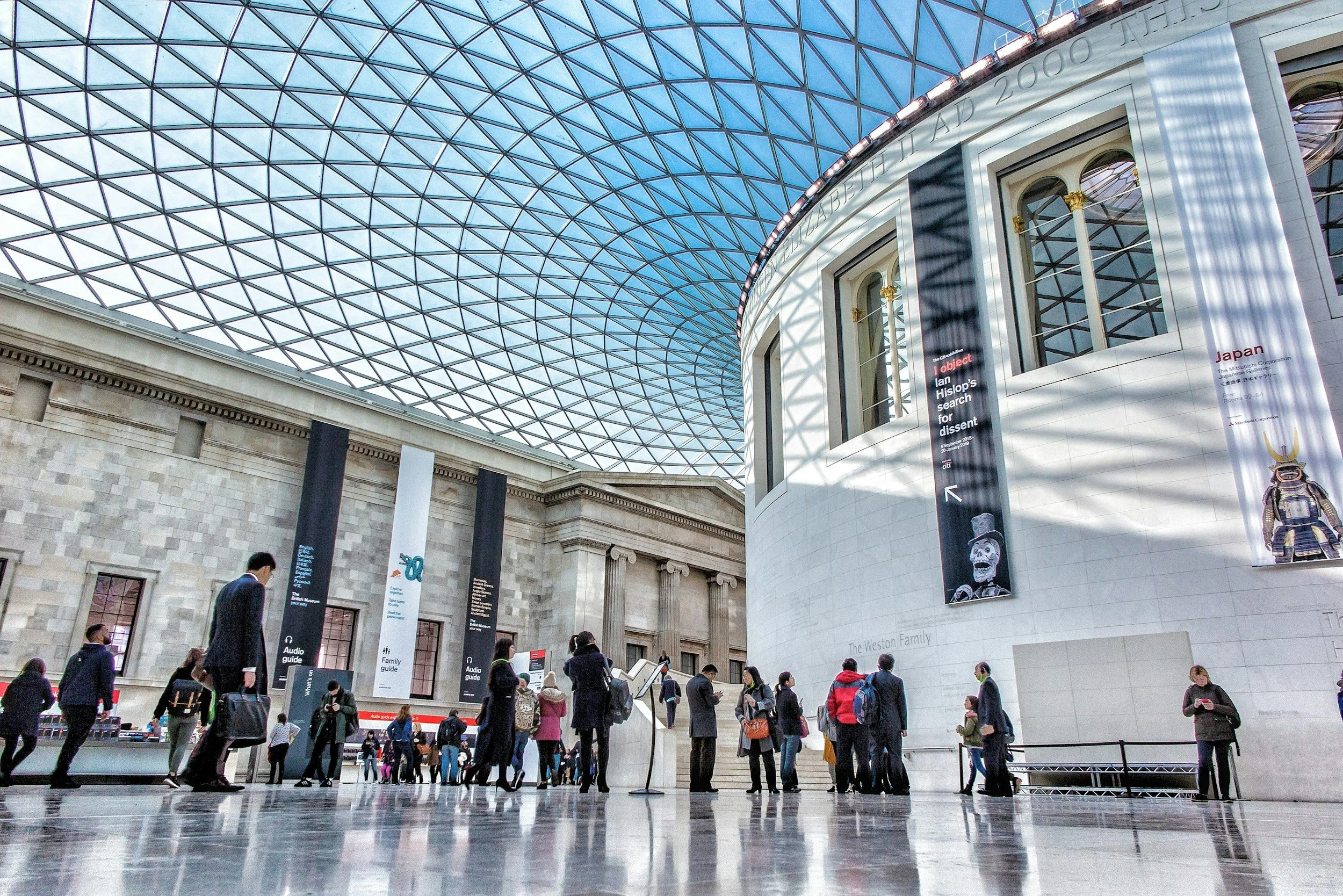
THE BRITISH MUSEUM
The Rosetta Stone uses 3 scripts for 2 language: It’s original decree appears in Egyptian hieroglyphs, Egyptian Demotic and Ancient Greek. Comparing these versions helped scholars decipher hieroglyphs, making the stone a key to understanding ancient Egyptian writing.
Free London Walks
Walking is one of the best ways to understand how London's famous places relate to each other. These routes offer different experiences: riverside culture, royal and political landmarks, or the quieter scale of a canal. The time allowances below are suggestions for an unhurried outing, rather than measured walking times.
The South Bank and Bankside
Begin around Westminster Bridge and follow the southern riverbank east towards Waterloo Bridge, the Southbank Centre and Bankside. Parliament provides the opening view; farther along, the cultural buildings and river crossings give the walk a different character.
Tate Modern makes a natural indoor stop. Millennium Bridge offers a view towards St Paul's, while continuing towards London Bridge and Tower Bridge turns this into a much longer outing. Break the river into sections instead of treating every landmark as a compulsory finish line.
Allow two to three hours for a leisurely Westminster-to-Tate outing with pauses, then add museum time separately. Leake Street's changing graffiti beneath Waterloo's railway arches is a possible detour. Crowds can slow the central riverfront, so an earlier walk may suit you better if space matters.
Walking the riverbank is free. Boat journeys and attraction interiors can cost extra, while performances have their own admission arrangements. Our wider London things-to-do guide helps you decide which of those deserve a place in the trip.
Westminster and St James's Park
Start at Parliament Square for the relationship between Parliament, Big Ben and Westminster Abbey, then head along Whitehall towards Horse Guards and into St James's Park. Continue through the park towards Buckingham Palace if you want a coherent introduction to royal London.
The route places political power, ceremony and public green space close together. Give the park time of its own: the lake paths and bridge views offer a welcome pause between the surrounding landmarks.
An outdoor visit does not need an admission ticket, but it does not include the Abbey, palace interiors or Parliament tours. Allow roughly two hours with stops, longer if you linger in the park. Events and security arrangements can affect the streets around ceremonial sites.
Changing the Guard is something to plan around if it matters to you; check the official schedule for your date rather than assuming it happens whenever you arrive.
Little Venice to Camden
For a change from the major sights, follow the Regent's Canal route between Little Venice and Camden. Boats, bridges and the edges of Regent's Park bring London down to a smaller scale, while Camden gives you a much busier finish.
The Canal & River Trust's Little Venice information provides a useful starting point and route map. The walk is approximately two miles, but leave around two hours if you want to stop along the way.
There is a street diversion around Maida Hill Tunnel: you cannot follow a waterside path through it. The route also includes slopes and shared, sometimes narrow stretches, so check the detailed route if you have access requirements. Respect people living on the boats and leave room for other towpath users.
The walk is free. Boat trips, food and shopping at the Camden end are optional purchases. For more context on the areas, see our London neighbourhood guide.
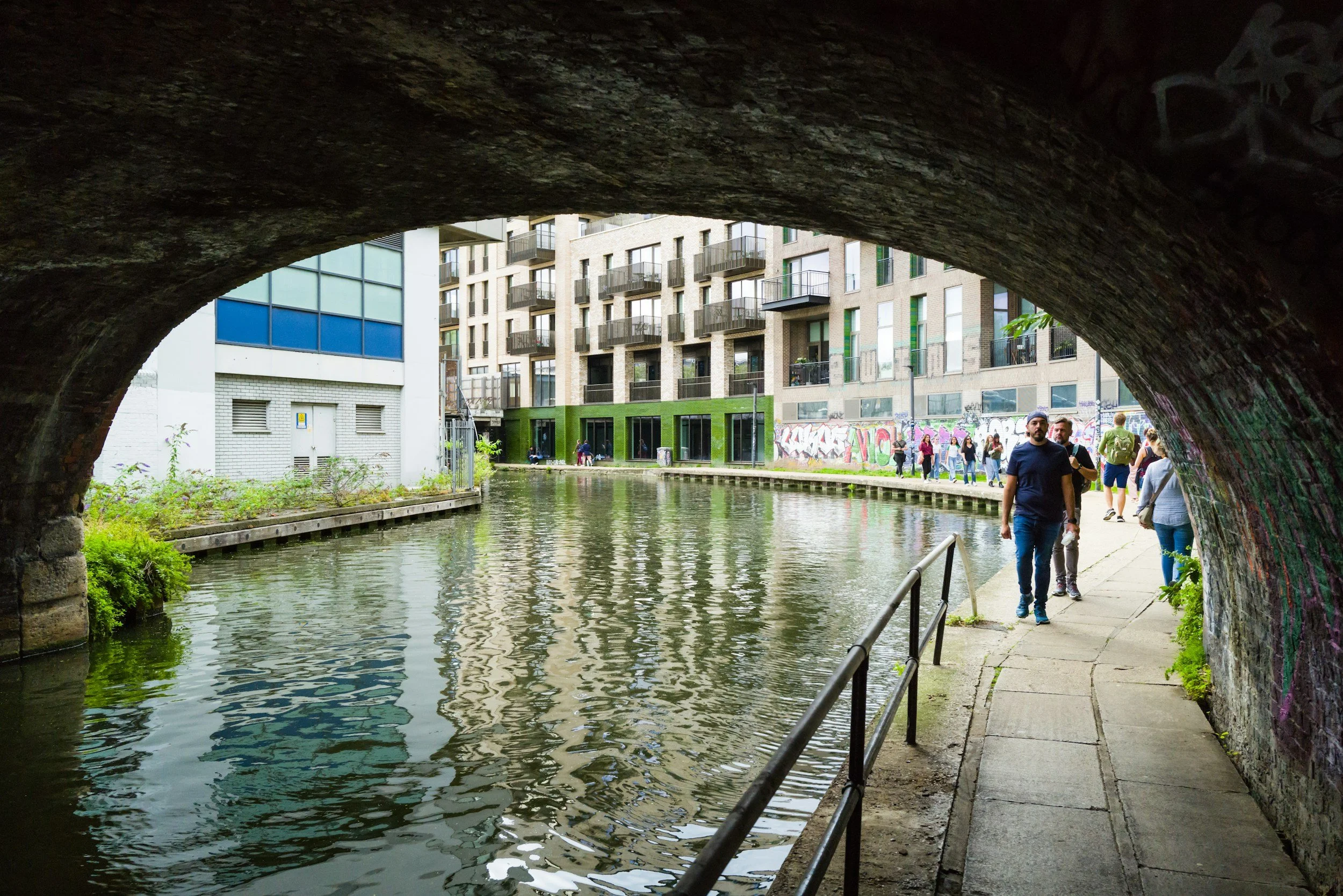
LONDON CANALS
Early narrowboats were pulled by horses walking along the towpath. Underwater ramps helped animals climb back out if they fell into the canal, a reminder that today’s walking routes were once part of a working transport network.
Free Rooftop Views
Choose one rooftop that fits your day. Horizon 22 gives you height, Sky Garden adds a planted indoor setting, and The Garden at 120 is the flexible outdoor option. A reservation or a high floor cannot guarantee clear weather.
Horizon 22
Horizon 22, on Level 58 of 22 Bishopsgate in the City, is the option to choose when the high-level panorama is the main reason for going. Its position makes it useful within a City outing rather than as a separate journey across London.
Standard visits are free. Choose a free ticket through the official booking page and check the arrival instructions. Paid events and optional extras are separate products.
Keep some flexibility around the visit and bring the identification required by your booking. A daylight slot can help you understand the city's layout; choose a different time because the light interests you, rather than assuming sunset is essential. Allow around an hour in your plan, including entry procedures, without treating that as a guaranteed time inside.
Sky Garden
Sky Garden occupies the upper levels of 20 Fenchurch Street. Plants, the indoor setting and views towards the river make it a different experience from a straightforward observation platform.
Free public access tickets are currently available up to three weeks ahead. They are tied to a date and time and allow one hour from entry. Walk-ins depend on capacity, so book if this is a priority.
Select the standard free visit. A restaurant reservation or paid event is a different commitment, and buying something is not necessary for a free public visit. Check the current opening and closure information before setting out. If no suitable ticket is available, The Garden at 120 offers another way to enjoy a rooftop in the same general area.
The Garden at 120
The Garden at 120 sits on the fifteenth floor of Fen Court, at 120 Fenchurch Street. Its open-air planting and closer relationship with the surrounding towers make it a particularly good choice when you want a rooftop stop without fixing the rest of your day around a reservation.
Individual visits are free and do not require advance booking, although entry involves security screening. Give yourself around half an hour for the garden, plus time for any queue.
Check the official visitor information before going: hours vary by season, it closes on bank holidays, and severe weather can affect access. Group visits have separate arrangements. It is an outdoor experience, so choose an indoor museum when the weather makes standing on a rooftop unappealing.
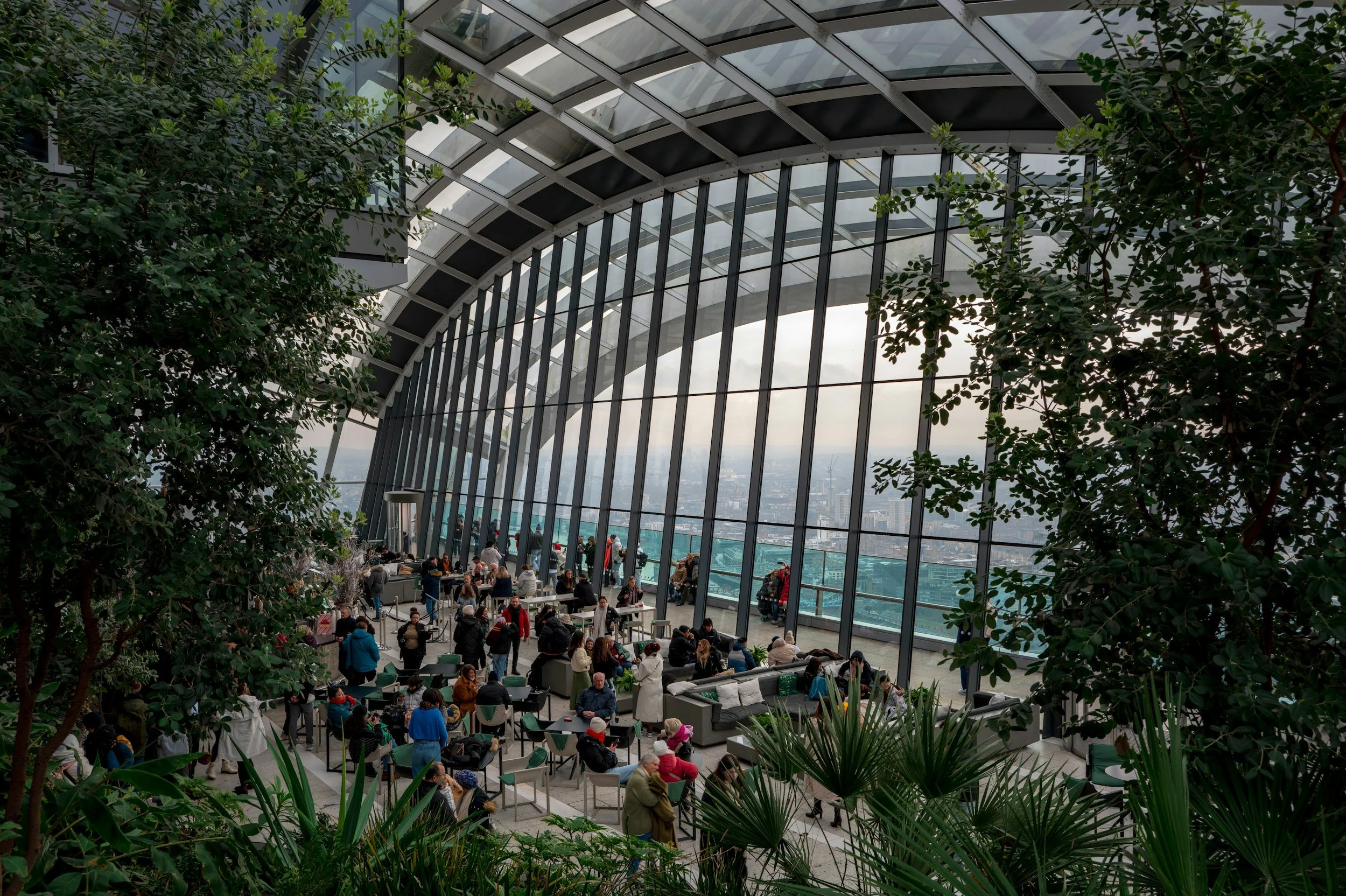
SKY GARDEN
Landscape architects Gillespies arranged the garden across three zones, with tree ferns and figs on the shaded upper terrace, ancient cycads in the middle and colourful flowering plants below. The planting deserves a look alongside the skyline.
Free Parks and Outdoor Views
London's public parks are generally free to enter, including all eight Royal Parks. A walk, time on a bench or a picnic with food you bring yourself can be part of the day without an admission charge. Attractions, sports facilities and organised events within a park may cost extra, and opening hours or temporary closures still apply.
Hyde Park
Hyde Park deserves a place on a first visit when you want a substantial stretch of green space in central London. The paths beside the Serpentine provide an easy focus, with gardens and quieter routes available when you want to wander farther.
Give it an hour for a shorter lakeside walk or longer for a relaxed afternoon. It can work after museum time in South Kensington, provided you leave enough energy for the walk between them.
Ordinary park access is free. The Royal Parks' Hyde Park page provides current visitor notices. Treat boating, swimming, booked sports and major events as separate activities with their own arrangements, rather than assuming the free park includes them.
Battersea Park
Battersea Park is one of my personal favourites. The combination of parkland and riverside walking makes it a good choice when you want an outing with less emphasis on major sightseeing.
Use the riverside promenade as one part of the visit, then spend time around the lake and the park's interior paths. Its Victorian layout gives you a different setting from the surrounding streets, and it is worth allowing an hour or two rather than crossing it on the way somewhere else.
The park walk is free; the zoo, paid activities and special events are separate. Check Wandsworth Council's park information for current arrangements. Battersea is a worthwhile change of pace, but on a very short visit choose it because parks and the river appeal to you, rather than trying to add every green space in this guide.
Greenwich Park
Greenwich is another personal favourite and deserves a half-day if you can give it the time. Its riverside, maritime buildings and parkland make a coherent outing, with the climb through Greenwich Park providing a wider perspective across the area.
The park and its public viewpoints are free. The hill involves a noticeable gradient, so allow for the climb and check current park information before visiting.
For an indoor extension, the National Maritime Museum's general galleries are also free; some exhibitions and activities charge. A free advance ticket can guarantee museum entry.
Keep the park separate from an Observatory visit. The Royal Observatory announces a temporary closure from 2 November 2026 for renovation. Check its project updates for current works and access information, and build the free outing around the park, riverside and museum.
Primrose Hill
Primrose Hill is a good choice when you want the skyline as part of a walk rather than a ticketed indoor visit. The reward comes with the green space around you, so leave time to sit and look rather than making the summit a quick photograph stop.
It can fit into a north London outing around Regent's Park or Camden. Allow time for the hill and expect the view to depend on visibility.
Access is free, but check The Royal Parks' current notices before planning an evening visit. Overnight closures apply on some dates; it should not be treated as an unrestricted late-night viewpoint.
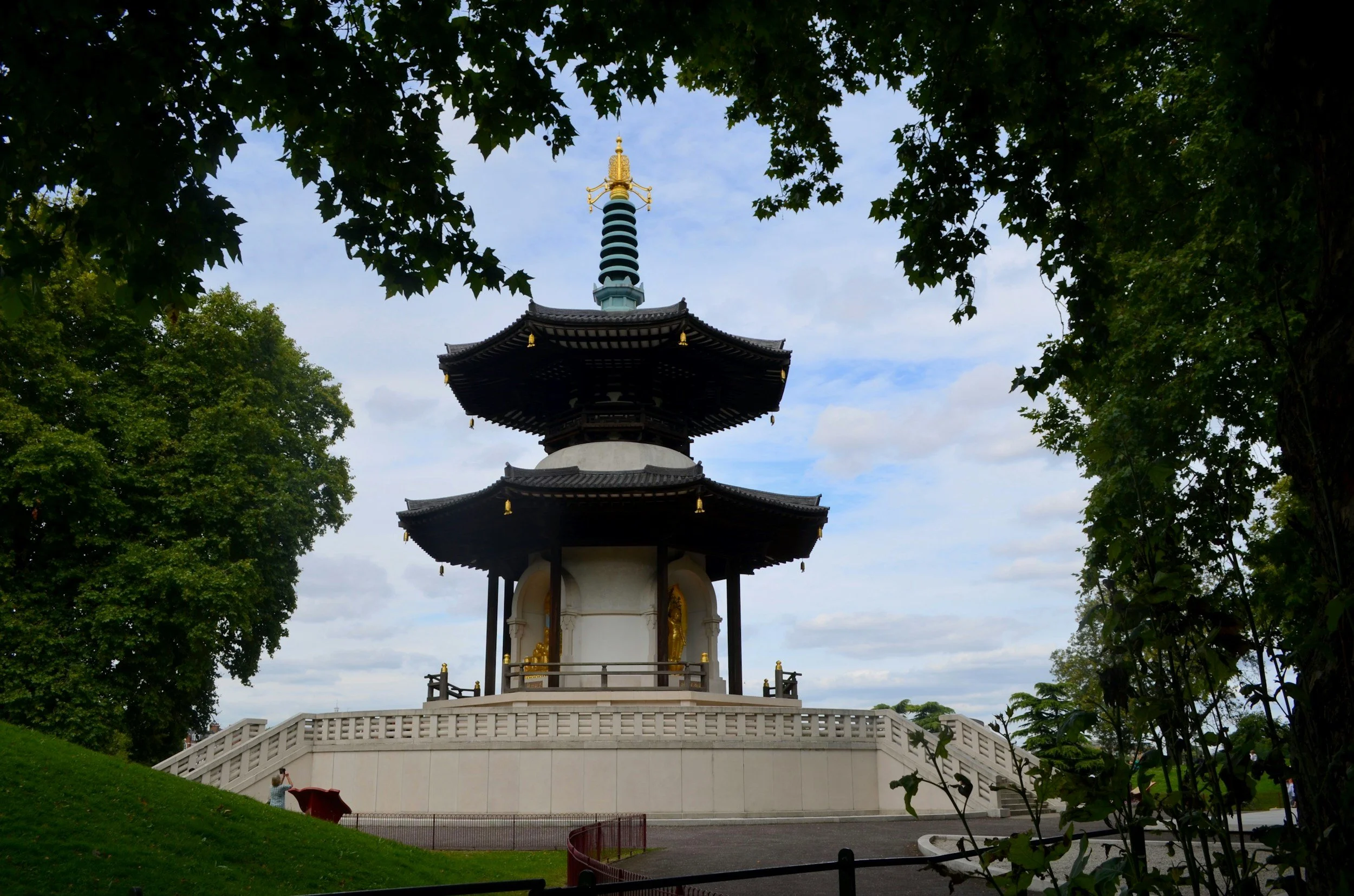
BATTERSEA PARK
Part of the park became the Festival Gardens for the 1951 Festival of Britain. Although the exhibition was intended to last one year, the funfair remained until 1974.
Smaller Free Cultural Stops
The British Library Treasures Gallery
The British Library's Treasures Gallery at St Pancras offers a focused alternative to a large museum. Books, manuscripts and documents give you a way into history through individual objects and the people connected with them.
It suits a quieter cultural visit and can work alongside time around King's Cross. Allow around an hour, with longer if the collection holds your attention.
The Treasures Gallery is free and does not require booking. Paid exhibitions and tours are separate, and a general visit is different from using the Reading Rooms. Check the Library's current hours, including temporary changes, and avoid planning around one particular manuscript without confirming it is on display.
London Mithraeum
London Mithraeum Bloomberg SPACE, at 12 Walbrook, introduces Roman London beneath the modern City. The temple remains and archaeological displays make a compact cultural visit that helps explain how much history sits below the surrounding streets.
It is especially useful if you want a smaller historical stop within a City day rather than another major museum. Leave roughly 30 to 45 minutes, with time for entry and the scheduled temple experience.
Admission is free and booking is recommended. The City of London's visitor listing provides current details and a booking link. Check your chosen date: it is not an everyday walk-in attraction, and its opening pattern includes different arrangements on some Wednesdays.
How to Plan a Free London Day
Group Your Choices by Area
A museum and one nearby outdoor experience are usually a better starting point than a long list spread across the city. These combinations keep the day manageable:
Westminster and the West End: explore the outdoor landmarks, take your time in St James's Park and continue to the National Gallery if you want painting as well as sightseeing.
South Bank and Bankside: walk a section of the river, visit Tate Modern and cross Millennium Bridge for the view towards St Paul's. Extend east only if you still have time and energy.
South Kensington and Hyde Park: choose the V&A or Natural History Museum, then walk towards Hyde Park for time outside. Give the museum a proper visit before deciding how far to continue.
Greenwich: combine the riverside, park and one free museum visit. Allow for the journey and resist adding several distant districts afterwards.
Our three-day London itinerary will help you fit these choices into a wider first visit.
Reserve the Visits That Matter
Book a free rooftop slot if it is a priority, and use available museum reservations when you want more certainty. Leave some unbooked time for parks and walks. If a rooftop is full, choose a flexible alternative rather than paying for an experience you did not particularly want.
Free general entry does not include every exhibition or activity. Read the ticket description, choose the free option where offered and check temporary closures close to your visit.
Keep an Indoor Alternative and Allow for Other Costs
The National Gallery, V&A, Natural History Museum and British Library give you useful indoor options, though busy periods can still involve queues. Choose one near the rest of your plans when the weather changes.
These experiences can be free while the day still includes transport, food and other spending. Bring water and a picnic if that suits the outing, and check where you can eat what you bring. Allow extra time for hills, shared towpaths and security checks rather than assuming every free activity is equally easy to access.
For transport choices and wider budgeting, use our London travel tips.
Continue Planning London
- 3 Days in London: A Realistic First-Time Itinerary brings your main priorities into a manageable trip.
- London Neighbourhood Guide helps you choose where to spend more time exploring.
- London Travel Tips covers transport, airports, costs and practical preparation.