A first trip to London goes more smoothly when you settle a few practical decisions before arriving: how to reach your accommodation, how to pay for transport and how much room to leave in your budget. Getting these right gives you more time and headspace to enjoy the city once you are here.
The most useful starting point is to plan around your actual accommodation address. An airport train can be quick, yet still leave you with a cross-city journey and several flights of stairs. A cheaper room can work well, provided its connections suit the places you want to visit.
This guide covers the practical side of a first London trip, from airport arrivals and contactless payments to mobile data, local etiquette and staying safe. For an introduction to the city and its neighbourhoods, start with our London Travel Guide.
Transport fares and entry information checked on 26 October 2026. Pedicab rule changes from 30 October and the announced bus and tram fare changes from 1 November 2026 are included below. Check the official journey planner for your own travel dates.
Before you travel to London
Check your entry requirements before booking the final details
The permission you need to visit the UK depends on your nationality and circumstances. Some visitors need a visa, others need an Electronic Travel Authorisation, known as an ETA, and some are exempt. British and Irish passport holders, for example, do not need an ETA.
Use the official UK entry-requirements checker rather than relying on advice written for someone with a different passport. An ETA currently costs £20 through GOV.UK or the official UK ETA app. Where required, each traveller needs their own, including children, and you should receive approval before travelling.
Book the things that shape your day
Arrange your accommodation and decide which major paid sights, theatre performances or particular restaurants matter enough to book ahead. Leave some space around them. Crossing London to make a succession of reservations can turn an enjoyable day into a rather expensive timetable.
Free admission does not always mean you can arrive without checking booking arrangements. Look at the individual venue's instructions, particularly for timed entry and temporary exhibitions.
Check your airport route for both arrival and departure. A service that works well on a weekday afternoon may be less useful for an early Sunday flight. Allow for immigration, baggage, waiting for transport and the final walk to your accommodation.

OVER HALF OF THE UNDERGROUND IS ACTUALLY ABOVE GROUND
Around 55% of the network is above ground, so a Tube journey can reveal stretches of suburban London as well as tunnels. The name reflects its pioneering origins beneath central London rather than the geography of the whole network.
Getting from London's airports to your accommodation
Choose the route that works for your final address, luggage and arrival time. The fastest train to one London station is not necessarily the quickest way to your hotel.
Heathrow: compare the Elizabeth line, Piccadilly line and Heathrow Express
Heathrow offers three useful rail choices.
The Elizabeth line is a strong starting point if your accommodation is near Paddington or one of its central London stops, including Bond Street, Tottenham Court Road, Farringdon and Liverpool Street. It can save an additional Underground change. The adult pay-as-you-go fare between Heathrow and Zone 1 is currently £15.50.
The Piccadilly line usually makes sense when keeping the fare down matters most, or when your accommodation is conveniently placed along the route. It serves places such as South Kensington, Piccadilly Circus and King's Cross St Pancras. It is slower than the other rail options, so compare the full journey before choosing.
The Heathrow Express reaches Paddington from Terminals 2 and 3 in approximately 15 minutes, with additional time for Terminal 5. It is worth comparing if you are staying near Paddington or find a suitable advance fare. Beyond Paddington, factor in the onward connection; the short airport train ride is only part of the journey.
Contactless acceptance does not make the fares identical. Heathrow Express is excluded from the normal daily caps, while Heathrow journeys on the Elizabeth line and Piccadilly line have their own fare rules. Travelling outside rush hour does not automatically make a Heathrow-to-central-London journey cheaper.
Gatwick: choose the London station that suits your stay
Gatwick's railway station is at the South Terminal, with a free inter-terminal shuttle connecting the North Terminal.
Compare Southern services towards Victoria with Thameslink services serving London Bridge, Blackfriars, Farringdon and St Pancras International. Gatwick Express provides a non-stop connection to Victoria, but compare its price and onward journey with the alternatives.
The airport gives approximately 30–45 minutes as the train journey to London, depending on the service. That excludes reaching the station and travelling onwards from your London arrival point.
Oyster and contactless can be used between Gatwick and London on the relevant services. Gatwick is outside the standard London fare zones, and Gatwick Express is excluded from fare capping. Budget for the airport journey separately rather than assuming the central London daily cap covers it.
Stansted: rail to Liverpool Street or Tottenham Hale
Stansted Express connects the airport with Liverpool Street and Tottenham Hale, where the Victoria line provides another way into London. Compare both arrival points against your accommodation address.
Contactless payment is now accepted on Stansted Express; Oyster is not valid at Stansted Airport. This distinction matters because older travel advice often treats the two payment methods as interchangeable.
You can also buy a train ticket in advance. Check the available fare and conditions before defaulting to contactless, particularly if travelling with children, using a Railcard or booking for a group.
Luton: include the DART connection
Trains serve Luton Airport Parkway, which connects to the terminal via the Luton DART shuttle. Luton Airport Express serves St Pancras International, while Thameslink offers additional London connections. Compare the onward journey to your accommodation when choosing a service.
When buying a through rail ticket, select Luton Airport if you want the terminal connection included. A ticket only to Luton Airport Parkway does not automatically cover the DART. Read what your chosen ticket includes rather than assuming the train arrives at the terminal.
London City: start by checking the DLR
London City Airport has a Docklands Light Railway, or DLR, station. Contactless and Oyster are accepted, making public transport a useful first option to compare, particularly for stays in east London.
Check the complete route and any changes needed. The airport's name does not mean every central London hotel is nearby.
Southend: rail towards Stratford and Liverpool Street
Southend Airport has a railway station close to the terminal, with Greater Anglia trains towards Stratford and Liverpool Street. The airport quotes approximately 52 minutes to Liverpool Street for the train journey.
Contactless travel was extended to Southend Airport in March 2026. It is accepted for eligible journeys, but Oyster coverage has not expanded with it. Check Greater Anglia's current contactless guidance for your full route, and compare a conventional ticket where discounts may apply.
When a coach or booked car makes sense
A coach is worth comparing when price is the priority and its London stop is convenient for your accommodation. Allow for road traffic, especially when returning to the airport.
A booked car can be sensible for a group, substantial luggage, particular accessibility requirements or an arrival when suitable public transport is limited. Compare the total group fare, waiting arrangements and any additional charges. For solo travellers and couples with a straightforward rail route, the train is usually the first option worth checking.
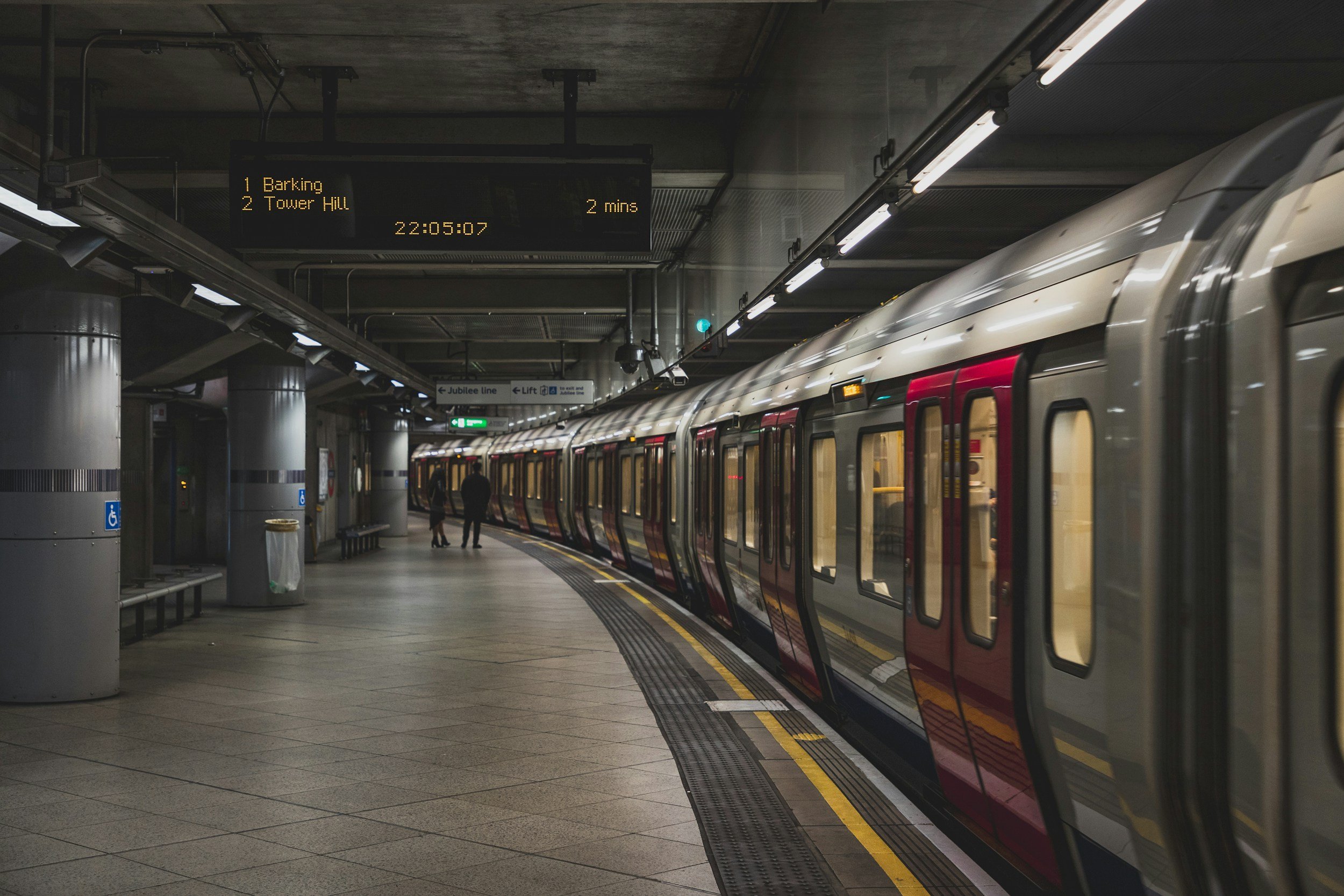
THE TUBE MAP IS INSPIRED BY ELECTRICAL CIRCUITS
Harry Beck’s pioneering design, introduced in 1933, prioritised clear connections over geographical accuracy. Initially rejected as too radical, it became a template for transport maps worldwide. Another reason to check a street map before deciding whether to walk.
Getting around London
Use walking and public transport together
London works best as a series of connected areas. Walk within an area, then use public transport for the larger jumps. This also leaves you more time to notice the streets, shops and smaller places between the major sights.
The Tube map is designed to show connections clearly. Use a street map to judge whether a short journey is worth making on foot, and remember that reaching a platform and changing lines can take longer than the train ride itself.
For everyday route planning, start with Google Maps or Citymapper. Both are useful for comparing public transport with walking and getting to an exact address. Enter the time you expect to travel and compare the quickest route with one involving fewer changes or less walking, particularly with luggage. TfL's journey planner and TfL Go are useful official resources for service updates and accessible routes.
Understand the main transport options
The Underground, usually called the Tube, is useful for moving between different parts of the city. The Elizabeth line, London Overground, DLR and local National Rail services are also part of everyday London travel. Your best route may combine them.
Buses can work well for journeys that are awkward by Tube, and they let you see more of the city along the way. They are also affected by traffic, so avoid judging their reliability by distance alone.
River services and cycle hire can add something to a trip, but check their separate prices and conditions. They are not included in the standard Tube-and-bus daily cap. For a first visit, there is no need to use every mode of transport simply because it is available.
For a London-only city break, hiring a car rarely makes the day easier. Public transport and walking are generally more practical, while driving introduces parking, traffic and possible road charges.
Black cabs, Uber, Bolt and other booked cars
London's black cabs can be hailed on the street when their TAXI light is illuminated, or taken from a taxi rank. Fares are metered under TfL's rules and depend on distance, journey time and the applicable tariff, so a short trip in heavy traffic can cost more than you expect. Licensed black cabs must accept card and contactless payments, including Visa, Mastercard and American Express, without a card-payment surcharge.
Uber and Bolt both operate in London. They are useful options for a late finish, luggage-heavy journey or address that is awkward to reach by public transport. Compare the fare and pickup time shown in each app before booking, particularly at busy times. Allow for road traffic, and follow the app's pickup instructions at airports rather than assuming the driver can collect you outside the terminal door.
Private-hire cars, including ordinary Uber and Bolt rides, must be booked through a licensed operator. You cannot hail them like a black cab. Check the car and driver against your booking before getting in. Taxi and private-hire fares are separate from public-transport daily caps.
Be cautious about rickshaw and pedicab prices
The cycle rickshaws, also called pedicabs, around the West End can look like a fun way to finish an evening, but overcharging has been a particular concern. If you choose a ride, confirm the destination and the total price for everyone travelling before getting in. Establish whether a quote is for the whole journey, per person or per minute, and ask about any extras. Walk away if the price is unclear or you feel pressured.
New pedicab maximum-fare rules take effect on 30 October 2026, alongside mandatory driver and operator licensing. Check the current rules for your travel date, and still confirm the full charge before setting off. Walking, public transport, a black cab or a booked car are useful alternatives for an ordinary journey home.
Check late-night services and accessibility properly
Selected Tube lines and part of the Overground have overnight services on Friday and Saturday nights. Coverage is limited, so check your particular route rather than assuming the whole network runs through the night. Night buses and booked taxis provide other options.
If stairs, escalators or long passages are a concern, use the accessibility options in the journey planner. Step-free access to a platform and step-free boarding onto a train are different things. Choose full step-free access where required, check for lift disruption and allow a more comfortable margin for changes.
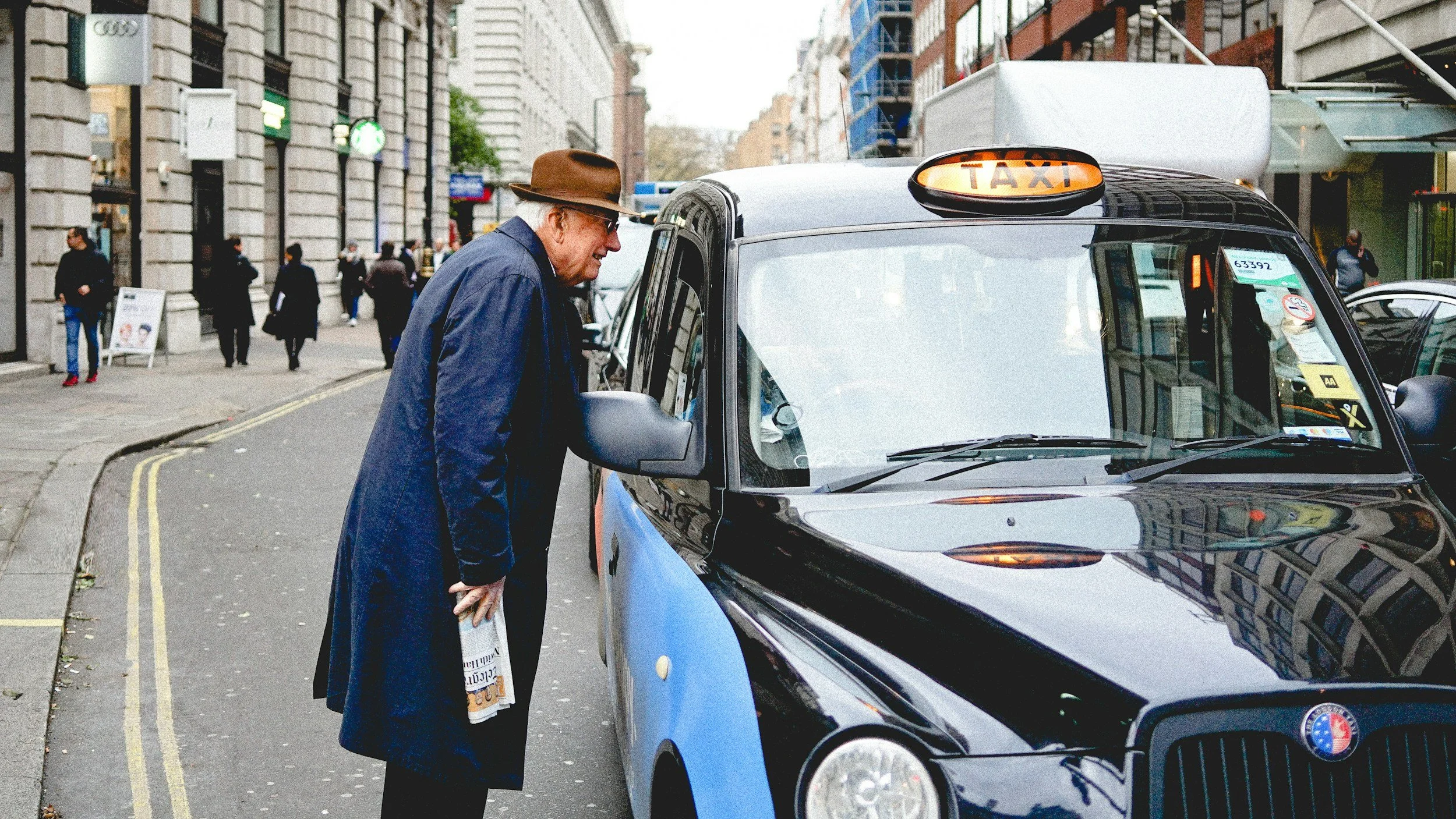
LEARNING LONDON’S STREETS CAN CHANGE A CABBIES BRAIN
Researchers following trainee taxi drivers found that those who passed the Knowledge developed more grey matter in the posterior hippocampus, a brain region associated with spatial memory. Their mental map of London involved measurable changes inside the brain.
Oyster or contactless: how to pay for transport
The simplest starting point for most adults
If you have a compatible contactless bank card or mobile wallet with suitable overseas fees, paying as you go is usually the simplest option for a short visit. You do not need to buy an Oyster card just because you are a tourist.
A standard Oyster card currently costs £10 before adding travel credit. It remains useful if your bank card is unsuitable, you prefer a separate transport card or you need an eligible discount added. Check coverage for journeys beyond London: Oyster and contactless do not have identical boundaries.
The important habits are straightforward:
Use one consistent card or device for your journeys, including touching in and out with the same one.
A phone, watch and physical bank card are treated separately, even when linked to the same account.
Each paying traveller needs a separate card or device; you cannot pass one card back through the barriers for everyone.
Touch in and out on rail services, even where the barriers are open. On buses and trams, touch in only.
Keep enough battery for mobile payments and carry a backup payment method.
Check your card provider's fees before leaving home. A convenient payment method can still attract overseas charges.
How daily caps work
For adult pay-as-you-go journeys within Zones 1 and 2, the current daily cap is £8.90. Travel covering Zones 1–6 has a £16.30 daily cap. These are maximum charges for qualifying travel in those zones, not amounts you pay automatically each day.
Airport routes, express services and journeys beyond the zones need separate attention. Heathrow Express, Gatwick Express, river services and the cable car do not all fall under the standard caps simply because they accept a contactless card.
For buses and trams, the adult pay-as-you-go fare is £1.75 until 31 October 2026, with a £5.25 daily cap. From 1 November 2026, the fare becomes £1.85 and the daily cap £5.55. The Hopper fare allows further qualifying bus and tram journeys within one hour of the first touch-in, using the same card or device.
For a specific rail journey, check TfL's single fare finder. Many rail fares have weekday peak periods, generally 06:30–09:30 and 16:00–19:00, with exceptions. Heathrow journeys involving Zone 1 have peak-fare rules even outside those times.
A useful note for families
On the Tube, DLR, Overground and Elizabeth line, up to four children under 11 can usually travel free with an appropriately ticketed adult. Some National Rail services have different conditions, so check the airport route separately.
For visitors aged 11–15, staff can add a Young Visitor discount to an Oyster or Visitor Oyster card, providing half-price adult pay-as-you-go fares for up to 14 days. Ask before starting paid journeys; ordinary contactless payments do not automatically apply child discounts.
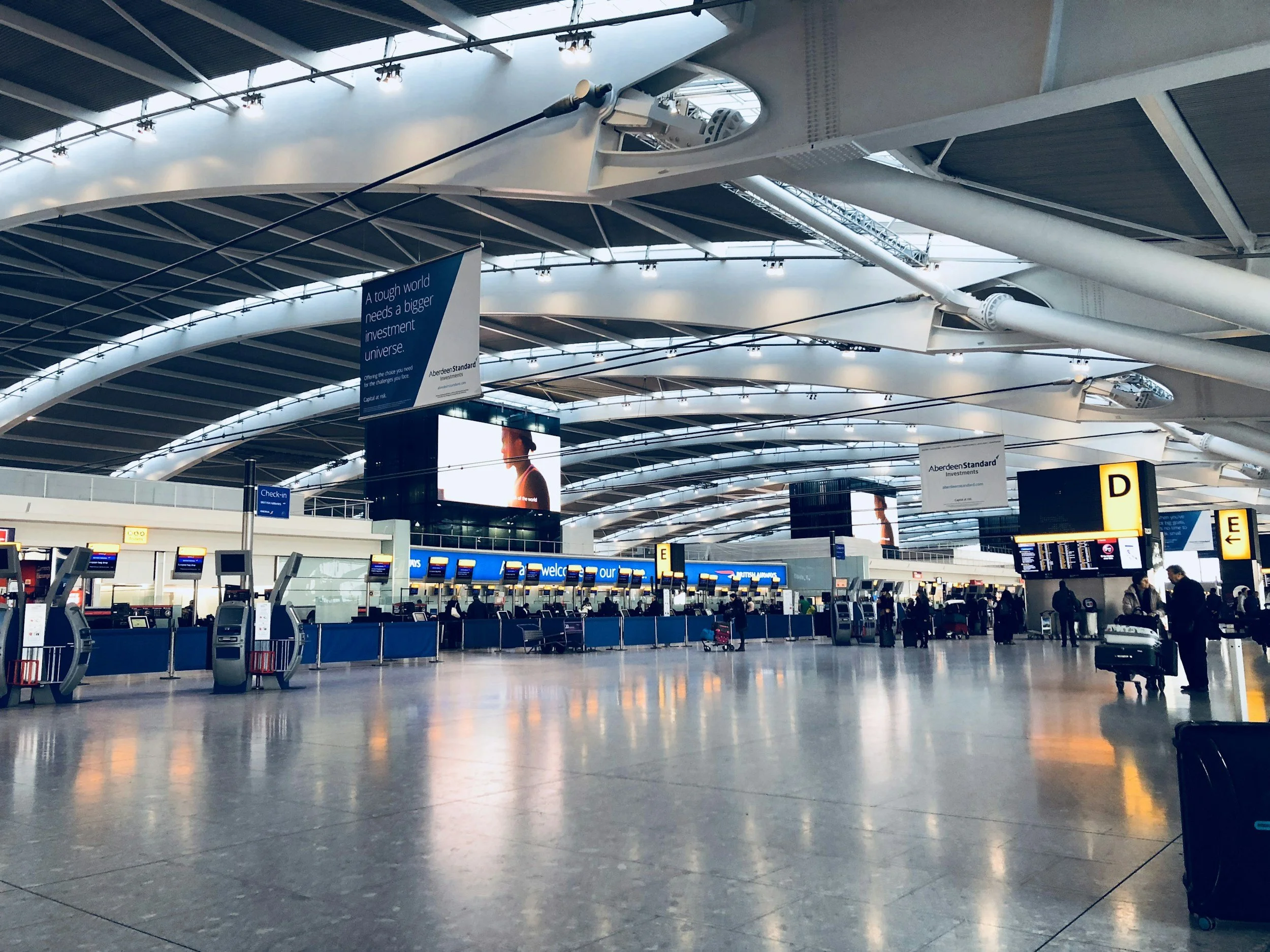
HEATHROW’S FIRST PASSENGER TERMINALS WERE ARMY TENTS
Its early terminals were ex-military marquees furnished with floral armchairs and vases of flowers. Passengers reached their aircraft along wooden walkways laid across the muddy airfield. Airport lounges have made some progress since then.
How much to budget for London
Accommodation and paid sightseeing will usually make the biggest difference to the total. Keep those separate from the everyday cost of eating and getting around, and it becomes easier to see where you can adjust the trip.
Everyday spending: useful planning allowances
The following estimates are per adult, excluding accommodation and airport transfers. Allow approximately £50–£75 a day for a relatively modest visit built around casual meals, local transport and mostly free sights. Choosing supermarket breakfasts, takeaway lunches and fewer extras can keep spending lower; frequent drinks and sit-down meals will push it upwards.
For £90–£140 a day, you have more room for café stops, restaurant meals and a major paid attraction. Adjust these planning allowances to the experiences you want to book.
For example, allocating £10 for breakfast, £15 for lunch, £30 for dinner including any service charge, £8.90 for local transport, £40 for one paid attraction and £10 for other drinks or snacks gives £113.90. This illustrates how a day's choices add up. Shopping and substantial alcohol spending are additional.
Add accommodation per room, not per person
Hotel prices depend heavily on the dates, location, room type and booking conditions. Compare the total stay price, including any breakfast or other extras you actually want.
For example, a £200 double room adds £100 per person per night when two people share. Price your actual dates before finalising the budget.
Our Where to Stay in London guide explains the neighbourhood and transport trade-offs. A lower room rate is less persuasive if it adds long journeys to each day.
Spend on the experiences you actually want
Build your sightseeing budget around selected paid experiences, then leave room for walks, parks and free collections. Compare attraction passes against the places you would genuinely visit, their current individual prices and any reservation requirements.
You do not need to fill every hour to justify being in London. A more selective itinerary can be better for both the trip and the budget.
Money, tipping and everyday etiquette
Expect contactless payments, and bring a backup card
London uses pounds sterling, or GBP. Contactless payments are widely accepted across shops, cafés, restaurants and bars, so a suitable bank card or mobile wallet will cover most everyday spending. Some businesses are cash-free. A small cash reserve can still be useful, but there is little reason to carry large amounts for a short city break.
American Express is accepted in London, but not by every business that takes contactless payments. Bring a Visa or Mastercard backup rather than relying on Amex alone, and check acceptance before ordering if it is your only available card.
Pay in pounds and check conversion charges
If a card terminal or ATM offers to charge you in your home currency, that is a currency-conversion service with its own exchange rate and possible markup. Choosing GBP generally avoids that particular conversion, although your card provider's own fees can still apply.
Check the bill before adding a tip
Restaurants often add a service charge. Check the bill before leaving an additional tip. Where no service charge is included, 10–15% is a common guide for good restaurant service, and tipping remains discretionary. It is not normally expected when ordering a drink at the bar.
At a traditional pub, ordering at the bar is common, though food and table-service arrangements vary. If you are unsure, ask a member of staff rather than waiting indefinitely for someone to take your order.
Queue where a queue is forming, let people off trains before boarding and stand on the right of escalators, keeping the left clear for people walking. Small courtesies make crowded places work rather better.
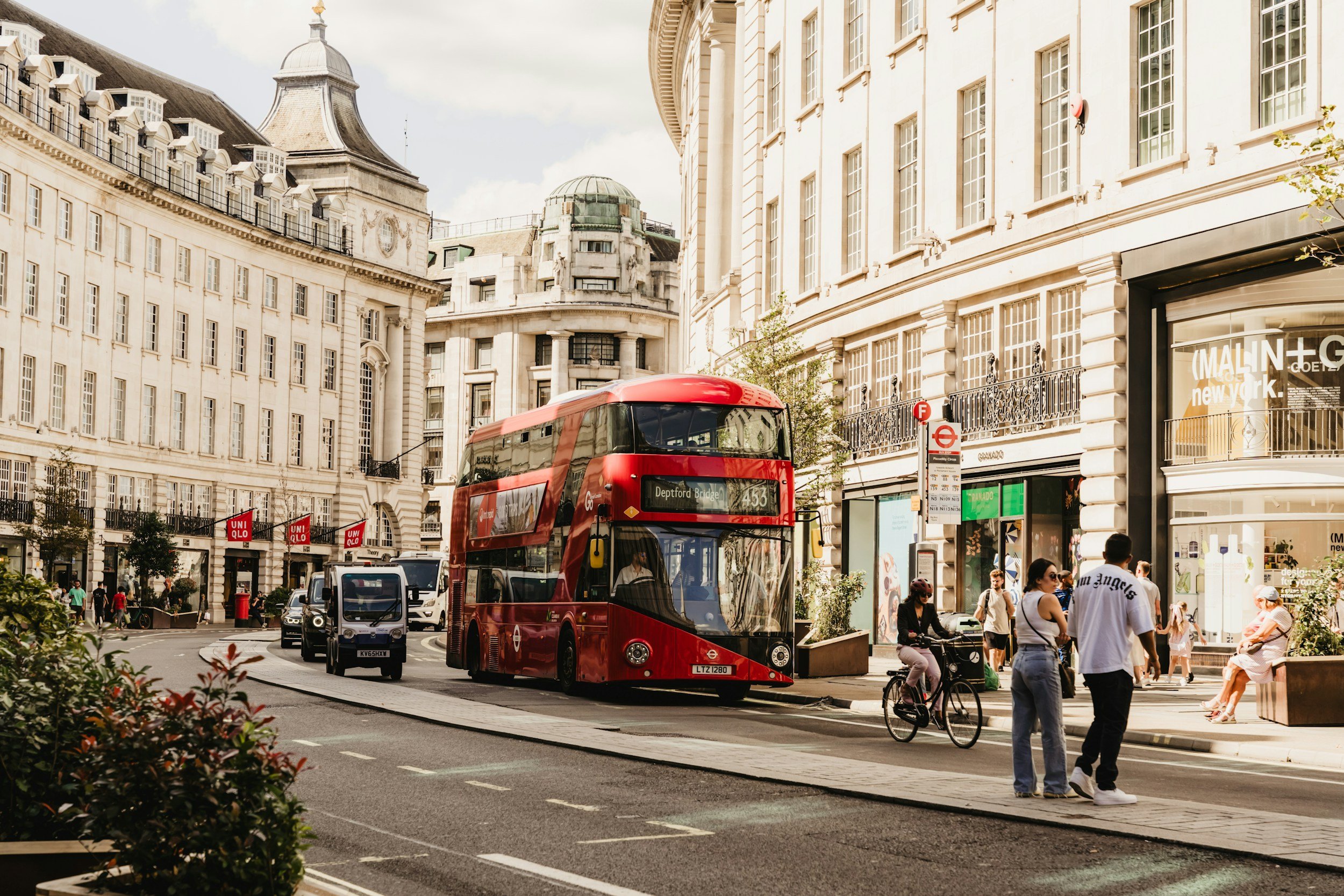
LONDON USED TO HAVE PIRATE BUSES
In the 1920s, independent operators competed with the dominant London General Omnibus Company, collecting passengers from busy queues intended for regular services. Their passenger-poaching tactics earned them the nickname “pirates”.
Mobile data, maps and useful apps
Check your existing mobile plan first. A roaming allowance that already includes the UK may cover what you need, while an expensive daily charge can make a separate SIM or eSIM worth comparing.
A travel eSIM is convenient if your phone supports it and is unlocked for use with another provider. Compare the countries covered, data allowance, validity, tethering rules and whether calls or texts are included. A plan described as European does not automatically establish that the UK is included.
Airalo's UK eSIM options are one option to compare with your current plan. Check the exact package and activation policy before installing; some eSIM validity periods begin at installation, while others start on connection to the destination network.
For navigation, Google Maps and Citymapper are good everyday choices in London. Google Maps is useful for finding an exact place and comparing walking with public transport. Citymapper is particularly useful for comparing Tube, train and bus combinations, checking departures and following a journey step by step. Choose whichever you find easier to use; there is no need to download a different app for every mode of transport.
TfL Go is the official transport app and a useful additional resource for live service information, station facilities and step-free route planning. If you expect to use booked cars, set up Uber or Bolt before you need the first ride.
Download useful offline maps and save your accommodation address and essential tickets somewhere you can access without mobile data. Offline maps will not replace live public-transport directions or disruption information.
Staying safe in London
Sensible precautions help you enjoy London with more confidence. For visitors, the most useful advice concerns street theft, keeping track of belongings and planning how to get home.
Be particularly careful with your phone
The Metropolitan Police warn about thieves on bikes and mopeds taking phones from people's hands, including near stations and other busy locations. If you need to check directions, pause away from the kerb, look around you and put the phone away once you have your route.
Do not leave a phone on a café table or walk for long stretches while absorbed in the screen. Before travelling, enable the device's security and recovery features and make sure important information is accessible somewhere else. A lost phone is more disruptive when it also holds every ticket, payment method and contact detail.
Keep bags and valuables secure in crowds
Keep valuables in a secure pocket or closed bag, particularly around busy stations, shops and attractions. Be alert to distractions and avoid leaving a bag hanging behind your chair. Keep luggage close during airport journeys and at station cafés.
Buy attraction and theatre tickets through official or established booking channels. Walk away from street games or distractions that involve handing over money.
Plan the journey home before the evening gets late
Check your return route before going out, and choose well-lit, busier routes if walking after dark. Keep enough phone battery and a backup payment method for getting home. Keep an eye on your drink and ask venue staff for help if you feel uncomfortable.
For a booked car, check the vehicle registration and driver against the booking confirmation before getting in, and decline unsolicited lifts. Use a licensed operator or the official booking app, and keep the booking details available until you arrive.
Know what to do if something happens
Call 999 or 112 in an emergency if you need police, ambulance or fire services. For non-emergency police matters, use 101 or the police's online reporting service.
If your phone is stolen, put your safety first and do not confront the thief. Report it promptly, use the device's remote security tools where available, and contact your mobile provider and relevant banks to secure the accounts linked to it.

ANGEL HOLDS THE LONGEST ESCALATORS
They stretch for 60 metres, carrying passengers through a vertical rise of 27.5 metres. A useful reminder that the journey between the pavement and platform can be a substantial part of a short Tube trip.
Other useful things to know
Pack comfortable walking shoes, layers and a light waterproof outer layer. Check the forecast for your dates, and leave enough flexibility to move an outdoor walk or viewpoint to a better part of the day.
Bring a suitable UK three-pin plug adapter if your chargers need one, and check the appliance's compatibility before plugging it in. A small power bank is useful when your phone is doing the work of a map, ticket wallet and payment card.
London's tap water is safe to drink. Carrying a refillable bottle and asking for tap water with meals can reduce incidental spending.
Use toilets at the attractions and venues you are visiting before moving on, and check facilities along longer routes. TfL's accessibility resources include a Tube toilet map; accessible facilities and their opening arrangements should be checked for your particular journey.
Traffic drives on the left. Use designated crossings, follow the signals and check for approaching vehicles rather than relying on the direction you instinctively expect them to come from.
Your London arrival checklist
Before leaving home:
Confirm the entry permission required for each traveller.
Save your accommodation address, check-in instructions and arrival route.
Decide which card or device you will use for transport, and keep a backup.
Check mobile data, essential downloads and device security.
Recheck your arrival and departure routes for the actual dates and times.
The most valuable next step is to enter your airport terminal and accommodation address into the journey planner. Once that route is clear, the rest of the first day becomes much easier to arrange.
Continue Planning London
- London Travel Guide: understand the city's layout and decide what matters most to your trip.
- Where to Stay in London: compare useful bases and their transport connections.
- 3 Days in London: turn your practical arrangements into a realistic first-time itinerary.
“London can be daunting: it’s large, fast-paced, and generally extremely busy. Follow these steps to traverse the city like a local.”