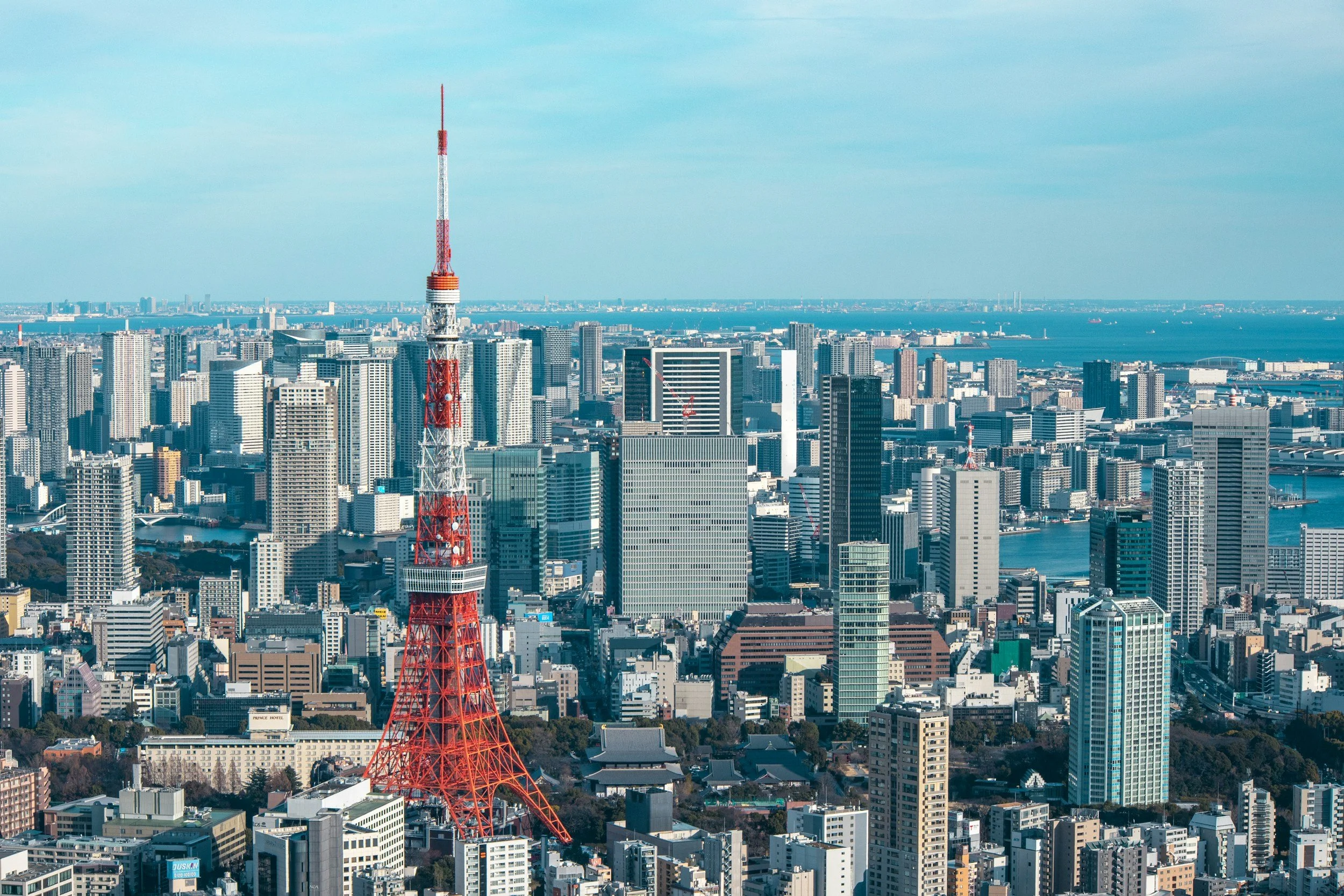
Tokyo changes more with the seasons than you might expect.
A spring trip can mean cherry trees filling parks and riverbanks with pale pink blossom. Summer brings festivals, fireworks and evenings that stay warm long after sunset, but also heat and humidity that make a full day on foot considerably harder. By November, the air is cooler, the leaves begin to turn and the city becomes much easier to explore slowly. Winter strips things back again: colder, drier and often clearer.
So the best time to visit Tokyo isn’t simply the month with the highest temperature or the least rain.
For most first-time visitors, November is our pick for the best overall time to visit Tokyo, with mid-to-late May a very close second. Both give you comfortable conditions for exploring on foot without the summer heat. November adds autumn colour and comparatively dry weather, while later May brings warmer days and fresh spring greenery once the Golden Week rush has passed.
If cherry blossoms are the reason you’re going, late March into early April is the obvious exception. Just know that you’ll be trading flexibility for one of Tokyo’s most sought-after seasons.
Here’s how to choose the Tokyo season that actually suits your trip.
Quick Answer: When Is the Best Time to Visit Tokyo?
Best Overall
November
Temperatures are cool but comfortable, humidity has dropped, rainfall is lower than in early autumn and autumn foliage starts transforming parks and gardens from around mid-November. JMA’s 1991–2020 normals put Tokyo’s November average daily maximum at 16.7°C and minimum at 8.8°C, with 96.3 mm of monthly precipitation.
Best for Cherry Blossoms
Late March to early April
Most cherry varieties in Tokyo typically peak around the end of March into the beginning of April, although flowering varies from year to year and the main display can be brief.
Best for Comfortable Weather
Mid-to-late May and November
May is warmer, with long-term average daytime highs around 23.6°C. November is cooler but drier, making both excellent for neighbourhood-heavy days on foot.
Best for Autumn Colours
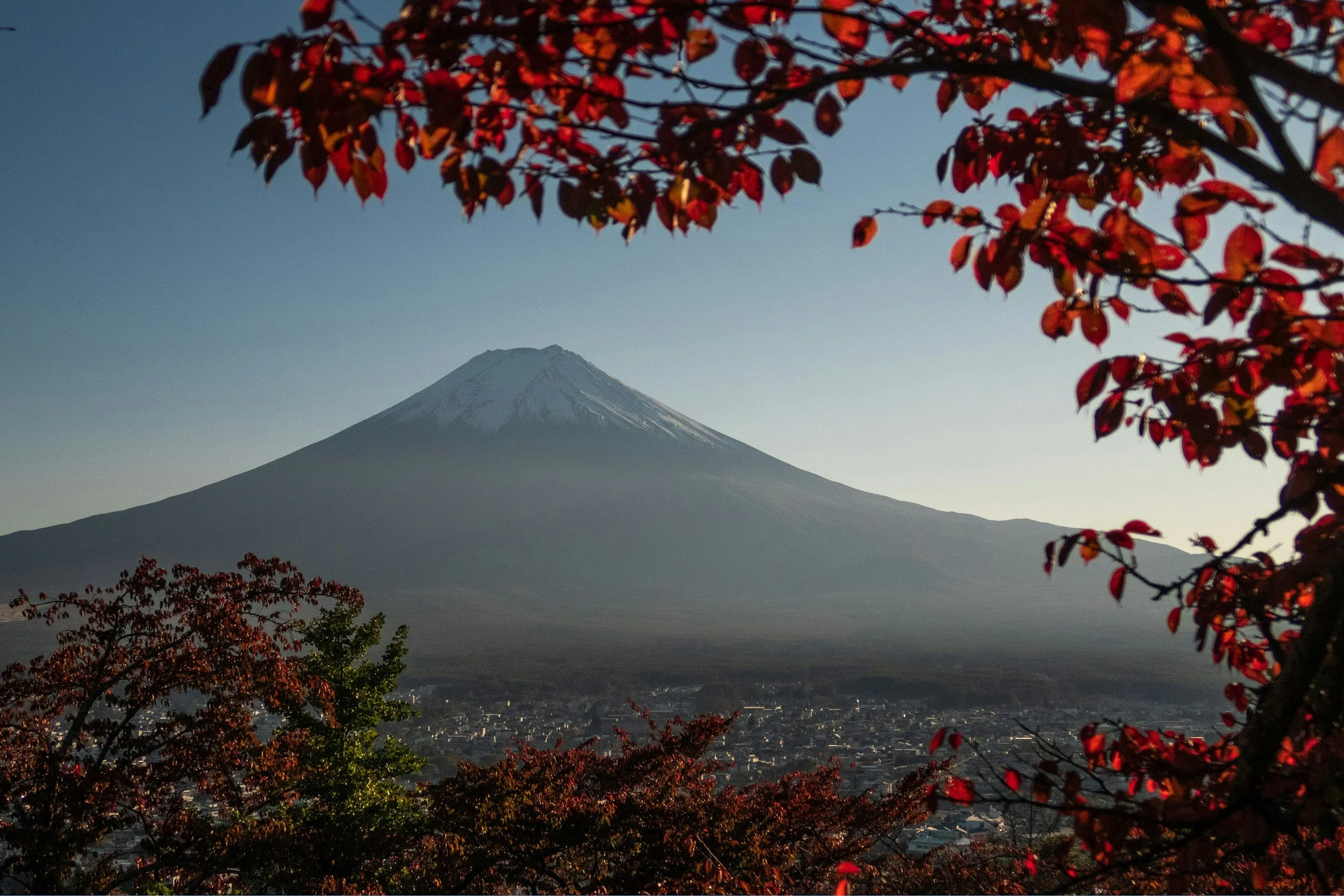
Mid-November to early December
Tokyo’s official tourism guidance places the strongest foliage window broadly between mid-November and early December.
Best for Fewer Crowds
Mid-to-late January and February
JNTO identifies weekdays in January and February among Japan’s quieter travel periods, outside the New Year holiday rush.
Best for Budget-Conscious Travellers
January, February or June
There is no guaranteed cheapest month for flights or hotels, but JNTO identifies June and weekdays in January and February as off-season periods, which can make them sensible places to look for better availability and value.
Most Challenging Weather
July and August
Tokyo’s summer is hot and humid. JMA’s climate normals put average daily highs at 29.9°C in July and 31.3°C in August, with relative humidity around 76% and 74% respectively. Recent official Tokyo guidance also describes August as persistently very hot and humid.
World Locals recommendation: choose mid-to-late November for the strongest overall balance, or mid-to-late May if you prefer warmer weather.
Tokyo’s Seasons Explained
Tokyo technically has four seasons, but trip planning makes more sense if you think of the year in six phases:
spring → rainy season → hot summer → warm early autumn → cooler autumn → winter
The difference matters.
April and May are mild enough to spend long days walking between neighbourhoods. June becomes more humid as the rainy season arrives. July and August turn genuinely hot. September can remain surprisingly summer-like, while October gradually becomes cooler but is historically one of Tokyo’s wetter months. November is where temperatures, humidity and rainfall settle into a particularly useful combination. Winter then becomes colder but comparatively dry.
That rhythm changes more than what you pack.
It changes how long you’ll want to stay outside, whether a midday museum feels optional or strategically brilliant, how ambitious your neighbourhood plans should be and whether a park is somewhere you pass through or one of the reasons you came.
Visiting Tokyo in Spring
Spring is Tokyo’s most famous season, largely because of sakura.
But March, April and May offer three quite different trips.
Tokyo in March
March is a good time to visit Tokyo if you want the beginning of spring without committing entirely to cherry blossom season.
JMA’s long-term normals give March an average high of 14.2°C and low of 5.0°C. GO TOKYO describes the month as chilly but increasingly comfortable as spring approaches.
Early March can still feel distinctly cool, especially in the evening. By the latter part of the month, temperatures begin rising and attention turns towards the first cherry blossoms.
The important distinction is that booking Tokyo in March does not guarantee sakura.
Most major cherry varieties tend to peak from the end of March into early April, but annual weather conditions influence exactly when flowering begins and reaches full bloom.
Best for: Early spring, cooler sightseeing and travellers hoping to catch the beginning of blossom season.
The trade-off: Weather is less reliably mild than April or May, and cherry blossom timing is uncertain.
World Locals verdict: A good month, particularly in the second half, but don’t book early March expecting Tokyo to already be pink.
Tokyo in April
April gives you Tokyo at its most recognisably spring-like, particularly around cherry blossom season.
Long-term JMA normals put average daily highs around 19.4°C and lows around 9.8°C, which makes April naturally suited to long days outdoors.
The main event is sakura.
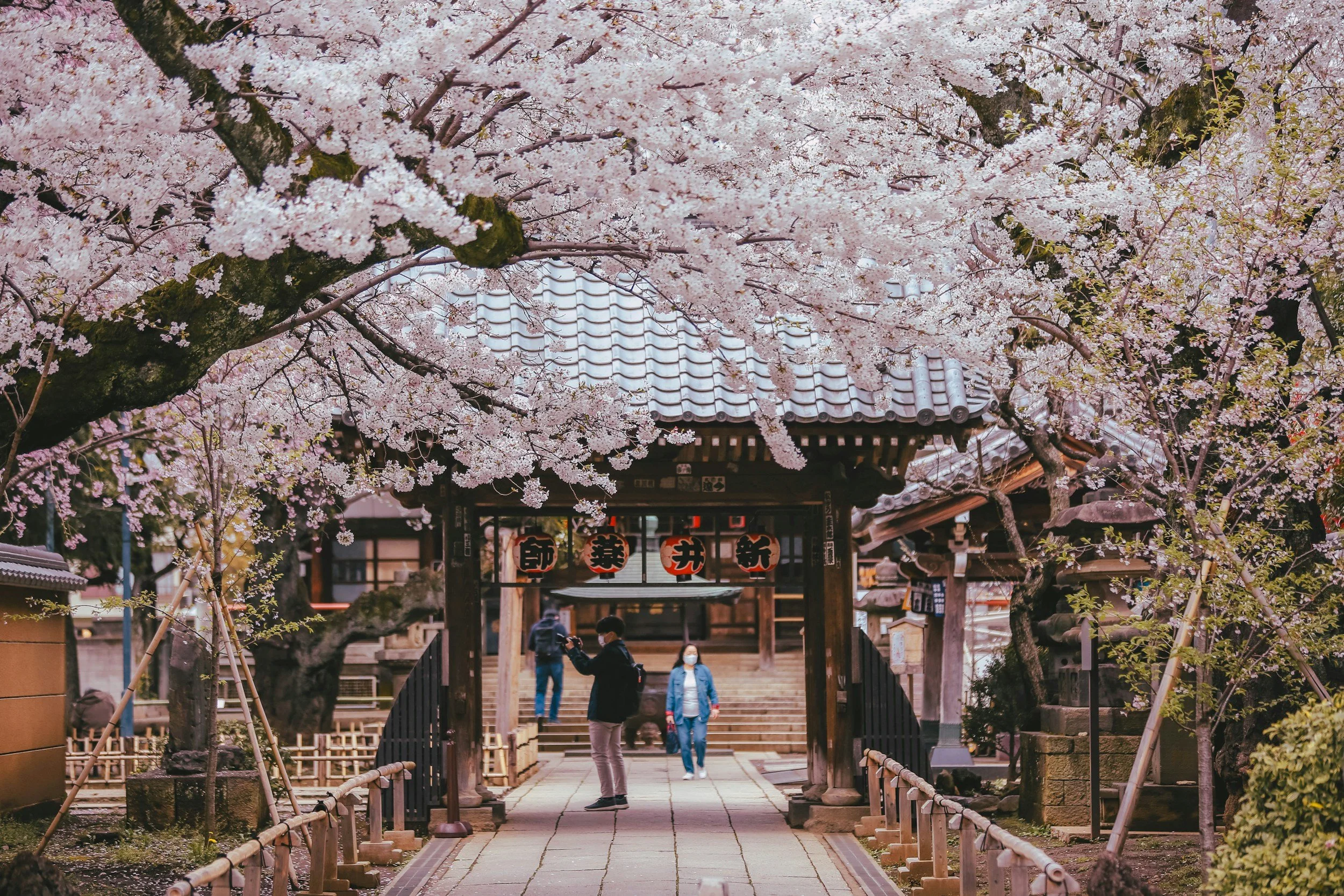
Hanami, or flower viewing, becomes part of everyday life during the short bloom period, with parks, riverbanks and gardens filling with people gathering beneath the trees. Tokyo’s most famous viewing areas include places such as Ueno Park and Chidorigafuchi, while blossom events are held across the city.
But April’s reputation comes with a cost.
Spring and cherry blossom season are among Japan’s most popular periods for international visitors, making advance reservations more important.
The other problem is timing.
Cherry blossoms do not consult your flight confirmation before opening. Peak conditions vary by year and individual varieties flower at different times. The most common varieties may only remain in bloom for a week or two.
Best for: Cherry blossoms, hanami and first-time visitors who actively want Tokyo in spring.
The trade-off: Higher demand, more crowded blossom spots and no guarantee your exact dates will match peak bloom.
World Locals verdict: One of Tokyo’s most special periods, but not necessarily its easiest.
Tokyo in May
May is arguably Tokyo’s best month if comfortable weather matters more to you than cherry blossoms.
JMA’s climate normals put May highs around 23.6°C and lows around 14.6°C, with humidity still below the levels seen in June, July and August.
That gives the city a useful balance: warm enough to stay outside into the evening, but generally without the punishing heat that arrives later in summer.
The main complication is Golden Week.
Golden Week runs from late April into early May and combines several Japanese national holidays. JNTO warns that transport and accommodation can become crowded or fully booked during the period as domestic travel rises sharply.
That means early May and later May should almost be treated as two separate travel periods.
Once Golden Week passes, the equation improves considerably.
Mid-to-late May is one of the strongest windows of the entire year.
The blossom crowds have gone, temperatures are comfortable, summer humidity has not fully arrived and the city is green.
Best for: Walking, neighbourhood exploration, outdoor dining and first-time visits.
The trade-off: Avoid Golden Week if lower crowds and easier logistics matter to you.
World Locals verdict: Excellent. If you want warm weather rather than sakura, aim for mid-to-late May.
Visiting Tokyo in Summer
Summer Tokyo deserves a fair hearing.
It brings festivals, fireworks, beer gardens and long warm evenings. But it also changes the physical reality of travelling around the city.
Tokyo in June
June is workable, but it comes with the rainy season and noticeably higher humidity.
JMA’s long-term normals put June highs around 26.1°C, lows around 18.5°C and relative humidity at roughly 75%. Monthly precipitation averages around 167.8 mm.
GO TOKYO describes the rainy season as bringing more cloudy and wet days, often with persistent lighter rain rather than necessarily uninterrupted downpours from morning until night.
That distinction matters.
June doesn’t automatically ruin a Tokyo trip. It simply rewards flexibility.
Keep an umbrella nearby, build museums, galleries and shopping into the plan, and avoid structuring every day around uninterrupted sunshine.
The upside is that JNTO identifies June among Japan’s quieter travel periods.
Best for: Travellers willing to trade perfect weather for potentially quieter sightseeing.
The trade-off: Rain, cloud and humidity make outdoor-heavy days less predictable.
World Locals verdict: Better than its reputation, but not our first choice for a first Tokyo trip.
Tokyo in July
July is when Tokyo’s summer starts demanding changes to the itinerary.
JMA normals put average highs around 29.9°C and lows around 22.4°C, with relative humidity of approximately 76%.
GO TOKYO notes that the rainy season can continue into early July before the hotter summer pattern takes over.
The advantage is cultural.
Summer brings outdoor celebrations, traditional festivals and fireworks displays, giving Tokyo a rhythm you won’t get in November or February.
But long walking days become harder.
A route through Harajuku, Omotesando, Shibuya and Shinjuku that feels natural in spring may feel significantly more ambitious when the temperature is around 30°C and humidity is high.
Build indoor stops deliberately.
Museums, department stores, cafés and long lunches are no longer failed sightseeing. They are infrastructure.
Best for: Summer events, festivals and travellers comfortable with heat.
The trade-off: Outdoor exploration becomes more tiring.
World Locals verdict: Worth considering for summer culture, but weather is no longer neutral to the trip.
Tokyo in August
August is the most difficult month to recommend for a sightseeing-heavy first trip to Tokyo.
JMA’s long-term average daily maximum is 31.3°C, with nighttime lows averaging 23.5°C. Relative humidity averages around 74%.
Recent official Tokyo guidance paints an even hotter picture, describing August as persistently very hot and humid, with recent daytime temperatures often climbing much higher. Heavy showers and typhoons are also possible.
That doesn’t make August a bad trip.
It makes it a different trip.
Tokyo’s summer calendar includes fireworks, traditional obon dancing and other seasonal events that genuinely belong to this time of year.
Mid-August also coincides with Obon, one of Japan’s major domestic travel periods. JNTO notes that transport and accommodation become particularly competitive as people travel across the country.
If you travel in August:
start earlier
build in indoor time
slow the middle of the day
explore more after sunset
keep plans flexible around severe weather
Best for: Summer festivals, fireworks and travellers actively wanting Japan’s summer atmosphere.
The trade-off: Heat, humidity, storm risk and the Obon travel period.
World Locals verdict: Not a month we’d choose for a first Tokyo sightseeing trip unless summer itself is part of the appeal.
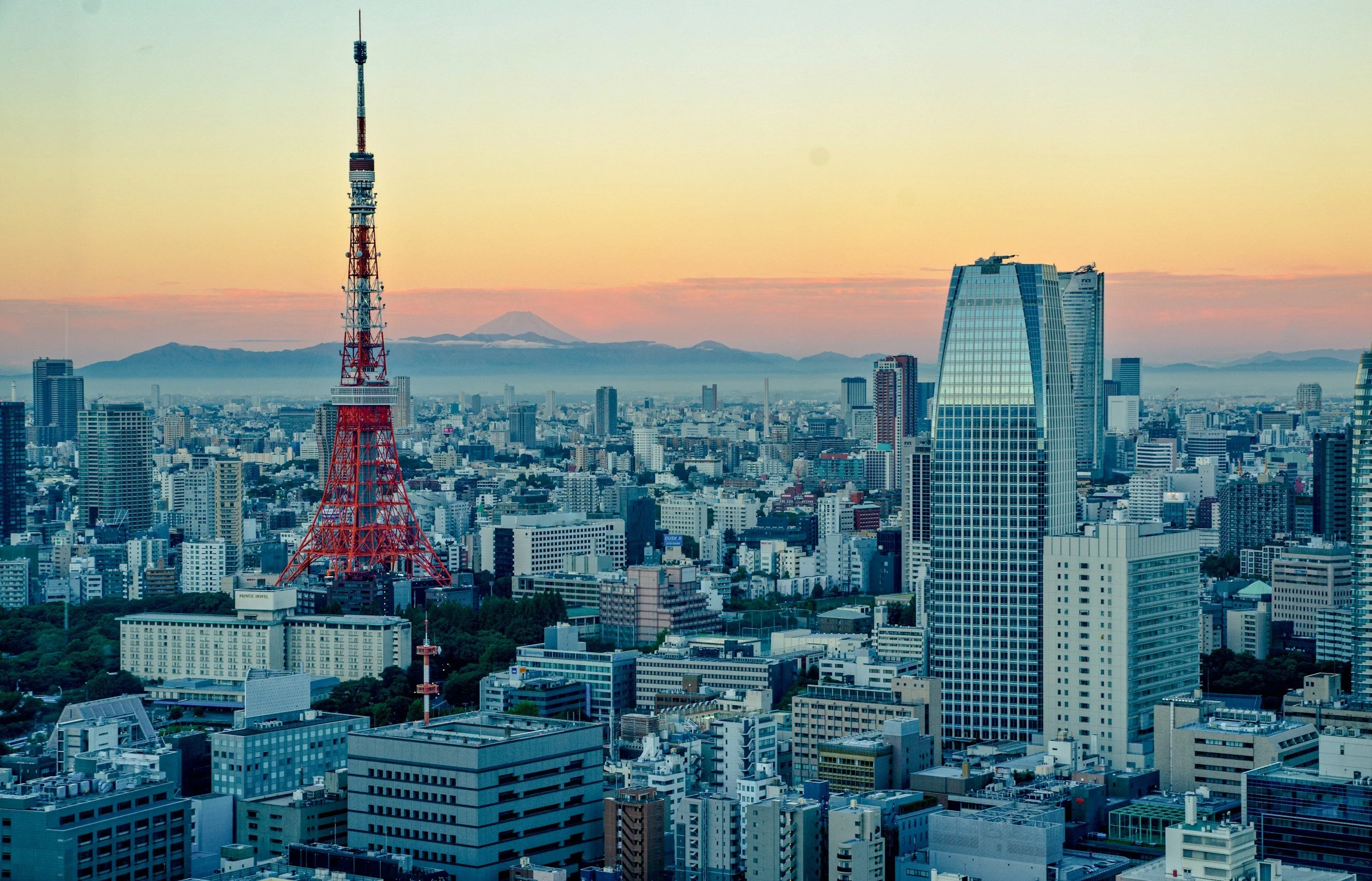
Visiting Tokyo in Autumn
Autumn is where Tokyo becomes particularly easy to recommend.
Just don’t assume it begins in September.
Tokyo in September
September can still feel remarkably like summer.
JMA’s climate normals put average highs at 27.5°C and lows at 20.3°C, with humidity around 75%. It is also Tokyo’s second-wettest month in the 1991–2020 normal dataset, averaging 224.9 mm of precipitation.
GO TOKYO’s more recent guidance similarly warns that temperatures can remain above 30°C and that typhoons may approach the region.
This is important for travellers arriving from Europe expecting September to mean light jackets and early autumn.
Tokyo may have other ideas.
The second half of the month generally begins moving towards more comfortable conditions, but September remains a transition period.
Best for: Travellers who want late-summer Tokyo without peak August conditions.
The trade-off: Heat, humidity, rainfall and possible typhoon disruption.
World Locals verdict: Late September can work. Early September would not be our first choice.
Tokyo in October
October is one of Tokyo’s most comfortable months for temperature, but it is not quite as flawless as travel shorthand sometimes suggests.
JMA normals put October highs at 22.0°C and lows at 14.8°C. Humidity falls to around 71%, making walking noticeably easier than in summer.
There is, however, a wrinkle.
October is historically Tokyo’s wettest month in the JMA 1991–2020 normal dataset, with average monthly precipitation of 234.8 mm, and official Tokyo guidance notes that typhoons can still affect the city during September and October.
That does not mean October is constantly rainy.
It does mean that calling it Tokyo’s universally perfect weather month is a little too tidy.
There is another common misconception worth correcting:
October is usually too early for peak autumn foliage in central Tokyo.
Leaves begin changing earlier in the mountainous western parts of the metropolis, but the city’s strongest foliage period typically runs from mid-November into early December.
Best for: Comfortable temperatures, food, culture and city exploration.
The trade-off: More rainfall than you might expect, and not yet peak autumn colour.
World Locals verdict: Still excellent. Choose October for the weather, not because you expect Tokyo to already be covered in red leaves.
Tokyo in November
November is our pick for the best overall month to visit Tokyo.
JMA normals put average daytime highs at 16.7°C and lows at 8.8°C. Humidity falls to around 64%, and average monthly precipitation drops sharply to 96.3 mm after the wetter early-autumn months.
The weather suits the way Tokyo is best explored.
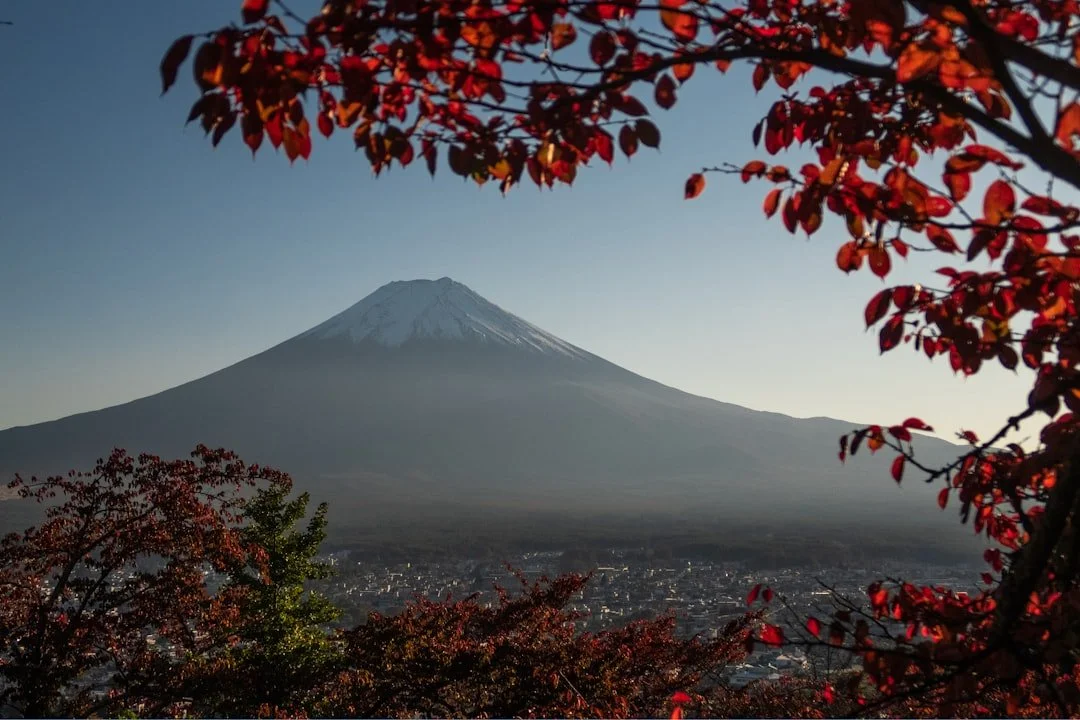
You can walk through neighbourhoods for hours without structuring the day around air conditioning. Cafés and museums become choices rather than heat refuges. Evenings are cool enough for a jacket, but generally not so cold that the city becomes uncomfortable after dark.
Then the leaves change.
GO TOKYO places Tokyo’s main autumn foliage season from mid-November to early December, with places such as Rikugien, Meiji Jingu Gaien and Shinjuku Gyoen among the city’s recognised autumn spots.
Weekends at popular foliage locations can still be busy, so mornings and weekdays are the better move where possible.
Best for: First-time visitors, autumn colour, photography and long days exploring on foot.
The trade-off: Cooler evenings and growing crowds around famous foliage locations.
World Locals verdict: The strongest all-round month.
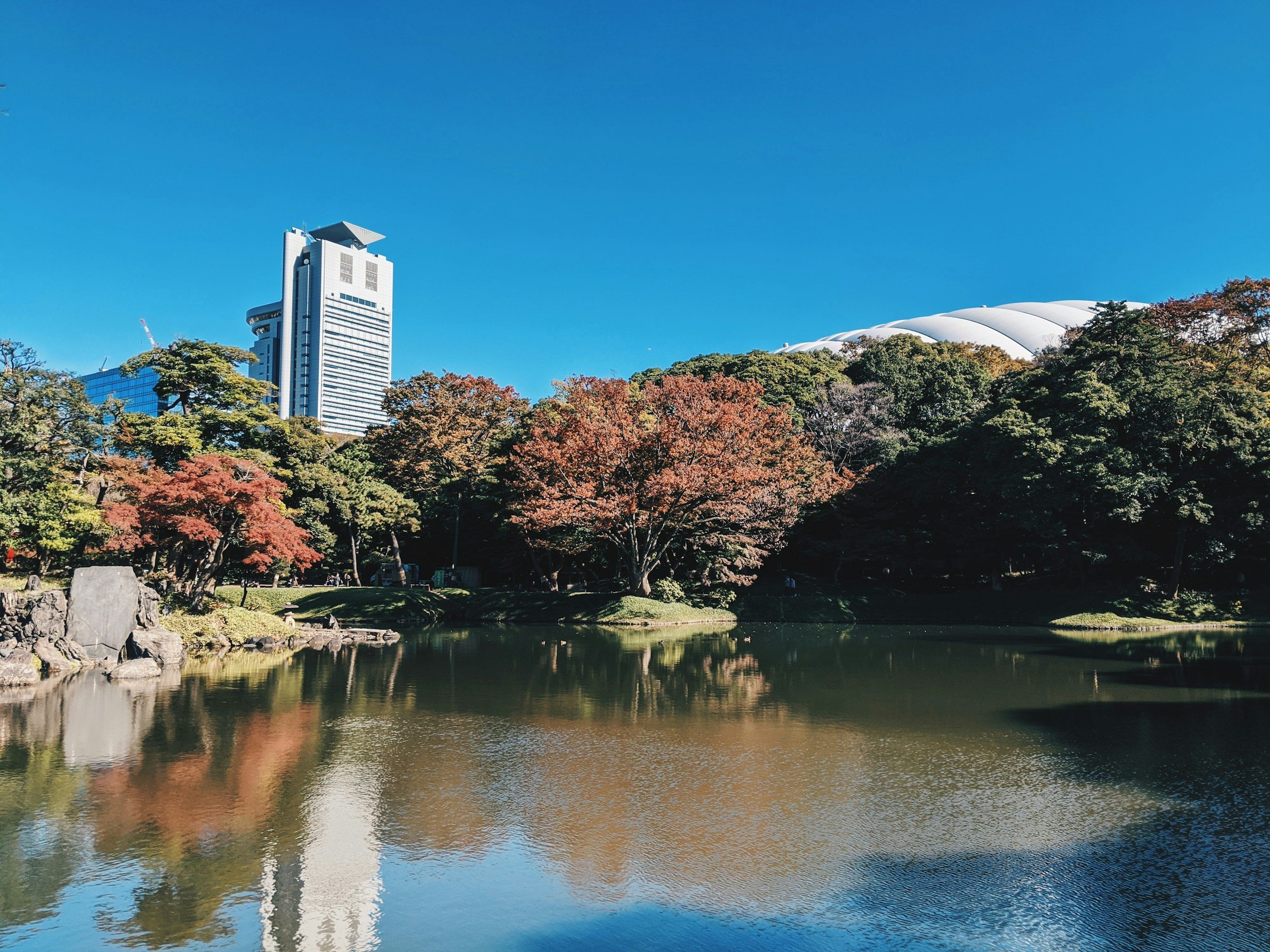
Visiting Tokyo in Winter
Winter is considerably more interesting than being “the season when it is cold”.
Tokyo becomes drier, often clearer and noticeably quieter outside the major holiday period.
Tokyo in December
December is a strong option if you don’t need warm weather.
JMA normals give December average highs of 12.0°C and lows of 3.8°C, with only 57.9 mm of precipitation.
Early December can also overlap with the tail end of autumn colour, while illuminations appear across commercial districts and public spaces throughout the city.
The main complication comes at the end of the month.
Japan’s New Year holiday period runs from late December into early January, and JNTO notes that many businesses close for several days.
Best for: Winter illuminations, drier sightseeing weather and early-winter trips.
The trade-off: Shorter daylight and year-end closures if you travel too close to New Year.
World Locals verdict: Early December is underrated. Late December requires more planning.
Tokyo in January
January can be one of Tokyo’s best periods for travellers who value clear, quieter conditions more than warmth.
JMA’s long-term averages sit around 9.8°C by day and 1.2°C at night, with just 59.7 mm of precipitation and relatively low humidity.
The first few days of January are different.
New Year is one of Japan’s major holiday periods, and many businesses close or reduce hours. At the same time, hatsumode, the first shrine or temple visit of the year, brings large crowds to major religious sites such as Meiji Jingu and Sensoji.
Once the holiday period passes, January becomes far easier.
JNTO identifies weekdays in January among the quieter times to travel.
Best for: Fewer visitors, dry conditions, winter city breaks and travellers who don’t mind the cold.
The trade-off: Cold mornings and evenings, plus holiday complications in early January.
World Locals verdict: Skip the first few days if convenience matters. Mid-to-late January is excellent value territory.
Tokyo in February
February may be Tokyo’s most underrated month.
JMA climate normals put daytime highs at 10.9°C and lows at 2.1°C, with only 56.5 mm of precipitation. JNTO also places weekdays in February within Japan’s quieter off-season.
It is cold, certainly.
But Tokyo is a city where large parts of the trip already happen indoors: restaurants, bars, shops, galleries, museums and train journeys.
Plum blossoms also begin introducing the first signs of spring before the sakura season arrives.
The result is a version of Tokyo with fewer seasonal headlines, but considerably less pressure to organise the entire trip around them.
Best for: Lower crowds, city sightseeing and travellers looking for a quieter alternative.
The trade-off: Cold weather and none of spring or autumn’s major visual spectacles.
World Locals verdict: A very good choice if you care more about Tokyo itself than seeing Tokyo in a specific season.
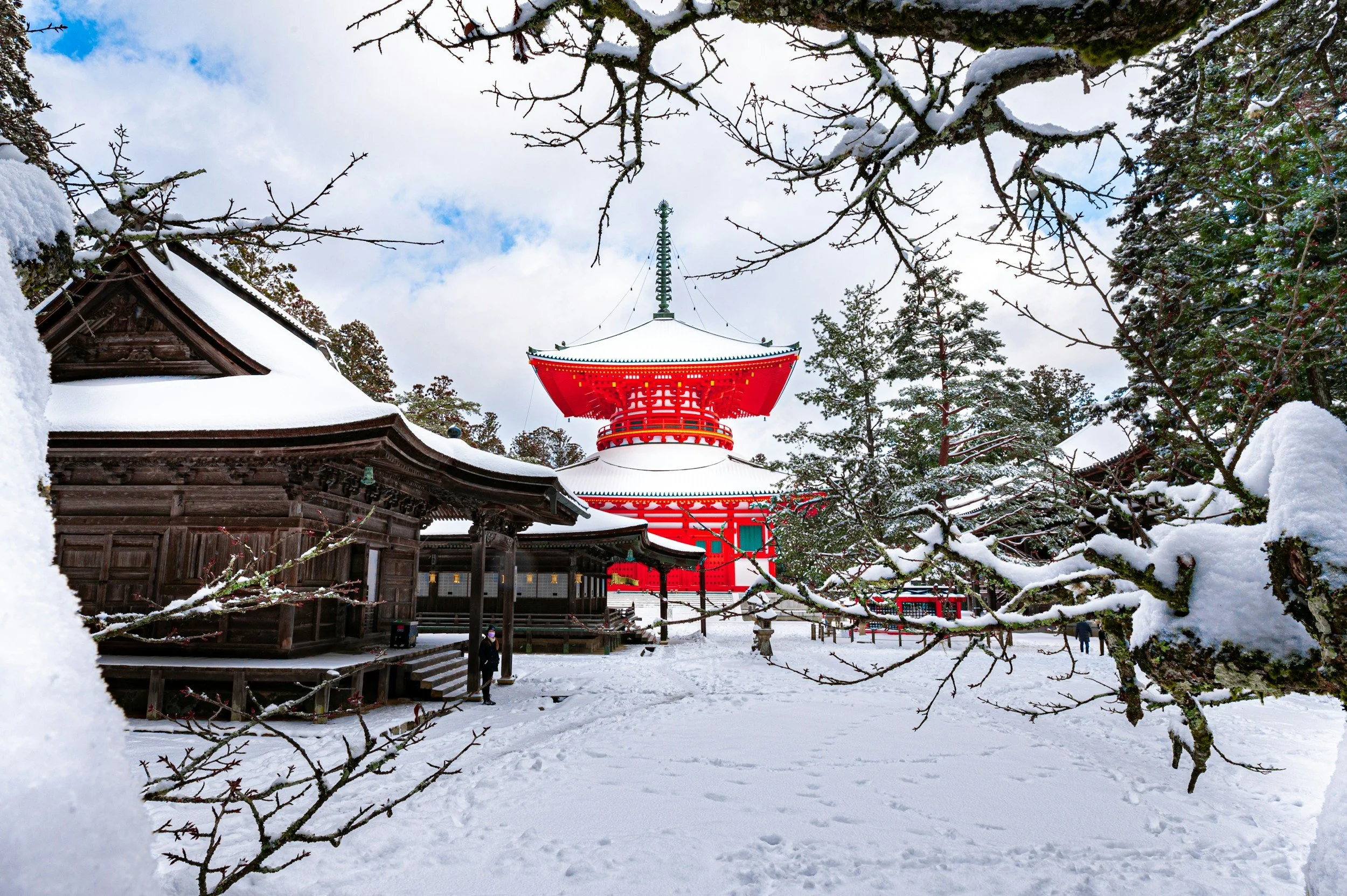
Cherry Blossom Season in Tokyo
Tokyo’s main cherry blossom season usually falls from late March into early April, but exact timing changes every year.
Different varieties flower at different times. For the most common varieties, GO TOKYO places peak bloom broadly around the end of March into the beginning of April, with the flowers generally lasting only around a week or two.
That brevity is what makes planning difficult.
“First bloom” and “full bloom” are also not the same thing. Forecasts track the progression of the season, but weather after the first flowers open can accelerate or shorten the display.
Tokyo has no shortage of places to see them.
Popular areas include:
Ueno Park
Chidorigafuchi
Sumida Park
Meguro River
Shinjuku Gyoen
Seasonal events and illuminations are held at several blossom locations, and major viewing spots can become extremely busy.
Is Cherry Blossom Season Actually the Best Time to Visit Tokyo?
It is the best time if seeing sakura is one of your main reasons for travelling. It is not automatically the best overall time for everyone else.
April has comfortable weather, and hanami gives the city an atmosphere that is genuinely seasonal rather than something created for visitors.
But you trade that for:
higher visitor demand
crowded viewing locations
less accommodation flexibility
uncertainty around exact flowering dates
For a first Tokyo trip where blossom is optional rather than essential, we would choose November or later May instead.
Autumn Colours in Tokyo
Tokyo’s autumn colour arrives later than many travellers expect.
October may feel like autumn, but central Tokyo’s strongest foliage generally arrives from mid-November to early December.
That distinction matters when booking.
October offers comfortable temperatures, but a late-November trip gives you a much better chance of combining those cooler conditions with actual seasonal colour.
Popular areas include:
Rikugien
Koishikawa Korakuen
Meiji Jingu Gaien
Shinjuku Gyoen
Hama-rikyu Gardens
Mount Takao
GO TOKYO specifically notes late November into early December as a strong period at traditional gardens such as Rikugien.
For us, this is one of autumn’s main advantages over cherry blossom season.
You get seasonal scenery without having to target such a narrow bloom window.
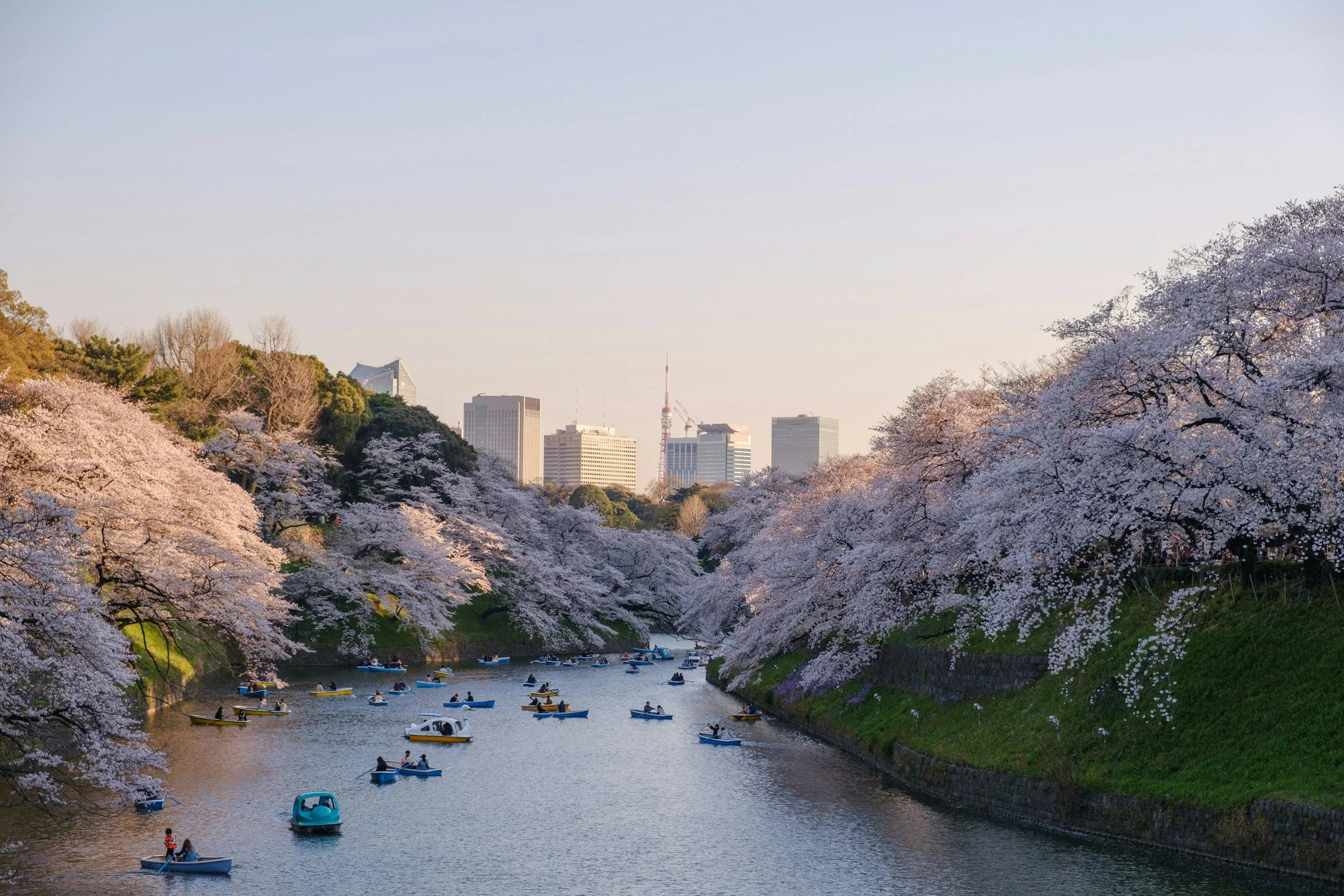
When Is Tokyo Most Crowded?
The busiest periods are driven by a mixture of international visitor demand and Japanese domestic travel.
The main periods to watch are:
Cherry Blossom Season
Late March into early April attracts heavy international demand and large numbers of people to parks and blossom viewing spots.
Golden Week
Late April into early May combines several national holidays and is one of Japan’s major domestic travel periods. Transport and accommodation can become heavily booked.
Obon
Mid-August sees significant domestic travel as people return to hometowns and visit family. JNTO identifies it alongside Golden Week and New Year as one of Japan’s busiest periods.
New Year
Late December into early January brings holiday travel as well as business closures and large shrine and temple crowds.
Tokyo is vast enough that none of these periods means every street suddenly becomes impassable.
The effect is more targeted.
Popular parks feel busier during sakura. Long-distance transport becomes harder around domestic holidays. Famous attractions need earlier booking. Hotel choice narrows.
That is the practical consequence to plan around.
When Is Tokyo Quietest?
Mid-to-late January, February and parts of June are among the better periods for avoiding peak visitor demand.
JNTO explicitly identifies June and weekdays in January and February as off-season periods.
None is perfect.
January and February are cold.
June is humid and rainy.
But that is why they are quieter.
If you have already visited Tokyo, dislike crowds or care more about restaurants, museums and neighbourhoods than seasonal scenery, those trade-offs become much more attractive.
Our choice would be February.
It is cold but comparatively dry, while Tokyo gives you enough indoor life that winter weather doesn’t dominate the trip in the way August heat can.
What Is the Cheapest Time to Visit Tokyo?
There isn’t one reliably cheapest month.
Airfares depend heavily on where you’re flying from, airline capacity and when you book. Hotel pricing responds to events, holidays and local demand.
So rather than promising a fictional bargain month, look for lower-demand periods.
JNTO identifies June and weekdays in January and February as off-season, while peak domestic periods such as Golden Week, Obon and New Year usually bring stronger demand for transport and accommodation.
That makes:
mid-to-late January
February
June
reasonable periods to search first if value matters.
Our best-value pick: February.
You sacrifice temperature, but you gain relatively dry weather and lower seasonal demand without the humidity and rain that come with June.
When Is the Worst Time to Visit Tokyo?
For a first-time visitor who wants to explore Tokyo mainly on foot, August is the most difficult month.
The combination of high temperatures and humidity changes the practical shape of the day. JMA normals put August highs at 31.3°C, while current official Tokyo guidance warns of very hot, humid conditions and the possibility of heavy rain and typhoons.
Add the mid-August Obon travel period and it becomes harder to recommend over spring, autumn or winter for a conventional first visit.
That is not the same as saying you should never go.
If you want summer festivals, fireworks and Japan at the height of its summer calendar, August gives you something November simply cannot.
The point is to choose it deliberately.
Best Time to Visit Tokyo by Travel Style
First-Time Visitors
Go: mid-to-late May or November
Both allow you to explore extensively on foot without planning the day around extreme heat.
Our preference is November for its combination of lower rainfall, moderate humidity and autumn colour.
Food-Focused Trips
Go: October to November or February
Tokyo’s food culture works year-round, so weather matters mainly because good food trips require time between meals.
Cooler weather makes walking between markets, cafés, restaurants and bars easier.
[AFFILIATE OPPORTUNITY: Tokyo food tour]
Cherry Blossom Trips
Go: late March to early April
But monitor annual bloom information and avoid treating one precise day as guaranteed months in advance.
Photography
Go: late March/early April, late November or winter
Cherry blossoms and autumn foliage provide the obvious seasonal colour. Winter brings drier conditions and fewer leaves obscuring urban views, while rainy evenings can give Tokyo’s illuminated streets an entirely different photographic character. JMA data shows January and February among Tokyo’s driest months.
Shopping
Go: January or any comfortable shoulder-season month
January brings seasonal sales, while spring and autumn simply make it easier to combine shopping districts with broader sightseeing. GO TOKYO specifically highlights January sales.
Nightlife
Go: May, October or November
Cooler-to-mild evenings make moving between neighbourhoods easier without midsummer humidity.
Families
Go: May or November
These months make full sightseeing days easier than summer, while avoiding the coldest part of winter.
Avoid Golden Week in early May if possible.
Budget-Conscious Travellers
Go: February
JNTO classifies winter weekdays among the quieter travel periods, and February is comparatively dry.
Travellers Who Hate Crowds
Go: February or later January
Avoid New Year itself, then make use of the quieter winter period.
Travellers Who Hate Heat
Go: November to April
Avoid July, August and much of September. JMA normals show temperatures and humidity climbing sharply through summer and remaining elevated into September.
Best Time to Visit Tokyo vs the Rest of Japan
Tokyo’s ideal travel season is not automatically the ideal season everywhere else in Japan.
The country stretches across a substantial climatic range.
Hokkaido in the north, subtropical Okinawa in the south and mountainous regions through central Japan can all experience seasons differently from Tokyo. JMA’s national climate data shows substantial variation between cities even within the same month.
That matters if Tokyo is just one part of a longer itinerary.
A date chosen perfectly for Tokyo foliage may be too late for leaves somewhere colder and higher. A Tokyo spring trip may encounter a completely different blossom stage further north.
Does the Season Change How Many Days You Need in Tokyo?
Slightly.
The number of places you want to experience does not change with the weather, but your realistic pace can.
Summer heat makes long walking days more demanding. Rainy periods benefit from flexibility. Spring and autumn make it easier to spend full days outdoors without repeatedly breaking for weather.
Seasonal priorities also consume time.
If you want cherry blossom viewing at several parks or autumn foliage at gardens outside your normal sightseeing route, those experiences deserve actual space in the itinerary.
For most first-time visitors, we still recommend around five full days, but summer travellers should be particularly careful about trying to compress too much into them.
Read next: How Many Days Do You Need in Tokyo?
Best Months to Visit Tokyo: World Locals Ranking
#1 November
Best overall
This is the month with the strongest balance.
It’s cool enough for long days walking, considerably drier than September and October in the JMA climate normals, less humid than summer and timed well for autumn colour from the middle of the month onwards.
Choose it if: You want the easiest all-round first Tokyo trip.
#2 May
Best for warmer weather
May gives you mild-to-warm temperatures before summer humidity reaches its peak.
The only major caveat is Golden Week.
Go after that and the month becomes one of the easiest to recommend.
Choose it if: You like warmer days and don’t care about cherry blossoms.
#3 April
Best seasonal experience
The weather is mild and sakura can make Tokyo feel completely different.
It ranks below May and November only because the blossom window increases demand and adds uncertainty around exact timing.
Choose it if: Cherry blossoms genuinely matter to you.
#4 October
Best for comfortable early autumn
October has excellent temperatures for sightseeing and a strong cultural calendar.
It loses points because rainfall is historically high and central Tokyo’s autumn foliage generally hasn’t peaked yet.
Choose it if: You want autumn temperatures without needing autumn leaves.
#5 February
Best underrated month
Cold, dry and comparatively quiet.
It doesn’t have spring’s blossom or autumn’s colour, but it gives you something arguably more useful: Tokyo with fewer seasonal complications.
Choose it if: Lower crowds matter more than warm weather.
The World Locals Verdict: When Should You Visit Tokyo?
Best overall: November
Best weather: Mid-to-late May
Best for cherry blossoms: Late March to early April
Best for autumn colour: Mid-November to early December
Best for fewer crowds: Mid-to-late January and February
Best value: February
Best underrated period: Winter, particularly February
Most difficult weather: July and August
“If we were booking a first trip to Tokyo ourselves, we’d aim for the second half of November.
The temperature is cool enough to explore properly, humidity has fallen, rainfall is substantially lower than in early autumn and the city’s ginkgo and maple trees are beginning to change.
It also avoids one of the main weaknesses of cherry blossom season: you’re not trying to organise an entire trip around a natural event that might reach full bloom several days earlier or later than hoped.
For warmer weather, our alternative would be mid-to-late May, once Golden Week has passed.
Tokyo works in every season.
But the better question is not whether you can visit in August, February or early April. It’s what kind of Tokyo you want when you get there.
For the easiest combination of weather, atmosphere and enough seasonal interest to make the city feel distinctive, November gets our vote.”